|
시장보고서
상품코드
2035053
인도의 중고차 시장 : 점유율 분석, 업계 동향 및 통계, 성장 예측(2026-2031년)India Used Car - Market Share Analysis, Industry Trends & Statistics, Growth Forecasts (2026 - 2031) |
||||||
 Mordor Intelligence
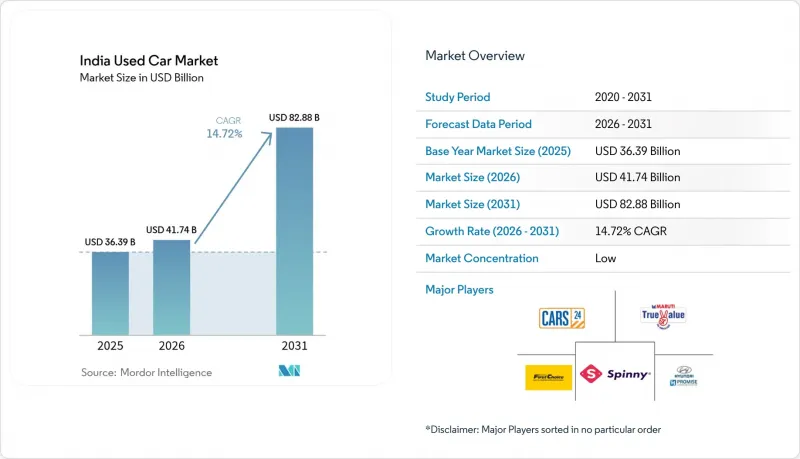
인도의 중고차 시장 규모는 2025년에 363억 9,000만 달러로 평가되었고 2026년 417억 4,000만 달러에서 2031년까지 828억 8,000만 달러에 이를 것으로 예측되며, 예측 기간(2026-2031년) CAGR은 14.72%를 나타낼 전망입니다.
급속한 디지털화, 신차 가격의 급등, 신용 이용의 확대, 연료 구성의 선호도 변화 등이 시장 역학을 재구성하고 있습니다. 투명한 가격 책정, 내장형 금융, 보증 서비스가 소비자의 신뢰를 높여가면서 조직화된 딜러와 온라인 플랫폼이 전통적인 지역 밀착형 딜러의 우위를 잠식하고 있습니다. 공급 제약, 특히 30만-50만 루피 구간에서공급 부족으로 인해 연간 재판매 가격이 8-10% 상승하고 있습니다. 한편, 폐차 정책 및 GST(물품 서비스세) 변경은 교체 주기를 앞당겨 대규모 사업자에게 유리하게 작용하고 있습니다. SUV, 소형 크로스오버, 배터리 전기자동차(BEV) 모델은 제품 라인업을 확장하고 고객층을 넓혀 새로운 성장층을 추가하고 있습니다.
인도의 중고차 시장 동향 및 인사이트
조직화된 소매 플랫폼과 디지털 플랫폼의 부상
디지털 전환으로 인해 기존에 불투명했던 시장에 전례 없는 투명성이 생겨나면서 조직화된 소매업체 시장 점유율이 2030년까지 30%에서 50%로 확대될 것으로 예측됩니다. Cars24가 50억 루피의 기술 투자와 100명 이상의 기술 전문가를 채용한 것은 실시간 평가 알고리즘과 유지보수 추적 시스템을 구축하는 데 필요한 자본 집약도를 보여줍니다. CarTrade Tech가 연간 순사용자 수 1억 5,000만 명을 달성하고, 그 중 90%가 오가닉 트래픽이라는 점은 자산이 적은 디지털 플랫폼 모델의 확장성을 입증합니다. 디지털 우선 거래로의 전환은 특히 여성 구매자들 사이에서 두드러져, 구매자의 46%(2024년 3분기 기준 35%)가 디지털 우선 거래로 전환하고 있습니다. 그 중에서도 델리 수도권(NCR)의 경우 여성 참여율이 48%로 가장 높은 것으로 나타났습니다. 융자 통합이 필수적인 가운데, 플랫폼 통합이 가속화되고 있으며, 현재 Cars24 거래의 60%가 임베디드 융자 솔루션을 포함하고 있습니다. 2급 및 3급 도시에서의 기술 도입은 기존에는 현지 딜러에게 유리했던 정보 비대칭성을 완화하고, 가격 발견 메커니즘의 개선을 통해 구매자와 판매자 모두에게 이익이 되는 시장 민주화 효과를 창출하고 있습니다.
신차 가격 급등과 급격한 감가상각
신차 가격 상승 압력은 소비자의 구매 결정을 근본적으로 바꾸고 있으며, 중고차 판매량은 2023년 517만 대에 달하고 2028년까지 2배인 1,000만 대에 달할 것으로 예측됩니다. 평균 소유기간이 6-8년에서 4-5년으로 단축되어 공급 회전율이 높아져 중고차 생태계에 긍정적인 영향을 미치고 있습니다. Cars24의 평균 판매가격이 55만 루피로 상승한 것은 이러한 프리미엄화 추세를 반영하고 있으며, 판매의 40%가 40만-80만 루피 가격대에 집중되어 있습니다. 이 가격대에서는 가성비를 중시하는 구매자가 최대한의 편의성을 추구합니다. 수요 및 공급의 불균형으로 인해 연간 8-10%의 가격 상승이 발생하고 있으며, 특히 전체 보유 대수의 63%를 차지하는 첫 구매자에게 영향을 미치고 있어 구매 부담이 가중되고 있습니다. 감가상각의 가속화는 프리미엄 부문에서 가장 두드러지며, 기술의 노후화 및 기능 업데이트가 더 빠른 교체 주기를 촉진하고 있습니다. 시장 역학에 따르면, 중고차가 자동차 소유의 주요 진입로가 되고 있으며, 신차 판매는 첫 구매 고객보다 교체 고객에 점점 더 집중되고 있습니다.
품질 불투명성과 주행거리계 부정행위
정보의 비대칭성은 여전히 시장 확대의 주요 장벽으로 남아 있으며, 시장 점유율의 70%를 차지하는 비조직화 부문에서는 품질 평가의 과제가 특히 심각합니다. 기존의 검사 방법은 표준화가 부족하여 소비자의 불신을 초래하여 시장 참여를 제한하고 정식 딜러의 가격 결정력을 제약하고 있습니다. 디지털 플랫폼은 표준화된 검사 프로토콜에 많은 투자를 하고 있으며, Cars24는 경쟁력 있는 가격의 투명성을 보장하기 위해 200개 항목의 검사 프로세스와 라이브 경매 시스템을 도입하고 있습니다. 인도 자동차 산업의 블록체인 기술 도입은 위변조가 불가능한 기록 관리를 통해 추적성 문제를 해결할 수 있지만, 세계 자동차 대기업과 비교했을 때 아직은 도입이 제한적일 수 밖에 없습니다. 품질 불투명성의 문제는 8년 이상 된 차량에서 가장 두드러지며, 그 기계적 상태를 평가하기 위해서는 많은 구매자가 가지고 있지 않은 전문 지식이 필요합니다. 소비자 교육과 표준화된 등급 시스템이 경쟁 차별화 요소로 부상하고 있으며, 조직화된 사업자는 기술을 활용하여 신뢰를 구축하고 비조직적 대안에 대한 프리미엄 가격을 정당화하기 위해 기술을 활용하고 있습니다.
부문 분석
2025년 기준, 초소형차/해치백은 시장 점유율 33.82%를 차지해 엔트리급 이동수단으로서의 역할을 반영하고 있습니다. 한편, SUV는 가치 유지에 대한 기대와 다목적성에 대한 수요에 힘입어 CAGR 15.95%(2026-2031년)로 가장 높은 성장률을 보이고 있습니다. 2021년 생산 종료에도 불구하고 포드 에코스포츠의 인기가 지속되고 있는 것은 검증된 신뢰성과 정비 네트워크를 통해 특정 모델이 강력한 재판매 수요를 유지할 수 있다는 것을 보여줍니다. 소비자들이 SUV와 해치백으로 이동함에 따라 세단의 인기가 떨어지고 있으며, 지상고와 적재 공간의 유연성을 중시하는 젊은 구매층 사이에서 전통적인 3박스 디자인에 대한 매력은 줄어들고 있습니다. MUV/MPV 부문은 틈새 상업용 수요와 대가족의 니즈를 충족시키고 있으며, 대가족 구조가 여전히 일반적인 지방 도시에서는 안정적인 수요를 유지하고 있습니다.
고급차 및 스포츠카 부문은 대도시 지역의 지위 상징으로서 구매 의욕의 혜택을 누리고 있습니다. BMW, 아우디, 메르세데스-벤츠 등의 브랜드는 브랜드 가치를 유지하면서 이러한 수요를 흡수하기 위해 인증 중고차 프로그램을 운영하고 있습니다. 이러한 세분화는 기존 SUV의 한계를 극복한 연비 효율과 승차감 향상에 힘입어 가격대를 불문하고 SUV가 주류 차체 스타일로 자리 잡고 있는 자동차 업계 전반의 트렌드를 반영하고 있습니다. 소비자의 선호도 변화로 인해 SUV 시장 점유율은 계속 확대될 것으로 예상되며, 특히 소형 및 중형 카테고리에서 제조업체들은 신차 및 향후 중고차 수요를 확보하기 위해 새로운 모델을 출시하고 있습니다.
2025년에도 비조직적인 현지 딜러가 70.83%의 시장 점유율을 유지했으며, 이는 시장의 세분화된 특성과 소비자들이 고가 거래에서 개인적 관계를 중요시하는 경향을 반영합니다. 온라인 플랫폼은 중고차 거래의 전통적인 문제를 해결하는 투명성 향상 방안과 금융 통합에 힘입어 26.85%의 연평균 복합 성장률(CAGR)(2026-2031년)로 가장 빠른 성장세를 보일 것으로 예측됩니다. OEM 인증 프랜차이즈 프로그램은 브랜드의 신뢰성과 표준화된 프로세스를 활용하여 확실한 차량 상태와 보증 범위에 대한 추가 비용을 기꺼이 지불할 의향이 있는 품질 중심의 구매자를 확보하고 있습니다. 대형 멀티 브랜드 오프라인 딜러는 중간 지점에 위치하며, OEM 프로그램보다 더 넓은 선택권을 제공하는 동시에 온라인 플랫폼에서 실현할 수 없는 실제 차량 검사 기능을 제공합니다.
디지털 플랫폼이 기술 인프라와 고객 확보에 많은 투자를 하고 있는 가운데, 벤더 환경은 빠르게 진화하고 있으며, Car24의 50억 루피 투자는 시장을 선도하기 위해 필요한 자본 규모를 보여줍니다. CarTrade Tech의 연간 순 사용자 수 1억 5,000만 명(트래픽의 90%가 오가닉)은 디지털 플랫폼 모델의 확장성과 고객 확보 효율을 입증하고 있습니다. 조직화된 사업자들이 비조직화된 딜러들이 흉내낼 수 없는 자금조달, 물류, 고객 서비스에서 규모의 경제를 확보하고 있기 때문에 시장의 통합은 피할 수 없을 것으로 보입니다. 그러나 현지 딜러가 구축한 관계와 비용적 우위를 고려할 때, 그 전환 일정은 여전히 불투명합니다.
2025년에는 가솔린 차량이 시장 점유율의 60.77%를 차지하며 광범위한 주유 인프라와 소비자의 익숙한 사용 환경에 힘입어 지배적인 위치를 유지하는 반면, 배터리 전기차는 현재 낮은 기반에도 불구하고 2026년부터 2031년까지 연평균 복합 성장률(CAGR) 34.10%의 놀라운 성장세를 보일 것으로 예측됩니다. EV의 성장 궤도는 재판매 가치에 대한 우려라는 역풍을 맞고 있으며, EV 소유자의 51%가 충전 불안과 유지비용을 이유로 내연기관차로의 전환을 고려하고 있습니다. 디젤 차량은 배기가스 규제와 높은 구매 비용으로 인해 인기가 떨어지고 있지만, 상업용 및 장거리 사용 시나리오에서는 여전히 매력을 유지하고 있습니다. CNG 차량은 인프라가 잘 갖추어진 시장, 특히 규제 지원과 비용 우위가 도입을 촉진하는 델리 수도권(NCR)에서 틈새 시장을 차지하고 있습니다.
하이브리드 자동차는 주행거리에 대한 불안감을 해소하고 연비 효율의 장점을 제공하는 과도기적 기술이지만, 높은 구매비용과 한정된 모델 라인업으로 인해 시장 침투도는 여전히 제한적일 수 밖에 없습니다. 연료 유형별 세분화는 인도의 에너지 전환의 복잡성을 반영하고 있으며, 인프라 제약과 비용 측면의 고려사항으로 인해 명확한 기술적 승자가 존재하기보다는 여러 가지 실행 가능한 파워트레인 선택이 존재하고 있습니다. 시장 역학은 당분간 내연기관(ICE)이 계속 주류를 이루겠지만, 충전 인프라 확충과 배터리 비용 하락에 따라 전기차 보급이 가속화될 것임을 시사하고 있습니다. 그러나 현재 재판매 가격과 관련된 문제를 고려할 때, 전환 일정은 여전히 불투명합니다.
기타 특전:
- 엑셀 형식 시장 예측(ME) 시트
- 3개월간 애널리스트 지원
자주 묻는 질문
목차
제1장 서론
제2장 조사 방법
제3장 주요 요약
제4장 시장 구도
제5장 시장 규모와 성장 예측(금액 및 수량)
제6장 경쟁 구도
제7장 시장 기회와 향후 전망
JHS 26.05.20The India used car market size was valued at USD 36.39 billion in 2025 and estimated to grow from USD 41.74 billion in 2026 to reach USD 82.88 billion by 2031, at a CAGR of 14.72% during the forecast period (2026-2031).
Rapid digitization, higher new-car prices, deeper credit access, and shifting fuel-mix preferences continue to reshape market dynamics. Organized dealers and online platforms are eroding traditional local dominance as transparent pricing, embedded financing, and warranty services raise consumer confidence. Supply constraints, especially in the INR 3-5 lakh band, push annual resale prices up by 8-10%, while the scrappage policy and GST changes accelerate replacement cycles and favor scale players. SUVs, compact crossovers, and battery-electric models add new growth layers by widening the product mix and extending the addressable customer base.
India Used Car Market Trends and Insights
Rise of Organized and Digital Retail Platforms
Digital transformation is creating unprecedented transparency in a traditionally opaque market, with organized retail expected to grow from 30% to 50% market share by 2030. Cars24's INR 5 billion technology investment and hiring of 100+ tech experts demonstrate the capital intensity required to build real-time valuation algorithms and maintenance tracking systems. CarTrade Tech's achievement of 150 million yearly unique users with 90% organic traffic validates the asset-light digital platform model's scalability. The shift toward digital-first transactions is particularly pronounced among women buyers, who now represent 46% of purchases compared to 35% in Q3 FY2024, with Delhi-NCR leading at 48% female participation. Platform consolidation accelerates as financing integration becomes critical, with 60% of Cars24 transactions now including embedded lending solutions. Technology adoption in tier-2 and tier-3 cities reduces information asymmetry that historically favored local dealers, creating market democratization effects that benefit buyers and sellers through improved price discovery mechanisms.
High New-Car Prices and Faster Depreciation
New vehicle pricing pressures fundamentally reshape consumer purchase decisions, with used car sales reaching 5.17 million units in FY23 and projected to double to 10 million by FY28. The average ownership period has contracted from 6-8 to 4-5 years, creating increased supply velocity that benefits the used car ecosystem. Cars24's average selling price increase to INR 5.5 lakh reflects this premium migration, with 40% of sales concentrated in the INR 4-8 lakh range, where value-conscious buyers seek maximum utility. Supply-demand imbalances generate annual price appreciation of 8-10%, particularly affecting first-time buyers who represent 63% of ownership count but face increasing affordability constraints. The depreciation acceleration is most pronounced in premium segments, where technology obsolescence and feature updates drive faster replacement cycles. Market dynamics suggest that used cars are becoming the primary entry point for vehicle ownership, with new car sales increasingly concentrated among replacement buyers rather than first-time purchasers.
Quality Opacity and Odometer Fraud
Information asymmetry remains the primary barrier to market expansion, with quality assessment challenges particularly acute in the unorganized segment that controls 70% of the market share. Traditional inspection methods lack standardization, creating consumer distrust that limits market participation and constrains pricing power for legitimate dealers. Digital platforms are investing heavily in standardized inspection protocols, with Cars24 implementing 200-point inspection processes and live auction mechanisms to ensure competitive pricing transparency. Blockchain technology adoption in the Indian automotive industry could address traceability concerns through immutable record-keeping, though implementation remains limited compared to global automotive giants. The quality opacity problem is most pronounced in vehicles over 8 years old, where mechanical condition assessment requires specialized expertise that many buyers lack. Consumer education and standardized grading systems are emerging as competitive differentiators, with organized players leveraging technology to build trust and justify premium pricing over unorganized alternatives.
Other drivers and restraints analyzed in the detailed report include:
- Expanding Credit Availability and Fintech Lending
- Growing Preference for SUVs in Value-Retention
- Limited Financing for More Than 8-Year-Old Vehicles
For complete list of drivers and restraints, kindly check the Table Of Contents.
Segment Analysis
Micro/hatchbacks command 33.82% market share in 2025, reflecting their role as entry-level mobility solutions, while SUVs demonstrate the fastest growth at 15.95% CAGR (2026-2031), driven by value retention perceptions and versatility demands. The Ford EcoSport's continued popularity despite production discontinuation in 2021 illustrates how certain models maintain strong resale demand due to proven reliability and service network availability. Sedans face declining preference as consumers migrate toward SUVs and hatchbacks, with traditional three-box designs losing appeal among younger buyers who prioritize ground clearance and cargo flexibility. MUV/MPV segments serve niche commercial and large family requirements, maintaining steady demand in tier-2 cities where joint family structures remain prevalent.
Luxury and sports car segments benefit from aspirational purchasing in metro cities, with brands like BMW, Audi, and Mercedes-Benz establishing certified pre-owned programs to capture this demand while maintaining brand equity. The segmentation reflects broader automotive trends where SUVs are becoming the dominant body style across price points, supported by improved fuel efficiency and ride quality that address traditional SUV limitations. Consumer preference evolution suggests continued SUV market share expansion, particularly in compact and mid-size categories, where manufacturers are launching new models to capture both new and eventual used car demand.
Unorganized local dealers maintain 70.83% market share in 2025, reflecting the market's fragmented nature and consumers' preference for personal relationships in high-value transactions. Online platforms achieve the fastest growth at 26.85% CAGR (2026-2031), driven by transparency initiatives and financing integration that address traditional pain points in used car transactions. OEM-certified franchise programs leverage brand trust and standardized processes to capture quality-conscious buyers willing to pay premiums for assured vehicle condition and warranty coverage. Large multi-brand offline dealers occupy the middle ground, offering a wider selection than OEM programs while providing physical inspection capabilities that online platforms cannot match.
The vendor landscape is experiencing rapid evolution as digital platforms invest heavily in technology infrastructure and customer acquisition, with Cars24's INR 5 billion investment demonstrating the capital requirements for market leadership. CarTrade Tech's 150 million yearly unique users with 90% organic traffic validate the digital platform model's scalability and customer acquisition efficiency. Market consolidation appears inevitable as organized players gain scale advantages in financing, logistics, and customer service that unorganized dealers cannot match. However, the transition timeline remains uncertain given local dealers' embedded relationships and cost advantages.
Petrol vehicles dominate with a 60.77% market share in 2025, benefiting from widespread refueling infrastructure and consumer familiarity, while battery-electric vehicles demonstrate an exceptional 34.10% CAGR (2026-2031) despite a current low base. The EV growth trajectory faces headwinds from resale value concerns, with 51% of EV owners considering switching to ICE vehicles due to charging anxiety and maintenance costs. Diesel vehicles face declining preference due to emission norms and higher acquisition costs, though they maintain appeal in commercial applications and long-distance usage scenarios. CNG vehicles occupy a niche position in markets with established infrastructure, particularly in Delhi-NCR, where regulatory support and cost advantages drive adoption.
Hybrid vehicles represent a transitional technology that addresses range anxiety while providing fuel efficiency benefits, though market penetration remains limited due to higher acquisition costs and limited model availability. The fuel type segmentation reflects India's energy transition complexity, where infrastructure limitations and cost considerations create multiple viable powertrain options rather than clear technology winners. Market dynamics suggest continued ICE dominance in the near term, with electric vehicle adoption accelerating as charging infrastructure expands and battery costs decline. However, the transition timeline remains uncertain given the challenges of the current resale value.
The India Used Car Market Report is Segmented by Vehicle Type (Micro/Hatchback, SUV, and More), Vendor Type (OEM-Certified Franchise, and More), Fuel Type (Petrol, Battery-Electric, and More), Vehicle Age (Less Than 3 Years, and More), Ownership Count (First-Owner, and More), Transmission (Manual and Automatic), Price Band, and Region. The Market Forecasts are Provided in Terms of Value (USD) and Volume (Units).
List of Companies Covered in this Report:
- CARS24
- Maruti Suzuki True Value
- Mahindra First Choice Wheels
- Hyundai H Promise
- Honda Auto Terrace
- Toyota U Trust
- Ford Assured
- Big Boy Toyz
- BMW Premium Selection
- Audi Approved Plus
- Mercedes-Benz Certified
- CarTrade Exchange
- OLX Autos
- Spinny
- CarDekho Gaadi
- Droom Auto
- Truebil
- Quikr Cars
- Tata Motors Certified Advantage
- Volkswagen Das WeltAuto
- MG Reassure
- Renault Selection
- Nissan Intelligent Choice
Additional Benefits:
- The market estimate (ME) sheet in Excel format
- 3 months of analyst support
TABLE OF CONTENTS
1 Introduction
- 1.1 Study Assumptions and Market Definition
- 1.2 Scope of the Study
2 Research Methodology
3 Executive Summary
4 Market Landscape
- 4.1 Market Overview
- 4.2 Market Drivers
- 4.2.1 Rise of organised and digital retail platforms
- 4.2.2 High new-car prices and faster depreciation
- 4.2.3 Expanding credit availability and fintech lending
- 4.2.4 Growing preference for SUVs in value-retention
- 4.2.5 Vehicle-scrappage policy accelerating turnover
- 4.2.6 Mobility-fleet de-fleeting and subscription returns
- 4.3 Market Restraints
- 4.3.1 Quality opacity and odometer fraud
- 4.3.2 Limited financing for more than 8-year-old vehicles
- 4.3.3 Stricter emission / ZEV norms devaluing older ICE stock
- 4.3.4 Micro-mobility and ride-hailing reducing first-car demand
- 4.4 Value / Supply-Chain Analysis
- 4.5 Regulatory Landscape
- 4.6 Technological Outlook
- 4.7 Porter's Five Forces Analysis
- 4.7.1 Threat of New Entrants
- 4.7.2 Bargaining Power of Buyers
- 4.7.3 Bargaining Power of Suppliers
- 4.7.4 Threat of Substitutes
- 4.7.5 Intensity of Competitive Rivalry
5 Market Size and Growth Forecasts (Value (USD) and Volume (Units))
- 5.1 By Vehicle Type
- 5.1.1 Micro/Hatchback
- 5.1.2 Sedan
- 5.1.3 Sport Utility Vehicle
- 5.1.4 Multi-Purpose Vehicle
- 5.1.5 Luxury and Sports
- 5.2 By Vendor Type
- 5.2.1 OEM-Certified Franchise
- 5.2.2 Online Platforms
- 5.2.3 Large Multi-brand Offline Dealers
- 5.2.4 Unorganized Local Dealers
- 5.3 By Fuel Type
- 5.3.1 Petrol
- 5.3.2 Diesel
- 5.3.3 CNG
- 5.3.4 Hybrid
- 5.3.5 Battery-Electric
- 5.4 By Vehicle Age
- 5.4.1 Less than 3 Years
- 5.4.2 3 to 5 Years
- 5.4.3 6 to 8 Years
- 5.4.4 More than 8 Years
- 5.5 By Ownership Count
- 5.5.1 First-Owner
- 5.5.2 Second-Owner
- 5.5.3 Third-Owner and Above
- 5.6 By Price Band
- 5.6.1 Less than ₹3 lakh
- 5.6.2 ₹3 to ₹5 lakh
- 5.6.3 ₹5 to ₹8 lakh
- 5.6.4 ₹8 to ₹12 lakh
- 5.6.5 More than ₹12 lakh
- 5.7 By Transmission
- 5.7.1 Manual
- 5.7.2 Automatic
- 5.8 By Region
- 5.8.1 North India
- 5.8.2 West India
- 5.8.3 South India
- 5.8.4 East India
- 5.8.5 Central India
- 5.8.6 North-East India
6 Competitive Landscape
- 6.1 Market Concentration
- 6.2 Strategic Moves
- 6.3 Market Share Analysis
- 6.4 Company Profiles (includes Global Level Overview, Market Level Overview, Core Segments, Financials as Available, Strategic Information, Market Rank/Share for Key Companies, Products and Services, SWOT Analysis, and Recent Developments)
- 6.4.1 CARS24
- 6.4.2 Maruti Suzuki True Value
- 6.4.3 Mahindra First Choice Wheels
- 6.4.4 Hyundai H Promise
- 6.4.5 Honda Auto Terrace
- 6.4.6 Toyota U Trust
- 6.4.7 Ford Assured
- 6.4.8 Big Boy Toyz
- 6.4.9 BMW Premium Selection
- 6.4.10 Audi Approved Plus
- 6.4.11 Mercedes-Benz Certified
- 6.4.12 CarTrade Exchange
- 6.4.13 OLX Autos
- 6.4.14 Spinny
- 6.4.15 CarDekho Gaadi
- 6.4.16 Droom Auto
- 6.4.17 Truebil
- 6.4.18 Quikr Cars
- 6.4.19 Tata Motors Certified Advantage
- 6.4.20 Volkswagen Das WeltAuto
- 6.4.21 MG Reassure
- 6.4.22 Renault Selection
- 6.4.23 Nissan Intelligent Choice
7 Market Opportunities and Future Outlook
- 7.1 White-space and Unmet-Need Assessment