|
시장보고서
상품코드
1645248
정형외과용 임플란트 시장 : 성장, 향후 전망, 경쟁 분석(2025-2033년)Orthopedic Implants Market - Growth, Future Prospects and Competitive Analysis, 2025 - 2033 |
||||||

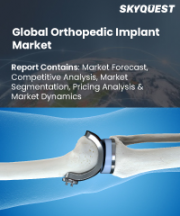
정형외과용 임플란트는 외상이나 질병, 선천성 질환으로 인해 상실된 뼈의 기능을 회복시키거나 관절의 움직임을 보충하기 위해 체내에 삽입하는 의료기기를 말합니다. 인공관절, 플레이트, 스크류, 척추 임플란트 등 다양합니다. 골다공증, 골관절염, 골관절염의 유병률 증가 및 전 세계 고령화 인구의 증가로 인해 이러한 임플란트에 대한 수요가 증가하고 있으며, 이로 인해 시장이 발전하고 있습니다. 그러나 정형외과용 임플란트 시장의 발전은 일련의 촉진요인, 기회, 시장 동인 및 과제에 의해 특징지어집니다. 정형외과용 임플란트 시장은 2025년부터 2033년까지 CAGR 6.0%로 성장할 것으로 추정되며, 고령화 인구와 뼈 질환이 그 원동력이 되고 있습니다.
촉진요인 : 노인 인구의 급증과 그에 따른 뼈 질환의 증가
정형외과용 임플란트 시장의 가장 큰 촉진요인은 전 세계 노인 인구의 급격한 증가입니다. 노인은 골밀도 감소와 관절 마모로 인해 골절과 골 장애가 발생하기 쉽습니다. 이러한 인구통계학적 변화는 세계보건기구(WHO)의 데이터에서도 확인할 수 있는데, 60세 이상의 세계 인구가 모든 젊은 연령층보다 빠르게 증가하고 있는 것으로 나타났습니다. 골다공증, 골관절염 등 노화 관련 질환의 증가는 정형외과용 임플란트에 대한 수요를 더욱 증가시키고 있습니다. 일례로, 국제 골다공증 재단은 골다공증으로 인해 연간 890만 명 이상의 골절이 발생하며, 전 세계적으로 3초에 1명꼴로 골다공증성 골절이 발생한다고 보고하고 있습니다. 이 데이터는 임플란트와 같은 정형외과적 솔루션의 필요성이 증가하고 있음을 강조하고 있습니다.
기회 : 생체적합성 재료와 3D 프린팅의 발전
생체적합성 재료의 혁신은 정형외과용 임플란트 시장에 큰 기회를 제공합니다. 생체적합성은 임플란트가 부작용 없이 신체와 잘 어울리도록 하는 데 있어 가장 중요한 요소입니다. 최근 추세는 강도와 적합성이 뛰어난 신소재의 도입으로 볼 수 있습니다. 예를 들어, 티타늄과 그 합금은 경량, 고강도, 우수한 생체적합성 특성으로 인해 인기를 얻고 있습니다. Journal of Orthopaedic Surgery and Research 저널에 게재된 연구에 따르면, 3D 프린팅 기술의 발전으로 환자 개개인의 필요에 따라 맞춤형 임플란트를 제작할 수 있는 길이 열렸습니다. 가능성을 강조하며, 환자의 해부학적 구조에 보다 적합하게 맞춤화하여 더 나은 치료 결과를 제공할 수 있다고 지적하고 있습니다.
억제요인 : 개발도상국의 높은 비용과 제한된 접근성
정형외과용 임플란트 시장의 주요 억제요인은 이러한 장치와 관련된 막대한 비용입니다. 연구 개발, 생산, 규제 당국의 승인 등을 종합하면 최종 제품의 가격은 매우 비쌉니다. 많은 개발도상국에서는 이러한 비용이 너무 비싸서 접근을 제한하고 있습니다. 세계은행 보고서는 고소득 국가와 중저소득 국가 간의 의료 접근성 격차를 강조하고 있습니다. 이 보고서는 정형외과용 임플란트와 같은 의료기기의 높은 비용이 부유하지 않은 국가에서 필요한 의료 서비스에 대한 접근을 제한하는 장벽 중 하나라고 지적하고 있습니다.
과제 : 이식 후 합병증과 재수술의 필요성
이러한 장점에도 불구하고, 정형외과용 임플란트에는 문제가 있으며, 그 중 가장 대표적인 것이 임플란트 식립 후 합병증입니다. 감염, 임플란트 풀림, 알레르기 반응 등은 통증과 운동성 저하, 심한 경우 재수술의 필요성으로 이어질 수 있습니다. 미국 정형외과 학회(AAOS)는 임플란트 실패에 대한 문제를 강조하며, AAOS는 한 간행물에서 대부분의 인공관절 치환술은 10년 이상 지속되지만, 일부는 실패하여 재수술이 필요할 수 있으며, 이 경우 첫 번째 수술보다 더 복잡한 경우가 많다고 언급했습니다.
제품별 분석
2024년에는 척추 임플란트가 가장 높은 수익을 창출했습니다. 척추 질환은 디스크 퇴행성 및 척추관 협착증과 같은 질환과 함께 척추 수술의 증가를 필요로 하며, 척추 임플란트 수요를 촉진했습니다. 세계보건기구(WHO) 데이터에 따르면, 요통은 전 세계 신체 장애의 원인 중 1위입니다. 그러나 2025년부터 2033년까지 치과용 임플란트가 가장 높은 연평균 성장률(CAGR)을 기록할 것으로 예상됩니다. 이러한 예상 성장은 심미적 치과 시술의 증가와 노화, 식습관, 생활습관 등의 요인으로 인한 치아 문제의 유병률 증가에 기인한 것으로 분석됩니다. 구강 건강이 주목받는 가운데, 국제치과연맹은 영구치의 미치료 충치가 전 세계적으로 가장 흔한 건강 상태라고 보고하고 있습니다.
최종 용도별 구분
최종 용도별로 살펴보면, 시장은 크게 병원과 외래환자로 나뉩니다. 종합적인 시설을 갖춘 병원은 2024년 정형외과용 임플란트 분야에서 가장 높은 수익을 창출했습니다. 첨단 수술 장비와 숙련된 인력을 보유한 이들 병원은 복잡한 정형외과 수술에 대응할 수 있어 많은 환자들의 선택을 받고 있습니다. 그러나 2025년부터 2033년까지 외래 환자 시설이 가장 높은 CAGR을 보일 것으로 예상되기 때문에 이 이야기는 발전할 것으로 예상됩니다. 이러한 긍정적인 변화는 최소침습 수술의 증가, 단기 입원의 편안함, 병원내 감염 위험 감소에 기인하는 것으로 보입니다.
지역별 분석
지역별로는 북미가 2024년 가장 높은 매출 비중을 차지했습니다. 이 지역의 강점은 첨단 의료 및 인프라, 정형외과에 대한 활발한 R&D 투자, 뼈 질환의 높은 유병률에 있습니다. 그러나 2025년부터 2033년 사이에는 아시아태평양이 가장 높은 CAGR을 보일 것으로 예상됨에 따라, 흐름이 약간 바뀔 것으로 예상됩니다. 급속한 도시화, 의료 시스템 개선, 인도와 중국 등의 국가에서 정형외과 질환의 급격한 증가는 이러한 성장에 박차를 가할 것으로 보입니다.
경쟁사 동향
경쟁의 장에서 2025년 특정 기업이 정형외과용 임플란트 시장을 휩쓸었습니다. 업계의 유명 기업들은 항상 발로 뛰며 혁신을 추구하고 진화하는 수요에 부응하기 위해 노력했습니다. 각 기업은 연구개발에 많은 투자를 통해 생체적합성과 내구성이 뛰어난 임플란트를 개발하기 위해 노력했습니다. 2025년부터 2033년까지 시장에서의 입지를 공고히 하고 종합적인 정형외과 솔루션을 제공하기 위해 주요 기업들은 합병과 제휴를 빈번하게 진행했으며, 2025년부터 2033년까지 시장은 치열한 경쟁을 벌일 것으로 예상됩니다. 혁신적인 기술로 무장한 신규 진입자들이 시장에 도전장을 내밀어 기존 기업들에게 지속적인 게임 체질 개선을 요구할 것으로 예상됩니다. 이 시장의 주요 기업으로는 Stryker, Arthrex, Inc., Smith & Nephew, Zimmer Biomet, DePuy Synthes, Inc. 등이 있습니다.
목차
제1장 서문
- 분석 내용
- 분석 목적
- 대상자
- 주요 제공 내용
- 시장 구분
- 분석 방법
- 단계 I : 2차 조사
- 단계 II : 1차 조사
- 단계 III : 전문가 패널 리뷰
- 가정
- 채용한 접근법
제2장 주요 요약
제3장 정형외과용 임플란트 시장 : 경쟁 분석
- 주요 벤더의 시장 포지셔닝
- 벤더가 채용한 전략
- 주요 산업 전략
제4장 정형외과용 임플란트 시장 : 거시적 분석과 시장 역학
- 소개
- 세계의 정형외과용 임플란트 시장(금액 기준, 2023-2033년)
- 시장 역학
- 시장 성장 촉진요인
- 시장 성장 억제요인
- 주요 과제
- 주요 기회
- 성장 촉진요인과 억제요인의 영향 분석
- See-Saw 분석
- Porter's Five Forces 모델
- 공급자의 교섭력
- 구매자의 교섭력
- 대체품의 위협
- 신규 참여업체의 위협
- 경쟁 기업 간의 경쟁 관계
- PESTEL 분석
- 정치적 상황
- 경제적 상황
- 기술적 상황
- 법적 상황
- 사회적 상황
제5장 정형외과용 임플란트 시장 : 제품별(2023-2033년)
- 시장 개요
- 성장·매출 분석 : 2024년 vs 2033년
- 시장 구분
- 하지 임플란트
- 고관절 임플란트
- 슬관절 임플란트
- 발 및 발목 임플란트
- 상지 임플란트
- 어깨 임플란트
- 팔꿈치 임플란트
- 손·손목 임플란트
- 치과 임플란트
- 치과 임플란트
- 두개악안면 임플란트
- 척추 임플란트
- 척추 고정 임플란트
- 척추 비고정 임플란트
- 하지 임플란트
제6장 정형외과용 임플란트 시장 : 최종 용도별(2023-2033년)
- 시장 개요
- 성장·매출 분석 : 2024년 vs 2033년
- 시장 구분
- 병원
- 외래 시설
제7장 북미의 정형외과용 임플란트 시장(2023-2033년)
- 시장 개요
- 정형외과용 임플란트 시장 : 제품별(2023-2033년)
- 정형외과용 임플란트 시장 : 최종 용도별(2023-2033년)
- 정형외과용 임플란트 시장 : 지역별(2023-2033년)
- 북미
- 미국
- 캐나다
- 기타 북미
- 북미
제8장 영국·EU 국가의 정형외과용 임플란트 시장(2023-2033년)
- 시장 개요
- 정형외과용 임플란트 시장 : 제품별(2023-2033년)
- 정형외과용 임플란트 시장 : 최종 용도별(2023-2033년)
- 정형외과용 임플란트 시장 : 지역별(2023-2033년)
- 영국·EU 국가
- 영국
- 독일
- 스페인
- 이탈리아
- 프랑스
- 기타 유럽
- 영국·EU 국가
제9장 아시아태평양의 정형외과용 임플란트 시장(2023-2033년)
- 시장 개요
- 정형외과용 임플란트 시장 : 제품별(2023-2033년)
- 정형외과용 임플란트 시장 : 최종 용도별(2023-2033년)
- 정형외과용 임플란트 시장 : 지역별(2023-2033년)
- 아시아태평양
- 중국
- 일본
- 인도
- 호주
- 한국
- 기타 아시아태평양
- 아시아태평양
제10장 라틴아메리카의 정형외과용 임플란트 시장(2023-2033년)
- 시장 개요
- 정형외과용 임플란트 시장 : 제품별(2023-2033년)
- 정형외과용 임플란트 시장 : 최종 용도별(2023-2033년)
- 정형외과용 임플란트 시장 : 지역별(2023-2033년)
- 라틴아메리카
- 브라질
- 멕시코
- 기타 라틴아메리카
- 라틴아메리카
제11장 중동 및 아프리카의 정형외과용 임플란트 시장(2023-2033년)
- 시장 개요
- 정형외과용 임플란트 시장 : 제품별(2023-2033년)
- 정형외과용 임플란트 시장 : 최종 용도별(2023-2033년)
- 정형외과용 임플란트 시장 : 지역별(2023-2033년)
- 중동 및 아프리카
- GCC
- 아프리카
- 기타 중동 및 아프리카
- 중동 및 아프리카
제12장 기업 개요
- Stryker
- Arthrex Inc.
- Smith & Nephew
- Zimmer Biomet
- DePuy Synthes Inc.
- 기타
Orthopedic implants are medical devices placed within the body to restore bone function or replace joint movement lost due to trauma, disease, or congenital disorders. They can range from joint replacements, plates, screws, to spine implants, and more. The rising prevalence of osteoporosis, osteoarthritis, and increasing global aging population has led to an escalating demand for these implants, thereby propelling the market forward. However, the journey of the orthopedic implant market is marked with a series of drivers, opportunities, restraints, and challenges. Orthopedic implants market is estimated to grow at a CAGR of 6.0% from 2025 to 2033, driven by the aging population and bone disorders.
Driver: Surge in Geriatric Population and Associated Bone Disorders
The most significant driver in the orthopedic implants market is the ballooning geriatric population worldwide. Older individuals are more susceptible to bone fractures and disorders due to reduced bone density and wear of joints. This demographic shift can be evidenced by data from the World Health Organization (WHO), which indicated that the global population of people aged 60 years and older is growing faster than all younger age groups. The age-associated rise in conditions like osteoporosis and osteoarthritis further fuels the demand for orthopedic implants. As an illustration, the International Osteoporosis Foundation reported that osteoporosis causes more than 8.9 million fractures annually, translating to an osteoporotic fracture every 3 seconds worldwide. This data underscores the escalating need for orthopedic solutions like implants.
Opportunity: Advancements in Biocompatible Materials and 3D Printing
Innovation in biocompatible materials presents a golden opportunity for the orthopedic implants market. Biocompatibility is paramount in ensuring that the implant integrates well with the body without causing adverse reactions. Recent developments have seen the introduction of new materials that offer better strength and compatibility. For instance, titanium and its alloys have gained popularity due to their lightweight, high strength, and superior biocompatibility properties. Additionally, the evolution of 3D printing technology has opened doors to creating customized implants tailored to individual patient needs. A study published in the Journal of Orthopaedic Surgery and Research highlighted the potential of 3D printed implants, noting that they could offer better patient outcomes by fitting better with the patient's anatomy.
Restraint: High Costs and Limited Access in Developing Regions
A major restraint in the orthopedic implants market is the significant cost associated with these devices. The combination of research, development, production, and regulatory approvals culminates in a hefty price tag for the end product. For many in developing nations, these costs can be prohibitive, limiting access. A report from the World Bank emphasized the disparities in healthcare access between high-income countries and low to middle-income countries. The report noted that high costs of medical devices, like orthopedic implants, are among the barriers limiting access to necessary healthcare services in less affluent nations.
Challenge: Complications Post-Implantation and Need for Revision Surgeries
Despite their benefits, orthopedic implants come with challenges, the most notable being post-implantation complications. Infections, implant loosening, or allergic reactions can lead to pain, reduced mobility, and in severe cases, the need for revision surgeries. The American Academy of Orthopaedic Surgeons (AAOS) highlighted the challenge of implant failures. In one of its publications, AAOS mentioned that while the majority of joint replacements last a decade or more, some might fail and require a revision, which is often more complicated than the original surgery.
Product Insights
In 2024, spinal implants generated the highest revenue. Spinal disorders, coupled with conditions like degenerative disc disease and spinal stenosis, necessitated an uptick in spinal surgeries, propelling the demand for spinal implants. The trend echoed the global alarm regarding spinal issues, with data from the World Health Organization (WHO) revealing that lower back pain is the single leading cause of disability worldwide. However, from 2025 to 2033, dental implants are expected to register the highest Compound Annual Growth Rate (CAGR). This anticipated growth resonates with the increasing cosmetic dental procedures and the growing prevalence of dental issues due to factors like aging, poor diet, and lifestyle habits. With oral health being a focus, the International Dental Federation reported that untreated dental caries in permanent teeth is the most common health condition globally.
End-Use Segmentation
Shifting to end-use segmentation, the market bifurcates mainly into hospitals and outpatient facilities. Hospitals, with their comprehensive facilities, bagged the highest revenue in the orthopedic implants sector in 2024. These institutions, armed with advanced surgical facilities and skilled personnel, could manage intricate orthopedic surgeries, making them the preferred choice for many patients. However, the narrative is expected to evolve from 2025 to 2033, as outpatient facilities are projected to exhibit the highest CAGR. This prospective shift might be attributed to the rising trend of minimally invasive surgeries, the comfort of short hospital stays, and the reduced risk of hospital-acquired infections.
Regional Insights
From a geographical lens, North America clinched the highest revenue percentage in 2024. The region's stronghold can be credited to its advanced healthcare infrastructure, robust R&D investments in orthopedics, and a high prevalence of bone disorders. Yet, the tides are expected to shift slightly between 2025 and 2033, as the Asia-Pacific region gears up to show the highest CAGR. Rapid urbanization, improving healthcare systems, and a surge in orthopedic disorders in countries like India and China might fuel this growth.
Competitive Trends
On the battleground of competition, 2025 witnessed certain players dominating the orthopedic implants scene. Prominent names in the industry were constantly on their toes, striving to innovate and cater to the evolving demands. Companies heavily invested in R&D, attempting to develop biocompatible, durable implants. Mergers and collaborations were frequently seen, as these giants aimed to consolidate their market position and offer comprehensive orthopedic solutions. From 2025 to 2033, the market is poised for intense competition. New entrants, armed with innovative technologies, are expected to challenge the status quo, pushing established players to up their game continually. Key players in this market include Stryker, Arthrex, Inc., Smith & Nephew, Zimmer Biomet, DePuy Synthes, Inc.
Historical & Forecast Period
This study report represents an analysis of each segment from 2023 to 2033 considering 2024 as the base year. Compounded Annual Growth Rate (CAGR) for each of the respective segments estimated for the forecast period of 2025 to 2033.
The current report comprises quantitative market estimations for each micro market for every geographical region and qualitative market analysis such as micro and macro environment analysis, market trends, competitive intelligence, segment analysis, porters five force model, top winning strategies, top investment markets, emerging trends & technological analysis, case studies, strategic conclusions and recommendations and other key market insights.
Research Methodology
The complete research study was conducted in three phases, namely: secondary research, primary research, and expert panel review. The key data points that enable the estimation of Orthopedic Implants market are as follows:
Research and development budgets of manufacturers and government spending
Revenues of key companies in the market segment
Number of end users & consumption volume, price, and value.
Geographical revenues generated by countries considered in the report
Micro and macro environment factors that are currently influencing the Orthopedic Implants market and their expected impact during the forecast period.
Market forecast was performed through proprietary software that analyzes various qualitative and quantitative factors. Growth rate and CAGR were estimated through intensive secondary and primary research. Data triangulation across various data points provides accuracy across various analyzed market segments in the report. Application of both top-down and bottom-up approach for validation of market estimation assures logical, methodical, and mathematical consistency of the quantitative data.
- Market Segmentation
- Product
- Lower Extremity Implants
- Hip Implants
- Knee Implants
- Foot & Ankle Implants
- Upper Extremity Implants
- Shoulder Implants
- Elbow Implants
- Hand & Wrist Implants
- Dental Implants
- Dental Implants
- Craniomaxillofacial Implants
- Spinal Implants
- Spinal Fusion Implants
- Spinal Non-fusion Implants
- End-Use
- Hospitals
- Outpatient Facilities
- Region Segment (2023-2033; US$ Million)
- North America
- U.S.
- Canada
- Rest of North America
- UK and European Union
- UK
- Germany
- Spain
- Italy
- France
- Rest of Europe
- Asia Pacific
- China
- Japan
- India
- Australia
- South Korea
- Rest of Asia Pacific
- Latin America
- Brazil
- Mexico
- Rest of Latin America
- Middle East and Africa
- GCC
- Africa
- Rest of Middle East and Africa
Key questions answered in this report
- What are the key micro and macro environmental factors that are impacting the growth of Orthopedic Implants market?
- What are the key investment pockets concerning product segments and geographies currently and during the forecast period?
- Estimated forecast and market projections up to 2033.
- Which segment accounts for the fastest CAGR during the forecast period?
- Which market segment holds a larger market share and why?
- Are low and middle-income economies investing in the Orthopedic Implants market?
- Which is the largest regional market for Orthopedic Implants market?
- What are the market trends and dynamics in emerging markets such as Asia Pacific, Latin America, and Middle East & Africa?
- Which are the key trends driving Orthopedic Implants market growth?
- Who are the key competitors and what are their key strategies to enhance their market presence in the Orthopedic Implants market worldwide?
Table of Contents
1. Preface
- 1.1. Report Description
- 1.1.1. Purpose of the Report
- 1.1.2. Target Audience
- 1.1.3. Key Offerings
- 1.2. Market Segmentation
- 1.3. Research Methodology
- 1.3.1. Phase I - Secondary Research
- 1.3.2. Phase II - Primary Research
- 1.3.3. Phase III - Expert Panel Review
- 1.3.4. Assumptions
- 1.3.5. Approach Adopted
2. Executive Summary
- 2.1. Market Snapshot: Global Orthopedic Implants Market
- 2.2. Global Orthopedic Implants Market, By Product, 2024 (US$ Million)
- 2.3. Global Orthopedic Implants Market, By End-Use, 2024 (US$ Million)
- 2.4. Global Orthopedic Implants Market, By Geography, 2024 (US$ Million)
- 2.5. Attractive Investment Proposition by Geography, 2024
3. Orthopedic Implants Market: Competitive Analysis
- 3.1. Market Positioning of Key Orthopedic Implants Market Vendors
- 3.2. Strategies Adopted by Orthopedic Implants Market Vendors
- 3.3. Key Industry Strategies
4. Orthopedic Implants Market: Macro Analysis & Market Dynamics
- 4.1. Introduction
- 4.2. Global Orthopedic Implants Market Value, 2023 - 2033, (US$ Million)
- 4.3. Market Dynamics
- 4.3.1. Market Drivers
- 4.3.2. Market Restraints
- 4.3.3. Key Challenges
- 4.3.4. Key Opportunities
- 4.4. Impact Analysis of Drivers and Restraints
- 4.5. See-Saw Analysis
- 4.6. Porter's Five Force Model
- 4.6.1. Supplier Power
- 4.6.2. Buyer Power
- 4.6.3. Threat Of Substitutes
- 4.6.4. Threat Of New Entrants
- 4.6.5. Competitive Rivalry
- 4.7. PESTEL Analysis
- 4.7.1. Political Landscape
- 4.7.2. Economic Landscape
- 4.7.3. Technology Landscape
- 4.7.4. Legal Landscape
- 4.7.5. Social Landscape
5. Orthopedic Implants Market: By Product, 2023-2033, USD (Million)
- 5.1. Market Overview
- 5.2. Growth & Revenue Analysis: 2024 Versus 2033
- 5.3. Market Segmentation
- 5.3.1. Lower Extremity Implants
- 5.3.1.1. Hip Implants
- 5.3.1.2. Knee Implants
- 5.3.1.3. Foot & Ankle Implants
- 5.3.2. Upper Extremity Implants
- 5.3.2.1. Shoulder Implants
- 5.3.2.2. Elbow Implants
- 5.3.2.3. Hand & Wrist Implants
- 5.3.3. Dental Implants
- 5.3.3.1. Dental Implants
- 5.3.3.2. Craniomaxillofacial Implants
- 5.3.4. Spinal Implants
- 5.3.4.1. Spinal Fusion Implants
- 5.3.4.2. Spinal Non-fusion Implants
- 5.3.1. Lower Extremity Implants
6. Orthopedic Implants Market: By End-Use, 2023-2033, USD (Million)
- 6.1. Market Overview
- 6.2. Growth & Revenue Analysis: 2024 Versus 2033
- 6.3. Market Segmentation
- 6.3.1. Hospitals
- 6.3.2. Outpatient Facilities
7. North America Orthopedic Implants Market, 2023-2033, USD (Million)
- 7.1. Market Overview
- 7.2. Orthopedic Implants Market: By Product, 2023-2033, USD (Million)
- 7.3. Orthopedic Implants Market: By End-Use, 2023-2033, USD (Million)
- 7.4.Orthopedic Implants Market: By Region, 2023-2033, USD (Million)
- 7.4.1.North America
- 7.4.1.1. U.S.
- 7.4.1.1.1. Orthopedic Implants Market: By Product, 2023-2033, USD (Million)
- 7.4.1.1.2. Orthopedic Implants Market: By End-Use, 2023-2033, USD (Million)
- 7.4.1.2. Canada
- 7.4.1.2.1. Orthopedic Implants Market: By Product, 2023-2033, USD (Million)
- 7.4.1.2.2. Orthopedic Implants Market: By End-Use, 2023-2033, USD (Million)
- 7.4.1.3. Rest of North America
- 7.4.1.3.1. Orthopedic Implants Market: By Product, 2023-2033, USD (Million)
- 7.4.1.3.2. Orthopedic Implants Market: By End-Use, 2023-2033, USD (Million)
- 7.4.1.1. U.S.
- 7.4.1.North America
8. UK and European Union Orthopedic Implants Market, 2023-2033, USD (Million)
- 8.1. Market Overview
- 8.2. Orthopedic Implants Market: By Product, 2023-2033, USD (Million)
- 8.3. Orthopedic Implants Market: By End-Use, 2023-2033, USD (Million)
- 8.4.Orthopedic Implants Market: By Region, 2023-2033, USD (Million)
- 8.4.1.UK and European Union
- 8.4.1.1. UK
- 8.4.1.1.1. Orthopedic Implants Market: By Product, 2023-2033, USD (Million)
- 8.4.1.1.2. Orthopedic Implants Market: By End-Use, 2023-2033, USD (Million)
- 8.4.1.2. Germany
- 8.4.1.2.1. Orthopedic Implants Market: By Product, 2023-2033, USD (Million)
- 8.4.1.2.2. Orthopedic Implants Market: By End-Use, 2023-2033, USD (Million)
- 8.4.1.3. Spain
- 8.4.1.3.1. Orthopedic Implants Market: By Product, 2023-2033, USD (Million)
- 8.4.1.3.2. Orthopedic Implants Market: By End-Use, 2023-2033, USD (Million)
- 8.4.1.4. Italy
- 8.4.1.4.1. Orthopedic Implants Market: By Product, 2023-2033, USD (Million)
- 8.4.1.4.2. Orthopedic Implants Market: By End-Use, 2023-2033, USD (Million)
- 8.4.1.5. France
- 8.4.1.5.1. Orthopedic Implants Market: By Product, 2023-2033, USD (Million)
- 8.4.1.5.2. Orthopedic Implants Market: By End-Use, 2023-2033, USD (Million)
- 8.4.1.6. Rest of Europe
- 8.4.1.6.1. Orthopedic Implants Market: By Product, 2023-2033, USD (Million)
- 8.4.1.6.2. Orthopedic Implants Market: By End-Use, 2023-2033, USD (Million)
- 8.4.1.1. UK
- 8.4.1.UK and European Union
9. Asia Pacific Orthopedic Implants Market, 2023-2033, USD (Million)
- 9.1. Market Overview
- 9.2. Orthopedic Implants Market: By Product, 2023-2033, USD (Million)
- 9.3. Orthopedic Implants Market: By End-Use, 2023-2033, USD (Million)
- 9.4.Orthopedic Implants Market: By Region, 2023-2033, USD (Million)
- 9.4.1.Asia Pacific
- 9.4.1.1. China
- 9.4.1.1.1. Orthopedic Implants Market: By Product, 2023-2033, USD (Million)
- 9.4.1.1.2. Orthopedic Implants Market: By End-Use, 2023-2033, USD (Million)
- 9.4.1.2. Japan
- 9.4.1.2.1. Orthopedic Implants Market: By Product, 2023-2033, USD (Million)
- 9.4.1.2.2. Orthopedic Implants Market: By End-Use, 2023-2033, USD (Million)
- 9.4.1.3. India
- 9.4.1.3.1. Orthopedic Implants Market: By Product, 2023-2033, USD (Million)
- 9.4.1.3.2. Orthopedic Implants Market: By End-Use, 2023-2033, USD (Million)
- 9.4.1.4. Australia
- 9.4.1.4.1. Orthopedic Implants Market: By Product, 2023-2033, USD (Million)
- 9.4.1.4.2. Orthopedic Implants Market: By End-Use, 2023-2033, USD (Million)
- 9.4.1.5. South Korea
- 9.4.1.5.1. Orthopedic Implants Market: By Product, 2023-2033, USD (Million)
- 9.4.1.5.2. Orthopedic Implants Market: By End-Use, 2023-2033, USD (Million)
- 9.4.1.6. Rest of Asia Pacific
- 9.4.1.6.1. Orthopedic Implants Market: By Product, 2023-2033, USD (Million)
- 9.4.1.6.2. Orthopedic Implants Market: By End-Use, 2023-2033, USD (Million)
- 9.4.1.1. China
- 9.4.1.Asia Pacific
10. Latin America Orthopedic Implants Market, 2023-2033, USD (Million)
- 10.1. Market Overview
- 10.2. Orthopedic Implants Market: By Product, 2023-2033, USD (Million)
- 10.3. Orthopedic Implants Market: By End-Use, 2023-2033, USD (Million)
- 10.4.Orthopedic Implants Market: By Region, 2023-2033, USD (Million)
- 10.4.1.Latin America
- 10.4.1.1. Brazil
- 10.4.1.1.1. Orthopedic Implants Market: By Product, 2023-2033, USD (Million)
- 10.4.1.1.2. Orthopedic Implants Market: By End-Use, 2023-2033, USD (Million)
- 10.4.1.2. Mexico
- 10.4.1.2.1. Orthopedic Implants Market: By Product, 2023-2033, USD (Million)
- 10.4.1.2.2. Orthopedic Implants Market: By End-Use, 2023-2033, USD (Million)
- 10.4.1.3. Rest of Latin America
- 10.4.1.3.1. Orthopedic Implants Market: By Product, 2023-2033, USD (Million)
- 10.4.1.3.2. Orthopedic Implants Market: By End-Use, 2023-2033, USD (Million)
- 10.4.1.1. Brazil
- 10.4.1.Latin America
11. Middle East and Africa Orthopedic Implants Market, 2023-2033, USD (Million)
- 11.1. Market Overview
- 11.2. Orthopedic Implants Market: By Product, 2023-2033, USD (Million)
- 11.3. Orthopedic Implants Market: By End-Use, 2023-2033, USD (Million)
- 11.4.Orthopedic Implants Market: By Region, 2023-2033, USD (Million)
- 11.4.1.Middle East and Africa
- 11.4.1.1. GCC
- 11.4.1.1.1. Orthopedic Implants Market: By Product, 2023-2033, USD (Million)
- 11.4.1.1.2. Orthopedic Implants Market: By End-Use, 2023-2033, USD (Million)
- 11.4.1.2. Africa
- 11.4.1.2.1. Orthopedic Implants Market: By Product, 2023-2033, USD (Million)
- 11.4.1.2.2. Orthopedic Implants Market: By End-Use, 2023-2033, USD (Million)
- 11.4.1.3. Rest of Middle East and Africa
- 11.4.1.3.1. Orthopedic Implants Market: By Product, 2023-2033, USD (Million)
- 11.4.1.3.2. Orthopedic Implants Market: By End-Use, 2023-2033, USD (Million)
- 11.4.1.1. GCC
- 11.4.1.Middle East and Africa
12. Company Profile
- 12.1. Stryker
- 12.1.1. Company Overview
- 12.1.2. Financial Performance
- 12.1.3. Product Portfolio
- 12.1.4. Strategic Initiatives
- 12.2. Arthrex, Inc.
- 12.2.1. Company Overview
- 12.2.2. Financial Performance
- 12.2.3. Product Portfolio
- 12.2.4. Strategic Initiatives
- 12.3. Smith & Nephew
- 12.3.1. Company Overview
- 12.3.2. Financial Performance
- 12.3.3. Product Portfolio
- 12.3.4. Strategic Initiatives
- 12.4. Zimmer Biomet
- 12.4.1. Company Overview
- 12.4.2. Financial Performance
- 12.4.3. Product Portfolio
- 12.4.4. Strategic Initiatives
- 12.5. DePuy Synthes, Inc.
- 12.5.1. Company Overview
- 12.5.2. Financial Performance
- 12.5.3. Product Portfolio
- 12.5.4. Strategic Initiatives
- 12.6. Others
- 12.6.1. Company Overview
- 12.6.2. Financial Performance
- 12.6.3. Product Portfolio
- 12.6.4. Strategic Initiatives