|
시장보고서
상품코드
1421539
소독 로봇 시장 - 세계 전망 및 예측(2023-2028년)Disinfection Robots Market - Global Outlook & Forecast 2023-2028 |
||||||

세계 소독 로봇 시장 규모는 2022년부터 2028년까지 연평균 31.02%의 연평균 복합 성장률(CAGR)로 성장할 것으로 예상됩니다.
현저한 인구 추세와 의료비 감소로 인해 병원에서 모바일 로봇과 그 사용에 대한 수요가 증가하고 있습니다. 의료 시스템에서 자동화 시스템은 실험실 샘플, 약국 의약품, 벌크 재료, 중앙 공급 및 운송을 처리하도록 설계되었습니다. 이러한 공급을 자동화하면 작업 효율을 높이고 다른 활동이나 부서로 인력을 이동시킬 수 있으며, AGV(Automatic Guided Vehicle: 무인 운반 차량)는 이러한 작업을 수행하고 워크플로우를 개선하기 위해 주목받고 있습니다. 또한 제어 인터페이스 기능을 추가하면 AGV는 엘리베이터 탐색 및 신호, 자동문 탐색 및 작동, 폐기물 압축기 작동, 청소용 카트 반입 및 카트 세척 시스템 작동을 수행할 수 있습니다.
코로나19로 인해 소독 로봇에 대한 수요가 급증하고 있습니다. 대부분의 소독 로봇은 가솔린 구동 건과 전동 섀시를 갖추고 있습니다. 현장 급유가 불편하고 깨끗하지 않기 때문에 피해 지역의 요구에 부응하기 위해 순수 전기식 소독 로봇의 개발이 제안되었습니다. 광범위한 경험과 전문 지식을 갖춘 팀은 신속하게 새로운 로봇 개발에 착수했습니다. 이러한 발전은 소독 로봇 시장에 더 많은 기회를 가져다 줄 가능성이 높습니다.
세계보건기구(WHO)는 의료 현장에서 병원 내 감염(HAI) 발생을 줄이기 위해 매우 적극적으로 노력하고 있으며, 여러 국가의 정부 기관과 협력하여 HAI 발생을 최소화하기 위한 예방 전략에 대한 인식을 확산하고 있습니다.
이 보고서는 세계 소독 로봇 시장을 조사했으며, 시장 개요와 함께 최종 사용자별, 제품 유형별, 기술별, 센서 유형별, 컨트롤러 유형별, 유통 채널별, 지역별 동향, 시장 진출기업 프로파일 등의 정보를 제공합니다.
목차
제1장 조사 방법
제2장 조사 목적
제3장 조사 과정
제4장 조사 대상 및 조사 범위
- 시장의 정의
- 기준년
- 조사 범위
제5장 보고서의 전제조건 및 주석
제6장 프리미엄 인사이트
- 개요
- 동향
- 성장 촉진요인
- 성장 억제요인
- 제품 유형
- 이용자
- 기술 유형
- 경쟁 구도
제7장 시장 개요
제8장 서론
- 개요
- 그린 에미션 영향
- 업계 전망
- 러시아와 우크라이나 분쟁 : 세계의 영향
- 스마트 소독 로봇에 대한 관심 증가
- 수요에 관한 통찰
- IoT와 시장 침투 전략
- 상업시설에서의 수요
- 산업 밸류체인 분석
제9장 시장 기회와 동향
제10장 시장 성장 실현요인
제11장 시장 성장 억제요인
제12장 시장 구도
- 시장 개요
- 시장 규모와 예측(금액)
- Five Forces 분석
제13장 최종사용자
- 시장 스냅숏과 성장 촉진요인(금액)
- 시장 개요
- 의료시설
- 바이오의약품 산업
- 운송
- 호스피탈리티
- 기타
제14장 제품 유형
- 시장 스냅숏과 성장 촉진요인(금액)
- 시장 개요
- 과산화수소 증기 소독 로봇
- 자외선 소독 로봇
- 소독 스프레이 로봇
- 복합 시스템 로봇
제15장 기술
- 시장 스냅숏과 성장 촉진요인(금액)
- 시장 개요
- 완전 자율형 로봇
- 반자율 로봇
제16장 센서 유형
- 시장 스냅숏과 성장 촉진요인(금액)
- 시장 개요
- 초음파 센서
- 적외선 센서
제17장 컨트롤러 유형
- 시장 스냅숏과 성장 촉진요인(금액)
- 시장 개요
- WI-FI
- Bluetooth
제18장 유통 채널
- 시장 스냅숏과 성장 촉진요인(금액)
- 시장 개요
- 오프라인
- 온라인
제19장 지역
제20장 유럽
제21장 아시아태평양
제22장 북미
제23장 중동 및 아프리카
제24장 라틴아메리카
제25장 경쟁 구도
- 경쟁 개요
제26장 주요 기업 개요
- BLUE OCEAN ROBOTICS
- NEVOA
- TAIMI ROBOTICS TECHNOLOGY
- XAG
- XENEX DISINFECTION SERVICES
- PHILIPS
- SIEMENS AG
- ALTOROS
제27장 기타 저명한 벤더
- AKARA ROBOTICS
- ALVO MEDICAL
- AMY ROBOTICS
- AVA ROBOTICS
- BADGER TECHNOLOGIES
- BIOQUELL
- BRIDGEPORT MAGNETICS GROUP
- CLEARPATH ROBOTICS
- CORVUS ROBOTICS
- ENGMOTION
- FETCH ROBOTICS
- FINSEN TECHNOLOGIES
- GEEKPLUS TECHNOLOGY
- GRIZZLY
- H-BOTS ROBOTICS
- IMEDTAC
- KEENON ROBOTICS
- MEDILAND
- METRALABS
- NANYANG TECHNOLOGICAL UNIVERSITY
- OMRON
- OTSAW
- PUDU ROBOTICS
- RUBEDO SISTEMOS
- SESTO ROBOTICS
- SHANGHAI HUIFENG MEDICAL INSTRUMENT
- SHENZHEN EAI TECHNOLOGY
- SIEMENS & AUCMA
- SIFSOF
- SKYTRON
- TECHMETICS ROBOTICS
- TRU-D SMARTUVC
- UVCLIGHT.CO.UK
- UVC SOLUTIONS
- VANORA ROBOTS
- TMI ROBOTICS
- ROBOTLAB INC
- A.O. SMITH
- LG ELECTRONICS
- VACKERGLOBAL
- KENT RO
제28장 보고서 개요
제29장 정량적인 개요
제30장 부록
LSH 24.02.16The global disinfection robot market is expected to grow at a CAGR of 31.02% from 2022 to 2028.
MARKET TRENDS & DRIVERS
Evolution of Automated Guided Vehicles & Automated Mobile Robots
The demand for mobile robots and their use in hospitals has increased due to significant demographic trends and decreased medical costs. For healthcare systems, automated systems are designed to handle laboratory samples, pharmacy medicines, bulk material, central supply, and transportation. By automating these supplies, operating efficiency increases, which allows workforce transfer to other activities or departments. Automatic Guided Vehicles (AGV) are gaining attention to fulfill such activities, improving workflow. Also, additional control interface features allow AGVs to navigate and signal lifts, navigate and activate through automatic doors, activate waste compactors, and deliver trolleys for cleaning and activating cart-washing systems.
Advancement of New Electric Disinfection Robots
The demand for disinfection robots has dramatically increased due to COVID-19. Most available disinfection robots have a petrol-driven gun and an electric chassis. As the on-site refueling of robots is neither convenient nor clean, the development of purely electric disinfection robots was proposed to better address the needs of affected areas. Utilizing a broad mix of experience and expertise, a team quickly initiated the development of a new type of robot. Such advancements can likely bring more opportunities in the disinfection robot market.
United Nations Agency Impacts
World Health Organization (WHO) has been very active in reducing the incidence of HAIs in healthcare settings. WHO has been working with government bodies of various countries to spread awareness about preventive strategies to minimize the occurrence of HAIs.
- It introduced its first set of guidelines to prevent HAIs in 2002. The impact of such policies on reducing HAIs was limited initially, which can be observed in the increased prevalence data.
- However, lately, there has been a strong push from various stakeholders, such as governments, payers, and regulatory bodies in the healthcare ecosystem, to reduce HAIs.
- Some of the essential efforts include staff re-education and increasing personal involvement in the day-to-day operations of healthcare facilities, posting large charts in the corridor of operating rooms, and tracking monthly surgical site infections (SSIs). Overall efforts are being directed to bring a cultural change among hospital staff and physicians and transparency in the process that ensures zero or negligible HAI cases.
Funding & Investments for Developing Disinfection Robots
The aggressive adoption of disinfection robots has increased demand and new large-scale investments worldwide, propelling the market. Across the board, such robots were deployed widely before the pandemic, followed by existing robotic platforms that can be adapted readily to address the most pressing current needs. Since existing platforms cater to the current demands, making investments will result in developing systems ready for future crises. Also, most companies are focusing on product line expansion to include disinfection robots integrating improved autonomous capabilities compared to existing products. Several companies are investing while supporting the robotic industry, providing greater control in shaping the future. Such investments mainly serve the pandemic response and post-pandemic recovery in various countries. One such investment was made recently by Robert Wood Johnson University Hospital in Tru-D, a UVC disinfection robot that protects patients and staff from harmful pathogens.
Adoption of Modern Disinfectant Technologies
Over recent years, there has been a growing consensus to improve the disinfection and cleaning of environmental surfaces in healthcare facilities. It has been proven in many epidemiological studies that careful disinfection and cleaning of environmental surfaces, daily and at the time of patient discharge, are essential elements of effective infection prevention programs in healthcare settings. With the incorporation of the latest innovative techniques in healthcare disinfectants, there is an improvement in the overall design, composition, and features offered by various products, thereby leading to an upsurge in demand among end-users. Several manufacturers are engaged in the manufacturing of cleaning and odor removal products as well as EPA-registered disinfectants. With the expansion of such a portfolio of products, HCPs are receiving the best-in-class solutions to keep themselves and patients safe. Therefore, the broader availability of such advanced and effective disinfectants can be incorporated into disinfection robots, boosting the uptake of such products and propelling the market growth.
INDUSTRY RESTRAINTS
Limitations of Disinfection Robots
Robots can extend societal inequalities, as some organizations and individuals may be unable to access this technology. Moreover, the risk of propagating unconscious bias by robots always exists. Evidence demonstrates that there will be a risk of consequences that can be raised due to the small and homogeneous individuals involved in developing and testing data-driven technologies. The fear of losing jobs, increased elderly isolation, and a decrease in patient contact with healthcare professionals is unavoidable with the advent of such robots. Such worries have resulted in violence against robots and hampered the disinfection robot industry's growth. Replacing technological investment with other societal initiatives is a growing concern for public health.
SEGMENTATION INSIGHTS
INSIGHTS BY PRODUCT TYPE
One of the leading concerns in medical, clinical, and research facilities is microbial contamination control. Harmful or harmless microorganisms can risk patients, caregivers, and other personnel. Patients in hospitals and medical facilities have severe conditions or are immune-compromised, making them specifically susceptible to opportunistic microorganisms or secondary infections. Several disinfecting products were developed to decontaminate these critical spaces for such reasons. Two leading UV-C and hydrogen peroxide vapor methods have been incorporated into disinfection robots to allow decontamination in healthcare areas. These methods may differ in effectivity, cost, potential residual damage, and operational limitations. The Hydrogen Peroxide Vapor Disinfection Robot dominated the market and was valued at over USD 102 million in 2022. Hydrogen Peroxide Vapor Disinfection Robots (HPV) are another effective way to sterilize and disinfect surfaces contaminated with undesirable microorganisms. The biocidal mechanism of action for hydrogen peroxide is attributed to the chemical oxidation of cellular components that rapidly interrupts chemical processes vital to microbial survival and thus sterilizes the environment. For these reasons, HPV is used in many applications when personnel seek to disinfect environments contaminated by virulent microbes and dominates the product type segment in the global disinfection robots market.
Segmentation by Product Type
- Hydrogen Peroxide Vapor Disinfection Robots
- UV Disinfection Robots
- Disinfection Spray Robots
- Combined System Robots
INSIGHTS BY TECHNOLOGY TYPE
Commercial locations, including hotels, shopping malls, hospitals, and many others, require good sanitation and cleaning. People from diverse backgrounds interact with public spaces regularly. Some individuals may be ill and carry contagious pathogens. Cleaning and sanitation are becoming top priorities across all industries, particularly in public areas, especially after COVID-19. Developed nations increasingly anticipate utilizing a UV disinfection robot to sanitize these locations rather than relying on people. Such factors help to boost the demand for fully and semi-autonomous disinfection robots in the global disinfection robots market.
Segmentation by Technology Type
- Fully Autonomous Robot
- Semi-Autonomous Robot
INSIGHTS BY SENSOR TYPE
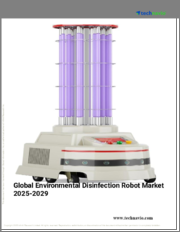
The disinfection robot consists of a mobile base equipped with multiple lidar sensors, such as ultrasonic and infrared, and an array of UV lamps mounted on top. The ultrasonic sensors segment held a dominant share of the global disinfection robots market in 2022. Ultrasonic sensors calculate the distance between the sensor and the target. By measuring, an ultrasonic sensor transmits data to the controller. The controller will control the movement of the robot whenever the sensor readings reach a limit threshold. Furthermore, ultrasonic sensor disinfection robots are highly manufactured in North American countries and are expected to have stable growth in North American countries.
Segmentation by Sensor Type
- Ultrasonic Sensor
- Infrared Sensor
INSIGHTS BY CONTROLLER TYPE
The Wi-Fi controller type segment held the most prominent global disinfection robots market share 2022. The intelligent disinfection robots, intended and developed as Wi-Fi-controlled devices, allow users to receive alerts, control the disinfection robots, and sync with other wireless devices. With smart homes and home automation, intelligent disinfection robots can trigger multiple smart home activities.
Segmentation by Controller Type
- Wi-Fi Controller
- Bluetooth Controller
INSIGHTS BY END-USER
The global disinfection robots market by end-users can be segmented as healthcare facilities, biopharmaceutical industry, transport, hospitality, etc. The healthcare facilities segment emerged as the largest end-user segment in the market. Healthcare settings such as hospitals, laboratories, clinics, and others have an increased risk of HAIs that could severely affect the patients, healthcare staff, and workers. Many studies have reported the contamination of air and surfaces by pathogens, emphasizing the importance of disinfection in hospitals. WHO has introduced guidance for HCPs and standard operating procedures for cleaning and disinfection of environmental surfaces. Disinfecting healthcare facilities has been considered necessary to control and minimize such infections. Disinfection robots aim to ensure a sterile hospital environment without exposing individuals to unnecessary risk. The robots can disinfect a standard-size patient room in as quickly as 10 minutes using ultraviolet light and disinfect over 18 rooms in one charge.
Segmentation by End User
- Healthcare Facilities
- Biopharmaceutical Industry
- Transport
- Hospitality
- Others
INSIGHTS BY DISTRIBUTION CHANNEL
The offline distribution channel segment dominated the global disinfection robots market in 2022 and is projected to witness the highest segmental growth rate during the forecast period. Offline sales of disinfection robots remained elevated compared with online sales due to factors to be analyzed before purchasing disinfection robots. Also, consumers are more decisive while purchasing electronic products as they want to be sure about various parameters. Certain companies, particularly local vendors, do not have an online presence. Such factors also contribute to offline sales of disinfection robots. Increasing pollution rates, urbanization, industrialization, and other reasons contribute to the penetration of disinfection robots, which is also expected to increase offline sales.
Segmentation by Distribution Channel
- Offline
- Online
GEOGRAPHICAL ANALYSIS
Europe accounted for a dominant position in the global disinfection robots market by contributing the highest revenue share. The growing number of HAIs, better access to healthcare disinfectants, awareness for maintaining safety against infectious diseases, high healthcare expenditure, increasing demand for automated devices in healthcare, and presence of several prominent market players are the primary factors contributing to the significant market share. The rise in chronic diseases and COVID-19 patients, coupled with the growing need to create safe environments, is expected to drive the market's growth during the forecast period. Further, North America had the second-largest share in the global disinfection robots market in 2022. The presence of a vast patient population suffering from HAIs, the prevalence of infectious diseases, the growing need to maintain safe and hygienic conditions, government regulations to deploy disinfection services, and technological advancements are increasing the demand for disinfection robots in the region.
Segmentation by Geography
- Europe
- Germany
- Italy
- France
- The U.K.
- Spain
- Russia
- Poland
- North America
- The U.S.
- Canada
- APAC
- China
- Japan
- India
- Australia
- South Korea
- Singapore
- Middle East & Africa
- South Africa
- Saudi Arabia
- Turkey
- UAE
- Egypt
- Kenya
- Latin America
- Mexico
- Brazil
- Argentina
- Chile
- Colombia
VENDOR LANDSCAPE
The global disinfection robots market is highly fragmented, with five major vendors dominating the market and a massive pool of emerging players and startups, boosting the market's growth. The major contributors to the global disinfection robots market include Blue Ocean Robotics, Xenex Disinfection Services, Taimi Robotics Technology, Nevoa, and XAG. Other emerging players include Akara Robotics, Ava Robotics, Bioquell, Engmotion, Finsen Technologies, Geekplus Technology, Grizzly, Mediland, Pudu Technology, and many others. The global industry is gaining attention due to the advent of COVID-19. In addition, several startups and emerging players offering disinfection robots are entering the market. These vendors exclusively offering disinfection robots are equipped with either a UV-C light system or disinfection spray system and sometimes both.
Key Company Profiles
- Blue Ocean Robotics
- Nevoa
- Taimi Robotics Technology
- XAG
- Xenex Disinfection Services
- PHILIPS
- SIEMENS AG
- Altoros
Other Prominent Vendors
- Akara Robotics
- ALVO Medical
- Amy Robotics
- Ava Robotics
- Badger Technologies
- Bioquell
- Bridgeport Magnetics Group
- Clearpath Robotics
- Corvus Robotics
- Engmotion
- Fetch Robotics
- Finsen Technologies
- Geekplus Technology
- Grizzly
- H-Bots Robotics
- imedtac
- Keenon Robotics
- Mediland
- MetraLabs
- Nanyang Technological University
- OMRON
- OTSAW
- Pudu Robotics
- Rubedo sistemos
- SESTO Robotics
- Shanghai Huifeng Medical Instrument
- Shenzhen EAI Technology
- SIEMENS & AuCMA
- SIFSOF
- Skytron
- Techmetics Robotics
- Tru-D SmartUVC
- UVCLight.co.uk
- UVC Solutions
- Vanora Robots
- TMI Robotics
- RobotLAB Inc
- A.O. Smith
- LG Electronics
- VackerGlobal
- KENT RO
KEY QUESTIONS ANSWERED:
1. How big is the disinfection robots market?
2. What is the growth rate of the global disinfection robots market?
3. Which region dominates the global disinfection robots market share?
4. What are the significant trends in the disinfection robots industry?
5. Who are the key players in the global disinfection robot market?
TABLE OF CONTENTS
1 RESEARCH METHODOLOGY
2 RESEARCH OBJECTIVES
3 RESEARCH PROCESS
4 SCOPE & COVERAGE
- 4.1 MARKET DEFINITION
- 4.1.1 INCLUSIONS
- 4.1.2 EXCLUSIONS
- 4.1.3 MARKET ESTIMATION CAVEATS
- 4.2 BASE YEAR
- 4.3 SCOPE OF THE STUDY
- 4.3.1 MARKET SEGMENTATION BY PRODUCT TYPE
- 4.3.2 MARKET SEGMENTATION BY END-USER
- 4.3.3 MARKET SEGMENTATION BY TECHNOLOGY TYPE
- 4.3.4 MARKET SEGMENTATION BY CONTROLLER TYPE
- 4.3.5 MARKET SEGMENTATION BY SENSOR TYPE
- 4.3.6 MARKET SEGMENTATION BY DISTRIBUTION CHANNEL
- 4.3.7 MARKET SEGMENTATION BY GEOGRAPHY
5 REPORT ASSUMPTIONS & CAVEATS
- 5.1 KEY CAVEATS
- 5.2 CURRENCY CONVERSION
- 5.3 MARKET DERIVATION
6 PREMIUM INSIGHTS
- 6.1 OVERVIEW
- 6.1.1 EVOLUTION OF AUTOMATED GUIDED VEHICLES & AUTOMATED MOBILE ROBOTS
- 6.1.2 ADVANCES IN NEW ELECTRIC DISINFECTION ROBOTS
- 6.1.3 UNITED NATIONS AGENCY IMPACTS
- 6.2 TRENDS
- 6.3 ENABLERS
- 6.4 RESTRAINTS
- 6.5 PRODUCT TYPE
- 6.6 END-USERS
- 6.7 TECHNOLOGY TYPE
- 6.8 COMPETITIVE LANDSCAPE
7 MARKET AT A GLANCE
8 INTRODUCTION
- 8.1 OVERVIEW
- 8.1.1 ROLE OF ROBOTIC TECHNOLOGIES IN HEALTHCARE
- 8.1.2 NEED FOR DISINFECTION ROBOTS
- 8.1.3 KEY COMPETITIVE HIGHLIGHTS
- 8.1.4 GLOBAL ECONOMIC SCENARIO
- 8.2 GREEN EMISSION EFFECTS
- 8.3 INDUSTRY OUTLOOK
- 8.3.1 MAJOR AFFECTING FACTORS
- 8.4 RUSSIA - UKRAINE CONFLICT: GLOBAL IMPACT
- 8.5 RISING PREFERENCE FOR SMART DISINFECTION ROBOT
- 8.6 DEMAND INSIGHTS
- 8.7 IOT AND MARKET PENETRATION STRATEGIES
- 8.8 DEMAND FROM COMMERCIAL PLACES
- 8.8.1 INCREASING DEMAND FOR SMART DISINFECTION ROBOTS IN CO-WORKING SPACES
- 8.8.2 KEY HIGHLIGHTS OF THE GLOBAL CONSTRUCTION SECTOR
- 8.9 INDUSTRY VALUE CHAIN ANALYSIS
- 8.9.1 RAW MATERIAL
- 8.9.2 MANUFACTURING
- 8.9.3 SALES CHANNEL
9 MARKET OPPORTUNITIES & TRENDS
- 9.1 EVOLUTION OF AUTOMATED GUIDED VEHICLES & AUTOMATED MOBILE ROBOTS
- 9.2 INNOVATIVE PATENTED TECHNOLOGIES & LARGE SUPPLY CONTRACTS
- 9.3 FUNDING AND INVESTMENTS FOR DEVELOPING DISINFECTION ROBOTS
- 9.4 ADVANCES OF NEW ELECTRIC DISINFECTION ROBOTS
- 9.5 GOVERNMENT AND NON-GOVERNMENT INITIATIVES FOR ENVIRONMENTAL PROTECTION
- 9.6 DEMAND FOR ENERGY-EFFICIENT DISINFECTION ROBOT
10 MARKET GROWTH ENABLERS
- 10.1 INCREASE IN URBANIZATION
- 10.2 INCREASING SPREAD OF HOSPITAL-ACQUIRED INFECTIONS (HAIS)
- 10.3 ROLE OF AI & ROBOTICS IN TRANSFORMING HEALTHCARE
- 10.4 ADOPTION OF MODERN DISINFECTANT TECHNOLOGIES
- 10.5 INCREASING DEMAND FOR SERVICE ROBOTS IN HEALTHCARE
- 10.6 IMMENSE DEMAND FOR DISINFECTION ROBOTS FROM HOSPITALITY SECTOR
- 10.7 INCREASING HEALTH PROBLEMS ASSOCIATED WITH AIR POLLUTION
11 MARKET RESTRAINTS
- 11.1 TECHNICAL ISSUES & HIGH COST OF DEPLOYMENT
- 11.2 LIMITATIONS OF DISINFECTION ROBOTS
- 11.3 POSSIBLE ADVERSE EFFECTS OF DISINFECTANTS
- 11.4 INCREASE IN OPERATIONAL COSTS
12 MARKET LANDSCAPE
- 12.1 MARKET OVERVIEW
- 12.1.1 KEY HIGHLIGHTS
- 12.2 MARKET SIZE & FORECAST (VALUE)
- 12.3 FIVE FORCES ANALYSIS
- 12.3.1 THREAT OF NEW ENTRANTS
- 12.3.2 BARGAINING POWER OF SUPPLIERS
- 12.3.3 BARGAINING POWER OF BUYERS
- 12.3.4 THREAT OF SUBSTITUTES
- 12.3.5 COMPETITIVE RIVALRY
13 END-USER
- 13.1 MARKET SNAPSHOT & GROWTH ENGINE (VALUE)
- 13.2 MARKET OVERVIEW
- 13.3 HEALTHCARE FACILITIES
- 13.3.1 MARKET OVERVIEW
- 13.3.2 KEY INSIGHTS
- 13.3.3 MARKET SIZE & FORECAST (VALUE)
- 13.3.4 MARKET BY GEOGRAPHY
- 13.4 BIOPHARMACEUTICAL INDUSTRY
- 13.4.1 MARKET OVERVIEW
- 13.4.2 MARKET SIZE & FORECAST (VALUE)
- 13.4.3 MARKET BY GEOGRAPHY
- 13.5 TRANSPORT
- 13.5.1 MARKET OVERVIEW
- 13.5.2 MARKET SIZE & FORECAST (VALUE)
- 13.5.3 MARKET BY GEOGRAPHY
- 13.6 HOSPITALITY
- 13.6.1 MARKET OVERVIEW
- 13.6.2 MARKET SIZE & FORECAST (VALUE)
- 13.6.3 MARKET BY GEOGRAPHY
- 13.7 OTHERS
- 13.7.1 MARKET OVERVIEW
- 13.7.2 KEY INSIGHTS
- 13.7.3 MARKET SIZE & FORECAST (VALUE)
- 13.7.4 MARKET BY GEOGRAPHY
14 PRODUCT TYPE
- 14.1 MARKET SNAPSHOT & GROWTH ENGINE (VALUE)
- 14.2 MARKET OVERVIEW
- 14.3 HYDROGEN PEROXIDE VAPOR DISINFECTION ROBOTS
- 14.3.1 MARKET OVERVIEW
- 14.3.2 KEY INSIGHTS
- 14.3.1 MARKET SIZE & FORECAST (VALUE)
- 14.3.2 MARKET BY GEOGRAPHY
- 14.4 UV DISINFECTION ROBOTS
- 14.4.1 MARKET OVERVIEW
- 14.4.2 KEY INSIGHTS
- 14.4.3 MARKET SIZE & FORECAST (VALUE)
- 14.4.4 MARKET BY GEOGRAPHY
- 14.5 DISINFECTION SPRAY ROBOTS
- 14.5.1 MARKET OVERVIEW
- 14.5.2 MARKET SIZE & FORECAST (VALUE)
- 14.5.3 MARKET BY GEOGRAPHY
- 14.6 COMBINED SYSTEM ROBOTS
- 14.6.1 MARKET OVERVIEW
- 14.6.2 KEY INSIGHTS
- 14.6.3 MARKET SIZE& FORECAST ( VALUE)
- 14.6.4 MARKET BY GEOGRAPHY
15 TECHNOLOGY
- 15.1 MARKET SNAPSHOT & GROWTH ENGINE (VALUE)
- 15.2 MARKET OVERVIEW
- 15.3 FULLY AUTONOMOUS ROBOT
- 15.3.1 MARKET OVERVIEW
- 15.3.2 MARKET SIZE & FORECAST (VALUE)
- 15.3.3 MARKET BY GEOGRAPHY
- 15.4 SEMI-AUTONOMOUS ROBOT
- 15.4.1 MARKET OVERVIEW
- 15.4.2 MARKET SIZE & FORECAST (VALUE)
- 15.4.3 MARKET BY GEOGRAPHY
16 SENSOR TYPE
- 16.1 MARKET SNAPSHOT & GROWTH ENGINE (VALUE)
- 16.2 MARKET OVERVIEW
- 16.3 ULTRASONIC SENSOR
- 16.3.1 MARKET OVERVIEW
- 16.3.2 KEY INSIGHTS
- 16.3.3 MARKET SIZE & FORECAST (VALUE)
- 16.3.4 MARKET BY GEOGRAPHY
- 16.4 INFRARED SENSOR
- 16.4.1 MARKET OVERVIEW
- 16.4.2 KEY INSIGHTS
- 16.4.3 MARKET SIZE & FORECAST (VALUE)
- 16.4.4 MARKET BY GEOGRAPHY
17 CONTROLLER TYPE
- 17.1 MARKET SNAPSHOT & GROWTH ENGINE (VALUE)
- 17.2 MARKET OVERVIEW
- 17.3 WI-FI
- 17.3.1 MARKET OVERVIEW
- 17.3.2 MARKET SIZE & FORECAST (VALUE)
- 17.3.3 MARKET BY GEOGRAPHY
- 17.4 BLUETOOTH CONTROLLER
- 17.4.1 MARKET OVERVIEW
- 17.4.2 MARKET SIZE & FORECAST (VALUE)
- 17.4.3 MARKET BY GEOGRAPHY
18 DISTRIBUTION CHANNEL
- 18.1 MARKET SNAPSHOT & GROWTH ENGINE (VALUE)
- 18.2 MARKET OVERVIEW
- 18.3 OFFLINE
- 18.3.1 MARKET OVERVIEW
- 18.3.2 MARKET SIZE & FORECAST (VALUE)
- 18.3.3 MARKET BY GEOGRAPHY
- 18.4 ONLINE
- 18.4.1 MARKET OVERVIEW
- 18.4.2 MARKET SIZE & FORECAST (VALUE)
- 18.4.3 MARKET BY GEOGRAPHY
19 GEOGRAPHY
- 19.1 MARKET SNAPSHOT & GROWTH ENGINE (VALUE)
- 19.2 GEOGRAPHIC OVERVIEW
- 19.2.1 KEY INSIGHTS
20 EUROPE
- 20.1 MARKET OVERVIEW
- 20.2 MARKET SIZE & FORECAST (VALUE)
- 20.3 PRODUCT TYPE
- 20.3.1 MARKET SIZE & FORECAST (VALUE)
- 20.4 TECHNOLOGY TYPES
- 20.4.1 MARKET SIZE & FORECAST (VALUE)
- 20.5 END-USERS
- 20.5.1 MARKET SIZE & FORECAST (VALUE)
- 20.6 SENSOR TYPES
- 20.6.1 MARKET SIZE & FORECAST (VALUE)
- 20.7 CONTROLLER TYPES
- 20.7.1 MARKET SIZE & FORECAST (VALUE)
- 20.8 DISTRIBUTION CHANNEL
- 20.8.1 MARKET SIZE & FORECAST (VALUE)
- 20.9 KEY COUNTRIES (VALUE)
- 20.10 GERMANY
- 20.10.1 MARKET SIZE & FORECAST
- 20.10.2 MARKET SIZE & FORECAST (VALUE)
- 20.11 ITALY
- 20.11.1 MARKET OVERVIEW
- 20.11.2 MARKET SIZE & FORECAST (VALUE)
- 20.12 FRANCE
- 20.12.1 MARKET OVERVIEW
- 20.12.2 MARKET SIZE & FORECAST (VALUE)
- 20.13 UK
- 20.13.1 MARKET SIZE & FORECAST
- 20.13.2 MARKET SIZE & FORECAST (VALUE)
- 20.14 SPAIN
- 20.14.1 MARKET OVERVIEW
- 20.14.2 MARKET SIZE & FORECAST (VALUE)
- 20.15 RUSSIA
- 20.15.1 MARKET OVERVIEW
- 20.15.2 MARKET SIZE & FORECAST (VALUE)
- 20.16 POLAND
- 20.16.1 MARKET OVERVIEW
- 20.16.2 MARKET SIZE & FORECAST (VALUE)
21 APAC
- 21.1 MARKET OVERVIEW
- 21.2 MARKET SIZE & FORECAST (VALUE)
- 21.3 PRODUCT TYPE
- 21.3.1 MARKET SIZE & FORECAST (VALUE)
- 21.4 TECHNOLOGY TYPES
- 21.4.1 MARKET SIZE & FORECAST (VALUE)
- 21.5 END-USERS
- 21.5.1 MARKET SIZE & FORECAST (VALUE)
- 21.6 SENSOR TYPES
- 21.6.1 MARKET SIZE & FORECAST (VALUE)
- 21.7 CONTROLLER TYPES
- 21.7.1 MARKET SIZE & FORECAST (VALUE)
- 21.8 DISTRIBUTION CHANNEL
- 21.8.1 MARKET SIZE & FORECAST (VALUE)
- 21.9 KEY COUNTRIES (VALUE)
- 21.10 CHINA
- 21.10.1 MARKET OVERVIEW
- 21.10.2 INDUSTRIAL DEVELOPMENT PLANS & INVESTMENTS IN CHINA 2021-2022
- 21.10.3 MARKET SIZE & FORECAST (VALUE)
- 21.11 JAPAN
- 21.11.1 MARKET SIZE & FORECAST
- 21.11.2 MARKET SIZE & FORECAST (VALUE)
- 21.12 INDIA
- 21.12.1 MARKET SIZE & FORECAST
- 21.12.2 MARKET SIZE & FORECAST (VALUE)
- 21.13 AUSTRALIA
- 21.13.1 MARKET SIZE & FORECAST
- 21.13.2 MARKET SIZE & FORECAST (VALUE)
- 21.14 SOUTH KOREA
- 21.14.1 MARKET SIZE & FORECAST
- 21.14.2 MARKET SIZE & FORECAST (VALUE)
- 21.15 SINGAPORE
- 21.15.1 MARKET SIZE & FORECAST
- 21.15.2 MARKET SIZE & FORECAST (VALUE)
22 NORTH AMERICA
- 22.1 MARKET OVERVIEW
- 22.2 MARKET SIZE & FORECAST (VALUE)
- 22.3 PRODUCT TYPE
- 22.3.1 MARKET SIZE & FORECAST (VALUE)
- 22.4 TECHNOLOGY TYPES
- 22.4.1 MARKET SIZE & FORECAST (VALUE)
- 22.5 END-USERS
- 22.5.1 MARKET SIZE & FORECAST (VALUE)
- 22.6 SENSOR TYPES
- 22.6.1 MARKET SIZE & FORECAST (VALUE)
- 22.7 CONTROLLER TYPES
- 22.7.1 MARKET SIZE & FORECAST (VALUE)
- 22.8 DISTRIBUTION CHANNEL
- 22.8.1 MARKET SIZE & FORECAST (VALUE)
- 22.9 KEY COUNTRIES (VALUE)
- 22.10 US
- 22.10.1 MARKET OVERVIEW
- 22.10.2 MARKET SIZE & FORECAST (VALUE)
- 22.11 CANADA
- 22.11.1 MARKET OVERVIEW
- 22.11.2 MARKET SIZE & FORECAST (VALUE)
23 MIDDLE EAST & AFRICA
- 23.1 MARKET OVERVIEW
- 23.2 MARKET SIZE & FORECAST (VALUE)
- 23.3 PRODUCT TYPE
- 23.3.1 MARKET SIZE & FORECAST (VALUE)
- 23.4 TECHNOLOGY TYPES
- 23.4.1 MARKET SIZE & FORECAST (VALUE)
- 23.5 END-USERS
- 23.5.1 MARKET SIZE & FORECAST (VALUE)
- 23.6 SENSOR TYPES
- 23.6.1 MARKET SIZE & FORECAST (VALUE)
- 23.7 CONTROLLER TYPES
- 23.7.1 MARKET SIZE & FORECAST (VALUE)
- 23.8 DISTRIBUTION CHANNEL
- 23.8.1 MARKET SIZE & FORECAST (VALUE)
- 23.9 KEY COUNTRIES (VALUE)
- 23.10 SOUTH AFRICA
- 23.10.1 MARKET SIZE & FORECAST
- 23.10.2 MARKET SIZE & FORECAST (VALUE)
- 23.11 SAUDI ARABIA
- 23.11.1 MARKET SIZE & FORECAST
- 23.11.2 MARKET SIZE & FORECAST (VALUE)
- 23.12 TURKEY
- 23.12.1 MARKET SIZE & FORECAST
- 23.12.2 MARKET SIZE & FORECAST (VALUE)
- 23.13 UAE
- 23.13.1 MARKET SIZE & FORECAST
- 23.13.2 MARKET SIZE & FORECAST (VALUE)
- 23.14 EGYPT
- 23.14.1 MARKET SIZE & FORECAST
- 23.14.2 MARKET SIZE & FORECAST (VALUE)
- 23.15 KENYA
- 23.15.1 MARKET SIZE & FORECAST
- 23.15.2 MARKET SIZE & FORECAST (VALUE)
24 LATIN AMERICA
- 24.1 MARKET OVERVIEW
- 24.1.1 KEY INSIGHTS
- 24.2 MARKET SIZE & FORECAST (VALUE)
- 24.3 PRODUCT TYPE
- 24.3.1 MARKET SIZE & FORECAST (VALUE)
- 24.4 TECHNOLOGY TYPES
- 24.4.1 MARKET SIZE & FORECAST (VALUE)
- 24.5 END-USERS
- 24.5.1 MARKET SIZE & FORECAST (VALUE)
- 24.6 SENSOR TYPES
- 24.6.1 MARKET SIZE & FORECAST (VALUE)
- 24.7 CONTROLLER TYPES
- 24.7.1 MARKET SIZE & FORECAST (VALUE)
- 24.8 DISTRIBUTION CHANNEL
- 24.8.1 MARKET SIZE & FORECAST (VALUE)
- 24.9 KEY COUNTRIES (VALUE)
- 24.10 MEXICO
- 24.10.1 MARKET SIZE & FORECAST
- 24.10.2 MARKET SIZE & FORECAST (VALUE)
- 24.10.3 KEY INSIGHTS
- 24.11 BRAZIL
- 24.11.1 MARKET SIZE & FORECAST
- 24.11.2 KEY INSIGHTS
- 24.11.3 MARKET SIZE & FORECAST (VALUE)
- 24.12 ARGENTINA
- 24.12.1 MARKET SIZE & FORECAST
- 24.12.2 MARKET SIZE & FORECAST (VALUE)
- 24.13 CHILE
- 24.13.1 MARKET SIZE & FORECAST
- 24.13.2 MARKET SIZE & FORECAST (VALUE)
- 24.14 COLUMBIA
- 24.14.1 MARKET OVERVIEW
- 24.14.2 MARKET SIZE & FORECAST (VALUE)
25 COMPETITIVE LANDSCAPE
- 25.1 COMPETITION OVERVIEW
- 25.1.1 TECHNOLOGICAL INNOVATIONS
- 25.1.2 MARKET ANALYSIS
- 25.1.3 BLUE OCEAN ROBOTICS IN DISINFECTION ROBOTS MARKET
- 25.1.4 XENEX DISINFECTION SERVICES IN DISINFECTION ROBOTS MARKET
- 25.1.5 TAIMI ROBOTICS TECHNOLOGY IN DISINFECTION ROBOTS MARKET
- 25.1.6 NEVOA IN DISINFECTION ROBOTS MARKET
- 25.1.7 XAG IN DISINFECTION ROBOTS MARKET
26 KEY COMPANY PROFILES
- 26.1 BLUE OCEAN ROBOTICS
- 26.1.1 BUSINESS OVERVIEW
- 26.1.2 PRODUCT OFFERINGS
- 26.1.3 KEY STRATEGIES
- 26.1.4 KEY STRENGTHS
- 26.1.5 KEY OPPORTUNITIES
- 26.2 NEVOA
- 26.2.1 BUSINESS OVERVIEW
- 26.2.2 PRODUCT OFFERINGS
- 26.2.3 KEY STRATEGIES
- 26.2.4 KEY STRENGTHS
- 26.2.5 KEY OPPORTUNITIES
- 26.3 TAIMI ROBOTICS TECHNOLOGY
- 26.3.1 BUSINESS OVERVIEW
- 26.3.2 PRODUCT OFFERINGS
- 26.3.3 KEY STRATEGIES
- 26.3.4 KEY STRENGTHS
- 26.3.5 KEY OPPORTUNITIES
- 26.4 XAG
- 26.4.1 BUSINESS OVERVIEW
- 26.4.2 PRODUCT OFFERINGS
- 26.4.3 KEY STRATEGIES
- 26.4.4 KEY STRENGTHS
- 26.4.5 KEY OPPORTUNITIES
- 26.5 XENEX DISINFECTION SERVICES
- 26.5.1 BUSINESS OVERVIEW
- 26.5.2 PRODUCT OFFERINGS
- 26.5.3 KEY STRATEGIES
- 26.5.4 KEY STRENGTHS
- 26.5.5 KEY OPPORTUNITIES
- 26.6 PHILIPS
- 26.6.1 BUSINESS OVERVIEW
- 26.6.2 PRODUCT OFFERINGS
- 26.6.3 KEY STRATEGIES
- 26.6.4 KEY STRENGTHS
- 26.6.5 KEY OPPORTUNITIES
- 26.7 SIEMENS AG
- 26.7.1 BUSINESS OVERVIEW
- 26.7.2 PRODUCT OFFERINGS
- 26.7.3 KEY STRENGTHS
- 26.7.4 KEY STRATEGIES
- 26.7.5 KEY OPPORTUNITIES
- 26.8 ALTOROS
- 26.8.1 BUSINESS OVERVIEW
- 26.8.2 PRODUCT OFFERINGS
- 26.8.3 KEY STRATEGIES
- 26.8.4 KEY STRENGTHS
- 26.8.5 KEY OPPORTUNITIES
27 OTHER PROMINENT VENDORS
- 27.1 AKARA ROBOTICS
- 27.1.1 BUSINESS OVERVIEW
- 27.1.2 PRODUCT OFFERINGS
- 27.2 ALVO MEDICAL
- 27.2.1 BUSINESS OVERVIEW
- 27.2.2 PRODUCT OFFERINGS
- 27.3 AMY ROBOTICS
- 27.3.1 BUSINESS OVERVIEW
- 27.3.2 PRODUCT OFFERINGS
- 27.4 AVA ROBOTICS
- 27.4.1 BUSINESS OVERVIEW
- 27.4.2 PRODUCT OFFERINGS
- 27.5 BADGER TECHNOLOGIES
- 27.5.1 BUSINESS OVERVIEW
- 27.5.2 PRODUCT OFFERINGS
- 27.6 BIOQUELL
- 27.6.1 BUSINESS OVERVIEW
- 27.6.2 PRODUCT OFFERINGS
- 27.7 BRIDGEPORT MAGNETICS GROUP
- 27.7.1 BUSINESS OVERVIEW
- 27.7.2 PRODUCT OFFERINGS
- 27.8 CLEARPATH ROBOTICS
- 27.8.1 BUSINESS OVERVIEW
- 27.8.2 PRODUCT OFFERINGS
- 27.9 CORVUS ROBOTICS
- 27.9.1 BUSINESS OVERVIEW
- 27.9.2 PRODUCT OFFERINGS
- 27.10 ENGMOTION
- 27.10.1 BUSINESS OVERVIEW
- 27.10.2 PRODUCT OFFERINGS
- 27.11 FETCH ROBOTICS
- 27.11.1 BUSINESS OVERVIEW
- 27.11.2 PRODUCT OFFERINGS
- 27.12 FINSEN TECHNOLOGIES
- 27.12.1 BUSINESS OVERVIEW
- 27.12.2 PRODUCT OFFERINGS
- 27.13 GEEKPLUS TECHNOLOGY
- 27.13.1 BUSINESS OVERVIEW
- 27.13.2 PRODUCT OFFERINGS
- 27.14 GRIZZLY
- 27.14.1 BUSINESS OVERVIEW
- 27.14.2 PRODUCT OFFERINGS
- 27.15 H-BOTS ROBOTICS
- 27.15.1 BUSINESS OVERVIEW
- 27.15.2 PRODUCT OFFERINGS
- 27.16 IMEDTAC
- 27.16.1 BUSINESS OVERVIEW
- 27.16.2 PRODUCT OFFERINGS
- 27.17 KEENON ROBOTICS
- 27.17.1 BUSINESS OVERVIEW
- 27.17.2 PRODUCT OFFERINGS
- 27.18 MEDILAND
- 27.18.1 BUSINESS OVERVIEW
- 27.18.2 PRODUCT OFFERINGS
- 27.19 METRALABS
- 27.19.1 BUSINESS OVERVIEW
- 27.19.2 PRODUCT OFFERINGS
- 27.20 NANYANG TECHNOLOGICAL UNIVERSITY
- 27.20.1 BUSINESS OVERVIEW
- 27.20.2 PRODUCT OFFERINGS
- 27.21 OMRON
- 27.21.1 BUSINESS OVERVIEW
- 27.21.2 PRODUCT OFFERINGS
- 27.22 OTSAW
- 27.22.1 BUSINESS OVERVIEW
- 27.22.2 PRODUCT OFFERINGS
- 27.23 PUDU ROBOTICS
- 27.23.1 BUSINESS OVERVIEW
- 27.23.2 PRODUCT OFFERINGS
- 27.24 RUBEDO SISTEMOS
- 27.24.1 BUSINESS OVERVIEW
- 27.24.2 PRODUCT OFFERINGS
- 27.25 SESTO ROBOTICS
- 27.25.1 BUSINESS OVERVIEW
- 27.25.2 PRODUCT OFFERINGS
- 27.26 SHANGHAI HUIFENG MEDICAL INSTRUMENT
- 27.26.1 BUSINESS OVERVIEW
- 27.26.2 PRODUCT OFFERINGS
- 27.27 SHENZHEN EAI TECHNOLOGY
- 27.27.1 BUSINESS OVERVIEW
- 27.27.2 PRODUCT OFFERINGS
- 27.28 SIEMENS & AUCMA
- 27.28.1 BUSINESS OVERVIEW
- 27.28.2 PRODUCT OFFERINGS
- 27.29 SIFSOF
- 27.29.1 BUSINESS OVERVIEW
- 27.29.2 PRODUCT OFFERINGS
- 27.30 SKYTRON
- 27.30.1 BUSINESS OVERVIEW
- 27.30.2 PRODUCT OFFERINGS
- 27.31 TECHMETICS ROBOTICS
- 27.31.1 BUSINESS OVERVIEW
- 27.31.2 PRODUCT OFFERINGS
- 27.32 TRU-D SMARTUVC
- 27.32.1 BUSINESS OVERVIEW
- 27.32.2 PRODUCT OFFERINGS
- 27.33 UVCLIGHT.CO.UK
- 27.33.1 BUSINESS OVERVIEW
- 27.33.2 PRODUCT OFFERINGS
- 27.34 UVC SOLUTIONS
- 27.34.1 BUSINESS OVERVIEW
- 27.34.2 PRODUCT OFFERINGS
- 27.35 VANORA ROBOTS
- 27.35.1 BUSINESS OVERVIEW
- 27.35.2 PRODUCT OFFERINGS
- 27.36 TMI ROBOTICS
- 27.36.1 BUSINESS OVERVIEW
- 27.36.2 PRODUCT OFFERINGS
- 27.37 ROBOTLAB INC
- 27.37.1 BUSINESS OVERVIEW
- 27.37.2 PRODUCT OFFERINGS
- 27.38 A.O. SMITH
- 27.38.1 BUSINESS OVERVIEW
- 27.38.2 PRODUCT OFFERINGS
- 27.39 LG ELECTRONICS
- 27.39.1 BUSINESS OVERVIEW
- 27.39.2 PRODUCT OFFERINGS
- 27.40 VACKERGLOBAL
- 27.40.1 BUSINESS OVERVIEW
- 27.40.2 PRODUCT OFFERINGS
- 27.41 KENT RO
- 27.41.1 BUSINESS OVERVIEW
- 27.41.2 PRODUCT OFFERINGS
28 REPORT SUMMARY
- 28.1 KEY TAKEAWAYS
- 28.2 STRATEGIC RECOMMENDATIONS
29 QUANTITATIVE SUMMARY
- 29.1 GEOGRAPHY
- 29.1.1 MARKET SIZE & FORECAST (VALUE)
- 29.2 PRODUCT TYPE
- 29.2.1 MARKET SIZE & FORECAST (VALUE)
- 29.3 TECHNOLOGY TYPE
- 29.3.1 MARKET SIZE & FORECAST (VALUE)
- 29.4 END-USER
- 29.4.1 MARKET SIZE & FORECAST (VALUE)
- 29.5 TECHNOLOGY TYPE
- 29.5.1 MARKET SIZE & FORECAST (VALUE)
- 29.6 CONTROLLER TYPE
- 29.6.1 MARKET SIZE & FORECAST (VALUE)
- 29.7 DISTRIBUTION CHANNEL
- 29.7.1 MARKET SIZE & FORECAST (VALUE)
30 APPENDIX
- 30.1 ABBREVIATIONS