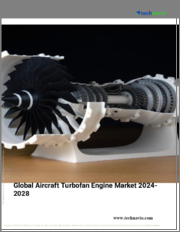
|
시장보고서
상품코드
2019268
항공기 터보팬 엔진 시장 : 용도, 엔진 유형, 추력 범위, 컴포넌트, 지역별 분석 - 시장 규모, 업계 동향, 기회 분석 및 예측(2026-2035년)Global Aircraft Turbofan Engine Market: Analysis By Application, Engine Type, Thrust Range, Component, Region - Market Size, Industry Dynamics, Opportunity Analysis and Forecast for 2026-2035 |
||||||

세계 항공기 터보팬 엔진 시장은 민간 항공의 확대와 보다 효율적이고 친환경적인 기술에 대한 노력을 반영하여 강력하고 지속적인 성장세를 보이고 있습니다. 2025년 1,125억 8,000만 달러로 평가되는 이 시장은 2035년까지 1,861억 9,000만 달러에 달할 것으로 예상되며, 2026년부터 2035년까지 예측 기간 동안 5.16%의 CAGR을 기록할 것으로 예상됩니다. 이러한 성장은 항공사들이 노후화된 항공기를 차세대 기종으로 교체하면서 운항 효율을 높이고 환경 부하를 줄이기 위해 항공기 납품이 증가하고 있는 것이 주요 요인으로 작용하고 있습니다.
지역별로는 북미가 시장을 주도하고 있으며, 북미는 제조업체와 항공사가 모두 집중되어 있다는 강점을 가지고 있습니다. 이 지역은 연구개발 및 생산의 주요 거점 역할을 하고 있으며, 세계 터보팬 엔진 산업에서 선도적인 위치를 확고히 하고 있습니다. 경쟁 구도는 CFM International, Pratt & Whitney, GE Aviation, Rolls-Royce와 같은 주요 기업들에 의해 형성되어 있으며, 이들 기업은 기술 혁신, 광범위한 서비스 네트워크, 그리고 오랜 고객 관계를 통해 큰 시장 점유율을 유지하고 있습니다.
주목할 만한 시장 동향
항공기 터보팬 엔진 시장의 경쟁 상황은 소수의 유력한 기업이 시장에 큰 영향력을 행사하는 엄격하게 통제된 과점 상태에 의해 지배되고 있습니다. 그 선두에는 GE Aerospace, Pratt & Whitney(RTX), Rolls-Royce, Safran Aircraft Engines와 같은 Tier 1 주요 제조업체들이 있습니다. 이들 기업은 단독으로 사업을 전개하거나 CFM 인터내셔널, 엔진 얼라이언스와 같은 전략적 합작투자를 통해 상업용 터보팬 엔진 시장의 약 90%를 점유하고 있습니다.
이러한 견고한 시장 지위는 몇 가지 중요한 요인에 의해 뒷받침되고 있습니다. 첫째, 현대의 고바이패스비 터보팬 엔진을 설계하고 제조하는 데 필요한 연구개발비는 매우 높으며, 한 번의 개발 주기에 수십억 달러에 달하는 경우도 드물지 않습니다. 둘째, 주요 제조업체는 특허, 독자적인 제조 기술, 경쟁사가 쉽게 모방할 수 없는 전문 지식 등 광범위한 지적재산권 포트폴리오를 보유하고 있습니다.
마지막으로, 수십 년 동안 수천 대의 엔진에서 축적된 운영 데이터를 통해 예측 유지보수, 엔진 최적화 및 성능 개선에 있어 큰 이점을 확보하고 있습니다. 이 풍부한 데이터세트를 활용하여 엔진의 효율성, 신뢰성, 안전성을 지속적으로 향상시켜 시장 지배적 지위를 더욱 공고히 하고, 신규 진입자가 진입하기 어렵게 만들고 있습니다.
주요 성장요인
2026년 현재, 항공기 터보팬 엔진의 수요는 전 세계 기체 갱신에 대한 집중에 힘입어 크게 급증하고 있습니다. 전 세계 항공사들은 낡고 효율성이 낮은 항공기를 차세대 항공기로 교체하는 움직임을 가속화하고 있습니다. 이러한 변화는 변동이 심한 연료 비용 관리, 점점 더 엄격해지는 국제 탄소 배출 규제 준수, 그리고 광범위한 환경적 노력의 일환으로 지속가능한 항공 연료(SAF)를 채택해야 하는 필요성 등 여러 가지 상호 연관된 요인에 의해 주도되고 있습니다. 최신 엔진은 연비 효율을 향상시킬 뿐만 아니라 배기가스 배출량도 감소시켜 항공사의 지속가능성 전략에 필수적인 요소로 자리 잡고 있습니다.
새로운 기회의 트렌드
디지털 트윈의 등장은 항공기 정비, 수리, 점검(MRO) 분야에서 중요하고 새로운 성장 기회를 나타냅니다. 디지털 트윈은 물리적 엔진의 정밀한 가상 복제본으로, 실시간 운영 데이터에 의해 지속적으로 업데이트됩니다. 디지털 트윈은 엔진의 실제 성능과 상태를 반영하여 MRO 엔지니어에게 예지보전을 위한 강력한 도구를 제공합니다. 엔지니어는 표준 유지보수 일정에만 의존하지 않고 디지털 트윈을 활용하여 특정 항공사의 노선 프로필에 맞는 마모와 손상의 영향을 시뮬레이션할 수 있습니다.
최적화 장벽
수요는 견조하지만, 항공기 터보팬 엔진 시장은 최근 역사상 가장 심각한 공급망 위기에 직면해 있습니다. 2025년에는 터빈 블레이드, 컴프레서 디스크 등 고강도 및 고온 부품에 필수적인 항공우주 등급 티타늄, 특수 초합금 등 핵심 원자재 공급 병목 현상으로 인해 시장이 큰 제약에 직면할 것으로 예상됩니다. 이러한 재료는 공급량이 한정되어 있고, 채굴, 정제, 인증에 긴 리드 타임이 소요되는 경우가 많습니다. 문제를 더욱 심각하게 만드는 것은 대형 고신뢰성 엔진 부품을 제조하는 데 필요한 대형 단조 및 주조 능력의 부족입니다.
목차
제1장 주요 요약 : 세계의 항공기 터보팬 엔진 시장
제2장 조사 방법 및 조사 프레임워크
제3장 세계의 항공기 터보팬 엔진 시장 개요
제4장 경쟁 대시보드
제5장 세계의 항공기 터보팬 엔진 시장 분석
제6장 북미의 항공기 터보팬 엔진 시장 분석
제7장 유럽의 항공기 터보팬 엔진 시장 분석
제8장 아시아태평양의 항공기 터보팬 엔진 시장 분석
제9장 중동 및 아프리카의 항공기 터보팬 엔진 시장 분석
제10장 남미의 항공기 터보팬 엔진 시장 분석
제11장 기업 개요
제12장 부록
KSM 26.05.11The global aircraft turbofan engine market is witnessing strong and sustained growth, reflecting both the expansion of commercial aviation and the push for more efficient, environmentally responsible technologies. Valued at USD 112.58 billion in 2025, the market is projected to reach USD 186.19 billion by 2035, representing a compound annual growth rate (CAGR) of 5.16% over the forecast period from 2026 to 2035. This growth is largely fueled by rising aircraft deliveries as airlines replace older fleets with next-generation aircraft, increasing operational efficiency and reducing environmental impact.
Geographically, the market is dominated by North America, which benefits from a strong concentration of both manufacturers and airline operators. The region serves as a key hub for research, development, and production, reinforcing its leading position in the global turbofan engine industry. The competitive landscape is shaped by major players such as CFM International, Pratt & Whitney, GE Aviation, and Rolls-Royce, all of which maintain significant market share through a combination of technological innovation, extensive service networks, and long-standing customer relationships.
Noteworthy Market Developments
The competitive landscape of the aircraft turbofan engine market is dominated by a tightly controlled oligopoly, marked by a few powerful players holding substantial market influence. At the forefront are the Tier 1 prime manufacturers: GE Aerospace, Pratt & Whitney (RTX), Rolls-Royce, and Safran Aircraft Engines. These companies, either operating independently or through strategic joint ventures such as CFM International and Engine Alliance, collectively command nearly 90% of the commercial turbofan engine market.
This strong market position is underpinned by several critical factors. First, the research and development costs required to design and produce modern high-bypass turbofan engines are extraordinarily high, often reaching billions of dollars over a single development cycle. Second, the leading manufacturers possess extensive intellectual property portfolios, encompassing patents, proprietary manufacturing techniques, and specialized knowledge that competitors cannot easily replicate.
Finally, decades of accumulated operational data from thousands of engines in service provide these companies with a significant advantage in predictive maintenance, engine optimization, and performance refinement. By leveraging this rich dataset, they can continuously improve engine efficiency, reliability, and safety, further solidifying their market dominance and making it extremely challenging for new entrants to gain a foothold.
Core Growth Drivers
As of 2026, the demand for aircraft turbofan engines is experiencing a notable surge, fueled by a global emphasis on fleet modernization. Airlines worldwide are accelerating the replacement of older, less efficient aircraft with next-generation models. This shift is driven by several interconnected factors, including the need to manage volatile fuel costs, comply with increasingly strict international carbon emission regulations, and adopt Sustainable Aviation Fuel (SAF) as part of broader environmental commitments. Modern engines offer not only improved fuel efficiency but also reduced emissions, making them an essential component of airlines' sustainability strategies.
Emerging Opportunity Trends
The rise of digital twins represents a significant and emerging opportunity for growth within the aviation maintenance, repair, and overhaul (MRO) sector. A digital twin is a precise virtual replica of a physical engine, continuously updated with real-time operational data. By mirroring the engine's actual performance and condition, digital twins provide MRO engineers with a powerful tool for predictive maintenance. Rather than relying solely on standard maintenance schedules, engineers can use the digital twin to simulate the effects of wear and tear tailored to specific airline route profiles.
Barriers to Optimization
Despite strong demand, the aircraft turbofan engine market is grappling with one of the most severe supply chain crises in recent history. In 2025, the market faces significant constraints due to bottlenecks in critical raw materials, particularly aerospace-grade titanium and specialized superalloys, which are essential for high-strength, high-temperature components such as turbine blades and compressor disks. These materials are limited in availability, often requiring long lead times for extraction, refinement, and certification. Compounding the issue is a shortage of heavy forging and casting capacities needed to produce large, high-integrity engine parts.
Detailed Market Segmentation
By component, the fan and compressor segment held a significant share of the global aircraft turbofan engine market in 2025, contributing approximately 31.27% to total market revenue. This dominance can be attributed to both the substantial physical scale of these components and their critical role in engine performance, which necessitates regular maintenance and replacement over the engine's operational life. As primary stages in the turbofan engine, the fan and compressor are at the forefront of aerodynamic engineering, converting airflow into the high-pressure air needed for combustion while sustaining the initial thrust for the aircraft.
By application, the commercial aviation segment dominated the aircraft turbofan engine market in 2025, accounting for approximately 65.94% of the global share. This dominance is largely driven by the strong post-pandemic recovery in global passenger air traffic, which has prompted airlines to ramp up operations, restore flight frequencies, and modernize fleets. Both mega-carriers and low-cost carriers (LCCs) are investing heavily in fleet expansions and replacements, driving sustained demand for turbofan engines designed specifically for commercial aircraft.
By thrust range, the above 50,000 lbf segment dominated the aircraft turbofan engine market, capturing approximately 50.23% of the global share. This category of engines is specifically engineered to power widebody aircraft such as the Boeing 787 Dreamliner, Boeing 777X, and Airbus A350, which are among the largest and most technologically advanced commercial airplanes in operation today. The dominance of this segment is largely attributable to the high cost, engineering complexity, and significant profit margins associated with these powerful engines, which make them a major contributor to overall market valuation.
By engine type, the high bypass turbofan segment dominated the aircraft turbofan engine market, holding an impressive share of approximately 78%. This commanding position is primarily due to the segment's unmatched efficiency and performance characteristics, which have made it the preferred choice for modern commercial aviation. High bypass turbofan engines are designed to maximize thrust while minimizing fuel consumption, delivering superior thermodynamic and propulsive efficiency compared to other engine types.
Segment Breakdown
By Engine Type
- High Bypass Turbofan
- Low Bypass Turbofan
- Geared Turbofan (GTF)
By Application
- Commercial Aviation
- Military Aviation
- Business & General Aviation
By Component
- Fan & Compressor
- Turbine
- Combustor
- Gearbox
- Exhaust System
By Thrust Range
- Below 20,000 lbf
- 20,000-50,000 lbf
- Above 50,000 lbf
By Region
- North America
- The U.S.
- Canada
- Mexico
- Europe
- Western Europe
- The UK
- Germany
- France
- Italy
- Spain
- Rest of Western Europe
- Eastern Europe
- Poland
- Russia
- Rest of Eastern Europe
- Asia Pacific
- China
- India
- Japan
- Australia & New Zealand
- South Korea
- ASEAN
- Rest of Asia Pacific
- Middle East & Africa (MEA)
- Saudi Arabia
- South Africa
- UAE
- Rest of MEA
- South America
- Argentina
- Brazil
- Rest of South America
Geography Breakdown
- In 2025, North America held the largest share of the aircraft turbofan engine market, accounting for approximately 36.54% of the global market. This dominance is largely driven by the region's well-established aerospace ecosystem, which includes a concentration of leading original equipment manufacturers (OEMs) such as GE Aerospace and Pratt & Whitney, alongside an extensive domestic aviation network. The combination of advanced manufacturing capabilities, technological expertise, and a mature commercial aviation infrastructure has allowed North America to maintain a stronghold in turbofan engine production and innovation.
- In contrast, the Asia Pacific region is poised to experience the fastest growth between 2026 and 2035, reflecting a distinct trajectory from the Western market. The surge in demand is fueled by the region's rapidly expanding commercial aviation sector, driven by growing middle-class populations, increased air travel, and government investments in airport infrastructure and aviation modernization.
- This geographical distribution illustrates a tale of two dynamics: entrenched industrial dominance in the West versus explosive demographic-driven demand in the East. While North America continues to lead in technological sophistication, research and development, and established aerospace supply chains, the commercial center of gravity is decisively shifting eastward.
Leading Market Participants
- Aviadvigatel
- CFM International
- GE Aerospace
- Honeywell Aerospace
- IHI Corporation
- Kawasaki Heavy Industries
- MTU Aero Engines
- Pratt & Whitney
- Rolls-Royce
- Safran
- Other Prominent Players
Table of Content
Chapter 1. Executive Summary: Global Aircraft Turbofan Engine Market
Chapter 2. Research Methodology & Research Framework
- 2.1. Research Objective
- 2.2. Product Overview
- 2.3. Market Segmentation
- 2.4. Qualitative Research
- 2.4.1. Primary & Secondary Sources
- 2.5. Quantitative Research
- 2.5.1. Primary & Secondary Sources
- 2.6. Breakdown of Primary Research Respondents, By Region
- 2.7. Assumption for Study
- 2.8. Market Size Estimation
- 2.9. Data Triangulation
Chapter 3. Global Aircraft Turbofan Engine Market Overview
- 3.1. Industry Value Chain Analysis
- 3.1.1. Raw Material Suppliers (Titanium, Nickel Alloys, Composites)
- 3.1.2. Component Manufacturers (Fan Blades, Compressors, Turbines)
- 3.1.3. Engine OEMs (Design & Assembly)
- 3.1.4. MRO Service Providers (Maintenance, Repair & Overhaul)
- 3.1.5. Aircraft Manufacturers (OEM Integration)
- 3.1.6. Airlines & Leasing Companies
- 3.1.7. Regulatory Authorities (FAA, EASA, DGCA)
- 3.2. Industry Outlook
- 3.2.1. Rising Global Air Passenger Traffic
- 3.2.2. Increasing Aircraft Fleet Expansion
- 3.2.3. Growing Demand for Fuel-Efficient Engines
- 3.2.4. Emergence of Next-Generation Engines (Geared Turbofan, UltraFan)
- 3.2.5. Stringent Emission & Noise Regulations
- 3.2.6. Increasing Demand for Narrow-Body Aircraft
- 3.2.7. Growth in Low-Cost Carriers (LCCs)
- 3.2.8. Rising MRO Activities Globally
- 3.3. PESTLE Analysis
- 3.4. Porter's Five Forces Analysis
- 3.4.1. Bargaining Power of Suppliers
- 3.4.2. Bargaining Power of Buyers
- 3.4.3. Threat of Substitutes
- 3.4.4. Threat of New Entrants
- 3.4.5. Degree of Competition
- 3.5. Market Dynamics and Trends
- 3.5.1. Growth Drivers
- 3.5.1.1. Increasing Demand for Fuel Efficiency is drive the market growth
- 3.5.2. Restraints
- 3.5.3. Opportunity
- 3.5.4. Key Trend
- 3.5.1. Growth Drivers
- 3.6. Market Growth and Outlook
- 3.6.1. Market Revenue Estimates and Forecast (US$ Mn), 2020 - 2035
- 3.6.2. Price Trend Analysis
Chapter 4. Competition Dashboard
- 4.1. Market Concentration Rate
- 4.2. Company Market Share Analysis (Value %), 2025
- 4.3. Competitor Mapping & Benchmarking
- 4.4. Startup Ecosystem Analysis
- 4.5. M&A and Funding Landscape
Chapter 5. Global Aircraft Turbofan Engine Market Analysis
- 5.1. Key Insights
- 5.2. Market Size and Forecast, 2020-2035 (US$ Mn)
- 5.2.1. By Engine Type
- 5.2.1.1. High Bypass Turbofan
- 5.2.1.2. Low Bypass Turbofan
- 5.2.1.3. Geared Turbofan (GTF)
- 5.2.2. By Application
- 5.2.2.1. Commercial Aviation
- 5.2.2.2. Military Aviation
- 5.2.2.3. Business & General Aviation
- 5.2.3. By Component
- 5.2.3.1. Fan & Compressor
- 5.2.3.2. Turbine
- 5.2.3.3. Combustor
- 5.2.3.4. Gearbox
- 5.2.3.5. Exhaust System
- 5.2.4. By Thrust Range
- 5.2.4.1. Below 20,000 lbf
- 5.2.4.2. 20,000-50,000 lbf
- 5.2.4.3. Above 50,000 lbf
- 5.2.5. By Region
- 5.2.5.1. North America
- 5.2.5.1.1. The U.S.
- 5.2.5.1.2. Canada
- 5.2.5.1.3. Mexico
- 5.2.5.2. Europe
- 5.2.5.2.1. Western Europe
- 5.2.5.2.1.1. The UK
- 5.2.5.2.1.2. Germany
- 5.2.5.2.1.3. France
- 5.2.5.2.1.4. Italy
- 5.2.5.2.1.5. Spain
- 5.2.5.2.1.6. Rest of Western Europe
- 5.2.5.2.2. Eastern Europe
- 5.2.5.2.2.1. Poland
- 5.2.5.2.2.2. Russia
- 5.2.5.2.2.3. Rest of Eastern Europe
- 5.2.5.2.1. Western Europe
- 5.2.5.3. Asia Pacific
- 5.2.5.3.1. China
- 5.2.5.3.2. India
- 5.2.5.3.3. Japan
- 5.2.5.3.4. South Korea
- 5.2.5.3.5. Australia & New Zealand
- 5.2.5.3.6. ASEAN
- 5.2.5.3.6.1. Indonesia
- 5.2.5.3.6.2. Malaysia
- 5.2.5.3.6.3. Thailand
- 5.2.5.3.6.4. Singapore
- 5.2.5.3.6.5. Rest of ASEAN
- 5.2.5.3.7. Rest of Asia Pacific
- 5.2.5.4. Middle East & Africa
- 5.2.5.4.1. UAE
- 5.2.5.4.2. Saudi Arabia
- 5.2.5.4.3. South Africa
- 5.2.5.4.4. Rest of MEA
- 5.2.5.5. South America
- 5.2.5.5.1. Argentina
- 5.2.5.5.2. Brazil
- 5.2.5.5.3. Rest of South America
- 5.2.5.1. North America
- 5.2.1. By Engine Type
Chapter 6. North America Aircraft Turbofan Engine Market Analysis
- 6.1. Market Dynamics and Trends
- 6.1.1. Growth Drivers
- 6.1.2. Restraints
- 6.1.3. Opportunity
- 6.1.4. Key Trends
- 6.2. Market Size and Forecast, 2020-2035 (US$ Mn)
- 6.2.1. By Engine Type
- 6.2.2. By Application
- 6.2.3. By Component
- 6.2.4. By Thrust Range
- 6.2.5. By Country
Chapter 7. Europe Aircraft Turbofan Engine Market Analysis
- 7.1. Market Dynamics and Trends
- 7.1.1. Growth Drivers
- 7.1.2. Restraints
- 7.1.3. Opportunity
- 7.1.4. Key Trends
- 7.2. Market Size and Forecast, 2020-2035 (US$ Mn)
- 7.2.1. By Engine Type
- 7.2.2. By Application
- 7.2.3. By Component
- 7.2.4. By Thrust Range
- 7.2.5. By Country
Chapter 8. Asia Pacific Aircraft Turbofan Engine Market Analysis
- 8.1. Market Dynamics and Trends
- 8.1.1. Growth Drivers
- 8.1.2. Restraints
- 8.1.3. Opportunity
- 8.1.4. Key Trends
- 8.2. Market Size and Forecast, 2020-2035 (US$ Mn)
- 8.2.1. By Engine Type
- 8.2.2. By Application
- 8.2.3. By Component
- 8.2.4. By Thrust Range
- 8.2.5. By Country
Chapter 9. Middle East & Africa Ground Aircraft Turbofan Engine Market Analysis
- 9.1. Market Dynamics and Trends
- 9.1.1. Growth Drivers
- 9.1.2. Restraints
- 9.1.3. Opportunity
- 9.1.4. Key Trends
- 9.2. Market Size and Forecast, 2020-2035 (US$ Mn)
- 9.2.1. By Engine Type
- 9.2.2. By Application
- 9.2.3. By Component
- 9.2.4. By Thrust Range
- 9.2.5. By Country
Chapter 10. South America Aircraft Turbofan Engine Market Analysis
- 10.1. Market Dynamics and Trends
- 10.1.1. Growth Drivers
- 10.1.2. Restraints
- 10.1.3. Opportunity
- 10.1.4. Key Trends
- 10.2. Market Size and Forecast, 2020-2035 (US$ Mn)
- 10.2.1. By Engine Type
- 10.2.2. By Application
- 10.2.3. By Component
- 10.2.4. By Thrust Range
- 10.2.5. By Country
Chapter 11. Company Profile (Company Overview, Financial Matrix, Key Product landscape, Key Personnel, Key Competitors, Contact Address, and Business Strategy Outlook)
- 11.1. Aviadvigatel
- 11.2. CFM International
- 11.3. GE Aerospace
- 11.4. Honeywell Aerospace
- 11.5. IHI Corporation
- 11.6. Kawasaki Heavy Industries
- 11.7. MTU Aero Engines
- 11.8. Pratt & Whitney
- 11.9. Rolls-Royce
- 11.10. Safran
- 11.11. Other Prominent Players
Chapter 12. Annexure
- 12.1. List of Secondary Sources
- 12.2. Macro-Economic Outlook/Indicators