

|
시장보고서
상품코드
1936043
공중 대응 시스템 시장(2026-2036년)Global Airborne Countermeasures System Market 2026-2036 |
||||||

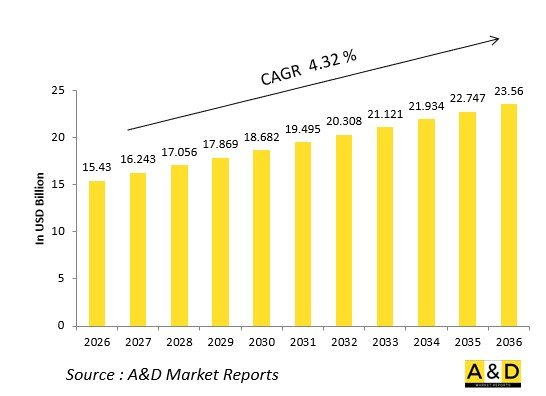
세계 공중 대응 시스템 시장 규모는 2026년 154억 3,000만 달러에서 2026년부터 2036년까지 예측 기간 동안 4.32%의 CAGR로 2036년에는 235억 6,000만 달러에 달할 것으로 예상됩니다.
소개
세계 공중 대응 시스템 시장은 진화하는 미사일 위협으로부터 고정익 및 회전익 항공기를 보호하고, 레이더 경고 수신기, 미사일 접근 경보 장치, 대응 조치 디스펜서를 완벽한 자기 방어 시스템에 통합하고 있습니다. 이 시스템은 적외선, 레이더, 레이저 유도 무기를 탐지 및 식별하고, 채프, 플레어, 전자 교란을 통해 무력화합니다.
시장 성장은 방공 밀도의 향상을 반영하고 있으며, 시스템은 반응형 디스펜서에서 AI 기반 지향성 이펙터로 진화하고 있습니다. 핵심 구성요소에는 포드형 재머, 견인형 디코이, 스텔스 전투기부터 VIP 수송기까지 플랫폼 간 호환이 가능한 프로그래밍 가능한 디스펜서가 포함됩니다. 부수적 피해를 최소화하는 도시 전략이 변조 적외선 대응 수단을 추진하고 있습니다.
지정학적 긴장이 고조되면서 연합 임무의 상호운용성을 우선순위에 두고 개보수를 가속화하고 있습니다. 개방형 아키텍처는 위협 라이브러리의 신속한 업데이트를 가능하게 하고, 지향성 에너지 무기의 확산을 배경으로 공급망은 내결함성이 높은 전자 장비에 초점을 맞추고 있습니다. BAE, Saab 등 주요 기업들이 광섬유 견인 어레이 개발을 주도하는 등 경쟁이 심화되고 있습니다.
본 시장은 항공기의 생존성이 임무 수행의 기본임을 보여주고 있습니다.
공중 대응 시스템에서의 기술적 영향
기술의 융합을 통해 공중 대항 조치 시스템은 능동적 방어 시스템으로 변모하고 있습니다. 다파장 미사일 접근 경보 장치(자외선, 적외선, 레이저 기반)는 전방위 발사를 감지하고 전 세계 교전 데이터로 훈련된 AI 위협 분류기를 통해 마이크로초 단위로 이펙터를 유도합니다.
지향성 적외선 대책(DIRCM) 레이저는 변조된 빔으로 유도 장치를 눈부시게 하여 소모품 없이 첨단 이미징 유도 미사일을 무력화시킵니다. 광섬유 견인형 디코이는 초음속 투사를 견디면서 항공기의 시그니처를 모방하여 방해 범위를 확대합니다. 스마트 디스펜서는 스펙트럼 분석에 기반하여 채프와 플레어를 최적으로 투사합니다.
네트워크화 아키텍처를 통해 편대 전체가 위협 데이터를 공유하여 편대 규모의 방어를 실현합니다. 질화갈륨 증폭기를 탑재한 소형 재머는 집중적인 방해에도 견딜 수 있습니다. 양자 캐스케이드 레이저는 하이퍼스펙트럼 시커를 대상으로 합니다. 디지털 무선 주파수 메모리(DRFM)는 실제 송신기와 구별할 수 없는 가짜 표적을 생성합니다.
AESA 레이더와의 통합을 통해 융합된 상황 인식을 제공합니다. 비행 중 마이크로 재머가 장착된 디코이를 배치하고, 이러한 기술은 잠금 해제 확률 감소, 탈출 금지 구역 확대, 통합 방공 돌파를 가능하게 합니다.
공중 대항 조치 시스템의 주요 촉진요인
휴대용 방공 시스템(MANPADS)의 확산으로 고가 항공기의 위협이 증가함에 따라 다층적인 방호가 필요하게 되었습니다. 첨단 영상화 미사일은 기존 플레어에 대응하여 각국 공군의 DIRCM(적외선 유도 미사일 대응)의 채택을 촉진하고 있습니다.
함대 정비 프로그램에서는 분쟁지역에서 운용되는 노후 수송기 및 급유기의 생존성 향상을 최우선 과제로 삼고 있습니다. 수출 시장에서는 다양한 위협 라이브러리에 대응할 수 있는 턴키 제품군에 대한 수요가 증가하고 있습니다.
연합군의 상호운용성 표준은 공통 아키텍처의 보급을 가속화하고 있습니다. 도시지역에서의 근접항공지원 교리는 부수적인 피해를 최소화하는 정밀효과장치를 필요로 합니다. 지향성 에너지 무기의 확산은 레이저 경고 수신기의 도입을 필수적으로 요구하고 있습니다.
세계의 공중 대응 시스템 시장을 조사했으며, 주요 동향, 시장 영향요인, 주요 기술 및 그 영향, 주요 지역 및 국가별 동향, 시장 기회 분석 등의 정보를 정리하여 전해드립니다.
목차
공중 대응 시스템 시장 : 목차
공중 대응 시스템 시장 : 보고서의 정의
공중 대응 시스템 시장 : 세분화
향후 10년간의 공중 대응 시스템 시장 분석
공중 대응 시스템 시장 : 기술
세계 공중 대응 시스템 시장 : 예측
공중 대응 시스템 시장 동향 및 전망 : 지역별 동향 및 전망
시장 예측 및 시나리오 분석
공중 대응 시스템 시장 : 국가별 분석
시장 예측 및 시나리오 분석
공중 대응 시스템 시장 : 기회 매트릭스
공중 대응 시스템 시장 : 보고서에 대한 전문가 의견
결론
Aviation and Defense Market Reports 소개
KSM 26.03.05The Global Airborne Countermeasures System Market is estimated at USD 15.43 billion in 2026, projected to grow to USD 23.56 billion by 2036 at a Compound Annual Growth Rate (CAGR) of 4.32% over the forecast period 2026-2036.
Introduction
The global Airborne Countermeasures System market safeguards fixed-wing and rotary aircraft against evolving missile threats, integrating radar warning receivers, missile approach warners, and countermeasure dispensers into seamless self-protection suites. These systems detect, identify, and neutralize infrared, radar, and laser-guided munitions via chaff, flares, and electronic jamming.
Market growth mirrors rising air defense densities, with suites evolving from reactive dispensers to AI-driven directional effectors. Core components include podded jammers, towed decoys, and programmable dispensers compatible across platforms from stealth fighters to VIP transports. Emphasis on low-collateral urban ops drives modulated infrared countermeasures.
Geopolitical flashpoints accelerate retrofits, prioritizing interoperability for coalition missions. Open architectures enable rapid threat library updates. Supply chains focus on resilient electronics amid directed-energy proliferation. Competition features primes like BAE and Saab pioneering fiber-optic towed arrays.
This market underscores aircraft survivability as mission enabler.
Technology Impact in Airborne Countermeasures System
Technological fusion transforms Airborne Countermeasures Systems into proactive shields. Multi-spectral missile approach warners-UV, IR, and laser-based-detect launches from all quadrants, cueing effectors in microseconds via AI threat classifiers trained on global engagement data.
Directional Infrared Countermeasures (DIRCM) lasers dazzle seeker heads with modulated beams, defeating advanced imaging missiles without expendables. Fiber-optic towed decoys extend jamming envelopes, mimicking aircraft signatures while surviving supersonic ejections. Smart dispensers sequence chaff and flares optimally, minimizing signatures via spectral analysis.
Networked architectures share threat data across formations, enabling formation-wide defenses. GaN amplifiers power compact jammers resisting barrage jamming. Quantum cascade lasers target hyperspectral seekers. Digital radio frequency memory (DRFM) creates false targets indistinguishable from real emitters.
Integration with AESA radars provides fused situational awareness. Expendable decoys deploy micro-jammers mid-flight. These innovations slash break-lock probabilities, extend no-escape zones, and enable deep-strike penetrations against integrated air defenses.
Key Drivers in Airborne Countermeasures System
Proliferating man-portable air defense systems expose high-value aircraft to top-attack profiles, mandating layered countermeasures. Advanced imaging missiles counter legacy flares, driving DIRCM adoption across air forces.
Fleet sustainment programs prioritize survivability upgrades for legacy transports and tankers operating in contested zones. Export markets demand turnkey suites compatible with diverse threat libraries.
Coalition interoperability standards accelerate common architectures. Urban close air support doctrines require precision effectors minimizing collateral. Directed-energy weapon proliferation necessitates laser warning receivers.
Budget imperatives favor podded solutions over airframe redesigns. Training revolutions leverage virtual threat injectors. Supply chain resilience counters sanctions via diversified electronics.
Sustainability via reusable lasers reduces expendable logistics. These dynamics position countermeasures as airpower prerequisites.
Regional Trends in Airborne Countermeasures System
North America pioneers DIRCM suites for strategic airlift and fifth-generation fighters, emphasizing towed decoys.
Europe standardizes via NATO frameworks, equipping multirole fleets with fiber-optic jammers for eastern corridors.
Asia-Pacific surges with indigenous development-India's digital RWR, China's modular pods-for maritime patrols.
Middle East fortifies VIP transports against shoulder-fired threats.
Russia advances plasma-based decoys resilient to multimode seekers.
South Korea integrates with K9 howitzers' air cover.
Latin America protects counter-narcotics helos.
Trends favor AI-driven autonomy, Asia-Pacific gaining manufacturing share.
Key Airborne Countermeasures System Programs
AN/ALE-47 dispensers equip coalition fighters with adaptive sequencing against IR/RF threats.
Saab's CMDS integrates with Gripen for sequenced expendables.
BAE's DIRCM suites dazzle advanced seekers on C-130J.
AN/ALQ-214 podded jammers defend legacy platforms.
Next-gen fiber decoys tow behind F-35s.
European MBDA Talios fuses RWR with laser warning.
India's digital integrated RF suite upgrades Su-30MKI.
VIP aircraft receive commercial DIRCM variants.
Export packages bundle with missile warners.
Table of Contents
Airborne Countermeasures System Market - Table of Contents
Airborne Countermeasures System Market Report Definition
Airborne Countermeasures System Market Segmentation
By Application
By Region
By Type
Airborne Countermeasures System Market Analysis for next 10 Years
The 10-year Airborne Countermeasures System Market analysis would give a detailed overview of Airborne Countermeasures System Market growth, changing dynamics, technology adoption overviews and the overall market attractiveness is covered in this chapter.
Market Technologies of Airborne Countermeasures System Market
This segment covers the top 10 technologies that is expected to impact this market and the possible implications these technologies would have on the overall market.
Global Airborne Countermeasures System Market Forecast
The 10-year Airborne Countermeasures System Market forecast of this market is covered in detailed across the segments which are mentioned above.
Regional Airborne Countermeasures System Market Trends & Forecast
The regional Airborne Countermeasures System Market trends, drivers, restraints and Challenges of this market, the Political, Economic, Social and Technology aspects are covered in this segment. The market forecast and scenario analysis across regions are also covered in detailed in this segment. The last part of the regional analysis includes profiling of the key companies, supplier landscape and company benchmarking. The current market size is estimated based on the normal scenario.
North America
Drivers, Restraints and Challenges
PEST
Market Forecast & Scenario Analysis
Key Companies
Supplier Tier Landscape
Company Benchmarking
Europe
Middle East
APAC
South America
Country Analysis of Airborne Countermeasures System Market
This chapter deals with the key defense programs in this market, it also covers the latest news and patents which have been filed in this market. Country level 10 year market forecast and scenario analysis are also covered in this chapter.
US
Defense Programs
Latest News
Patents
Current levels of technology maturation in this market
Market Forecast & Scenario Analysis
Canada
Italy
France
Germany
Netherlands
Belgium
Spain
Sweden
Greece
Australia
South Africa
India
China
Russia
South Korea
Japan
Malaysia
Singapore
Brazil
Opportunity Matrix for Airborne Countermeasures System Market
The opportunity matrix helps the readers understand the high opportunity segments in this market.
Expert Opinions on Airborne Countermeasures System Market Report
Hear from our experts their opinion of the possible analysis for this market.


