

|
시장보고서
상품코드
1996989
방위용 GPS/GNSS 수신기(방해 대책) 시장(2026-2036년)Global Defense GPS / GNSS Receivers (Anti-Jam) Market 2026-2036 |
||||||

세계의 방위용 GPS/GNSS 수신기(방해 대책) 시장
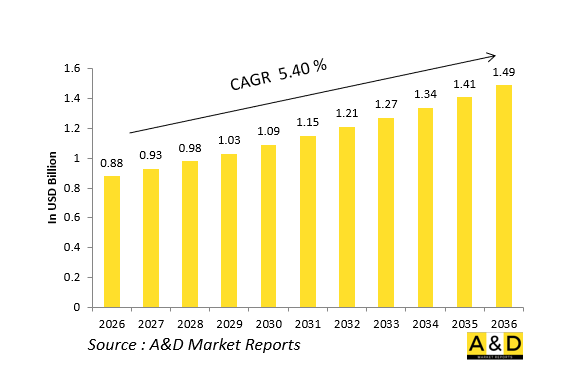
세계의 방위용 GPS/GNSS 수신기(방해 대책) 시장 규모는 2026년에 8억 8,000만 달러로 추계되고 있으며, 2026-2036년의 예측 기간에 CAGR 5.40%로 성장하며, 2036년에는 14억 9,000만 달러에 달할 것으로 전망되고 있습니다.
1. 소개:
전파방해 방지 기능을 갖춘 국방용 GPS 및 GNSS 수신기는 전자기 환경이 제압된 상황에서 운용되는 군사 플랫폼에 안전하고 내결함성이 높은 위치, 속도, 시간 정보를 제공하는 매우 중요한 항법 및 시간 동기화 노드입니다. 이 시스템은 항공기, 함정, 지상 차량, 미사일 및 지휘통제 노드에 내장되어 취약한 민간 신호에 의존하지 않고 정밀한 항법, 표적 포착 및 시간 동기화를 가능하게 합니다. 2026-2036년 군가 내결함성이 없는 GNSS 링크가 재밍, 스푸핑 및 사이버 공격에 의한 방해에 점점 더 취약하다는 것을 인식함에 따라 시장은 확대될 것입니다.
최신 전파 교란 방지 수신기는 첨단 신호 처리 기술, 지향성 안테나 및 암호화 보호 기능을 통합하여 치열한 전자전 압력 하에서도 안정적인 항법을 유지합니다. 이들은 관성 항법, 지형 정보 및 대체 PNT(위치, 항법, 시간) 정보 소스와 결합되어 GPS가 장기간 사용 불가능한 경우에도 운영을 지속할 수 있는 하이브리드 아키텍처를 형성하고 있습니다. 멀티 도메인 및 네트워크화된 전쟁이 일상화됨에 따라 방해 전파 방지 GPS/GNSS 수신기는 단순한 타이밍 모듈에서 정밀 타격 조정, 보안 통신, 자율 플랫폼 운영 등 모든 것을 지원하는 안전하고 미션 크리티컬한 서브시스템으로 진화하고 있습니다. 으로 진화하고 있습니다.
2. 국방용 GPS/GNSS 수신기(항재밍) 시장에서의 기술적 영향
기술의 발전으로 국방용 GPS/GNSS 수신기는 기본적인 신호 추적 장치에서 지능형, 소프트웨어 정의, 스펙트럼 인식 기능을 갖춘 노드로 변모하고 있습니다. 현대의 항재밍 수신기는 고감도, 다중 주파수, 다중 별자리 아키텍처를 채택하여 여러 위성 시스템의 신호를 활용하여 가용성 및 내결함성을 향상시킵니다. 적응형 필터링 및 간섭 제거 알고리즘을 포함한 고급 디지털 신호 처리를 통해 이 수신기는 약하고 저하된 신호에 대한 잠금을 유지하면서 간섭 소스를 제거할 수 있습니다.
제어 수신 패턴 안테나(CRPA) 및 다소자 위상 어레이와의 통합을 통해 방해 방향의 공간적 무효화가 가능하여 열악한 환경에서의 신호 대 잡음비를 크게 향상시킵니다. 소프트웨어 정의 수신기 아키텍처는 새로운 주파수, 변조 방식 또는 암호화 키에 대한 무선 업데이트 및 재구성을 지원하여 차세대 플랫폼의 통합 주기를 단축합니다. 보안 측면에서는 군용 전용 암호화 모듈과 암호화된 신호를 통해 스푸핑 및 변조에 강한 확실한 위치 및 시간 제공을 실현합니다. 이러한 혁신 기술은 플랫폼의 생존성을 높이고, 분쟁 지역에서 작전 범위를 확장하며, 정확하고 신뢰할 수 있는 시간이 필수적인 자율 및 네트워크 기반 작전을 지원합니다.
3. 국방용 GPS/GNSS 수신기(항재밍) 시장의 주요 촉진요인
방어용 항재밍 GPS/GNSS 수신기 시장은 전자전에 의한 위협이 증가함에 따라 주도하고 있습니다. 적대세력은 비교적 저렴한 재머와 스푸핑 기술을 이용하여 민간 GNSS 서비스를 쉽게 저하시키거나 사용하지 못하게 할 수 있습니다. 이에 따라 군은 첨단 교란 환경에서도 안정적으로 작동하고 임무에 필수적인 항법, 표적 포착, 통신을 지원할 수 있는 견고한 군용 전용 수신기에 대한 투자를 진행하고 있습니다. 이 요구사항은 전투기, 무인항공기(UAV), 미사일, 포병, 함정, 지상배치형 C4ISR 시스템에 적용되며, 이 모든 것은 정확한 시간 및 위치 정보에 의존합니다.
또 다른 중요한 요인은 멀티 도메인 및 네트워크 중심 전략의 확대입니다. 이러한 작전에서는 공동 표적 지정, 협동 공격, 센서 융합을 위해 위치 및 시간 동기화가 필수적입니다. 현대의 정밀 유도탄, 자율주행 차량, 분산형 센서 네트워크는 모두 비행 및 임무의 모든 단계에서 내결함성이 높은 GNSS 입력에 의존하고 있습니다. 함대 현대화 및 수명 연장 프로그램도 새로운 위성 별자리와 암호화된 신호를 지원하는 업그레이드된 전파방해 방지 수신기를 통해 구형 플랫폼의 개조를 가속화하고 있습니다. 동맹국 간의 상호운용성 및 표준화 요구사항은 공통의 안티 재밍 아키텍처의 채택을 더욱 촉진하고 있으며, 안전 및 인증 표준은 견고하고 내결함성 및 변조 방지 기능을 갖춘 설계에 대한 수요를 촉진하고 있습니다. 이러한 요인들이 결합되어 국방 생태계 전반에서 확장성, 소프트웨어 업그레이드, 사이버 보안 대책이 적용된 GPS/GNSS 수신기에 대한 수요가 증가하고 있습니다.
4. 방위용 GPS/GNSS 수신기(항재밍) 시장 지역별 동향
지역별로는 북미가 항재밍 GPS/GNSS 수신기 시장을 주도하고 있습니다. 이는 강력한 위치 및 시간 동기화 능력을 우선시하는 대규모 전투기, 폭격기, UAV, 미사일 및 C4ISR 프로그램에 의해 지원되고 있습니다. 미국과 파트너 국가들은 디지털 비행 제어 시스템, 미션 컴퓨터 및 보안 통신 제품군에 통합된 강력한 다중 별자리 수신기를 중요시하고 있으며, 이는 종종 고급 위성 항법 서비스와 연계되어 있습니다. 유럽의 국방 프로그램에서는 다용도 플랫폼 전반에 걸쳐 공통의 전파 교란 방지 아키텍처를 채택하는 경향이 증가하고 있으며, 국경을 초월한 표준 및 공동 물류에 대응하는 상호 운용 가능한 수신기를 선호하고 있습니다.
아시아태평양에서는 여러 국가들이 지역의 전자전 위협에 맞게 조정된 국산 또는 공동 개발한 방해 전파 방지 GNSS 솔루션을 사용하여 공군, 해군, 미사일 부대를 현대화함에 따라 급속한 성장을 보이고 있습니다. 중동 및 걸프 지역 국가들은 신규 건조 플랫폼과 개조 플랫폼 모두에 견고한 수신기에 투자하고 있으며, 방해가 심한 환경에서도 지속적인 항해 능력을 보장하기 위해 노력하고 있습니다. 이 지역에서는 고정익, 회전익, 해군 및 지상 플랫폼 간에 재사용 및 업그레이드가 가능한 모듈식, 개방형 아키텍처의 전파 교란 방지 수신기에 대한 수요가 증가하고 있습니다. 국내 공급 및 기술 주권 정책도 지역내 설계 및 생산을 촉진하는 한편, 수출 관리 및 보안 체제가 고급 방해 전파 차단 장치의 가용성 및 구성에 영향을 미치고 있습니다.
5. 주요 국방용 GPS/GNSS 수신기(항재밍) 시장 프로그램
2026-2036년 몇 가지 주요 국방 프로그램이 방해 전파 방지 GPS/GNSS 수신기 시장을 주도하고 있습니다. 차세대 전투기 및 다목적 전투기 프로그램은 디지털 비행 제어 시스템, 미션 컴퓨터, 전자전 시스템과 긴밀하게 통합된 첨단 방해 전파 방지 수신기를 요구하고 있으며, 이는 심한 방해 전파 속에서도 정밀한 항법 및 목표물 포착을 가능하게 합니다. 해군용 항공 및 해상 프로그램은 항공모함 운영, 해상 항법 및 분쟁 해역에서의 연합 공격 작전을 지원하는 강력한 수신기를 항공모함 탑재형 및 장거리 플랫폼에 장착하고 있습니다.
무인 전투기, 장시간 체류형 UAV 및 군집형 드론 프로그램은 깨끗한 GNSS 신호에 지속적으로 의존하지 않고도 자율 비행, 웨이포인트 항법 및 편대 유지를 위해 소형 저전력 저잡음 수신기에 의존하고 있습니다. 미사일 및 정밀유도탄 프로그램에서는 종말 비행 단계에서 교란이나 스푸핑에 직면했을 때에도 정확도를 유지하기 위해 소형화된 군용 GNSS 모듈을 유도부에 통합하고 있습니다. 지상 배치형 C4ISR, 포병 및 전자전 시스템에서는 통신, 레이더 및 네트워크화된 작전을 위해 안전하고 동기화된 타이밍을 제공하기 위해 항재밍 GNSS 수신기를 채택하고 있습니다. 다국적 및 연합 차원의 프로그램에서는 GNSS 수신기 인터페이스와 데이터 형식의 표준화가 진행되고 있으며, 이를 통해 파트너 국가 간 소프트웨어 라이브러리, 인증 패키지 및 유지관리 체계의 공유가 가능해졌습니다. 이러한 프로그램을 통해, 방해 전파 방지 GPS/GNSS 수신기는 복원력 있는 멀티 도메인 디지털 전쟁 인프라의 기반이 되고 있습니다.
목차
방위용 GPS/GNSS 수신기(방해 대책) 시장 - 목차
방위용 GPS/GNSS 수신기(방해 대책) 시장 보고서의 정의
방위용 GPS/GNSS 수신기(방해 대책) 시장 세분화
방위 분야에서 GPS/GNSS 수신기(방해 대책) 시장의 향후 10년간의 분석
세계의 방위용 GPS/GNSS 수신기(방해 대책) 시장 예측
지역 방위용 GPS/GNSS 수신기(방해 대책) 시장 동향과 예측
시장 예측과 시나리오 분석
방위용 GPS/GNSS 수신기(방해 대책) 시장의 국가별 분석
시장 예측과 시나리오 분석
방위용 GPS/GNSS 수신기(방해 대책) 시장의 기회 매트릭스
결론
KSA 26.04.20Global Defense GPS / GNSS Receivers (Anti Jam) Market
The Global Defense GPS / GNSS Receivers (Anti Jam) Market is estimated at USD 0.88 billion in 2026, projected to grow to USD 1.49 billion by 2036 at a Compound Annual Growth Rate (CAGR) of 5.40% over the forecast period 2026-2036.
1. Introduction:
Defense grade GPS and GNSS receivers with anti jam capabilities are critical navigation and timing nodes that provide secure, resilient position, velocity, and time information for military platforms operating in contested electromagnetic environments. These systems are embedded in aircraft, ships, ground vehicles, missiles, and command and control nodes, enabling precision navigation, targeting, and time synchronization without relying on vulnerable civilian grade signals. Over the 2026-2036 horizon, the market is expanding as armed forces recognize that unhardened GNSS links are increasingly susceptible to jamming, spoofing, and cyber enabled disruption.
Modern anti jam receivers integrate advanced signal processing techniques, directional antennas, and cryptographic protections to maintain reliable navigation even under heavy electronic warfare pressure. They are increasingly combined with inertial, terrain based, and alternative PNT sources to form hybrid architectures that can sustain operations during prolonged GPS outages. As multi domain and networked warfare becomes the norm, anti jam GPS/GNSS receivers are evolving from simple timing modules into secure, mission critical subsystems that underpin everything from precision strike coordination to secure communications and autonomous platform operations.
2. Technology Impact in Defense GPS / GNSS Receivers (Anti Jam) Market
Technology is transforming defense GPS/GNSS receivers from basic signal tracking units into intelligent, software defined, spectrum aware nodes. Modern anti jam receivers leverage high sensitivity, multi frequency, multi constellation architectures that exploit signals from several satellite systems to improve availability and resilience. Advanced digital signal processing, including adaptive filtering and interference cancellation algorithms, allows these receivers to reject jamming sources while maintaining lock on weak or degraded signals.
Integration with controlled reception pattern antennas (CRPA) and multi element phased arrays enables spatial nulling of jamming directions, significantly improving signal to noise margins in hostile environments. Software defined receiver architectures support over the air updates and reconfiguration for new frequencies, modulation schemes, or cryptographic keys, shortening integration cycles for next generation platforms. On the security side, military specific cryptographic modules and encrypted signals provide assured positioning and timing that are resistant to spoofing and manipulation. These innovations collectively raise platform survivability, extend operational reach in contested regions, and support autonomous and networked operations where precise, trusted timing is essential.
3. Key Drivers in Defense GPS / GNSS Receivers (Anti Jam) Market
The defense anti jam GPS/GNSS receiver market is driven by the growing threat of electronic warfare, where adversaries can easily degrade or deny civilian GNSS services using relatively low cost jammers and spoofing techniques. As a result, armed forces are investing in hardened, military specific receivers that can operate reliably in high jamming environments and support mission critical navigation, targeting, and communications. This requirement spans fighters, UAVs, missiles, artillery, naval vessels, and ground based C4ISR systems, all of which depend on precise timing and positioning.
Another key driver is the expansion of multi domain and network centric operations, where synchronized positioning and time are essential for joint targeting, coordinated strikes, and sensor fusion. Modern precision guided munitions, autonomous vehicles, and distributed sensor networks all rely on resilient GNSS inputs at every phase of flight or mission. Fleet modernization and life extension programs are also accelerating the retrofit of legacy platforms with upgraded anti jam receivers compatible with new satellite constellations and encrypted signals. Interoperability and standardization requirements across allied forces further encourage adoption of common anti jam architectures, while safety and certification standards reinforce demand for robust, fault tolerant, tamper resistant designs. Together, these factors are increasing the demand for scalable, software upgradable, and cyber secure GPS/GNSS receivers across the defense ecosystem.
4. Regional Trends in Defense GPS / GNSS Receivers (Anti Jam) Market
Regionally, North America leads the anti jam GPS/GNSS receiver market, supported by large scale fighter, bomber, UAV, missile, and C4ISR programs that prioritize resilient positioning and timing capabilities. The United States and its partners emphasize hardened, multi constellation receivers integrated into digital flight control systems, mission computers, and secure communications suites, often tied to advanced satellite navigation services. European defense programs are increasingly adopting common anti jam architectures across multi role platforms, favoring interoperable receivers that support cross national standards and shared logistics.
The Asia Pacific region is witnessing rapid growth as several nations modernize their air forces, navies, and missile forces with indigenous or co developed anti jam GNSS solutions tailored to regional electronic warfare threats. Middle Eastern and Gulf states are investing in hardened receivers for both new build platforms and retrofits, ensuring continued navigation capability in high jamming environments. Across these regions, there is a growing preference for modular, open architecture anti jam receivers that can be reused or upgraded across fixed wing, rotary wing, naval, and ground platforms. Domestic supply and technology sovereignty policies are also encouraging regional design and production, while export control and security regimes shape the availability and configuration of high end anti jam units.
5. Key Defense GPS / GNSS Receivers (Anti Jam) Market Program
Several flagship defense programs are shaping the anti jam GPS/GNSS receiver market over the 2026-2036 period. Next generation fighter and multi role combat air programs are specifying advanced anti jam receivers that integrate tightly with digital flight control systems, mission computers, and electronic warfare suites, enabling precise navigation and targeting even under heavy jamming. Naval aviation and maritime programs are equipping carrier based and long range platforms with hardened receivers that support carrier operations, over water navigation, and coordinated strike operations in contested maritime environments.
Unmanned combat air, long endurance UAV, and swarming drone programs are relying on compact, low power anti jam receivers to enable autonomous flight, waypoint navigation, and formation keeping without continuous reliance on clean GNSS signals. Missile and precision guided munitions programs are integrating miniaturized military grade GNSS modules into guidance sections to maintain accuracy when faced with jamming or spoofing during terminal phase flight. Ground based C4ISR, artillery, and electronic warfare systems are adopting anti jam GNSS receivers to provide secure, synchronized timing for communications, radar, and networked operations. Multinational and coalition level programs are standardizing GNSS receiver interfaces and data formats, enabling shared software libraries, certification packages, and sustainment arrangements across partner nations. Through these programs, anti jam GPS/GNSS receivers are becoming foundational elements of the resilient, multi domain digital warfare infrastructure.
Table of Contents
Defense GPS / GNSS Receivers (Anti-Jam) Market - Table of Contents
Defense GPS / GNSS Receivers (Anti-Jam) Market Report Definition
Defense GPS / GNSS Receivers (Anti-Jam) Market Segmentation
By Region
By Jamming Protection Level
By Platform
By Receiver Type
By Integration
Defense GPS / GNSS Receivers (Anti-Jam) Market Analysis for next 10 Years
The 10-year Defense GPS / GNSS Receivers (Anti-Jam) Market analysis would give a detailed overview of Defense GPS / GNSS Receivers (Anti-Jam) Market growth, changing dynamics, technology adoption overviews and the overall market attractiveness is covered in this chapter.
Market Technologies of Defense GPS / GNSS Receivers (Anti-Jam) Market
This segment covers the top 10 technologies that is expected to impact this market and the possible implications these technologies would have on the overall market.
Global Defense GPS / GNSS Receivers (Anti-Jam) Market Forecast
The 10-year Defense GPS / GNSS Receivers (Anti-Jam) Market forecast of this market is covered in detailed across the segments which are mentioned above.
Regional Defense GPS / GNSS Receivers (Anti-Jam) Market Trends & Forecast
The regional counter drone market trends, drivers, restraints and Challenges of this market, the Political, Economic, Social and Technology aspects are covered in this segment. The market forecast and scenario analysis across regions are also covered in detailed in this segment. The last part of the regional analysis includes profiling of the key companies, supplier landscape and company benchmarking. The current market size is estimated based on the normal scenario.
North America
Drivers, Restraints and Challenges
PEST
Market Forecast & Scenario Analysis
Key Companies
Supplier Tier Landscape
Company Benchmarking
Europe
Middle East
APAC
South America
Country Analysis of Defense GPS / GNSS Receivers (Anti-Jam) Market
This chapter deals with the key defense programs in this market, it also covers the latest news and patents which have been filed in this market. Country level 10 year market forecast and scenario analysis are also covered in this chapter.
US
Defense Programs
Latest News
Patents
Current levels of technology maturation in this market
Market Forecast & Scenario Analysis
Canada
Italy
France
Germany
Netherlands
Belgium
Spain
Sweden
Greece
Australia
South Africa
India
China
Russia
South Korea
Japan
Malaysia
Singapore
Brazil
Opportunity Matrix for Defense GPS / GNSS Receivers (Anti-Jam) Market
The opportunity matrix helps the readers understand the high opportunity segments in this market.
Expert Opinions on Defense GPS / GNSS Receivers (Anti-Jam) Market Report
Hear from our experts their opinion of the possible analysis for this market.
Conclusions
About Aviation and Defense Market Reports


