
|
시장보고서
상품코드
1996991
방위용 TACAN/VOR/ILS 수신기 시장(2026-2036년)Global Defense TACAN / VOR / ILS Receivers Market 2026-2036 |
||||||

세계의 방위용 TACAN/VOR/ILS 수신기 시장
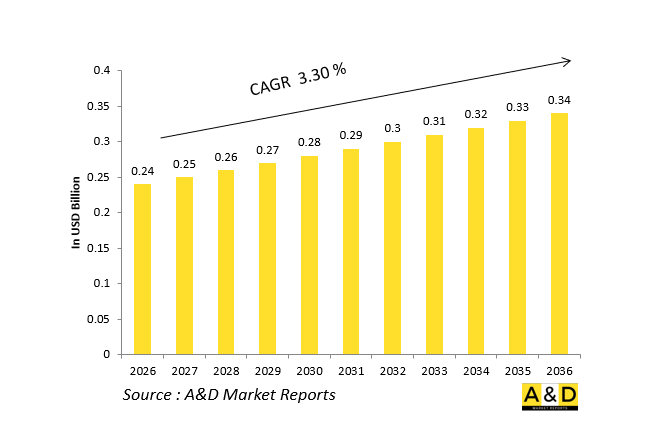
세계의 방위용 TACAN/VOR/ILS 수신기 시장 규모는 2026년에 추정 2억 4,000만 달러로, 2036년까지 3억 4,000만 달러에 달할 것으로 예측되며, 2026-2036년의 예측 기간에 CAGR로 3.30%의 성장이 전망되고 있습니다.
1. 소개
국방용 TACAN/VOR/ILS 수신기는 구형이지만 여전히 작전상 필수적인 무선 항법 시스템으로 군용기가 지상국에 대한 방위, 거리, 진입 유도를 결정할 수 있게 해줍니다. TACAN은 항로와 종단항법에 방위각과 거리 정보를 제공하고, VOR은 자기방위를 유도하며, ILS는 특히 시야가 좋지 않은 조건에서 정밀 계기 진입과 착륙을 지원합니다. 2026-2036년, 많은 공군이 최신 GNSS 및 데이터링크 항법 외에도 전통적 지상 지원 장비에 의존하는 다세대 혼합형 항공기를 계속 운용할 것이기 때문에 이러한 수신기에 대한 방위 시장 수요는 계속 중요할 것입니다.
최신형 수신기는 디지털 항공전자 아키텍처에 통합되어 멀티모드 항법 솔루션과 관성 항법 시스템 및 위성 항법 시스템과의 상호 운용성을 지원하고 있습니다. 이들은 전투기, 연습기, 수송기, 해상초계기, 회전익 항공기 플랫폼에 탑재되어 적대적이거나 통신 환경이 열악한 상황에서 GNSS의 백업 또는 보완 역할을 하는 경우가 많습니다. 레거시 인프라가 유지되고 새로운 플랫폼도 하위 호환성을 고려하여 설계되었으므로 TACAN/VOR/ILS 지원 수신기는 고정익과 회전익을 막론하고 안전하고 유연하며 상호 운용 가능한 군용 항공 작전의 중요한 구성 요소로 남아 있습니다.
2. 국방용 TACAN/VOR/ILS 수신기 시장에서의 기술 영향력
기술의 발전으로 국방용 TACAN/VOR/ILS 수신기는 아날로그 중심의 하드웨어 장치에서 디지털화된 멀티모드 소프트웨어 정의 항법 노드로 변모하고 있습니다. 최신 수신기는 첨단 신호 처리, 광대역 프론트 엔드, 디지털 필터링을 활용하여 신호 포착 성능을 향상시키고, 방해 및 간섭에 대한 내성을 높이고, 전자파가 밀집된 환경에서도 안정적인 잠금을 유지합니다. 또한 관성항법이나 GNSS 데이터와 같은 다른 센서 입력과 결합하는 경우가 증가하고 있으며, 하나의 정보 소스가 작동하지 않는 경우에도 성능을 적절히 유지할 수 있는 하이브리드 항법 솔루션을 형성하고 있습니다.
디지털 비행 제어 시스템, 작전 컴퓨터, 조종석 디스플레이와의 통합을 통해 TACAN/VOR/ILS 데이터는 조종사의 지속적인 수동 개입 없이 자동 항법 모드, 홀드 패턴, 정밀 진입 유도를 지원할 수 있습니다. 개방형 아키텍처 설계와 모듈식 형식은 소프트웨어 업데이트를 통해 동일한 수신기 하드웨어를 다른 플랫폼과 전략에 맞게 재구성할 수 있으며, 개발 및 통합 주기를 단축할 수 있습니다. 사이버 보안 및 전자기 내성 강화 기능을 통해 이러한 통신 링크는 스푸핑 및 전자전의 영향으로부터 보호됩니다. 또한 지속적인 소형화를 통해 소형 훈련기, UAV, 특수작전용 포드에 탑재가 가능합니다. 이러한 혁신은 디지털 전장 시대에도 기존 무선 항법의 유용성을 유지하고, 위성 기반 시스템의 기능이 저하된 상황에서도 안전하고 상호 운용성이 높은 견고한 접근 방식을 보장합니다.
3. 국방용 TACAN/VOR/ILS 수신기 시장의 주요 촉진요인
국방용 TACAN/VOR/ILS 수신기 시장은 기존 세계 항공 교통 및 군용 항법 인프라와의 상호 운용성을 유지해야 할 필요성에 의해 주도되고 있습니다. 이러한 인프라의 대부분은 여전히 항로와 진입 작전에서 이러한 레거시 시스템에 의존하고 있습니다. 많은 공군은 신세대 항공기와 구세대 항공기가 혼합된 함대를 운영하고 있으며, 신세대 항공기는 표준 계기 비행 방식에 따라 비행하고 구식 플랫폼, 기지 및 수용국 공항과 연계할 수 있어야 합니다. 이 모든 것은 TACAN/VOR/ILS 신호에 의존하고 있습니다. 이러한 현실이 구식 및 최신 항법 표준을 모두 지원하는 수신기에 대한 수요를 지원하고 있습니다.
세계의 국방용 TACAN/VOR/ILS 수신기 시장에 대해 조사 분석했으며, 시장에 영향을 미치는 기술, 향후 10년간의 예측, 각 지역별 시장 동향 등의 정보를 전해드립니다.
목차
방위용 TACAN/VOR/ILS 수신기 시장 보고서의 정의
방위용 TACAN/VOR/ILS 수신기 시장 세분화
향후 10년간 방위용 TACAN/VOR/ILS 수신기 시장의 분석
세계의 방위용 TACAN/VOR/ILS 수신기 시장 예측
지역의 방위용 TACAN/VOR/ILS 수신기 시장 동향과 예측
시장 예측과 시나리오 분석
방위용 TACAN/VOR/ILS 수신기 시장의 국가 분석
시장 예측과 시나리오 분석
방위용 TACAN/VOR/ILS 수신기 시장의 기회 매트릭스
결론
KSA 26.04.20Global Defense TACAN / VOR / ILS Receivers Market
The Global Defense TACAN / VOR / ILS Receivers Market is estimated at USD 0.24 billion in 2026, projected to grow to USD 0.34 billion by 2036 at a Compound Annual Growth Rate (CAGR) of 3.30% over the forecast period 2026-2036.
1. Introduction:
Defense grade TACAN, VOR, and ILS receivers are legacy but still operationally critical radio navigation systems that enable military aircraft to determine bearing, distance, and approach guidance relative to ground based stations. TACAN provides azimuth and range information for en route and terminal navigation, VOR delivers magnetic bearing guidance, and ILS supports precision instrument approaches and landings, particularly in poor visibility conditions. Over the 2026-2036 horizon, the defense market for these receivers remains relevant as many air forces continue to operate mixed generation fleets that rely on traditional ground based aids alongside modern GNSS and data link navigation.
Modern variants of these receivers are increasingly integrated into digital avionics architectures, supporting multi mode navigation solutions and interoperability with inertial and satellite based systems. They are embedded in fighters, trainers, transports, maritime patrol aircraft, and rotary wing platforms, often serving as a backup or complementary layer to GNSS in contested or degraded environments. As legacy infrastructure persists and new platforms are designed for backward compatibility, TACAN/VOR/ILS capable receivers remain a key component of safe, flexible, and interoperable military air operations across fixed and rotary wing domains.
2. Technology Impact in Defense TACAN / VOR / ILS Receivers Market
Technology is transforming defense TACAN, VOR, and ILS receivers from analog centric hardware units into digital, multi mode, software defined navigation nodes. Modern receivers leverage advanced signal processing, wide band front ends, and digital filtering to improve signal acquisition, reduce susceptibility to jamming and interference, and maintain stable lock in dense electromagnetic environments. They are increasingly combined with other sensor inputs, such as inertial and GNSS data, to form hybrid navigation solutions that can degrade gracefully when one source is compromised.
Integration with digital flight control systems, mission computers, and cockpit displays enables TACAN/VOR/ILS data to support automated navigation modes, holding patterns, and precision approach guidance without constant manual pilot intervention. Open architecture designs and modular form factors allow the same receiver hardware to be reconfigured for different platforms and missions through software updates, reducing development and integration cycles. Cybersecurity and electromagnetic hardening features help protect these links from spoofing and electronic warfare effects, while continued miniaturization supports deployment on smaller trainers, UAVs, and special mission pods. These innovations preserve the utility of traditional radio navigation in an era of digital battlespace, ensuring safe, interoperable, and robust approaches even when satellite based systems are degraded.
3. Key Drivers in Defense TACAN / VOR / ILS Receivers Market
The defense TACAN / VOR / ILS receiver market is driven by the need to maintain interoperability with existing global air traffic and military navigation infrastructure, much of which still relies on these legacy systems for en route and approach operations. Many air forces operate mixed generation fleets where new aircraft must be able to fly standard instrument procedures and coordinate with older platforms, bases, and host nation airports, all of which depend on TACAN, VOR, and ILS signals. This reality sustains demand for receivers that support both legacy and modern navigation standards.
Another key driver is the growing emphasis on resilient, multi layered navigation architectures that can fall back to ground based radio aids when GNSS or datalinks are jammed, denied, or unreliable. As electronic warfare threats rise, military planners view TACAN/VOR/ILS compatible receivers as a critical redundancy layer, particularly for precision approaches, carrier operations, and low visibility landings at forward or austere airfields. Fleet modernization and life extension programs are also accelerating the retrofit of legacy platforms with upgraded, software defined TACAN/VOR/ILS receivers that integrate cleanly with digital avionics and flight control systems. Interoperability requirements across allied forces further encourage adoption of standardized receiver interfaces and data formats, enabling shared procedures, training, and logistics. Together, these factors are sustaining a steady, if niche, demand for robust, interoperable TACAN/VOR/ILS capable navigation hardware.
4. Regional Trends in Defense TACAN / VOR / ILS Receivers Market
Regionally, North America remains a core market for advanced TACAN/VOR/ILS compatible receivers, supported by large scale fighter, trainer, maritime, and rotary wing programs that emphasize interoperability with both domestic and allied air navigation infrastructure. The United States and its partners operate extensive TACAN based en route and carrier approach networks, making these receivers essential for carrier based aviation, special mission flying, and training in standard instrument procedures.
In Europe, many air forces retain TACAN and VOR infrastructure for joint exercises and interoperability, shaping demand for receivers that can link to both NATO standard and national ground based aids. The Asia Pacific region shows a mix of legacy dependence and gradual transition, where several air forces still rely on VOR and ILS for approach and landing operations at regional bases and consequently require compatible receivers on new and modernized platforms. Middle Eastern and Gulf states are investing in modernized fleets whose navigation suites must support both advanced digital systems and traditional TACAN/VOR/ILS procedures for operations at a diverse network of host nation and coalition airfields. Across these regions, there is a growing preference for modular, multi mode receivers that can coexist with GNSS and data link navigation, often housed in open architecture form factors that allow for future upgrades without full hardware replacement.
5. Key Defense TACAN / VOR / ILS Receivers Market Program
Several flagship defense programs are shaping the TACAN / VOR / ILS receiver market over the 2026-2036 period. Next generation fighter and multi role combat air programs are specifying integrated navigation suites that include TACAN/VOR/ILS capable receivers, ensuring compatibility with legacy carrier based and airfield based procedures while supporting modern digital fly by wire and mission computer architectures. Naval aviation and carrier strike programs rely on TACAN and ILS receivers for shipboard approaches, automatic carrier landing systems, and interoperability with fleet wide communication and navigation standards.
Trainer aircraft programs emphasize TACAN/VOR/ILS compatible receivers to mirror frontline operational procedures, allowing pilots to master standard instrument flying and carrier style approaches before transitioning to advanced platforms. Maritime patrol and special mission aircraft programs require robust TACAN and ILS coverage for long range over water navigation and precision approaches at remote or austere locations. Multinational and coalition level programs standardize TACAN/VOR/ILS receiver interfaces and procedures, enabling shared training, joint exercises, and common logistics support. Rotary wing and special operations programs also retain demand for these receivers to support low level and austere field operations where GNSS may be unavailable or unreliable. Through these programs, TACAN / VOR / ILS receivers are evolving from standalone hardware into integrated elements of a layered, interoperable military navigation architecture designed to remain functional even in contested or degraded environments.
Table of Contents
Defense TACAN / VOR / ILS Receivers Market - Table of Contents
Defense TACAN / VOR / ILS Receivers Market Report Definition
Defense TACAN / VOR / ILS Receivers Market Segmentation
By Region
By Platform
By System Type
By Installation
By Modernization
Defense TACAN / VOR / ILS Receivers Market Analysis for next 10 Years
The 10-year Defense TACAN / VOR / ILS Receivers Market analysis would give a detailed overview of Defense TACAN / VOR / ILS Receivers Market growth, changing dynamics, technology adoption overviews and the overall market attractiveness is covered in this chapter.
Market Technologies of Defense TACAN / VOR / ILS Receivers Market
This segment covers the top 10 technologies that is expected to impact this market and the possible implications these technologies would have on the overall market.
Global Defense TACAN / VOR / ILS Receivers Market Forecast
The 10-year Defense TACAN / VOR / ILS Receivers Market forecast of this market is covered in detailed across the segments which are mentioned above.
Regional Defense TACAN / VOR / ILS Receivers Market Trends & Forecast
The regional counter drone market trends, drivers, restraints and Challenges of this market, the Political, Economic, Social and Technology aspects are covered in this segment. The market forecast and scenario analysis across regions are also covered in detailed in this segment. The last part of the regional analysis includes profiling of the key companies, supplier landscape and company benchmarking. The current market size is estimated based on the normal scenario.
North America
Drivers, Restraints and Challenges
PEST
Market Forecast & Scenario Analysis
Key Companies
Supplier Tier Landscape
Company Benchmarking
Europe
Middle East
APAC
South America
Country Analysis of Defense TACAN / VOR / ILS Receivers Market
This chapter deals with the key defense programs in this market, it also covers the latest news and patents which have been filed in this market. Country level 10 year market forecast and scenario analysis are also covered in this chapter.
US
Defense Programs
Latest News
Patents
Current levels of technology maturation in this market
Market Forecast & Scenario Analysis
Canada
Italy
France
Germany
Netherlands
Belgium
Spain
Sweden
Greece
Australia
South Africa
India
China
Russia
South Korea
Japan
Malaysia
Singapore
Brazil
Opportunity Matrix for Defense TACAN / VOR / ILS Receivers Market
The opportunity matrix helps the readers understand the high opportunity segments in this market.
Expert Opinions on Defense TACAN / VOR / ILS Receivers Market Report
Hear from our experts their opinion of the possible analysis for this market.
Conclusions
About Aviation and Defense Market Reports