

|
시장보고서
상품코드
2037786
극초음속 미사일 시장(2026-2036년)Global Hypersonic Missiles Market 2026-2036 |
||||||

세계의 극초음속 미사일 시장
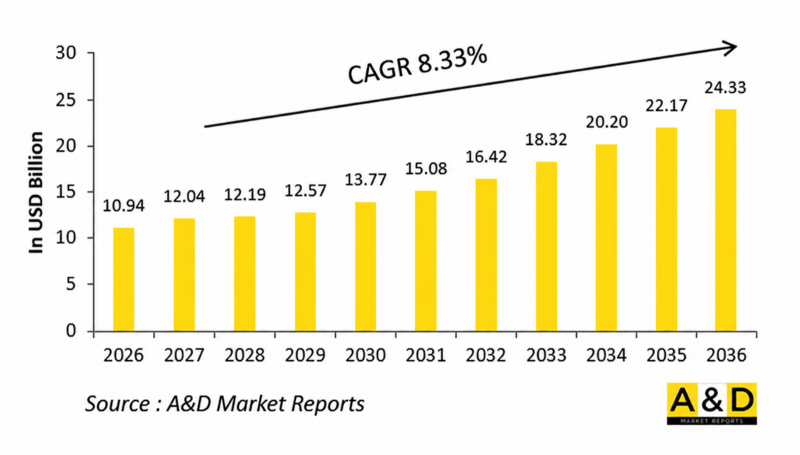
세계의 극초음속 미사일 시장 규모는 2026년에 추정 109억 4,000만 달러로, 2036년까지 243억 3,000만 달러에 달할 것으로 예측되며, 2026-2036년의 예측 기간에 CAGR로 8.33%의 성장이 전망되고 있습니다.
소개
각국이 첨단 고속 무기 시스템 개발에 박차를 가하고 있는 가운데, 세계 초음속 미사일 시장은 전 세계 방산업체들의 전략적 중점 분야로 떠오르고 있습니다. 극초음속 미사일은 매우 빠른 속도로 비행하고 기동 능력을 갖추고 있으며, 기존의 미사일 방어 시스템으로는 탐지 및 요격이 어렵습니다. 이러한 무기는 전략적 억제력, 신속 공격 작전, 현대 전쟁 작전에서 점점 더 중요한 자산으로 간주되고 있습니다.
이 시장은 지정학적 긴장 고조, 군사 현대화 프로그램, 첨단 정밀 타격 능력에 대한 수요 증가에 의해 주도되고 있습니다. 주요 군사 강국들은 국방력 강화를 위해 극초음속 활공체, 극초음속 순항미사일, 차세대 추진기술에 많은 투자를 하고 있습니다.
스크럼젯 엔진, 열 보호 시스템, 고속 유도 기술의 발전으로 보다 효율적이고 실전에 적합한 극초음속 무기의 개발이 가능해졌습니다. 또한 각국 정부는 연구개발 및 생산 프로그램을 가속화하기 위해 민간 항공우주 기업 및 방위 관련 기업과의 협력을 강화하고 있습니다. 세계 안보 정세가 계속 변화하는 가운데, 극초음속 미사일 시스템은 미래의 전략적 방어 작전에서 점점 더 중요한 역할을 할 것으로 예상됩니다.
세계 극초음속 미사일 시장에서 기술의 영향력
기술의 발전은 추진 효율, 기동성, 표적 포착 정확도, 생존성을 향상시킴으로써 전 세계 극초음속 미사일 시장을 크게 변화시키고 있습니다. 스크럼 제트 추진 기술은 지속적인 극초음속 비행을 지원하는 가장 중요한 혁신 중 하나로, 동작의 안정성을 유지하면서 미사일이 매우 빠른 속도로 비행할 수 있게 해줍니다.
초음속 미사일은 극한의 공기역학 및 열을 발생시키기 때문에 첨단 열 보호 시스템 및 내열 소재 개발도 매우 중요합니다. 재료 과학의 지속적인 발전으로 방위산업체들은 고속 비행 중 미사일의 내구성과 작전 효율성을 향상시킬 수 있게 되었습니다.
표적 포착 정확도, 탄도 최적화, 위협 회피 능력을 향상시키기 위해 AI와 첨단 유도 시스템이 극초음속 무기에 점점 더 많이 통합되고 있습니다. 이러한 기술을 통해 미사일은 역동적인 전장 상황에 적응하고 요격 위험을 줄일 수 있습니다.
센서 융합, 위성 항법, 실시간 전장 통신 기술은 작전 조정과 표적 포착의 효율성을 더욱 높이고 있습니다. 또한 예측 분석 및 탄도 모델링에 대한 연구는 극초음속 위협에 대한 첨단 미사일 방어 및 요격 전략 개발을 지원하고 있습니다. 새로운 기술은 미래의 극초음속 미사일 시스템의 운용 능력을 지속적으로 형성할 것으로 예상됩니다.
세계의 극초음속 미사일 시장의 주요 추진 요인
지정학적 긴장 고조와 주요 군사 강대국의 전략적 경쟁은 세계 극초음속 미사일 시장의 중요한 촉진요인입니다. 각국은 급변하는 안보 환경에서 억지력을 강화하고 공격의 효율성을 높이며 군사적 우위를 유지하기 위해 극초음속 무기 개발을 중시하고 있습니다.
기존 미사일 방어 시스템의 한계가 드러나고 있는 것도 극초음속 기술에 대한 투자를 부추기고 있습니다. 극초음속 미사일은 속도, 기동성, 예측할 수 없는 비행 경로로 인해 현대 방공 시스템에 매우 효과적인 것으로 여겨지고 있습니다. 이 능력으로 국방 기관은 조달 및 연구 활동을 가속화하고 있습니다.
추진 시스템, AI, 열 관리, 유도 기술의 발전으로 극초음속 무기의 실용화 가능성이 높아지고 있습니다. 각국 정부는 스크럼젯 엔진, 활공체, 극한의 온도를 견딜 수 있는 첨단 소재에 초점을 맞춘 연구 프로그램에 대한 자금 지원을 확대하고 있습니다.
전 세계의 군사 현대화 노력과 국방 예산의 증가도 시장 확대를 더욱 부추기고 있습니다. 각국은 신속한 대응 능력과 정밀 타격 능력을 향상시키기 위해 광범위한 방어 전략에 극초음속 기술을 통합하고 있습니다. 또한 정부, 방위 관련 기업, 항공우주 기업 간의 협력 관계가 심화되면서 극초음속 시스템의 혁신과 대규모 개발이 가속화되고 있습니다.
세계의 극초음속 미사일 시장에 대해 조사 분석했으며, 시장에 영향을 미치는 기술, 향후 10년간의 예측, 지역별 동향 등의 정보를 전해드립니다.
목차
극초음속 미사일 시장 보고서의 정의
극초음속 미사일 시장 세분화
향후 10년간의 극초음속 미사일 시장 분석
세계의 극초음속 미사일 시장 전망
지역 극초음속 미사일 시장 동향 및 전망
시장 예측 및 시나리오 분석
극초음속 미사일 시장의 국가별 분석
시장 예측 및 시나리오 분석
극초음속 미사일 시장의 기회 매트릭스
결론
KSA 26.05.29Global Hypersonic Missiles Market
The Global Hypersonic Missiles Market is estimated at USD 10.94 billion in 2026, projected to grow to USD 24.33 billion by 2036 at a Compound Annual Growth Rate (CAGR) of 8.33% over the forecast period 2026-2036.
Introduction
The Global Hypersonic Missiles Market is becoming a strategic focus area for defense organizations worldwide as nations accelerate the development of advanced high-speed weapon systems. Hypersonic missiles travel at extremely high velocities and possess maneuvering capabilities that make them difficult to detect and intercept using conventional missile defense systems. These weapons are increasingly viewed as critical assets for strategic deterrence, rapid strike missions, and modern warfare operations.
The market is driven by growing geopolitical tensions, military modernization programs, and the rising demand for advanced precision strike capabilities. Major military powers are investing heavily in hypersonic glide vehicles, hypersonic cruise missiles, and next-generation propulsion technologies to strengthen national defense capabilities.
Advancements in scramjet engines, thermal protection systems, and high-speed guidance technologies are enabling the development of more efficient and operationally capable hypersonic weapons. Governments are also increasing collaboration with private aerospace companies and defense contractors to accelerate research and production programs. As global security dynamics continue to evolve, hypersonic missile systems are expected to play an increasingly important role in future strategic defense operations.
Technology Impact in Global Hypersonic Missiles Market
Technological advancements are significantly transforming the Global Hypersonic Missiles Market by improving propulsion efficiency, maneuverability, targeting precision, and survivability. Scramjet propulsion technology is one of the most important innovations supporting sustained hypersonic flight, enabling missiles to travel at extremely high speeds while maintaining operational stability.
Advanced thermal protection systems and heat-resistant materials are also critical in hypersonic missile development, as these weapons operate under extreme aerodynamic and thermal conditions. Continuous improvements in material science are helping defense manufacturers enhance missile durability and operational effectiveness during high-speed flight.
Artificial intelligence and advanced guidance systems are increasingly integrated into hypersonic weapons to improve targeting accuracy, trajectory optimization, and threat evasion capabilities. These technologies enable missiles to adapt to dynamic battlefield conditions and reduce interception risks.
Sensor fusion, satellite navigation, and real-time battlefield communication technologies are further enhancing mission coordination and targeting efficiency. Additionally, research in predictive analytics and trajectory modeling is supporting the development of advanced missile defense and interception strategies against hypersonic threats. Emerging technologies are expected to continue reshaping the operational capabilities of future hypersonic missile systems.
Key Drivers in Global Hypersonic Missiles Market
Growing geopolitical tensions and strategic competition among major military powers are key drivers of the Global Hypersonic Missiles Market. Nations are prioritizing the development of hypersonic weapons to strengthen deterrence capabilities, improve strike effectiveness, and maintain military superiority in rapidly evolving security environments.
The increasing limitations of conventional missile defense systems are also encouraging investment in hypersonic technologies. Due to their speed, maneuverability, and unpredictable flight paths, hypersonic missiles are considered highly effective against modern air defense systems. This capability is driving defense agencies to accelerate procurement and research activities.
Advancements in propulsion systems, artificial intelligence, thermal management, and guidance technologies are making hypersonic weapons more operationally feasible. Governments are also increasing funding for research programs focused on scramjet engines, glide vehicles, and advanced materials capable of withstanding extreme temperatures.
Military modernization initiatives and increasing defense budgets worldwide are further supporting market expansion. Countries are integrating hypersonic technologies into broader defense strategies to improve rapid response and precision strike capabilities. In addition, growing collaboration between governments, defense contractors, and aerospace companies is accelerating innovation and large-scale development of hypersonic systems.
Regional Trends in Global Hypersonic Missiles Market
North America remains one of the leading regions in the Global Hypersonic Missiles Market due to extensive investments in advanced defense technologies and ongoing hypersonic weapons programs. The region focuses heavily on developing next-generation strike capabilities, missile defense systems, and advanced propulsion technologies to maintain military superiority.
Europe is increasingly investing in hypersonic research and collaborative defense initiatives aimed at strengthening regional security capabilities. Several countries are focusing on advanced missile systems, air defense modernization, and technology partnerships to enhance strategic deterrence.
The Asia-Pacific region is witnessing rapid market growth driven by rising geopolitical tensions, territorial disputes, and strong defense modernization programs. Countries such as China, India, Japan, and South Korea are investing significantly in indigenous hypersonic weapon development and missile defense technologies. India's growing focus on hypersonic propulsion and advanced missile programs reflects the region's increasing strategic emphasis on high-speed weapon systems.
The Middle East is gradually exploring advanced missile technologies to strengthen regional defense capabilities, while Russia continues to play a major role in global hypersonic weapon deployment and strategic deterrence programs. Increasing global defense competition is expected to drive continued regional investments in hypersonic technologies and counter-hypersonic defense systems.
Key Global Hypersonic Missiles Market Program
Several major defense programs worldwide are accelerating the development and deployment of hypersonic missile systems. Governments are investing heavily in hypersonic glide vehicles, scramjet-powered cruise missiles, and advanced strike systems designed for rapid response and strategic deterrence missions.
Military organizations are focusing on integrating hypersonic technologies into land-based, naval, and airborne platforms to enhance operational flexibility and long-range precision strike capabilities. Programs involving advanced thermal protection systems, autonomous guidance technologies, and high-speed propulsion are supporting the transition from prototype development to operational deployment.
Research institutions and defense contractors are collaborating to improve missile maneuverability, survivability, and targeting accuracy under extreme operational conditions. Governments are also investing in counter-hypersonic defense programs aimed at improving threat detection, tracking, and interception capabilities.
India's ongoing hypersonic propulsion and missile development initiatives, including scramjet combustor testing programs, demonstrate increasing global participation in advanced hypersonic research. Collaborative defense partnerships between allied nations are further accelerating innovation, technology transfer, and large-scale production efforts in the global hypersonic missile industry.
Table of Contents
Hypersonic Missiles Market - Table of Contents
Hypersonic Missiles Market Report Definition
Hypersonic Missiles Market Segmentation
By Region
By Product
By Guidance
Hypersonic Missiles Market Analysis for next 10 Years
The 10-year Hypersonic Missiles Market analysis would give a detailed overview of Hypersonic Missiles Market growth, changing dynamics, technology adoption overviews and the overall market attractiveness is covered in this chapter.
Market Technologies of Hypersonic Missiles Market
This segment covers the top 10 technologies that is expected to impact this market and the possible implications these technologies would have on the overall market.
Global Hypersonic Missiles Market Forecast
The 10-year hypersonic missiles market forecast of this market is covered in detailed across the segments which are mentioned above.
Regional Hypersonic Missiles Market Trends & Forecast
The regional hypersonic missiles market trends, drivers, restraints and Challenges of this market, the Political, Economic, Social and Technology aspects are covered in this segment. The market forecast and scenario analysis across regions are also covered in detailed in this segment. The last part of the regional analysis includes profiling of the key companies, supplier landscape and company benchmarking. The current market size is estimated based on the normal scenario.
North America
Drivers, Restraints and Challenges
PEST
Market Forecast & Scenario Analysis
Key Companies
Supplier Tier Landscape
Company Benchmarking
Europe
Middle East
APAC
South America
Country Analysis of Hypersonic Missiles Market
This chapter deals with the key defense programs in this market, it also covers the latest news and patents which have been filed in this market. Country level 10 year market forecast and scenario analysis are also covered in this chapter.
US
Defense Programs
Latest News
Patents
Current levels of technology maturation in this market
Market Forecast & Scenario Analysis
Canada
Italy
France
Germany
Netherlands
Belgium
Spain
Sweden
Greece
Australia
South Africa
India
China
Russia
South Korea
Japan
Malaysia
Singapore
Brazil
Opportunity Matrix for Hypersonic Missiles Market
The opportunity matrix helps the readers understand the high opportunity segments in this market.
Expert Opinions on Hypersonic Missiles Market Report
Hear from our experts their opinion of the possible analysis for this market.
Conclusions
About Aviation and Defense Market Reports


