|
시장보고서
상품코드
2029040
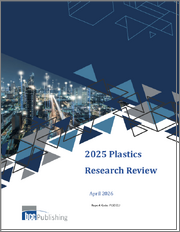
플라스틱 조사 리뷰(2025년)2025 Plastics Research Review |
||||||

세계 고성능 필름 시장 규모는 2024년 220억 파운드에 달할 것으로 추정되며, 2025년부터 2030년까지 CAGR 7.2%로 성장하여 2030년 말에는 331억 파운드에 달할 것으로 예상됩니다.
전 세계 CO2 유래 플라스틱 시장 규모는 2024년에 3억 9,500만 달러로 추정되며, 2025년부터 2030년까지 27.8%의 CAGR을 기록하여 2030년 말에는 17억 달러에 달할 것으로 예상됩니다.
세계 폴리머 폼 시장 규모는 2024년에 1,488억 달러로 평가되었으며, 2025년부터 2030년까지 연평균 5%의 CAGR로 2030년 말까지 1,978억 달러에 달할 것으로 예상됩니다.
세계 플라스틱 산업은 포장, 자동차, 건설, 전자, 헬스케어, 소비재 등 다양한 분야를 아우르고 있습니다. 자동차 부품용 경량 폴리머, 포장용 연질 필름, 의료용 의료용 플라스틱 등 각 분야별로 전문화된 소재가 요구되고 있습니다. 환경 문제가 기존 관행에 도전이 되고 있지만, 플라스틱 산업은 혁신을 촉진하고 새로운 성장 기회를 창출하고 있습니다. 플라스틱 폐기물에 대한 인식이 높아지면서 재생 플라스틱 사용, 순환 경제 이니셔티브의 실행, 친환경 소재 채택을 지원하는 규제적 인센티브의 도입이 촉진되고 있습니다.
고성능 필름, CO2 유래 플라스틱, 폴리머 폼, 목질 플라스틱 복합재, 바이오플라스틱 등 플라스틱 산업의 일부 부문은 괄목할 만한 성장을 보이고 있습니다. 각 부문은 장벽 강화, 경량화, 지속가능성, 탄소발자국 감소 등 각기 다른 시장 요구에 대응하고 있습니다.
고성능 필름 분야는 포장, 전자기기, 산업용으로 수요가 증가함에 따라 확대되고 있습니다. 최근 재료 과학 및 제조 공정의 발전으로 내구성, 광학 투명성, 환경 스트레스에 대한 내성이 향상된 필름이 개발되었습니다. 업계가 유연하고 가벼운 솔루션으로 전환함에 따라, 이러한 필름은 자동차, 항공우주, 전자제품 등의 분야에서 진화하는 요구사항을 충족할 수 있게 되어 지속적인 성장을 뒷받침하고 있습니다.
CO2 유래 플라스틱은 기존의 석유 유래 폴리머를 대체할 수 있는 지속가능한 대안으로 떠오르고 있습니다. 이 시장은 촉매 기술, 전기화학 변환, 생명공학 기술의 발전에 힘입어 탄소 이용 기술에 대한 관심이 증가하고 있는 것이 특징입니다. 기업들은 CO2를 가치 있는 고분자 전구체로 전환하기 위한 고효율 촉매 개발에 많은 투자를 하고 있습니다. 탄소 배출에 대한 엄격한 규제와 기업의 야심찬 지속가능성 목표가 맞물리면서 시장 확대는 더욱 가속화될 것으로 예상됩니다.
폴리머 폼은 경량성, 단열성, 비용 효율성이 높아 건설, 자동차, 포장, 가구 산업에서 활용되고 있습니다. 이러한 재료는 온도 안정성에 기여하고 식품, 의약품, 전자제품 등의 제품을 보관 및 운송 중에 보호하는 역할을 하기 때문에 폴리머 폼에 대한 수요는 지속되고 있습니다.
목질 플라스틱 복합재료(WPC)는 목재 섬유와 열가소성 플라스틱을 융합한 재료로 내구성, 내습성, 최소한의 유지보수 요건을 갖추고 있습니다. WPC는 데크재, 울타리, 가구, 자동차 내장재 등에 널리 이용되고 있습니다. 친환경 건축자재에 대한 수요 증가와 재생 플라스틱의 채택이 이 부문의 성장을 이끄는 주요 요인으로 작용하고 있습니다. 자동차에 재활용 또는 생분해성 WPC 부품의 채택은 기계적 강도와 음향 성능의 향상으로 이어질 것으로 예상됩니다.
바이오플라스틱 시장은 환경 문제에 대한 관심 증가와 플라스틱 폐기물 감축에 대한 규제 압력에 힘입어 괄목할 만한 성장을 거듭하고 있습니다. 옥수수 전분, 사탕수수, 셀룰로오스 등 재생 가능한 자원으로 생산되는 바이오플라스틱은 생분해성과 탄소발자국 감소 등의 이점을 제공합니다. 석유화학제품의 환경 영향과 원유의 유한성에 대한 우려가 커지면서 바이오 기반 폴리머의 개발이 가속화되고 있습니다. 식품 포장 및 의료기기 등의 분야에서 석유화학제품의 사용을 제한하는 규제 조치로 인해 업계 전반에서 생분해성 대체품을 포함한 바이오플라스틱의 채택이 더욱 촉진될 것으로 예상됩니다.
본 조사 리뷰는 BCC Research가 발행한 고성능 필름, CO2 유래 플라스틱, 폴리머 폼, 목재 플라스틱 복합재(WPC), 바이오플라스틱 등 플라스틱 관련 보고서의 하이라이트와 발췌 내용을 담고 있으며, 각 시장 개요, 시장 영향요인 및 시장 기회 분석, 신흥 기술 및 기술 개발 동향, 시장 규모 추정 및 예측, 각종 부문별 및 지역별 상세 분석 등을 정리했습니다.
목차
제1장 서문
제2장 고성능 필름 : 세계 시장(PLS076C)
- 주요 요약
- 시장 전망
- 조사 범위
- 시장 요약
- 시장 개요
- 시장 정의
- 가치사슬 분석
- 시장 역학
- 시장 촉진요인
- 시장의 과제
- 시장 기회
- 신흥 기술 및 개발
- 후막용 첨단 폴리머
- 초박형 폴리이미드 필름
- 고성능 커패시터 필름
- 포장용 바이오 기반 필름
- 가스 분자 불투과성 고분자 필름
- 시장 세분화 분석
- 용도별 시장 분석
- 지역별 내역
- 지역별 시장 분석
- 경쟁사 정보
- 산업구조
- 기업 점유율 분석
제3장 세계 CO2 유래 플라스틱 시장(PLS127A)
- 주요 요약
- 시장 전망
- 조사 범위
- 시장 요약
- 시장 개요
- 시장 정의
- 세계 CO2 유래 플라스틱 시장 공급망 분석
- 시장 역학
- 시장 촉진요인
- 시장 억제요인
- 시장 기회
- 시장의 과제
- 신흥 기술 및 개발
- 이산화탄소 배출물로 생분해성 플라스틱 생산
- 탄소 회수를 위한 획기적인 기술
- 볼타 기술의 진화
- 시장 세분화 분석
- 생산 공정별 시장 분석
- 지역별 내역
- 지역별 시장 분석
- 경쟁사 정보
- 산업구조
- 기업 순위 분석
제4장 폴리머 폼 : 세계 시장(PLS008K)
- 주요 요약
- 시장 전망
- 조사 범위
- 시장 요약
- 시장 개요
- 시장 정의
- 공급망 분석
- 시장 역학
- 시장 촉진요인
- 시장 억제요인
- 시장 기회
- 신흥 기술 및 개발
- 고급 발포제 및 발포 기술
- 폴리머 폼 재활용
- 시장 세분화 분석
- 용도별 시장 분석
- 지역별 내역
- 지역별 시장 분석
- 경쟁사 정보
- 산업구조
- 시장 점유율 분석
제5장 바이오플라스틱 세계 시장과 기술(PLS050G)
- 주요 요약
- 시장 전망
- 조사 범위
- 시장 요약
- 시장 개요
- 시장 정의
- 세계 바이오플라스틱 시장 공급망 분석
- 시장 역학
- 시장 촉진요인
- 시장 억제요인
- 시장 기회
- 시장의 과제
- 신흥 기술 및 개발
- 보라색 박테리아를 이용한 지속가능한 바이오플라스틱 생산
- 해수에서 빠르게 분해되는 바이오플라스틱 개발
- 시장 세분화 분석
- 원재료 유형별 시장 분석
- 지역별 내역
- 지역별 시장 분석
- 경쟁사 정보
- 바이오플라스틱 시장에서의 세계 기업별 시장 점유율
제6장 목재 플라스틱 복합재료(WPC) : 기술 및 세계 시장(PLS034D)
- 주요 요약
- 시장 전망
- 조사 범위
- 시장 요약
- 시장 개요
- 시장 정의
- 세계 WPC 시장 공급망 분석
- 시장 역학
- 시장 촉진요인
- 시장 억제요인
- 시장 기회
- 시장의 과제
- 신흥 기술 및 개발
- 재생 폴리에틸렌으로 WPC 제조
- 난연제를 사용한 WPC 제조
- 시장 부문 분석
- 제품 유형별 시장 분석
- 지역별 내역
- 지역별 시장 분석
- 경쟁사 정보
- WPC 시장 : 기업 순위
제7장 부록
KSM 26.05.21The global market volume for high-performance films was estimated at 22 billion lbs. in 2024 and is expected to reach 33.1 billion lbs. by the end of 2030, at a compound annual growth rate (CAGR) of 7.2% from 2025 to 2030.
The global market for CO2-based plastics was estimated at $395 million in 2024 and is expected to reach $1.7 billion by the end of 2030, at a CAGR of 27.8% from 2025 to 2030.
The global market for polymeric foam was valued at $148.8 billion in 2024 and is expected to reach $197.8 billion by the end of 2030, at a CAGR of 5% from 2025 through 2030.
Report Scope
The global plastics industry encompasses a wide range of sectors, including packaging, automotive, construction, electronics, healthcare, and consumer goods. Each sector requires specialized materials, such as lightweight polymers for automotive components, flexible films for packaging, and medical-grade plastics for healthcare applications. Although environmental concerns present challenges to traditional practices, the plastic industry stimulates innovation and generates new growth opportunities. Heightened awareness of plastic waste has promoted the use of recycled plastics, the implementation of circular-economy initiatives, and the introduction of regulatory incentives that support the adoption of environmentally friendly materials.
Several segments within the plastics industry are experiencing significant growth, including high-performance films, CO2-based plastics, polymeric foams, wood-plastic composites, and bioplastics. Each of these segments addresses distinct market demands, such as enhanced barrier properties, lightweight construction, sustainability, and a reduced carbon footprint.
The high-performance films segment is expanding as a result of increased demand in packaging, electronics, and industrial applications. Recent advances in materials science and manufacturing processes have led to the development of films with enhanced durability, optical clarity, and resistance to environmental stressors. The industry's transition toward flexible, lightweight solutions allows these films to address evolving requirements in sectors such as automotive, aerospace, and electronics, thereby supporting continued growth.
CO2-based plastics are emerging as sustainable alternatives to conventional petroleum-derived polymers. The market for CO2-based plastics is characterized by a growing emphasis on carbon utilization technologies, supported by advances in catalysis, electrochemical conversion, and biotechnological methods. Companies are making substantial investments in the development of efficient catalysts for converting CO2 into valuable polymer precursors. Stringent regulations on carbon emissions, combined with ambitious corporate sustainability objectives, are anticipated to further accelerate market expansion.
Polymeric foams are utilized in construction, automotive, packaging, and furniture industries because of their lightweight nature, insulation properties, and cost efficiency. These materials contribute to temperature stability and protect products such as food, pharmaceuticals, and electronics during storage and transportation, thereby sustaining demand for polymeric foams.
Wood-plastic composites (WPCs) are materials that integrate wood fibers with thermoplastics, providing durability, moisture resistance, and minimal maintenance requirements. The application of WPCs is common in decking, fencing, furniture, and automotive interior components. Increasing demand for environmentally friendly construction materials and the incorporation of recycled plastics are primary factors driving the growth of this segment. The adoption of recyclable or biodegradable WPC components in automobiles is projected to enhance mechanical strength and acoustic performance.
The bioplastics market is experiencing significant growth driven by increasing environmental concerns and regulatory pressure to reduce plastic waste. Bioplastics, derived from renewable resources such as corn starch, sugarcane, and cellulose, offer advantages such as biodegradability and reduced carbon footprint. Increasing concerns regarding the environmental impact of petrochemicals and the finite availability of crude oil are accelerating the development of bio-based polymers. Regulatory measures that limit petrochemical use in applications such as food packaging and medical devices are expected to further promote the adoption of bioplastics, including biodegradable alternatives, throughout the industry.
Research Reviews from BCC Research provide market professionals with concise market coverage within a specific research category. This 2025 Research Review of Plastics provides a sampling of the type of quantitative market information, analysis, and guidance that BCC Research has been developing since its inception in 1971 to help its customers make informed business decisions. This Research Review includes highlights and excerpts from the following reports published by BCC Research in 2025:
- PLS076C High-Performance Films: Global Markets
- PLS127A Global CO2-Based Plastics Market
- PLS008K Polymeric Foams: Global Markets
- PLS034D Wood-Plastic Composites: Technologies and Global Markets
- PLS050G Global Markets and Technologies for Bioplastics
After you survey the excerpts in this Research Review, we encourage you to follow up on these topics by checking out the full market research reports associated with each topic. BCC Research looks forward to serving your market intelligence needs in the future.
Table of Contents
Chapter 1 Foreword
- Research Review Scope
Chapter 2 High-Performance Films: Global Markets (PLS076C)
- Executive Summary
- Market Outlook
- Scope of Report
- Market Summary
- Market Overview
- Market Definition
- Value Chain Analysis
- Market Dynamics
- Market Drivers
- Market Challenges
- Market Opportunities
- Emerging Technologies and Developments
- Advanced Polymers for Thick Films
- Ultra-thin Polyimide Film
- High-Performance Capacitor Films
- Biobased Film for Packaging
- Polymer Film Impermeable to Gas Molecules
- Market Segmentation Analysis
- Market Analysis by Application
- Geographic Breakdown
- Market Analysis by Region
- Competitive Intelligence
- Industry Structure
- Company Share Analysis
Chapter 3 Global CO2-Based Plastics Market (PLS127A)
- Executive Summary
- Market Outlook
- Scope of Report
- Market Summary
- Market Overview
- Market Definition
- Supply Chain Analysis of the Global CO2-Based Plastics Market
- Market Dynamics
- Market Drivers
- Market Restraints
- Market Opportunities
- Market Challenges
- Emerging Technologies and Developments
- Production of Biodegradable Plastics from CO2 Emissions
- Groundbreaking Technology for Carbon Capture
- Evolution of Volta Technology
- Market Segmentation Analysis
- Market Analysis, by Production Process
- Geographic Breakdown
- Market Analysis, by Region
- Competitive Intelligence
- Industry Structure
- Company Ranking Analysis
Chapter 4 Polymeric Foams: Global Markets (PLS008K)
- Executive Summary
- Market Outlook
- Scope of Report
- Market Summary
- Market Overview
- Market Definition
- Supply Chain Analysis
- Market Dynamics
- Market Drivers
- Market Restraints
- Market Opportunities
- Emerging Technologies and Developments
- Advanced Blowing Agents and Foaming Techniques
- Recycling of Polymeric Foams
- Market Segmentation Analysis
- Market Analysis by Application
- Geographic Breakdown
- Market Analysis by Region
- Competitive Intelligence
- Industry Structure
- Market Share Analysis
Chapter 5 Global Markets and Technologies for Bioplastics (PLS050G)
- Executive Summary
- Market Outlook
- Scope of Report
- Market Summary
- Market Overview
- Market Definition
- Supply Chain Analysis of the Global Bioplastics Markets
- Market Dynamics
- Market Drivers
- Market Restraints
- Market Opportunities
- Market Challenges
- Emerging Technologies and Developments
- Sustainable Bioplastics Production from Purple Bacteria
- Development of Fast-Degrading Bioplastics in Seawater
- Market Segmentation Analysis
- Market Analysis by Raw Material Type
- Geographic Breakdown
- Market Analysis by Region
- Competitive Intelligence
- Global Company Market Shares of Bioplastics Market
Chapter 6 Wood-Plastic Composites: Technologies and Global Markets (PLS034D)
- Executive Summary
- Market Outlook
- Scope of Report
- Market Summary
- Market Overview
- Market Definition
- Supply Chain Analysis of Global WPCs: Markets
- Market Dynamics
- Market Drivers
- Market Restraints
- Market Opportunities
- Market Challenges
- Emerging Technologies and Developments
- Production of WPCs from Recycled Polyethylene
- Production of WPCs with Flame Retardants
- Market Segment Analysis
- Market Analysis by Product Type
- Geographic Breakdown
- Market Analysis by Region
- Competitive Intelligence
- WPC Markets: Company Ranking
Chapter 7 Appendix
- Methodology
- Analyst's Credentials