|
시장보고서
상품코드
1462586
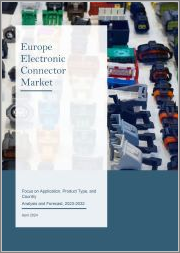
유럽의 전자 커넥터 시장 : 용도별, 제품 유형별, 국가별 - 분석 및 예측(2023-2032년)Europe Electronic Connector Market: Focus on Application, Product Type, and Country - Analysis and Forecast, 2023-2032 |
||||||
 BIS Research
유럽의 전자 커넥터 시장 규모(영국 제외)는 2023년 145억 2,000만 달러로 평가되었고, 2032년에는 220억 9,000만 달러에 이를 것으로 예측되며, 예측 기간의 CAGR은 4.78%가 될 것으로 예측됩니다.
유럽의 전자 커넥터 시장의 확대는 자동차 및 운송, 컴퓨터 및 주변기기, 통신 등 다양한 용도로 세련되고 효과적인 전자 커넥터에 대한 수요 증가에 의해 추진될 것으로 예측됩니다.
| 주요 시장 통계 | |
|---|---|
| 예측 기간 | 2023-2032년 |
| 2023년 평가액 | 145억 2,000만 달러 |
| 2032년 예측 | 220억 9,000만 달러 |
| CAGR | 4.78% |
유럽의 전자 커넥터 시장은 다양한 요인에 따라 빠르게 확대되고 있습니다. 자동차, 운송, 컴퓨터, 통신 등 다양한 산업에서 혁신적이고 효율적인 전자 커넥터에 대한 수요가 증가하고 있으며, 이 업계에서는 채용이 급증하고 있습니다. 전자 커넥터는 다양한 전자 장치와 시스템의 원활한 연결과 데이터 전송을 보장하는 데 필수적입니다.
전기자동차(EV), 자율주행 시스템, 커넥티드카 등 첨단기술의 급속한 통합을 특징으로 하는 유럽의 자동차 및 운송 부문은 전자커넥터 수요에 크게 기여하고 있습니다. 이 커넥터는 엔터테인먼트 시스템, 센서, 제어 장치 등 자동차용 전자 기기에서 중요한 부품으로 자동차의 성능과 편의성을 향상시킵니다.
또한 스마트 디바이스, IoT(사물인터넷) 및 데이터센터의 성장은 컴퓨팅 및 통신 산업에서 전자 커넥터 수요를 증가시키고 있습니다. 이러한 연결은 스마트폰, 태블릿, 서버, 네트워크 장비 등 광범위한 장비에 안정적인 연결성과 효율적인 데이터 전송을 제공합니다.
전반적으로 유럽의 전자 커넥터 시장은 다양한 산업 분야에서 고품질의 신뢰할 수 있는 전자 커넥터 솔루션에 대한 요구가 증가함에 따라 제조업체 및 공급업체에게 큰 잠재력을 가지고 있습니다.
본 보고서에서는 유럽의 전자 커넥터 시장에 대해 조사했으며, 시장 개요와 함께 용도별, 제품 유형별, 국가별 동향 및 시장 진출기업 프로파일 등의 정보를 제공합니다.
목차
주요 요약
조사 범위
제1장 시장
- 업계 전망
- 비즈니스 역학
제2장 지역
- 유럽
- 영국
제3장 시장-경쟁 벤치마킹 및 기업 프로파일
- 경쟁 벤치마킹
- 경쟁 포지션 매트릭스
- 시장 점유율 분석
- 기업 프로파일
- TE Connectivity
- Aptiv PLC
- Rosenberger Group
- HARTING Technology Group
- Phoenix Contact
- HUBER SUHNER
- Radiall
- LEMO Group
- Weidmuller Interface GmbH & Co. KG
- WAGO
제4장 조사 방법
AJY 24.04.25Introduction to Europe Electronic Connector Market
The Europe electronic connector market (excluding U.K.) is projected to reach $22.09 billion by 2032 from $14.52 billion in 2023, growing at a CAGR of 4.78% during the forecast period 2023-2032. The expansion of the Europe electronic connector market is anticipated to be propelled by rising demand for sophisticated and effective electronic connectors across various applications, including automotive and transportation, computers and peripherals, and telecommunications.
| KEY MARKET STATISTICS | |
|---|---|
| Forecast Period | 2023 - 2032 |
| 2023 Evaluation | $14.52 Billion |
| 2032 Forecast | $22.09 Billion |
| CAGR | 4.78% |
Market Introduction
The electronic connection market in Europe is expanding rapidly, owing to a variety of causes. With rising demand for innovative and efficient electronic connections in a variety of industries, including automotive, transportation, computer, and telecommunications, the industry is seeing a spike in adoption. Electronic connectors are essential for ensuring seamless connectivity and data transmission in a variety of electronic devices and systems.
The automotive and transportation sector in Europe, which is characterized by the fast integration of sophisticated technologies such as electric vehicles (EVs), autonomous driving systems, and connected vehicles, contributes significantly to the demand for electronic connectors. These connectors are critical components in automotive electronics, including entertainment systems, sensors, and control units, which improve vehicle performance and usefulness.
Furthermore, the growth of smart devices, IoT (Internet of Things) applications, and data centers is increasing the demand for electronic connections in the computing and telecommunications industries. These connections provide dependable connectivity and efficient data transfer in a wide range of devices, including smartphones, tablets, servers, and networking equipment.
Furthermore, technical improvements such as electronic component shrinking, faster data transfer speeds, and better durability are influencing the evolution of Europe's electronic connection industry. Government actions to promote digitalization, as well as investments in infrastructure development, help to drive market growth.
Overall, the European electronic connector market offers considerable potential for manufacturers and suppliers to capitalize on the region's growing need for high-quality, dependable electronic connecting solutions across a variety of industries.
Market Segmentation:
Segmentation 1: by Application
- Computers and Peripherals
- Consumer Electronics
- Automotive and Transportation
- Telecom
- Energy and Power
- Others (Industrial, Military, and Medical, among others)
Segmentation 2: by Product Type
- I/O Connectors
- Printed Circuit Board (PCB) Connectors
- RF Coaxial Connectors
- Fiber Optic Connectors
- Others (Circular Connectors, Rectangular Connectors, and others)
Segmentation 3: by Country
- Germany
- France
- Italy
- Rest-of-Europe
How can this report add value to an organization?
Product/Innovation Strategy: The product segment helps the reader understand the different types of electronic connector products available by product type (I/O connectors, printed circuit board (PCB) connectors, RF coaxial connectors, fiber optic connectors, and others (circular connectors, rectangular connectors, and others)), by application (computers and peripherals, consumer electronics, automotive and transportation, telecom, energy and power, others (industrial, military, and medical, among others)). Increasing automotive and transportation demand worldwide is pushing the sales of electronic connector systems. Therefore, the electronic connector business is a high-investment and high-revenue generating model.
Growth/Marketing Strategy: The Europe electronic connector market is exponentially growing, with enormous opportunities for the market players. Some strategies covered in this segment are product launches, partnerships and collaborations, business expansions, and investments. The companies' preferred strategies have been product launches, partnerships, and collaborations to strengthen their positions in the Europe electronic connector market.
Competitive Strategy: Key players in the Europe electronic connector market analyzed and profiled in the study involve electronic connector-based product manufacturers and start-ups. Moreover, a detailed competitive benchmarking of the players operating in the Europe electronic connector market has been done to help the reader understand how players stack against each other, presenting a clear market landscape. Additionally, comprehensive competitive strategies such as partnerships, agreements, and collaborations will aid the reader in understanding the untapped revenue pockets in the market.
Key Market Players and Competition Synopsis
The companies that are profiled have been selected based on inputs gathered from primary experts and analyzing company coverage, type portfolio, and market penetration.
Some prominent names in the market include:
- Aptiv PLC
- Phoenix Contact
- Rosenberger Group
- HARTING Technology Group
Table of Contents
Executive Summary
Scope of the Study
1 Markets
- 1.1 Industry Outlook
- 1.1.1 Overview: Electronic Connector
- 1.1.2 Trends: Current and Future
- 1.1.2.1 Growing Numbers of Electric Vehicles Worldwide
- 1.1.2.2 Growing Demand for High-Speed Data Transfer
- 1.1.2.3 Evolution of Wireless Connectivity
- 1.1.3 Supply Chain Analysis
- 1.1.4 Ecosystem/Ongoing Programs
- 1.1.4.1 Consortiums, Associations, and Regulatory Bodies
- 1.1.4.2 Government Programs
- 1.1.4.3 Programs by Research Institutions and Universities
- 1.1.5 Regulatory Landscape
- 1.1.5.1 Analyst View
- 1.2 Business Dynamics
- 1.2.1 Business Drivers
- 1.2.1.1 Rapidly Increasing Demand for Electrical Connectors in the Automotive Industry
- 1.2.1.2 Increasing Adoption of the Internet of Things (IoT)
- 1.2.1.3 Growing Demand for Renewable Energy Sources
- 1.2.2 Business Challenges
- 1.2.2.1 Intricate Design and Process of Manufacturing
- 1.2.2.2 Elevated Corrosion Levels and the Occurrence of Loose Connections
- 1.2.2.3 High Implementation Cost and Availability of Alternatives
- 1.2.3 Business Strategies
- 1.2.3.1 Product Development
- 1.2.3.2 Market Development
- 1.2.4 Corporate Strategies
- 1.2.4.1 Mergers and Acquisitions
- 1.2.4.2 Partnerships, Joint Ventures, Collaborations, and Alliances
- 1.2.5 Business Opportunities
- 1.2.5.1 Increasing Trend of Miniaturization in Electronics
- 1.2.5.2 Requirement of High-Performance Connectors in 5G Technology
- 1.2.1 Business Drivers
2 Regions
- 2.1 Europe
- 2.1.1 Market
- 2.1.1.1 Buyer Attributes
- 2.1.1.2 Key Suppliers and Product Manufacturers in Europe
- 2.1.1.3 Competitive Benchmarking
- 2.1.1.4 Business Challenges
- 2.1.1.5 Business Drivers
- 2.1.2 Application
- 2.1.2.1 Europe Electronic Connector Market (by Application), Value Data
- 2.1.3 Product
- 2.1.3.1 Europe Electronic Connector Market (by Product Type), Value Data
- 2.1.4 Europe: Country-Level Analysis
- 2.1.4.1 Germany
- 2.1.4.1.1 Market
- 2.1.4.1.1.1 Buyer Attributes
- 2.1.4.1.1.2 Key Suppliers and Product Manufacturers in Germany
- 2.1.4.1.1.3 Business Challenges
- 2.1.4.1.1.4 Business Drivers
- 2.1.4.1.2 Application
- 2.1.4.1.2.1 Germany Electronic Connector Market (by Application), Value Data
- 2.1.4.1.3 Product
- 2.1.4.1.3.1 Germany Electronic Connector Market (by Product Type), Value Data
- 2.1.4.1.1 Market
- 2.1.4.2 France
- 2.1.4.2.1 Market
- 2.1.4.2.1.1 Buyer Attributes
- 2.1.4.2.1.2 Key Suppliers and Product Manufacturers in France
- 2.1.4.2.1.3 Business Challenges
- 2.1.4.2.1.4 Business Drivers
- 2.1.4.2.2 Application
- 2.1.4.2.2.1 France Electronic Connector Market (by Application), Value Data
- 2.1.4.2.3 Product
- 2.1.4.2.3.1 France Electronic Connector Market (by Product Type), Value Data
- 2.1.4.2.1 Market
- 2.1.4.3 Italy
- 2.1.4.3.1 Market
- 2.1.4.3.1.1 Buyer Attributes
- 2.1.4.3.1.2 Key Suppliers and Product Manufacturers in Italy
- 2.1.4.3.1.3 Business Challenges
- 2.1.4.3.1.4 Business Drivers
- 2.1.4.3.2 Application
- 2.1.4.3.2.1 Italy Electronic Connector Market (by Application), Value Data
- 2.1.4.3.3 Product
- 2.1.4.3.3.1 Italy Electronic Connector Market (by Product Type), Value Data
- 2.1.4.3.1 Market
- 2.1.4.4 Rest-of-Europe
- 2.1.4.4.1 Market
- 2.1.4.4.1.1 Buyer Attributes
- 2.1.4.4.1.2 Key Suppliers and Product Manufacturers in Rest-of-Europe
- 2.1.4.4.1.3 Business Challenges
- 2.1.4.4.1.4 Business Drivers
- 2.1.4.4.2 Application
- 2.1.4.4.2.1 Rest-of-Europe Electronic Connector Market (by Application), Value Data
- 2.1.4.4.3 Product
- 2.1.4.4.3.1 Rest-of-Europe Electronic Connector Market (by Product Type), Value Data
- 2.1.4.4.1 Market
- 2.1.4.1 Germany
- 2.1.1 Market
- 2.2 U.K.
- 2.2.1 Market
- 2.2.1.1 Buyer Attributes
- 2.2.1.2 Key Suppliers and Product Manufacturers in the U.K.
- 2.2.1.3 Competitive Benchmarking
- 2.2.1.4 Business Challenges
- 2.2.1.5 Business Drivers
- 2.2.2 Application
- 2.2.2.1 U.K. Electronic Connector Market (by Application), Value Data
- 2.2.3 Product
- 2.2.3.1 U.K. Electronic Connector Market (by Product Type), Value Data
- 2.2.1 Market
3 Markets - Competitive Benchmarking & Company Profiles
- 3.1 Competitive Benchmarking
- 3.1.1 Competitive Position Matrix
- 3.2 Market Share Analysis
- 3.3 Company Profiles
- 3.3.1 TE Connectivity
- 3.3.1.1 Company Overview
- 3.3.1.1.1 Role of TE Connectivity in the Electronic Connector Market
- 3.3.1.1.2 Product Portfolio
- 3.3.1.2 Business Strategies
- 3.3.1.2.1 TE Connectivity: Product Development
- 3.3.1.3 Corporate Strategies
- 3.3.1.3.1 TE Connectivity: Mergers and Acquisitions
- 3.3.1.3.2 TE Connectivity: Partnerships, Joint Ventures, Collaborations, and Alliances
- 3.3.1.4 Production Sites and R&D Analysis
- 3.3.1.5 Analyst View
- 3.3.1.1 Company Overview
- 3.3.2 Aptiv PLC
- 3.3.2.1 Company Overview
- 3.3.2.1.1 Role of Aptiv PLC in the Electronic Connector Market
- 3.3.2.1.2 Product Portfolio
- 3.3.2.2 Corporate Strategies
- 3.3.2.2.1 Aptiv PLC: Mergers and Acquisitions
- 3.3.2.3 Production Sites and R&D Analysis
- 3.3.2.4 Analyst View
- 3.3.2.1 Company Overview
- 3.3.3 Rosenberger Group
- 3.3.3.1 Company Overview
- 3.3.3.1.1 Role of Rosenberger Group in the Electronic Connector Market
- 3.3.3.1.2 Product Portfolio
- 3.3.3.2 Business Strategies
- 3.3.3.2.1 Rosenberger Group: Product Development
- 3.3.3.2.2 Rosenberger Group: Market Development
- 3.3.3.3 Corporate Strategies
- 3.3.3.3.1 Rosenberger Group: Partnerships, Joint Ventures, Collaborations, and Alliances
- 3.3.3.4 Production Sites and R&D Analysis
- 3.3.3.5 Analyst View
- 3.3.3.1 Company Overview
- 3.3.4 HARTING Technology Group
- 3.3.4.1 Company Overview
- 3.3.4.1.1 Role of HARTING Technology Group in the Electronic Connector Market
- 3.3.4.1.2 Product Portfolio
- 3.3.4.2 Business Strategies
- 3.3.4.2.1 HARTING Technology Group: Product Development
- 3.3.4.2.2 HARTING Technology Group: Market Development
- 3.3.4.3 Corporate Strategies
- 3.3.4.3.1 HARTING Technology Group: Partnerships, Joint Ventures, Collaborations, and Alliances
- 3.3.4.4 Production Sites and R&D Analysis
- 3.3.4.5 Analyst View
- 3.3.4.1 Company Overview
- 3.3.5 Phoenix Contact
- 3.3.5.1 Company Overview
- 3.3.5.1.1 Role of Phoenix Contact in the Electronic Connector Market
- 3.3.5.1.2 Product Portfolio
- 3.3.5.2 Business Strategies
- 3.3.5.2.1 Phoenix Contact: Product Development
- 3.3.5.3 Corporate Strategies
- 3.3.5.3.1 Phoenix Contact: Partnerships, Joint Ventures, Collaborations, and Alliances
- 3.3.5.4 Production Sites and R&D Analysis
- 3.3.5.5 Analyst View
- 3.3.5.1 Company Overview
- 3.3.6 HUBER+SUHNER
- 3.3.6.1 Company Overview
- 3.3.6.1.1 Role of HUBER+SUHNER in the Electronic Connector Market
- 3.3.6.1.2 Product Portfolio
- 3.3.6.2 Corporate Strategies
- 3.3.6.2.1 HUBER+SUHNER: Mergers and Acquisitions
- 3.3.6.3 Production Sites and R&D Analysis
- 3.3.6.4 Analyst View
- 3.3.6.1 Company Overview
- 3.3.7 Radiall
- 3.3.7.1 Company Overview
- 3.3.7.1.1 Role of Radiall in the Electronic Connector Market
- 3.3.7.1.2 Product Portfolio
- 3.3.7.2 Corporate Strategies
- 3.3.7.2.1 Radiall: Mergers and Acquisitions
- 3.3.7.3 Production Sites and R&D Analysis
- 3.3.7.4 Analyst View
- 3.3.7.1 Company Overview
- 3.3.8 LEMO Group
- 3.3.8.1 Company Overview
- 3.3.8.1.1 Role of LEMO Group in the Electronic Connector Market
- 3.3.8.1.2 Product Portfolio
- 3.3.8.2 Business Strategies
- 3.3.8.2.1 LEMO Group: Product Development
- 3.3.8.3 Production Sites and R&D Analysis
- 3.3.8.4 Analyst View
- 3.3.8.1 Company Overview
- 3.3.9 Weidmuller Interface GmbH & Co. KG
- 3.3.9.1 Company Overview
- 3.3.9.1.1 Role of Weidmuller Interface GmbH & Co. KG in the Electronic Connector Market
- 3.3.9.1.2 Product Portfolio
- 3.3.9.2 Business Strategies
- 3.3.9.2.1 Weidmuller Interface GmbH & Co. KG: Market Development
- 3.3.9.3 Production Sites and R&D Analysis
- 3.3.9.4 Analyst View
- 3.3.9.1 Company Overview
- 3.3.10 WAGO
- 3.3.10.1 Company Overview
- 3.3.10.1.1 Role of WAGO in the Electronic Connector Market
- 3.3.10.1.2 Product Portfolio
- 3.3.10.2 Production Sites and R&D Analysis
- 3.3.10.3 Analyst View
- 3.3.10.1 Company Overview
- 3.3.1 TE Connectivity
4 Research Methodology
- 4.1 Data Sources
- 4.1.1 Primary Data Sources
- 4.1.2 Secondary Data Sources
- 4.1.3 Data Triangulation
- 4.2 Market Estimation and Forecast
- 4.2.1 Research Methodology - Top-Down and Bottom-Up Approach
- 4.2.2 Factors for Data Prediction and Modeling