|
시장보고서
상품코드
1501761
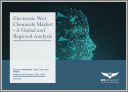
전자 습식 화학제품 시장 : 지역 분석 : 용도별, 유형별, 지역별 분석 및 예측(2024-2034년)Electronic Wet Chemicals Market - A Global and Regional Analysis: Focus on Application, Type, and Region - Analysis and Forecast, 2024-2034 |
||||||
 BIS Research
세계의 전자 습식 화학제품 시장 규모는 낙관적 견해로는 2024년 43억 2,000만 달러로 추정되고, CAGR 6.85%로 전망되며, 2034년에는 83억 9,000만 달러에 이를 것으로 예상됩니다.
| 주요 시장 통계 | |
|---|---|
| 예측 기간 | 2024-2034년 |
| 평가액(2024년) | 43억 2,000만 달러 |
| 예측(2034년) | 83억 9,000만 달러 |
| CAGR | 6.85% |
일렉트로닉스 산업의 급속한 확대가 전자 습식 화학제품 수요를 이끌고 있습니다. 이러한 화학물질은 세척, 에칭, 표면 치료, 연마 등 전자기기 제조의 다양한 단계에서 매우 중요합니다. 업계의 소형화, 성능 향상, 비용 절감에 대한 끊임없는 노력이 전자 습식 화학제품의 채용 증가로 이어지고 있습니다. 전자기기의 고기능화 및 소형화에 따라 정밀하고 신뢰성이 높은 습식 케미컬 솔루션의 중요성이 높아지고 있습니다. 이러한 수요 증가는 최고 품질의 전자 부품의 생산을 촉진하는데 있어서 전자 습식 화학제품이 완수하는 중요한 역할을 부각시키고 시장의 성장을 가속하고 있습니다.
지속가능성 및 환경보전에 대한 주목이 높아지고 있는 것도 전자 습식 화학제품 시장의 주요 촉진요인입니다. 오염과 자원의 고갈에 대한 우려가 높아지는 가운데 제조업체는 기존의 화학 공정을 대체하는 친환경 대체품을 찾고 있습니다. 전자 습식 화학제품은 전자 제조에서 고성능을 유지하면서 환경에 미치는 영향을 최소화하는 솔루션을 제공합니다. 이러한 지속가능성으로의 전환은 전자공학 분야에서 녹색 실천을 추진하는 정부의 규제와 업계의 이니셔티브에 의해 강화되고 있습니다.
게다가 화학배합에 있어서의 지속적인 기술의 진보와 혁신이 시장 확대의 기회를 뒷받침하고 있습니다. BASF SE, Dow Chemical Company, Mitsubishi Chemical Corporation 등의 기업은 업계의 진화하는 수요에 부응하는 최첨단 전자 제품용 습식 화학을 개발하는 리더 기업입니다. R&D에 대한 투자 증가와 지속가능성에 대한 헌신은 전자제품 공급망 전반에 걸쳐 보다 친환경적인 화학 솔루션의 채택을 촉진하고 있습니다.
이 보고서는 세계의 전자 습식 화학제품 시장을 조사했으며, 업계 동향, 기술 및 특허 동향, 법 규제 환경, 사례 연구, 시장 성장 촉진요인 및 억제요인, 시장 규모 추이 및 예측, 다양한 분류, 지역 및 주요 국가별 상세 분석, 경쟁 구도, 주요 기업 프로파일 등을 정리했습니다.
목차
주요 요약
제1장 시장 : 업계 전망
- 동향 : 현재 및 미래의 영향 평가
- 첨단 반도체 재료 수요 증가
- 친환경 처방에 대한 주목 고조
- 공급망 개요
- 밸류체인 분석
- 가격 예측
- R&D 리뷰
- 특허출원 동향 : 국가 및 기업별
- 규제 상황
- 이해관계자 분석
- 이용 사례
- 최종 사용자 및 구매 기준
- 주요 세계적 이벤트의 영향 분석
- 시장 역학 개요
- 시장 성장 촉진요인
- 시장 성장 억제요인
- 시장 기회
제2장 전자 습식 화학제품 시장 : 용도별
- 용도의 분류
- 용도 개요
- 전자 습식 화학제품 시장 : 용도별
- 반도체
- 프린트 기판
- IC 패키징
- 기타
제3장 전자 습식 화학제품 시장 : 제품별
- 제품 분류
- 제품 개요
- 전자 습식 화학제품 시장 : 유형별
- 아세트산
- 수산화암모늄
- 염산
- 불화수소산
- 과산화수소
- 이소프로파일알코올
- 질산
- 인산
- 황산
- 기타
- 전자 습식 화학제품 시장 : 형태별
- 가스
- 액체
- 고체
제4장 전자 습식 화학제품 시장 : 지역별
- 전자 습식 화학제품 시장 : 지역별
- 북미
- 유럽
- 아시아태평양
- 기타 지역
제5장 기업 프로파일
- 다음 프론티어
- 지리적 평가
- Air Products and Chemicals, Inc.
- BASF SE
- Cabot Microelectronics Corporation
- Dow Chemical Company
- Fujifilm Corporation
- Honeywell International Inc.
- KMG Chemicals, Inc.
- Linde plc
- Mitsubishi Chemical Corporation
- Sumitomo Chemical Co., Ltd.
- Technic Inc.
- Tokyo Ohka Kogyo Co., Ltd.
- Kanto Chemical Co. Inc.
- LANXESS
- Ineos
제6장 조사 방법
AJY 24.07.05Introduction to Electronic Wet Chemicals Market
The electronic wet chemicals market is undergoing significant growth, propelled by various key factors and market drivers. In an optimistic scenario, the market is evaluated at a valuation of $4.32 billion in 2024 and is projected to expand at a CAGR of 6.85% to reach $8.39 billion by 2034.
| KEY MARKET STATISTICS | |
|---|---|
| Forecast Period | 2024 - 2034 |
| 2024 Evaluation | $4.32 Billion |
| 2034 Forecast | $8.39 Billion |
| CAGR | 6.85% |
The electronics industry's rapid expansion is driving the demand for electronic wet chemicals. These chemicals are crucial in different stages of electronic manufacturing, including cleaning, etching, surface treatment, and polishing. The industry's constant drive for miniaturization, improved performance, and cost reduction is leading to increased adoption of electronic wet chemicals. With electronic devices becoming more sophisticated and compact, the importance of precise and reliable wet chemical solutions is growing. This rising demand highlights the critical role electronic wet chemicals play in facilitating the production of top-quality electronic components, thereby stimulating market growth.
The increasing focus on sustainability and environmental conservation is another key driver for the electronic wet chemicals market. With growing concerns about pollution and resource depletion, manufacturers are seeking eco-friendly alternatives to traditional chemical processes. Electronic wet chemicals offer solutions that minimize environmental impact while maintaining high performance in electronic manufacturing. This shift towards sustainability is reinforced by government regulations and industry initiatives promoting green practices in the electronics sector.
Moreover, ongoing technological advancements and innovations in chemical formulations are fueling opportunities for market expansion. Companies such as BASF SE, Dow Chemical Company, and Mitsubishi Chemical Corporation are among the leaders in developing cutting-edge electronic wet chemicals that meet the evolving demands of the industry. The growing investments in research and development, coupled with commitments to sustainability, are driving the adoption of greener chemical solutions across the electronics manufacturing supply chain.
Overall, the electronic wet chemicals market is experiencing steady growth, propelled by the increasing demand for advanced semiconductor materials and the continuous development of cutting-edge electronic devices. The shift towards smaller, more efficient electronic components has led to a greater need for high-performance wet chemicals used in semiconductor fabrication processes.
Market Segmentation:
Segmentation 1: by Application
- Semiconductor
- PCB
- IC Packaging
- Others
Segmentation 2: by Type
- Acetic Acid
- Ammonium Hydroxide
- Hydrochloric Acid
- Hydrofluoric Acid
- Hydrogen Peroxide
- Isopropyl Alcohol
- Nitric Acid
- Phosphoric Acid
- Sulfuric Acid
- Others
Segmentation 3: by Form
- Gas
- Liquid
- Solid
Segmentation 4: by Region
- North America
- Europe
- Asia-Pacific
- Rest-of-the-World
How can this report add value to an organization?
Product/Innovation Strategy: The global electronic wet chemicals market has been extensively segmented based on various categories, such as application, type, and form. This can help readers get a clear overview of which segments account for the largest share and which ones are well-positioned to grow in the coming years.
Competitive Strategy: A detailed competitive benchmarking of the players operating in the global electronic wet chemicals market has been done to help the reader understand how players stack against each other, presenting a clear market landscape. Additionally, comprehensive competitive strategies such as partnerships, agreements, and collaborations will aid the reader in understanding the untapped revenue pockets in the market.
Key Market Players and Competition Synopsis
The companies that are profiled have been selected based on thorough secondary research, which includes analyzing company coverage, product portfolio, market penetration, and insights gathered from primary experts.
Some of the prominent names in this market are:
- BASF SE
- Cabot Microelectronics Corporation
- Fujifilm Corporation
- Honeywell International Inc.
- Linde plc
- Technic Inc.
Key Questions Answered in this Report:
- What are the main factors driving the demand for electronic wet chemicals market?
- What are the major patents filed by the companies active in the electronic wet chemicals market?
- Who are the key players in the electronic wet chemicals market, and what are their respective market shares?
- What partnerships or collaborations are prominent among stakeholders in the electronic wet chemicals market?
- What are the strategies adopted by the key companies to gain a competitive edge in electronic wet chemicals market?
- What is the futuristic outlook for the electronic wet chemicals market in terms of growth potential?
- What is the current estimation of the electronic wet chemicals market and what growth trajectory is projected from 2024 to 2034?
- Which application, and product segment is expected to lead the market over the forecast period (2024-2034)?
- Which regions demonstrate the highest adoption rates for electronic wet chemicals market, and what factors contribute to their leadership?
Table of Contents
Executive Summary
Scope and Definition
Market/Product Definition
Key Questions Answered
Analysis and Forecast Note
1. Markets: Industry Outlook
- 1.1 Trends: Current and Future Impact Assessment
- 1.1.1 Increasing Demand for Advanced Semiconductor Materials
- 1.1.2 Growing Focus on Environmentally Friendly Formulations
- 1.2 Supply Chain Overview
- 1.2.1 Value Chain Analysis
- 1.2.2 Pricing Forecast
- 1.3 R&D Review
- 1.3.1 Patent Filing Trend by Country, by Company
- 1.4 Regulatory Landscape
- 1.5 Stakeholder Analysis
- 1.5.1 Use Case
- 1.5.2 End User and Buying Criteria
- 1.6 Impact Analysis for Key Global Events
- 1.7 Market Dynamics Overview
- 1.7.1 Market Drivers
- 1.7.2 Market Restraints
- 1.7.3 Market Opportunities
2. Electronic Wet Chemicals Market (by Application)
- 2.1 Application Segmentation
- 2.2 Application Summary
- 2.3 Electronic Wet Chemicals Market (by Application)
- 2.3.1 Semiconductor
- 2.3.2 PCB
- 2.3.3 IC Packaging
- 2.3.4 Others
3. Electronic Wet Chemicals Market (by Products)
- 3.1 Product Segmentation
- 3.2 Product Summary
- 3.3 Electronic Wet Chemicals Market (by Type)
- 3.3.1 Acetic Acid
- 3.3.2 Ammonium Hydroxide
- 3.3.3 Hydrochloric Acid
- 3.3.4 Hydrofluoric Acid
- 3.3.5 Hydrogen Peroxide
- 3.3.6 Isopropyl Alcohol
- 3.3.7 Nitric Acid
- 3.3.8 Phosphoric Acid
- 3.3.9 Sulfuric Acid
- 3.3.10 Others
- 3.4 Electronic Wet Chemicals Market (by Form)
- 3.4.1 Gas
- 3.4.2 Liquid
- 3.4.3 Solid
4. Electronic Wet Chemicals Market (by Region)
- 4.1 Electronic Wet Chemicals Market (by Region)
- 4.2 North America
- 4.2.1 Regional Overview
- 4.2.2 Driving Factors for Market Growth
- 4.2.3 Factors Challenging the Market
- 4.2.4 Application
- 4.2.5 Product
- 4.2.6 U.S.
- 4.2.6.1 Market by Application
- 4.2.6.2 Market by Product
- 4.2.7 Canada
- 4.2.7.1 Market by Application
- 4.2.7.2 Market by Product
- 4.2.8 Mexico
- 4.2.8.1 Market by Application
- 4.2.8.2 Market by Product
- 4.3 Europe
- 4.3.1 Regional Overview
- 4.3.2 Driving Factors for Market Growth
- 4.3.3 Factors Challenging the Market
- 4.3.4 Application
- 4.3.5 Product
- 4.3.6 Germany
- 4.3.6.1 Market by Application
- 4.3.6.2 Market by Product
- 4.3.7 France
- 4.3.7.1 Market by Application
- 4.3.7.2 Market by Product
- 4.3.8 U.K.
- 4.3.8.1 Market by Application
- 4.3.8.2 Market by Product
- 4.3.9 Italy
- 4.3.9.1 Market by Application
- 4.3.9.2 Market by Product
- 4.3.10 Rest-of-Europe
- 4.3.10.1 Market by Application
- 4.3.10.2 Market by Product
- 4.4 Asia-Pacific
- 4.4.1 Regional Overview
- 4.4.2 Driving Factors for Market Growth
- 4.4.3 Factors Challenging the Market
- 4.4.4 Application
- 4.4.5 Product
- 4.4.6 China
- 4.4.6.1 Market by Application
- 4.4.6.2 Market by Product
- 4.4.7 Japan
- 4.4.7.1 Market by Application
- 4.4.7.2 Market by Product
- 4.4.8 India
- 4.4.8.1 Market by Application
- 4.4.8.2 Market by Product
- 4.4.9 South Korea
- 4.4.9.1 Market by Application
- 4.4.9.2 Market by Product
- 4.4.10 Rest-of-Asia-Pacific
- 4.4.10.1 Market by Application
- 4.4.10.2 Market by Product
- 4.5 Rest-of-the-World
- 4.5.1 Regional Overview
- 4.5.2 Driving Factors for Market Growth
- 4.5.3 Factors Challenging the Market
- 4.5.4 Application
- 4.5.5 Product
- 4.5.6 South America
- 4.5.6.1 Market by Application
- 4.5.6.2 Market by Product
- 4.5.7 Middle East and Africa
- 4.5.7.1 Market by Application
- 4.5.7.2 Market by Product
5. Companies Profiled
- 5.1 Next Frontiers
- 5.2 Geographic Assessment
- 5.2.1 Air Products and Chemicals, Inc.
- 5.2.1.1 Overview
- 5.2.1.2 Top Products/Product Portfolio
- 5.2.1.3 Top Competitors
- 5.2.1.4 Target Customers
- 5.2.1.5 Key Personnel
- 5.2.1.6 Analyst View
- 5.2.1.7 Market Share
- 5.2.2 BASF SE
- 5.2.2.1 Overview
- 5.2.2.2 Top Products/Product Portfolio
- 5.2.2.3 Top Competitors
- 5.2.2.4 Target Customers
- 5.2.2.5 Key Personnel
- 5.2.2.6 Analyst View
- 5.2.2.7 Market Share
- 5.2.3 Cabot Microelectronics Corporation
- 5.2.3.1 Overview
- 5.2.3.2 Top Products/Product Portfolio
- 5.2.3.3 Top Competitors
- 5.2.3.4 Target Customers
- 5.2.3.5 Key Personnel
- 5.2.3.6 Analyst View
- 5.2.3.7 Market Share
- 5.2.4 Dow Chemical Company
- 5.2.4.1 Overview
- 5.2.4.2 Top Products/Product Portfolio
- 5.2.4.3 Top Competitors
- 5.2.4.4 Target Customers
- 5.2.4.5 Key Personnel
- 5.2.4.6 Analyst View
- 5.2.4.7 Market Share
- 5.2.5 Fujifilm Corporation
- 5.2.5.1 Overview
- 5.2.5.2 Top Products/Product Portfolio
- 5.2.5.3 Top Competitors
- 5.2.5.4 Target Customers
- 5.2.5.5 Key Personnel
- 5.2.5.6 Analyst View
- 5.2.5.7 Market Share
- 5.2.6 Honeywell International Inc.
- 5.2.6.1 Overview
- 5.2.6.2 Top Products/Product Portfolio
- 5.2.6.3 Top Competitors
- 5.2.6.4 Target Customers
- 5.2.6.5 Key Personnel
- 5.2.6.6 Analyst View
- 5.2.6.7 Market Share
- 5.2.7 KMG Chemicals, Inc.
- 5.2.7.1 Overview
- 5.2.7.2 Top Products/Product Portfolio
- 5.2.7.3 Top Competitors
- 5.2.7.4 Target Customers
- 5.2.7.5 Key Personnel
- 5.2.7.6 Analyst View
- 5.2.7.7 Market Share
- 5.2.8 Linde plc
- 5.2.8.1 Overview
- 5.2.8.2 Top Products/Product Portfolio
- 5.2.8.3 Top Competitors
- 5.2.8.4 Target Customers
- 5.2.8.5 Key Personnel
- 5.2.8.6 Analyst View
- 5.2.8.7 Market Share
- 5.2.9 Mitsubishi Chemical Corporation
- 5.2.9.1 Overview
- 5.2.9.2 Top Products/Product Portfolio
- 5.2.9.3 Top Competitors
- 5.2.9.4 Target Customers
- 5.2.9.5 Key Personnel
- 5.2.9.6 Analyst View
- 5.2.9.7 Market Share
- 5.2.10 Sumitomo Chemical Co., Ltd.
- 5.2.10.1 Overview
- 5.2.10.2 Top Products/Product Portfolio
- 5.2.10.3 Top Competitors
- 5.2.10.4 Target Customers
- 5.2.10.5 Key Personnel
- 5.2.10.6 Analyst View
- 5.2.10.7 Market Share
- 5.2.11 Technic Inc.
- 5.2.11.1 Overview
- 5.2.11.2 Top Products/Product Portfolio
- 5.2.11.3 Top Competitors
- 5.2.11.4 Target Customers
- 5.2.11.5 Key Personnel
- 5.2.11.6 Analyst View
- 5.2.11.7 Market Share
- 5.2.12 Tokyo Ohka Kogyo Co., Ltd.
- 5.2.12.1 Overview
- 5.2.12.2 Top Products/Product Portfolio
- 5.2.12.3 Top Competitors
- 5.2.12.4 Target Customers
- 5.2.12.5 Key Personnel
- 5.2.12.6 Analyst View
- 5.2.12.7 Market Share
- 5.2.13 Kanto Chemical Co. Inc.
- 5.2.13.1 Overview
- 5.2.13.2 Top Products/Product Portfolio
- 5.2.13.3 Top Competitors
- 5.2.13.4 Target Customers
- 5.2.13.5 Key Personnel
- 5.2.13.6 Analyst View
- 5.2.13.7 Market Share
- 5.2.14 LANXESS
- 5.2.14.1 Overview
- 5.2.14.2 Top Products/Product Portfolio
- 5.2.14.3 Top Competitors
- 5.2.14.4 Target Customers
- 5.2.14.5 Key Personnel
- 5.2.14.6 Analyst View
- 5.2.14.7 Market Share
- 5.2.15 Ineos
- 5.2.15.1 Overview
- 5.2.15.2 Top Products/Product Portfolio
- 5.2.15.3 Top Competitors
- 5.2.15.4 Target Customers
- 5.2.15.5 Key Personnel
- 5.2.15.6 Analyst View
- 5.2.15.7 Market Share
- 5.2.1 Air Products and Chemicals, Inc.