|
시장보고서
상품코드
1674375
목재 방부제 시장 : 유형별, 용도별, 지역별Wood Preservatives Market, By Type (Water Based, Solvent Based, and Oil Based), By Application (Residential, Commercial, and Industrial), By Geography (North America, Latin America, Europe, Asia Pacific, Middle East & Africa) |
||||||

목재 방부제 세계 시장은 2025년에 16억 5,000만 달러, 2032년에는 23억 4,000만 달러에 달할 것으로 예상되며, 2025-2032년 5.1%의 연평균 복합 성장률(CAGR)로 성장할 것으로 예상됩니다.
| 보고 범위 | 보고서 상세 내용 | ||
|---|---|---|---|
| 기준 연도 | 2024년 | 2025년 시장 규모 | 16억 5,000만 달러 |
| 실적 데이터 | 2020-2024년 | 예측 기간 | 2025-2032년 |
| 예측 기간(2025-2032년) CAGR | 5.1% | 2032년 금액 예측 | 23억 4,000만 달러 |
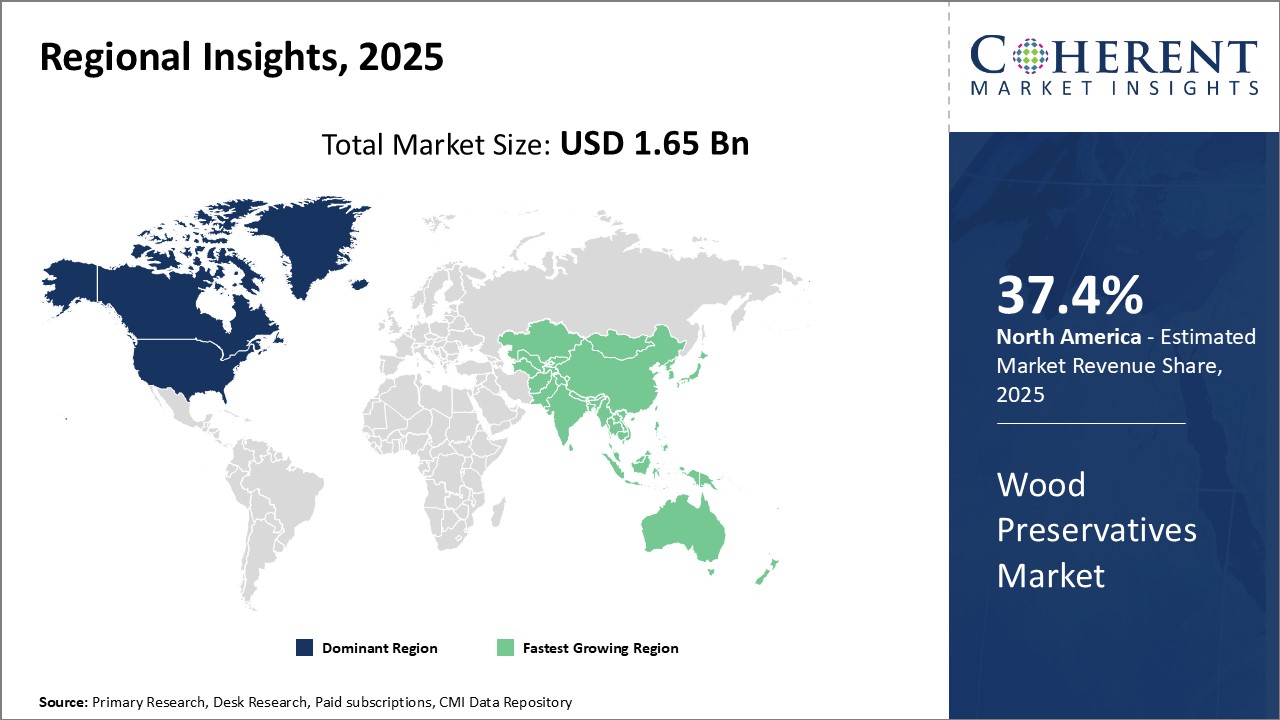
목재 방부제는 목재 제품을 곰팡이에 의한 부패, 곤충의 공격, 기타 다양한 생물학적, 생물학적 영향으로부터 목재 제품을 보호하기 위해 목재 제품에 적용되는 화학 제제이며, 조기 열화를 초래합니다. 목재는 원래 다공성이기 때문에 수분 및 기타 환경 요소를 흡수하기 쉽습니다. 방부제는 목재의 세포 구조에 침투하여 유해한 생물에 대한 장벽을 형성하여 작동합니다. 세계 목재 방부제 시장은 목재가 주요 건축자재로 널리 사용됨에 따라 최근 몇 년동안 꾸준히 성장하고 있습니다. 또한, 지속가능성과 친환경적 선택에 대한 인식이 높아지면서 금속염과 같은 천연 유래 방부제는 기존 석유 기반 방부제에 비해 높은 지지를 받고 있습니다.
시장 역학
세계 목재 방부제 시장의 성장을 주도하는 것은 전 세계의 급속한 도시화와 시장 개척, 건축물에 목재 및 목재 제품이 많이 사용되는 요인입니다. 또한, 상업 및 주택 건설 산업은 지난 10년간 지속적인 성장세를 보이고 있습니다. 유해 화학물질에 대한 환경의식이 높아지면서 차세대 바이오 및 천연 유래 목재 방부제에 대한 수요도 증가하고 있습니다. 그러나 특정 화학 물질에 대한 엄격한 규제는 시장 확대를 제한할 수 있습니다. 금속 기반 목재 방부제와 관련된 높은 원료 비용도 문제입니다. 긍정적인 측면에서는 친환경 목재 방부제 개발을 위한 새로운 생명공학 기술의 발전과 상용화가 향후 몇 년동안 유리한 기회를 제공할 것입니다.
본 조사의 주요 특징
- 세계의 목재 방부제 시장에 대해 조사 분석했으며, 2024년을 기준 연도로 하여 예측 기간(2025-2032년) 시장 규모와 연평균 성장률(CAGR)을 조사하여 전해드립니다.
- 또한, 다양한 부문에 걸친 잠재적 수익 기회를 파악하고 이 시장의 매력적인 투자 제안 매트릭스를 설명합니다.
- 또한 시장 성장 촉진요인, 억제요인, 기회, 신제품 출시 및 승인, 시장 동향, 지역별 전망, 주요 기업의 경쟁 전략 등에 대한 주요 고찰을 제공합니다.
- 이 보고서는 기업 하이라이트, 제품 포트폴리오, 주요 하이라이트, 재무 성과, 전략 및 기타 매개 변수를 기반으로 세계 목재 방부제 시장의 주요 기업을 프로파일링합니다.
- 이 보고서의 통찰력을 통해 마케팅 담당자와 기업 경영진은 향후 제품 출시, 유형 업그레이드, 시장 확대, 마케팅 전술에 대한 정보에 입각한 의사결정을 내릴 수 있습니다.
- 목재 방부제 세계 시장 보고서는 투자자, 공급업체, 제품 제조업체, 유통업체, 신규 시장 진출기업, 재무 분석가 등 이 산업의 다양한 이해관계자를 대상으로 합니다.
- 이해관계자들은 세계 목재 방부제 시장을 분석할 때 사용되는 다양한 전략 매트릭스를 통해 의사결정을 용이하게 할 수 있습니다.
목차
제1장 조사 목적과 전제조건
- 조사 목적
- 전제조건
- 약어
제2장 시장 전망
- 보고서 설명
- 시장 정의와 범위
- 주요 요약
- Coherent Opportunity Map (COM)
제3장 시장 역학, 규제, 동향 분석
- 시장 역학
- 성장 촉진요인
- 성장 억제요인
- PEST 분석
- Porter의 Five Forces 분석
- 시장 기회
- 규제 시나리오
- 산업 동향
- 인수합병(M&A)
제4장 세계의 목재 방부제 시장 - 코로나바이러스(COVID-19) 팬데믹의 영향
- 서론
- 세계의 목재 방부제 시장에 영향을 미치는 요인
- 영향 분석
제5장 세계의 목재 방부제 시장, 유형별, 2020-2032년
- 서론
- 수성
- 용제계
- 오일 베이스
제6장 세계의 목재 방부제 시장, 용도별, 2020-2032년
- 서론
- 가정
- 상업
- 산업
제7장 세계의 목재 방부제 시장, 지역별, 2020-2032년
- 서론
- 북미
- 라틴아메리카
- 유럽
- 아시아태평양
- 중동 및 아프리카
제8장 경쟁 구도
- 시장 점유율 분석
- 기업 개요
- Lada Organics Pvt. Ltd.
- Advance Agrisearch Limited
- Jubilant
- Dolphin Bay
- Rio Tinto
- LANXESS
- Shree Evid Sons
- Viance
- Nisus Corporation
- BERKEM
- Troy Corporation
- Dolphin Bay
- Impra Wood Protection Ltd.
- Wykamol Group Ltd
- Lonza Specialty Ingredients
- Koppers Performance Chemicals
- Dattashri Enterprises
제9장 애널리스트 추천 사항
- 융성과 쇠퇴
- COP(Coherent Opportunity Map)
제10장 섹션
- 참고 문헌
- 조사 방법
Global Wood Preservatives Market is estimated to be valued at USD 1.65 Bn in 2025 and is expected to reach USD 2.34 Bn by 2032, growing at a compound annual growth rate (CAGR) of 5.1% from 2025 to 2032.
| Report Coverage | Report Details | ||
|---|---|---|---|
| Base Year: | 2024 | Market Size in 2025: | USD 1.65 Bn |
| Historical Data for: | 2020 To 2024 | Forecast Period: | 2025 To 2032 |
| Forecast Period 2025 to 2032 CAGR: | 5.10% | 2032 Value Projection: | USD 2.34 Bn |
Wood preservatives are chemical formulations applied to wood products in order to protect them from fungal decay, insect attacks, and various other organismal or abiotic influences that lead to premature degradation. Wood is an inherently porous material and thus prone to absorption of water and other environmental elements. Preservatives work by permeating the cellular structure of wood and forming a barrier against damaging biological entities. The global wood preservatives market has seen steady growth in recent times due to the widespread use of wood as a primary construction material. Moreover, with increased awareness about sustainability and eco-friendly options, naturally derived preservatives such as metal-based salts have gained more traction compared to conventional oil-borne preservatives.
Market Dynamics:
The global wood preservatives market growth is driven by factors such as rapid urbanization and infrastructure development activities worldwide, which involve extensive use of wood and wood products in buildings. Moreover, commercial and residential construction industries have exhibited sustained growth over the past decade. Growing environmental awareness about harmful chemicals has also augmented the demand for newer generation bio-based and naturally derived wood preservatives. However, stringent regulations pertaining to certain chemical formulations may restrict market expansion. High raw material costs associated with metal-based wood preservatives is another challenge. On the positive side, advancement and commercialization of novel bioengineering technologies for developing eco-friendly wood preservatives present lucrative opportunities in the coming years.
Key Features of the Study:
- This report provides an in-depth analysis of the global wood preservatives market, and provides market size (US$ Bn) and compound annual growth rate (CAGR%) for the forecast period (2025-2032), considering 2024 as the base year.
- It elucidates potential revenue opportunities across different segments and explains attractive investment proposition matrices for this market.
- This study also provides key insights about market drivers, restraints, opportunities, new product launches or approval, market trends, regional outlook, and competitive strategies adopted by key players.
- It profiles key players in the global wood preservatives market based on the following parameters - company highlights, products portfolio, key highlights, financial performance, and strategies.
- Key companies covered as a part of this study include Lada Organics Pvt. Ltd., Advance Agrisearch Limited, Jubilant, Dolphin Bay, Rio Tinto, LANXESS, Shree Evid Sons, Viance, Nisus Corporation, BERKEM, Troy Corporation, Dolphin Bay, Impra Wood Protection Ltd., Wykamol Group Ltd, Lonza Specialty Ingredients, Koppers Performance Chemicals, and Dattashri Enterprises
- Insights from this report would allow marketers and the management authorities of the companies to make informed decisions regarding their future product launches, type up-gradation, market expansion, and marketing tactics.
- The global wood preservatives market report caters to various stakeholders in this industry including investors, suppliers, product manufacturers, distributors, new entrants, and financial analysts.
- Stakeholders would have ease in decision-making through various strategy matrices used in analyzing the global wood preservatives market.
Detailed Segmentation-
- By Type:
- Water Based
- Solvent Based
- Oil Based
- By Applications:
- Residential
- Commercial
- Industrial
- By Region:
- North America
- Europe
- Asia Pacific
- Latin America
- Middle East & Africa
- Company Profiles:
- Lada Organics Pvt. Ltd.
- Advance Agrisearch Limited
- Jubilant
- Dolphin Bay
- Rio Tinto
- LANXESS
- Shree Evid Sons
- Viance
- Nisus Corporation
- BERKEM
- Troy Corporation
- Dolphin Bay
- Impra Wood Protection Ltd.
- Wykamol Group Ltd
- Lonza Specialty Ingredients
- Koppers Performance Chemicals
- Dattashri Enterprises
Table of Contents
1. Research Objectives and Assumptions
- Research Objectives
- Assumptions
- Abbreviations
2. Market Purview
- Report Description
- Market Definition and Scope
- Executive Summary
- Market Snippet, By Type
- Market Snippet, By Application
- Market Snippet, By Region
- Coherent Opportunity Map (COM)
3. Market Dynamics, Regulations, and Trends Analysis
- Market Dynamics
- Drivers
- Restraints
- PEST Analysis
- PORTER's Five Forces Analysis
- Market Opportunities
- Regulatory Scenario
- Industry Trend
- Mergers and Acquisitions
4. Global Wood Preservatives Market - Impact of Coronavirus (COVID-19) Pandemic
- Overview
- Factors Affecting the Global Wood Preservatives Market
- Impact Analysis
5. Global Wood Preservatives Market, By Type, 2020-2032, (US$ Bn & KT)
- Introduction
- Market Share Analysis, 2025, 2028 and 2032 (%)
- Y-o-Y Growth Analysis, 2020 - 2032
- Segment Trends
- Water Based
- Market Share Analysis, 2025, 2028 and 2032 (%)
- Y-o-Y Growth Analysis, 2020 - 2032
- Segment Trends
- Solvent Based
- Market Share Analysis, 2025, 2028 and 2032 (%)
- Y-o-Y Growth Analysis, 2020 - 2032
- Segment Trends
- Oil Based
- Market Share Analysis, 2025, 2028 and 2032 (%)
- Y-o-Y Growth Analysis, 2020 - 2032
- Segment Trends
6. Global Wood Preservatives Market, By Application, 2020-2032, (US$ Bn & KT)
- Introduction
- Market Share Analysis, 2025, 2028 and 2032 (%)
- Y-o-Y Growth Analysis, 2020 - 2032
- Segment Trends
- Residential
- Market Share Analysis, 2025, 2028 and 2032 (%)
- Y-o-Y Growth Analysis, 2020 - 2032
- Segment Trends
- Commercial
- Market Share Analysis, 2025, 2028 and 2032 (%)
- Y-o-Y Growth Analysis, 2020 - 2032
- Segment Trends
- Industrial
- Market Share Analysis, 2025, 2028 and 2032 (%)
- Y-o-Y Growth Analysis, 2020 - 2032
- Segment Trends
7. Global Wood Preservatives Market, By Region, 2020-2032, (US$ Bn & KT)
- Introduction
- Market Share Analysis, By Region, 2025, 2028 and 2032 (%)
- Y-o-Y Growth Analysis, For Region, 2020-2032
- North America
- Introduction
- Market Size and Forecast, By Type, 2020 - 2032, (US$ Bn & KT)
- Market Size and Forecast, By Application, 2020 - 2032, (US$ Bn & KT)
- Market Size and Forecast, By Country, 2020 - 2032, (US$ Bn & KT)
- U.S.
- Canada
- Latin America
- Introduction
- Market Size and Forecast, By Type, 2020 - 2032, (US$ Bn & KT))
- Market Size and Forecast, By Application, 2020 - 2032, (US$ Bn & KT)
- Market Size and Forecast, By Country, 2020 - 2032, (US$ Bn & KT)
- Brazil
- Argentina
- Mexico
- Rest of Latin America
- Europe
- Introduction
- Market Size and Forecast, By Type, 2020 - 2032, (US$ Bn & KT)
- Market Size and Forecast, By Application, 2020 - 2032, (US$ Bn & KT)
- Market Size and Forecast, By Country, 2020 - 2032, (US$ Bn & KT)
- U.K.
- Germany
- Italy
- France
- Spain
- Russia
- Rest of Europe
- Asia Pacific
- Introduction
- Market Size and Forecast, By Type, 2020 - 2032, (US$ Bn & KT)
- Market Size and Forecast, By Application, 2020 - 2032, (US$ Bn & KT)
- Market Size and Forecast, By Country, 2020 - 2032, (US$ Bn & KT)
- China
- India
- Japan
- ASEAN
- Australia
- South Korea
- Rest of Asia Pacific
- Middle East & Africa
- Introduction
- Market Size and Forecast, By Type, 2020 - 2032, (US$ Bn & KT)
- Market Size and Forecast, By Application, 2020 - 2032 (US$ Bn & KT)
- Market Size and Forecast, By Country, 2020 - 2032, (US$ Bn & KT)
- GCC Countries
- Israel
- Rest of Middle East & Africa
8. Competitive Landscape
- Market Share Analysis
- Company Profiles
- Lada Organics Pvt. Ltd.
- Company Overview
- Product Portfolio
- Recent Developments/Updates
- Advance Agrisearch Limited
- Company Overview
- Product Portfolio
- Recent Developments/Updates
- Jubilant
- Company Overview
- Product Portfolio
- Recent Developments/Updates
- Dolphin Bay
- Company Overview
- Product Portfolio
- Recent Developments/Updates
- Rio Tinto
- Company Overview
- Product Portfolio
- Recent Developments/Updates
- LANXESS
- Company Overview
- Product Portfolio
- Recent Developments/Updates
- Shree Evid Sons
- Company Overview
- Product Portfolio
- Recent Developments/Updates
- Viance
- Company Overview
- Product Portfolio
- Recent Developments/Updates
- Nisus Corporation
- Company Overview
- Product Portfolio
- Recent Developments/Updates
- BERKEM
- Company Overview
- Product Portfolio
- Recent Developments/Updates
- Troy Corporation
- Company Overview
- Product Portfolio
- Recent Developments/Updates
- Dolphin Bay
- Company Overview
- Product Portfolio
- Recent Developments/Updates
- Impra Wood Protection Ltd.
- Company Overview
- Product Portfolio
- Recent Developments/Updates
- Wykamol Group Ltd
- Company Overview
- Product Portfolio
- Recent Developments/Updates
- Lonza Specialty Ingredients
- Company Overview
- Product Portfolio
- Recent Developments/Updates
- Koppers Performance Chemicals
- Company Overview
- Product Portfolio
- Recent Developments/Updates
- Dattashri Enterprises
- Company Overview
- Product Portfolio
- Recent Developments/Updates
9. Analyst Recommendations
- Wheel of Fortune
- Analyst View
- Coherent Opportunity Map
10. Section
- References
- Research Methodology
- About Us and Sales Contact