|
시장보고서
상품코드
2050790
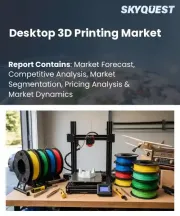
3D 프린팅 시장 : 기술별, 용도별, 최종사용자별, 지역별3D Printing Market, By Technology, By Application, By End User, By Geography |
||||||

3D 프린팅 시장은 2026년에 276억 8,000만 달러로 추계되고 있으며, 2033년까지 1,027억 달러에 달할 것으로 전망되고 있습니다. 2026-2033년에는 CAGR 20.6%로 성장할 것으로 예측됩니다.
| 리포트 범위 | 리포트 상세 | ||
|---|---|---|---|
| 기준연도 : | 2025년 | 2026년 시장 규모 : | 276억 8,000만 달러 |
| 과거 데이터 기간 : | 2020-2024년 | 예측 기간 : | 2026-2033년 |
| 2026-2033년 예측 기간의 CAGR : | 20.60% | 2033년 시장 규모 예측 : | 1,027억 달러 |
세계의 3D 프린팅 시장은 지난 10년간 다양한 산업 분야에서의 활용 확대에 힘입어 괄목할 만한 성장을 거듭해왔습니다. 3D 프린팅(적층조형이라고도 함)은 디지털 데이터로 입체물을 만들어내는 과정입니다. 이를 통해 기존 방식으로는 제조가 불가능한 복잡한 형상의 제품을 제작할 수 있습니다. 자동차에서 항공우주, 의료, 소비재에 이르기까지 3D 프린팅은 제품 설계 및 제조 공정에 큰 이점을 가져다주고 있습니다. 이 기술을 통해 대량 맞춤화 실현, 설계 최적화를 통한 비용 절감, 재료 낭비를 줄일 수 있습니다. 재료, 소프트웨어, 프린터의 발전으로 3D 프린팅은 모든 규모의 기업에게 보다 친숙하고 합리적인 가격으로 다가서고 있습니다. 아직 충분히 개발되지 않은 많은 응용 분야가 있고, 혁신이 계속되고 있으므로 3D 프린팅 산업은 전 세계 제조업에 혁명을 일으킬 준비가 되어 있습니다.
시장 역학
세계의 3D 프린팅 시장은 여러 요인에 힘입어 2026-2033년 연평균 20% 이상의 성장률을 기록할 것으로 예상됩니다. 지난 수년간 3D 프린터 가격이 크게 하락하면서 새로운 응용 분야와 중소기업의 도입을 촉진하고 있습니다. 데스크톱형 3D 프린터의 기능 향상으로 사내 프로토타이핑 및 중요도가 낮은 부품의 생산이 가능해졌습니다. 산업용 3D 프린터를 이용한 대규모 생산은 우수한 설계를 실현하기 위해 자동차 및 항공우주 산업 제조 현장에서 사용 사례를 볼 수 있습니다. 3D 프린팅에 대응하는 재료의 범위는 열경화성 수지, 고급 금속, 복합재료 등 몇 배로 확대되었습니다. 이를 통해 프로토타입부터 최종 사용 제품까지 다양한 용도로 활용되고 있습니다. 3D 모델링, 스캐닝, 슬라이싱, 공정 시뮬레이션을 위한 소프트웨어의 발전이 복잡한 설계를 지원하고 있습니다. 그러나 재료의 한계, 인쇄 속도, 크기 등의 제약으로 인해 더 널리 보급되지 못하고 있습니다. 산업용 3D 프린터에 필요한 막대한 설비 투자도 특히 중소기업에 있어서는 큰 부담으로 작용하고 있습니다.
본 조사의 주요 특징
- 이 보고서는 다양한 부문의 잠재적 매출 창출 기회를 밝히고, 이 시장의 매력적인 투자 제안 매트릭스를 설명합니다.
- 또한 시장 촉진요인, 시장 억제요인, 기회, 신제품 출시 및 승인, 시장 동향, 지역별 전망, 주요 기업이 채택한 경쟁 전략에 대한 중요 인사이트를 제공합니다.
- 이 보고서는 글로벌 3D 프린팅 시장의 주요 기업 개요을 회사 개요, 제품 포트폴리오, 주요 특징, 재무 실적, 전략 등의 정보를 바탕으로 작성되었습니다.
- 이 보고서의 내용을 통해 기업의 마케팅 담당자와 경영진은 향후 제품 출시, 모델 업그레이드, 시장 확대 및 마케팅 전략에 대한 정보에 입각한 의사결정을 내릴 수 있을 것입니다.
- 이 세계 3D 프린팅 시장 보고서는 투자자, 공급업체, 제품 제조업체, 유통업체, 신규 진입자, 재무 분석가 등 업계의 다양한 이해관계자를 대상으로 합니다.
- 이해관계자들은 글로벌 3D 프린팅 시장을 분석하는 데 사용되는 다양한 전략 매트릭스를 통해 의사결정을 쉽게 내릴 수 있을 것입니다.
목차
제1장 조사 목적과 전제조건
제2장 시장 전망
제3장 시장 역학·규제·동향 분석
제4장 세계의 3D 프린팅 시장 : 기술별, 2026-2033년
제5장 세계의 3D 프린팅 시장 : 용도별, 2026-2033년
제6장 세계의 3D 프린팅 시장 : 최종사용자별, 2026-2033년
제7장 세계의 3D 프린팅 시장 : 지역별, 2026-2033년
제8장 경쟁 구도
제9장 애널리스트의 제안
제10장 참고 문헌 및 조사 방법
KSA 26.06.103d Printing Market is estimated to be valued at USD 27.68 Bn in 2026 and is expected to reach USD 102.70 Bn by 2033, growing at a compound annual growth rate (CAGR) of 20.6% from 2026 to 2033.
| Report Coverage | Report Details | ||
|---|---|---|---|
| Base Year: | 2025 | Market Size in 2026: | USD 27.68 Bn |
| Historical Data for: | 2020 To 2024 | Forecast Period: | 2026 To 2033 |
| Forecast Period 2026 to 2033 CAGR: | 20.60% | 2033 Value Projection: | USD 102.70 Bn |
The global 3D printing market has seen tremendous growth over the past decade driven by expanding applications in diverse industries. 3D printing, also known as additive manufacturing, is the process of producing three dimensional solid objects from a digital file. It allows the creation of complex geometries that would otherwise be impossible to manufacture using conventional methods. From automotive to aerospace and medical to consumer goods, 3D printing brings significant advantages to product design and manufacturing processes. The technology enables mass customization, cost savings through optimized design and reduced material wastage. Advancements in materials, software and printers are making 3D printing more accessible and affordable for businesses of all sizes. With several applications yet to be explored fully and ongoing innovations, the 3D printing industry is poised to revolutionize manufacturing worldwide.
Market Dynamics
The global 3D printing market is projected to grow at a compound annual growth rate of over 20% between 2026 to 2033 driven by several factors. Significant reduction in 3D printer prices over the past few years is encouraging adoption across new application areas and by small businesses. Improving functionality of desktop 3D printers allow for in-house prototyping and production of non-critical parts. Large scale production using industrial 3D printers is finding use cases in automotive and aerospace manufacturing for superior designs. The scope of compatible materials for 3D printing has increased multi-fold including thermosets, advanced metals and composites. This is enhancing applications from prototypes to end-use products. Software advancements for 3D modeling, scanning, slicing and process simulation are supporting complex designs. However, constraints around limited materials, print speeds and sizes continue to hinder broader uptake. High capital expenditure required for industrial 3D printers also poses a challenge, especially for SMEs.
Key features of the study
- It elucidates potential revenue opportunities across different segments and explains attractive investment proposition matrices for this market
- This study also provides key insights about market drivers, restraints, opportunities, new product launches or approval, market trends, regional outlook, and competitive strategies adopted by key players
- It profiles key players in the global 3D printing market based on the following parameters - company highlights, products portfolio, key highlights, financial performance, and strategies
- Key companies covered as a part of this study include 3D Systems Corporation, Arkema, EOS GmbH, ExOne Company, General Electric Company (GE Additive), Hewlett Packard Inc., Markforged Holding Corporation, Materialise NV, Renishaw plc, SLM Solutions Group AG, Stratasys Ltd, Sisma SPA, Ultimaker BV, voxeljet AG, and Xometry Inc.
- Insights from this report would allow marketers and the management authorities of the companies to make informed decisions regarding their future product launches, type up-gradation, market expansion, and marketing tactics
- Global 3D printing market report caters to various stakeholders in this industry including investors, suppliers, product manufacturers, distributors, new entrants, and financial analysts
- Stakeholders would have ease in decision-making through various strategy matrices used in analyzing the global 3D printing market.
Market Segmentation
- Technology Insights (Revenue, USD Bn, 2021 - 2033)
- Fused Deposition Modeling (FDM)
- Stereolithography (SLA)
- Selective Laser Sintering (SLS)
- Direct Metal Laser Sintering (DMLS)
- PolyJet
- Others (SLM, EBM, DLP, etc.)
- Application Insights (Revenue, USD Bn, 2021 - 2033)
- Automotive
- Aerospace and Defense
- Healthcare
- Consumer Goods
- Industrial/Business Machines
- Others
- End User Insights (Revenue, USD Bn, 2021 - 2033)
- Manufacturers
- Service Bureaus
- Designers and Engineers
- Hobbyists and Consumers
- Others
- By Regional Insights (Revenue, USD Bn 2021 - 2033)
- North America
- U.S.
- Canada
- Latin America
- Brazil
- Argentina
- Mexico
- Rest of Latin America
- Europe
- Germany
- U.K.
- Spain
- France
- Italy
- Russia
- Rest of Europe
- Asia Pacific
- China
- India
- Japan
- Australia
- South Korea
- ASEAN
- Rest of Asia Pacific
- Middle East
- GCC Countries
- Israel
- Rest of Middle East
- Africa
- South Africa
- North Africa
- Central Africa
- Key Players Insights
- 3D Systems Corporation
- Arkema
- EOS GmbH
- ExOne Company
- General Electric Company (GE Additive)
- Hewlett Packard Inc.
- Markforged Holding Corporation
- Materialise NV
- Renishaw plc
- SLM Solutions Group AG
- Stratasys Ltd
- Sisma SPA
- Ultimaker BV
- voxeljet AG
- Xometry Inc.
Table of Contents
1. Research Objectives and Assumptions
- Research Objectives
- Assumptions
- Abbreviations
2. Market Purview
- Report Description
- Market Definition and Scope
- Executive Summary
- Global 3D Printing Market, By Technology
- Global 3D Printing Market, By Application
- Global 3D Printing Market, By End User
3. Market Dynamics, Regulations, and Trends Analysis
- Market Dynamics
- Impact Analysis
- Key Highlights
- Regulatory Scenario
- Product Launches/Approvals
- PEST Analysis
- PORTER's Analysis
- Merger and Acquisition Scenario
4. Global 3D Printing Market, By Technology, 2026 - 2033, (USD Bn)
- Introduction
- Market Share Analysis, 2026 and 2033 (%)
- Y-o-Y Growth Analysis, 2026 - 2033
- Segment Trends
- Fused Deposition Modeling (FDM)
- Introduction
- Market Size and Forecast, and Y-o-Y Growth, 2026 - 2033, (USD Bn)
- Stereolithography (SLA)
- Introduction
- Market Size and Forecast, and Y-o-Y Growth, 2026 - 2033, (USD Bn)
- Selective Laser Sintering (SLS)
- Introduction
- Market Size and Forecast, and Y-o-Y Growth, 2026 - 2033, (USD Bn)
- Direct Metal Laser Sintering (DMLS)
- Introduction
- Market Size and Forecast, and Y-o-Y Growth, 2026 - 2033, (USD Bn)
- PolyJet
- Introduction
- Market Size and Forecast, and Y-o-Y Growth, 2026 - 2033, (USD Bn)
- Others (SLM, EBM, DLP, etc.)
- Introduction
- Market Size and Forecast, and Y-o-Y Growth, 2026 - 2033, (USD Bn)
5. Global 3D Printing Market, By Application, 2026 - 2033, (USD Bn)
- Introduction
- Market Share Analysis, 2026 and 2033 (%)
- Y-o-Y Growth Analysis, 2026 - 2033
- Segment Trends
- Automotive
- Introduction
- Market Size and Forecast, and Y-o-Y Growth, 2026 - 2033, (USD Bn)
- Aerospace and Defense
- Introduction
- Market Size and Forecast, and Y-o-Y Growth, 2026 - 2033, (USD Bn)
- Healthcare
- Introduction
- Market Size and Forecast, and Y-o-Y Growth, 2026 - 2033, (USD Bn)
- Consumer Goods
- Introduction
- Market Size and Forecast, and Y-o-Y Growth, 2026 - 2033, (USD Bn)
- Industrial/Business Machines
- Introduction
- Market Size and Forecast, and Y-o-Y Growth, 2026 - 2033, (USD Bn)
- Others
- Introduction
- Market Size and Forecast, and Y-o-Y Growth, 2026 - 2033, (USD Bn)
6. Global 3D Printing Market, By End-User, 2026 - 2033, (USD Bn)
- Introduction
- Market Share Analysis, 2026 and 2033 (%)
- Y-o-Y Growth Analysis, 2026 - 2033
- Segment Trends
- Manufacturers
- Introduction
- Market Size and Forecast, and Y-o-Y Growth, 2026 - 2033, (USD Bn)
- Service Bureaus
- Introduction
- Market Size and Forecast, and Y-o-Y Growth, 2026 - 2033, (USD Bn)
- Designers and Engineers
- Introduction
- Market Size and Forecast, and Y-o-Y Growth, 2026 - 2033, (USD Bn)
- Hobbyists and Consumers
- Introduction
- Market Size and Forecast, and Y-o-Y Growth, 2026 - 2033, (USD Bn)
- Others
- Introduction
- Market Size and Forecast, and Y-o-Y Growth, 2026 - 2033, (USD Bn)
7. Global 3D Printing Market, By Region, 2026 - 2033, Value (USD Bn)
- Introduction
- Market Share (%) Analysis, 2026,2028 & 2033, Value (USD Bn)
- Market Y-o-Y Growth Analysis (%), 2026 - 2033, Value (USD Bn)
- Regional Trends
- North America
- Introduction
- Market Size and Forecast, By Technology, 2021 - 2033, Value (USD Bn)
- Market Size and Forecast, By Application, 2021 - 2033, Value (USD Bn)
- Market Size and Forecast, By End User, 2021 - 2033, Value (USD Bn)
- U.S.
- Canada
- Latin America
- Introduction
- Market Size and Forecast, By Technology, 2021 - 2033, Value (USD Bn)
- Market Size and Forecast, By Application, 2021 - 2033, Value (USD Bn)
- Market Size and Forecast, By End User, 2021 - 2033, Value (USD Bn)
- Brazil
- Argentina
- Mexico
- Rest of Latin America
- Europe
- Introduction
- Market Size and Forecast, By Technology, 2021 - 2033, Value (USD Bn)
- Market Size and Forecast, By Application, 2021 - 2033, Value (USD Bn)
- Market Size and Forecast, By End User, 2021 - 2033, Value (USD Bn)
- Germany
- U.K.
- Spain
- France
- Italy
- Russia
- Rest of Europe
- Asia Pacific
- Introduction
- Market Size and Forecast, By Technology, 2021 - 2033, Value (USD Bn)
- Market Size and Forecast, By Application, 2021 - 2033, Value (USD Bn)
- Market Size and Forecast, By End User, 2021 - 2033, Value (USD Bn)
- China
- India
- Japan
- Australia
- South Korea
- ASEAN
- Rest of Asia Pacific
- Middle East
- Introduction
- Market Size and Forecast, By Technology, 2021 - 2033, Value (USD Bn)
- Market Size and Forecast, By Application, 2021 - 2033, Value (USD Bn)
- Market Size and Forecast, By End User, 2021 - 2033, Value (USD Bn)
- GCC Countries
- Israel
- Rest of Middle East
- Africa
- Introduction
- Market Size and Forecast, By Technology, 2021 - 2033, Value (USD Bn)
- Market Size and Forecast, By Application, 2021 - 2033, Value (USD Bn)
- Market Size and Forecast, By End User, 2021 - 2033, Value (USD Bn)
- South Africa
- North Africa
- Central Africa
8. Competitive Landscape
- 3D Systems Corporation
- Company Highlights
- Product Portfolio
- Key Developments
- Financial Performance
- Strategies
- Arkema
- Company Highlights
- Product Portfolio
- Key Developments
- Financial Performance
- Strategies
- EOS GmbH
- Company Highlights
- Product Portfolio
- Key Developments
- Financial Performance
- Strategies
- ExOne Company
- Company Highlights
- Product Portfolio
- Key Developments
- Financial Performance
- Strategies
- General Electric Company (GE Additive)
- Company Highlights
- Product Portfolio
- Key Developments
- Financial Performance
- Strategies
- Hewlett Packard Inc.
- Company Highlights
- Product Portfolio
- Key Developments
- Financial Performance
- Strategies
- Markforged Holding Corporation
- Company Highlights
- Product Portfolio
- Key Developments
- Financial Performance
- Strategies
- Materialise NV
- Company Highlights
- Product Portfolio
- Key Developments
- Financial Performance
- Strategies
- Renishaw plc
- Company Highlights
- Product Portfolio
- Key Developments
- Financial Performance
- Strategies
- SLM Solutions Group AG
- Company Highlights
- Product Portfolio
- Key Developments
- Financial Performance
- Strategies
- Stratasys Ltd
- Company Highlights
- Product Portfolio
- Key Developments
- Financial Performance
- Strategies
- Sisma SPA
- Company Highlights
- Product Portfolio
- Key Developments
- Financial Performance
- Strategies
- Ultimaker BV
- Company Highlights
- Product Portfolio
- Key Developments
- Financial Performance
- Strategies
- voxeljet AG
- Company Highlights
- Product Portfolio
- Key Developments
- Financial Performance
- Strategies
- Xometry Inc.
- Company Highlights
- Product Portfolio
- Key Developments
- Financial Performance
- Strategies
9. Analyst Recommendations
- Wheel of Fortune
- Analyst View
- Coherent Opportunity Map
10. References and Research Methodology
- References
- Research Methodology
- About us