|
시장보고서
상품코드
2052306
자동 타이어 공기압 조절 시스템 시장 : 유형별, 차종별, 판매 채널별, 지역별Automatic Tire Inflation System Market, By Type, By Vehicle Type, By Sales Channel, By Geography |
||||||

자동 타이어 공기압 조절 시스템 시장은 2026년에 26억 3,000만 달러로 추정되며, 2033년까지 47억 5,000만 달러에 달할 것으로 예상됩니다. 2026년부터 2033년까지 CAGR 8.8%로 성장할 것으로 전망됩니다.
| 보고서 범위 | 보고서 상세 | ||
|---|---|---|---|
| 기준 연도: | 2025년 | 2026년 시장 규모: | 26억 3,000만 달러 |
| 과거 데이터 기간: | 2020-2024년 | 예측 기간: | 2026-2033년 |
| 2026년부터 2033년까지 예측 기간 CAGR: | 8.80% | 2033년 시장 규모 예측: | 47억 5,000만 달러 |
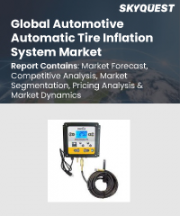
자동 타이어 공기압 조절 시스템(ATIS)은 최적의 타이어 공기압을 자동으로 조정하고 유지하기 위해 차량에 장착되는 시스템입니다. 이 시스템은 개별 타이어 공기압 센서를 지속적으로 모니터링하고 차량에 장착된 컴프레서와 밸브를 사용하여 공기압을 조절하는 방식으로 작동합니다. 최적의 타이어 공기압을 유지하면 차량의 안전성, 기동성 및 연비를 향상시킬 수 있습니다. 또한, 타이어의 편마모와 파열의 위험을 증가시킬 수 있는 공기압 부족을 방지합니다. 이 시스템은 온도 변화 등의 요인으로 인한 타이어 공기압 저하를 보정합니다. 차량의 안전성, 연비, 예방 정비에 대한 관심이 높아짐에 따라 다양한 차종에 ATIS의 도입이 촉진될 것으로 예상됩니다.
시장 역학
자동 타이어 공기압 조절 시스템(ATIS) 시장은 엄격한 연비 및 차량 안전 규제에 의해 주도되고 있습니다. 공기압이 부족한 타이어는 연비를 최대 3%까지 떨어뜨릴 수 있으며, 트레드 수명을 단축시키는 원인이 되기도 합니다. ATIS는 기업 평균 연비 기준(CAFE) 달성을 지원합니다. 또한, 고속 주행 시 타이어 고장으로 인한 사고 예방에도 도움이 됩니다. 그러나 높은 초기 비용이 보급을 위한 주요 과제로 남아있습니다. 시장 기업들은 ATIS를 보다 저렴하게 만들기 위해 첨단 센서와 컴팩트한 디자인의 솔루션에 집중하고 있습니다. 또한, 차량 관리 시스템의 인기가 높아지는 것도 ATIS의 통합을 위한 기회를 제공하고 있습니다. 상용차는 주행거리가 길기 때문에 주요 적용 분야가 되었습니다.
본 조사의 주요 특징
- 이 조사에서는 각 부문의 잠재적 수익 성장 기회를 파악하고, 이 시장에서 매력적인 투자 제안 매트릭스를 설명합니다.
- 또한 시장 촉진요인, 억제요인, 기회, 신제품 출시 및 승인, 시장 동향, 지역별 전망, 주요 기업의 경쟁 전략에 대한 중요한 인사이트를 제공합니다.
- 이 조사는 다음과 같은 매개 변수를 기반으로 세계 자동 타이어 공기압 조절 시스템 시장의 주요 기업 프로파일을 작성했습니다. 구체적으로 기업 개요, 제품 포트폴리오, 주요 하이라이트, 재무 실적 및 전략 등입니다.
- 이 보고서의 내용을 통해 기업의 마케팅 담당자와 경영진은 향후 제품 출시, 제품 업그레이드, 시장 확대, 마케팅 전략에 대한 정보에 입각한 의사결정을 내릴 수 있을 것입니다.
- 이 세계 자동 타이어 공기압 조절 시스템 시장 보고서는 투자자, 공급업체, 제품 제조업체, 유통업체, 신규 진입자, 재무 분석가 등 업계의 다양한 이해관계자를 대상으로 합니다.
- 이해관계자들은 세계 자동 타이어 공기압 조절 시스템 시장 분석에 사용되는 다양한 전략 매트릭스를 활용하여 의사결정을 원활하게 내릴 수 있습니다.
목차
제1장 조사 목적과 가정
제2장 시장 개요
제3장 시장 역학·동향 분석
제4장 세계의 자동 타이어 공기압 조절 시스템 시장 : 유형별, 2021-2033년
제5장 세계의 자동 타이어 공기압 조절 시스템 시장 : 차종별, 2021-2033년
제6장 세계의 자동 타이어 공기압 조절 시스템 시장 : 판매 채널별, 2021-2033년
제7장 세계의 자동 타이어 공기압 조절 시스템 시장 : 지역별, 2021-2033년
제8장 기업 개요 : 세계의 자동 타이어 공기압 조절 시스템 시장
KSM 26.06.11Automatic Tire Inflation System Market is estimated to be valued at USD 2.63 Bn in 2026 and is expected to reach USD 4.75 Bn by 2033, growing at a compound annual growth rate (CAGR) of 8.8% from 2026 to 2033.
| Report Coverage | Report Details | ||
|---|---|---|---|
| Base Year: | 2025 | Market Size in 2026: | USD 2.63 Bn |
| Historical Data for: | 2020 To 2024 | Forecast Period: | 2026 To 2033 |
| Forecast Period 2026 to 2033 CAGR: | 8.80% | 2033 Value Projection: | USD 4.75 Bn |
Automatic tire inflation systems (ATIS) are onboard systems installed in vehicles to automatically adjust and maintain optimal tire pressure levels. They work by continuously monitoring individual tire pressure sensors and adjusting pressures using an onboard compressor and valves. Maintaining optimal tire pressure improves vehicle safety, handling, and fuel efficiency. It also prevents underinflation which can lead to uneven tire wear and an increased risk of blowouts. The system compensates for tire pressure loss caused due to factors like temperature change. The growing emphasis on vehicle safety, fuel efficiency, and preventive maintenance are expected to drive the adoption of ATIS across different vehicle types.
Market Dynamics
The automatic tire inflation system market is driven by stringent fuel economy and vehicle safety regulations. Underinflated tires can decrease fuel economy by up to 3% and can also reduce tread life. ATIS help meet corporate average fuel economy (CAFE) standards. They also help prevent accidents caused due to tire failure at high speeds. However, high upfront costs remain a key challenge for mass adoption. Market players are focusing on solutions with advanced sensors and compact designs to make ATIS more affordable. The growing popularity of fleet management systems also provides an opportunity for the integration of ATIS. Commercial vehicles are a major application area due to their high mileage.
Key Features of the Study
- It elucidates potential revenue growth opportunities across different segments and explains attractive investment proposition matrices for this market.
- This study also provides key insights about market drivers, restraints, opportunities, new product launches or approvals, market trends, regional outlook, and competitive strategies adopted by key players.
- It profiles key players in the global automatic tire inflation system market based on the following parameters - company highlights, products portfolio, key highlights, financial performance, and strategies.
- Key companies covered as a part of this study include Dana Limited, Goodyear, Hendrickson USA, L.L.C, Meritor, Inc., SAF-HOLLAND S.A., WABCO, Rotex Automation, STEMCo Products Inc., Haltec Corporation, TI Fluid Systems, Michelin, Bremsen Technik Group (PSI), FTL/IDEX, Aperia Technologies inc., Airgo Systems, LLC, VIGIA, Trans Technologies, Continental, BFGoodrich, and Deere & Company.
- Insights from this report would allow marketers and the management authorities of the companies to make informed decisions regarding their future product launches, type up-gradation, market expansion, and marketing tactics.
- The global automatic tire inflation system market report caters to various stakeholders in this industry including investors, suppliers, product manufacturers, distributors, new entrants, and financial analysts.
- Stakeholders would have ease in decision-making through various strategy matrices used in analyzing the global automatic tire inflation system market.
Market Segmentation
- By Type (Revenue, USD Bn, 2021 - 2033)
- Central Tire Inflation System
- Continuous tire Inflation System
- By Vehicle Type (Revenue, USD Bn, 2021 - 2033)
- On-Highway Vehicle
- Light Duty Vehicle
- Heavy Duty Vehicle
- Off-Highway Vehicle
- Agriculture Tractors
- Construction Equipment
- By Sales Channel (Revenue, USD Bn, 2021 - 2033)
- OEM
- Aftermarket
- By Region (Revenue, USD Bn, 2021 - 2033)
- North America
- U.S.
- Canada
- Latin America
- Brazil
- Argentina
- Mexico
- Rest of Latin America
- Europe
- Germany
- U.K.
- Spain
- France
- Italy
- Russia
- Rest of Europe
- Asia Pacific
- China
- India
- Japan
- Australia
- South Korea
- ASEAN
- Rest of Asia Pacific
- Middle East
- GCC Countries
- Israel
- Rest of Middle East
- Africa
- South Africa
- North Africa
- Central Africa
- Key Players
- Goodyear
- Dana Limited.
- Hendrickson USA, LLC.
- Cummins-Meritor
- SAF-HOLLAND S.A.
- WABCO
- Rotex Automation
- STEMCO Products Inc.
- Haltec Corporation
- TI Fluid Systems
- Michelin
- Bremsen Technik Group (PSI)
- FTL/IDEX
- Aperia Technologies inc.
- Airgo Systems, LLC
- VIGIA
- Trans Technologies
- Continental
- BFGoodrich
- Deere & Company
Table of Contents
1. Research Objectives and Assumptions
- Research Objectives
- Assumptions
2. Market Overview
- Report Description
- Market Definition and Scope
- Executive Summary
- Market Snapshot, By Type
- Market Snapshot, By Vehicle Type
- Market Snapshot, By Sales Channel
- Market Snapshot, By Region
- Market Scenario - Conservative, Likely, Opportunistic
- Market Opportunity Map
3. Market Dynamics and Trend Analysis
- Market Dynamics
- Drivers
- Restraints
- Opportunities
- Impact Analysis
- Pest Analysis
- Porters Analysis
- Regulatory Scenario
- Consumer Behavior Analysis
- Product Preference Analysis
- Value Chain Analysis
- New Product Approvals
- Market Attractiveness, By Country
- Market Attractiveness, By Market Segment
- Key Developments & Deals
- Technology Trends
4. Global Automatic Tire Inflation System Market, By Type, 2021 - 2033 (USD Bn)
- Introduction
- Market Share (%) Analysis, 2026, 2028 & 2033
- Market Y-o-Y Growth Comparison (%), 2021 - 2033
- Segment Trends
- Central Tire Inflation System, 2021 - 2033(USD Bn)
- Introduction
- Market Size and Forecast, 2021 - 2033, (USD Bn)
- Continuous Tire Inflation System, 2021 - 2033(USD Bn)
- Introduction
- Market Size and Forecast, 2021 - 2033, (USD Bn)
5. Global Automatic Tire Inflation System Market, By Vehicle Type, 2021 - 2033 (USD Bn)
- Introduction
- Market Share (%) Analysis, 2026, 2028 & 2033
- Market Y-o-Y Growth Comparison (%), 2021 - 2033
- Segment Trends
- On-Highway Vehicle, 2021 - 2033(USD Bn)
- Introduction
- Market Size and Forecast, 2021 - 2033, (USD Bn)
- Light Duty Vehicle, 2021 - 2033(USD Bn)
- Market Size and Forecast, 2021 - 2033, (USD Bn)
- Heavy Duty Vehicle, 2021 - 2033(USD Bn)
- Market Size and Forecast, 2021 - 2033, (USD Bn)
- Light Duty Vehicle, 2021 - 2033(USD Bn)
- Off-Highway Vehicle, 2021 - 2033(USD Bn)
- Introduction
- Market Size and Forecast, 2021 - 2033, (USD Bn)
- Agriculture Tractors, 2021 - 2033(USD Bn)
- Market Size and Forecast, 2021 - 2033, (USD Bn)
- Construction Equipment, 2021 - 2033(USD Bn)
- Market Size and Forecast, 2021 - 2033, (USD Bn)
- Agriculture Tractors, 2021 - 2033(USD Bn)
6. Global Automatic Tire Inflation System Market, By Sales Channel, 2021 - 2033 (USD Bn)
- Introduction
- Market Share (%) Analysis, 2026, 2028 & 2033
- Market Y-o-Y Growth Comparison (%), 2021 - 2033
- Segment Trends
- OEM, 2021 - 2033(USD Bn)
- Introduction
- Market Size and Forecast, 2021 - 2033, (USD Bn)
- Aftermarket, 2021 - 2033(USD Bn)
- Introduction
- Market Size and Forecast, 2021 - 2033, (USD Bn)
7. Global Automatic Tire Inflation System Market, By Region, 2021 - 2033 (USD Bn)
- Introduction
- Market Share (%) Analysis, 2026, 2028 & 2033, (USD Bn)
- Market Y-o-Y Growth Comparison (%), 2021 - 2033, (USD Bn)
- Regional Trends
- North America
- Introduction
- Market Size and Forecast, By Type, 2021 - 2033, (USD Bn)
- Market Size and Forecast, By Vehicle Type, 2021 - 2033, (USD Bn)
- Market Size and Forecast, By Sales Channel, 2021 - 2033, (USD Bn)
- Market Size and Forecast, By Country, 2021 - 2033, (USD Bn)
- U.S.
- Canada
- Europe
- Introduction
- Market Size and Forecast, By Type, 2021 - 2033, (USD Bn)
- Market Size and Forecast, By Vehicle Type, 2021 - 2033, (USD Bn)
- Market Size and Forecast, By Sales Channel, 2021 - 2033, (USD Bn)
- Market Size and Forecast, By Country, 2021 - 2033, (USD Bn)
- U.K.
- Germany
- Italy
- France
- Spain
- Russia
- Rest Of Europe
- Asia Pacific
- Introduction
- Market Size and Forecast, By Type, 2021 - 2033, (USD Bn)
- Market Size and Forecast, By Vehicle Type, 2021 - 2033, (USD Bn)
- Market Size and Forecast, By Sales Channel, 2021 - 2033, (USD Bn)
- Market Size and Forecast, By Country, 2021 - 2033, (USD Bn)
- China
- India
- Japan
- Australia
- South Korea
- Asean
- Rest Of Asia Pacific
- Middle East & Africa
- Introduction
- Market Size and Forecast, By Type, 2021 - 2033, (USD Bn)
- Market Size and Forecast, By Vehicle Type, 2021 - 2033, (USD Bn)
- Market Size and Forecast, By Sales Channel, 2021 - 2033, (USD Bn)
- Market Size and Forecast, By Country, 2021 - 2033, (USD Bn)
- GCC
- Israel
- Rest Of Middle East & Africa
- Latin America
- Introduction
- Market Size and Forecast, By Type, 2021 - 2033, (USD Bn)
- Market Size and Forecast, By Vehicle Type, 2021 - 2033, (USD Bn)
- Market Size and Forecast, By Sales Channel, 2021 - 2033, (USD Bn)
- Market Size and Forecast, By Country, 2021 - 2033, (USD Bn)
- Brazil
- Mexico
- Argentina
- Rest Of Latin America
8. Company Profiles - Global Automatic Tire Inflation System Market
- Goodyear
- Company Overview
- Product/Service Portfolio
- Financial Performance
- Recent Developments/Updates
- Strategic Overview
- Dana Limited.
- Hendrickson USA, LLC.
- Cummins-Meritor
- SAF-HOLLAND S.A.
- WABCO
- Rotex Automation
- STEMCO Products Inc.
- Haltec Corporation
- TI Fluid Systems
- Michelin
- Bremsen Technik Group (PSI).
- FTL/IDEX
- Aperia Technologies inc.
- Airgo Systems, LLC
- VIGIA
- Trans Technologies
- Continental
- BFGoodrich
- Deere & Company