|
시장보고서
상품코드
1576923
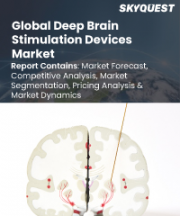
뇌심부 자극 기기 시장 : 인사이트, 경쟁 구도, 시장 예측(2030년)Deep Brain Stimulation Devices - Market Insights, Competitive Landscape, and Market Forecast - 2030 |
||||||
 DelveInsight
뇌심부 자극 기기(DBS) 시장 규모는 2023년에 13억 1,000만 달러에 달했습니다. 이 시장은 2024-2030년의 예측 기간 중 10.40%의 CAGR로 확대하며, 2030년에는 23억 7,000만 달러에 달할 것으로 예측됩니다. 뇌심부 자극치료(DBS) 장비의 수요는 파킨슨병 및 간질 등 신경질환의 유병률 상승에 의해 성장하고 있습니다. 이러한 질환에 취약한 노인 인구 증가가 이러한 추세를 촉진하는 주요 요인으로 작용하고 있습니다. 또한 연구개발(R&D)에 대한 집중과 제품 혁신에 대한 기술 발전이 2024-2030년의 예측 기간 중 뇌심부 자극 기기 시장의 긍정적인 성장에 크게 기여하고 있습니다.
DBS 기술의 이러한 발전은 신경질환에 대한 치료의 정확성, 안전성, 유효성을 향상시키는 것을 목표로 하고 있습니다. 그 결과, 더 많은 환자들이 DBS를 치료 옵션으로 선택하면서 시장 확대에 박차를 가하고 있습니다.
뇌심부 자극 기기(DBS) 시장은 파킨슨병, 근긴장이상증, 떨림 등 다양한 운동 장애의 유병률 증가로 인해 성장하고 있으며, 2021년 2월 영국 의회의 자료에 따르면 영국에는 약 145,000명의 성인이 파킨슨병을 앓고 있으며, 이 수치는 2030년까지 172,000명에 달할 것으로 예상됩니다.에 172,000명에 달할 것으로 예상됩니다. 마찬가지로 파킨슨 재단은 2022년 미국에서 매년 약 9만 명이 파킨슨병(PD) 진단을 받고 있으며, 2030년까지 120만 명에 달할 것으로 예측했습니다. 이에 따라 파킨슨병 증상 완화를 위해 표적화된 신경 자극을 제공하는 DBS 장비에 대한 수요가 크게 증가하여 시장 성장의 원동력이 될 것으로 예상됩니다.
세계의 뇌심부 자극 기기 시장에 대해 조사했으며, 시장의 개요와 제품 유형별, 배터리 유형별, 용도별, 최종사용자별, 지역별 동향 및 시장에 참여하는 기업의 개요 등을 제공하고 있습니다.
목차
제1장 뇌심부 자극 기기 시장 보고서 서론
제2장 뇌심부 자극 기기 시장의 개요
제3장 경쟁 구도
제4장 규제 분석
- 미국
- 유럽
- 일본
- 중국
제5장 뇌심부 자극 기기 시장의 주요 요인 분석
- 뇌심부 자극 기기 시장 성장 촉진요인
- 뇌심부 자극 기기 시장 성장 억제요인과 과제
- 뇌심부 자극 기기 시장 기회
제6장 뇌심부 자극 기기 시장의 Porter's Five Forces 분석
제7장 뇌심부 자극 기기 시장 평가
- 제품 유형별
- 배터리 유형별
- 용도별
- 최종사용자별
- 지역별
제8장 뇌심부 자극 기기 시장의 기업과 제품 개요
- Abbott Laboratories
- Medtronic
- Boston Scientific Corporation
- Aleva Neurotherapeutics
- Renishaw plc
- NeuroPace, Inc.
- NeuroSigma, Inc.
- Elekta
- LivaNova PLC
- SceneRay Co., Ltd.
- Synapse Biomedical Inc.
- BrainsWay
- Magstim
- Newronika S.p.A.
- Brainlab AG
- Functional Neuromodulation, Ltd.
- Theranica Bio-Electronics Ltd.
- Precisis GmbH
- Neuros Medical
- Magnus Medical, Inc.
제9장 KOL의 견해
제10장 프로젝트 어프로치
제11장 DelveInsight 소개
제12장 면책사항과 문의
KSA 24.10.31Deep Brain Stimulation Devices Market by Product Type (Single Channel and Dual Channel), Battery Type (Rechargeable and Non-Rechargeable), Application (Parkinson's Disease, Epilepsy, Obsessive Compulsive Disorder, Dystonia, and Others), End-User (Hospitals and Specialty Clinics), and Geography (North America, Europe, Asia-Pacific, and Rest of the World) is expected to grow at a steady CAGR forecast till 2030 owing to the rising prevalence of neurological disorders and technological advancements in DBS devices
The deep brain stimulation devices (DBS) Market was valued at USD 1.31 billion in 2023, growing at a CAGR of 10.40% during the forecast period from 2024 to 2030 to reach USD 2.37 billion by 2030. The demand for deep brain stimulation (DBS) devices is experiencing growth due to the increasing prevalence of neurological disorders, such as Parkinson's disease and epilepsy. The rising geriatric population, which is more susceptible to these disorders, is a major factor driving this trend. Additionally, the growing focus on research and development (R&D) and technological advancements in product innovation are contributing significantly to the positive growth of the deep brain stimulation devices market during the forecast period from 2024 to 2030.
These advancements in DBS technology are aimed at improving the precision, safety, and efficacy of treatments for neurological conditions. As a result, more patients are turning to DBS as a therapeutic option, boosting market expansion.
Deep Brain Stimulation Devices Market Dynamics:
The deep brain stimulation (DBS) devices market is experiencing growth due to the rising prevalence of various movement disorders such as Parkinson's disease, dystonia, and tremors. According to data from the UK Parliament in February 2021, approximately 145,000 adults in the United Kingdom were living with Parkinson's disease, with this number expected to reach 172,000 by 2030. Similarly, the Parkinson's Foundation reported in 2022 that around 90,000 individuals are diagnosed with Parkinson's disease (PD) annually in the United States, and projections suggest that the number of people affected by PD will reach 1.2 million by 2030. As a result, the demand for DBS devices, which provide targeted neural stimulation to alleviate PD symptoms, is expected to increase significantly, driving market growth.
In addition to Parkinson's disease, the growing prevalence of epilepsy is also fueling global demand for DBS devices. According to the World Health Organization (WHO), approximately 50 million people worldwide were affected by epilepsy in 2023. The WHO estimates that around 5 million new cases of epilepsy are diagnosed annually, making it the most common neurological disorder globally. DBS devices have proven to be effective in controlling seizure occurrences, further propelling growth in the DBS market.
Key market players are actively developing innovative devices to address the increasing prevalence of movement disorders, contributing to substantial market expansion. For example, in January 2024, Abbott Laboratories received FDA approval for its Liberta RC(TM) DBS system. Notably, Liberta is the smallest rechargeable DBS device available, featuring remote programming capabilities, and designed specifically for treating conditions such as Parkinson's disease and essential tremors. The rise in research and development activities focused on DBS devices is expected to positively influence the market's growth during the forecast period.
However, the high cost of these devices and the risk of device-associated complications remain key challenges that could limit the growth of the deep brain stimulation devices market.
Deep Brain Stimulation Devices Market Segment Analysis:
Deep Brain Stimulation Devices Market by Product Type (Single Channel and Dual Channel), Battery Type (Rechargeable and Non-Rechargeable), Application (Parkinson's disease, Epilepsy, Obsessive Compulsive Disorder, Dystonia, and Others), End-User (Hospitals and Specialty Clinics), and Geography (North America, Europe, Asia-Pacific, and Rest of the World)
In the product type segment of the deep brain stimulation (DBS) devices market, dual-channel DBS systems are expected to account for a prominent market share during the forecast period. This growth is driven by the rising number of patients affected by neurological conditions such as essential tremors and obsessive-compulsive disorders. According to the National Tremor Foundation, over one million individuals in the United Kingdom and 10 million in the United States were diagnosed with essential tremors in 2021. Dual-channel DBS systems, which effectively stimulate the ventral intermediate nucleus (VIM) of the thalamus, play a crucial role in significantly reducing tremors in both upper and lower limbs. The increasing prevalence of neurological conditions is fueling demand for dual-channel DBS devices, thereby driving market growth.
One of the key advantages of dual-channel neurostimulators is their ability to provide bilateral therapy through two separate stimulation channels. This innovative design allows for fewer incisions and minimizes the need for extensive tunneling of extensions compared to single-channel DBS systems, leading to a less invasive surgical procedure. These benefits are anticipated to increase the demand for dual-channel DBS devices throughout the forecast period, contributing significantly to the overall expansion of the DBS devices market.
Key market players are heavily focused on research and development to create advanced dual-channel DBS devices, aiming to strengthen their competitive position. For example, in January 2024, Medtronic received FDA approval for its Percept(TM) RC DBS system. This innovative device features sensing technology that enables physicians to tailor treatments more precisely for patients with movement disorders such as Parkinson's disease, essential tremor, dystonia, and epilepsy. Such advancements in product development are expected to drive significant growth in the dual-channel DBS segment, further boosting the overall deep brain stimulation devices market.
North America is expected to dominate the overall deep brain stimulation devices market:
North America is expected to account for the largest market share in the deep brain stimulation (DBS) devices market in 2023. This growth is driven by the rising prevalence of movement disorders such as Alzheimer's disease, tremors, and obsessive-compulsive disorder (OCD). The increasing geriatric population, along with favorable government support and initiatives focused on brain health, are key factors contributing to the expansion of the DBS devices market in the region. Additionally, technological advancements in product development are further accelerating market growth.
The growing prevalence of neurological disorders is a significant factor driving the demand for DBS devices in North America. According to a report from the Centers for Disease Control and Prevention (CDC) published in September 2023, approximately 6.7 million individuals aged 65 and older were living with Alzheimer's disease in the United States, with this number projected to reach 13.9 million by 2060. DBS devices regulate neuronal activity in specific areas of the brain, helping improve neural function and alleviate cognitive decline. As the number of neurological disorder cases continues to rise, the demand for DBS devices is expected to increase, further driving market growth in the region.
The expanding geriatric population is another factor contributing to the growth of the DBS market. Older adults are particularly vulnerable to neurological disorders due to age-related nerve degeneration. According to the Population Reference Bureau, approximately 58 million individuals aged 65 and older were living in the United States in 2022, and this number is projected to reach 82 million by 2050. Movement disorders like Parkinson's disease are more common among this age group due to irregular brain activity, making the growing elderly population a key driver for DBS device demand.
Epilepsy also represents a significant driver of demand for DBS devices. According to the CDC, approximately 3 million people in the United States were living with epilepsy in 2021. The increasing number of epilepsy cases has encouraged key players in the industry to develop DBS devices specifically for treating epilepsy. For instance, in February 2022, Precisis GmbH received FDA Breakthrough Device Designation for its EASEE system, which delivers precise electrical currents to targeted areas of the brain to control seizures. Designed for individualized brain stimulation, the system is placed above the origin of epileptic seizures, significantly improving treatment outcomes. These developments are contributing to the growth of the DBS devices market in the region.
Government support is another critical factor boosting market growth. In March 2023, the Government of Canada announced an investment of CAD 38.3 million for the Brain Health Research Initiative, aimed at advancing research on aging brains and reducing the risks of dementia and cognitive impairment. This initiative also focuses on improving care and services for individuals affected by cognitive decline. Such government-backed initiatives are expected to further foster market growth in North America.
In summary, the rising prevalence of movement disorders, increasing government support, and technological innovations in product development are key factors driving the growth of the deep brain stimulation devices market in North America.
Deep Brain Stimulation Devices Market Key Players:
Some of the key market players operating in the deep brain stimulation devices market include Abbott Laboratories, Medtronic, Boston Scientific Corporation, Aleva Neurotherapeutics, Renishaw plc, NeuroPace, Inc., NeuroSigma, Inc., Elekta, LivaNova PLC, SceneRay Co., Ltd., Synapse Biomedical, BrainsWay, Magstim, Newronika S.p.A., Brainlab AG, Functional Neuromodulation, Ltd., Theranica Bio-Electronics Ltd., Precisis GmbH, Neuros Medical, Magnus Medical, Inc., and others.
Recent Developmental Activities in the Deep Brain Stimulation Devices Market:
- In April 2022, Boston Scientific Corporation announced FDA approval for STIMVIEWTM XT, developed in collaboration with BrainLab. It allows clinicians to visualize lead placement and stimulation modeling in real-time, providing a detailed view of the brain anatomy of patients with Parkinson's disease or essential tremor.
- In June 2021, Medtronic received product approval from the US Food and Drug Administration for the First-of-its-Kind SenSight(TM) Directional Lead System for DBS Therapy.
- In January 2021, Boston Scientific received product approval from the US FDA for their fourth-generation Vercise Genus Deep Brain Stimulation (DBS) System used in the treatment of symptoms associated with advanced Parkinson's disease.
Key Takeaways from the Deep Brain Stimulation Devices Market Report Study
- Market size analysis for current Deep Brain Stimulation Devices Market size (2023), and market forecast for 6 years (2024 to 2030)
- Top key product/technology developments, mergers, acquisitions, partnerships, and joint ventures happened over the last 3 years.
- Key companies dominating the global Deep Brain Stimulation Devices market.
- Various opportunities available for the other competitors in the Deep Brain Stimulation Devices Market space.
- What are the top-performing segments in 2023? How these segments will perform in 2030?
- Which are the top-performing regions and countries in the current Deep Brain Stimulation Devices market scenario?
- Which are the regions and countries where companies should have concentrated on opportunities for Deep Brain Stimulation Devices market growth in the coming future?
Target Audience who can be benefited from this Deep Brain Stimulation Devices Market Report Study
- Deep Brain Stimulation Devices product providers
- Research organizations and consulting companies
- Deep Brain Stimulation Devices related organizations, associations, forums, and other alliances
- Government and corporate offices
- Start-up companies, venture capitalists, and private equity firms
- Distributors and Traders dealing in Deep Brain Stimulation Devices
- Various end-users who want to know more about the Deep Brain Stimulation Devices Market and the latest technological developments in the Deep Brain Stimulation Devices Market.
Frequently Asked Questions for the Deep Brain Stimulation Devices Market:
1. What are Deep Brain Stimulation Devices?
- Deep brain stimulation (DBS) is a device that sends electrical signals to brain areas responsible for body movement. Electrodes are placed deep in the brain and are connected to a stimulator device. The device design is identical to that of a heart pacemaker.
2. What is the market for Deep Brain Stimulation Devices?
- The Deep Brain Stimulation Devices Market was valued at USD 1.31 billion in 2023, growing at a CAGR of 10.40% during the forecast period from 2024 to 2030 to reach USD 2.37 billion by 2030.
3. What are the drivers for the Deep Brain Stimulation Devices market?
- The deep brain stimulation devices market is slated to witness prosperity owing to factors such as the growing prevalence of neurological disorders such as Parkinson's disease and epilepsy. The rising geriatric population increasing R&D activities and technological advancements in product development are some of the key factors resulting in appreciable revenue growth in the Deep Brain Stimulation Devices Market during the forecast period (2024 to 2030).
4. Who are the key players operating in the Deep Brain Stimulation Devices market?
- Some of the key market players operating in the deep brain stimulation devices market include Abbott Laboratories, Medtronic, Boston Scientific Corporation, Aleva Neurotherapeutics, Renishaw plc, NeuroPace, Inc., NeuroSigma, Inc., Elekta, LivaNova PLC, SceneRay Co., Ltd., Synapse Biomedical, BrainsWay, Magstim, Newronika S.p.A., Brainlab AG, Functional Neuromodulation, Ltd., Theranica Bio-Electronics Ltd., Precisis GmbH, Neuros Medical, Magnus Medical, Inc., and others.
5. Which region has the highest share in the Deep Brain Stimulation Devices market?
- North America is expected to account for the largest market share in the deep brain stimulation devices market in 2023, among all the regions. This growth can be attributed to the rising prevalence of movement disorders such as Alzheimer's disease, tremors, and obsessive-compulsive disorder (OCD). The increasing geriatric population, along with favorable government support and initiatives focused on brain health, are major factors fuelling market expansion. Additionally, technological advancements in product development within the region play a crucial role in driving the growth of the deep brain stimulation devices market in North America.
Table of Contents
1. Deep Brain Stimulation Devices Market Report Introduction
- 1.1. Scope of the Study
- 1.2. Market Segmentation
- 1.3. Market Assumption
2. Deep Brain Stimulation Devices Market Executive Summary
- 2.1. Market at Glance
3. Competitive Landscape
4. Regulatory Analysis
- 4.1. The United States
- 4.2. Europe
- 4.3. Japan
- 4.4. China
5. Deep Brain Stimulation Devices Market Key Factors Analysis
- 5.1. Deep Brain Stimulation Devices Market Drivers
- 5.1.1. The growing prevalence of neurological disorders
- 5.1.2. The rising geriatric population
- 5.1.3. Increasing R&D activities and technological advancements in product development
- 5.2. Deep Brain Stimulation Devices Market Restraints and Challenges
- 5.2.1. The high cost of these devices
- 5.2.2. Risk of device-associated complications
- 5.3. Deep Brain Stimulation Devices Market Opportunity
- 5.3.1. The integration of artificial intelligence in deep brain stimulation devices
- 5.3.2. Emergence of digital health to provide personalized treatment
6. Deep Brain Stimulation Devices Market Porter's Five Forces Analysis
- 6.1. Bargaining Power of Suppliers
- 6.2. Bargaining Power of Consumers
- 6.3. Threat of New Entrants
- 6.4. Threat of Substitutes
- 6.5. Competitive Rivalry
7. Deep Brain Stimulation Devices Market Assessment
- 7.1. By Product Type
- 7.1.1. Single Channel
- 7.1.2. Dual Channel
- 7.2. By Battery Type
- 7.2.1. Rechargeable
- 7.2.2. Non-Rechargeable
- 7.3. By Application
- 7.3.1. Parkinson's Disease
- 7.3.2. Epilepsy
- 7.3.3. Obsessive Compulsive Disorder
- 7.3.4. Dystonia
- 7.3.5. Others
- 7.4. By End-User
- 7.4.1. Hospitals
- 7.4.2. Specialty Clinics
- 7.5. By Geography
- 7.5.1. North America
- 7.5.1.1. United States Deep Brain Stimulation Devices Market Size in USD million (2021-2030)
- 7.5.1.2. Canada Deep Brain Stimulation Devices Market Size in USD million (2021-2030)
- 7.5.1.3. Mexico Deep Brain Stimulation Devices Market Size in USD million (2021-2030)
- 7.5.2. Europe
- 7.5.2.1. France Deep Brain Stimulation Devices Market Size in USD million (2021-2030)
- 7.5.2.2. Germany Deep Brain Stimulation Devices Market Size in USD million (2021-2030)
- 7.5.2.3. United Kingdom Deep Brain Stimulation Devices Market Size in USD million (2021-2030)
- 7.5.2.4. Italy Deep Brain Stimulation Devices Market Size in USD million (2021-2030)
- 7.5.2.5. Spain Deep Brain Stimulation Devices Market Size in USD million (2021-2030)
- 7.5.2.6. Rest of Europe Deep Brain Stimulation Devices Market Size in USD million (2021-2030)
- 7.5.3. Asia-Pacific
- 7.5.3.1. China Deep Brain Stimulation Devices Market Size in USD million (2021-2030)
- 7.5.3.2. Japan Deep Brain Stimulation Devices Market Size in USD million (2021-2030)
- 7.5.3.3. India Deep Brain Stimulation Devices Market Size in USD million (2021-2030)
- 7.5.3.4. Australia Deep Brain Stimulation Devices Market Size in USD million (2021-2030)
- 7.5.3.5. South Korea Deep Brain Stimulation Devices Market Size in USD million (2021-2030)
- 7.5.3.6. Rest of Asia-Pacific Deep Brain Stimulation Devices Market Size in USD million (2021-2030)
- 7.5.4. Rest of the World (RoW)
- 7.5.4.1. Middle East Deep Brain Stimulation Devices Market Size in USD million (2021-2030)
- 7.5.4.2. Africa Deep Brain Stimulation Devices Market Size in USD million (2021-2030)
- 7.5.4.3. South America Deep Brain Stimulation Devices Market Size In USD Million (2021-2030)
- 7.5.1. North America
8. Deep Brain Stimulation Devices Market Company and Product Profiles
- 8.1. Abbott Laboratories
- 8.1.1. Company Overview
- 8.1.2. Company Snapshot
- 8.1.3. Financial Overview
- 8.1.4. Product Listing
- 8.1.5. Entropy
- 8.2. Medtronic
- 8.2.1. Company Overview
- 8.2.2. Company Snapshot
- 8.2.3. Financial Overview
- 8.2.4. Product Listing
- 8.2.5. Entropy
- 8.3. Boston Scientific Corporation
- 8.3.1. Company Overview
- 8.3.2. Company Snapshot
- 8.3.3. Financial Overview
- 8.3.4. Product Listing
- 8.3.5. Entropy
- 8.4. Aleva Neurotherapeutics
- 8.4.1. Company Overview
- 8.4.2. Company Snapshot
- 8.4.3. Financial Overview
- 8.4.4. Product Listing
- 8.4.5. Entropy
- 8.5. Renishaw plc
- 8.5.1. Company Overview
- 8.5.2. Company Snapshot
- 8.5.3. Financial Overview
- 8.5.4. Product Listing
- 8.5.5. Entropy
- 8.6. NeuroPace, Inc.
- 8.6.1. Company Overview
- 8.6.2. Company Snapshot
- 8.6.3. Financial Overview
- 8.6.4. Product Listing
- 8.6.5. Entropy
- 8.7. NeuroSigma, Inc.
- 8.7.1. Company Overview
- 8.7.2. Company Snapshot
- 8.7.3. Financial Overview
- 8.7.4. Product Listing
- 8.7.5. Entropy
- 8.8. Elekta
- 8.8.1. Company Overview
- 8.8.2. Company Snapshot
- 8.8.3. Financial Overview
- 8.8.4. Product Listing
- 8.8.5. Entropy
- 8.9. LivaNova PLC
- 8.9.1. Company Overview
- 8.9.2. Company Snapshot
- 8.9.3. Financial Overview
- 8.9.4. Product Listing
- 8.9.5. Entropy
- 8.10. SceneRay Co., Ltd.
- 8.10.1. Company Overview
- 8.10.2. Company Snapshot
- 8.10.3. Financial Overview
- 8.10.4. Product Listing
- 8.10.5. Entropy
- 8.11. Synapse Biomedical Inc.
- 8.11.1. Company Overview
- 8.11.2. Company Snapshot
- 8.11.3. Financial Overview
- 8.11.4. Product Listing
- 8.11.5. Entropy
- 8.12. BrainsWay
- 8.12.1. Company Overview
- 8.12.2. Company Snapshot
- 8.12.3. Financial Overview
- 8.12.4. Product Listing
- 8.12.5. Entropy
- 8.13. Magstim
- 8.13.1. Company Overview
- 8.13.2. Company Snapshot
- 8.13.3. Financial Overview
- 8.13.4. Product Listing
- 8.13.5. Entropy
- 8.14. Newronika S.p.A.
- 8.14.1. Company Overview
- 8.14.2. Company Snapshot
- 8.14.3. Financial Overview
- 8.14.4. Product Listing
- 8.14.5. Entropy
- 8.15. Brainlab AG
- 8.15.1. Company Overview
- 8.15.2. Company Snapshot
- 8.15.3. Financial Overview
- 8.15.4. Product Listing
- 8.15.5. Entropy
- 8.16. Functional Neuromodulation, Ltd.
- 8.16.1. Company Overview
- 8.16.2. Company Snapshot
- 8.16.3. Financial Overview
- 8.16.4. Product Listing
- 8.16.5. Entropy
- 8.17. Theranica Bio-Electronics Ltd.
- 8.17.1. Company Overview
- 8.17.2. Company Snapshot
- 8.17.3. Financial Overview
- 8.17.4. Product Listing
- 8.17.5. Entropy
- 8.18. Precisis GmbH
- 8.18.1. Company Overview
- 8.18.2. Company Snapshot
- 8.18.3. Financial Overview
- 8.18.4. Product Listing
- 8.18.5. Entropy
- 8.19. Neuros Medical
- 8.19.1. Company Overview
- 8.19.2. Company Snapshot
- 8.19.3. Financial Overview
- 8.19.4. Product Listing
- 8.19.5. Entropy
- 8.20. Magnus Medical, Inc.
- 8.20.1. Company Overview
- 8.20.2. Company Snapshot
- 8.20.3. Financial Overview
- 8.20.4. Product Listing
- 8.20.5. Entropy