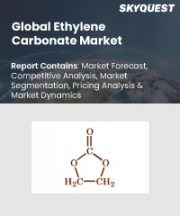
|
시장보고서
상품코드
1916560
에틸렌 카보네이트 시장 : 규모, 점유율, 성장률, 산업 분석, 유형별, 용도별, 지역별 인사이트, 예측(2026-2034년)Ethylene Carbonate Market Size, Share, Growth and Global Industry Analysis By Type & Application, Regional Insights and Forecast to 2026-2034 |
||||||

에틸렌 카보네이트 시장의 성장 요인
세계의 에틸렌 카보네이트 시장은 2025년에 2억 684만 달러로 평가되었으며, 2026년에는 2억 3,137만 달러로 성장하고 2034년까지 5억 2,462만 달러에 이를 것으로 예측됩니다. 2026년부터 2034년의 예측 기간에 11.10%라는 높은 CAGR로 성장할 전망입니다. 주로 리튬 이온 전지, 슈퍼커패시터, 첨단적 에너지 저장 시스템에서의 수요 증가가 견인하고 있습니다. 2025년에는 아시아태평양이 시장의 63%를 차지하여 배터리 제조, 전자기기 생산, 폴리머 가공에서 주도적인 입장을 배경으로 시장을 독점했습니다.
에틸렌 카보네이트는 에틸렌 글리콜과 탄산으로부터 생성되는 환상 카르복실산 에스테르입니다. 높은 극성, 우수한 수용성, 강력한 유전 특성을 갖추고있어 이상적인 용매 및 전해질 성분이됩니다. 본 제품은 윤활유, 플라스틱, 수지, 표면 코팅, 화학 중간체 등 폭넓은 용도로 사용되고 있습니다. 최근, 리튬 이온 전지 전해질에서의 역할이 최대의 성장 요인으로 부상하고, 에틸렌 카보네이트는 세계의 에너지 전환에 있어서 중요한 재료로서의 지위를 확립하고 있습니다.
신형 코로나바이러스 감염(COVID-19)의 유행으로 인해 공장 가동 중단, 물류 제한, 자동차 및 에너지 인프라 프로젝트 지연이 일어나 시장 성장이 일시적으로 정체되었습니다. 자동차, 폴리머, 윤활유, 수지 등의 주요 최종 이용 산업에서는 2020년에 수요가 줄어들었습니다. 그러나 락다운의 완화에 따라 전동 이동성 분야에서의 새로운 기세와 제약 및 반도체 산업에서의 수요 증가에 힘입어 시장은 급속히 회복되었습니다.
가장 영향력있는 시장 동향 중 하나는 자동차의 전기화의 가속입니다. 세계 배출 감축 목표와 청정 에너지 투자에 힘입어 전기자동차 판매량은 지난 5년간 급속히 성장하고 있습니다. 리튬 이온 배터리는 전기자동차의 기반을 구성하고 에틸렌 카보네이트는 안정적인 고체 전해질 계면(SEI) 형성, 배터리 수명 연장, 에너지 밀도 향상을 가능하게 하는 중요한 전해질 용매입니다. 아시아태평양만 봐도 시장 규모는 2023년 1억 340만 달러, 2024년 1억 1,610만 달러로 성장했 으며, 이 지역의 강한 보급 경향을 반영하고 있습니다.
주요 성장 요인 중 리튬 이온 배터리와 슈퍼커패시터가 가장 큰 수요 원동력이 되고 있습니다. 배터리 등급의 에틸렌 카보네이트는 사이클 안정성과 전지 성능을 향상시키기 위해 전기자동차, 가전 기기 및 그리드 규모의 에너지 저장에 필수적입니다. 슈퍼커패시터의 보급 확대도 수요를 지지하고 있어, 에틸렌 카보네이트는 고용량화와 충방전 효율의 향상을 실현합니다. 이러한 용도는 2034년까지 견고한 소비 성장을 유지할 것으로 예측됩니다.
수요는 견고하지만, 특히 중국의 환경 규제와 관련된 제약이 시장에 영향을 미칩니다. 국가 개발 계획에서 엄격한 탄소 배출 목표로 인해 여러 생산자가 기존 생산 설비의 운영 중단과 감산을 강요합니다. 공장 폐쇄 및 가동률 저하는 단기적인 공급 동향에 영향을 미치고 중기 예측 기간 동안 가용성이 강화될 가능성이 있습니다.
등급별로는 2026년에 배터리 등급의 에틸렌 카보네이트가 61.59%의 점유율로 시장을 주도하고 있습니다. 이것은 리튬 이온 배터리 수요의 급증이 주인입니다. 이 부문은 2030년까지 크게 확대될 것으로 예측됩니다. 전자급 재료는 반도체 산업의 성장에 연동하여 확대되고 있으며, 산업용 등급의 에틸렌 카보네이트는 계속해서 폴리머, 화장품, 윤활유, 의약품 용도에 공급되고 있습니다.
용도별로는 리튬 전지 전해질이 2026년에 61.59%의 점유율로 시장을 주도하고 있습니다. 이것은 제품의 끓는점의 높이와 전기 화학적 안정성을 지원합니다. 고분자 및 수지는 두 번째 성장 영역이며 반도체 및 윤활유 응용 분야는 적당하면서도 안정적인 수요를 제공합니다.
최종 용도별로는 자동차 부문이 2026년에 59.03%의 점유율로 시장을 주도하고 있습니다. 전기자동차로의 급속한 이행을 반영하고 있습니다. 전자기기, 산업, 의료 분야도 다양한 수요를 지원하고 있습니다.
지역별로 아시아태평양은 2025년 1억 3,123만 달러로 최대 시장 규모를 유지했습니다. 중국, 일본, 한국, 인도에서 강력한 리튬 이온 배터리 생산 능력이 이를 지원합니다. 북미와 유럽에서는 전동화 추진과 배출 감축을 촉진하는 정부 정책에 힘입어 배터리 제조에 대한 투자가 증가하는 경향이 있습니다.
경쟁 구도에서는 BASF SE, Huntsman International LLC, Mitsubishi Chemical Group Corporation, Shandong Shida Shenghua Chemical Group Co. 등 주요 제조업체가 참가하고 있으며, 모두 배터리급 생산에 중점을 두면서 생산능력 확대를 추진하고 있습니다.
목차
제1장 서론
제2장 주요 요약
제3장 시장 역학
- 시장 성장 촉진요인
- 시장 성장 억제요인
- 시장 기회
제4장 주요 인사이트
- 주요 지역의 주요 신규 동향
- 주요 동향 : 기업 합병 및 인수(M&A), 사업 제휴 등
- 최신 기술적 진보
- 규제 환경에 대한 인사이트
- Porter's Five Forces 분석
제5장 COVID-19가 세계의 에틸렌 카보네이트 시장에 미치는 영향에 대한 정성적 인사이트
- 공급망 분석과 COVID-19에 의한 과제
- 정부 및 기업이 이 영향을 극복하기 위해 취한 조치
- COVID-19의 발생에 의한 잠재적인 과제와 기회
제6장 세계의 에틸렌 카보네이트 시장 분석 : 인사이트 및 예측(2021-2034년)
- 주요 분석 결과/요약
- 등급별(금액 및 수량 기준)
- 배터리 등급
- 전자급
- 산업용 등급
- 용도별(금액 및 수량 기준)
- 리튬 전지 전해액
- 폴리머 및 수지
- 반도체
- 윤활제
- 기타
- 용도별(금액 및 수량 기준)
- 자동차
- 전자기기
- 산업
- 의료
- 기타
- 지역별(금액 및 수량 기준)
- 북미
- 유럽
- 아시아태평양
- 라틴아메리카
- 중동 및 아프리카
제7장 북미의 에틸렌 카보네이트 시장 분석 : 인사이트 및 예측(2021-2034년)
- 국가별
- 미국
- 캐나다
제8장 유럽의 에틸렌 카보네이트 시장 분석 : 인사이트 및 예측(2021-2034년)
- 국가별
- 독일
- 프랑스
- 영국
- 이탈리아
- 스페인
- 기타 유럽 국가
제9장 아시아태평양의 에틸렌 카보네이트 시장 분석 : 인사이트 및 예측(2021-2034년)
- 국가별
- 중국
- 일본
- 한국
- 기타 아시아태평양 국가
제10장 라틴아메리카의 에틸렌 카보네이트 시장 분석 : 인사이트 및 예측(2021-2034년)
- 국가별
- 브라질
- 멕시코
- 기타 라틴아메리카 국가
제11장 중동 및 아프리카의 에틸렌 카보네이트 시장 분석 : 인사이트 및 예측(2021-2034년)
- 국가별
- 걸프 협력 회의(GCC) 국가
- 남아프리카
- 기타 중동 및 아프리카 국가
제12장 기업 프로파일
- BASF SE
- Hi-Tech Spring
- Huntsman International LLC
- Indorama Ventures Public Company Limited
- Lotte Chemical
- Mitsubishi Chemical Group Corporation
- Oriental Union Chemical Corporation(OUCC)
- Shandong Haike Chemical Group
- Shandong Shida Shenghua Chemical Group Co. Ltd.
- Toagosei Co., Ltd.
제13장 전략적 제안
SHW 26.02.09Growth Factors of ethylene carbonate Market
The global ethylene carbonate market was valued at USD 206.84 million in 2025 and is expected to grow to USD 231.37 million in 2026, reaching USD 524.62 million by 2034. This expansion reflects a strong CAGR of 11.10% during the 2026-2034 forecast period, primarily driven by rising demand from lithium-ion batteries, supercapacitors, and advanced energy storage systems. In 2025, Asia Pacific dominated the market with a 63% share, supported by its leadership in battery manufacturing, electronics production, and polymer processing.
Ethylene carbonate is a cyclic carbonate ester derived from ethylene glycol and carbonic acid. Its high polarity, excellent water solubility, and strong dielectric properties make it an ideal solvent and electrolyte component. The product is widely used in lubricants, plastics, resins, surface coatings, and chemical intermediates. Over recent years, its role in lithium-ion battery electrolytes has emerged as the most significant growth driver, positioning ethylene carbonate as a critical material in the global energy transition.
The COVID-19 pandemic temporarily disrupted market growth due to plant shutdowns, restricted logistics, and delayed automotive and energy infrastructure projects. Key end-use industries such as automotive, polymers, lubricants, and resins experienced demand contraction in 2020. However, the market recovered rapidly following the easing of lockdowns, supported by renewed momentum in electric mobility and rising demand from pharmaceutical and semiconductor industries.
One of the most influential market trends is the accelerating electrification of vehicles. Electric vehicle sales have grown rapidly over the last five years, driven by global emission-reduction targets and clean-energy investments. Lithium-ion batteries form the backbone of electric vehicles, and ethylene carbonate is a vital electrolyte solvent enabling stable solid electrolyte interface (SEI) formation, longer battery life, and improved energy density. Asia Pacific alone recorded market growth from USD 103.40 million in 2023 to USD 116.10 million in 2024, reflecting strong regional adoption.
Among the key growth factors, lithium-ion batteries and supercapacitors represent the largest demand engine. Battery-grade ethylene carbonate improves cycle stability and overall battery performance, making it indispensable for electric vehicles, consumer electronics, and grid-scale energy storage. The expansion of supercapacitors further supports demand, as ethylene carbonate enables high capacitance and improved charge-discharge efficiency. These applications are expected to sustain strong consumption growth through 2034.
Despite strong demand, the market faces restraints linked to environmental regulations, particularly in China. Stricter carbon-emission targets under national development plans have forced several producers to shut down or reduce output from conventional production facilities. Plant closures and lower utilization rates have affected short-term supply dynamics, potentially tightening availability during the mid-term forecast period.
By grade, battery-grade ethylene carbonate dominated the market with a 61.59% share in 2026, driven by surging lithium-ion battery demand. This segment is expected to expand significantly through 2030. Electronic-grade material is growing alongside the semiconductor industry, while industrial-grade ethylene carbonate continues to serve polymers, cosmetics, lubricants, and pharmaceutical applications.
By application, lithium battery electrolytes accounted for a 61.59% share in 2026, supported by the product's high boiling point and electrochemical stability. Polymers & resins represent a secondary growth area, while semiconductor and lubricant applications contribute moderate but consistent demand.
By end-use, the automotive segment led the market with a 59.03% share in 2026, reflecting the rapid shift toward electric vehicles. Electronics, industrial, and healthcare sectors further support diversified demand.
Regionally, Asia Pacific remained the dominant market, valued at USD 131.23 million in 2025, supported by strong lithium-ion battery production capacity in China, Japan, South Korea, and India. North America and Europe are witnessing rising investment in battery manufacturing, supported by government policies promoting electric mobility and emission reduction.
The competitive landscape includes major producers such as BASF SE, Huntsman International LLC, Mitsubishi Chemical Group Corporation, and Shandong Shida Shenghua Chemical Group Co. Ltd., all of which are expanding capacity with a strong focus on battery-grade production.
Conclusion
The global ethylene carbonate market is poised for robust expansion from USD 206.84 million in 2025 to USD 524.62 million by 2034, driven primarily by accelerating electric vehicle adoption and the rapid growth of lithium-ion battery and supercapacitor technologies. Asia Pacific's dominance underscores the importance of battery manufacturing hubs, while policy-driven electrification initiatives in North America and Europe continue to create new growth avenues. Although environmental regulations pose short-term supply challenges, ongoing investments in cleaner production technologies and capacity expansion are expected to sustain long-term market growth through 2034.
Segmentation
By Grade
- Battery Grade
- Electronic Grade
- Industrial Grade
By Application
- Lithium Battery Electrolyte
- Polymers & Resins
- Semiconductor
- Lubricants
- Others
By End-use
- Automotive
- Electronics
- Industrial
- Healthcare
- Others
By Geography
- North America (By Grade, Application, End-use, Country)
- U.S. (By End-use)
- Canada (By End-use)
- Europe (By Grade, Application, End-use, Country)
- Germany (By End-use)
- U.K. (By End-use)
- France (By End-use)
- Italy (By End-use)
- Rest of Europe (By End-use)
- Asia Pacific (By Grade, Application, End-use, Country)
- China (By End-use)
- India (By End-use)
- Japan (By End-use)
- Rest of Asia Pacific (By End-use)
- Latin America (By Grade, Application, End-use, Country)
- Brazil (By End-use)
- Mexico (By End-use)
- Rest of Latin America (By End-use)
- Middle East & Africa (By Grade, Application, End-use, Country)
- GCC (By End-use)
- South Africa (By End-use)
- Rest of the Middle East & Africa (By End-use)
Table of Content
1. Introduction
- 1.1. Research Scope
- 1.2. Market Segmentation
- 1.3. Research Methodology
- 1.4. Definitions and Assumptions
2. Executive Summary
3. Market Dynamics
- 3.1. Market Drivers
- 3.2. Market Restraints
- 3.3. Market Opportunities
4. Key Insights
- 4.1. Key Emerging Trends - For Major Regions
- 4.2. Key Developments: Mergers, Acquisition, Partnership, etc.
- 4.3. Latest Technological Advancement
- 4.4. Insights on Regulatory Scenario
- 4.5. Porters Five Forces Analysis
5. Qualitative Insights on Impact of COVID-19 on Global Ethylene Carbonate Market
- 5.1. Supply Chain Analysis & Challenges due to Covid-19
- 5.2. Steps taken by Government / Companies to Overcome this Impact
- 5.3. Potential Challenges and Opportunities due to COVID-19 Outbreak
6. Global Ethylene Carbonate Market Analysis, Insights and Forecast, 2021-2034
- 6.1. Key Findings / Summary
- 6.2. By Grade (Value & Volume)
- 6.2.1. Battery Grade
- 6.2.2. Electronic Grade
- 6.2.3. Industrial Grade
- 6.3. By Application (Value & Volume)
- 6.3.1. Lithium Battery Electrolyte
- 6.3.2. Polymers & Resins
- 6.3.3. Semiconductor
- 6.3.4. Lubricants
- 6.3.5. Others
- 6.4. By End Use (Value & Volume)
- 6.4.1. Automotive
- 6.4.2. Electronics
- 6.4.3. Industrial
- 6.4.4. Healthcare
- 6.4.5. Others
- 6.5. By Region (Value & Volume)
- 6.5.1. North America
- 6.5.2. Europe
- 6.5.3. Asia Pacific
- 6.5.4. Latin America
- 6.5.5. Middle East & Africa
7. North America Ethylene Carbonate Market Analysis, Insights and Forecast, 2021-2034
- 7.1. Key Findings / Summary
- 7.2. By Grade (Value & Volume)
- 7.2.1. Battery Grade
- 7.2.2. Electronic Grade
- 7.2.3. Industrial Grade
- 7.3. By Application (Value & Volume)
- 7.3.1. Lithium Battery Electrolyte
- 7.3.2. Polymers & Resins
- 7.3.3. Semiconductor
- 7.3.4. Lubricants
- 7.3.5. Others
- 7.4. By End Use (Value & Volume)
- 7.4.1. Automotive
- 7.4.2. Electronics
- 7.4.3. Industrial
- 7.4.4. Healthcare
- 7.4.5. Others
- 7.5. By Country (Value & Volume)
- 7.5.1. U.S
- 7.5.1.1. By End Use (Value & Volume)
- 7.5.1.1.1. Automotive
- 7.5.1.1.2. Electronics
- 7.5.1.1.3. Industrial
- 7.5.1.1.4. Healthcare
- 7.5.1.1.5. Others
- 7.5.1.1. By End Use (Value & Volume)
- 7.5.2. Canada
- 7.5.2.1. By End Use (Value & Volume)
- 7.5.2.1.1. Automotive
- 7.5.2.1.2. Electronics
- 7.5.2.1.3. Industrial
- 7.5.2.1.4. Healthcare
- 7.5.2.1.5. Others
- 7.5.2.1. By End Use (Value & Volume)
- 7.5.1. U.S
8. Europe Ethylene Carbonate Market Analysis, Insights and Forecast, 2021-2034
- 8.1. Key Findings / Summary
- 8.2. By Grade (Value & Volume)
- 8.2.1. Battery Grade
- 8.2.2. Electronic Grade
- 8.2.3. Industrial Grade
- 8.3. By Application (Value & Volume)
- 8.3.1. Lithium Battery Electrolyte
- 8.3.2. Polymers & Resins
- 8.3.3. Semiconductor
- 8.3.4. Lubricants
- 8.3.5. Others
- 8.4. By End Use (Value & Volume)
- 8.4.1. Automotive
- 8.4.2. Electronics
- 8.4.3. Industrial
- 8.4.4. Healthcare
- 8.4.5. Others
- 8.5. By Country (Value & Volume)
- 8.5.1. Germany
- 8.5.1.1. By End Use (Value & Volume)
- 8.5.1.1.1. Automotive
- 8.5.1.1.2. Electronics
- 8.5.1.1.3. Industrial
- 8.5.1.1.4. Healthcare
- 8.5.1.1.5. Others
- 8.5.1.1. By End Use (Value & Volume)
- 8.5.2. France
- 8.5.2.1. By End Use (Value & Volume)
- 8.5.2.1.1. Automotive
- 8.5.2.1.2. Electronics
- 8.5.2.1.3. Industrial
- 8.5.2.1.4. Healthcare
- 8.5.2.1.5. Others
- 8.5.2.1. By End Use (Value & Volume)
- 8.5.3. U.K.
- 8.5.3.1. By End Use (Value & Volume)
- 8.5.3.1.1. Automotive
- 8.5.3.1.2. Electronics
- 8.5.3.1.3. Industrial
- 8.5.3.1.4. Healthcare
- 8.5.3.1.5. Others
- 8.5.3.1. By End Use (Value & Volume)
- 8.5.4. Italy
- 8.5.4.1. By End Use (Value & Volume)
- 8.5.4.1.1. Automotive
- 8.5.4.1.2. Electronics
- 8.5.4.1.3. Industrial
- 8.5.4.1.4. Healthcare
- 8.5.4.1.5. Others
- 8.5.4.1. By End Use (Value & Volume)
- 8.5.5. Spain
- 8.5.5.1. By End Use (Value & Volume)
- 8.5.5.1.1. Automotive
- 8.5.5.1.2. Electronics
- 8.5.5.1.3. Industrial
- 8.5.5.1.4. Healthcare
- 8.5.5.1.5. Others
- 8.5.5.1. By End Use (Value & Volume)
- 8.5.6. Rest of Europe
- 8.5.6.1. By End Use (Value & Volume)
- 8.5.6.1.1. Automotive
- 8.5.6.1.2. Electronics
- 8.5.6.1.3. Industrial
- 8.5.6.1.4. Healthcare
- 8.5.6.1.5. Others
- 8.5.6.1. By End Use (Value & Volume)
- 8.5.1. Germany
9. Asia-Pacific Ethylene Carbonate Market Analysis, Insights and Forecast, 2021-2034
- 9.1. Key Findings / Summary
- 9.2. By Grade (Value & Volume)
- 9.2.1. Battery Grade
- 9.2.2. Electronic Grade
- 9.2.3. Industrial Grade
- 9.3. By Application (Value & Volume)
- 9.3.1. Lithium Battery Electrolyte
- 9.3.2. Polymers & Resins
- 9.3.3. Semiconductor
- 9.3.4. Lubricants
- 9.3.5. Others
- 9.4. By End Use (Value & Volume)
- 9.4.1. Automotive
- 9.4.2. Electronics
- 9.4.3. Industrial
- 9.4.4. Healthcare
- 9.4.5. Others
- 9.5. By Country (Value & Volume)
- 9.5.1. China
- 9.5.1.1. By End Use (Value & Volume)
- 9.5.1.1.1. Automotive
- 9.5.1.1.2. Electronics
- 9.5.1.1.3. Industrial
- 9.5.1.1.4. Healthcare
- 9.5.1.1.5. Others
- 9.5.1.1. By End Use (Value & Volume)
- 9.5.2. Japan
- 9.5.2.1. By End Use (Value & Volume)
- 9.5.2.1.1. Automotive
- 9.5.2.1.2. Electronics
- 9.5.2.1.3. Industrial
- 9.5.2.1.4. Healthcare
- 9.5.2.1.5. Others
- 9.5.2.1. By End Use (Value & Volume)
- 9.5.3. South Korea
- 9.5.3.1. By End Use (Value & Volume)
- 9.5.3.1.1. Automotive
- 9.5.3.1.2. Electronics
- 9.5.3.1.3. Industrial
- 9.5.3.1.4. Healthcare
- 9.5.3.1.5. Others
- 9.5.3.1. By End Use (Value & Volume)
- 9.5.4. Rest of Asia Pacific
- 9.5.4.1. By End Use (Value & Volume)
- 9.5.4.1.1. Automotive
- 9.5.4.1.2. Electronics
- 9.5.4.1.3. Industrial
- 9.5.4.1.4. Healthcare
- 9.5.4.1.5. Others
- 9.5.4.1. By End Use (Value & Volume)
- 9.5.1. China
10. Latin America Ethylene Carbonate Market Analysis, Insights and Forecast, 2021-2034
- 10.1. Key Findings / Summary
- 10.2. By Grade (Value & Volume)
- 10.2.1. Battery Grade
- 10.2.2. Electronic Grade
- 10.2.3. Industrial Grade
- 10.3. By Application (Value & Volume)
- 10.3.1. Lithium Battery Electrolyte
- 10.3.2. Polymers & Resins
- 10.3.3. Semiconductor
- 10.3.4. Lubricants
- 10.3.5. Others
- 10.4. By End Use (Value & Volume)
- 10.4.1. Automotive
- 10.4.2. Electronics
- 10.4.3. Industrial
- 10.4.4. Healthcare
- 10.4.5. Others
- 10.5. By Country (Value & Volume)
- 10.5.1. Brazil
- 10.5.1.1. By End Use (Value & Volume)
- 10.5.1.1.1. Automotive
- 10.5.1.1.2. Electronics
- 10.5.1.1.3. Industrial
- 10.5.1.1.4. Healthcare
- 10.5.1.1.5. Others
- 10.5.1.1. By End Use (Value & Volume)
- 10.5.2. Mexico
- 10.5.2.1. By End Use (Value & Volume)
- 10.5.2.1.1. Automotive
- 10.5.2.1.2. Electronics
- 10.5.2.1.3. Industrial
- 10.5.2.1.4. Healthcare
- 10.5.2.1.5. Others
- 10.5.2.1. By End Use (Value & Volume)
- 10.5.3. Rest of Latin America
- 10.5.3.1. By End Use (Value & Volume)
- 10.5.3.1.1. Automotive
- 10.5.3.1.2. Electronics
- 10.5.3.1.3. Industrial
- 10.5.3.1.4. Healthcare
- 10.5.3.1.5. Others
- 10.5.3.1. By End Use (Value & Volume)
- 10.5.1. Brazil
11. Middle East & Africa Ethylene Carbonate Market Analysis, Insights and Forecast, 2021-2034
- 11.1. Key Findings / Summary
- 11.2. By Grade (Value & Volume)
- 11.2.1. Battery Grade
- 11.2.2. Electronic Grade
- 11.2.3. Industrial Grade
- 11.3. By Application (Value & Volume)
- 11.3.1. Lithium Battery Electrolyte
- 11.3.2. Polymers & Resins
- 11.3.3. Semiconductor
- 11.3.4. Lubricants
- 11.3.5. Others
- 11.4. By End Use (Value & Volume)
- 11.4.1. Automotive
- 11.4.2. Electronics
- 11.4.3. Industrial
- 11.4.4. Healthcare
- 11.4.5. Others
- 11.5. By Country (Value)
- 11.5.1. GCC
- 11.5.1.1. By End Use (Value & Volume)
- 11.5.1.1.1. Automotive
- 11.5.1.1.2. Electronics
- 11.5.1.1.3. Industrial
- 11.5.1.1.4. Healthcare
- 11.5.1.1.5. Others
- 11.5.1.1. By End Use (Value & Volume)
- 11.5.2. South Africa
- 11.5.2.1. By End Use (Value & Volume)
- 11.5.2.1.1. Automotive
- 11.5.2.1.2. Electronics
- 11.5.2.1.3. Industrial
- 11.5.2.1.4. Healthcare
- 11.5.2.1.5. Others
- 11.5.2.1. By End Use (Value & Volume)
- 11.5.3. Rest of Middle East and Africa
- 11.5.3.1. By End Use (Value & Volume)
- 11.5.3.1.1. Automotive
- 11.5.3.1.2. Electronics
- 11.5.3.1.3. Industrial
- 11.5.3.1.4. Healthcare
- 11.5.3.1.5. Others
- 11.5.3.1. By End Use (Value & Volume)
- 11.5.1. GCC
12. Company Profiles
- 12.1. BASF SE
- 12.1.1. Overview
- 12.1.2. Description
- 12.1.3. Grade Portfolio
- 12.1.4. Financials (Data as available in public domain and/or on paid databases)
- 12.1.5. Recent Developments
- 12.2. Hi-Tech Spring
- 12.2.1. Overview
- 12.2.2. Description
- 12.2.3. Grade Portfolio
- 12.2.4. Financials (Data as available in public domain and/or on paid databases)
- 12.2.5. Recent Developments
- 12.3. Huntsman International LLC
- 12.3.1. Overview
- 12.3.2. Description
- 12.3.3. Grade Portfolio
- 12.3.4. Financials (Data as available in public domain and/or on paid databases)
- 12.3.5. Recent Developments
- 12.4. Indorama Ventures Public Company Limited
- 12.4.1. Overview
- 12.4.2. Description
- 12.4.3. Grade Portfolio
- 12.4.4. Financials (Data as available in public domain and/or on paid databases)
- 12.4.5. Recent Developments
- 12.5. Lotte Chemical
- 12.5.1. Overview
- 12.5.2. Description
- 12.5.3. Grade Portfolio
- 12.5.4. Financials (Data as available in public domain and/or on paid databases)
- 12.5.5. Recent Developments
- 12.6. Mitsubishi Chemical Group Corporation
- 12.6.1. Overview
- 12.6.2. Description
- 12.6.3. Grade Portfolio
- 12.6.4. Financials (Data as available in public domain and/or on paid databases)
- 12.6.5. Recent Developments
- 12.7. Oriental Union Chemical Corporation (OUCC)
- 12.7.1. Overview
- 12.7.2. Description
- 12.7.3. Grade Portfolio
- 12.7.4. Financials (Data as available in public domain and/or on paid databases)
- 12.7.5. Recent Developments
- 12.8. Shandong Haike Chemical Group
- 12.8.1. Overview
- 12.8.2. Description
- 12.8.3. Grade Portfolio
- 12.8.4. Financials (Data as available in public domain and/or on paid databases)
- 12.8.5. Recent Developments
- 12.9. Shandong Shida Shenghua Chemical Group Co. Ltd.
- 12.9.1. Overview
- 12.9.2. Description
- 12.9.3. Grade Portfolio
- 12.9.4. Financials (Data as available in public domain and/or on paid databases)
- 12.9.5. Recent Developments
- 12.10. Toagosei Co., Ltd.
- 12.10.1. Overview
- 12.10.2. Description
- 12.10.3. Grade Portfolio
- 12.10.4. Financials (Data as available in public domain and/or on paid databases)
- 12.10.5. Recent Developments