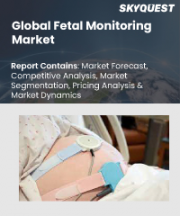
|
시장보고서
상품코드
1980195
태아 모니터링 시장 : 규모, 점유율, 성장, 업계 분석, 유형별, 용도별, 지역별 인사이트, 예측(2026-2034년)Fetal Monitoring Market Size, Share, Growth and Global Industry Analysis By Type & Application, Regional Insights and Forecast to 2026-2034 |
||||||

태아 모니터링 시장의 성장 요인
세계 태아 모니터링 시장은 2025년에 32억 8,000만 달러로 평가되었고, 2026년 34억 6,000만 달러, 2034년까지 54억 5,000만 달러에 이르고, 2026년에서 2034년에 걸쳐 CAGR은 5.83%를 나타낼 것으로 예측됩니다. 북미는 첨단 의료 인프라와 강력한 규제 감독에 힘입어 2025년에는 34.48%의 점유율을 차지하며 세계 시장을 선도했습니다.
태아 모니터링 장치는 임신 및 분만 중 태아 심박수, 자궁 수축, 태동 및 태아의 전반적인 건강 상태를 평가하는 데 사용됩니다. 이 시스템은 태아의 고통을 확인하고, 산과적 개입을 이끌고, 출산시 유해한 결과를 최소화하는 데 매우 중요합니다. 노인 출산 증가, 고위험 임신 증가, 제왕 절개율 증가 및 실시간 분만 모니터링에 대한 수요가 시장 확대의 주요 요인이 되고 있습니다. 또한 휴대용, 무선 및 비침범성 모니터링 솔루션의 도입이 성장 전망을 강화하고 있습니다.
시장 역학
시장 성장 촉진요인
고위험 임신 증가가 시장 성장을 뒷받침
모체 고령화, 임신성 당뇨, 고혈압, 자간전증 및 체외수정(IVF)(IVF)과 같은 보조생식기술 기술로 고위험 임신으로 분류되는 경우가 증가하고 있습니다. 고위험 사례에서는 합병증을 조기에 감지하기 위해 빈번하고 지속적인 태아 심박수 모니터링이 필요합니다. 클리블랜드 클리닉에 따르면, 미국에서는 매년 임신의 약 6-8%가 고위험 임신으로 분류됩니다.
병원에서는 적시의 개입을 가능하게 하고 신생아의 이환율을 저감시키기 위해 분만 중의 태아 심음도(CTG) 검사를 표준화하고 있습니다. 이러한 임상적 필요성은 CTG 모니터, 텔레메트리 시스템 및 첨단 태아용 트랜스듀서에 대한 수요를 이끌고 있습니다.
시장 성장 억제요인
비침습적 연속 모니터링에서 규제 및 정확성에 대한 우려
웨어러블형 및 비침습형 태아 모니터는 보급되고 있지만, 신호의 정밀도와 모체와 태아의 심박수의 구별에 관한 규제상의 정사에 직면하고 있습니다. 오경보는 긴급 제왕 절개와 같은 불필요한 개입으로 이어질 수 있습니다. 또한 고급 CTG 및 무선 원격 측정 시스템의 고비용은 소규모 산과 시설 및 저소득 지역에서의 도입을 제한합니다.
시장 기회
AI와 의사결정 지원 분석의 통합
심박동 변동과 진통 패턴을 분석하는 AI 기반 태아 모니터링 플랫폼에는 큰 성장 기회가 있습니다. 이러한 솔루션은 의료 종사자 간의 진단 편차를 줄이고 태아 기능 장애의 조기 발견을 향상시킵니다. 클라우드 기반 연결은 원격으로 산과 의사의 진단 및 실시간 경고를 가능하게 합니다. 통합 하드웨어, 무선 패치, AI를 활용한 분석 기능을 제공하는 벤더는 고부가가치 병원 계약을 획득하는데 유리한 입장에 있습니다.
시장의 과제
잘못된 경보와 임상 책임
연속 CTG 모니터링에서는 임상적으로 유의하지 않은 "안심할 수 없는" 파형이 종종 생성됩니다. 이것은 과도하게 신중한 의사 결정을 증가시키고 제왕 절개율을 증가시킬 수 있습니다. 병원은 안전과 불필요한 개입 사이의 균형을 유지해야 합니다. BMI가 높은 환자나 움직임이 있을 때의 신호의 중단도 운용상의 과제가 되고 있습니다.
시장 동향
비 침습적이고 무선 모니터링으로 전환
주요 동향은 전통적인 벨트 모니터에서 분만 중 어머니의 이동성을 높이는 무선 및 패치 시스템으로의 전환을 포함합니다. 무선 원격 측정을 통해 환자는 지속적인 모니터링을 유지하면서 자유롭게 걸을 수 있습니다.
예를 들어, 2024년 2월, GE Healthcare는 분만 전 및 분만 중 모니터링에서 이동성을 지원하도록 설계된 “Novii 무선 모체 및 태아 모니터링 솔루션”에 대해 미국 FDA의 510(k) 인가를 취득했습니다.
세분화 분석
방법별
시장 세분화는 침습적이고 비침습적인 방법으로 분류됩니다.
- 비침습적 부문은 2024년에 시장을 독점하고 있으며, 안전성과 감염 위험의 감소로 인해 2026년에는 시장의 67.77%를 차지할 것으로 예측되고 있습니다.
- 침습적 부문은 2034년까지 연평균 복합 성장률(CAGR)은 4.6%를 나타낼 것으로 예측됩니다.
제품별
부문에는 장비 및 소모품이 포함됩니다.
- 소모품 부문은 2025년에 62.3%의 점유율로 시장을 선도하고 교환 빈도 높음을 배경으로 2026년에는 64.84%를 차지할 것으로 예측되고 있습니다.
- 기구의 CAGR은 5.1%를 나타낼 것으로 예측됩니다.
용도별
시장에는 산전 및 분만 중 모니터링이 포함됩니다.
- 분만 중 모니터링은 분만 중 지속적인 모니터링을 통해 2025년에는 54.3%의 점유율로 시장을 독점했고 2026년에는 53.99%의 점유율을 유지할 것으로 예측됩니다.
- 분만 전 모니터링의 CAGR은 6.3%를 나타낼 것으로 예측됩니다.
최종 사용자별
이 부문은 병원, 재택 관리 시설, 진단센터 및 기타로 구성되어 있습니다.
- 병원이 시장을 독점하고 있으며, 2026년에는 시장의 75.76%를 차지할 것으로 예측되고 있습니다.
- 재택 관리 환경의 CAGR은 6.6%를 나타낼 것으로 예측됩니다.
지역별 전망
북미
북미는 2025년 11억 3,000만 달러, 2026년 11억 9,000만 달러 시장 규모를 기록하고 첨단 태아 모니터링 기술의 도입이 활발하기 때문에 계속 주도적인 지위를 유지할 것으로 전망됩니다.
유럽
유럽은 충실한 출산 전 케어 기준과 감염 예방 프로토콜에 힘입어 2026년에는 9억 5,000만 달러에 달할 것으로 예측되고 있습니다.
아시아태평양
아시아태평양은 중국과 인도의 의료 투자 증가로 이어지고 있으며, 가장 높은 CAGR로 성장하며 2026년에는 10억 5,000만 달러에 이를 것으로 예측됩니다.
라틴아메리카 및 중동 및 아프리카
이 지역에서는 의료 인프라 개선과 임산부 건강에 대한 의식이 높아짐에 따라 완만한 성장이 예상됩니다.
목차
제1장 서론
제2장 주요 요약
제3장 시장 역학
- 시장 성장 촉진요인
- 시장 성장 억제요인
- 시장 기회
- 시장 동향
제4장 주요 고찰
- 주요 질환의 유병률, 주요국 및 지역, 2024년/2025년
- 태아 모니터링 기술의 진보
- 신제품 발매, 주요 기업
- 업계의 주요 발전 : 합병, 인수, 제휴
제5장 세계의 태아 모니터링 시장 분석, 인사이트, 예측, 2021년-2034년
- 시장 분석, 인사이트, 예측 : 방법별
- 침습적
- 비침습적
- 시장 분석, 인사이트, 예측 : 제품별
- 소모품
- 전극
- 초음파 젤 및 커플런트
- 일회용 센서
- 기타
- 기기
- 초음파 태아 모니터
- 전자태아모니터(EFM)
- 태아 도플러
- 기타
- 소모품
- 시장 분석, 인사이트, 예측 : 용도별
- 산전 모니터링
- 분만 중 모니터링
- 시장 분석, 인사이트, 예측 : 최종 사용자별
- 병원
- 재택치료 환경
- 진단 및 영상 진단센터
- 기타
- 시장 분석, 인사이트, 예측 :지역별
- 북미
- 유럽
- 아시아태평양
- 라틴아메리카
- 중동 및 아프리카
제6장 북미의 태아 모니터링 시장 분석, 인사이트, 예측, 2021년-2034년
- 국가별
- 미국
- 캐나다
제7장 유럽의 태아 모니터링 시장 분석, 인사이트, 예측, 2021년-2034년
- 국가별
- 영국
- 독일
- 프랑스
- 스페인
- 이탈리아
- 스칸디나비아
- 기타 유럽 국가
제8장 아시아태평양의 태아 모니터링 시장 분석, 인사이트, 예측, 2021년-2034년
- 국가별
- 일본
- 호주
- 중국
- 인도
- 동남아시아
- 기타 아시아태평양 국가
제9장 라틴아메리카의 태아 모니터링 시장 분석, 인사이트, 예측, 2021-2034
- 국가별
- 브라질
- 멕시코
- 기타 라틴아메리카 국가
제10장 중동 및 아프리카의 태아 모니터링 시장 분석, 인사이트, 예측, 2021년-2034년
- 국가별
- 남아프리카
- GCC
- 기타 중동 및 아프리카 국가
제11장 경쟁 분석
- 세계 시장 점유율 분석(2025년)
- 기업 프로파일
- GE HealthCare Technologies Inc.
- Koninklijke Philips NV
- Mindray Medical International Ltd.
- Nihon Kohden Corporation
- Analogic Corporation
- Huntleigh Healthcare Limited
- Bionet Co., Ltd.
- Edan Instruments, Inc.
- Spacelabs Healthcare
- Dragerwerk AG & Co. KGaA
Growth Factors of fetal monitoring Market
The global fetal monitoring market was valued at USD 3.28 billion in 2025 and is projected to grow from USD 3.46 billion in 2026 to USD 5.45 billion by 2034, registering a CAGR of 5.83% during 2026-2034. North America dominated the global market with a 34.48% share in 2025, supported by advanced obstetric care infrastructure and strong regulatory oversight.
Fetal monitoring devices are used to evaluate fetal heart rate, uterine contractions, fetal movement, and overall fetal well-being during pregnancy and labor. These systems are critical in identifying fetal distress, guiding obstetric intervention, and minimizing adverse birth outcomes. Rising maternal age, increasing high-risk pregnancies, growing cesarean section rates, and demand for real-time labor monitoring are key contributors to market expansion. Additionally, adoption of portable, wireless, and non-invasive monitoring solutions is strengthening growth prospects.
Market Dynamics
Market Drivers
Rising Rate of High-Risk Pregnancies to Support Market Growth
An increasing number of pregnancies are categorized as high-risk due to maternal age, gestational diabetes, hypertension, preeclampsia, and assisted reproductive technologies such as IVF. High-risk cases require frequent and often continuous fetal heart rate monitoring to detect complications early. According to the Cleveland Clinic, approximately 6-8% of pregnancies in the U.S. are high-risk annually.
Hospitals are standardizing cardiotocography (CTG) during labor to enable timely intervention and reduce neonatal morbidity. This clinical necessity is driving demand for CTG monitors, telemetry systems, and advanced fetal transducers.
Market Restraints
Regulatory and Accuracy Concerns in Non-Invasive Continuous Monitoring
Although wearable and non-invasive fetal monitors are gaining popularity, they face regulatory scrutiny regarding signal accuracy and differentiation between maternal and fetal heart rates. False alarms may lead to unnecessary interventions such as emergency C-sections. Additionally, high costs of advanced CTG and wireless telemetry systems limit adoption in smaller maternity centers and low-income regions.
Market Opportunities
Integration of AI and Decision-Support Analytics
AI-based fetal monitoring platforms that interpret heart rate variability and contraction patterns present strong growth opportunities. These solutions reduce inter-clinician variability and improve early detection of fetal distress. Cloud-based connectivity enables remote obstetric review and real-time alerts. Vendors offering integrated hardware, wireless patches, and AI-powered analytics are well-positioned to secure higher-value hospital contracts.
Market Challenges
False Alarms and Clinical Liability
Continuous CTG monitoring often generates "non-reassuring" tracings that are not clinically significant. This may increase defensive decision-making and raise C-section rates. Hospitals must balance safety with unnecessary intervention. Signal dropouts in patients with higher BMI or during movement also pose operational challenges.
Market Trends
Shift Toward Non-Invasive and Wireless Monitoring
A major trend is the shift from traditional belt-based monitors to wireless and patch-based systems that enhance maternal mobility during labor. Wireless telemetry allows patients to ambulate freely while maintaining continuous monitoring.
For instance, in February 2024, GE HealthCare received U.S. FDA 510(k) clearance for its Novii+ Wireless Maternal and Fetal Monitoring Solution, designed to support mobility during antepartum and intrapartum monitoring.
Segmentation Analysis
By Method
The market is segmented into invasive and non-invasive methods.
- The non-invasive segment dominated in 2024 and is projected to account for 67.77% of the market in 2026, due to safety and reduced infection risk.
- The invasive segment is expected to grow at a CAGR of 4.6% through 2034.
By Product
Segments include instruments and consumables.
- The consumables segment led the market with 62.3% share in 2025 and is projected to account for 64.84% in 2026, driven by high replacement frequency.
- Instruments are projected to grow at a CAGR of 5.1%.
By Application
The market includes antepartum and intrapartum monitoring.
- Intrapartum monitoring dominated with 54.3% share in 2025 and is expected to hold 53.99% in 2026, due to continuous monitoring during labor.
- Antepartum monitoring is expected to grow at a CAGR of 6.3%.
By End User
Hospitals, home care settings, diagnostic centers, and others comprise the segment.
- Hospitals dominated and are projected to account for 75.76% of the market in 2026.
- Home care settings are expected to grow at a CAGR of 6.6%.
Regional Outlook
North America
North America generated USD 1.13 billion in 2025 and USD 1.19 billion in 2026, maintaining leadership due to strong adoption of advanced fetal monitoring technologies.
Europe
Europe is projected to reach USD 0.95 billion in 2026, supported by strong pre-birth care standards and infection prevention protocols.
Asia Pacific
Asia Pacific is expected to grow at the fastest CAGR, reaching USD 1.05 billion in 2026, driven by rising healthcare investments in China and India.
Latin America and Middle East & Africa
These regions are projected to witness moderate growth due to improving healthcare infrastructure and increasing maternal health awareness.
Competitive Landscape
The market is moderately consolidated with leading players such as Philips Healthcare, GE HealthCare, Mindray Medical, Huntleigh Healthcare (Arjo), and Monica Healthcare. Companies emphasize clinical accuracy, wireless connectivity, AI-assisted interpretation, and patient comfort to strengthen market position. Strategic partnerships, FDA approvals, and expansion into remote monitoring solutions remain key competitive strategies.
Conclusion
The global fetal monitoring market is projected to grow from USD 3.28 billion in 2025 to USD 5.45 billion by 2034, expanding at a CAGR of 5.83%. Rising high-risk pregnancies, technological advancements in wireless and AI-enabled monitoring, and increasing emphasis on safe childbirth practices are key growth drivers. While regulatory scrutiny and false alarm challenges persist, innovation in non-invasive, connected, and decision-support systems is expected to sustain long-term market expansion through 2034.
Segmentation By Method
- Invasive
- Non-Invasive
By Product
- Consumables
- Electrodes
- Ultrasound Gel & Couplants
- Disposable Sensors
- Others
- Instrument
- Ultrasound Fetal Monitors
- Electronic Fetal Monitors (EFM)
- Fetal Dopplers
- Others
By Application
- Antepartum Monitoring
- Intrapartum Monitoring
By End-User
- Hospitals
- Home Care Settings
- Diagnostic & Imaging Centers
- Others
By Region
- North America (By Method, Product, Application, End-User, and Country)
- U.S.
- By Product
- Canada
- By Product
- U.S.
- Europe (By Method, Product, Application, End-User, and Country/Sub-region)
- Germany
- By Product
- U.K.
- By Product
- France
- By Product
- Spain
- By Product
- Italy
- By Product
- Scandinavia
- By Product
- Rest of Europe
- By Product
- Germany
- Asia Pacific (By Method, Product, Application, End-User, and Country/Sub-region)
- China
- By Product
- Japan
- By Product
- India
- By Product
- Australia
- By Product
- Southeast Asia
- By Product
- Rest of Asia Pacific
- By Product
- China
- Latin America (By Method, Product, Application, End-User, and Country/Sub-region)
- Brazil
- By Product
- Mexico
- By Product
- Rest of Latin America
- By Product
- Brazil
- Middle East & Africa (By Method, Product, Application, End-User, and Country/Sub-region)
- GCC
- By Product
- South Africa
- By Product
- Rest of Middle East & Africa
- By Product
- GCC
Table of Content
1. Introduction
- 1.1. Research Scope
- 1.2. Market Segmentation
- 1.3. Research Methodology
2. Executive Summary
3. Market Dynamics
- 3.1. Market Drivers
- 3.2. Market Restraints
- 3.3. Market Opportunities
- 3.4. Market Trends
4. Key Insights
- 4.1. Prevalence of Key Disorders, Key Countries/Regions, 2024/2025
- 4.2. Technological Advancements in Fetal Monitoring
- 4.3. New Product Launches, Key Players
- 4.4. Key Industry Developments - Mergers, Acquisitions & Partnerships
5. Global Fetal Monitoring Market Analysis, Insights and Forecast, 2021-2034
- 5.1. Market Analysis, Insights and Forecast - By Method
- 5.1.1. Invasive
- 5.1.2. Non-Invasive
- 5.2. Market Analysis, Insights and Forecast - By Product
- 5.2.1. Consumables
- 5.2.1.1. Electrodes
- 5.2.1.2. Ultrasound Gel & Couplants
- 5.2.1.3. Disposable Sensors
- 5.2.1.4. Others
- 5.2.2. Instrument
- 5.2.2.1. Ultrasound Fetal Monitors
- 5.2.2.2. Electronic Fetal Monitors (EFM)
- 5.2.2.3. Fetal Dopplers
- 5.2.2.4. Others
- 5.2.1. Consumables
- 5.3. Market Analysis, Insights and Forecast - By Application
- 5.3.1. Antepartum Monitoring
- 5.3.2. Intrapartum Monitoring
- 5.4. Market Analysis, Insights and Forecast - By End-user
- 5.4.1. Hospitals
- 5.4.2. Home Care Settings
- 5.4.3. Diagnostic & Imaging Centers
- 5.4.4. Others
- 5.5. Market Analysis, Insights and Forecast - By Region
- 5.5.1. North America
- 5.5.2. Europe
- 5.5.3. Asia Pacific
- 5.5.4. Latin America
- 5.5.5. Middle East & Africa
6. North America Fetal Monitoring Market Analysis, Insights and Forecast, 2021-2034
- 6.1. Market Analysis, Insights and Forecast - By Method
- 6.1.1. Invasive
- 6.1.2. Non-Invasive
- 6.2. Market Analysis, Insights and Forecast - By Product
- 6.2.1. Consumables
- 6.2.1.1. Electrodes
- 6.2.1.2. Ultrasound Gel & Couplants
- 6.2.1.3. Disposable Sensors
- 6.2.1.4. Others
- 6.2.2. Instrument
- 6.2.2.1. Ultrasound Fetal Monitors
- 6.2.2.2. Electronic Fetal Monitors (EFM)
- 6.2.2.3. Fetal Dopplers
- 6.2.2.4. Others
- 6.2.1. Consumables
- 6.3. Market Analysis, Insights and Forecast - By Application
- 6.3.1. Antepartum Monitoring
- 6.3.2. Intrapartum Monitoring
- 6.4. Market Analysis, Insights and Forecast - By End-user
- 6.4.1. Hospitals
- 6.4.2. Home Care Settings
- 6.4.3. Diagnostic & Imaging Centers
- 6.4.4. Others
- 6.5. Market Analysis, Insights and Forecast - By Country
- 6.5.1. U.S.
- 6.5.1.1. By Method
- 6.5.2. Canada
- 6.5.2.1. By Method
- 6.5.1. U.S.
7. Europe Fetal Monitoring Market Analysis, Insights and Forecast, 2021-2034
- 7.1. Market Analysis, Insights and Forecast - By Method
- 7.1.1. Invasive
- 7.1.2. Non-Invasive
- 7.2. Market Analysis, Insights and Forecast - By Product
- 7.2.1. Consumables
- 7.2.1.1. Electrodes
- 7.2.1.2. Ultrasound Gel & Couplants
- 7.2.1.3. Disposable Sensors
- 7.2.1.4. Others
- 7.2.2. Instrument
- 7.2.2.1. Ultrasound Fetal Monitors
- 7.2.2.2. Electronic Fetal Monitors (EFM)
- 7.2.2.3. Fetal Dopplers
- 7.2.2.4. Others
- 7.2.1. Consumables
- 7.3. Market Analysis, Insights and Forecast - By Application
- 7.3.1. Antepartum Monitoring
- 7.3.2. Intrapartum Monitoring
- 7.4. Market Analysis, Insights and Forecast - By End-user
- 7.4.1. Hospitals
- 7.4.2. Home Care Settings
- 7.4.3. Diagnostic & Imaging Centers
- 7.4.4. Others
- 7.5. Market Analysis, Insights and Forecast - By Country/Sub-region
- 7.5.1. U.K.
- 7.5.1.1. By Method
- 7.5.2. Germany
- 7.5.2.1. By Method
- 7.5.3. France
- 7.5.3.1. By Method
- 7.5.4. Spain
- 7.5.4.1. By Method
- 7.5.5. Italy
- 7.5.5.1. By Method
- 7.5.6. Scandinavia
- 7.5.6.1. By Method
- 7.5.7. Rest of Europe
- 7.5.7.1. By Method
- 7.5.1. U.K.
8. Asia Pacific Fetal Monitoring Market Analysis, Insights and Forecast, 2021-2034
- 8.1. Market Analysis, Insights and Forecast - By Method
- 8.1.1. Invasive
- 8.1.2. Non-Invasive
- 8.2. Market Analysis, Insights and Forecast - By Product
- 8.2.1. Consumables
- 8.2.1.1. Electrodes
- 8.2.1.2. Ultrasound Gel & Couplants
- 8.2.1.3. Disposable Sensors
- 8.2.1.4. Others
- 8.2.2. Instrument
- 8.2.2.1. Ultrasound Fetal Monitors
- 8.2.2.2. Electronic Fetal Monitors (EFM)
- 8.2.2.3. Fetal Dopplers
- 8.2.2.4. Others
- 8.2.1. Consumables
- 8.3. Market Analysis, Insights and Forecast - By Application
- 8.3.1. Antepartum Monitoring
- 8.3.2. Intrapartum Monitoring
- 8.4. Market Analysis, Insights and Forecast - By End-user
- 8.4.1. Hospitals
- 8.4.2. Home Care Settings
- 8.4.3. Diagnostic & Imaging Centers
- 8.4.4. Others
- 8.5. Market Analysis, Insights and Forecast - By Country/Sub-region
- 8.5.1. Japan
- 8.5.1.1. By Method
- 8.5.2. Australia
- 8.5.2.1. By Method
- 8.5.3. China
- 8.5.3.1. By Method
- 8.5.4. India
- 8.5.4.1. By Method
- 8.5.5. Southeast Asia
- 8.5.5.1. By Method
- 8.5.6. Rest of Asia Pacific
- 8.5.6.1. By Method
- 8.5.1. Japan
9. Latin America Fetal Monitoring Market Analysis, Insights and Forecast, 2021-2034
- 9.1. Market Analysis, Insights and Forecast - By Method
- 9.1.1. Invasive
- 9.1.2. Non-Invasive
- 9.2. Market Analysis, Insights and Forecast - By Product
- 9.2.1. Consumables
- 9.2.1.1. Electrodes
- 9.2.1.2. Ultrasound Gel & Couplants
- 9.2.1.3. Disposable Sensors
- 9.2.1.4. Others
- 9.2.2. Instrument
- 9.2.2.1. Ultrasound Fetal Monitors
- 9.2.2.2. Electronic Fetal Monitors (EFM)
- 9.2.2.3. Fetal Dopplers
- 9.2.2.4. Others
- 9.2.1. Consumables
- 9.3. Market Analysis, Insights and Forecast - By Application
- 9.3.1. Antepartum Monitoring
- 9.3.2. Intrapartum Monitoring
- 9.4. Market Analysis, Insights and Forecast - By End-user
- 9.4.1. Hospitals
- 9.4.2. Home Care Settings
- 9.4.3. Diagnostic & Imaging Centers
- 9.4.4. Others
- 9.5. Market Analysis, Insights and Forecast - By Country/Sub-region
- 9.5.1. Brazil
- 9.5.1.1. By Method
- 9.5.2. Mexico
- 9.5.2.1. By Method
- 9.5.3. Rest of Latin America
- 9.5.3.1. By Method
- 9.5.1. Brazil
10. Middle East &Africa Fetal Monitoring Market Analysis, Insights and Forecast, 2021-2034
- 10.1. Market Analysis, Insights and Forecast - By Method
- 10.1.1. Invasive
- 10.1.2. Non-Invasive
- 10.2. Market Analysis, Insights and Forecast - By Product
- 10.2.1. Consumables
- 10.2.1.1. Electrodes
- 10.2.1.2. Ultrasound Gel & Couplants
- 10.2.1.3. Disposable Sensors
- 10.2.1.4. Others
- 10.2.2. Instrument
- 10.2.2.1. Ultrasound Fetal Monitors
- 10.2.2.2. Electronic Fetal Monitors (EFM)
- 10.2.2.3. Fetal Dopplers
- 10.2.2.4. Others
- 10.2.1. Consumables
- 10.3. Market Analysis, Insights and Forecast - By Application
- 10.3.1. Antepartum Monitoring
- 10.3.2. Intrapartum Monitoring
- 10.4. Market Analysis, Insights and Forecast - By End-user
- 10.4.1. Hospitals
- 10.4.2. Home Care Settings
- 10.4.3. Diagnostic & Imaging Centers
- 10.4.4. Others
- 10.5. Market Analysis, Insights and Forecast - By Country/Sub-region
- 10.5.1. South Africa
- 10.5.1.1. By Method
- 10.5.2. GCC
- 10.5.2.1. By Method
- 10.5.3. Rest of Middle East & Africa
- 10.5.3.1. By Method
- 10.5.1. South Africa
11. Competitive Analysis
- 11.1. Global Market Share Analysis (2025)
- 11.2. Company Profiles (Overview, Products, SWOT analysis, Recent developments, strategies, financials (based on availability))
- 11.2.1. GE HealthCare Technologies Inc.
- 11.2.2. Koninklijke Philips N.V.
- 11.2.3. Mindray Medical International Ltd.
- 11.2.4. Nihon Kohden Corporation
- 11.2.5. Analogic Corporation
- 11.2.6. Huntleigh Healthcare Limited
- 11.2.7. Bionet Co., Ltd.
- 11.2.8. Edan Instruments, Inc.
- 11.2.9. Spacelabs Healthcare
- 11.2.10. Dragerwerk AG & Co. KGaA