|
시장보고서
상품코드
1980347
자동차 스위치 시장 : 규모, 점유율, 성장, 업계 분석, 유형별, 용도별, 지역별 인사이트, 예측(2026-2034년)Automotive Switches Market Size, Share, Growth and Global Industry Analysis By Type & Application, Regional Insights and Forecast to 2026-2034 |
||||||

자동차 스위치 시장의 성장 요인
세계 자동차 스위치 시장은 2025년 484억 7,000만 달러로 평가되었으며, 2026년에는 507억 3,000만 달러, 2034년까지 841억 5,000만 달러에 이르고, 예측 기간 중 CAGR은 6.53%를 나타낼 전망입니다. 아시아태평양은 신흥국의 견조한 자동차 생산과 급속한 기술 도입에 힘입어 2025년에는 51.38%의 점유율로 세계 시장을 견인했습니다.
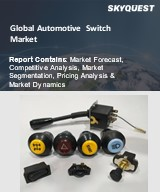
자동차 스위치는 조명, 인포테인먼트, 에어컨 제어, 시트 조정, 안전 시스템 등 차량 내 및 외부의 여러 기능을 제어하는 현대 자동차에 필수적인 부품입니다. 스마트카, 커넥티드카, 전기자동차로의 전환이 진행됨에 따라 스위치는 기존의 기계식 기기에서 고급 전자 시스템과 터치 조작 대응 시스템으로 진화하고 있습니다.
시장 동향
자동차 스위치 시장을 견인하는 주요 동향은 터치 센서식 조작, 제스처 인식, 햅틱 피드백, 모듈식 다기능 스위치 등의 첨단 기술의 통합입니다. 이러한 혁신은 운전자의 편의성을 높이고 주의 산만을 줄이고 차량의 미관을 향상시킵니다.
차량의 급속한 전기화는 고급 스위치에 대한 수요를 더욱 강화하고 있습니다. 2023년 미국의 전기차 판매량은 전체 자동차 판매량의 7.6%를 차지했고 2022년 5.9%에서 증가했으며, 이는 특수 전기 스위치 시스템에 대한 요구가 증가하고 있음을 반영합니다. 휴먼 머신 인터페이스(HMI) 기술은 인포테인먼트, 배터리 관리 및 안전 시스템에서 점점 더 중요해지고 있으며 차세대 차량 아키텍처를 지원합니다.
시장 성장 촉진요인
고급 안전 기능의 보급 확대
어댑티브 크루즈 컨트롤, 차선 이탈 경보, 자동 긴급 브레이크 등 ADAS(선진 운전 지원 시스템)의 통합이 진행됨에 따라 신뢰성이 높은 스위치에 대한 수요가 대폭 증가하고 있습니다. 이러한 시스템이 제대로 작동하려면 전용 스위치와 전자 제어 장치가 필요합니다.
유럽 유로 6 및 미국 기업 평균 연비(CAFE) 기준과 같은 정부 규제는 안전성과 배출 가스 제어를 개선할 의무가 있으며, 스타트 스톱 시스템, 에코 모드 작동 및 실린더 휴지 기능을 위한 스위치가 필요합니다.
승용차 및 프리미엄차의 성장
가처분 소득 증가, 임대 옵션 확대, 자동차 소유 대수 증가로 전 세계적으로 승용차 판매가 증가하고 있습니다. 소비자는 시트 메모리 기능, 스티어링 조정, 인포테인먼트에 대한 접근성 등 보다 정교한 개인화를 요구하고 있으며, 이는 스위치 수요를 견인하고 있습니다.
시장억제요인과 과제
시장은 치열한 경쟁과 원재료 가격 상승으로 비용면에서 압력에 직면하고 있습니다. 자동차 제조업체는 공급업체에게 지속적으로 비용 절감을 요구하고 이익률을 압박하고 있습니다. 또한 터치 스크린, 음성 인식 및 제스처 작업과 같은 대체 사용자 인터페이스가 기존의 기계식 스위치의 일부를 대체할 수 있습니다.
급속한 기술의 진화도 과제가 되고 있어 제품의 진부화를 막기 위해서는 지속적인 R&D 투자가 필요합니다.
시장 기회
HMI 기술과 스마트 차량 인프라의 급속한 통합은 강력한 성장 기회를 제공합니다. EV의 보급이 가속화되면서 배터리 관리, 충전 시스템, 회생 브레이크에 특화된 고급 스위치 솔루션의 중요성이 높아지고 있습니다. 제조업체 각사는 디지털 조종실로의 변화에 대응하기 위해 스마트하고 모듈식, 다기능 스위치의 개발을 진행하고 있습니다.
세분화 분석
용도별
인포테인먼트 및 멀티미디어 제어 부문은 차내 조작성 향상에 대한 수요에 견인되어 2026년에는 23.87%로 최대 점유율을 차지했습니다.
제조업체 각 회사는 운전자의 집중력과 안전성을 높이기 위해 토글 스위치와 버튼 스위치를 통합하여 스티어링 휠 스위치 부문이 가장 높은 성장률을 보일 것으로 예측됩니다.
판매 채널별
OEM 부문은 OEM 장착 스위치가 제공하는 높은 내구성과 고급 기능성으로 인해 2025년 약 91%에 이어 2026년에도 90.77%의 점유율을 기록하며 시장을 주도했습니다.
애프터마켓 부문은 교환 수요에 힘입어 CAGR 4.70%로 성장할 것으로 예측됩니다.
차종별
승용차 부문은 세계 판매량 증가와 소비자 구매력 향상에 견인되었으며 2026년에는 시장 점유율의 77.66%를 차지했습니다. 해치백 및 세단 모델은 2025년에 48.94%의 점유율을 차지한 것으로 추산되며, SUV는 2025년부터 2032년에 걸쳐 CAGR 6.60%로 성장할 것으로 전망되고 있습니다.
상용차 부문은 소형 상용차의 현대화에 힘입어 꾸준한 성장이 예상됩니다.
지역별 동향
아시아태평양
아시아태평양은 2025년 249억 달러, 2026년 261억 9,000만 달러로 시장을 견인하고 있습니다. 중국은 2026년 136억 7,000만 달러, 인도는 27억 8,000만 달러, 일본은 46억 7,000만 달러에 이를 것으로 예측됩니다. 급속한 현대화와 전동화가 주요 성장 요인이 되었습니다.
북미
북미는 2025년 88억 4,000만 달러에 이르렀고, 미국 시장은 2026년 61억 9,000만 달러로 평가되고 있습니다. EV의 보급 확대와 ADAS의 통합이 성장을 이끌고 있습니다.
유럽
유럽은 2025년에 125억 7,000만 달러를 차지했습니다. 독일은 2026년 31억 9,000만 달러에 이를 것으로 예상되며, 영국은 8억 2,000만 달러로 예측됩니다.
세계 기타 지역
이 지역은 아프리카, 라틴아메리카, 중동의 자동차 판매량 증가에 힘입어 2025년에는 21억 6,000만 달러에 달했습니다.
목차
제1장 서론
제2장 주요 요약
제3장 시장 역학
- 시장 성장 촉진요인
- 시장 성장 억제요인
- 시장 기회
- 시장 동향
제4장 주요 고찰
- 업계의 주요 발전 : 합병, 인수, 제휴
- 최신 기술적 진보
- 용도별 분석, 차종별(대수)
- 용도별 세계 시장 점유율 분석
- 공급망 분석
- 가격 분석
- COVID-19 팬데믹의 영향 : 세계의 자동차 스위치 시장
제5장 세계 자동차 스위치 시장 분석, 인사이트, 예측, 2021년-2034년
- 주요 조사 결과 및 정의
- 시장 분석, 인사이트, 예측 : 용도별
- 스티어링 휠 스위치
- 도어 패널
- 루프 모듈
- 기능 스위치
- 공조 및 편의 제어
- 인포테인먼트 및 멀티미디어 제어
- 기어 시프트
- 시트 컨트롤
- 시장 분석, 인사이트, 예측 : 차량 유형별
- 승용차
- 상용차
- 시장 분석, 인사이트, 예측 : 판매 채널별
- OEM
- 애프터마켓
- 시장 분석, 인사이트, 예측 :지역별
- 북미
- 유럽
- 아시아태평양
- 세계 기타 지역
제6장 북미의 자동차 스위치 시장 분석, 인사이트, 예측, 2021년-2034년
- 국가별
- 미국
- 캐나다
- 멕시코
제7장 유럽의 자동차 스위치 시장 분석, 인사이트, 예측, 2021년-2034년
- 국가별
- 영국
- 독일
- 프랑스
- 기타 유럽 국가
제8장 아시아태평양의 자동차 스위치 시장 분석, 인사이트, 예측, 2021년-2034년
- 국가별
- 중국
- 인도
- 일본
- 한국
- 기타 아시아태평양 국가
제9장 세계 기타 지역의 자동차 스위치 시장 분석, 인사이트, 예측, 2021년-2034년
제10장 경쟁 분석
- 주요 업계 동향
- 세계 시장 순위 분석(2025년)
- 경쟁 대시보드
- 주요 기업 비교 분석
- 기업 프로파일
- Continental AG(Germany)
- Valeo SA(France)
- ZF Friedrichshafen AG(Germany)
- DENSO CORPORATION(Japan)
- HELLA GmbH & Co. KGaA(Germany)
- Uno Minda(India)
- Marelli Corporation(Japan)
- Eaton(Ireland)
- ALPS ALPINE CO., LTD.(Japan)
- Preh GmbH(Germany)
- KOSTAL Automobil Elektrik GmbH & Co. KG(Germany)
- BCS Automotive(Germany)
- Marquardt Group(Germany)
- Yanfeng(China)
- Visteon Corporation.(US)
- Clarion(US)
- Kasai Mills (Japan)
- C&K Switches(US)
- Ningbo Jietong Switch(China)
- MinebeaMitsumi, Inc(Japan)
- Marvell Technology, Inc.(US)
- Dhoot Transmission Pvt. Ltd.(India)
- Desay(China)
- OMRON Corporation(Japan)
- LS Automotive India Pvt Ltd.(India)
- YueQing Daier Electron Co., Ltd.(China)
- Merit Automotive Electronics Systems, SLU(Spain)
Growth Factors of automotive switches Market
The global automotive switches market was valued at USD 48.47 billion in 2025 and is projected to grow to USD 50.73 billion in 2026, reaching USD 84.15 billion by 2034, exhibiting a CAGR of 6.53% during the forecast period. Asia Pacific dominated the global market with a 51.38% share in 2025, supported by strong automotive production and rapid technological adoption across emerging economies.
Automotive switches are essential components in modern vehicles, controlling multiple in-cabin and exterior functions such as lighting, infotainment, climate control, seat adjustment, and safety systems. With the increasing shift toward smart, connected, and electric vehicles, switches are evolving from conventional mechanical devices to advanced electronic and touch-enabled systems.
Market Trends
A major trend driving the automotive switches market is the integration of advanced technologies, including touch-sensitive controls, gesture recognition, haptic feedback, and modular multi-function switches. These innovations enhance driver convenience, reduce distraction, and improve vehicle aesthetics.
The rapid electrification of vehicles further strengthens demand for advanced switches. In 2023, electric vehicles accounted for 7.6% of total U.S. vehicle sales, up from 5.9% in 2022, reflecting a growing need for specialized electrical switch systems. Human-Machine Interface (HMI) technologies are becoming increasingly important in infotainment, battery management, and safety systems, supporting next-generation vehicle architectures.
Market Drivers
Increased Adoption of Advanced Safety Features
The rising integration of Advanced Driver Assistance Systems (ADAS) such as adaptive cruise control, lane departure warning, and automatic emergency braking significantly increases the demand for reliable switches. These systems require dedicated switches and electronic controls to ensure proper functioning.
Government regulations such as Euro 6 in Europe and Corporate Average Fuel Economy (CAFE) standards in the U.S. mandate improved safety and emission controls, requiring switches for start-stop systems, eco-mode activation, and cylinder deactivation features.
Growth in Passenger and Premium Vehicles
Rising disposable incomes, expanding leasing options, and increasing vehicle ownership have boosted passenger car sales globally. Consumers demand greater personalization, including memory seat controls, steering adjustments, and infotainment accessibility, driving switch demand.
Market Restraints and Challenges
The market faces cost pressures due to intense competition and rising raw material prices. Automotive manufacturers continuously push suppliers to lower costs, reducing profit margins. Additionally, alternative user interfaces such as touchscreens, voice recognition, and gesture controls may replace certain traditional mechanical switches.
Rapid technological evolution also poses a challenge, requiring continuous R&D investments to prevent product obsolescence.
Market Opportunities
The rapid integration of HMI technologies and smart vehicle infrastructure presents strong growth opportunities. As EV adoption accelerates, advanced switch solutions tailored to battery management, charging systems, and regenerative braking are gaining importance. Manufacturers are innovating with smart, modular, and multi-function switches to align with digital cockpit transformations.
Segmentation Analysis
By Application
The infotainment & multimedia controls segment held the largest share at 23.87% in 2026, driven by demand for improved in-cabin accessibility.
The steering wheel switches segment is expected to grow at the fastest rate, as manufacturers integrate toggle and button switches to enhance driver focus and safety.
By Sales Channel
The OEM segment dominated the market with a 90.77% share in 2026 and approximately 91% in 2025, owing to higher durability and advanced functionalities offered by OEM-installed switches.
The aftermarket segment is projected to grow at a CAGR of 4.70%, supported by replacement demand.
By Vehicle Type
The passenger car segment accounted for 77.66% of the market share in 2026, driven by increasing global sales and higher consumer spending power. Hatchback and sedan models are projected to hold 48.94% share in 2025, while SUVs are expected to grow at a CAGR of 6.60% during 2025-2032.
The commercial vehicle segment is expected to grow steadily, supported by modernization in light commercial vehicles.
Regional Insights
Asia Pacific
Asia Pacific led the market with USD 24.9 billion in 2025 and USD 26.19 billion in 2026. China is projected to reach USD 13.67 billion in 2026, India USD 2.78 billion, and Japan USD 4.67 billion. Rapid modernization and electrification are key growth drivers.
North America
North America is projected to reach USD 8.84 billion in 2025, with the U.S. market valued at USD 6.19 billion in 2026. Increasing EV adoption and ADAS integration are fueling growth.
Europe
Europe accounted for USD 12.57 billion in 2025. Germany is expected to reach USD 3.19 billion in 2026, while the U.K. is projected at USD 0.82 billion.
Rest of the World
The region is projected to reach USD 2.16 billion in 2025, supported by rising vehicle sales in Africa, Latin America, and the Middle East.
Competitive Landscape
Key players include Panasonic, Robert Bosch GmbH, Continental AG, Valeo SA, ZF Friedrichshafen AG, DENSO Corporation, HELLA, ALPS ALPINE, Marelli, Uno Minda, Visteon Corporation, and OMRON Corporation. Companies focus on product innovation, smart switch integration, and expansion into emerging markets to strengthen their competitive positions.
Conclusion
The global automotive switches market is set to grow from USD 48.47 billion in 2025 to USD 84.15 billion by 2034, driven by electrification, advanced safety features, digital cockpit integration, and regulatory mandates. While cost pressures and technological shifts pose challenges, the rapid adoption of smart interfaces and EV-focused switch solutions will sustain long-term market expansion across regions.
Segmentation By Application
- Steering Wheel Switches
- Door Panels
- Roof Modules
- Function Switches
- Climate & Comfort Controls
- Infotainment & Multimedia Controls
- Gear Shifts
- Seat Controls
By Sales Channel
- OEM
- Aftermarket
By Vehicle Type
- Passenger Car
- Hatchback/Sedan
- SUV
- Commercial Vehicle
- Light Commercial Vehicle
- Heavy Commercial Vehicle
By Region
- North America (By Application, Sales Channel, and Vehicle Type)
- U.S. (By Vehicle Type)
- Canada (By Vehicle Type)
- Mexico (By Vehicle Type)
- Europe (By Application, Sales Channel, and Vehicle Type)
- U.K. (By Vehicle Type)
- Germany (By Vehicle Type)
- France (By Vehicle Type)
- Rest of Europe (By Vehicle Type)
- Asia Pacific (By Application, Sales Channel, and Vehicle Type)
- China (By Vehicle Type)
- Japan (By Vehicle Type)
- India (By Vehicle Type)
- South Korea (By Vehicle Type)
- Rest of APAC (By Vehicle Type)
- Rest of the World (By Application, Sales Channel, and Vehicle Type)
Table of Content
1. Introduction
- 1.1. Research Scope
- 1.2. Market Segmentation
- 1.3. Research Methodology
- 1.4. Definitions and Assumptions
2. Executive Summary
3. Market Dynamics
- 3.1. Market Drivers
- 3.2. Market Restraints
- 3.3. Market Opportunities
- 3.4. Market Trends
4. Key Insights
- 4.1. Key Industry Developments - Mergers, Acquisitions & Partnerships
- 4.2. Latest Technological Advancements
- 4.3. Application Analysis, By Vehicle Type (Units)
- 4.4. Global Market Share Analysis, By Application
- 4.5. Supply Chain Analysis
- 4.6. Pricing Analysis
- 4.7. Impact of COVID-19 Pandemic on Global Automotive Switches Market
5. Global Automotive Switches Market Analysis, Insights and Forecast, 2021-2034
- 5.1. Key Findings / Definition
- 5.2. Market Analysis, Insights and Forecast - By Application
- 5.2.1. Steering Wheel Switches
- 5.2.2. Door Panels
- 5.2.3. Roof Modules
- 5.2.4. Function Switches
- 5.2.5. Climate & Comfort Controls
- 5.2.6. Infotainment & Multimedia Controls
- 5.2.7. Gear Shifts
- 5.2.8. Seat Controls
- 5.3. Market Analysis, Insights and Forecast - By Vehicle Type
- 5.3.1. Passenger Cars
- 5.3.2. Commercial Vehicles
- 5.4. Market Analysis, Insights and Forecast - By Sales Channel
- 5.4.1. OEM
- 5.4.2. Aftermarket
- 5.5. Market Analysis, Insights and Forecast - By Region
- 5.5.1. North America
- 5.5.2. Europe
- 5.5.3. Asia Pacific
- 5.5.4. Rest of the World
6. North America Automotive Switches Market Analysis, Insights and Forecast, 2021-2034
- 6.1. Market Analysis, Insights and Forecast - By Application
- 6.1.1. Steering Wheel Switches
- 6.1.2. Door Panels
- 6.1.3. Roof Modules
- 6.1.4. Function Switches
- 6.1.5. Climate & Comfort Controls
- 6.1.6. Infotainment & Multimedia Controls
- 6.1.7. Gear Shifts
- 6.1.8. Seat Controls
- 6.2. Market Analysis, Insights and Forecast - By Vehicle Type
- 6.2.1. Passenger Cars
- 6.2.2. Commercial Vehicles
- 6.3. Market Analysis, Insights and Forecast - By Sales Channel
- 6.3.1. OEM
- 6.3.2. Aftermarket
- 6.4. Market Analysis, Insights and Forecast - By Country
- 6.4.1. U.S.
- 6.4.1.1. Market Analysis, Insights and Forecast - By Vehicle Type
- 6.4.2. Canada
- 6.4.2.1. Market Analysis, Insights and Forecast - By Vehicle Type
- 6.4.3. Mexico
- 6.4.3.1. Market Analysis, Insights and Forecast - By Vehicle Type
- 6.4.1. U.S.
7. Europe Automotive Switches Market Analysis, Insights and Forecast, 2021-2034
- 7.1. Market Analysis, Insights and Forecast - By Application
- 7.1.1. Steering Wheel Switches
- 7.1.2. Door Panels
- 7.1.3. Roof Modules
- 7.1.4. Function Switches
- 7.1.5. Climate & Comfort Controls
- 7.1.6. Infotainment & Multimedia Controls
- 7.1.7. Gear Shifts
- 7.1.8. Seat Controls
- 7.2. Market Analysis, Insights and Forecast - By Vehicle Type
- 7.2.1. Passenger Cars
- 7.2.2. Commercial Vehicles
- 7.3. Market Analysis, Insights and Forecast - By Sales Channel
- 7.3.1. OEM
- 7.3.2. Aftermarket
- 7.4. Market Analysis, Insights and Forecast - By Country
- 7.4.1. U.K.
- 7.4.1.1. Market Analysis, Insights and Forecast - By Vehicle Type
- 7.4.2. Germany
- 7.4.2.1. Market Analysis, Insights and Forecast - By Vehicle Type
- 7.4.3. France
- 7.4.3.1. Market Analysis, Insights and Forecast - By Vehicle Type
- 7.4.4. Rest of Europe
- 7.4.4.1. Market Analysis, Insights and Forecast - By Vehicle Type
- 7.4.1. U.K.
8. Asia Pacific Automotive Switches Market Analysis, Insights and Forecast, 2021-2034
- 8.1. Market Analysis, Insights and Forecast - By Application
- 8.1.1. Steering Wheel Switches
- 8.1.2. Door Panels
- 8.1.3. Roof Modules
- 8.1.4. Function Switches
- 8.1.5. Climate & Comfort Controls
- 8.1.6. Infotainment & Multimedia Controls
- 8.1.7. Gear Shifts
- 8.1.8. Seat Controls
- 8.2. Market Analysis, Insights and Forecast - By Vehicle Type
- 8.2.1. Passenger Cars
- 8.2.2. Commercial Vehicles
- 8.3. Market Analysis, Insights and Forecast - By Sales Channel
- 8.3.1. OEM
- 8.3.2. Aftermarket
- 8.4. Market Analysis, Insights and Forecast - By Country
- 8.4.1. China
- 8.4.1.1. Market Analysis, Insights and Forecast - By Vehicle Type
- 8.4.2. India
- 8.4.2.1. Market Analysis, Insights and Forecast - By Vehicle Type
- 8.4.3. Japan
- 8.4.3.1. Market Analysis, Insights and Forecast - By Vehicle Type
- 8.4.4. South Korea
- 8.4.4.1. Market Analysis, Insights and Forecast - By Vehicle Type
- 8.4.5. Rest of Asia Pacific
- 8.4.5.1. Market Analysis, Insights and Forecast - By Vehicle Type
- 8.4.1. China
9. Rest of the World Automotive Switches Market Analysis, Insights and Forecast, 2021-2034
- 9.1. Market Analysis, Insights and Forecast - By Application
- 9.1.1. Steering Wheel Switches
- 9.1.2. Door Panels
- 9.1.3. Roof Modules
- 9.1.4. Function Switches
- 9.1.5. Climate & Comfort Controls
- 9.1.6. Infotainment & Multimedia Controls
- 9.1.7. Gear Shifts
- 9.1.8. Seat Controls
- 9.2. Market Analysis, Insights and Forecast - By Vehicle Type
- 9.2.1. Passenger Cars
- 9.2.2. Commercial Vehicles
- 9.3. Market Analysis, Insights and Forecast - By Sales Channel
- 9.3.1. OEM
- 9.3.2. Aftermarket
10. Competitive Analysis
- 10.1. Key Industry Developments
- 10.2. Global Market Ranking Analysis (2025)
- 10.3. Competitive Dashboard
- 10.4. Comparative Analysis - Major Players
- 10.5. Company Profiles
- 10.5.1. Continental AG (Germany)
- 10.5.1.1. Overview
- 10.5.1.2. Products & services
- 10.5.1.3. SWOT Analysis
- 10.5.1.4. Recent Developments
- 10.5.1.5. Strategies
- 10.5.1.6. Financials (Based on Availability)
- 10.5.2. Valeo SA (France)
- 10.5.2.1. Overview
- 10.5.2.2. Products & services
- 10.5.2.3. SWOT Analysis
- 10.5.2.4. Recent Developments
- 10.5.2.5. Strategies
- 10.5.2.6. Financials (Based on Availability)
- 10.5.3. ZF Friedrichshafen AG (Germany)
- 10.5.3.1. Overview
- 10.5.3.2. Products & services
- 10.5.3.3. SWOT Analysis
- 10.5.3.4. Recent Developments
- 10.5.3.5. Strategies
- 10.5.3.6. Financials (Based on Availability)
- 10.5.4. DENSO CORPORATION (Japan)
- 10.5.4.1. Overview
- 10.5.4.2. Products & services
- 10.5.4.3. SWOT Analysis
- 10.5.4.4. Recent Developments
- 10.5.4.5. Strategies
- 10.5.4.6. Financials (Based on Availability)
- 10.5.5. HELLA GmbH & Co. KGaA (Germany)
- 10.5.5.1. Overview
- 10.5.5.2. Products & services
- 10.5.5.3. SWOT Analysis
- 10.5.5.4. Recent Developments
- 10.5.5.5. Strategies
- 10.5.5.6. Financials (Based on Availability)
- 10.5.6. Uno Minda (India)
- 10.5.6.1. Overview
- 10.5.6.2. Products & services
- 10.5.6.3. SWOT Analysis
- 10.5.6.4. Recent Developments
- 10.5.6.5. Strategies
- 10.5.6.6. Financials (Based on Availability)
- 10.5.7. Marelli Corporation (Japan)
- 10.5.7.1. Overview
- 10.5.7.2. Products & services
- 10.5.7.3. SWOT Analysis
- 10.5.7.4. Recent Developments
- 10.5.7.5. Strategies
- 10.5.7.6. Financials (Based on Availability)
- 10.5.8. Eaton (Ireland)
- 10.5.8.1. Overview
- 10.5.8.2. Products & services
- 10.5.8.3. SWOT Analysis
- 10.5.8.4. Recent Developments
- 10.5.8.5. Strategies
- 10.5.8.6. Financials (Based on Availability)
- 10.5.9. ALPS ALPINE CO., LTD. (Japan)
- 10.5.9.1. Overview
- 10.5.9.2. Products & services
- 10.5.9.3. SWOT Analysis
- 10.5.9.4. Recent Developments
- 10.5.9.5. Strategies
- 10.5.9.6. Financials (Based on Availability)
- 10.5.10. Preh GmbH (Germany)
- 10.5.10.1. Overview
- 10.5.10.2. Products & services
- 10.5.10.3. SWOT Analysis
- 10.5.10.4. Recent Developments
- 10.5.10.5. Strategies
- 10.5.10.6. Financials (Based on Availability)
- 10.5.11. KOSTAL Automobil Elektrik GmbH & Co. KG (Germany)
- 10.5.11.1. Overview
- 10.5.11.2. Products & services
- 10.5.11.3. SWOT Analysis
- 10.5.11.4. Recent Developments
- 10.5.11.5. Strategies
- 10.5.11.6. Financials (Based on Availability)
- 10.5.12. BCS Automotive (Germany)
- 10.5.12.1. Overview
- 10.5.12.2. Products & services
- 10.5.12.3. SWOT Analysis
- 10.5.12.4. Recent Developments
- 10.5.12.5. Strategies
- 10.5.12.6. Financials (Based on Availability)
- 10.5.13. Marquardt Group (Germany)
- 10.5.13.1. Overview
- 10.5.13.2. Products & services
- 10.5.13.3. SWOT Analysis
- 10.5.13.4. Recent Developments
- 10.5.13.5. Strategies
- 10.5.13.6. Financials (Based on Availability)
- 10.5.14. Yanfeng (China)
- 10.5.14.1. Overview
- 10.5.14.2. Products & services
- 10.5.14.3. SWOT Analysis
- 10.5.14.4. Recent Developments
- 10.5.14.5. Strategies
- 10.5.14.6. Financials (Based on Availability)
- 10.5.15. Visteon Corporation.(U.S.)
- 10.5.15.1. Overview
- 10.5.15.2. Products & services
- 10.5.15.3. SWOT Analysis
- 10.5.15.4. Recent Developments
- 10.5.15.5. Strategies
- 10.5.15.6. Financials (Based on Availability)
- 10.5.16. Clarion (U.S.)
- 10.5.16.1. Overview
- 10.5.16.2. Products & services
- 10.5.16.3. SWOT Analysis
- 10.5.16.4. Recent Developments
- 10.5.16.5. Strategies
- 10.5.16.6. Financials (Based on Availability)
- 10.5.17. Kasai Mills (Japan)
- 10.5.17.1. Overview
- 10.5.17.2. Products & services
- 10.5.17.3. SWOT Analysis
- 10.5.17.4. Recent Developments
- 10.5.17.5. Strategies
- 10.5.17.6. Financials (Based on Availability)
- 10.5.18. C&K Switches (U.S.)
- 10.5.18.1. Overview
- 10.5.18.2. Products & services
- 10.5.18.3. SWOT Analysis
- 10.5.18.4. Recent Developments
- 10.5.18.5. Strategies
- 10.5.18.6. Financials (Based on Availability)
- 10.5.19. Ningbo Jietong Switch (China)
- 10.5.19.1. Overview
- 10.5.19.2. Products & services
- 10.5.19.3. SWOT Analysis
- 10.5.19.4. Recent Developments
- 10.5.19.5. Strategies
- 10.5.19.6. Financials (Based on Availability)
- 10.5.20. MinebeaMitsumi, Inc (Japan)
- 10.5.20.1. Overview
- 10.5.20.2. Products & services
- 10.5.20.3. SWOT Analysis
- 10.5.20.4. Recent Developments
- 10.5.20.5. Strategies
- 10.5.20.6. Financials (Based on Availability)
- 10.5.21. Marvell Technology, Inc.(U.S.)
- 10.5.21.1. Overview
- 10.5.21.2. Products & services
- 10.5.21.3. SWOT Analysis
- 10.5.21.4. Recent Developments
- 10.5.21.5. Strategies
- 10.5.21.6. Financials (Based on Availability)
- 10.5.22. Dhoot Transmission Pvt. Ltd. (India)
- 10.5.22.1. Overview
- 10.5.22.2. Products & services
- 10.5.22.3. SWOT Analysis
- 10.5.22.4. Recent Developments
- 10.5.22.5. Strategies
- 10.5.22.6. Financials (Based on Availability)
- 10.5.23. Desay (China)
- 10.5.23.1. Overview
- 10.5.23.2. Products & services
- 10.5.23.3. SWOT Analysis
- 10.5.23.4. Recent Developments
- 10.5.23.5. Strategies
- 10.5.23.6. Financials (Based on Availability)
- 10.5.24. OMRON Corporation (Japan)
- 10.5.24.1. Overview
- 10.5.24.2. Products & services
- 10.5.24.3. SWOT Analysis
- 10.5.24.4. Recent Developments
- 10.5.24.5. Strategies
- 10.5.24.6. Financials (Based on Availability)
- 10.5.25. LS Automotive India Pvt Ltd. (India)
- 10.5.25.1. Overview
- 10.5.25.2. Products & services
- 10.5.25.3. SWOT Analysis
- 10.5.25.4. Recent Developments
- 10.5.25.5. Strategies
- 10.5.25.6. Financials (Based on Availability)
- 10.5.26. YueQing Daier Electron Co., Ltd. (China)
- 10.5.26.1. Overview
- 10.5.26.2. Products & services
- 10.5.26.3. SWOT Analysis
- 10.5.26.4. Recent Developments
- 10.5.26.5. Strategies
- 10.5.26.6. Financials (Based on Availability)
- 10.5.27. Merit Automotive Electronics Systems, S.L.U. (Spain)
- 10.5.27.1. Overview
- 10.5.27.2. Products & services
- 10.5.27.3. SWOT Analysis
- 10.5.27.4. Recent Developments
- 10.5.27.5. Strategies
- 10.5.27.6. Financials (Based on Availability)
- 10.5.1. Continental AG (Germany)