|
시장보고서
상품코드
2020281
항공기 구조물 시장 규모, 점유율, 성장 및 세계 업계 분석 : 유형 및 용도별, 지역별 인사이트 및 예측(2026-2034년)Aerostructures Market Size, Share, Growth and Global Industry Analysis By Type & Application, Regional Insights and Forecast to 2026-2034 |
||||||

항공기 구조물 시장의 성장 요인
세계 항공기 구조물 시장은 항공기 생산 증가, 기술 발전, 항공 수요 증가를 배경으로 꾸준히 성장하고 있습니다. 보고서에 따르면, 2025년 시장 규모는 1,328억 달러로 평가되었습니다. 2026년에는 1,414억 달러, 2034년에는 2,355억 달러에 달할 것으로 예상되며, 2026-2034년 연평균 6.6%의 성장률을 보일 것으로 예측됩니다. 북미는 강력한 항공우주 제조 역량과 국방 투자에 힘입어 2025년 37.5%의 점유율로 시장을 독점했습니다.
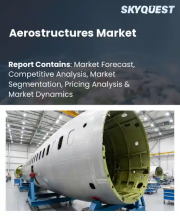
항공기 구조물에는 기체의 구조적 골격을 형성하는 동체, 날개, 나셀, 랜딩 기어, 꼬리날개 등 중요한 항공기 부품이 포함됩니다. 팬데믹 이후 시장은 강력하게 회복되고 있으며, 승객 수 증가와 항공기 수주 회복으로 수요가 증가하고 있습니다.
시장 동향
항공기 구조물 시장을 형성하는 가장 중요한 트렌드 중 하나는 3D 프린팅과 같은 첨단 제조 기술의 통합입니다. 이 기술을 통해 제조업체는 가볍고 복잡한 부품을 효율적으로 생산할 수 있으며, 동시에 제조 비용과 재료 낭비를 줄일 수 있습니다. 기업들은 여러 부품을 하나의 구조물에 통합하고 전체 항공기의 성능을 향상시키기 위해 적층 가공(적층 가공)를 점점 더 많이 채택하고 있습니다.
또한, 머신러닝과 디지털 설계 도구의 활용으로 생산 정밀도가 향상되고 항공기 구조물 개발의 혁신이 가속화되고 있습니다. 이러한 발전으로 제조업체들은 연비 효율이 높고 가벼운 항공기에 대한 수요 증가에 대응할 수 있게 되었습니다.
시장 성장 요인
이 시장은 주로 쉐브론 노즐이 장착된 최신형 항공기 엔진에 대한 수요 증가에 의해 주도되고 있습니다. 이 노즐은 소음을 줄이고 연료 효율을 향상시키기 때문에 보잉 747, 787과 같은 차세대 항공기에서 수요가 매우 높은 제품입니다.
또 다른 중요한 성장 요인은 복합소재의 채택 확대입니다. 유리섬유강화플라스틱(GRP), 섬유강화플라스틱(FRP) 등의 소재는 강도와 내구성이 높고 가벼워 항공기 제작에 적합합니다. 복합재료의 사용은 연료 소비를 크게 줄이고 항공기 성능을 향상시키기 때문에 업계 전체에서 그 수요를 주도하고 있습니다.
또한, 전 세계 항공사 및 방산 분야로부터의 항공기 수주 증가도 시장 확대에 기여하고 있습니다.
억제요인
견고한 성장 전망에도 불구하고, 항공기 구조물의 높은 유지 보수 및 수리 비용으로 인해 시장은 문제에 직면해 있습니다. 손상된 구조 부품은 수리가 아닌 완전한 교체가 필요한 경우가 많아 항공사 및 운항 사업자의 운영 비용을 증가시키고 있습니다.
또한, 설계 및 제조 공정의 복잡성으로 인해 조달 비용이 더욱 증가하여 특히 소규모 사업자의 경우 시장 성장을 저해하는 요인이 될 수 있습니다.
시장 세분화 분석
부품별
2026년 동체 부문은 기체의 주요 부품으로서 중요한 역할과 높은 제조 비용으로 인해 38.26%의 점유율을 차지하며 시장을 주도했습니다. 한편, 현대 항공기의 복합재료 채택이 확대됨에 따라 날개 부문이 가장 높은 성장률을 보일 것으로 예측됩니다.
재료별
합금 부문은 항공기 구조에 광범위하게 사용되어 가장 큰 점유율을 차지했습니다. 그러나 복합소재 부문은 경량성과 우수한 성능 특성으로 인해 가장 높은 성장세를 보일 것으로 예측됩니다.
플랫폼별
2026년에는 민간 및 군용 항공기에 대한 높은 수요에 힘입어 고정익 부문이 92.08%의 점유율로 시장을 장악했습니다. 한편, 무인항공기(UAV)와 헬리콥터 도입이 증가함에 따라 회전익 부문은 더 빠른 속도로 성장할 것으로 예측됩니다.
항공기 기종별
A320 부문은 높은 세계 수요와 막대한 수주잔량으로 인해 시장을 주도했습니다. 한편, A350 부문은 진보적인 디자인과 높은 연료 효율성으로 인해 더욱 탄력을 받을 것으로 예측됩니다.
지역별 동향
북미는 주요 제조업체의 거점화와 견조한 방위비 지출에 힘입어 2025년 498억 달러 시장 규모로 1위를 차지할 것이며, 2026년에는 529억 달러로 확대될 것으로 예측됩니다.
유럽은 2025년 368억 달러를 차지할 것으로 예상되며, 첨단 항공우주 기술과 주요 산업 기업의 존재에 힘입어 2026년에는 392억 달러에 달할 것으로 예측됩니다.
아시아태평양은 가장 빠르게 성장하는 지역으로, 2025년 시장 규모는 260억 달러, 2026년에는 280억 달러에 달할 것으로 예측됩니다. 이는 항공사의 항공기 수 확대, 국방 예산 증가 및 현지 생산 확대가 주도하고 있습니다.
중동, 아프리카 및 라틴아메리카도 항공기 수요 증가와 신흥 제조 거점의 부상으로 꾸준한 성장세를 보이고 있습니다.
목차
제1장 서론
제2장 주요 요약
제3장 시장 역학
제4장 주요 인사이트
제5장 세계의 항공기 구조물 시장 분석, 인사이트 및 예측, 2021년-2034년
제6장 북미의 항공기 구조물 시장 분석, 인사이트 및 예측, 2021년-2034년
제7장 유럽의 항공기 구조물 시장 분석, 인사이트 및 예측, 2021년-2034년
제8장 아시아태평양의 항공기 구조물 시장 분석, 인사이트 및 예측, 2021년-2034년
제9장 중동 및 아프리카의 항공기 구조물 시장 분석, 인사이트 및 예측, 2021년-2034년
제10장 라틴아메리카기 구조재 시장 분석, 인사이트 및 예측, 2021년-2034년
제11장 경쟁 분석
제12장 기업 개요
LSH 26.05.14Growth Factors of aerostructures Market
The global aerostructures market is witnessing steady expansion driven by rising aircraft production, technological advancements, and increasing air travel demand. According to the report, the market was valued at USD 132.8 billion in 2025 and is projected to grow to USD 141.4 billion in 2026, reaching USD 235.5 billion by 2034, exhibiting a CAGR of 6.6% during 2026-2034. North America dominated the market with a 37.5% share in 2025, supported by strong aerospace manufacturing capabilities and defense investments.
Aerostructures include critical aircraft components such as fuselage, wings, nacelle, landing gear, and empennage that form the structural framework of an aircraft. The market is recovering strongly post-pandemic, with increasing passenger traffic and renewed aircraft orders boosting demand.
Market Trends
One of the most significant trends shaping the aerostructures market is the integration of advanced manufacturing technologies such as 3D printing. This technology enables manufacturers to produce lightweight and complex components efficiently while reducing production costs and material waste. Companies are increasingly adopting additive manufacturing to combine multiple parts into single structures, improving overall aircraft performance.
Additionally, the use of machine learning and digital design tools is enhancing production precision and accelerating innovation in aerostructure development. These advancements are helping manufacturers meet the growing demand for fuel-efficient and lightweight aircraft.
Market Growth Drivers
The market is primarily driven by the increasing demand for modern aircraft engines equipped with chevron nozzles. These nozzles reduce noise levels and improve fuel efficiency, making them highly desirable in next-generation aircraft such as Boeing 747 and 787.
Another key growth factor is the rising adoption of composite materials. Materials such as glass-reinforced plastics (GRP) and fiber-reinforced plastics (FRP) offer high strength, durability, and reduced weight, making them ideal for aircraft manufacturing. The use of composites significantly lowers fuel consumption and enhances aircraft performance, driving their demand across the industry.
Furthermore, increasing aircraft orders from airlines and defense sectors globally are contributing to market expansion.
Restraining Factors
Despite strong growth prospects, the market faces challenges due to the high cost of maintenance and repair of aerostructure components. Damaged structural components often require complete replacement rather than repair, increasing operational costs for airlines and operators.
Additionally, the complexity of design and manufacturing processes further raises procurement costs, which may hinder market growth, especially for smaller operators.
Market Segmentation Analysis
By Component
The fuselage segment dominated the market with a 38.26% share in 2026, owing to its critical role as the main body of the aircraft and its high manufacturing cost. Meanwhile, the wings segment is expected to grow at the fastest rate due to increasing adoption of composite materials in modern aircraft.
By Material
The alloys segment held the largest share due to widespread use in aircraft structures. However, the composites segment is projected to witness the highest growth due to its lightweight properties and superior performance characteristics.
By Platform
The fixed-wing segment dominated the market with a 92.08% share in 2026, driven by high demand for commercial and military aircraft. The rotary-wing segment is expected to grow at a faster pace due to increasing deployment of UAVs and helicopters.
By Aircraft Model
The A320 segment led the market due to strong global demand and large order backlogs. Meanwhile, the A350 segment is expected to gain traction due to its advanced design and fuel efficiency.
Regional Insights
North America led the market with a value of USD 49.8 billion in 2025, growing to USD 52.9 billion in 2026, driven by the presence of major manufacturers and strong defense spending.
Europe accounted for USD 36.8 billion in 2025 and is expected to reach USD 39.2 billion in 2026, supported by advanced aerospace technologies and key industry players.
Asia Pacific is the fastest-growing region, valued at USD 26 billion in 2025 and projected to reach USD 28 billion in 2026, driven by expanding airline fleets, increasing defense budgets, and rising indigenous manufacturing.
Middle East & Africa and Latin America are also witnessing steady growth due to increasing aircraft demand and emerging manufacturing hubs.
Key Industry Players
Prominent companies operating in the aerostructures market include Airbus SAS, The Boeing Company, Leonardo SpA, Spirit AeroSystems Inc., and GKN Aerospace. These players are focusing on lightweight materials, partnerships, and technological innovations to strengthen their market position.
Key Industry Developments
Recent developments include strategic collaborations and manufacturing expansions. For instance, Airbus partnered with Tata Advanced Systems and Mahindra Aerospace to manufacture aircraft components in India. Additionally, companies are investing in new technologies and partnerships to enhance production capabilities and sustainability.
Conclusion
In conclusion, the aerostructures market is poised for steady growth, rising from USD 132.8 billion in 2025 to USD 235.5 billion by 2034. The growth is driven by increasing aircraft demand, technological advancements such as 3D printing, and rising adoption of composite materials. However, high maintenance and production costs remain key challenges. Overall, strong industry investments, expanding global fleets, and continuous innovation are expected to sustain long-term market growth.
Segmentation By Platform
- Fixed Wing
- Commercial
- Military
- Business Jet
- General Aviation Aircraft
- Rotary Wing
- Commercial Helicopters
- Military Helicopters
- UAVs
By Component
- Wings
- Nose
- Fuselage
- Nacelle & Pylon
- Empennage
- Others
By Material
- Alloys
- Composites
- Metals
By Aircraft Model
- A320
- A350
- A330
- A220
- B737
- B777
- B787
- Others
By Region
- North America (By Platform, Component, Material, Aircraft Model, and Country)
- U.S. (By Platform)
- Canada (By Platform)
- Europe (By Platform, Component, Material, Aircraft Model, and Country)
- U.K. (By Platform)
- Germany (By Platform)
- France (By Platform)
- Russia (By Platform)
- Rest of Europe (By Platform)
- Asia Pacific (By Platform, Component, Material, Aircraft Model, and Country)
- China (By Platform)
- India (By Platform)
- Japan (By Platform)
- Australia (By Platform)
- Rest of Asia Pacific (By Platform)
- Middle East & Africa (By Platform, Component, Material, Aircraft Model, and Country)
- UAE (By Platform)
- Saudi Arabia (By Platform)
- Qatar (By Platform)
- Rest of the Middle East and Africa (By Platform)
- Latin America (By Platform, Component, Material, Aircraft Model, and Country)
- Brazil (By Platform)
- Argentina (By Platform)
- Rest of Latin America (By Platform)
Table of Content
1. Introduction
- 1.1. Research Scope
- 1.2. Market Segmentation
- 1.3. Research Methodology
- 1.4. Definitions and Assumptions
2. Executive Summary
3. Market Dynamics
- 3.1. Market Drivers
- 3.2. Market Restraints
- 3.3. Market Opportunities
- 3.4. Market Trends
4. Key Insights
- 4.1. Key Industry Developments - Key Contracts & Agreements, Mergers, Acquisitions and Partnerships
- 4.2. Latest Technological Advancements
- 4.3. Porters Five Forces Analysis
- 4.4. Supply Chain Analysis
5. Global Aerostructures Market Analysis, Insights and Forecast, 2021-2034
- 5.1. Key Findings / Definition
- 5.2. Market Analysis, Insights and Forecast - By Platform
- 5.2.1. Fixed Wing
- 5.2.2. Rotary Wing
- 5.3. Market Analysis, Insights and Forecast - By Fixed Wing
- 5.3.1. Commercial
- 5.3.2. Military
- 5.3.3. Business Jet
- 5.3.4. General Aviation Aircraft
- 5.4. Market Analysis, Insights and Forecast - By Rotary Wing
- 5.4.1. Commercial Helicopters
- 5.4.2. Military Helicopters
- 5.4.3. UAVs
- 5.5. Market Analysis, Insights and Forecast - By Component
- 5.5.1. Wings
- 5.5.2. Nose
- 5.5.3. Fuselage
- 5.5.4. Nacella and Pylon
- 5.5.5. Empennage
- 5.5.6. Others
- 5.6. Market Analysis, Insights and Forecast - By Material
- 5.6.1. Alloys
- 5.6.2. Composite
- 5.6.3. Metals
- 5.7. Market Analysis, Insights and Forecast - By Aircraft Model
- 5.7.1. A320
- 5.7.2. A350
- 5.7.3. A330
- 5.7.4. A220
- 5.7.5. B737
- 5.7.6. B777
- 5.7.7. B787
- 5.7.8. Others
- 5.8. Market Analysis, Insights and Forecast - By Region
- 5.8.1. North America
- 5.8.2. Europe
- 5.8.3. Asia Pacific
- 5.8.4. Middle East & Africa
- 5.8.5. Latin America
6. North America Aerostructures Market Analysis, Insights and Forecast, 2021-2034
- 6.1. Market Analysis, Insights and Forecast - By Platform
- 6.1.1. Fixed Wing
- 6.1.2. Rotary Wing
- 6.2. Market Analysis, Insights and Forecast - By Fixed Wing
- 6.2.1. Commercial
- 6.2.2. Military
- 6.2.3. Business Jet
- 6.2.4. General Aviation Aircraft
- 6.3. Market Analysis, Insights and Forecast - By Rotary Wing
- 6.3.1. Commercial Helicopters
- 6.3.2. Military Helicopters
- 6.3.3. UAVs
- 6.4. Market Analysis, Insights and Forecast - By Component
- 6.4.1. Wings
- 6.4.2. Nose
- 6.4.3. Fuselage
- 6.4.4. Nacella and Pylon
- 6.4.5. Empennage
- 6.4.6. Others
- 6.5. Market Analysis, Insights and Forecast - By Material
- 6.5.1. Alloys
- 6.5.2. Composite
- 6.5.3. Metals
- 6.6. Market Analysis, Insights and Forecast - By Aircraft Model
- 6.6.1. A320
- 6.6.2. A350
- 6.6.3. A330
- 6.6.4. A220
- 6.6.5. B737
- 6.6.6. B777
- 6.6.7. B787
- 6.6.8. Others
- 6.7. Market Analysis, Insights and Forecast - By Country
- 6.7.1. U.S.
- 6.7.1.1. Market Analysis, Insights and Forecast - By Platform
- 6.7.1.1.1. Fixed Wing
- 6.7.1.1.2. Rotary Wing
- 6.7.1.1. Market Analysis, Insights and Forecast - By Platform
- 6.7.2. Canada
- 6.7.2.1. Market Analysis, Insights and Forecast - By Platform
- 6.7.2.1.1. Fixed Wing
- 6.7.2.1.2. Rotary Wing
- 6.7.2.1. Market Analysis, Insights and Forecast - By Platform
- 6.7.1. U.S.
7. Europe Aerostructures Market Analysis, Insights and Forecast, 2021-2034
- 7.1. Market Analysis, Insights and Forecast - By Platform
- 7.1.1. Fixed Wing
- 7.1.2. Rotary Wing
- 7.2. Market Analysis, Insights and Forecast - By Fixed Wing
- 7.2.1. Commercial
- 7.2.2. Military
- 7.2.3. Business Jet
- 7.2.4. General Aviation Aircraft
- 7.3. Market Analysis, Insights and Forecast - By Rotary Wing
- 7.3.1. Commercial Helicopters
- 7.3.2. Military Helicopters
- 7.3.3. UAVs
- 7.4. Market Analysis, Insights and Forecast - By Component
- 7.4.1. Wings
- 7.4.2. Nose
- 7.4.3. Fuselage
- 7.4.4. Nacella and Pylon
- 7.4.5. Empennage
- 7.4.6. Others
- 7.5. Market Analysis, Insights and Forecast - By Material
- 7.5.1. Alloys
- 7.5.2. Composite
- 7.5.3. Metals
- 7.6. Market Analysis, Insights and Forecast - By Aircraft Model
- 7.6.1. A320
- 7.6.2. A350
- 7.6.3. A330
- 7.6.4. A220
- 7.6.5. B737
- 7.6.6. B777
- 7.6.7. B787
- 7.6.8. Others
- 7.7. Market Analysis, Insights and Forecast - By Country
- 7.7.1. U.K.
- 7.7.1.1. Market Analysis, Insights and Forecast - By Platform
- 7.7.1.1.1. Fixed Wing
- 7.7.1.1.2. Rotary Wing
- 7.7.1.1. Market Analysis, Insights and Forecast - By Platform
- 7.7.2. Germany
- 7.7.2.1. Market Analysis, Insights and Forecast - By Platform
- 7.7.2.1.1. Fixed Wing
- 7.7.2.1.2. Rotary Wing
- 7.7.2.1. Market Analysis, Insights and Forecast - By Platform
- 7.7.3. France
- 7.7.3.1. Market Analysis, Insights and Forecast - By Platform
- 7.7.3.1.1. Fixed Wing
- 7.7.3.1.2. Rotary Wing
- 7.7.3.1. Market Analysis, Insights and Forecast - By Platform
- 7.7.4. Russia
- 7.7.4.1. Market Analysis, Insights and Forecast - By Platform
- 7.7.4.1.1. Fixed Wing
- 7.7.4.1.2. Rotary Wing
- 7.7.4.1. Market Analysis, Insights and Forecast - By Platform
- 7.7.5. Rest of Europe
- 7.7.5.1. Market Analysis, Insights and Forecast - By Platform
- 7.7.5.1.1. Fixed Wing
- 7.7.5.1.2. Rotary Wing
- 7.7.5.1. Market Analysis, Insights and Forecast - By Platform
- 7.7.1. U.K.
8. Asia Pacific Aerostructures Market Analysis, Insights and Forecast, 2021-2034
- 8.1. Market Analysis, Insights and Forecast - By Platform
- 8.1.1. Fixed Wing
- 8.1.2. Rotary Wing
- 8.2. Market Analysis, Insights and Forecast - By Fixed Wing
- 8.2.1. Commercial
- 8.2.2. Military
- 8.2.3. Business Jet
- 8.2.4. General Aviation Aircraft
- 8.3. Market Analysis, Insights and Forecast - By Rotary Wing
- 8.3.1. Commercial Helicopters
- 8.3.2. Military Helicopters
- 8.3.3. UAVs
- 8.4. Market Analysis, Insights and Forecast - By Component
- 8.4.1. Wings
- 8.4.2. Nose
- 8.4.3. Fuselage
- 8.4.4. Nacella and Pylon
- 8.4.5. Empennage
- 8.4.6. Others
- 8.5. Market Analysis, Insights and Forecast - By Material
- 8.5.1. Alloys
- 8.5.2. Composite
- 8.5.3. Metals
- 8.6. Market Analysis, Insights and Forecast - By Aircraft Model
- 8.6.1. A320
- 8.6.2. A350
- 8.6.3. A330
- 8.6.4. A220
- 8.6.5. B737
- 8.6.6. B777
- 8.6.7. B787
- 8.6.8. Others
- 8.7. Market Analysis, Insights and Forecast - By Country
- 8.7.1. China
- 8.7.1.1. Market Analysis, Insights and Forecast - By Platform
- 8.7.1.1.1. Fixed Wing
- 8.7.1.1.2. Rotary Wing
- 8.7.1.1. Market Analysis, Insights and Forecast - By Platform
- 8.7.2. India
- 8.7.2.1. Market Analysis, Insights and Forecast - By Platform
- 8.7.2.1.1. Fixed Wing
- 8.7.2.1.2. Rotary Wing
- 8.7.2.1. Market Analysis, Insights and Forecast - By Platform
- 8.7.3. Japan
- 8.7.3.1. Market Analysis, Insights and Forecast - By Platform
- 8.7.3.1.1. Fixed Wing
- 8.7.3.1.2. Rotary Wing
- 8.7.3.1. Market Analysis, Insights and Forecast - By Platform
- 8.7.4. Australia
- 8.7.4.1. Market Analysis, Insights and Forecast - By Platform
- 8.7.4.1.1. Fixed Wing
- 8.7.4.1.2. Rotary Wing
- 8.7.4.1. Market Analysis, Insights and Forecast - By Platform
- 8.7.5. Rest of Asia Pacific
- 8.7.5.1. Market Analysis, Insights and Forecast - By Platform
- 8.7.5.1.1. Fixed Wing
- 8.7.5.1.2. Rotary Wing
- 8.7.5.1. Market Analysis, Insights and Forecast - By Platform
- 8.7.1. China
9. Middle East & Africa Aerostructures Market Analysis, Insights and Forecast, 2021-2034
- 9.1. Market Analysis, Insights and Forecast - By Platform
- 9.1.1. Fixed Wing
- 9.1.2. Rotary Wing
- 9.2. Market Analysis, Insights and Forecast - By Fixed Wing
- 9.2.1. Commercial
- 9.2.2. Military
- 9.2.3. Business Jet
- 9.2.4. General Aviation Aircraft
- 9.3. Market Analysis, Insights and Forecast - By Rotary Wing
- 9.3.1. Commercial Helicopters
- 9.3.2. Military Helicopters
- 9.3.3. UAVs
- 9.4. Market Analysis, Insights and Forecast - By Component
- 9.4.1. Wings
- 9.4.2. Nose
- 9.4.3. Fuselage
- 9.4.4. Nacella and Pylon
- 9.4.5. Empennage
- 9.4.6. Others
- 9.5. Market Analysis, Insights and Forecast - By Material
- 9.5.1. Alloys
- 9.5.2. Composite
- 9.5.3. Metals
- 9.6. Market Analysis, Insights and Forecast - By Aircraft Model
- 9.6.1. A320
- 9.6.2. A350
- 9.6.3. A330
- 9.6.4. A220
- 9.6.5. B737
- 9.6.6. B777
- 9.6.7. B787
- 9.6.8. Others
- 9.7. Market Analysis, Insights and Forecast - By Country
- 9.7.1. UAE
- 9.7.1.1. Market Analysis, Insights and Forecast - By Platform
- 9.7.1.1.1. Fixed Wing
- 9.7.1.1.2. Rotary Wing
- 9.7.1.1. Market Analysis, Insights and Forecast - By Platform
- 9.7.2. Saudi Arabia
- 9.7.2.1. Market Analysis, Insights and Forecast - By Platform
- 9.7.2.1.1. Fixed Wing
- 9.7.2.1.2. Rotary Wing
- 9.7.2.1. Market Analysis, Insights and Forecast - By Platform
- 9.7.3. Qatar
- 9.7.3.1. Market Analysis, Insights and Forecast - By Platform
- 9.7.3.1.1. Fixed Wing
- 9.7.3.1.2. Rotary Wing
- 9.7.3.1. Market Analysis, Insights and Forecast - By Platform
- 9.7.4. Rest of Middle East and Africa
- 9.7.4.1. Market Analysis, Insights and Forecast - By Platform
- 9.7.4.1.1. Fixed Wing
- 9.7.4.1.2. Rotary Wing
- 9.7.4.1. Market Analysis, Insights and Forecast - By Platform
- 9.7.1. UAE
10. Latin America Aerostructures Market Analysis, Insights and Forecast, 2021-2034
- 10.1. Market Analysis, Insights and Forecast - By Platform
- 10.1.1. Fixed Wing
- 10.1.2. Rotary Wing
- 10.2. Market Analysis, Insights and Forecast - By Fixed Wing
- 10.2.1. Commercial
- 10.2.2. Military
- 10.2.3. Business Jet
- 10.2.4. General Aviation Aircraft
- 10.3. Market Analysis, Insights and Forecast - By Rotary Wing
- 10.3.1. Commercial Helicopters
- 10.3.2. Military Helicopters
- 10.3.3. UAVs
- 10.4. Market Analysis, Insights and Forecast - By Component
- 10.4.1. Wings
- 10.4.2. Nose
- 10.4.3. Fuselage
- 10.4.4. Nacella and Pylon
- 10.4.5. Empennage
- 10.4.6. Others
- 10.5. Market Analysis, Insights and Forecast - By Material
- 10.5.1. Alloys
- 10.5.2. Composite
- 10.5.3. Metals
- 10.6. Market Analysis, Insights and Forecast - By Aircraft Model
- 10.6.1. A320
- 10.6.2. A350
- 10.6.3. A330
- 10.6.4. A220
- 10.6.5. B737
- 10.6.6. B777
- 10.6.7. B787
- 10.6.8. Others
- 10.7. Market Analysis, Insights and Forecast - By Country
- 10.7.1. Brazil
- 10.7.1.1. Market Analysis, Insights and Forecast - By Platform
- 10.7.1.1.1. Fixed Wing
- 10.7.1.1.2. Rotary Wing
- 10.7.1.1. Market Analysis, Insights and Forecast - By Platform
- 10.7.2. Argentina
- 10.7.2.1. Market Analysis, Insights and Forecast - By Platform
- 10.7.2.1.1. Fixed Wing
- 10.7.2.1.2. Rotary Wing
- 10.7.2.1. Market Analysis, Insights and Forecast - By Platform
- 10.7.3. Rest of Latin America
- 10.7.3.1. Market Analysis, Insights and Forecast - By Platform
- 10.7.3.1.1. Fixed Wing
- 10.7.3.1.2. Rotary Wing
- 10.7.3.1. Market Analysis, Insights and Forecast - By Platform
- 10.7.1. Brazil
11. Competitive Analysis
- 11.1. Global Market Rank Analysis (2025)
- 11.2. Competitive Dashboard
12. Company Profiles
- 12.1. Airbus SAS (Netherlands)
- 12.1.1. Overview
- 12.1.2. Products & services
- 12.1.3. SWOT Analysis
- 12.1.4. Recent Developments
- 12.1.5. Strategies
- 12.1.6. Financials (Based on Availability)
- 12.2. Collins Aerospace (U.S)
- 12.2.1. Overview
- 12.2.2. Products & services
- 12.2.3. SWOT Analysis
- 12.2.4. Recent Developments
- 12.2.5. Strategies
- 12.2.6. Financials (Based on Availability)
- 12.3. Cyient ltd (India)
- 12.3.1. Overview
- 12.3.2. Products & services
- 12.3.3. SWOT Analysis
- 12.3.4. Recent Developments
- 12.3.5. Strategies
- 12.3.6. Financials (Based on Availability)
- 12.4. Elbit Systems Ltd (Israel)
- 12.4.1. Overview
- 12.4.2. Products & services
- 12.4.3. SWOT Analysis
- 12.4.4. Recent Developments
- 12.4.5. Strategies
- 12.4.6. Financials (Based on Availability)
- 12.5. GKN Aerospace (U.K.)
- 12.5.1. Overview
- 12.5.2. Products & services
- 12.5.3. SWOT Analysis
- 12.5.4. Recent Developments
- 12.5.5. Strategies
- 12.5.6. Financials (Based on Availability)
- 12.6. Leonardo SpA (Italy)
- 12.6.1. Overview
- 12.6.2. Products & services
- 12.6.3. SWOT Analysis
- 12.6.4. Recent Developments
- 12.6.5. Strategies
- 12.6.6. Financials (Based on Availability)
- 12.7. SAAB AB (Sweden)
- 12.7.1. Overview
- 12.7.2. Products & services
- 12.7.3. SWOT Analysis
- 12.7.4. Recent Developments
- 12.7.5. Strategies
- 12.7.6. Financials (Based on Availability)
- 12.8. Spirit Aerosystems Inc. (U.S.)
- 12.8.1. Overview
- 12.8.2. Products & services
- 12.8.3. SWOT Analysis
- 12.8.4. Recent Developments
- 12.8.5. Strategies
- 12.8.6. Financials (Based on Availability)
- 12.9. The Boeing Company (U.S.)
- 12.9.1. Overview
- 12.9.2. Products & services
- 12.9.3. SWOT Analysis
- 12.9.4. Recent Developments
- 12.9.5. Strategies
- 12.9.6. Financials (Based on Availability)
- 12.10. Triumph Group Inc. (U.S.)
- 12.10.1. Overview
- 12.10.2. Products & services
- 12.10.3. SWOT Analysis
- 12.10.4. Recent Developments
- 12.10.5. Strategies
- 12.10.6. Financials (Based on Availability)