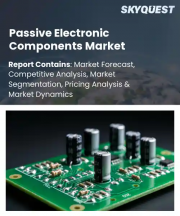
|
시장보고서
상품코드
2028126
전자부품 시장 : 규모, 점유율, 성장률, 업계 분석, 유형별, 용도별, 지역별 인사이트, 예측(2026-2034년)Electronic Components Market Size, Share, Growth and Global Industry Analysis By Type & Application, Regional Insights and Forecast to 2026-2034 |
||||||

전자부품 시장의 성장요인
세계 전자부품 시장은 2025년에 4,282억 2,000만 달러로 평가되었으며, 2026년 4,681억 1,000만 달러, 2034년까지 1조 34억 4,000만 달러에 이르고, 예측 기간 동안 CAGR은 10%를 나타낼 것으로 예측됩니다. 아시아태평양은 강력한 제조 능력과 가정용 전자 기기에 대한 높은 수요에 힘입어 2025년에는 37.79%의 점유율로 세계 시장을 견인했습니다.
전자부품은 모든 전자기기의 기초가 되는 구성요소로, 정보를 전기 신호로 변환하여 모든 산업에서 고속 처리를 가능하게 합니다.
시장 개요
디지털화의 진전과 스마트폰, 노트북, 스마트 가전 등의 전자기기의 보급에 의해 시장은 급속한 성장을 이루고 있습니다. 이러한 부품에는 장치의 기능을 지원하는 능동 소자, 수동 소자 및 전기 기계 소자가 포함됩니다.
COVID-19의 유통은 공급망과 생산 능력에 혼란을 주어 전자부품공급 부족을 초래했습니다. 하지만 팬대믹 이후의 회복과 디지털 기기에 대한 수요 증가로 시장 성장이 가속화되고 있습니다.
시장 동향
부품 소형화 및 통합
소형화는 업계를 변화시키는 중요한 동향입니다. 제조업체 각사는 기능성을 높이면서 컴팩트한 기기 설계를 가능하게 하는 보다 작고 고성능인 부품의 개발에 주력하고 있습니다.
고급 나노 스케일 전자 제품은 웨어러블 기술, 의료기기, 스마트 전자 제품의 혁신을 가능하게 합니다. 이 동향은 에너지 효율의 향상과 환경 부하의 저감에도 기여하고 있습니다.
시장 성장 요인
1. IoT 기기 확대
사물인터넷(IoT)의 급속한 성장은 전자부품 수요를 크게 견인하고 있습니다. IoT 용도는 연결, 실시간 데이터 처리를 실현하기 위해 센서, 마이크로컨트롤러 및 통신 모듈이 필요합니다.
스마트홈, 헬스케어, 제조 등 업계에서는 IoT 솔루션의 도입이 점차 진행되고 있으며, 부품 수요를 추진하고 있습니다.
2. 가정용 전자 기기 수요 증가
가정용 전자 기기의 지속적인 진화는 주요 성장 요인 중 하나입니다. 스마트폰, 태블릿, 웨어러블 기기의 보급이 진행됨에 따라 고급 전자부품에 대한 수요가 증가하고 있습니다.
제조 시설에 대한 투자, 특히 인도와 같은 신흥 시장에서의 투자는 시장 확대를 더욱 강화하고 있습니다.
억제요인
비용 효율성과 부품의 진부화
비용과 품질의 균형을 유지하는 것은 제조업체에게 여전히 어려움을 겪고 있습니다. 또한 급속한 기술 발전으로 부품이 진부화되어 운영상의 복잡성과 비용이 증가하고 있습니다.
고온, 기계적 스트레스, 전기적 고장 등의 요인도 부품의 신뢰성에 영향을 미치고 시장의 성장을 억제하고 있습니다.
시장 세분화 분석
유형별
- 능동 부품은 회로 및 전력 시스템에서 광범위한 용도를 배경으로 2026년 시장 점유율의 41.79%를 차지할 것으로 예측됩니다.
- 소형의 고효율 장치에 대한 수요가 증가함에 따라 수동 부품은 가장 높은 CAGR로 성장할 것으로 예측됩니다.
- 전기 기계 부품은 장치의 연결성과 기계적 작동을 계속 지원합니다.
산업별
- 자동차 부문은 전기자동차 및 선진 운전 지원 시스템의 보급을 배경으로 2026년에는 23.72%의 점유율을 차지할 것으로 예측되고 있습니다.
- 통신 부문은 5G 네트워크 및 모바일 기술의 확대로 인해 가장 높은 CAGR로 성장할 것으로 예측됩니다.
- 기타 주요 부문에는 가정용 전자 기기, 의료 및 산업용 기계가 포함됩니다.
지역별 동향
아시아태평양
아시아태평양은 2025년 1,648억 3,000만 달러로 시장을 선도하고, 2026년에는 1,835억 1,000만 달러로 성장할 것으로 전망됩니다. 중국, 인도, 일본의 왕성한 수요와 낮은 생산 비용이 이 지역의 성장을 이끌고 있습니다.
북미
북미는 2025년에 1,113억 5,000만 달러를 차지하며, 첨단 인프라와 업계 전반에 걸친 견조한 수요에 힘입어 2026년에는 1,198억 9,000만 달러에 이를 것으로 예측됩니다.
유럽
유럽은 2025년 965억 4,000만 달러를 기록했으며, 기술 진보와 산업 간의 협력을 원동력으로 삼아 2026년에는 1,056억 4,000만 달러에 이를 것으로 예측됩니다.
중동 및 아프리카
이 지역은 2025년에 320억 5,000만 달러를 기록하고 디지털 기술의 보급 확대에 힘입어 2026년에는 342억 1,000만 달러로 성장할 것으로 예측됩니다.
라틴아메리카
라틴아메리카는 2025년에 234억 4,000만 달러 시장 규모를 기록하고, 전자기기의 보급 확대를 배경으로, 2026년에는 248억 4,000만 달러에 이를 것으로 예상되고 있습니다.
주요 산업 동향
- 2023년: 무라타 제작소는 전원 용도를 위한 소형 적층 세라믹 커패시터를 발표했습니다.
- 2023년: Vishay Intertechnology, Inc.는 항공우주 용도를 위한 고급 탄탈 커패시터를 출시했습니다.
- 2023년: TE 커넥티비티는 자동차 커넥티비티 솔루션을 제공하기 위해 AVIVA Links와 제휴했습니다.
시장 규모는 2034년까지 1조 34억 4,000만 달러에 달할 것으로 예측되고 있으며, 전자부품은 앞으로도 현대 기술의 기반이 되고 있으며, 모든 산업에서 보다 스마트하고, 빠르고, 보다 효율적인 전자 시스템을 실현할 것입니다.
목차
제1장 서론
제2장 주요 요약
제3장 시장 역학
- 매크로 및 마이크로 경제 지표
- 성장 촉진요인, 억제요인, 기회 및 동향
제4장 경쟁 구도
- 주요 기업이 채택하는 사업 전략
- 주요 기업의 통합 SWOT 분석
- 세계의 전자부품 시장 : 주요 기업의 시장 점유율 순위, 2025년
제5장 세계의 전자부품 시장 규모 추정, 예측, 2021년-2034년
- 주요 조사 결과
- 유형별
- 능동 부품
- 다이오드
- 트랜지스터
- 집적회로(IC)
- 기타(이미터, 진공관 등)
- 수동 부품
- 저항기
- 커패시터
- 인덕터
- 기타(검출기, 안테나 등)
- 전기 기계 부품
- 모터
- 스위치
- 릴레이
- 기타(단자 및 커넥터, 케이블 등)
- 능동 부품
- 산업별
- 통신
- 자동차
- 산업기계
- 가정용 전자 기기
- 헬스케어
- 기타
- 지역별
- 북미
- 유럽
- 아시아태평양
- 중동 및 아프리카
- 남아메리카
제6장 북미의 전자부품 시장 규모 추정, 예측, 2021년-2034년
- 국가별
- 미국
- 캐나다
- 멕시코
제7장 남미의 전자부품 시장 규모 추정, 예측, 2021년-2034년
- 국가별
- 브라질
- 아르헨티나
- 기타 남미 국가
제8장 유럽의 전자부품 시장 규모 추정, 예측, 2021년-2034년
- 국가별
- 영국
- 독일
- 프랑스
- 이탈리아
- 스페인
- 러시아
- 베네룩스
- 북유럽
- 기타 유럽 국가
제9장 아시아태평양의 전자부품 시장 규모 추정, 예측, 2021년-2034년
- 국가별
- 중국
- 인도
- 일본
- 한국
- ASEAN
- 오세아니아
- 기타 아시아태평양 국가
제10장 중동 및 아프리카의 전자부품 시장 규모 추정, 예측, 2021년-2034년
- 국가별
- 튀르키예
- 이스라엘
- GCC
- 북아프리카
- 남아프리카
- 기타 중동 및 아프리카 국가
제11장 주요 10개 기업의 기업 프로파일
- TDK Corporation
- KYOCERA AVX Components Corporation.
- Murata Manufacturing Co., Ltd.
- Panasonic Corporation
- Amphenol Corporation
- Littelfuse, Inc.
- TE Connectivity.
- Vishay Intertechnology, Inc.
- Analog Devices Inc.
- SAMSUNG ELECTRO-MECHANICS
제12장 요점
SHW 26.05.14Growth Factors of electronic components Market
The global electronic components market was valued at USD 428.22 billion in 2025 and is projected to grow from USD 468.11 billion in 2026 to USD 1,003.44 billion by 2034, exhibiting a CAGR of 10% during the forecast period. Asia Pacific dominated the global market with a 37.79% share in 2025, driven by strong manufacturing capabilities and high demand for consumer electronics.
Electronic components are fundamental building blocks of all electronic devices, enabling the conversion of information into electrical signals and ensuring high-speed processing across industries.
Market Overview
The market is experiencing rapid growth due to increasing digitalization and the widespread use of electronic devices such as smartphones, laptops, and smart appliances. These components include active, passive, and electromechanical elements that support device functionality.
The COVID-19 pandemic disrupted the supply chain and production capacity, leading to shortages of electronic components. However, post-pandemic recovery and increased demand for digital devices have accelerated market growth.
Market Trends
Miniaturization and Integration of Components
Miniaturization is a key trend transforming the industry. Manufacturers are focusing on developing smaller, high-performance components that enable compact device designs while enhancing functionality.
Advanced nanoscale electronics are enabling innovations in wearable technology, medical devices, and smart electronics. This trend also supports energy efficiency and reduced environmental impact.
Market Growth Drivers
1. Expansion of IoT Devices
The rapid growth of the Internet of Things (IoT) is significantly driving demand for electronic components. IoT applications require sensors, microcontrollers, and communication modules to enable connectivity and real-time data processing.
Industries such as smart homes, healthcare, and manufacturing are increasingly adopting IoT solutions, boosting component demand.
2. Rising Demand for Consumer Electronics
The continuous evolution of consumer electronics is a major growth driver. Increasing adoption of smartphones, tablets, and wearable devices is fueling demand for advanced components.
Investments in manufacturing facilities, particularly in emerging markets such as India, are further supporting market expansion.
Restraining Factors
Cost Efficiency and Component Obsolescence
Maintaining a balance between cost and quality remains a challenge for manufacturers. Additionally, rapid technological advancements lead to the obsolescence of components, increasing operational complexity and costs.
Factors such as high temperature, mechanical stress, and electrical failures also affect component reliability, restraining market growth.
Market Segmentation Analysis
By Type
- Active components are expected to account for 41.79% market share in 2026, driven by their wide applications in circuits and power systems.
- Passive components are projected to grow at the highest CAGR due to increasing demand for compact and efficient devices.
- Electromechanical components continue to support connectivity and mechanical operations in devices.
By Industry
- Automotive segment is projected to hold 23.72% share in 2026, driven by the adoption of electric vehicles and advanced driver assistance systems.
- Telecommunication segment is expected to grow at the highest CAGR due to the expansion of 5G networks and mobile technologies.
- Other key sectors include consumer electronics, healthcare, and industrial machinery.
Regional Insights
Asia Pacific
Asia Pacific leads the market with USD 164.83 billion in 2025, growing to USD 183.51 billion in 2026. Strong demand from China, India, and Japan, along with low production costs, drives regional growth.
North America
North America accounted for USD 111.35 billion in 2025 and is projected to reach USD 119.89 billion in 2026, supported by advanced infrastructure and strong demand across industries.
Europe
Europe generated USD 96.54 billion in 2025 and is expected to reach USD 105.64 billion in 2026, driven by technological advancements and industrial collaborations.
Middle East & Africa
The region held USD 32.05 billion in 2025 and is projected to grow to USD 34.21 billion in 2026, supported by increasing adoption of digital technologies.
Latin America
Latin America contributed USD 23.44 billion in 2025 and is expected to reach USD 24.84 billion in 2026, driven by growing electronics adoption.
Competitive Landscape
Key players in the electronic components market include:
- TDK Corporation
- Murata Manufacturing Co., Ltd.
- Panasonic Corporation
- Amphenol Corporation
- Littelfuse, Inc.
- Analog Devices Inc.
These companies focus on product innovation, strategic partnerships, and expansion to strengthen their market position.
Key Industry Developments
- 2023: Murata Manufacturing Co., Ltd. introduced compact multilayer ceramic capacitors for power applications.
- 2023: Vishay Intertechnology, Inc. launched advanced tantalum capacitors for aerospace use.
- 2023: TE Connectivity collaborated with AVIVA Links for automotive connectivity solutions.
Conclusion
The global electronic components market is on a strong growth trajectory, fueled by IoT expansion, rising consumer electronics demand, and advancements in communication technologies such as 5G. While challenges such as cost pressures and component obsolescence persist, continuous innovation and increasing investments are expected to drive long-term growth.
With the market projected to reach USD 1,003.44 billion by 2034, electronic components will remain the backbone of modern technology, enabling smarter, faster, and more efficient electronic systems across industries.
Segmentation By Type
- Active Component
- Diodes
- Transistors
- Integrated Circuit (IC)
- Others (Emitters and Vacuum Tubes)
- Passive Component
- Resistor
- Capacitor
- Inductors
- Others (Detectors and Antennas)
- Electromechanical Component
- Motor
- Switches
- Relays
- Others (Terminal & Connectors, and Cables)
By Industry
- Telecommunication
- Automotive
- Industrial Machinery
- Consumer Electronics
- Healthcare
- Others (Energy & Utilities, Aerospace & Defense, etc.)
By Region
- North America (By Type, Industry, and Country)
- U.S. (By Industry)
- Canada (By Industry)
- Mexico (By Industry)
- South America (By Type, Industry, and Country)
- Brazil (By Industry)
- Argentina (By Industry)
- Rest of South America
- Europe (By Type, Industry, and Country)
- U.K. (By Industry)
- Germany (By Industry)
- France (By Industry)
- Italy (By Industry)
- Spain (By Industry)
- Russia (By Industry)
- Benelux (By Industry)
- Nordics (By Industry)
- Rest of Europe
- Middle East & Africa (By Type, Industry, and Country)
- Turkey (By Industry)
- Israel (By Industry)
- GCC (By Industry)
- North Africa (By Industry)
- South Africa (By Industry)
- Rest of Middle East & Africa
- Asia Pacific (By Type, Industry, and Country)
- China (By Industry)
- India (By Industry)
- Japan (By Industry)
- South Korea (By Industry)
- ASEAN (By Industry)
- Oceania (By Industry)
- Rest of Asia Pacific
Table of Content
1. Introduction
- 1.1. Definition, By Segment
- 1.2. Research Methodology/Approach
- 1.3. Data Sources
2. Executive Summary
3. Market Dynamics
- 3.1. Macro and Micro Economic Indicators
- 3.2. Drivers, Restraints, Opportunities and Trends
4. Competition Landscape
- 4.1. Business Strategies Adopted by Key Players
- 4.2. Consolidated SWOT Analysis of Key Players
- 4.3. Global Electronic Components Market Key Players Market Share/Ranking, 2025
5. Global Electronic Components Market Size Estimates and Forecasts, By Segments, 2021-2034
- 5.1. Key Findings
- 5.2. By Type
- 5.2.1. Active Component
- 5.2.1.1. Diodes
- 5.2.1.2. Transistors
- 5.2.1.3. Integrated Circuit (IC)
- 5.2.1.4. Others (Emitters, Vacuum Tubes, etc.)
- 5.2.2. Passive Component
- 5.2.2.1. Resistor
- 5.2.2.2. Capacitor
- 5.2.2.3. Inductors
- 5.2.2.4. Others (Detectors, Antennas, etc.)
- 5.2.3. Electromechanical Component
- 5.2.3.1. Motor
- 5.2.3.2. Switches
- 5.2.3.3. Relays
- 5.2.3.4. Others (Terminal & Connectors, Cables, etc.)
- 5.2.1. Active Component
- 5.3. By Industry
- 5.3.1. Telecommunication
- 5.3.2. Automotive
- 5.3.3. Industrial Machinery
- 5.3.4. Consumer Electronics
- 5.3.5. Healthcare
- 5.3.6. Others
- 5.4. By Region (USD)
- 5.4.1. North America
- 5.4.2. Europe
- 5.4.3. Asia Pacific
- 5.4.4. Middle East & Africa
- 5.4.5. South America
6. North America Electronic Components Market Size Estimates and Forecasts, By Segments, 2021-2034
- 6.1. Key Findings
- 6.2. By Type
- 6.2.1. Active Component
- 6.2.1.1. Diodes
- 6.2.1.2. Transistors
- 6.2.1.3. Integrated Circuit (IC)
- 6.2.1.4. Others
- 6.2.2. Passive Component
- 6.2.2.1. Resistor
- 6.2.2.2. Capacitor
- 6.2.2.3. Inductors
- 6.2.2.4. Others
- 6.2.3. Electromechanical Component
- 6.2.3.1. Motor
- 6.2.3.2. Switches
- 6.2.3.3. Relays
- 6.2.3.4. Others
- 6.2.1. Active Component
- 6.3. By Industry
- 6.3.1. Telecommunication
- 6.3.2. Automotive
- 6.3.3. Industrial Machinery
- 6.3.4. Consumer Electronics
- 6.3.5. Healthcare
- 6.3.6. Others
- 6.4. By Country (USD)
- 6.4.1. United States
- 6.4.1.1. By Industry
- 6.4.2. Canada
- 6.4.2.1. By Industry
- 6.4.3. Mexico
- 6.4.3.1. By Industry
- 6.4.1. United States
7. South America Electronic Components Market Size Estimates and Forecasts, By Segments, 2021-2034
- 7.1. Key Findings
- 7.2. By Type
- 7.2.1. Active Component
- 7.2.1.1. Diodes
- 7.2.1.2. Transistors
- 7.2.1.3. Integrated Circuit (IC)
- 7.2.1.4. Others
- 7.2.2. Passive Component
- 7.2.2.1. Resistor
- 7.2.2.2. Capacitor
- 7.2.2.3. Inductors
- 7.2.2.4. Others
- 7.2.3. Electromechanical Component
- 7.2.3.1. Motor
- 7.2.3.2. Switches
- 7.2.3.3. Relays
- 7.2.3.4. Others
- 7.2.1. Active Component
- 7.3. By Industry
- 7.3.1. Telecommunication
- 7.3.2. Automotive
- 7.3.3. Industrial Machinery
- 7.3.4. Consumer Electronics
- 7.3.5. Healthcare
- 7.3.6. Others
- 7.4. By Country (USD)
- 7.4.1. Brazil
- 7.4.1.1. By Industry
- 7.4.2. Argentina
- 7.4.2.1. By Industry
- 7.4.3. Rest of South America
- 7.4.1. Brazil
8. Europe Electronic Components Market Size Estimates and Forecasts, By Segments, 2021-2034
- 8.1. Key Findings
- 8.2. By Type
- 8.2.1. Active Component
- 8.2.1.1. Diodes
- 8.2.1.2. Transistors
- 8.2.1.3. Integrated Circuit (IC)
- 8.2.1.4. Others
- 8.2.2. Passive Component
- 8.2.2.1. Resistor
- 8.2.2.2. Capacitor
- 8.2.2.3. Inductors
- 8.2.2.4. Others
- 8.2.3. Electromechanical Component
- 8.2.3.1. Motor
- 8.2.3.2. Switches
- 8.2.3.3. Relays
- 8.2.3.4. Others
- 8.2.1. Active Component
- 8.3. By Industry
- 8.3.1. Telecommunication
- 8.3.2. Automotive
- 8.3.3. Industrial Machinery
- 8.3.4. Consumer Electronics
- 8.3.5. Healthcare
- 8.3.6. Others
- 8.4. By Country (USD)
- 8.4.1. United Kingdom
- 8.4.1.1. By Industry
- 8.4.2. Germany
- 8.4.2.1. By Industry
- 8.4.3. France
- 8.4.3.1. By Industry
- 8.4.4. Italy
- 8.4.4.1. By Industry
- 8.4.5. Spain
- 8.4.5.1. By Industry
- 8.4.6. Russia
- 8.4.6.1. By Industry
- 8.4.7. Benelux
- 8.4.7.1. By Industry
- 8.4.8. Nordics
- 8.4.8.1. By Industry
- 8.4.9. Rest of Europe
- 8.4.1. United Kingdom
9. Asia Pacific Electronic Components Market Size Estimates and Forecasts, By Segments, 2021-2034
- 9.1. Key Findings
- 9.2. By Type
- 9.2.1. Active Component
- 9.2.1.1. Diodes
- 9.2.1.2. Transistors
- 9.2.1.3. Integrated Circuit (IC)
- 9.2.1.4. Others
- 9.2.2. Passive Component
- 9.2.2.1. Resistor
- 9.2.2.2. Capacitor
- 9.2.2.3. Inductors
- 9.2.2.4. Others
- 9.2.3. Electromechanical Component
- 9.2.3.1. Motor
- 9.2.3.2. Switches
- 9.2.3.3. Relays
- 9.2.3.4. Others
- 9.2.1. Active Component
- 9.3. By Industry
- 9.3.1. Telecommunication
- 9.3.2. Automotive
- 9.3.3. Industrial Machinery
- 9.3.4. Consumer Electronics
- 9.3.5. Healthcare
- 9.3.6. Others
- 9.4. By Country (USD)
- 9.4.1. China
- 9.4.1.1. By Industry
- 9.4.2. India
- 9.4.2.1. By Industry
- 9.4.3. Japan
- 9.4.3.1. By Industry
- 9.4.4. South Korea
- 9.4.4.1. By Industry
- 9.4.5. ASEAN
- 9.4.5.1. By Industry
- 9.4.6. Oceania
- 9.4.6.1. By Industry
- 9.4.7. Rest of Asia Pacific
- 9.4.1. China
10. Middle East & Africa Electronic Components Market Size Estimates and Forecasts, By Segments, 2021-2034
- 10.1. Key Findings
- 10.2. By Type
- 10.2.1. Active Component
- 10.2.1.1. Diodes
- 10.2.1.2. Transistors
- 10.2.1.3. Integrated Circuit (IC)
- 10.2.1.4. Others
- 10.2.2. Passive Component
- 10.2.2.1. Resistor
- 10.2.2.2. Capacitor
- 10.2.2.3. Inductors
- 10.2.2.4. Others
- 10.2.3. Electromechanical Component
- 10.2.3.1. Motor
- 10.2.3.2. Switches
- 10.2.3.3. Relays
- 10.2.3.4. Others
- 10.2.1. Active Component
- 10.3. By Industry
- 10.3.1. Telecommunication
- 10.3.2. Automotive
- 10.3.3. Industrial Machinery
- 10.3.4. Consumer Electronics
- 10.3.5. Healthcare
- 10.3.6. Others
- 10.4. By Country (USD)
- 10.4.1. Turkey
- 10.4.1.1. By Industry
- 10.4.2. Israel
- 10.4.2.1. By Industry
- 10.4.3. GCC
- 10.4.3.1. By Industry
- 10.4.4. North Africa
- 10.4.4.1. By Industry
- 10.4.5. South Africa
- 10.4.5.1. By Industry
- 10.4.6. Rest of MEA
- 10.4.1. Turkey
11. Company Profiles for Top 10 Players (Based on data availability in public domain and/or on paid databases)
- 11.1. TDK Corporation
- 11.1.1. Overview
- 11.1.1.1. Key Management
- 11.1.1.2. Headquarters
- 11.1.1.3. Offerings/Business Segments
- 11.1.2. Key Details (Key details are consolidated data and not product/service specific)
- 11.1.2.1. Employee Size
- 11.1.2.2. Past and Current Revenue
- 11.1.2.3. Geographical Share
- 11.1.2.4. Business Segment Share
- 11.1.2.5. Recent Developments
- 11.1.1. Overview
- 11.2. KYOCERA AVX Components Corporation.
- 11.2.1. Overview
- 11.2.1.1. Key Management
- 11.2.1.2. Headquarters
- 11.2.1.3. Offerings/Business Segments
- 11.2.2. Key Details (Key details are consolidated data and not product/service specific)
- 11.2.2.1. Employee Size
- 11.2.2.2. Past and Current Revenue
- 11.2.2.3. Geographical Share
- 11.2.2.4. Business Segment Share
- 11.2.2.5. Recent Developments
- 11.2.1. Overview
- 11.3. Murata Manufacturing Co., Ltd.
- 11.3.1. Overview
- 11.3.1.1. Key Management
- 11.3.1.2. Headquarters
- 11.3.1.3. Offerings/Business Segments
- 11.3.2. Key Details (Key details are consolidated data and not product/service specific)
- 11.3.2.1. Employee Size
- 11.3.2.2. Past and Current Revenue
- 11.3.2.3. Geographical Share
- 11.3.2.4. Business Segment Share
- 11.3.2.5. Recent Developments
- 11.3.1. Overview
- 11.4. Panasonic Corporation
- 11.4.1. Overview
- 11.4.1.1. Key Management
- 11.4.1.2. Headquarters
- 11.4.1.3. Offerings/Business Segments
- 11.4.2. Key Details (Key details are consolidated data and not product/service specific)
- 11.4.2.1. Employee Size
- 11.4.2.2. Past and Current Revenue
- 11.4.2.3. Geographical Share
- 11.4.2.4. Business Segment Share
- 11.4.2.5. Recent Developments
- 11.4.1. Overview
- 11.5. Amphenol Corporation
- 11.5.1. Overview
- 11.5.1.1. Key Management
- 11.5.1.2. Headquarters
- 11.5.1.3. Offerings/Business Segments
- 11.5.2. Key Details (Key details are consolidated data and not product/service specific)
- 11.5.2.1. Employee Size
- 11.5.2.2. Past and Current Revenue
- 11.5.2.3. Geographical Share
- 11.5.2.4. Business Segment Share
- 11.5.2.5. Recent Developments
- 11.5.1. Overview
- 11.6. Littelfuse, Inc.
- 11.6.1. Overview
- 11.6.1.1. Key Management
- 11.6.1.2. Headquarters
- 11.6.1.3. Offerings/Business Segments
- 11.6.2. Key Details (Key details are consolidated data and not product/service specific)
- 11.6.2.1. Employee Size
- 11.6.2.2. Past and Current Revenue
- 11.6.2.3. Geographical Share
- 11.6.2.4. Business Segment Share
- 11.6.2.5. Recent Developments
- 11.6.1. Overview
- 11.7. TE Connectivity.
- 11.7.1. Overview
- 11.7.1.1. Key Management
- 11.7.1.2. Headquarters
- 11.7.1.3. Offerings/Business Segments
- 11.7.2. Key Details (Key details are consolidated data and not product/service specific)
- 11.7.2.1. Employee Size
- 11.7.2.2. Past and Current Revenue
- 11.7.2.3. Geographical Share
- 11.7.2.4. Business Segment Share
- 11.7.2.5. Recent Developments
- 11.7.1. Overview
- 11.8. Vishay Intertechnology, Inc.
- 11.8.1. Overview
- 11.8.1.1. Key Management
- 11.8.1.2. Headquarters
- 11.8.1.3. Offerings/Business Segments
- 11.8.2. Key Details (Key details are consolidated data and not product/service specific)
- 11.8.2.1. Employee Size
- 11.8.2.2. Past and Current Revenue
- 11.8.2.3. Geographical Share
- 11.8.2.4. Business Segment Share
- 11.8.2.5. Recent Developments
- 11.8.1. Overview
- 11.9. Analog Devices Inc.
- 11.9.1. Overview
- 11.9.1.1. Key Management
- 11.9.1.2. Headquarters
- 11.9.1.3. Offerings/Business Segments
- 11.9.2. Key Details (Key details are consolidated data and not product/service specific)
- 11.9.2.1. Employee Size
- 11.9.2.2. Past and Current Revenue
- 11.9.2.3. Geographical Share
- 11.9.2.4. Business Segment Share
- 11.9.2.5. Recent Developments
- 11.9.1. Overview
- 11.10. SAMSUNG ELECTRO-MECHANICS
- 11.10.1. Overview
- 11.10.1.1. Key Management
- 11.10.1.2. Headquarters
- 11.10.1.3. Offerings/Business Segments
- 11.10.2. Key Details (Key details are consolidated data and not product/service specific)
- 11.10.2.1. Employee Size
- 11.10.2.2. Past and Current Revenue
- 11.10.2.3. Geographical Share
- 11.10.2.4. Business Segment Share
- 11.10.2.5. Recent Developments
- 11.10.1. Overview