|
시장보고서
상품코드
1884179
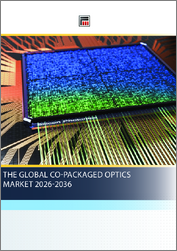
공동 패키징 광학(CPO) 시장(2026-2036년)The Global Co-Packaged Optics Market 2026-2036 |
||||||

세계의 공동 패키징 광학(CPO) 시장은 전환점에 서 있으며, 향후 10년간 데이터 센터 상호 연결 아키텍처를 근본적으로 변화시킬 준비가 되어 있습니다. 특히 대규모 언어 모델과 생성형 AI를 중심으로 한 인공지능 워크로드의 폭발적 성장에 힘입어, CPO 기술은 기존 플러그형 광학 모듈로는 더 이상 극복할 수 없는 대역폭, 전력 소비 및 지연 시간의 핵심 병목 현상을 해결합니다.
공동 패키징 광학는 광 트랜시버를 동일한 패키지 내의 스위치 ASIC 또는 프로세서와 직접 통합하여 컴퓨팅 실리콘과 광 변환 사이의 전기적 경로를 획기적으로 단축합니다. 이러한 아키텍처 전환은 플러그형 모듈의 비트당 약 15피코줄(pJ)이던 전력 소비를 비트당 약 5피코줄로 줄이며, 향후 비트당 1피코줄 미만으로 감소할 전망입니다. 이 기술은 또한 패키지 엣지에서 훨씬 더 높은 대역폭 밀도를 가능하게 하여, 초당 51.2테라비트 이상의 속도로 작동하는 차세대 스위치에 필수적입니다.
시장은 주로 두 가지 용도 부문으로 나뉩니다. 스케일아웃(scale-out)과 스케일업(scale-up) 네트워크입니다. 스케일아웃 애플리케이션은 이더넷 또는 인피니밴드 프로토콜을 사용하는 전통적인 데이터 센터 스위칭 패브릭을 포함하며, 시설 전체에 걸쳐 랙과 클러스터를 연결합니다. 스케일업 애플리케이션은 AI 훈련 클러스터 내 GPU 간 및 가속기 상호연결을 대상으로 하며, NVIDIA의 NVLink와 같은 구리 기반 솔루션을 광학 대안으로 대체하여 우수한 도달 거리, 대역폭 및 전력 효율성을 제공합니다. 초기 CPO 전개는 스케일업 AI 네트워크를 대상으로 한 후 더 광범위한 스케일아웃 인프라로 확장될 것으로 예상됩니다.
NVIDIA가 GTC 2025에서 발표한 Spectrum-X/Quantum-X 실리콘 포토닉스 스위치는 업계에 있어 획기적인 순간이 되었습니다. 이는 주요 AI 인프라 제공업체가 CPO 기술에 전적으로 집중하고 있음을 보여줍니다. 이러한 스위치는 TSMC의 System on Integrated Chips(SoIC) 기술과 3D 하이브리드 본딩을 활용하여 전례 없는 집적 밀도를 실현하고 있습니다. 주요 스위치 ASIC 공급업체인 Broadcom은 여러 패키징 포토닉스 파트너와 협력하는 개방형 생태계 접근 방식을 강조하는 Bailly CPO 플랫폼의 보완 전략을 추진하고 있습니다.
CPO 공급망은 포토닉 집적 회로 설계, 레이저 소스, 전자 인터페이스 회로, 첨단 패키징, 광학 정렬, 시스템 통합에 이르기까지 반도체 산업에서 가장 복잡한 생태계 중 하나를 구성합니다. TSMC는 선도적인 로직 공정과 CoWoS 및 COUPE를 포함한 첨단 패키징 플랫폼을 제공하며 광전자 칩렛의 긴밀한 통합을 가능케 하는 핵심 플레이어로 부상했습니다. 광학 조립 및 테스트 분야에서는 여전히 중요한 병목 현상이 존재하는데, 서브마이크론 정렬 허용오차와 특수 장비가 제조상의 과제를 야기하고 있으며 업계는 이를 해결하기 위해 적극적으로 노력 중입니다.
업계가 직면한 주요 기술 결정 사항으로는 2.5D와 3D 통합 방식 선택, 외부 레이저 소스 대 내장형 레이저 소스, 광섬유 부착 방식으로서의 엣지 커플링 대 그레이팅 커플링 등이 있습니다. 대부분의 선도적 구현 사례는 온도에 민감한 레이저를 발열 ASIC과 분리하여 신뢰성을 높이고 중복성을 가능하게 하는 외부 레이저 소스 아키텍처로 수렴하고 있습니다. 차세대 광학 엔진에 필요한 상호 연결 밀도를 달성하기 위해 하이브리드 본딩 기술이 점점 더 선호되고 있습니다.
AWS, Microsoft Azure, Google, Meta 등 하이퍼스케일 클라우드 제공업체들이 주요 수요 촉진요인으로, 그들의 대규모 AI 인프라 투자가 CPO 솔루션에 대한 긴급한 요구를 창출하고 있습니다. 이들 기업은 데이터 센터 인프라에 연간 수백억 달러를 공동 투자하며, 2026-2027년부터 전개를 목표로 CPO 기술을 적극적으로 평가하거나 개발 중입니다.
이 보고서는 세계의 CPO(공동 패키징 광학) 시장에 대한 조사 분석을 통해 이 혁신적인 기술이 AI와 머신러닝 워크로드의 전례없는 대역폭 요구 사항을 충족하기 위해 데이터센터 상호 연결 아키텍처를 재구성하는 방법을 확인합니다.
프로파일에 포함된 기업
|
|
등
목차
제1장 주요 요약
- 보고서의 개요와 주요 조사 결과
- 시장 정의와 범위
- 주요 시장 성장 촉진요인과 억제요인
- 최신 고성능 AI 데이터센터 아키텍처
- 스위치 : 현대 데이터센터의 주요 컴포넌트
- 스위치 IC 대역폭 발전과 CPO 기술의 필요성
- 데이터센터 아키텍처의 주요 과제 개요
- 하이 엔드 데이터센터에서 광트랜시버의 주요 동향
- 설계 판단 : CPO와 빼고 꽂는 식의 비교
- 광학 엔진(OE)이란?
- 이종 통합과 공동 패키징 광학
- 반도체 패키징의 상호 접속 기술 개요
- 주요 CPO 용도 : 네트워크 스위치 및 컴퓨팅 광 I/O
- 고급 상호 연결 기술을 통한 EIC/PIC 통합
- 2D에서 3D로 EIC/PIC 통합 옵션
- EIC/PIC에 이용하는 각 패키징 기술의 벤치마크
- 3D 광학 엔진과 IC의 패키징 예시
- CPO XPU/스위치 ASIC 패키지 구조 유형
- CPO 기술 과제와 미래 가능성
- NVIDIA vs. Broadcom : AI 인프라와 CPO의 전략 비교
- 현재의 AI 시스템 아키텍처
- 미래의 AI 아키텍처
- 시장 예측
- 공동 패키징 광학(CPO) 산업 생태계
제2장 미래의 AI 시스템의 과제와 솔루션
- 대규모 언어 모델(LLM)의 부상과 과제
- 스케일업, 스케일아웃 및 스케일어크로스 네트워크
- 하이엔드 데이터 센터용 네트워크 스위치 상호 연결의 과제
- 하이엔드 데이터 센터용 컴퓨트 스위치 상호 연결(광학 I/O)의 과제
- 하이엔드 데이터센터의 미래 AI 시스템
제3장 공동 패키징 광학(CPO)의 소개
- 포토닉 집적 회로(PIC)의 주요 개념
- 광학 엔진(OE)
- 공동 패키징 광학
- CPO 규격
제4장 공동 패키징 광학(CPO) 패키징
- CPO 패키징의 소개
- 2.5D와 3D 첨단 반도체 패키징 기술의 개요와 개발 로드맵
- 2.5D 실리콘 기반 패키징 기술
- 2.5D 유기 기반 패키징 기술
- 2.5D 유리 기반 패키징 기술
- 3D 첨단 반도체 패키징 기술
- CPO 패키징 : EIC와 PIC의 통합
- EIC/PIC 통합용 TSV
- EIC/PIC 통합용 팬아웃
- 유리 기반 CPO 패키징 기술
- EIC/PIC 통합용 하이브리드 본딩
- 광학 엔진과 ASIC/XPU의 시스템 통합
- 미래의 3D-CPO 구조
- 광학 얼라인먼트와 레이저 통합
- 파이버 어레이 유닛(FAU)
- CPO의 기타 광학 부품 공급업체
- 레이저 통합
제5장 공동 패키징 광학 시장 분석
- CPO 시장 정의와 범위
- CPO 시장 규모와 성장 예측
- 스위치 CPO 시장 분석
- XPU 광 I/O 시장 분석
- CPO 가격 설정 및 비용 분석
- 지역 시장 역학
- 총 잠재 시장(TAM) 분석
- 시장 예측 : 컴포넌트별
- 시장 예측 : 기술 세대별
- 시장 성장 억제요인과 장벽
- 채택 곡선 분석
- 채택 촉진요인과 억제요인
- 경쟁 구도의 진화
- 시나리오 분석
제6장 데이터 통신의 세계 시장 동향
- 데이터 통신 시장 역학 소개
- 응용 동향
- 기술 동향
제7장 시장 전망
- 스케일아웃 전망
- 스케일업 전망
- 고밀도 커넥터
- 새로운 공급망 역학
- 타사 공급업체 및 시스템 통합 사업자
제8장 기업 프로파일(61개사 프로파일)
제9장 부록
제10장 참고문헌
HBR 25.12.17The global co-packaged optics (CPO) market stands at an inflection point, poised to fundamentally transform data center interconnect architecture over the coming decade. Driven primarily by the explosive growth of artificial intelligence workloads, particularly large language models and generative AI, CPO technology addresses critical bottlenecks in bandwidth, power consumption, and latency that conventional pluggable optical modules can no longer overcome.
Co-packaged optics integrates optical transceivers directly with switch ASICs or processors within the same package, dramatically shortening the electrical path between computing silicon and optical conversion. This architectural shift reduces power consumption from approximately 15 picojoules per bit with pluggable modules to around 5 picojoules per bit, with a projected path to below 1 picojoule per bit. The technology also enables significantly higher bandwidth density at the package edge, essential for next-generation switches operating at 51.2 terabits per second and beyond.
The market divides into two primary application segments: scale-out and scale-up networks. Scale-out applications encompass traditional data center switching fabrics using Ethernet or InfiniBand protocols, connecting racks and clusters across the facility. Scale-up applications target GPU-to-GPU and accelerator interconnects within AI training clusters, replacing copper-based solutions like NVIDIA's NVLink with optical alternatives that offer superior reach, bandwidth, and power efficiency. Initial CPO deployments are expected to target scale-up AI networks before expanding to broader scale-out infrastructure.
NVIDIA's announcement of Spectrum-X and Quantum-X silicon photonics switches at GTC 2025 marked a watershed moment for the industry, signaling that the dominant AI infrastructure provider is fully committed to CPO technology. These switches leverage TSMC's System on Integrated Chips (SoIC) technology with 3D hybrid bonding to achieve unprecedented integration density. Broadcom, the leading switch ASIC supplier, has pursued a complementary strategy with its Bailly CPO platform, emphasizing an open ecosystem approach that works with multiple packaging and photonics partners.
The CPO supply chain represents one of the semiconductor industry's most complex ecosystems, spanning photonic integrated circuit design, laser sources, electronic interface circuits, advanced packaging, optical alignment, and system integration. TSMC has emerged as a central player, providing both leading-edge logic processes and advanced packaging platforms including CoWoS and COUPE that enable tight integration of photonic and electronic chiplets. Critical bottlenecks remain in optical assembly and testing, where sub-micron alignment tolerances and specialized equipment create manufacturing challenges that the industry is actively working to resolve.
Key technology decisions facing the industry include the choice between 2.5D and 3D integration approaches, external versus integrated laser sources, and edge coupling versus grating coupling for fiber attachment. Most leading implementations have converged on external laser source architectures that keep temperature-sensitive lasers separate from heat-generating ASICs, improving reliability and enabling redundancy. Hybrid bonding technology is increasingly favored for achieving the interconnect density required for next-generation optical engines.
Hyperscale cloud providers including AWS, Microsoft Azure, Google, and Meta represent the primary demand drivers, with their massive AI infrastructure investments creating urgent requirements for CPO solutions. These companies collectively invest tens of billions of dollars annually in data center infrastructure and are actively evaluating or developing CPO technology for deployment beginning in 2026-2027.
The competitive landscape features established semiconductor giants alongside well-funded startups. Companies like Ayar Labs, Lightmatter, and Celestial AI are pioneering novel architectures including 3D photonic interposers and photonic fabric technologies that may reshape the market. Meanwhile, traditional optical component suppliers including Lumentum, Coherent, and Marvell are adapting their portfolios for CPO applications. As AI model sizes continue growing exponentially and data center power constraints tighten, CPO technology offers a compelling solution to interconnect challenges that will only intensify. The technology's ability to deliver higher bandwidth at lower power positions it as essential infrastructure for the AI era.
"The Global Co-Packaged Optics Market 2026-2036" delivers comprehensive analysis of the rapidly emerging CPO industry, examining how this transformative technology is reshaping data centre interconnect architecture to meet the unprecedented bandwidth demands of artificial intelligence and machine learning workloads. As hyperscale operators and AI infrastructure providers confront critical limitations in power consumption, latency, and bandwidth density with conventional pluggable optical modules, co-packaged optics has emerged as the definitive next-generation solution, integrating optical transceivers directly with switch ASICs and accelerators to achieve dramatic improvements in performance and efficiency.
This authoritative report provides semiconductor industry professionals, investors, data centre operators, and technology strategists with detailed market forecasts projecting CPO growth from nascent commercial deployments through mass adoption, with granular segmentation by application (scale-out networking and scale-up AI interconnects), integration technology (2D, 2.5D, and 3D packaging), and end-use sector. The research examines the complete CPO value chain, from photonic integrated circuit design and laser sources through advanced semiconductor packaging and system integration, identifying critical bottlenecks, emerging solutions, and strategic opportunities across each segment.
Drawing on extensive primary research including interviews with industry leaders across the CPO ecosystem, the report delivers actionable intelligence on technology roadmaps from dominant players including NVIDIA and Broadcom, evaluates competing packaging approaches from leading OSATs and foundries, and assesses the readiness of hyperscale customers to deploy CPO at scale. Detailed company profiles provide strategic analysis of 55 organisations actively shaping the CPO landscape, while comprehensive benchmarking enables direct comparison of competing technologies, products, and ecosystem strategies.
Report contents include:
- Market Analysis and Forecasts
- Ten-year market forecasts (2026-2036) for total CPO market size and revenue
- Optical I/O for AI interconnect unit shipment and revenue projections
- CPO network switch unit shipment and market size forecasts
- Server board, CPU, and GPU/accelerator demand forecasts driving CPO adoption
- Segmentation by EIC/PIC integration technology and packaging approach
- Regional analysis and adoption timeline projections
- Technology Analysis
- Comprehensive examination of photonic integrated circuit (PIC) architectures and silicon photonics
- Optical engine design principles, components, and performance benchmarks
- Detailed analysis of 2D, 2.5D, and 3D EIC/PIC integration approaches
- Through-silicon via (TSV), fan-out, glass-based, and hybrid bonding packaging technologies
- Fiber array unit (FAU) alignment challenges and solutions
- Laser integration methods including external laser source architectures
- Universal Chiplet Interconnect Express (UCIe) implications for CPO
- Application Analysis
- Scale-out network switch CPO for Ethernet and InfiniBand fabrics
- Scale-up optical I/O for GPU-to-GPU and AI accelerator interconnects
- Comparison of CPO, pluggable optics, and copper interconnect approaches
- Power efficiency analysis: CPO vs. pluggable vs. copper (pJ/bit benchmarks)
- Latency performance comparisons across interconnect technologies
- Migration roadmaps from copper to optical in AI infrastructure
- Industry and Supply Chain Intelligence
- Complete CPO industrial ecosystem mapping across ten value chain segments
- PIC design, ASIC/xPU, laser sources, wafer/substrate suppliers analysis
- EIC, SerDes, PHY, and retimer supplier landscape
- Connector and fiber infrastructure provider assessment
- Foundry capabilities for silicon photonics and advanced packaging
- OSAT packaging, assembly, and test service provider evaluation
- System integrator and ODM/OEM positioning
- Hyperscaler end customer requirements and adoption timelines
- Ecosystem interdependencies and strategic implications
- Competitive Intelligence
- NVIDIA vs. Broadcom strategic comparison in AI infrastructure and CPO
- Product benchmarking: Spectrum-X, Quantum-X, Bailly platform specifications
- Divergent ecosystem strategies and partnership analysis
- Start-up innovation landscape: Ayar Labs, Lightmatter, Celestial AI, and others
- Foundry platform comparison: TSMC COUPE/iOIS, GlobalFoundries Fotonix
- Challenges and Solutions
- SerDes bottlenecks in high-bandwidth systems and mitigation approaches
- Thermal management challenges in CPO module design
- Optical alignment precision requirements and manufacturing solutions
- Reliability considerations: redundancy, monitoring, and self-correction
- Testing strategies for wafer-level and package-level optical validation
- Standardisation efforts and interoperability considerations
Companies Profiled include:
|
|
and more.......
Key Questions Answered:
- What is the total addressable market for co-packaged optics through 2036?
- How will CPO adoption differ between scale-out networking and scale-up AI applications?
- Which advanced packaging technologies offer the best performance-cost trade-offs for CPO?
- How are NVIDIA and Broadcom positioning their CPO strategies differently?
- What role will TSMC's COUPE and iOIS platforms play in CPO manufacturing?
- Which laser integration approach will achieve commercial dominance?
- How will optical alignment and fiber attachment challenges be resolved at scale?
- When will hyperscale data centres begin volume CPO deployment?
- What are the key investment opportunities across the CPO value chain?
- How does CPO compare to high-density connector alternatives being developed?
Who Should Purchase This Report:
- Semiconductor company executives evaluating CPO market entry or expansion
- Photonics and optical component manufacturers assessing strategic positioning
- Advanced packaging service providers planning CPO capability development
- Data centre operators and hyperscale infrastructure planners
- AI chip and accelerator designers exploring optical interconnect integration
- Venture capital and private equity investors targeting CPO opportunities
- Investment analysts covering semiconductor, photonics, and data centre sectors
- Strategic planners at system OEMs and ODMs
- Supply chain managers responsible for optical and packaging sourcing
- Technology policy makers assessing semiconductor industry trends
TABLE OF CONTENTS
1. EXECUTIVE SUMMARY
- 1.1. Report Overview and Key Findings
- 1.2. Market Definition and Scope
- 1.2.1. Definition of Co-Packaged Optics (CPO)
- 1.2.2. Scope of This Report
- 1.3. Key Market Drivers and Restraints
- 1.4. Modern High-Performance AI Data Centre Architecture
- 1.4.1. Physical Infrastructure Hierarchy
- 1.4.2. Network Architecture
- 1.4.3. Power and Cooling Considerations
- 1.5. Switches: Key Components in Modern Data Centres
- 1.5.1. Switch Architecture Evolution
- 1.5.2. Switch ASIC Technology
- 1.5.3. Optical Transceiver Requirements
- 1.6. Advancements in Switch IC Bandwidth and the Need for CPO Technology
- 1.6.1. Historical Bandwidth Scaling
- 1.6.2. SerDes Technology Evolution
- 1.6.3. Electrical Signalling Limits
- 1.6.4. Front-Panel Density Constraints
- 1.6.5. Power Consumption Trajectory
- 1.7. Overview of Key Challenges in Data Centre Architectures
- 1.7.1. Thermal Management
- 1.7.2. Power Delivery
- 1.7.3. Cable Management
- 1.7.4. Reliability and Serviceability
- 1.7.5. Standards and Interoperability
- 1.8. Key Trend of Optical Transceivers in High-End Data Centres
- 1.8.1. Historical Evolution
- 1.8.2. Technology Migration Path
- 1.9. Design Decisions: CPO vs. Pluggables Comparison
- 1.9.1. Performance Comparison
- 1.9.2. Operational Comparison
- 1.9.3. Economic Comparison
- 1.10. What is an Optical Engine (OE)?
- 1.10.1. Functional Description
- 1.10.2. Optical Engine Components
- 1.10.3. Performance Parameters
- 1.11. Heterogeneous Integration and Co-Packaged Optics
- 1.11.1. The Heterogeneous Integration Imperative
- 1.11.2. Integration Approaches for CPO
- 1.11.3. TSMC's Role in Heterogeneous Integration
- 1.15. Overview of Interconnection Techniques in Semiconductor Packaging
- 1.15.1. Wire Bonding
- 1.15.2. Flip-Chip Bumping
- 1.15.3. Micro-Bumping
- 1.15.4. Through-Silicon Via (TSV)
- 1.15.5. Hybrid Bonding
- 1.15.6. Redistribution Layer (RDL)
- 1.16. Key CPO Applications: Network Switch and Computing Optical I/O
- 1.16.1. Scale-Out Network Switching
- 1.16.2. Scale-Up Computing Optical I/O
- 1.17. EIC/PIC Integration by Advanced Interconnect Techniques
- 1.17.1. Integration Requirements
- 1.18. 2D to 3D EIC/PIC Integration Options
- 1.18.1. 2D Integration Architecture
- 1.18.2. 2.5D Integration Architecture
- 1.18.3. 3D Integration Architecture
- 1.19. Benchmark of Different Packaging Technologies for EIC/PIC
- 1.20. Examples of Packaging a 3D Optical Engine with an IC
- 1.20.1. Configuration 1: EIC-on-PIC with Micro-Bumps
- 1.20.2. Configuration 2: PIC-on-EIC with Through-Silicon Vias
- 1.20.3. Configuration 3: 3D SoIC with Hybrid Bonding
- 1.21. Types of CPO + XPU/Switch ASIC Packaging Structures
- 1.21.1. Type I: Optical Engines on Package Periphery
- 1.21.2. Type II: Optical Engines Co-Located with ASIC on Interposer
- 1.21.3. Type III: 3D Stacked Optical Engines
- 1.22. Challenges and Future Potential of CPO Technology
- 1.22.1. Technical Challenges
- 1.22.2. Commercial Challenges
- 1.22.2.1. Future Potential
- 1.23. NVIDIA vs. Broadcom: Strategic Comparison in AI Infrastructure and CPO
- 1.23.1. NVIDIA's CPO Strategy: Vertical Integration
- 1.23.2. Broadcom's CPO Strategy: Open Ecosystem
- 1.23.3. Competitive Dynamics
- 1.23.4. CPO Product Benchmark: NVIDIA vs. Broadcom
- 1.23.5. NVIDIA and Broadcom: Divergent CPO Ecosystems
- 1.24. Current AI System Architecture
- 1.24.1. NVIDIA DGX/HGX Architecture
- 1.25. Future AI Architecture
- 1.26. Market Forecast
- 1.26.1. Server Boards, CPUs, and GPUs/Accelerators
- 1.26.2. Optical I/O for AI Interconnect CPO Forecast (Units Shipped)
- 1.26.3. Optical I/O for AI Interconnect CPO Forecast (Revenue/Market Size)
- 1.26.4. CPO Network Switches for AI Accelerators Forecast (Units Shipped)
- 1.26.5. CPO Network Switches for AI Accelerators Forecast (Market Size and Revenue)
- 1.26.6. Total CPO Market Overview
- 1.26.7. Total CPO by Different EIC/PIC Integration Technology (Unit Shipments)
- 1.26.8. System Integration of Network Switches by Packaging Technologies
- 1.26.9. System Integration of Optical I/O Forecast by Packaging Technologies
- 1.27. Co-packaged optics (CPO) industrial ecosystem
- 1.27.1. PIC Design Segment
- 1.27.2. ASIC and xPU Design Segment
- 1.27.3. Laser Sources Segment
- 1.27.4. SOI Wafer and Epi-Wafer Segment
- 1.27.5. EIC, Retimers, SerDes, and PHY Segment
- 1.27.6. Connectors and Fibers Segment
- 1.27.7. Foundries Segment
- 1.27.8. Packaging, Assembling, and Testing Segment
- 1.27.9. System and Equipment Segment
- 1.27.10. End Customers (Hyperscalers) Segment
- 1.27.11. Ecosystem Interdependencies and Strategic Implications
2. CHALLENGES AND SOLUTIONS FOR FUTURE AI SYSTEMS
- 2.1. The Rise and Challenges of Large Language Models (LLMs)
- 2.1.1. The Explosive Growth of AI and Generative AI
- 2.1.1.1. Historical Context and Acceleration
- 2.1.1.2. Compute Demand Scaling
- 2.1.1.3. Generative AI Market Expansion
- 2.1.2. Modern High-Performance AI Data Centre Requirements
- 2.1.2.1. Compute Density Requirements
- 2.1.2.2. Network Topology Requirements
- 2.1.2.3. Availability and Reliability Requirements
- 2.1.3. NVIDIA's State-of-the-Art AI Systems
- 2.1.3.1. DGX H100 and HGX H100
- 2.1.4. Switches: Key Components in Modern Data Centres
- 2.1.4.1. Switch Hierarchy in AI Data Centres
- 2.1.1. The Explosive Growth of AI and Generative AI
- 2.2. Scale-Up, Scale-Out, and Scale-Across Networks
- 2.2.1. Scale-Up Networks: GPU-to-GPU Interconnects
- 2.2.1.1. NVIDIA NVLink Implementation
- 2.2.1.2. CPO Value Proposition for Scale-Up
- 2.2.2. Scale-Out Networks: Rack-to-Rack Communications
- 2.2.2.1. Ethernet-Based Scale-Out
- 2.2.2.2. InfiniBand for AI
- 2.2.2.3. CPO Value Proposition for Scale-Out
- 2.2.3. Scale-Up, Scale-Out, and Scale-Across Comparison
- 2.2.1. Scale-Up Networks: GPU-to-GPU Interconnects
- 2.3. Challenges in Network Switch Interconnects for High-End Data Centres
- 2.3.1. Roadmap of Interconnect Technology for Network Switches in High-End Data Centres
- 2.3.1.1. Technology Generations
- 2.3.2. SerDes Bottleneck in High-Bandwidth Systems
- 2.3.2.1. SerDes Function
- 2.3.2.2. Channel Loss Challenges
- 2.3.3. Solutions to SerDes Bottlenecks in High-Bandwidth Systems
- 2.3.3.1. Linear-Drive Electronics
- 2.3.3.2. Near-Package Optics
- 2.3.3.3. Co-Packaged Optics
- 2.3.4. Pluggable Optics: Current Bottlenecks and Limitations
- 2.3.4.1. Form Factor Constraints
- 2.3.4.2. Electrical Interface Limitations
- 2.3.4.3. Thermal Management Challenges
- 2.3.4.4. Serviceability Trade-offs
- 2.3.5. On-Board Optics (OBO)
- 2.3.6. Co-Packaged Optics (CPO)
- 2.3.6.1. CPO Architecture
- 2.3.6.2. Key Enabling Technologies
- 2.3.6.3. Performance Benefits
- 2.3.6.4. Implementation Challenges
- 2.3.7. Transmission Losses in Pluggable Optical Transceiver Connections
- 2.3.7.1. Total Path Loss
- 2.3.8. Pluggable Optics vs. CPO
- 2.3.9. Design Decisions for CPO Compared to Pluggables
- 2.3.10. Advancements in Switch IC Bandwidth and the Need for CPO Technology
- 2.3.10.1. Bandwidth Scaling Trajectory
- 2.3.10.2. Physical Constraints at Scale
- 2.3.11. L2 Frontside Network Architecture Diagram: CPO vs. Non-CPO
- 2.3.1. Roadmap of Interconnect Technology for Network Switches in High-End Data Centres
- 2.4. Challenges in Compute Switch Interconnects (Optical I/O) for High-End Data Centres
- 2.4.1. Number of Copper Wires in Current AI System Interconnects
- 2.4.1.1. NVLink Copper Cable Count
- 2.4.1.2. SuperPOD Cable Complexity
- 2.4.2. Limitations of Current Copper Systems in AI
- 2.4.3. NVIDIA's Connectivity Choices: Copper vs. Optical for High-Bandwidth Systems
- 2.4.3.1. Current Generation: Copper-Centric
- 2.4.3.2. Transition Generation: Hybrid Approach
- 2.4.3.3. Future Generation: Optical-First
- 2.4.3.4. Strategic Implications
- 2.4.4. Copper vs. Optical for High-Bandwidth Systems: Benchmark
- 2.4.5. Migration from Copper to Optical Interconnects for High-End AI Systems
- 2.4.6. Current AI System Architecture
- 2.4.7. L1 Backside Compute Architecture with Copper Systems
- 2.4.8. L1 Backside Compute Architecture with Optical Interconnect: Co-Packaged Optics (CPO)
- 2.4.9. Opportunities for Swapping Copper to Optical
- 2.4.1. Number of Copper Wires in Current AI System Interconnects
- 2.5. Future AI Systems in High-End Data Centres
- 2.5.1. Power Efficiency Comparison: CPO vs. Pluggable Optics vs. Copper Interconnects
- 2.5.1.1. Power Consumption Breakdown
- 2.5.2. Latency of 60cm Data Transmission Technology Benchmark
- 2.5.3. Future AI Architecture (Short to Mid-Term)
- 2.5.4. Future AI Architecture (Long-Term)
- 2.5.1. Power Efficiency Comparison: CPO vs. Pluggable Optics vs. Copper Interconnects
3. INTRODUCTION TO CO-PACKAGED OPTICS (CPO)
- 3.1. Photonic Integrated Circuits (PICs) Key Concepts
- 3.1.1. What are Photonic Integrated Circuits (PICs)?
- 3.1.1.1. Fundamental Definition
- 3.1.1.2. Material Platforms
- 3.1.1.3. Integration Levels
- 3.1.2. PICs vs. Silicon Photonics: What are the Differences?
- 3.1.2.1. Silicon Photonics: A Specific Implementation
- 3.1.2.2. Why Silicon Photonics Dominates CPO
- 3.1.3. PIC Architecture
- 3.1.3.1. Transmit Path Architecture
- 3.1.3.2. Receive Path Architecture
- 3.1.3.3. Supporting Functions
- 3.1.4. Advantages and Challenges of PICs
- 3.1.1. What are Photonic Integrated Circuits (PICs)?
- 3.2. Optical Engine (OE)
- 3.2.1. What is an Optical Engine?
- 3.2.1.1. Optical Engine Composition
- 3.2.1.2. Optical Engine vs. Pluggable Transceiver
- 3.2.2. How an Optical Engine Works
- 3.2.2.1. Transmit Path Operation
- 3.2.2.2. Receive Path Operation
- 3.2.2.3. Critical Performance Parameters
- 3.2.3. Optical Power Supplies
- 3.2.3.1. Why External Laser Sources?
- 3.2.3.2. External Laser Source Architectures
- 3.2.3.3. Optical Power Delivery
- 3.2.1. What is an Optical Engine?
- 3.3. Co-Packaged Optics
- 3.3.1. Three Key Concepts in Co-Packaged Optics (CPO)
- 3.3.1.1. Concept 1: Proximity Integration
- 3.3.1.2. Concept 2: Functional Partitioning
- 3.3.1.3. Concept 3: Coherent Ecosystem Development
- 3.3.2. Key Technology Building Blocks for CPO
- 3.3.2.1. Silicon Photonics PIC
- 3.3.2.2. Electronic IC (EIC)
- 3.3.2.3. EIC-PIC Integration
- 3.3.2.4. Fibre Array Units (FAUs)
- 3.3.2.5. External Laser Source
- 3.3.2.6. Advanced Packaging Platform
- 3.3.3. Benefits of CPO: Latency Reduction
- 3.3.3.1. Sources of Latency in Optical Interconnects
- 3.3.3.2. CPO Latency Advantages
- 3.3.4. Benefits of CPO: Power Consumption Reduction
- 3.3.4.1. Power Consumption Breakdown
- 3.3.4.2. Why CPO Consumes Less Power
- 3.3.5. Benefits of CPO: Data Rate Improvements
- 3.3.5.1. Pluggable Scaling Limitations
- 3.3.5.2. CPO Scaling Advantages
- 3.3.5.3. Data Rate Scaling Roadmap
- 3.3.6. Overview of Value Proposition of CPO
- 3.3.6.1. Value for Hyperscale Data Centre Operators
- 3.3.6.2. Value for Network Equipment Vendors
- 3.3.6.3. Value for the Technology Ecosystem
- 3.3.7. Future Challenges in CPO
- 3.3.7.1. Manufacturing and Yield Challenges
- 3.3.7.2. Thermal Management Challenges
- 3.3.7.3. Serviceability and Reliability Challenges
- 3.3.7.4. Ecosystem and Standardisation Challenges
- 3.3.7.5. Cost Challenges
- 3.3.1. Three Key Concepts in Co-Packaged Optics (CPO)
- 3.4. CPO Standards
- 3.4.1. OIF Co-Packaging Framework
- 3.4.2. OIF Standards for 1.6T and 3.2T CPO Module
- 3.4.3. External Laser Small Form Pluggable (ELSFP) Implementation Agreement
- 3.4.4. Telemetry and Management
- 3.4.5. OIF's CEI-112G XSR / XSR+ PAM4
- 3.4.6. UCIe Standard and Its Relationship to CPO
- 3.4.7. The CPO Standards Process in China
4. PACKAGING FOR CO-PACKAGED OPTICS (CPO)
- 4.1. Introduction to CPO Packaging
- 4.1.1. Key Components to be Packaged in an Optical Transceiver
- 4.1.1.1. Photonic Integrated Circuit (PIC)
- 4.1.1.2. Electronic Integrated Circuit (EIC)
- 4.1.1.3. Laser Source Interface
- 4.1.1.4. Fibre Array Unit (FAU)
- 4.1.1.5. Host ASIC Interface
- 4.1.2. Heterogeneous Integration and Co-Packaged Photonics
- 4.1.2.1. Why Heterogeneous Integration for CPO?
- 4.1.2.2. Heterogeneous Integration Approaches for CPO
- 4.1.2.3. Integration Hierarchy for CPO
- 4.1.3. CPO for Network Switch: Packaging Concept
- 4.1.3.1. Switch Architecture with CPO
- 4.1.3.2. Package Configuration Options
- 4.1.3.3. Packaging Requirements for Switch CPO
- 4.1.4. 1.6 Tbps Co-Packaged Optics for Network Switch
- 4.1.4.1. Integration Approach
- 4.1.5. CPO as Optical I/O for XPUs: Packaging Concept
- 4.1.5.1. The Scale-Up Interconnect Challenge
- 4.1.5.2. XPU-CPO Packaging Concept
- 4.1.5.3. Implementation Approaches
- 4.1.5.4. NVIDIA's Approach to XPU Optical I/O
- 4.1.5.5. Packaging Implications for XPU Optical I/O
- 4.1.5.6. System Architecture Evolution
- 4.1.6. CPO Integration for Compute Silicon
- 4.1.6.1. System Configuration
- 4.1.6.2. Integration Architecture
- 4.1.6.3. Thermal Partitioning
- 4.1.6.4. Enabled Architectures
- 4.1.7. Overview of CPO Packaging Technologies
- 4.1.1. Key Components to be Packaged in an Optical Transceiver
- 4.2. Overview and Development Roadmap of 2.5D and 3D Advanced Semiconductor Packaging Technologies
- 4.2.1. Evolution Roadmap of Semiconductor Packaging
- 4.2.2. Semiconductor Packaging Overview
- 4.2.3. Key Metrics for Advanced Semiconductor Packaging Performance
- 4.2.4. Overview of Interconnection Techniques in Semiconductor Packaging
- 4.2.5. Overview of 2.5D Packaging Structure
- 4.2.6. 2.5D Package Components
- 4.2.7. Benefits for CPO
- 4.2.8. Challenges for CPO
- 4.3. 2.5D Silicon-Based Packaging Technologies
- 4.3.1. 2.5D Packaging Involving Silicon as Interconnect
- 4.3.2. Silicon Interposer Technology
- 4.3.3. Silicon Bridge Technology
- 4.3.4. CPO Implications
- 4.3.5. Through-Silicon Via (TSV): Current State and Future
- 4.3.5.1. TSV Fabrication Process
- 4.3.5.2. TSV Technology Generations
- 4.3.5.3. TSV Challenges for CPO
- 4.3.5.4. Future TSV Development
- 4.3.6. Development Trends for 2.5D Silicon-Based Packaging
- 4.3.6.1. Interposer Size Scaling
- 4.3.6.2. Routing Density Advancement
- 4.3.6.3. Cost Reduction Initiatives
- 4.3.6.4. Integration with Advanced Features
- 4.3.7. Silicon Interposer vs. Silicon Bridge Benchmark
- 4.3.7.1. Implications for CPO
- 4.4. 2.5D Organic-Based Packaging Technologies
- 4.4.1. 2.5D Packaging: High-Density Fan-Out (FO) Packaging
- 4.4.1.1. Fan-Out Technology Concept
- 4.4.1.2. High-Density Fan-Out Variants
- 4.4.1.3. Advantages for CPO
- 4.4.1.4. Challenges for CPO
- 4.4.2. Redistribution Layer (RDL)
- 4.4.2.1. RDL Fabrication Process
- 4.4.2.2. RDL Design Considerations for CPO
- 4.4.3. Electronic Interconnects: SiO2 vs. Organic Dielectric
- 4.4.4. Panel Level Fab-Out
- 4.4.4.1. Panel-Level Processing
- 4.4.4.2. Advantages for CPO
- 4.4.4.3. Challenges for CPO
- 4.4.5. Wafer Level Fan-Out
- 4.4.5.1. Wafer-Level Processing
- 4.4.5.2. Advantages for WLFO
- 4.4.5.3. Challenges for WLFO
- 4.4.6. Wafer-Level Fan-Out vs. Panel-Level Fan-Out
- 4.4.6.1. Selection Criteria for CPO
- 4.4.7. Key Trends in Fan-Out Packaging
- 4.4.8. Challenges in Future Fan-Out Processes
- 4.4.8.1. Die Shift and Placement Accuracy
- 4.4.8.2. Warpage Control
- 4.4.8.3. Yield and Cost
- 4.4.8.4. High-Frequency Performance
- 4.4.1. 2.5D Packaging: High-Density Fan-Out (FO) Packaging
- 4.5. 2.5D Glass-Based Packaging Technologies
- 4.5.1. Roles of Glass in Semiconductor Packaging
- 4.5.1.1. Glass Properties Relevant to Packaging
- 4.5.1.2. Applications in Packaging
- 4.5.1.3. Glass Core as Interposer for Advanced Semiconductor Packaging
- 4.5.2. Overcoming Limitations of Silicon Interposers with Glass
- 4.5.2.1. Size Limitation
- 4.5.2.2. Optical Opacity
- 4.5.2.3. Dielectric Loss
- 4.5.2.4. Cost Structure
- 4.5.2.5. Remaining Silicon Advantages
- 4.5.3. Glass vs. Molding Compound
- 4.5.3.1. Implications for CPO
- 4.5.4. Glass Core (Interposer) Package: Process Flow
- 4.5.5. Challenges of Glass Packaging
- 4.5.5.1. Handling and Breakage
- 4.5.5.2. Via Formation and Metallisation
- 4.5.5.3. Thermal Conductivity
- 4.5.5.4. RDL Adhesion
- 4.5.5.5. Warpage Control
- 4.5.1. Roles of Glass in Semiconductor Packaging
- 4.6. 3D Advanced Semiconductor Packaging Technologies
- 4.6.1. Evolution of Bumping Technologies
- 4.6.1.1. Solder Bumps (C4)
- 4.6.1.2. Copper Pillar Bumps
- 4.6.1.3. Micro-Bumps
- 4.6.1.4. Hybrid Bonding (Bumpless)
- 4.6.2. Challenges in Scaling Bumps
- 4.6.2.1. Mechanical Challenges
- 4.6.2.2. Electrical Challenges
- 4.6.2.3. Manufacturing Challenges
- 4.6.2.4. Implications for CPO
- 4.6.3. Micro-Bump for Advanced Semiconductor Packaging
- 4.6.3.1. Micro-Bump Structure
- 4.6.4. Bumpless Cu-Cu Hybrid Bonding
- 4.6.4.1. Hybrid Bonding Concept
- 4.6.4.2. Process Fundamentals
- 4.6.4.3. Key Characteristics
- 4.6.4.4. Benefits for CPO
- 4.6.5. Three Ways of Cu-Cu Hybrid Bonding: Benchmark
- 4.6.5.1. Die-to-Die (D2D)
- 4.6.5.2. Die-to-Wafer (D2W)
- 4.6.5.3. Wafer-to-Wafer (W2W)
- 4.6.6. Challenges in Cu-Cu Hybrid Bonding Manufacturing Process
- 4.6.1. Evolution of Bumping Technologies
- 4.7. CPO Packaging: EIC and PIC Integration
- 4.7.1. EIC/PIC Integration by Conventional Interconnect Techniques
- 4.7.1.1. Wire Bond Integration
- 4.7.1.2. Flip-Chip Integration (2D)
- 4.7.2. EIC/PIC Integration by Emerging Interconnect Techniques
- 4.7.2.1. 2.5D Interposer Integration
- 4.7.2.2. 3D Micro-Bump Stacking
- 4.7.2.3. 3D Hybrid Bonding
- 4.7.3. 2D to 3D EIC/PIC Integration Options
- 4.7.3.1. Technology Transition Drivers
- 4.7.3.2. 2D to 3D Integration Evolution
- 4.7.4. Integration Roadmap by CPO Segment
- 4.7.5. Benchmarking of Different Packaging Technologies for EIC/PIC
- 4.7.6. Pros and Cons of 2D Integration of EIC/PIC
- 4.7.7. Pros and Cons of 2.5D Integration of EIC/PIC
- 4.7.8. Pros and Cons of 3D Hybrid Integration of EIC/PIC
- 4.7.9. Pros and Cons of 3D Monolithic Integration of EIC/PIC
- 4.7.1. EIC/PIC Integration by Conventional Interconnect Techniques
- 4.8. TSV for EIC/PIC Integration
- 4.8.1. TSV for EIC/PIC Integration in CPO
- 4.8.1.1. TSV Configurations for EIC/PIC
- 4.8.1.2. Design Considerations
- 4.8.2. Benefits of TSV for PIC/EIC Integration
- 4.8.3. Cisco Packaging Architectures of Optical Engine Over Generations
- 4.8.4. Cisco: 2.5D Chip-on-Chip (CoC) Packaging Architecture for EIC/PIC Integration
- 4.8.4.1. Architecture Description
- 4.8.4.2. Manufacturing Considerations
- 4.8.5. Cisco: 3D TSV for PIC/EIC Integration
- 4.8.5.1. Architecture Description
- 4.8.5.2. Benefits of TSV Integration
- 4.8.5.3. Manufacturing Considerations
- 4.8.6. Key TSV Fabrication Steps and Challenges in CPO
- 4.8.6.1. Fabrication Process Flow
- 4.8.7. Packaging Options for Silicon Photonics
- 4.8.8. Pros and Cons of 2.5D Si Interposer for EIC/PIC Integration
- 4.8.1. TSV for EIC/PIC Integration in CPO
- 4.9. Fan-Out for EIC/PIC Integration
- 4.9.1. ASE's Proposed Fan-Out Solution for CPO Packaging
- 4.9.1.1. ASE Fan-Out CPO Concept
- 4.9.2. FOPOP from ASE: Process
- 4.9.3. Analysis of FOPOP vs. Wire Bond Packaging for CPO
- 4.9.4. Optical Packaging Process Considerations for Silicon Photonics - ASE
- 4.9.5. SPIL's Fan-Out Embedded Bridge (FOEB) Structure for PIC/EIC Integration in CPO
- 4.9.6. Process Flow of Integrating PIC and EIC in a FOEB Structure
- 4.9.7. Process Challenges in Packaging Optical Engines
- 4.9.8. Challenges of Using Fan-Out for EIC/PIC Integration
- 4.9.1. ASE's Proposed Fan-Out Solution for CPO Packaging
- 4.10. Glass-Based CPO Packaging Technologies
- 4.10.1. Glass-Based Co-Packaged Optics
- 4.10.1.1. Corning's Glass CPO Vision
- 4.10.2. Glass CPO Package Architecture
- 4.10.3. Glass-Based CPO Process Development
- 4.10.3.1. Corning's 102.4 Tb/s Test Vehicle Demonstration
- 4.10.1. Glass-Based Co-Packaged Optics
- 4.11. Hybrid Bonding for EIC/PIC Integration
- 4.11.1. TSMC: Integrated HPC Technology Platform for AI
- 4.11.2. iOIS: Integrated Optical Interconnection System from TSMC
- 4.11.3. Combining EIC and PIC with 3D SoIC Bond
- 4.11.4. Roadmap of Bond Pitch Scaling
- 4.12. System Integration of Optical Engine and ASIC/XPU
- 4.12.1. Co-Packaging vs. Co-Packaged Optics (CPO)
- 4.12.2. Three Types of CPO + XPU/Switch ASIC Packaging Structures
- 4.12.2.1. Type 1: 2D/2.5D Peripheral Integration
- 4.12.2.2. Type 2: 2.5D with Embedded Bridge
- 4.12.2.3. Type 3: 3D Stacked Integration
- 4.13. Future 3D-CPO Structure
- 4.13.1. Future 3D-CPO Architecture Vision
- 4.13.2. NVIDIA's 3D Integration of SoC, HBM, EIC, and PIC on Co-Packaged Substrates
- 4.13.2.1.1. Architecture Overview
- 4.13.2.1.2. Integration Approach
- 4.13.2.1.3. Key Innovations
- 4.14. Optical Alignment and Laser Integration
- 4.14.1. How CPO is Built and the Bottleneck
- 4.14.2. The fibre attach bottleneck
- 4.14.3. Interface Between Coupler and FAU
- 4.14.4. Grating vs. Edge Couplers: Challenges in High-Density Optical I/O for Silicon Photonics
- 4.14.5. Challenges in High-Density Optical I/O for Silicon Photonics
- 4.15. Fiber Array Unit (FAU)
- 4.15.1. Optical Alignment Challenges and Solutions
- 4.15.2. Two Alignment Approaches
- 4.15.3. Reducing Optical Fiber Packaging Complexity
- 4.15.4. Key Technical Challenges
- 4.15.4.1. The Size Mismatch Between Silicon Waveguides and Planar Optical Fibers
- 4.15.5. Fiber Attach Methods
- 4.15.6. Key Players in FAU for CPO
- 4.15.7. Benchmark of Optical Fiber Alignment Structure Variations
- 4.15.8. Suppliers of Other Optical Components in CPO
- 4.16. Suppliers of Other Optical Components in CPO
- 4.17. Laser Integration
- 4.17.1. On-Chip Light Source Integration Methods
- 4.17.2. External Lasers for CPO
- 4.17.3. Laser Attach Technology Benchmark
- 4.17.4. Benchmark of Different Laser Integration Technologies
5. CO-PACKAGED OPTICS MARKET ANALYSIS
- 5.1. CPO Market Definition and Scope
- 5.2. CPO Market Size and Growth Projections
- 5.3. Switch CPO Market Analysis
- 5.3.1. Market Overview and Drivers
- 5.3.2. Deployment Timeline and Adoption Phases
- 5.3.3. Volume Projections and Market Sizing
- 5.3.4. Market Concentration and Regional Distribution
- 5.3.5. Pricing Trajectory and Cost Dynamics
- 5.4. XPU Optical I/O Market Analysis
- 5.4.1. Market Drivers and Value Proposition
- 5.4.2. Adoption Timeline and Platform Evolution
- 5.4.3. Volume and Revenue Projections
- 5.4.4. Market Segmentation by Platform
- 5.4.5. Technology Requirements and Differentiation
- 5.5. CPO Pricing and Cost Analysis
- 5.5.1. Current Pricing Landscape
- 5.5.2. Cost Trajectory and Reduction Drivers
- 5.5.3. Cost Parity Timeline and Dynamics
- 5.5.4. Pricing Strategy Implications
- 5.6. Regional Market Dynamics
- 5.6.1. North America
- 5.6.2. Asia-Pacific
- 5.6.3. Europe
- 5.6.4. Rest of World
- 5.7. Total Addressable Market Analysis
- 5.7.1. Core TAM Segments
- 5.7.2. Serviceable Addressable Market (SAM)
- 5.8. Market Forecast by Component
- 5.9. Market Forecast by Technology Generation
- 5.9.1. Optical Engine Bandwidth Evolution
- 5.9.2. Generation Lifecycle Analysis
- 5.10. Market Restraints and Barriers
- 5.10.1. Manufacturing Yield and Cost
- 5.10.2. Serviceability and Field Replacement Concerns
- 5.10.3. Standards Maturity and Interoperability
- 5.10.4. Supply Chain Capacity Constraints
- 5.10.5. Competitive Alternatives
- 5.11. Adoption Curve Analysis
- 5.11.1. Technology Adoption Framework
- 5.11.1.1. Innovators (2024-2026)
- 5.11.1.2. Early Adopters (2026-2028)
- 5.11.1.3. Early Majority (2028-2031)
- 5.11.1.4. Late Majority (2031-2034)
- 5.11.1.5. Laggards (2034+)
- 5.11.2. Segment-Specific Adoption Curves
- 5.11.1. Technology Adoption Framework
- 5.12. Adoption Accelerators and Inhibitors
- 5.12.1. Adoption Curve Implications
- 5.13. Competitive Landscape Evolution
- 5.13.1. Current Competitive Positioning
- 5.13.2. Integrated Device Manufacturers (IDMs)
- 5.13.3. Silicon Photonics Specialists
- 5.13.4. Foundry/OSAT Providers
- 5.13.5. System Vendors
- 5.13.6. Laser Suppliers
- 5.13.7. Competitive Dynamics and Market Structure Evolution
- 5.13.7.1. Near-Term Dynamics (2025-2028)
- 5.13.7.1.1. Expected Evolution (2028)
- 5.13.7.2. Mid-Term Dynamics (2028-2032)
- 5.13.7.2.1. Expected Evolution (2032)
- 5.13.7.3. Long-Term Dynamics (2032-2036)
- 5.13.7.3.1. Expected Evolution (2036)
- 5.13.7.1. Near-Term Dynamics (2025-2028)
- 5.13.8. Vertical Integration Trends
- 5.13.8.1. Integration Strategy Framework
- 5.13.8.1.1. Full Vertical Integration (Broadcom, Intel Model)
- 5.13.8.1.2. Partial Integration (Cisco, NVIDIA Model)
- 5.13.8.1.3. Fabless/Assembly-Light (Ayar Labs, Ranovus Model)
- 5.13.8.1.4. Platform Provider (TSMC Model)
- 5.13.8.2. Strategic Implications of Integration Trends
- 5.13.8.1. Integration Strategy Framework
- 5.14. Scenario Analysis
- 5.14.1. Scenario Framework
- 5.14.2. Scenario Definitions
- 5.14.3. Bull Case Scenario
- 5.14.4. Base Case Scenario
- 5.14.5. Bear Case Scenario
- 5.14.6. Scenario Comparison and Key Variables
6. GLOBAL MARKET TRENDS IN DATACOM
- 6.1. Introduction to DATACOM Market Dynamics
- 6.1.1. Overview of the Data Communications Market
- 6.1.1.1. Market Definition and Scope
- 6.1.1.2. Market Size and Growth
- 6.1.2. Key Market Drivers
- 6.1.2.1. Artificial Intelligence and Machine Learning
- 6.1.2.2. Cloud Computing Growth
- 6.1.2.3. Data Growth
- 6.1.2.4. Power and Sustainability Pressures
- 6.1.1. Overview of the Data Communications Market
- 6.2. Application Trends
- 6.2.1. AI and Machine Learning Workload Growth
- 6.2.1.1. The AI Training Revolution
- 6.2.1.2. Training Cluster Architecture Evolution
- 6.2.1.3. AI Inference Deployment
- 6.2.1.4. Market Quantification
- 6.2.1.5. Implications for CPO
- 6.2.2. Hyperscale Data Centre Expansion
- 6.2.2.1. Defining Hyperscale
- 6.2.3. Global Hyperscale Capacity
- 6.2.4. Regional Distribution
- 6.2.5. Hyperscaler Investment Trends
- 6.2.5.1. Capital expenditure acceleration
- 6.2.5.2. AI-Specific Infrastructure
- 6.2.5.3. Implications for CPO
- 6.2.6. Edge Computing and Distributed AI
- 6.2.6.1. Market Growth
- 6.2.7. Edge AI Applications
- 6.2.8. Edge Network Architecture
- 6.2.1. AI and Machine Learning Workload Growth
- 6.3. Technology Trends
- 6.3.1. Technology Trends Overview
- 6.3.1.1. Key Technology Vectors
- 6.3.1.2. Technology Interdependencies
- 6.3.2. Technology Trends: Packaging
- 6.3.3. Universal Chiplet Interconnect Express (UCIe)
- 6.3.4. Laser Sources for CPO
- 6.3.5. External vs. Integrated Laser
- 6.3.1. Technology Trends Overview
7. MARKET OUTLOOK
- 7.1. Scale-Out Outlook
- 7.1.1. Scale-Out CPO Market Evolution
- 7.1.1.1. Scale-Out Market Drivers
- 7.1.1.2. Market Evolution Phases
- 7.1.1.3. Scale-Out CPO Market Forecast
- 7.1.2. Scale-Out Technology Roadmap
- 7.1.2.1. Technology Generation Evolution
- 7.1.2.2. Technology Enablers by Generation
- 7.1.3. Scale-Out Key Players and Competitive Landscape
- 7.1.1. Scale-Out CPO Market Evolution
- 7.2. Scale-Up Outlook
- 7.2.1. Scale-Up CPO Market Evolution
- 7.2.2. Copper to Optical Transition
- 7.2.3. Optical I/O Solution
- 7.2.4. Scale-Up CPO Market Forecast
- 7.2.5. Market Evolution Phases
- 7.2.6. Scale-Up Technology Roadmap
- 7.2.6.1. NVIDIA Optical I/O Evolution
- 7.2.6.2. AMD Optical I/O Evolution
- 7.2.6.3. Custom Silicon Optical I/O
- 7.2.7. Scale-Up Key Players and Competitive Landscape
- 7.2.7.1. Competitive Landscape Overview
- 7.3. High-Density Connectors
- 7.3.1. High-Density Connectors vs. CPO
- 7.3.1.1. Scenario 1: Connectors Enable Extended Pluggable (Low CPO Impact)
- 7.3.1.2. Scenario 2: Connectors Complement CPO (Moderate Impact)
- 7.3.1.3. Scenario 3: Connectors Enable "Near-Packaged" Optics (Moderate CPO Impact)
- 7.3.1.4. Scenario 4: Connector Development Delays (Positive CPO Impact)
- 7.3.1. High-Density Connectors vs. CPO
- 7.4. Emerging Supply Chain Dynamics
- 7.4.1. Geographic Concentration in CPO Supply Chains
- 7.5. Third-Party Suppliers and Systems Integrators
- 7.5.1. Multi-Tier Supply Chain Architecture
- 7.5.1.1. Tier 1: Silicon Photonics Platform
- 7.5.1.2. Tier 2: CPO Assembly (OSAT)
- 7.5.1.3. Tier 3: Fiber Array Unit (FAU) Suppliers
- 7.5.1.4. Tier 4: External Laser Source (ELS) Suppliers
- 7.5.1.5. Tier 5: Optical Fiber Supply
- 7.5.1.6. Tier 6: Optical Sub-Assembly Integration
- 7.5.2. Strategic Implications for Supply Chain Participants
- 7.5.1. Multi-Tier Supply Chain Architecture
8. COMPANY PROFILES(61 company profiles)
9. APPENDIX
- 9.1. Research Methodology and Data Sources