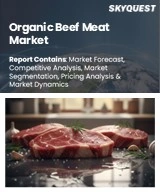
|
시장보고서
상품코드
1509741
유기농 소고기 시장 : 세계 산업 분석, 규모, 점유율, 성장, 동향, 예측(2031년) - 소고기 유형별, 유통 채널별, 지역별Organic Beef Market - Global Industry Analysis, Size, Share, Growth, Trends, and Forecast 2031 - By Product, Technology, Grade, Application, End-user, Region: (North America, Europe, Asia Pacific, Latin America and Middle East and Africa) |
||||||

세계 유기농 소고기 시장 규모는 강력한 성장 궤도에 올라 2024년 187억 9,000만 달러에 달하고, 2031년에는 312억 8,000만 달러로 급증할 것으로 예상되며, 연평균 7.5%의 견조한 성장세를 보일 것으로 전망됩니다. 이러한 성장의 원동력은 건강 지향적이고 환경 친화적인 소비자의 증가로 인한 전 세계 유기농 제품 소비의 증가에 기인합니다. 유기농 소고기의 건강 및 환경적 이점에 대한 인식이 높아지면서 유기농 소고기로의 전환이 가속화되고 있습니다. 또한, 소매 체인을 통해 유기농 소고기를 쉽게 구할 수 있게 된 것도 세계 시장 매출을 크게 증가시킬 것으로 예상됩니다.
소비자 라이프스타일의 변화와 노동 인구의 증가로 간편식에 대한 수요가 급증하고 있습니다. 유기농 소고기 생산업체들은 이러한 추세를 이용하여 소비자층을 확대하기 위해 다양한 조리된 제품을 제공하고 있습니다. 유기농 소고기 부문의 주요 업체들은 다진 고기, 패티, 척, 스테이크용 소고기 등 가공품을 제공하며 제품 다양화를 꾀하고 있습니다. 또한, 유기농 소고기 공급업체들은 유기농 소고기로 만든 식사 옵션을 추가하여 건강 지향적인 소비자들에게 대응하고 있으며, E-Commerce 플랫폼에서 유기농 소고기 제품의 존재감이 높아진 것도 수요 확대에 기여하고 있습니다.
건강한 라이프스타일과 깨끗한 식습관에 대한 인식이 높아지면서 유기농 식품 시장에 긍정적인 영향을 미치고 있습니다. 그 결과, 레스토랑과 퀵서비스 레스토랑(QSR)을 포함한 외식업체들은 더 많은 고객을 유치하고 매출을 늘리기 위해 유기농 식품을 메뉴에 포함시키고 있습니다. 유기농 식품의 판매가 용이해짐에 따라, 레스토랑들은 유기농 트렌드를 도입할 수 있게 되었고, 건강상의 이점이 있고 농약을 사용하지 않은 농장에서 생산된 신선한 식품으로 고객들을 끌어들일 수 있게 되었습니다. 유기농 식품은 또한 기존 식품보다 식욕을 돋우는 것으로 간주되어 레스토랑 메뉴에 유기농 옵션을 추가하는 것을 더욱 촉진하고 있습니다.
이 보고서는 세계 유기농 소고기 시장에 대해 조사했으며, 시장 개요와 함께 소고기 종류별, 유통 채널별, 지역별 동향, 시장 진입 기업의 경쟁 동향 등을 제공합니다.
목차
제1장 주요 요약
제2장 시장 개요
- 시장 정의와 세분화
- 시장 역학
- 밸류체인 분석
- Porter's Five Forces 분석
- COVID-19의 영향 분석
- 우크라이나·러시아 분쟁의 영향
- 경제 개요
- PESTLE 분석
제3장 생산량과 무역 통계, 2018-2023년
제4장 가격 분석, 2023년
제5장 세계의 유기농 소고기 시장 전망, 2018-2031년
- 세계의 유기농 소고기 시장 전망, 소고기 유형별, 금액(10억 달러), 수량(톤), 2018-2031년
- 세계의 유기농 소고기 시장 전망, 유통 채널별, 금액(10억 달러), 수량(톤), 2018-2031년
- 세계의 유기농 소고기 시장 전망, 지역별, 금액(10억 달러), 수량(톤), 2018-2031년
제6장 북미의 유기농 소고기 시장 전망, 2018-2031년
제7장 유럽의 유기농 소고기 시장 전망, 2018-2031년
제8장 아시아태평양의 유기농 소고기 시장 전망, 2018-2031년
제9장 라틴아메리카의 유기농 소고기 시장 전망, 2018-2031년
제10장 중동 및 아프리카의 유기농 소고기 시장 전망, 2018-2031년
제11장 경쟁 상황
- 기업 시장 점유율 분석, 2023년
- 경쟁 대시보드
- 기업 개요
- Danish Crown
- Meyer Natural Foods
- OBE Organics
- Eversfield Organic Ltd.
- Blackwood Valley Beef
- JBS Global
- Tyson Foods Inc.
- Perdue Farms
- Australian Organic Meats Group Pty. Ltd.
- Verde Farms, LLC
- Arcadian Organic & Natural Meat CO Pty. Ltd.
제12장 부록
ksm 24.07.16The global organic beef market is on a strong growth trajectory, with market value projections reaching $18.79 billion in 2024 and expected to soar to $31.28 billion by 2031, propelled by a robust CAGR of 7.5%. This growth is fueled by the increasing global consumption of organic products, driven by a growing number of health-conscious and environmentally aware consumers. The shift towards organically produced beef is gaining momentum due to heightened awareness of its health benefits and environmental advantages. Moreover, the easy availability of organic beef through retail chains is anticipated to significantly drive global market sales.
Product Diversification Enhancing Market Reach
Changes in consumer lifestyles and the growing working population have led to a surge in the demand for convenience foods. Organic beef producers are capitalizing on this trend by offering a variety of ready-to-eat products to expand their consumer base. Leading players in the organic beef sector are diversifying their product offerings with processed items such as ground beef, patties, chucks, and steak beef. Additionally, organic beef providers are catering to health-conscious consumers by including meal options featuring organic beef. The increased presence of organic beef products on e-commerce platforms also contributes to rising demand.
Growth in Hospitality Sector
The growing awareness of healthy lifestyles and clean eating has positively impacted the market for organic food. Consequently, food service providers, including restaurants and quick-service restaurants (QSRs), are incorporating organic foods into their menus to attract more customers and boost sales. The ease of marketing organic food has enabled restaurants to adopt the organic trend, drawing customers towards farm-fresh food that offers health benefits and is free from pesticides. Organic food is also considered more appetizing than conventional food, further driving the incorporation of organic options in restaurant menus.
Increasing Demand for Transparency and Traceability
Consumers' desire to understand the origins and production processes of their food has increased significantly in recent years. This demand for product transparency is high, with consumers tracing the journey and nature of their food. The emphasis on food safety issues has raised awareness of potential safety risks associated with food consumption. With meat product contamination being a common issue, there is an increased demand for transparency in organic meat, such as organic beef. Regulatory labeling and traceability are becoming more important as consumers seek assurance that livestock is raised according to recommended norms.
Government Support Driving Organic Food Production
Government initiatives are increasingly encouraging the production and consumption of organic products to reduce environmental degradation. Several programs, such as the Cattleman's Financial Corporation in Canada, provide financial assistance for the feeder and breeding of livestock, acknowledging the higher costs associated with organic cattle feed. Increased government support and encouragement for organic food products present opportunities for existing manufacturers to expand and increase the penetration of organic products like organic beef, along with enhanced export opportunities.
Challenges in Organic Beef Production
Despite the growing market, organic beef production faces challenges due to stringent guidelines. According to USDA regulations, animals used for producing organic meat must be raised using organic management practices and separated from conventional livestock. The use of antibiotics and growth-enhancing hormones is prohibited. These regulations, coupled with lower production efficiency, increased labor costs, and higher production and marketing expenses, result in reduced profit margins for manufacturers. Organic beef producers must choose between grain-fed or grass-fed organic systems, both of which come with added costs and risks.
Regional Market Insights
North America and Europe are expected to hold prominent market value shares in the global organic beef market. European consumers prioritize health and wellness, leading to increased consumption of chemical-free and organic food products. Beef is a key meat product in Europe, further driving the consumption rate of organic beef. North America also exhibits a leading market share, attributed to the higher number of organic beef manufacturers and the increasing adoption of organic meat products by consumers. The millennial consumer base in the region is particularly demanding high-protein and healthy food products.
Segment Growth Insights
By type, processed meat is expected to show the highest market value share in the global organic beef market. The higher consumption pattern of processed meat among consumers through various food service channels is a key contributing factor. Ground beef is projected to witness the highest CAGR among processed meat sub-segments, owing to its higher utilization in processed food products.
Distribution Channel Insights
Among business-to-consumer segments, online retailers and independent retailers are expected to exhibit beneficial growth rates in the global organic beef market. The presence of products on online sales channels makes it convenient for both manufacturers and consumers to purchase and sell products, driving market growth.
Competitive Landscape
Manufacturers are increasing the presence of organic beef products on online retail channels to meet consumer demand. They are also keen on catering to the growing health-conscious consumer base, which is increasingly adopting organic products, including organic beef. For instance, Blackwood Valley has partnered with various suppliers and distributors to reach a wider customer base. Neat Meat has designed recyclable packaging for its HARMONY brand to attract environmentally conscious customers. Mangapiri Downs Organicstud Farm introduced a new Ram Catalogue to attract customers seeking affordable organic beef. In 2017, Thomas Foods International invested significantly in meat processing infrastructure in Australia to incorporate sustainable practices and expand its business.
Organic Beef Industry Research by Category
By Beef Type:
- Fresh Meat
- Processed Meat
- Ground Beef
- Steak Beef
- Chucks
- Patty
- Others
By Distribution Channel:
- Business to Business
- Business to Consumer
- Hypermarket/Supermarket
- Convenience Store
- Specialty Store
- Online Retail
- Other Retail Channels
By Region:
- North America
- Latin America
- Europe
- South Asia & Pacific
- East Asia
- Middle East & Africa
Table of Contents
1. Executive Summary
- 1.1. Global Organic Beef Market Snapshot
- 1.2. Future Projections
- 1.3. Key Market Trends
- 1.4. Regional Snapshot, by Value, 2023
- 1.5. Analyst Recommendations
2. Market Overview
- 2.1. Market Definitions and Segmentations
- 2.2. Market Dynamics
- 2.2.1. Drivers
- 2.2.2. Restraints
- 2.2.3. Market Opportunities
- 2.3. Value Chain Analysis
- 2.4. Porter's Five Forces Analysis
- 2.5. COVID-19 Impact Analysis
- 2.5.1. Supply
- 2.5.2. Demand
- 2.6. Impact of Ukraine-Russia Conflict
- 2.7. Economic Overview
- 2.7.1. World Economic Projections
- 2.8. PESTLE Analysis
3. Production Output and Trade Statistics, 2018 - 2023
- 3.1. Global Organic Beef Production Output, by Region, Value (US$ Bn) and Volume (Tons), 2018 - 2023
- 3.1.1. North America
- 3.1.2. Europe
- 3.1.3. Asia Pacific
- 3.1.4. Latin America
- 3.1.5. Middle East and Africa
4. Price Analysis, 2023
- 4.1. Global Average Price Analysis, by Beef Type, US$ Per Ton, 2023
- 4.2. Prominent Factor Affecting Organic Beef Prices
- 4.3. Global Average Price Analysis, by Region, US$ Per Ton, 2023
5. Global Organic Beef Market Outlook, 2018 - 2031
- 5.1. Global Organic Beef Market Outlook, By Beef Type, Value (US$ Bn) and Volume (Tons), 2018 - 2031
- 5.1.1. Key Highlights
- 5.1.1.1. Fresh Meat
- 5.1.1.2. Processed Meat
- 5.1.1.2.1. Ground Beef
- 5.1.1.2.2. Chucks
- 5.1.1.2.3. Patty
- 5.1.1.2.4. Steak Beef
- 5.1.1.2.5. Others
- 5.1.1. Key Highlights
- 5.2. Global Organic Beef Market Outlook, By Distribution Channel, Value (US$ Bn) and Volume (Tons), 2018 - 2031
- 5.2.1. Key Highlights
- 5.2.1.1. Business to Business
- 5.2.1.2. Business to Consumer
- 5.2.1.2.1. Convenience Stores
- 5.2.1.2.2. Hypermarkets/Supermarkets
- 5.2.1.2.3. Online Retail
- 5.2.1.2.4. Specialty Stores
- 5.2.1.2.5. Others
- 5.2.1. Key Highlights
- 5.3. Global Organic Beef Market Outlook, by Region, Value (US$ Bn) and Volume (Tons), 2018 - 2031
- 5.3.1. Key Highlights
- 5.3.1.1. North America
- 5.3.1.2. Europe
- 5.3.1.3. Asia Pacific
- 5.3.1.4. Latin America
- 5.3.1.5. Middle East & Africa
- 5.3.1. Key Highlights
6. North America Organic Beef Market Outlook, 2018 - 2031
- 6.1. North America Organic Beef Market Outlook, By Beef Type, Value (US$ Bn) and Volume (Tons), 2018 - 2031
- 6.1.1. Key Highlights
- 6.1.1.1. Fresh Meat
- 6.1.1.2. Processed Meat
- 6.1.1.2.1. Ground Beef
- 6.1.1.2.2. Chucks
- 6.1.1.2.3. Patty
- 6.1.1.2.4. Steak Beef
- 6.1.1.2.5. Others
- 6.1.1. Key Highlights
- 6.2. North America Organic Beef Market Outlook, By Distribution Channel, Value (US$ Bn) and Volume (Tons), 2018 - 2031
- 6.2.1. Key Highlights
- 6.2.1.1. Business to Business
- 6.2.1.2. Business to Consumer
- 6.2.1.2.1. Convenience Stores
- 6.2.1.2.2. Hypermarkets/Supermarkets
- 6.2.1.2.3. Online Retail
- 6.2.1.2.4. Specialty Stores
- 6.2.1.2.5. Others
- 6.2.1. Key Highlights
- 6.3. North America Organic Beef Market Outlook, by Country, Value (US$ Bn) and Volume (Tons), 2018 - 2031
- 6.3.1. Key Highlights
- 6.3.1.1. U.S. Organic Beef Market By Beef Type, Value (US$ Bn) and Volume (Tons), 2018 - 2031
- 6.3.1.2. U.S. Organic Beef Market By Distribution Channel, Value (US$ Bn) and Volume (Tons), 2018 - 2031
- 6.3.1.3. Canada Organic Beef Market By Beef Type, Value (US$ Bn) and Volume (Tons), 2018 - 2031
- 6.3.1.4. Canada Organic Beef Market By Distribution Channel, Value (US$ Bn) and Volume (Tons), 2018 - 2031
- 6.3.2. BPS Analysis/Market Attractiveness Analysis
- 6.3.1. Key Highlights
7. Europe Organic Beef Market Outlook, 2018 - 2031
- 7.1. Europe Organic Beef Market Outlook, By Beef Type, Value (US$ Bn) and Volume (Tons), 2018 - 2031
- 7.1.1. Key Highlights
- 7.1.1.1. Fresh Meat
- 7.1.1.2. Processed Meat
- 7.1.1.2.1. Ground Beef
- 7.1.1.2.2. Chucks
- 7.1.1.2.3. Patty
- 7.1.1.2.4. Steak Beef
- 7.1.1.2.5. Others
- 7.1.1. Key Highlights
- 7.2. Europe Organic Beef Market Outlook, By Distribution Channel, Value (US$ Bn) and Volume (Tons), 2018 - 2031
- 7.2.1. Key Highlights
- 7.2.1.1. Business to Business
- 7.2.1.2. Business to Consumer
- 7.2.1.2.1. Convenience Stores
- 7.2.1.2.2. Hypermarkets/Supermarkets
- 7.2.1.2.3. Online Retail
- 7.2.1.2.4. Specialty Stores
- 7.2.1.2.5. Others
- 7.2.1. Key Highlights
- 7.3. Europe Organic Beef Market Outlook, by Country, Value (US$ Bn) and Volume (Tons), 2018 - 2031
- 7.3.1. Key Highlights
- 7.3.1.1. Germany Organic Beef Market By Beef Type, Value (US$ Bn) and Volume (Tons), 2018 - 2031
- 7.3.1.2. Germany Organic Beef Market By Distribution Channel, Value (US$ Bn) and Volume (Tons), 2018 - 2031
- 7.3.1.3. U.K. Organic Beef Market By Beef Type, Value (US$ Bn) and Volume (Tons), 2018 - 2031
- 7.3.1.4. U.K. Organic Beef Market By Distribution Channel, Value (US$ Bn) and Volume (Tons), 2018 - 2031
- 7.3.1.5. France Organic Beef Market By Beef Type, Value (US$ Bn) and Volume (Tons), 2018 - 2031
- 7.3.1.6. France Organic Beef Market By Distribution Channel, Value (US$ Bn) and Volume (Tons), 2018 - 2031
- 7.3.1.7. Italy Organic Beef Market By Beef Type, Value (US$ Bn) and Volume (Tons), 2018 - 2031
- 7.3.1.8. Italy Organic Beef Market By Distribution Channel, Value (US$ Bn) and Volume (Tons), 2018 - 2031
- 7.3.1.9. Turkiye Organic Beef Market By Beef Type, Value (US$ Bn) and Volume (Tons), 2018 - 2031
- 7.3.1.10. Turkiye Organic Beef Market By Distribution Channel, Value (US$ Bn) and Volume (Tons), 2018 - 2031
- 7.3.1.11. Russia Organic Beef Market By Beef Type, Value (US$ Bn) and Volume (Tons), 2018 - 2031
- 7.3.1.12. Russia Organic Beef Market By Distribution Channel, Value (US$ Bn) and Volume (Tons), 2018 - 2031
- 7.3.1.13. Rest of Europe Organic Beef Market By Beef Type, Value (US$ Bn) and Volume (Tons), 2018 - 2031
- 7.3.1.14. Rest of Europe Organic Beef Market By Distribution Channel, Value (US$ Bn) and Volume (Tons), 2018 - 2031
- 7.3.2. BPS Analysis/Market Attractiveness Analysis
- 7.3.1. Key Highlights
8. Asia Pacific Organic Beef Market Outlook, 2018 - 2031
- 8.1. Asia Pacific Organic Beef Market Outlook, By Beef Type, Value (US$ Bn) and Volume (Tons), 2018 - 2031
- 8.1.1. Key Highlights
- 8.1.1.1. Fresh Meat
- 8.1.1.2. Processed Meat
- 8.1.1.2.1. Ground Beef
- 8.1.1.2.2. Chucks
- 8.1.1.2.3. Patty
- 8.1.1.2.4. Steak Beef
- 8.1.1.2.5. Others
- 8.1.1. Key Highlights
- 8.2. Asia Pacific Organic Beef Market Outlook, By Distribution Channel, Value (US$ Bn) and Volume (Tons), 2018 - 2031
- 8.2.1. Key Highlights
- 8.2.1.1. Business to Business
- 8.2.1.2. Business to Consumer
- 8.2.1.2.1. Convenience Stores
- 8.2.1.2.2. Hypermarkets/Supermarkets
- 8.2.1.2.3. Online Retail
- 8.2.1.2.4. Specialty Stores
- 8.2.1.2.5. Others
- 8.2.1. Key Highlights
- 8.3. Asia Pacific Organic Beef Market Outlook, by Country, Value (US$ Bn) and Volume (Tons), 2018 - 2031
- 8.3.1. Key Highlights
- 8.3.1.1. China Organic Beef Market By Beef Type, Value (US$ Bn) and Volume (Tons), 2018 - 2031
- 8.3.1.2. China Organic Beef Market By Distribution Channel, Value (US$ Bn) and Volume (Tons), 2018 - 2031
- 8.3.1.3. Japan Organic Beef Market By Beef Type, Value (US$ Bn) and Volume (Tons), 2018 - 2031
- 8.3.1.4. Japan Organic Beef Market By Distribution Channel, Value (US$ Bn) and Volume (Tons), 2018 - 2031
- 8.3.1.5. South Korea Organic Beef Market By Beef Type, Value (US$ Bn) and Volume (Tons), 2018 - 2031
- 8.3.1.6. South Korea Organic Beef Market By Distribution Channel, Value (US$ Bn) and Volume (Tons), 2018 - 2031
- 8.3.1.7. India Organic Beef Market By Beef Type, Value (US$ Bn) and Volume (Tons), 2018 - 2031
- 8.3.1.8. India Organic Beef Market By Distribution Channel, Value (US$ Bn) and Volume (Tons), 2018 - 2031
- 8.3.1.9. Southeast Asia Organic Beef Market By Beef Type, Value (US$ Bn) and Volume (Tons), 2018 - 2031
- 8.3.1.10. Southeast Asia Organic Beef Market By Distribution Channel, Value (US$ Bn) and Volume (Tons), 2018 - 2031
- 8.3.1.11. Rest of Asia Pacific Organic Beef Market By Beef Type, Value (US$ Bn) and Volume (Tons), 2018 - 2031
- 8.3.1.12. Rest of Asia Pacific Organic Beef Market By Distribution Channel, Value (US$ Bn) and Volume (Tons), 2018 - 2031
- 8.3.2. BPS Analysis/Market Attractiveness Analysis
- 8.3.1. Key Highlights
9. Latin America Organic Beef Market Outlook, 2018 - 2031
- 9.1. Latin America Organic Beef Market Outlook, By Beef Type, Value (US$ Bn) and Volume (Tons), 2018 - 2031
- 9.1.1. Key Highlights
- 9.1.1.1. Fresh Meat
- 9.1.1.2. Processed Meat
- 9.1.1.2.1. Ground Beef
- 9.1.1.2.2. Chucks
- 9.1.1.2.3. Patty
- 9.1.1.2.4. Steak Beef
- 9.1.1.2.5. Others
- 9.1.1. Key Highlights
- 9.2. Latin America Organic Beef Market Outlook, By Distribution Channel, Value (US$ Bn) and Volume (Tons), 2018 - 2031
- 9.2.1. Key Highlights
- 9.2.1.1. Business to Business
- 9.2.1.2. Business to Consumer
- 9.2.1.2.1. Convenience Stores
- 9.2.1.2.2. Hypermarkets/Supermarkets
- 9.2.1.2.3. Online Retail
- 9.2.1.2.4. Specialty Stores
- 9.2.1.2.5. Others
- 9.2.1. Key Highlights
- 9.3. Latin America Organic Beef Market Outlook, by Country, Value (US$ Bn) and Volume (Tons), 2018 - 2031
- 9.3.1. Key Highlights
- 9.3.1.1. Brazil Organic Beef Market By Beef Type, Value (US$ Bn) and Volume (Tons), 2018 - 2031
- 9.3.1.2. Brazil Organic Beef Market By Distribution Channel, Value (US$ Bn) and Volume (Tons), 2018 - 2031
- 9.3.1.3. Mexico Organic Beef Market By Beef Type, Value (US$ Bn) and Volume (Tons), 2018 - 2031
- 9.3.1.4. Mexico Organic Beef Market By Distribution Channel, Value (US$ Bn) and Volume (Tons), 2018 - 2031
- 9.3.1.5. Argentina Organic Beef Market By Beef Type, Value (US$ Bn) and Volume (Tons), 2018 - 2031
- 9.3.1.6. Argentina Organic Beef Market By Distribution Channel, Value (US$ Bn) and Volume (Tons), 2018 - 2031
- 9.3.1.7. Rest of Latin America Organic Beef Market By Beef Type, Value (US$ Bn) and Volume (Tons), 2018 - 2031
- 9.3.1.8. Rest of Latin America Organic Beef Market By Distribution Channel, Value (US$ Bn) and Volume (Tons), 2018 - 2031
- 9.3.2. BPS Analysis/Market Attractiveness Analysis
- 9.3.1. Key Highlights
10. Middle East & Africa Organic Beef Market Outlook, 2018 - 2031
- 10.1. Middle East & Africa Organic Beef Market Outlook, By Beef Type, Value (US$ Bn) and Volume (Tons), 2018 - 2031
- 10.1.1. Key Highlights
- 10.1.1.1. Fresh Meat
- 10.1.1.2. Processed Meat
- 10.1.1.2.1. Ground Beef
- 10.1.1.2.2. Chucks
- 10.1.1.2.3. Patty
- 10.1.1.2.4. Steak Beef
- 10.1.1.2.5. Others
- 10.1.1. Key Highlights
- 10.2. Middle East & Africa Organic Beef Market Outlook, By Distribution Channel, Value (US$ Bn) and Volume (Tons), 2018 - 2031
- 10.2.1. Key Highlights
- 10.2.1.1. Business to Business
- 10.2.1.2. Business to Consumer
- 10.2.1.2.1. Convenience Stores
- 10.2.1.2.2. Hypermarkets/Supermarkets
- 10.2.1.2.3. Online Retail
- 10.2.1.2.4. Specialty Stores
- 10.2.1.2.5. Others
- 10.2.1. Key Highlights
- 10.3. Middle East & Africa Organic Beef Market Outlook, by Country, Value (US$ Bn) and Volume (Tons), 2018 - 2031
- 10.3.1. Key Highlights
- 10.3.1.1. GCC Organic Beef Market By Beef Type, Value (US$ Bn) and Volume (Tons), 2018 - 2031
- 10.3.1.2. GCC Organic Beef Market By Distribution Channel, Value (US$ Bn) and Volume (Tons), 2018 - 2031
- 10.3.1.3. South Africa Organic Beef Market By Beef Type, Value (US$ Bn) and Volume (Tons), 2018 - 2031
- 10.3.1.4. South Africa Organic Beef Market By Distribution Channel, Value (US$ Bn) and Volume (Tons), 2018 - 2031
- 10.3.1.5. Egypt Organic Beef Market By Beef Type, Value (US$ Bn) and Volume (Tons), 2018 - 2031
- 10.3.1.6. Egypt Organic Beef Market By Distribution Channel, Value (US$ Bn) and Volume (Tons), 2018 - 2031
- 10.3.1.7. Nigeria Organic Beef Market By Beef Type, Value (US$ Bn) and Volume (Tons), 2018 - 2031
- 10.3.1.8. Nigeria Organic Beef Market By Distribution Channel, Value (US$ Bn) and Volume (Tons), 2018 - 2031
- 10.3.1.9. Rest of Middle East & Africa Organic Beef Market By Beef Type, Value (US$ Bn) and Volume (Tons), 2018 - 2031
- 10.3.1.10. Rest of Middle East & Africa Organic Beef Market By Distribution Channel, Value (US$ Bn) and Volume (Tons), 2018 - 2031
- 10.3.2. BPS Analysis/Market Attractiveness Analysis
- 10.3.1. Key Highlights
11. Competitive Landscape
- 11.1. Company Market Share Analysis, 2023
- 11.2. Competitive Dashboard
- 11.3. Company Profiles
- 11.3.1. Danish Crown
- 11.3.1.1. Company Overview
- 11.3.1.2. Product Portfolio
- 11.3.1.3. Financial Overview
- 11.3.1.4. Business Strategies and Development
- 11.3.2. Meyer Natural Foods
- 11.3.2.1. Company Overview
- 11.3.2.2. Product Portfolio
- 11.3.2.3. Financial Overview
- 11.3.2.4. Business Strategies and Development
- 11.3.3. OBE Organics
- 11.3.3.1. Company Overview
- 11.3.3.2. Product Portfolio
- 11.3.3.3. Financial Overview
- 11.3.3.4. Business Strategies and Development
- 11.3.4. Eversfield Organic Ltd.
- 11.3.4.1. Company Overview
- 11.3.4.2. Product Portfolio
- 11.3.4.3. Financial Overview
- 11.3.4.4. Business Strategies and Development
- 11.3.5. Blackwood Valley Beef
- 11.3.5.1. Company Overview
- 11.3.5.2. Product Portfolio
- 11.3.5.3. Financial Overview
- 11.3.5.4. Business Strategies and Development
- 11.3.6. JBS Global
- 11.3.6.1. Company Overview
- 11.3.6.2. Product Portfolio
- 11.3.6.3. Financial Overview
- 11.3.6.4. Business Strategies and Development
- 11.3.7. Tyson Foods Inc.
- 11.3.7.1. Company Overview
- 11.3.7.2. Product Portfolio
- 11.3.7.3. Financial Overview
- 11.3.7.4. Business Strategies and Development
- 11.3.8. Perdue Farms
- 11.3.8.1. Company Overview
- 11.3.8.2. Product Portfolio
- 11.3.8.3. Financial Overview
- 11.3.8.4. Business Strategies and Development
- 11.3.9. Australian Organic Meats Group Pty. Ltd.
- 11.3.9.1. Company Overview
- 11.3.9.2. Product Portfolio
- 11.3.9.3. Financial Overview
- 11.3.9.4. Business Strategies and Development
- 11.3.10. Verde Farms, LLC
- 11.3.10.1. Company Overview
- 11.3.10.2. Product Portfolio
- 11.3.10.3. Financial Overview
- 11.3.10.4. Business Strategies and Development
- 11.3.11. Arcadian Organic & Natural Meat CO Pty. Ltd.
- 11.3.11.1. Company Overview
- 11.3.11.2. Product Portfolio
- 11.3.11.3. Financial Overview
- 11.3.11.4. Business Strategies and Development
- 11.3.1. Danish Crown
12. Appendix
- 12.1. Research Methodology
- 12.2. Report Assumptions
- 12.3. Acronyms and Abbreviations