|
시장보고서
상품코드
1971111
비근침윤성 방광암 시장 : 시장 분석 및 예측 - 유형별, 제품별, 기술별, 용도별, 최종 사용자별, 병기별, 프로세스별, 서비스별, 디바이스별, 솔루션별(-2035년)Non Muscle Invasive Bladder Cancer Market Analysis and Forecast to 2035: Type, Product, Technology, Application, End User, Stage, Process, Services, Device, Solutions |
||||||

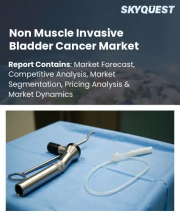
비근침윤성 방광암 시장은 2024년 54억 달러에서 2034년까지 216억 달러로 확대될 전망이며, CAGR 약 14.9%를 나타낼 것으로 예측됩니다. 비근침윤성 방광암 시장은 근육층에 침윤하지 않은 방광암에 대한 치료법 및 진단 도구를 포괄하며 조기 단계의 개입에 초점을 맞추었습니다. 여기에는 방광내 요법, 면역관문 억제제 및 고급 이미징 기술이 포함됩니다. 발병률 증가와 표적 요법의 진보가 시장 성장을 가속하고 있으며, 정밀의료와 환자 결과의 개선이 중요합니다.
비근침윤성 방광암 시장은 진단 및 치료 기술의 진보에 의해 진화를 계속하고 있습니다. 치료 분야가 가장 높은 성장률을 나타내고 화학요법 및 면역요법이 조기암 관리에 있어서 유효성으로부터 주도적 역할을 담당하고 있습니다. 카르멧 겔란균(BCG) 요법은 여전히 기초를 이루는 한편, 새로운 면역요법제가 주목을 받고 있습니다. 방광경 검사와 소변 세포 진단을 중심으로 한 진단 분야는 정확하고 조기 검출 요구에 밀접하게 밀려 나오고 있습니다. 분자진단 및 액체 생검과 같은 신기술은 비침습적이고 정밀한 진단 옵션을 제공함으로써 이 분야에 혁명을 가져올 전망입니다. 맞춤형 의료의 상승은 치료 성과를 높이는 표적 요법의 개발을 촉진합니다. 게다가 의식 증가와 정기적인 스크리닝 노력이 시장 성장에 기여할 것으로 기대됩니다. 전략적 제휴와 연구 투자는 혁신을 추진하고, 시장이 역동적이고 지속적인 진화하는 환자의 요구에 대응하는 데 매우 중요합니다.
| 시장 세분화 | |
|---|---|
| 유형별 | 마이그레이션 상피암, 편평상피암, 선암 |
| 제품별 | 방광내 요법, 화학요법제, 면역요법제 |
| 기술별 | 내시경 기술, 레이저 절제, 광선 역학 요법 |
| 용도별 | 진단, 치료, 모니터링, 조사 |
| 최종 사용자별 | 병원, 전문 클리닉, 외래수술센터(ASC), 연구 기관 |
| 병기별 | 스테이지 0a(비침윤성 유두암), 스테이지 0is(상피내암), 스테이지 I, 스테이지 II |
| 프로세스별 | 스크리닝, 치료 절차, 후속 관리 |
| 서비스별 | 상담 서비스, 진단 서비스, 치료 서비스 |
| 디바이스별 | 방광경, 절제경, 요도 카테터 |
| 솔루션별 | 환자 관리 시스템, 임상 의사 결정 지원 시스템, 데이터 분석 |
시장 개황 :
비근침윤성 방광암 시장은 시장 점유율의 견조한 확대와 혁신적인 가격 전략을 특징으로 하는 역동적인 단계를 맞이하고 있습니다. 신제품의 발매에 의해 치료 옵션이 대폭 확충되고, 각사는 선진적인 제제 기술과 전달 메커니즘에 주력하고 있습니다. 이 전략적 포지셔닝을 통해 기업은 미충족 요구에 대응하고 경쟁 우위를 키우고 있습니다. 또한 제품 차별화 및 시장 확대의 추진에 있어 매우 중요한 역할을 하는 전략적 제휴와 파트너십에 의해 시장 상황가 더욱 충실해지고 있습니다. 경쟁 벤치마킹 분석에 의하면 주요 기업이 경쟁 우위를 유지하기 위해 연구 개발에 적극적으로 임하는 집중 시장 구조가 분명합니다. 규제의 영향이 시장 동향을 형성하고 있으며, 엄격한 지침이 제품의 효율성과 안전성을 보장합니다. 북미와 유럽과 같은 지역은 유리한 규제 프레임워크 및 높은 헬스케어 지출에 의해 지원되고 최첨단을 달리고 있습니다. 아시아태평양의 신흥 시장은 의식이 높아지고 헬스케어 인프라가 개선됨에 따라 기세가 커지고 있습니다. 기술의 진보와 맞춤형 의료에 대한 관심 증가에 힘입어 시장 전망은 유망합니다.
주요 동향 및 촉진요인 :
비근침윤성 방광암 시장은 세계의 방광암 발생률 상승으로 현저한 성장을 이루고 있습니다. 주요 동향으로는 강화 방광경 검사나 요중 바이오마커 등의 진단 기술의 진보에 의해 조기 발견률이 향상되고 있다는 점을 들 수 있습니다. 회복 기간의 단축과 환자 결과의 개선을 초래하는 저침습 수술의 보급 확대도 또 다른 트렌드입니다. 게다가, 새로운 면역요법 및 표적요법의 개발이 진행되고, 보다 맞춤 치료 옵션이 제공됨으로써, 시장은 혜택을 받고 있습니다. 신규 약제나 치료법의 규제 당국에 의한 승인이 시장 확대를 가속시키고 있습니다. 환자의 의식 향상 및 지원 활동에 의해 생활의 질과 생존율의 향상을 요구하는 분들 사이에 혁신적인 치료 솔루션에 대한 수요가 높아지고 있습니다. 헬스케어 인프라가 발전하고 진보된 치료에 대한 접근이 확대되고 있는 신흥 시장에는 많은 기회가 존재합니다. 차세대 치료의 연구 개발에 투자하는 기업은 큰 시장 점유율을 얻는 태세를 갖추고 있습니다. 디지털 건강 기술과 원격 의료의 통합은 환자 관리와 후속 관리를 강화하고 시장 성장을 더욱 촉진하고 있습니다.
성장 억제요인 및 과제 :
비근침윤성 방광암 시장은 몇 가지 심각한 제약 및 과제에 직면하고 있습니다. 주요 제약은 진단 및 치료 절차의 높은 비용입니다. 이 경제적 부담은 특히 개발 도상 지역에서 환자의 접근을 제한하고 시장 확대를 막고 있습니다. 또한 엄격한 승인 프로세스가 혁신적인 치료의 도입을 지연시키는 등 규제 과제가 존재합니다. 또, 일반 시민들 사이에서 비근침윤성 방광암에 대한 인지도가 현저히 낮은 것도 과제입니다. 이로 인해 진단이 지연되고 치료 효과가 저하되는 결과를 초래합니다. 또한 보험 적용 범위의 한계는 시장의 장벽이 되고 있으며, 의료 서비스 제공업체가 선진 치료 옵션을 채택하는 것을 방해하고 있습니다. 기존 치료에 대한 환자 반응의 편차도 과제이며, 표준화를 어렵게 하는 맞춤형 치료 접근법이 요구되고 있습니다. 마지막으로, 최신의 진단 및 치료 기술에 정통한 헬스케어 전문가의 부족이 시장의 발판이 되고 있습니다. 이 인력 부족은 건강 관리의 질에 영향을 미치고 신기술의 도입을 늦추고 있습니다. 이러한 요인들이 결합되어 시장 성장에 중대한 장벽이 되고 있습니다.
목차
제1장 주요 요약
제2장 시장 하이라이트
제3장 시장 역학
- 거시경제 분석
- 시장 동향
- 시장 성장 촉진요인
- 시장 기회
- 시장 성장 억제요인
- CAGR : 성장 분석
- 영향 분석
- 신흥 시장
- 기술 로드맵
- 전략적 프레임워크
제4장 부문 분석
- 시장 규모 및 예측 : 유형별
- 이행 상피암
- 편평상피암
- 선암암
- 시장 규모 및 예측 : 제품별
- 방광내 요법
- 화학요법제
- 면역요법제
- 시장 규모 및 예측 : 기술별
- 내시경적 치료법
- 레이저 어블레이션
- 광선역학요법
- 시장 규모 및 예측 : 용도별
- 진단
- 치료
- 모니터링
- 조사
- 시장 규모 및 예측 : 최종 사용자별
- 병원
- 전문 클리닉
- 외래수술센터(ASC)
- 연구기관
- 시장 규모 및 예측 : 병기별
- 스테이지 0a(비침윤성 유두암)
- 스테이지 0is(상피내암)
- 스테이지 I
- 스테이지 II
- 시장 규모 및 예측 : 프로세스별
- 스크리닝
- 치료 절차
- 경과 관찰
- 시장 규모 및 예측 : 서비스별
- 컨설팅 서비스
- 진단 서비스
- 치료 서비스
- 시장 규모 및 예측 : 디바이스별
- 방광경
- 내시경용 절제기
- 요도 카테터
- 시장 규모 및 예측 : 솔루션별
- 환자 관리 시스템
- 임상 의사 결정 지원 시스템
- 데이터 분석
제5장 지역별 분석
- 북미
- 미국
- 캐나다
- 멕시코
- 라틴아메리카
- 브라질
- 아르헨티나
- 기타 라틴아메리카
- 아시아태평양
- 중국
- 인도
- 한국
- 일본
- 호주
- 대만
- 기타 아시아태평양
- 유럽
- 독일
- 프랑스
- 영국
- 스페인
- 이탈리아
- 기타 유럽
- 중동 및 아프리카
- 사우디아라비아
- 아랍에미리트(UAE)
- 남아프리카
- 서브 사하라 아프리카
- 기타 중동 및 아프리카
제6장 시장 전략
- 수요 및 공급의 갭 분석
- 무역 및 물류 상의 제약
- 가격, 비용 및 마진의 동향
- 시장 침투
- 소비자 분석
- 규제 개요
제7장 경쟁 정보
- 시장 포지셔닝
- 시장 점유율
- 경쟁 벤치마킹
- 주요 기업의 전략
제8장 기업 프로파일
- Ferring Pharmaceuticals
- Telix Pharmaceuticals
- UroGen Pharma
- Instil Bio
- Imagin Medical
- Sesen Bio
- Immunis
- Astellas Pharma
- BioCancell
- Viventia Bio
- Asieris Pharmaceuticals
- Anchiano Therapeutics
- Heat Biologics
- Taris Biomedical
- CG Oncology
제9장 당사에 대해서
AJY 26.04.06Non Muscle Invasive Bladder Cancer Market is anticipated to expand from $5.4 billion in 2024 to $21.6 billion by 2034, growing at a CAGR of approximately 14.9%. The Non Muscle Invasive Bladder Cancer Market encompasses treatments and diagnostic tools for bladder cancers not invading muscle tissue, focusing on early-stage interventions. It includes intravesical therapies, immune checkpoint inhibitors, and advanced imaging techniques. Rising incidence rates and advancements in targeted therapies are propelling market growth, emphasizing precision medicine and improved patient outcomes.
The Non-Muscle Invasive Bladder Cancer Market is evolving, propelled by advancements in diagnostic and therapeutic techniques. The treatment segment is the top performer, with chemotherapy and immunotherapy leading due to their efficacy in early-stage cancer management. Bacillus Calmette-Gu\erin (BCG) therapy remains a cornerstone, while newer immunotherapeutic agents are gaining prominence. The diagnostic segment, featuring cystoscopy and urine cytology, follows closely, driven by the need for accurate and early detection. Emerging technologies, such as molecular diagnostics and liquid biopsies, are set to revolutionize the landscape by offering non-invasive and precise diagnostic options. The rise of personalized medicine is fostering the development of targeted therapies, enhancing treatment outcomes. Additionally, increasing awareness and regular screening initiatives are expected to contribute to market growth. Strategic collaborations and research investments are pivotal in driving innovation, ensuring that the market remains dynamic and responsive to evolving patient needs.
| Market Segmentation | |
|---|---|
| Type | Transitional Cell Carcinoma, Squamous Cell Carcinoma, Adenocarcinoma |
| Product | Intravesical Therapy, Chemotherapy Drugs, Immunotherapy Drugs |
| Technology | Endoscopic Techniques, Laser Ablation, Photodynamic Therapy |
| Application | Diagnosis, Treatment, Monitoring, Research |
| End User | Hospitals, Specialty Clinics, Ambulatory Surgical Centers, Research Institutes |
| Stage | Stage 0a (Non-Invasive Papillary Carcinoma), Stage 0is (Carcinoma In Situ), Stage I, Stage II |
| Process | Screening, Therapeutic Procedures, Follow-up Care |
| Services | Consultation Services, Diagnostic Services, Therapeutic Services |
| Device | Cystoscopes, Resectoscopes, Urinary Catheters |
| Solutions | Patient Management Systems, Clinical Decision Support Systems, Data Analytics |
Market Snapshot:
The Non Muscle Invasive Bladder Cancer Market is witnessing a dynamic phase, characterized by a robust increase in market share and innovative pricing strategies. New product launches are significantly enhancing therapeutic options, with companies focusing on advanced formulations and delivery mechanisms. This strategic positioning is enabling firms to cater to unmet medical needs, thereby fostering a competitive edge. The market landscape is further enriched by strategic collaborations and partnerships, which are pivotal in driving product differentiation and expanding market reach. Competition benchmarking reveals a concentrated market with key players actively engaged in research and development to maintain their competitive stance. Regulatory influences are shaping the market trajectory, with stringent guidelines ensuring product efficacy and safety. Regions such as North America and Europe are at the forefront, driven by favorable regulatory frameworks and high healthcare expenditure. Emerging markets in Asia-Pacific are also gaining traction, propelled by increasing awareness and improved healthcare infrastructure. The market's future is promising, buoyed by technological advancements and a growing focus on personalized medicine.
Geographical Overview:
The Non Muscle Invasive Bladder Cancer (NMIBC) market is poised for significant growth across various regions, driven by advancements in treatment modalities and rising awareness. North America maintains a dominant position, attributed to high healthcare expenditure and robust research initiatives. The presence of leading pharmaceutical companies also bolsters market growth in this region. Europe follows closely, with increasing investments in healthcare infrastructure and a focus on innovative cancer therapies. Asia Pacific emerges as a promising growth pocket, propelled by the rising prevalence of bladder cancer and improvements in healthcare access. Countries like China and India are at the forefront, with government initiatives supporting cancer research and treatment accessibility. Latin America and the Middle East & Africa are gradually gaining traction. In Latin America, enhanced healthcare policies and awareness campaigns are driving market expansion. Meanwhile, the Middle East & Africa are recognizing the importance of early diagnosis and treatment, contributing to the market's growth trajectory.
Key Trends and Drivers:
The Non Muscle Invasive Bladder Cancer Market is experiencing substantial growth due to the rising incidence of bladder cancer globally. Key trends include advances in diagnostic techniques, such as enhanced cystoscopy and urine-based biomarkers, improving early detection rates. The increasing adoption of minimally invasive surgical procedures is another trend, offering reduced recovery times and improved patient outcomes. Furthermore, the market benefits from the development of novel immunotherapies and targeted therapies, providing more personalized treatment options. Regulatory approvals of new drugs and therapies are accelerating market expansion. Patient awareness and advocacy are driving demand for innovative treatment solutions, as individuals seek improved quality of life and survival rates. Opportunities abound in emerging markets where healthcare infrastructure is evolving, and access to advanced treatments is increasing. Companies investing in research and development of next-generation therapies are poised to capture significant market share. The integration of digital health technologies and telemedicine is also enhancing patient management and follow-up care, further propelling market growth.
Restraints and Challenges:
The Non Muscle Invasive Bladder Cancer Market encounters several significant restraints and challenges. A primary restraint is the high cost of diagnostic and therapeutic procedures. This financial burden limits accessibility for patients, particularly in developing regions, and constrains market expansion. Furthermore, the market faces regulatory challenges, with stringent approval processes delaying the introduction of innovative treatments. There is also a notable lack of awareness about non-muscle invasive bladder cancer among the general population. This results in late diagnoses and reduced treatment efficacy. Additionally, the market struggles with limited reimbursement policies, discouraging healthcare providers from adopting advanced treatment options. Another challenge is the variability in patient response to existing therapies, necessitating personalized treatment approaches that complicate standardization. Finally, the market is hindered by a shortage of skilled healthcare professionals trained in the latest diagnostic and therapeutic techniques. This shortage impacts the quality of care and slows the adoption of new technologies. Together, these factors present substantial obstacles to market growth.
Key Players:
Ferring Pharmaceuticals, Telix Pharmaceuticals, UroGen Pharma, Instil Bio, Imagin Medical, Sesen Bio, Immunis, Astellas Pharma, BioCancell, Viventia Bio, Asieris Pharmaceuticals, Anchiano Therapeutics, Heat Biologics, Taris Biomedical, CG Oncology
Research Scope:
- Estimates and forecasts the overall market size across type, application, and region.
- Provides detailed information and key takeaways on qualitative and quantitative trends, dynamics, business framework, competitive landscape, and company profiling.
- Identifies factors influencing market growth and challenges, opportunities, drivers, and restraints.
- Identifies factors that could limit company participation in international markets to help calibrate market share expectations and growth rates.
- Evaluates key development strategies like acquisitions, product launches, mergers, collaborations, business expansions, agreements, partnerships, and R&D activities.
- Analyzes smaller market segments strategically, focusing on their potential, growth patterns, and impact on the overall market.
- Outlines the competitive landscape, assessing business and corporate strategies to monitor and dissect competitive advancements.
Our research scope provides comprehensive market data, insights, and analysis across a variety of critical areas. We cover Local Market Analysis, assessing consumer demographics, purchasing behaviors, and market size within specific regions to identify growth opportunities. Our Local Competition Review offers a detailed evaluation of competitors, including their strengths, weaknesses, and market positioning. We also conduct Local Regulatory Reviews to ensure businesses comply with relevant laws and regulations. Industry Analysis provides an in-depth look at market dynamics, key players, and trends. Additionally, we offer Cross-Segmental Analysis to identify synergies between different market segments, as well as Production-Consumption and Demand-Supply Analysis to optimize supply chain efficiency. Our Import-Export Analysis helps businesses navigate global trade environments by evaluating trade flows and policies. These insights empower clients to make informed strategic decisions, mitigate risks, and capitalize on market opportunities.
TABLE OF CONTENTS
1 Executive Summary
- 1.1 Market Size and Forecast
- 1.2 Market Overview
- 1.3 Market Snapshot
- 1.4 Regional Snapshot
- 1.5 Strategic Recommendations
- 1.6 Analyst Notes
2 Market Highlights
- 2.1 Key Market Highlights by Type
- 2.2 Key Market Highlights by Product
- 2.3 Key Market Highlights by Technology
- 2.4 Key Market Highlights by Application
- 2.5 Key Market Highlights by End User
- 2.6 Key Market Highlights by Stage
- 2.7 Key Market Highlights by Process
- 2.8 Key Market Highlights by Services
- 2.9 Key Market Highlights by Device
- 2.10 Key Market Highlights by Solutions
3 Market Dynamics
- 3.1 Macroeconomic Analysis
- 3.2 Market Trends
- 3.3 Market Drivers
- 3.4 Market Opportunities
- 3.5 Market Restraints
- 3.6 CAGR Growth Analysis
- 3.7 Impact Analysis
- 3.8 Emerging Markets
- 3.9 Technology Roadmap
- 3.10 Strategic Frameworks
- 3.10.1 PORTER's 5 Forces Model
- 3.10.2 ANSOFF Matrix
- 3.10.3 4P's Model
- 3.10.4 PESTEL Analysis
4 Segment Analysis
- 4.1 Market Size & Forecast by Type (2020-2035)
- 4.1.1 Transitional Cell Carcinoma
- 4.1.2 Squamous Cell Carcinoma
- 4.1.3 Adenocarcinoma
- 4.2 Market Size & Forecast by Product (2020-2035)
- 4.2.1 Intravesical Therapy
- 4.2.2 Chemotherapy Drugs
- 4.2.3 Immunotherapy Drugs
- 4.3 Market Size & Forecast by Technology (2020-2035)
- 4.3.1 Endoscopic Techniques
- 4.3.2 Laser Ablation
- 4.3.3 Photodynamic Therapy
- 4.4 Market Size & Forecast by Application (2020-2035)
- 4.4.1 Diagnosis
- 4.4.2 Treatment
- 4.4.3 Monitoring
- 4.4.4 Research
- 4.5 Market Size & Forecast by End User (2020-2035)
- 4.5.1 Hospitals
- 4.5.2 Specialty Clinics
- 4.5.3 Ambulatory Surgical Centers
- 4.5.4 Research Institutes
- 4.6 Market Size & Forecast by Stage (2020-2035)
- 4.6.1 Stage 0a (Non-Invasive Papillary Carcinoma)
- 4.6.2 Stage 0is (Carcinoma In Situ)
- 4.6.3 Stage I
- 4.6.4 Stage II
- 4.7 Market Size & Forecast by Process (2020-2035)
- 4.7.1 Screening
- 4.7.2 Therapeutic Procedures
- 4.7.3 Follow-up Care
- 4.8 Market Size & Forecast by Services (2020-2035)
- 4.8.1 Consultation Services
- 4.8.2 Diagnostic Services
- 4.8.3 Therapeutic Services
- 4.9 Market Size & Forecast by Device (2020-2035)
- 4.9.1 Cystoscopes
- 4.9.2 Resectoscopes
- 4.9.3 Urinary Catheters
- 4.10 Market Size & Forecast by Solutions (2020-2035)
- 4.10.1 Patient Management Systems
- 4.10.2 Clinical Decision Support Systems
- 4.10.3 Data Analytics
5 Regional Analysis
- 5.1 Global Market Overview
- 5.2 North America Market Size (2020-2035)
- 5.2.1 United States
- 5.2.1.1 Type
- 5.2.1.2 Product
- 5.2.1.3 Technology
- 5.2.1.4 Application
- 5.2.1.5 End User
- 5.2.1.6 Stage
- 5.2.1.7 Process
- 5.2.1.8 Services
- 5.2.1.9 Device
- 5.2.1.10 Solutions
- 5.2.2 Canada
- 5.2.2.1 Type
- 5.2.2.2 Product
- 5.2.2.3 Technology
- 5.2.2.4 Application
- 5.2.2.5 End User
- 5.2.2.6 Stage
- 5.2.2.7 Process
- 5.2.2.8 Services
- 5.2.2.9 Device
- 5.2.2.10 Solutions
- 5.2.3 Mexico
- 5.2.3.1 Type
- 5.2.3.2 Product
- 5.2.3.3 Technology
- 5.2.3.4 Application
- 5.2.3.5 End User
- 5.2.3.6 Stage
- 5.2.3.7 Process
- 5.2.3.8 Services
- 5.2.3.9 Device
- 5.2.3.10 Solutions
- 5.2.1 United States
- 5.3 Latin America Market Size (2020-2035)
- 5.3.1 Brazil
- 5.3.1.1 Type
- 5.3.1.2 Product
- 5.3.1.3 Technology
- 5.3.1.4 Application
- 5.3.1.5 End User
- 5.3.1.6 Stage
- 5.3.1.7 Process
- 5.3.1.8 Services
- 5.3.1.9 Device
- 5.3.1.10 Solutions
- 5.3.2 Argentina
- 5.3.2.1 Type
- 5.3.2.2 Product
- 5.3.2.3 Technology
- 5.3.2.4 Application
- 5.3.2.5 End User
- 5.3.2.6 Stage
- 5.3.2.7 Process
- 5.3.2.8 Services
- 5.3.2.9 Device
- 5.3.2.10 Solutions
- 5.3.3 Rest of Latin America
- 5.3.3.1 Type
- 5.3.3.2 Product
- 5.3.3.3 Technology
- 5.3.3.4 Application
- 5.3.3.5 End User
- 5.3.3.6 Stage
- 5.3.3.7 Process
- 5.3.3.8 Services
- 5.3.3.9 Device
- 5.3.3.10 Solutions
- 5.3.1 Brazil
- 5.4 Asia-Pacific Market Size (2020-2035)
- 5.4.1 China
- 5.4.1.1 Type
- 5.4.1.2 Product
- 5.4.1.3 Technology
- 5.4.1.4 Application
- 5.4.1.5 End User
- 5.4.1.6 Stage
- 5.4.1.7 Process
- 5.4.1.8 Services
- 5.4.1.9 Device
- 5.4.1.10 Solutions
- 5.4.2 India
- 5.4.2.1 Type
- 5.4.2.2 Product
- 5.4.2.3 Technology
- 5.4.2.4 Application
- 5.4.2.5 End User
- 5.4.2.6 Stage
- 5.4.2.7 Process
- 5.4.2.8 Services
- 5.4.2.9 Device
- 5.4.2.10 Solutions
- 5.4.3 South Korea
- 5.4.3.1 Type
- 5.4.3.2 Product
- 5.4.3.3 Technology
- 5.4.3.4 Application
- 5.4.3.5 End User
- 5.4.3.6 Stage
- 5.4.3.7 Process
- 5.4.3.8 Services
- 5.4.3.9 Device
- 5.4.3.10 Solutions
- 5.4.4 Japan
- 5.4.4.1 Type
- 5.4.4.2 Product
- 5.4.4.3 Technology
- 5.4.4.4 Application
- 5.4.4.5 End User
- 5.4.4.6 Stage
- 5.4.4.7 Process
- 5.4.4.8 Services
- 5.4.4.9 Device
- 5.4.4.10 Solutions
- 5.4.5 Australia
- 5.4.5.1 Type
- 5.4.5.2 Product
- 5.4.5.3 Technology
- 5.4.5.4 Application
- 5.4.5.5 End User
- 5.4.5.6 Stage
- 5.4.5.7 Process
- 5.4.5.8 Services
- 5.4.5.9 Device
- 5.4.5.10 Solutions
- 5.4.6 Taiwan
- 5.4.6.1 Type
- 5.4.6.2 Product
- 5.4.6.3 Technology
- 5.4.6.4 Application
- 5.4.6.5 End User
- 5.4.6.6 Stage
- 5.4.6.7 Process
- 5.4.6.8 Services
- 5.4.6.9 Device
- 5.4.6.10 Solutions
- 5.4.7 Rest of APAC
- 5.4.7.1 Type
- 5.4.7.2 Product
- 5.4.7.3 Technology
- 5.4.7.4 Application
- 5.4.7.5 End User
- 5.4.7.6 Stage
- 5.4.7.7 Process
- 5.4.7.8 Services
- 5.4.7.9 Device
- 5.4.7.10 Solutions
- 5.4.1 China
- 5.5 Europe Market Size (2020-2035)
- 5.5.1 Germany
- 5.5.1.1 Type
- 5.5.1.2 Product
- 5.5.1.3 Technology
- 5.5.1.4 Application
- 5.5.1.5 End User
- 5.5.1.6 Stage
- 5.5.1.7 Process
- 5.5.1.8 Services
- 5.5.1.9 Device
- 5.5.1.10 Solutions
- 5.5.2 France
- 5.5.2.1 Type
- 5.5.2.2 Product
- 5.5.2.3 Technology
- 5.5.2.4 Application
- 5.5.2.5 End User
- 5.5.2.6 Stage
- 5.5.2.7 Process
- 5.5.2.8 Services
- 5.5.2.9 Device
- 5.5.2.10 Solutions
- 5.5.3 United Kingdom
- 5.5.3.1 Type
- 5.5.3.2 Product
- 5.5.3.3 Technology
- 5.5.3.4 Application
- 5.5.3.5 End User
- 5.5.3.6 Stage
- 5.5.3.7 Process
- 5.5.3.8 Services
- 5.5.3.9 Device
- 5.5.3.10 Solutions
- 5.5.4 Spain
- 5.5.4.1 Type
- 5.5.4.2 Product
- 5.5.4.3 Technology
- 5.5.4.4 Application
- 5.5.4.5 End User
- 5.5.4.6 Stage
- 5.5.4.7 Process
- 5.5.4.8 Services
- 5.5.4.9 Device
- 5.5.4.10 Solutions
- 5.5.5 Italy
- 5.5.5.1 Type
- 5.5.5.2 Product
- 5.5.5.3 Technology
- 5.5.5.4 Application
- 5.5.5.5 End User
- 5.5.5.6 Stage
- 5.5.5.7 Process
- 5.5.5.8 Services
- 5.5.5.9 Device
- 5.5.5.10 Solutions
- 5.5.6 Rest of Europe
- 5.5.6.1 Type
- 5.5.6.2 Product
- 5.5.6.3 Technology
- 5.5.6.4 Application
- 5.5.6.5 End User
- 5.5.6.6 Stage
- 5.5.6.7 Process
- 5.5.6.8 Services
- 5.5.6.9 Device
- 5.5.6.10 Solutions
- 5.5.1 Germany
- 5.6 Middle East & Africa Market Size (2020-2035)
- 5.6.1 Saudi Arabia
- 5.6.1.1 Type
- 5.6.1.2 Product
- 5.6.1.3 Technology
- 5.6.1.4 Application
- 5.6.1.5 End User
- 5.6.1.6 Stage
- 5.6.1.7 Process
- 5.6.1.8 Services
- 5.6.1.9 Device
- 5.6.1.10 Solutions
- 5.6.2 United Arab Emirates
- 5.6.2.1 Type
- 5.6.2.2 Product
- 5.6.2.3 Technology
- 5.6.2.4 Application
- 5.6.2.5 End User
- 5.6.2.6 Stage
- 5.6.2.7 Process
- 5.6.2.8 Services
- 5.6.2.9 Device
- 5.6.2.10 Solutions
- 5.6.3 South Africa
- 5.6.3.1 Type
- 5.6.3.2 Product
- 5.6.3.3 Technology
- 5.6.3.4 Application
- 5.6.3.5 End User
- 5.6.3.6 Stage
- 5.6.3.7 Process
- 5.6.3.8 Services
- 5.6.3.9 Device
- 5.6.3.10 Solutions
- 5.6.4 Sub-Saharan Africa
- 5.6.4.1 Type
- 5.6.4.2 Product
- 5.6.4.3 Technology
- 5.6.4.4 Application
- 5.6.4.5 End User
- 5.6.4.6 Stage
- 5.6.4.7 Process
- 5.6.4.8 Services
- 5.6.4.9 Device
- 5.6.4.10 Solutions
- 5.6.5 Rest of MEA
- 5.6.5.1 Type
- 5.6.5.2 Product
- 5.6.5.3 Technology
- 5.6.5.4 Application
- 5.6.5.5 End User
- 5.6.5.6 Stage
- 5.6.5.7 Process
- 5.6.5.8 Services
- 5.6.5.9 Device
- 5.6.5.10 Solutions
- 5.6.1 Saudi Arabia
6 Market Strategy
- 6.1 Demand-Supply Gap Analysis
- 6.2 Trade & Logistics Constraints
- 6.3 Price-Cost-Margin Trends
- 6.4 Market Penetration
- 6.5 Consumer Analysis
- 6.6 Regulatory Snapshot
7 Competitive Intelligence
- 7.1 Market Positioning
- 7.2 Market Share
- 7.3 Competition Benchmarking
- 7.4 Top Company Strategies
8 Company Profiles
- 8.1 Ferring Pharmaceuticals
- 8.1.1 Overview
- 8.1.2 Product Summary
- 8.1.3 Financial Performance
- 8.1.4 SWOT Analysis
- 8.2 Telix Pharmaceuticals
- 8.2.1 Overview
- 8.2.2 Product Summary
- 8.2.3 Financial Performance
- 8.2.4 SWOT Analysis
- 8.3 UroGen Pharma
- 8.3.1 Overview
- 8.3.2 Product Summary
- 8.3.3 Financial Performance
- 8.3.4 SWOT Analysis
- 8.4 Instil Bio
- 8.4.1 Overview
- 8.4.2 Product Summary
- 8.4.3 Financial Performance
- 8.4.4 SWOT Analysis
- 8.5 Imagin Medical
- 8.5.1 Overview
- 8.5.2 Product Summary
- 8.5.3 Financial Performance
- 8.5.4 SWOT Analysis
- 8.6 Sesen Bio
- 8.6.1 Overview
- 8.6.2 Product Summary
- 8.6.3 Financial Performance
- 8.6.4 SWOT Analysis
- 8.7 Immunis
- 8.7.1 Overview
- 8.7.2 Product Summary
- 8.7.3 Financial Performance
- 8.7.4 SWOT Analysis
- 8.8 Astellas Pharma
- 8.8.1 Overview
- 8.8.2 Product Summary
- 8.8.3 Financial Performance
- 8.8.4 SWOT Analysis
- 8.9 BioCancell
- 8.9.1 Overview
- 8.9.2 Product Summary
- 8.9.3 Financial Performance
- 8.9.4 SWOT Analysis
- 8.10 Viventia Bio
- 8.10.1 Overview
- 8.10.2 Product Summary
- 8.10.3 Financial Performance
- 8.10.4 SWOT Analysis
- 8.11 Asieris Pharmaceuticals
- 8.11.1 Overview
- 8.11.2 Product Summary
- 8.11.3 Financial Performance
- 8.11.4 SWOT Analysis
- 8.12 Anchiano Therapeutics
- 8.12.1 Overview
- 8.12.2 Product Summary
- 8.12.3 Financial Performance
- 8.12.4 SWOT Analysis
- 8.13 Heat Biologics
- 8.13.1 Overview
- 8.13.2 Product Summary
- 8.13.3 Financial Performance
- 8.13.4 SWOT Analysis
- 8.14 Taris Biomedical
- 8.14.1 Overview
- 8.14.2 Product Summary
- 8.14.3 Financial Performance
- 8.14.4 SWOT Analysis
- 8.15 CG Oncology
- 8.15.1 Overview
- 8.15.2 Product Summary
- 8.15.3 Financial Performance
- 8.15.4 SWOT Analysis
9 About Us
- 9.1 About Us
- 9.2 Research Methodology
- 9.3 Research Workflow
- 9.4 Consulting Services
- 9.5 Our Clients
- 9.6 Client Testimonials
- 9.7 Contact Us