|
시장보고서
상품코드
1665027
스마트 콘크리트 시장 기회, 성장 촉진 요인, 산업 동향 분석, 예측(2024-2032년)Smart Concrete Market Opportunity, Growth Drivers, Industry Trend Analysis, and Forecast 2024 - 2032 |
||||||

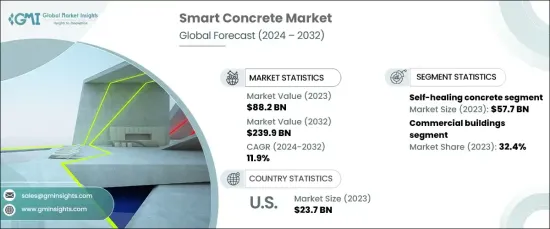
세계의 스마트 콘크리트 시장은 2023년에 882억 달러로 평가되었으며, 2024년부터 2032년까지의 CAGR은 11.9%를 나타낼 전망이며, 높은 성장세를 나타낼 것으로 예상됩니다.
건설 업계에서는 지속가능성에 대한 주목이 높아지고 있으며, 스마트 콘크리트가 선도역이 되어 혁신적인 재료의 채택이 진행되고 있습니다. 이 고급 소재는 탁월한 내구성을 제공하고 빈번한 수리의 필요성을 줄이기 때문에 장기적인 유지 보수 비용을 최소화하는 매우 매력적인 선택입니다. 스마트 콘크리트는 자체 치유 능력 덕분에 구조물의 수명을 크게 연장하여 세계 인프라 계획자, 정부 및 개발자에게 선호되는 선택입니다.
신흥 지역에서 일어나고 있는 급속한 도시화는 스마트 콘크리트 수요를 더욱 끌어 올리고 있습니다. 향상된 내구성과 자기 감지 기능을 포함한 독특한 특징을 지닌 스마트 콘크리트는 도로, 다리, 건물 등 중요한 인프라 건설에 특히 가치가 있습니다. 미래 도시, 교통 시스템, 재생 가능 에너지 시설에 초점을 맞춘 대규모 프로젝트가 성장함에 따라 이러한 중요한 구조물의 성능과 수명을 향상시키기 위해 스마트 콘크리트를 활용하는 개발자가 늘고 있습니다.
| 시장 범위 | |
|---|---|
| 시작연도 | 2023 |
| 예측연도 | 2024-2032 |
| 시작금액 | 882억 달러 |
| 예측 금액 | 2,399억 달러 |
| CAGR | 11.9% |
2023년에 577억 달러로 평가된 자가 복구 콘크리트 분야는 박테리아와 곰팡이와 같은 생물에 착상을 얻은 재료를 연구하여 복구 능력을 높이기 위해 계속 큰 주목을 받고 있습니다. 유기적이고 지속 가능한 솔루션에 대한 이러한 관심은 환경 친화적인 건설 관행에 대한 경향 증가와 일치합니다. 게다가, 자가 복구 콘크리트에 나노기술을 통합하는 것도 탄력을 받고 있습니다. 폴리머나 캡슐과 같은 나노입자를 통합하여 재료의 기계적 강도를 향상시키고 마이크로 레벨에서의 자가 복구 프로세스를 강화하는 것을 목표로 합니다.
최종 용도별로는 2023년 시장 점유율로 상업 빌딩 분야가 32.4%를 차지했습니다. 사무실, 쇼핑몰, 병원 등의 건물에는 지속적인 유지 보수 비용을 최소화하는 내구성있는 재료가 필요합니다. 스마트 콘크리트의 자체 복구 특성은 균열, 습기 및 환경 스트레스로 인한 구조의 열화를 방지하는 데 도움이 됩니다. 수리 비용과 유지 보수 빈도를 줄임으로써 스마트 콘크리트는 지속가능성과 비용 효율성을 강조하는 개발자에게 인기있는 선택이되었습니다. 또한 LEED, BREEAM, WELL과 같은 지속가능성 인증을 충족시키는 건물에 대한 수요가 증가함에 따라 건설에서이 재료의 채택을 더욱 강화하고 있습니다.
미국에서 스마트콘크리트 시장은 2023년 237억 달러에 달했으며, 2024년부터 2032년까지 연평균 복합 성장률(CAGR) 12.6%를 기록할 것으로 예상됩니다. 이 성장의 원동력은 인프라에 대한 많은 투자, 엄격한 규제 기준, 기술 혁신에 대한 강한 헌신입니다. 이 나라에서는 인프라의 노후화에 대처하기 위해 다리, 도로, 건물을 유지 및 교환하기 위한 효율적인 솔루션이 시급해지고 있습니다. 이러한 선진적이고 내구성있는 건축자재에 대한 수요는 미국 시장에서 스마트 콘크리트의 필요성을 더욱 높여 왔습니다.
목차
제1장 조사 방법과 조사 범위
- 시장 범위와 정의
- 기본 추정과 계산
- 예측 계산
- 데이터 소스
- 1차 데이터
- 2차 데이터
- 유료 정보원
- 공적 정보원
제2장 주요 요약
제3장 업계 인사이트
- 생태계 분석
- 밸류체인에 영향을 주는 요인
- 이익률 분석
- 파괴
- 장래의 전망
- 제조업체
- 유통업체
- 공급자의 상황
- 이익률 분석
- 주요 뉴스 및 이니셔티브
- 규제 상황
- 영향요인
- 성장 촉진요인
- 지속 가능하고 내구성있는 건축자재에 대한 수요 증가
- 인프라 투자 증가
- 스마트 콘크리트의 기술 진보
- 업계의 잠재적 위험 및 과제
- 높은 초기 비용
- 기술적 과제
- 성장 촉진요인
- 성장 가능성 분석
- Porter's Five Forces 분석
- PESTEL 분석
제4장 경쟁 구도
- 소개
- 기업 점유율 분석
- 경쟁 포지셔닝 매트릭스
- 전략 전망 매트릭스
제5장 시장 추정 및 예측 : 유형별, 2021-2032년
- 주요 동향
- 자기 수복 콘크리트
- 자기 감지 콘크리트
- 열전도성 콘크리트
- 기타
제6장 시장 추정 및 예측 : 재료별, 2021-2032년
- 주요 동향
- 시멘트 베이스
- 지오폴리머 베이스
- 첨가제 및 약제
제7장 시장 추정 및 예측 : 최종 용도별, 2021-2032년
- 주요 동향
- 인프라
- 주택
- 상업 빌딩
- 산업 구조물
- 기타
제8장 시장 추정 및 예측 : 유통 채널별, 2021-2032년
- 주요 동향
- 직접 판매
- 간접판매
제9장 시장 추정 및 예측 : 지역별, 2021-2032년
- 주요 동향
- 북미
- 미국
- 캐나다
- 유럽
- 영국
- 독일
- 프랑스
- 이탈리아
- 스페인
- 러시아
- 아시아태평양
- 중국
- 인도
- 일본
- 한국
- 호주
- 라틴아메리카
- 브라질
- 멕시코
- 중동 및 아프리카
- UAE
- 사우디아라비아
- 남아프리카
제10장 기업 프로파일
- Acciona
- BASF
- Basilisk
- Bouygues Construction
- Breedon Group
- Cemex
- Heidelberg Materials
- Holcim
- Hycrete
- Kryton
- Sika AG
- Xypex Chemical Corporation
The Global Smart Concrete Market was valued at USD 88.2 billion in 2023 and is projected to experience significant growth, with a robust CAGR of 11.9% from 2024 to 2032. The construction industry's increasing focus on sustainability is driving the adoption of innovative materials, with smart concrete leading the way. This advanced material offers exceptional durability and reduces the need for frequent repairs, making it a highly attractive option for minimizing long-term maintenance costs. Thanks to its self-healing capabilities, smart concrete significantly extends the lifespan of structures, making it a preferred choice for infrastructure planners, governments, and developers worldwide.
The rapid urbanization occurring in emerging regions further boosts the demand for smart concrete. With its unique features, including enhanced durability and self-sensing capabilities, smart concrete is particularly valuable in the construction of critical infrastructure such as roads, bridges, and buildings. As large-scale projects focused on future cities, transportation systems, and renewable energy facilities grow, more developers are turning to smart concrete to improve the performance and longevity of these essential structures.
| Market Scope | |
|---|---|
| Start Year | 2023 |
| Forecast Year | 2024-2032 |
| Start Value | $88.2 Billion |
| Forecast Value | $239.9 Billion |
| CAGR | 11.9% |
The self-healing concrete segment, valued at USD 57.7 billion in 2023, continues to garner significant attention as researchers explore bio-inspired materials like bacteria and fungi to enhance their repair capabilities. This focus on organic and sustainable solutions aligns with the growing trend toward environmentally friendly construction practices. Additionally, the integration of nanotechnology into self-healing concrete is gaining momentum. The inclusion of nanoparticles, such as polymers and capsules, aims to improve the material's mechanical strength and enhance the self-healing process at the microscopic level.
In terms of end-use, the commercial buildings segment accounted for 32.4% of the market share in 2023. Buildings such as offices, malls, and hospitals require durable materials that minimize ongoing maintenance costs. Smart concrete's self-healing properties help prevent the degradation of structures caused by cracks, moisture, and environmental stress. By reducing repair costs and maintenance frequency, smart concrete has become a popular choice for developers focused on sustainability and cost-efficiency. Moreover, the increasing demand for buildings that meet sustainability certifications, such as LEED, BREEAM, and WELL, further propels the adoption of this material in construction.
In the United States, the smart concrete market reached USD 23.7 billion in 2023 and is projected to grow at a CAGR of 12.6% from 2024 to 2032. This growth is driven by substantial investments in infrastructure, rigorous regulatory standards, and a strong commitment to technological innovation. As the country addresses its aging infrastructure, there is an urgent need for efficient solutions to maintain and replace bridges, roads, and buildings. This demand for advanced, durable construction materials further fuels the need for smart concrete in the U.S. market.
Table of Contents
Chapter 1 Methodology & Scope
- 1.1 Market scope & definitions
- 1.2 Base estimates & calculations
- 1.3 Forecast calculations.
- 1.4 Data sources
- 1.4.1 Primary
- 1.4.2 Secondary
- 1.4.2.1 Paid sources
- 1.4.2.2 Public sources
Chapter 2 Executive Summary
- 2.1 Industry synopsis, 2021-2032
Chapter 3 Industry Insights
- 3.1 Industry ecosystem analysis
- 3.1.1 Factor affecting the value chain.
- 3.1.2 Profit margin analysis.
- 3.1.3 Disruptions
- 3.1.4 Future outlook
- 3.1.5 Manufacturers
- 3.1.6 Distributors
- 3.2 Supplier landscape
- 3.3 Profit margin analysis.
- 3.4 Key news & initiatives
- 3.5 Regulatory landscape
- 3.6 Impact forces
- 3.6.1 Growth drivers
- 3.6.1.1 Growing demand for sustainable and durable construction materials
- 3.6.1.2 Rising infrastructure investments
- 3.6.1.3 Technological advancements in smart concrete
- 3.6.2 Industry pitfalls & challenges
- 3.6.2.1 High initial cost
- 3.6.2.2 Technological challenges
- 3.6.1 Growth drivers
- 3.7 Growth potential analysis
- 3.8 Porter’s analysis
- 3.9 PESTEL analysis
Chapter 4 Competitive Landscape, 2023
- 4.1 Introduction
- 4.2 Company market share analysis
- 4.3 Competitive positioning matrix
- 4.4 Strategic outlook matrix
Chapter 5 Market Estimates & Forecast, By Type, 2021-2032 (USD Billion) (Kilo Tons)
- 5.1 Key trends
- 5.2 Self-Healing concrete
- 5.3 Self-Sensing concrete
- 5.4 Thermal conductive concrete
- 5.5 Others
Chapter 6 Market Estimates & Forecast, By Material, 2021-2032 (USD Billion) (Kilo Tons)
- 6.1 Key trends
- 6.2 Cement-Based
- 6.3 Geopolymer-Based
- 6.4 Additives and Agents
Chapter 7 Market Estimates & Forecast, By End-use, 2021-2032 (USD Billion) (Kilo Tons)
- 7.1 Key trends
- 7.2 Infrastructure
- 7.3 Residential buildings
- 7.4 Commercial buildings
- 7.5 Industrial structures
- 7.6 Others
Chapter 8 Market Estimates & Forecast, By Distribution Channel, 2021-2032 (USD Billion) (Kilo Tons)
- 8.1 Key trends
- 8.2 Direct sales
- 8.3 Indirect sales
Chapter 9 Market Estimates & Forecast, By Region, 2021-2032 (USD Billion) (Kilo Tons)
- 9.1 Key trends
- 9.2 North America
- 9.2.1 U.S.
- 9.2.2 Canada
- 9.3 Europe
- 9.3.1 UK
- 9.3.2 Germany
- 9.3.3 France
- 9.3.4 Italy
- 9.3.5 Spain
- 9.3.6 Russia
- 9.4 Asia Pacific
- 9.4.1 China
- 9.4.2 India
- 9.4.3 Japan
- 9.4.4 South Korea
- 9.4.5 Australia
- 9.5 Latin America
- 9.5.1 Brazil
- 9.5.2 Mexico
- 9.6 MEA
- 9.6.1 UAE
- 9.6.2 Saudi Arabia
- 9.6.3 South Africa
Chapter 10 Company Profiles
- 10.1 Acciona
- 10.2 BASF
- 10.3 Basilisk
- 10.4 Bouygues Construction
- 10.5 Breedon Group
- 10.6 Cemex
- 10.7 Heidelberg Materials
- 10.8 Holcim
- 10.9 Hycrete
- 10.10 Kryton
- 10.11 Sika AG
- 10.12 Xypex Chemical Corporation