|
시장보고서
상품코드
1666968
주거용 전기 퓨즈 시장 기회, 성장 촉진요인, 산업 동향 분석, 예측(2025-2034년)Residential Electric Fuse Market Opportunity, Growth Drivers, Industry Trend Analysis, and Forecast 2025 - 2034 |
||||||

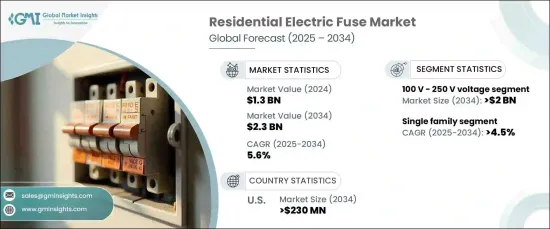
주거용 전기 퓨즈 세계 시장은 2024년 13억 달러로 평가되며 2034년까지 5.6%의 CAGR로 견조한 성장을 보일 것으로 예상됩니다.
이러한 성장 궤적은 가속화되는 도시화, 인구 증가, 전력 수요 증가로 인한 주택 인프라의 급속한 확장에 힘입은 바 큽니다. 에너지 효율에 대한 강조와 안전 대책의 강화는 시장의 잠재력을 더욱 높여주고 있습니다.
전력 소비를 최적화하기 위한 노력은 주택 소유자와 정부가 전기 시스템을 현대화하도록 유도하고 있습니다. 최신 전기 퓨즈는 그 최전선에 있으며, 에너지 사용을 개선하고 가정의 안전을 보장하는 데 중요한 역할을 하고 있습니다. 첨단 소재와 최첨단 고장 감지 기능을 포함한 퓨즈 기술의 혁신은 주거용 전기 시스템의 안전성과 효율성을 크게 향상시켜 시장을 더욱 촉진하고 있습니다.
| 시장 범위 | |
|---|---|
| 시작 연도 | 2024년 |
| 예측 연도 | 2025-2034년 |
| 시작 금액 | 13억 달러 |
| 예상 금액 | 23억 달러 |
| CAGR | 5.6% |
100V-250V 전압 분야는 2034년까지 20억 달러 이상의 매출을 창출할 것으로 예상됩니다. 이러한 급격한 증가는 주택 건설에 에너지 효율적인 저전압 시스템의 통합으로 인해 신뢰할 수 있는 보호 부품에 대한 요구가 증가하고 있기 때문입니다. 또한, 태양광 패널과 같은 재생에너지 솔루션의 채택이 증가함에 따라 견고한 전기 보호 시스템에 대한 필요성이 증가하고 있습니다. 안전, 비용 절감, 스마트홈오토메이션 시스템의 광범위한 통합에 대한 관심이 높아지면서 이 부문에서 최신형 퓨즈에 대한 수요가 더욱 증가하고 있습니다.
단독주택 시장 부문은 도시화 진전과 신규 주택 수요 급증에 힘입어 2034년까지 4.5%의 안정적인 CAGR을 기록할 것으로 예상됩니다. 단독주택 건설 붐은 첨단 전기 인프라 개발에 큰 기회가 될 것입니다. 주택을 관리하는 엄격한 안전 기준과 규제로 인해 스마트홈 기술의 채택이 증가하고 있으며, 첨단 회로 보호 장치에 대한 수요가 증가하고 있습니다. 이러한 추세는 주택 소유주들이 가전제품과 전기 시스템을 보호하려는 노력으로 인해 주거용 전기 퓨즈 시장을 재편하고 있습니다.
미국의 주거용 전기 퓨즈 시장은 2034년까지 2억 3,000만 달러가 넘을 것으로 예상됩니다. 도시화의 진전, 주택 건설 활동의 확대, 최신 에너지 효율 및 안전 기준을 충족하기 위한 노후 주택의 개조가 결합되어 이러한 성장에 박차를 가하고 있습니다. 규제와 안전 캠페인, 전기적 위험에 대한 우려로 인한 전기 안전에 대한 소비자의 인식이 첨단 퓨즈 기술의 채택을 촉진하고 있습니다.
목차
제1장 조사 방법과 조사 범위
- 시장 정의
- 기본 추정과 계산
- 예측 계산
- 데이터 소스
- 1차 데이터
- 2차 데이터
- 유료
- 공개
제2장 주요 요약
제3장 업계 인사이트
- 생태계 분석
- 규제 상황
- 업계에 대한 영향요인
- 성장 촉진요인
- 업계의 잠재적 리스크와 과제
- 성장 가능성 분석
- Porters 분석
- 공급 기업의 교섭력
- 구매자의 교섭력
- 신규 참여업체의 위협
- 대체품의 위협
- PESTEL 분석
제4장 경쟁 구도
- 소개
- 전략 대시보드
- 혁신과 지속가능성 전망
제5장 시장 규모 및 예측 : 전압별, 2021-2034년
- 주요 동향
- 100 V 미만
- 100 V-250 V
제6장 시장 규모 및 예측 : 용도별, 2021-2034년
- 주요 동향
- 싱글 패밀리
- 멀티 패밀리
제7장 시장 규모 및 예측 : 지역별 시장 규모 및 예측 : 지역별, 2021-2034년
- 주요 동향
- 북미
- 미국
- 캐나다
- 멕시코
- 유럽
- 영국
- 프랑스
- 독일
- 이탈리아
- 네덜란드
- 아시아태평양
- 중국
- 일본
- 인도
- 한국
- 중동 및 아프리카
- 사우디아라비아
- UAE
- 쿠웨이트
- 터키
- 라틴아메리카
- 브라질
- 아르헨티나
제8장 기업 개요
- Bel Fuse
- Denco
- Eaton
- Efen
- Fuji Electric
- Fuseco
- KYOCERA AVX
- Legrand
- Littelfuse
- McGraw Edison
- Mersen
- Optifuse
- Schurter
- Siba
- Siemens
The Global Residential Electric Fuse Market reached USD 1.3 billion in 2024 and is projected to grow at a robust CAGR of 5.6% through 2034. This growth trajectory is fueled by the rapid expansion of residential infrastructure, driven by accelerating urbanization, population increases, and rising electricity demand. The emphasis on energy efficiency and enhanced safety measures further strengthens the market's potential.

Efforts to optimize electricity consumption are prompting homeowners and governments to modernize electrical systems. Modern electric fuses are at the forefront, playing a vital role in improving energy use and ensuring household safety. Innovations in fuse technology, including advanced materials and cutting-edge fault detection features, are significantly enhancing the safety and efficiency of residential electrical systems, further propelling the market.
| Market Scope | |
|---|---|
| Start Year | 2024 |
| Forecast Year | 2025-2034 |
| Start Value | $1.3 Billion |
| Forecast Value | $2.3 Billion |
| CAGR | 5.6% |
The 100 V - 250 V voltage segment is expected to generate over USD 2 billion by 2034. This surge is attributed to the integration of energy-efficient, low-voltage systems in residential construction, which demand reliable protective components. Additionally, the growing adoption of renewable energy solutions like solar panels underscores the critical need for robust electrical protection systems. Heightened focus on safety, cost savings, and the widespread integration of smart home automation systems are further driving demand for modern fuses in this segment.
The single-family housing market segment is expected to experience a steady CAGR of 4.5% through 2034, fueled by increased urbanization and surging demand for new homes. The boom in single-family home construction presents significant opportunities for advanced electrical infrastructure development. With strict safety standards and regulations governing residential buildings, the adoption of smart home technologies continues to rise, bolstering the demand for cutting-edge circuit protection devices. This trend is reshaping the residential electric fuse market as homeowners seek to safeguard appliances and electrical systems.
In the U.S., the residential electric fuse market is expected to exceed USD 230 million by 2034. The combination of growing urbanization, expanding residential construction activities, and retrofitting older homes to meet modern energy efficiency and safety standards is fueling this growth. Consumer awareness regarding electrical safety, spurred by regulations, safety campaigns, and concerns over electrical hazards, is driving the adoption of advanced fuse technologies.
Table of Contents
Chapter 1 Methodology & Scope
- 1.1 Market definitions
- 1.2 Base estimates & calculations
- 1.3 Forecast calculation
- 1.4 Data sources
- 1.4.1 Primary
- 1.4.2 Secondary
- 1.4.2.1 Paid
- 1.4.2.2 Public
Chapter 2 Executive Summary
- 2.1 Industry synopsis, 2021 - 2034
Chapter 3 Industry Insights
- 3.1 Industry ecosystem analysis
- 3.2 Regulatory landscape
- 3.3 Industry impact forces
- 3.3.1 Growth drivers
- 3.3.2 Industry pitfalls & challenges
- 3.4 Growth potential analysis
- 3.5 Porter's analysis
- 3.5.1 Bargaining power of suppliers
- 3.5.2 Bargaining power of buyers
- 3.5.3 Threat of new entrants
- 3.5.4 Threat of substitutes
- 3.6 PESTEL analysis
Chapter 4 Competitive Landscape, 2024
- 4.1 Introduction
- 4.2 Strategic dashboard
- 4.3 Innovation & sustainability landscape
Chapter 5 Market Size and Forecast, By Voltage, 2021 – 2034 (USD Million, ‘000 Units)
- 5.1 Key trends
- 5.2 < 100 V
- 5.3 100 V - 250 V
Chapter 6 Market Size and Forecast, By Application, 2021 – 2034 (USD Million, ‘000 Units)
- 6.1 Key trends
- 6.2 Single family
- 6.3 Multi family
Chapter 7 Market Size and Forecast, By Region, 2021 – 2034 (USD Million, ‘000 Units)
- 7.1 Key trends
- 7.2 North America
- 7.2.1 U.S
- 7.2.2 Canada
- 7.2.3 Mexico
- 7.3 Europe
- 7.3.1 UK
- 7.3.2 France
- 7.3.3 Germany
- 7.3.4 Italy
- 7.3.5 Netherlands
- 7.4 Asia Pacific
- 7.4.1 China
- 7.4.2 Japan
- 7.4.3 India
- 7.4.4 South Korea
- 7.5 Middle East & Africa
- 7.5.1 Saudi Arabia
- 7.5.2 UAE
- 7.5.3 Kuwait
- 7.5.4 Turkey
- 7.6 Latin America
- 7.6.1 Brazil
- 7.6.2 Argentina
Chapter 8 Company Profiles
- 8.1 Bel Fuse
- 8.2 Denco
- 8.3 Eaton
- 8.4 Efen
- 8.5 Fuji Electric
- 8.6 Fuseco
- 8.7 KYOCERA AVX
- 8.8 Legrand
- 8.9 Littelfuse
- 8.10 McGraw Edison
- 8.11 Mersen
- 8.12 Optifuse
- 8.13 Schurter
- 8.14 Siba
- 8.15 Siemens