
|
시장보고서
상품코드
1666994
플렉서블 전선관 시장 기회, 성장 촉진요인, 산업 동향 분석, 예측(2025-2034년)Flexible Electrical Conduit Market Opportunity, Growth Drivers, Industry Trend Analysis, and Forecast 2025 - 2034 |
||||||

세계 플렉서블 전선관 시장은 2024년 21억 달러로 평가되며 2025년부터 2034년까지 연평균 7.5%의 성장률을 보일 것으로 예상됩니다.
이러한 성장은 건설, 자동차, 통신 등 내구성과 적응성이 뛰어난 솔루션이 필수적인 산업 분야의 수요 증가에 기인합니다. 도시화, 인프라 발전, 자동화 도입으로 인해 배선 시스템을 효과적으로 보호할 수 있는 유연한 도관의 필요성이 더욱 커지고 있습니다.
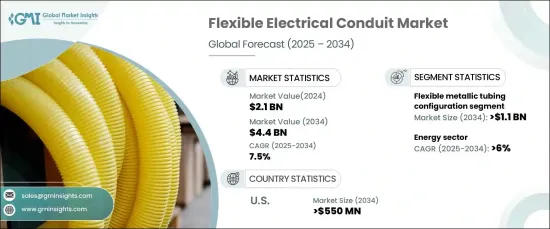
플렉서블 메탈 튜브(Flexible Metal Tubing, FMT) 분야는 다재다능하고 설치가 용이한 솔루션에 대한 수요에 힘입어 2034년까지 11억 달러의 매출을 달성할 것으로 예상됩니다. 고객이 산업 자동화에 맞는 내화성 및 유연성이 높은 전선관 등 특수한 옵션을 요구함에 따라 커스터마이징이 매우 중요한 트렌드가 되고 있습니다. 모듈식 및 사전 조립된 구성의 출현은 설치 프로세스를 간소화하고, 인건비를 절감하며, 전반적인 효율성을 향상시키고 있습니다. 또한, 안전과 규제 준수에 대한 관심이 높아지면서 엄격한 업계 표준을 충족하는 혁신적인 설계에 대한 투자에 박차를 가하고 있습니다.
| 시장 범위 | |
|---|---|
| 시작 연도 | 2024년 |
| 예측 연도 | 2025-2034년 |
| 시작 금액 | 21억 달러 |
| 예상 금액 | 44억 달러 |
| CAGR | 7.5% |
플렉서블 전선관 시장은 2034년까지 CAGR 6%로 에너지 분야가 크게 성장할 것으로 예상됩니다. 풍력 및 태양광을 포함한 재생에너지 프로젝트에 대한 관심이 높아지면서 효율적이고 안전한 배선 시스템을 위한 유연한 전선관 채택이 증가하고 있습니다. 또한, 스마트 그리드 인프라의 확대와 에너지 효율이 높은 기술의 통합이 진행됨에 따라 에너지 유통망에서 플렉서블 도관에 대한 수요가 증가하고 있습니다. 이러한 요구에 부응하기 위해 제조업체들은 안전, 규정 준수, 환경적 지속가능성을 우선시하는 첨단 전선관 솔루션을 개발하고 있습니다.
미국의 플렉서블 전선관 시장은 2034년까지 5억 5,000만 달러 규모의 시장을 형성할 것으로 예상됩니다. 건설, 제조, 에너지 및 기타 산업 분야의 수요가 성장의 원동력이 되고 있습니다. 건물에 스마트 기술과 자동화가 통합되면서 내구성과 내화성이 뛰어난 플렉서블 도관에 대한 수요가 증가하고 있습니다. 또한, 안전 및 환경 규정 준수에 초점을 맞춘 규제 요건의 진화로 인해 제조업체들은 친환경적이고 고성능의 전선관 솔루션을 개발하고 있습니다.
전반적으로 플렉서블 전선관 시장은 다양한 분야에서 신뢰할 수 있고 안전하며 효율적인 배선 솔루션에 대한 요구가 증가함에 따라 꾸준히 성장하고 있습니다. 커스터마이징, 규제 준수 및 기술 혁신에 대한 강조는 빠르게 진화하는 세계 인프라 상황의 수요에 대응하고 시장을 더욱 촉진할 것으로 예상됩니다.
목차
제1장 조사 방법과 조사 범위
- 시장 정의
- 기본 추정과 계산
- 예측 계산
- 데이터 소스
- 1차 데이터
- 2차 데이터
- 유료
- 공개
제2장 주요 요약
제3장 업계 인사이트
- 생태계 분석
- 규제 상황
- 업계에 대한 영향요인
- 성장 촉진요인
- 업계의 잠재적 리스크와 과제
- 성장 가능성 분석
- Porters 분석
- 공급 기업의 교섭력
- 구매자의 교섭력
- 신규 참여업체의 위협
- 대체품의 위협
- PESTEL 분석
제4장 경쟁 구도
- 전략 대시보드
- 혁신과 지속가능성 전망
제5장 시장 규모 및 예측 : 거래 규모별, 2021-2034년
- 주요 동향
- 1/2-1
- 1 1/4-2
- 2 1/2-3
- 3-4
- 5-6
- 기타
제6장 시장 규모 및 예측 : 구성별, 2021-2034년
- 주요 동향
- 플렉서블 메탈릭(FMC)
- 액밀 플렉서블 메탈(LFMC)
- 플렉서블 메탈 튜브(FMT)
- 액밀 플렉서블 비금속(LFNC)
제7장 시장 규모 및 예측 : 용도별, 2021-2034년
- 주요 동향
- 철도 인프라
- 군용 항공우주
- 의료 시설
- 프로세스 플랜트
- 에너지
- 기타
제8장 시장 규모 및 예측 : 최종 용도별, 2021-2034년
- 주요 동향
- 주거용
- 상업용
- 산업용
- 유틸리티
제9장 시장 규모 및 예측 : 지역별, 2021-2034년
- 주요 동향
- 북미
- 미국
- 캐나다
- 멕시코
- 유럽
- 프랑스
- 독일
- 이탈리아
- 영국
- 러시아
- 아시아태평양
- 중국
- 인도
- 일본
- 한국
- 호주
- 중동 및 아프리카
- 사우디아라비아
- 아랍에미리트
- 카타르
- 남아프리카공화국
- 라틴아메리카
- 브라질
- 아르헨티나
제10장 기업 개요
- ABB
- Anamet Electrical
- Atkore
- CANTEX
- Dongguan FlexGlory Machinery Accessories
- Electri-Flex Company
- Hubbell
- HellermannTyton
- Kaiphone Technology
- Legrand
- Schneider Electric
- Southwire Company
- Wienerberger
The Global Flexible Electrical Conduit Market reached USD 2.1 billion in 2024 and is projected to grow at a CAGR of 7.5% during 2025-2034. This growth is attributed to rising demand across industries such as construction, automotive, and telecommunications, where durable and adaptable solutions are essential. Increasing urbanization, infrastructure advancements, and the adoption of automation are further driving the need for flexible conduits to safeguard wiring systems effectively.
The flexible metallic tubing (FMT) segment is expected to generate USD 1.1 billion through 2034, fueled by the demand for versatile, easy-to-install solutions. Customization has become a pivotal trend as clients seek specialized options like fire-resistant or high-flexibility conduits tailored for industrial automation. The emergence of modular and pre-assembled configurations is simplifying installation processes, reducing labor expenses, and enhancing overall efficiency. Moreover, growing attention to safety and regulatory compliance has spurred investments in innovative designs that meet stringent industry standards.
| Market Scope | |
|---|---|
| Start Year | 2024 |
| Forecast Year | 2025-2034 |
| Start Value | $2.1 Billion |
| Forecast Value | $4.4 Billion |
| CAGR | 7.5% |
The energy sector is poised for significant growth in the flexible electrical conduit market, with a CAGR of 6% through 2034. The rising focus on renewable energy projects, including wind and solar installations, is driving the adoption of flexible conduits for efficient and secure wiring systems. Additionally, the expansion of smart grid infrastructure and the increasing integration of energy-efficient technologies are boosting demand for flexible conduits in energy distribution networks. To address these needs, manufacturers are developing advanced conduit solutions that prioritize safety, compliance, and environmental sustainability.
U.S. flexible electrical conduit market is projected to generate USD 550 million by 2034. Growth is being driven by robust demand from industries such as construction, manufacturing, and energy. The integration of smart technologies and automation in buildings has heightened the need for durable and fire-resistant flexible conduits. Furthermore, evolving regulatory requirements focused on safety and environmental compliance are pushing manufacturers to create environment-friendly, high-performance conduit solutions.
Overall, the flexible electrical conduit market is experiencing steady growth due to the increasing need for reliable, safe, and efficient wiring solutions across diverse sectors. Emphasis on customization, regulatory adherence, and innovation is expected to further propel the market, catering to the demands of a rapidly evolving global infrastructure landscape.
Table of Contents
Chapter 1 Methodology & Scope
- 1.1 Market definitions
- 1.2 Base estimates & calculations
- 1.3 Forecast calculation
- 1.4 Data sources
- 1.4.1 Primary
- 1.4.2 Secondary
- 1.4.2.1 Paid
- 1.4.2.2 Public
Chapter 2 Executive Summary
- 2.1 Industry synopsis, 2021 - 2034
Chapter 3 Industry Insights
- 3.1 Industry ecosystem analysis
- 3.2 Regulatory landscape
- 3.3 Industry impact forces
- 3.3.1 Growth drivers
- 3.3.2 Industry pitfalls & challenges
- 3.4 Growth potential analysis
- 3.5 Porter's analysis
- 3.5.1 Bargaining power of suppliers
- 3.5.2 Bargaining power of buyers
- 3.5.3 Threat of new entrants
- 3.5.4 Threat of substitutes
- 3.6 PESTEL analysis
Chapter 4 Competitive Landscape, 2024
- 4.1 Strategic dashboard
- 4.2 Innovation & sustainability landscape
Chapter 5 Market Size and Forecast, By Trade Size, 2021 – 2034 (USD Million)
- 5.1 Key trends
- 5.2 ½ to 1
- 5.3 1 ¼ to 2
- 5.4 2 ½ to 3
- 5.5 3 to 4
- 5.6 5 to 6
- 5.7 Others
Chapter 6 Market Size and Forecast, By Configuration, 2021 – 2034 (USD Million)
- 6.1 Key trends
- 6.2 Flexible Metallic (FMC)
- 6.3 Liquid-Tight Flexible Metal (LFMC)
- 6.4 Flexible Metallic Tubing (FMT)
- 6.5 Liquid-Tight Flexible Non-Metallic (LFNC)
Chapter 7 Market Size and Forecast, By Application, 2021 – 2034 (USD Million)
- 7.1 Key trends
- 7.2 Rail infrastructure
- 7.3 Military aerospace
- 7.4 Healthcare facilities
- 7.5 Process plants
- 7.6 Energy
- 7.7 Others
Chapter 8 Market Size and Forecast, By End Use, 2021 – 2034 (USD Million)
- 8.1 Key trends
- 8.2 Residential
- 8.3 Commercial
- 8.4 Industrial
- 8.5 Utility
Chapter 9 Market Size and Forecast, By Region, 2021 – 2034 (USD Million)
- 9.1 Key trends
- 9.2 North America
- 9.2.1 U.S.
- 9.2.2 Canada
- 9.2.3 Mexico
- 9.3 Europe
- 9.3.1 France
- 9.3.2 Germany
- 9.3.3 Italy
- 9.3.4 UK
- 9.3.5 Russia
- 9.4 Asia Pacific
- 9.4.1 China
- 9.4.2 India
- 9.4.3 Japan
- 9.4.4 South Korea
- 9.4.5 Australia
- 9.5 Middle East & Africa
- 9.5.1 Saudi Arabia
- 9.5.2 UAE
- 9.5.3 Qatar
- 9.5.4 South Africa
- 9.6 Latin America
- 9.6.1 Brazil
- 9.6.2 Argentina
Chapter 10 Company Profiles
- 10.1 ABB
- 10.2 Anamet Electrical
- 10.3 Atkore
- 10.4 CANTEX
- 10.5 Dongguan FlexGlory Machinery Accessories
- 10.6 Electri-Flex Company
- 10.7 Hubbell
- 10.8 HellermannTyton
- 10.9 Kaiphone Technology
- 10.10 Legrand
- 10.11 Schneider Electric
- 10.12 Southwire Company
- 10.13 Wienerberger