

|
시장보고서
상품코드
1740790
재생 해양 플라스틱 포장 시장 : 기회, 성장 촉진요인, 산업 동향 분석, 예측(2025-2034년)Recycled Ocean Plastic Packaging Market Opportunity, Growth Drivers, Industry Trend Analysis, and Forecast 2025 - 2034 |
||||||

세계의 재생 해양 플라스틱 포장 시장은 2024년 6억 4,680만 달러로 평가되었고, CAGR 11.8%로 성장하여 2034년까지 19억 3,000만 달러에 이를 것으로 예측됩니다.
이는 해양에서의 플라스틱 폐기물 축적 증가, 지속가능성에 대한 규제의 강화, 환경친화적인 패키징 솔루션의 채용에 있어서의 기업 협력 증가 등이 배경에 있습니다. 이 변화는 특히 패키징 분야에서 현저하고, 해양 유래의 재생 플라스틱이 선택되는 소재가 되고 있습니다. 브랜드는 규제를 준수하기 위해서뿐만 아니라, 환경에 배려한 방식을 좋아하는 소비자의 기호의 변화에 맞추어, 환경에 배려한 포장을 채용하게 되어 있습니다.
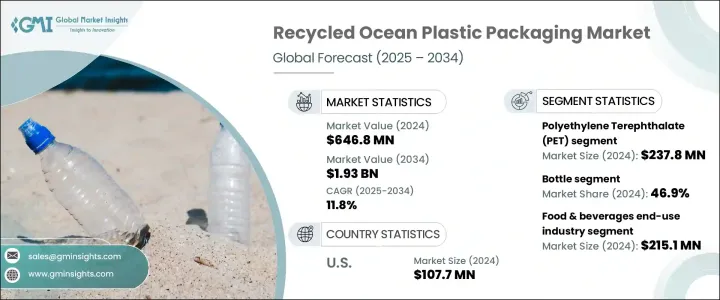
해양 오염에 대한 세계의 의식은 계속 증가하고 있으며, 매년 약 800만 톤에서 1,000만 톤의 플라스틱 폐기물이 해양으로 유입되어 해양 오염 전체의 80% 가까이를 차지하고 있습니다. 비공개 회사, 환경 보호 단체는 플라스틱 유출을 줄이고 포장재에 해양 재생 플라스틱의 사용을 가속화하기 위해 협력하고 있습니다. 주요 제조업체 각사는 재활용 소재를 일상 제품에 짜넣는 것으로 지속가능성에의 대처를 강화해, 보다 엄격한 환경, 사회 및 거버넌스(ESG) 목표를 달성하면서 브랜드 인지를 향상시키고 있습니다. 추적 가능성, 제품 수명주기의 투명성, 카본 실적의 삭감에 대한 요구의 고조는 이 동향을 한층 더 강화하고 있습니다.
| 시장 범위 | |
|---|---|
| 시작 연도 | 2024년 |
| 예측 연도 | 2025-2034년 |
| 시작 금액 | 6억 4,680만 달러 |
| 예측 금액 | 19억 3,000만 달러 |
| CAGR | 11.8% |
음식, 퍼스널케어, 화장품, 일용소비재(FMCG) 등의 산업은 해양 플라스틱 기반의 패키징에 대한 강한 수요를 나타내고 있습니다. 소비자는 구입품이 환경에 미치는 영향을 더욱 인식하게 됐으며, 기업은 재활용 소재를 포장 라인에 통합하기 위해 신속하게 행동합니다. 해양 플라스틱의 사용은 브랜드의 지속가능성에 대한 헌신을 직접 반영합니다.
플라스틱 산업은 해양 유래의 소재를 생산 라인에 통합함으로써 이 수요에 부응하기 위해 진화하고 있습니다.
재생 해양 플라스틱 포장 시장은 고밀도 폴리에틸렌(HDPE), 폴리프로필렌(PP), 저밀도 폴리에틸렌(LDPE), 폴리에틸렌 테레프탈레이트(PET), 폴리스티렌(PS), 폴리염화비닐(PVC) 등 소재 유형별로 구분되어 있습니다. 식음료 분야에서 PET의 강한 존재감은 그 내구성, 리사이클성, 기존의 제조 공정과의 적합성에 기인하고 있습니다.
제품 유형별로는 병이 계속 시장을 독점하고 2024년에는 47%의 점유율을 차지했습니다. 해양 재생 플라스틱을 도입하여 환경의식이 높은 구매층에 어필하고 환경에 대한 기대의 고조에 부응하고 있습니다.
미국에서 재생 해양 플라스틱 포장 시장은 2024년에 1억 770만 달러에 이르렀으며, 이 나라가 환경 책임에 종사하는 자세를 강화하고 있음을 보여주고 있습니다. 확대 생산자 책임(EPR)법 등의 정책은 생산자에게 포장의 라이프 사이클에 대한 책임을 지는 것으로, 리사이클 소재의 사용을 한층 더 촉구하고 있습니다.
이 시장을 형성하는 주요 기업은 UPM Raflatac, Prevented Ocean Plastic, Oceanworks, Envision Plastics, Ocean Waste Plastic(Pack Tech A/S) 등이 있습니다. 이러한 기업은 재료의 품질과 성능을 향상시키기 위해 최첨단 재활용 기술에 투자하고 있습니다. 지속가능성을 확인하고 전하고자 하는 가운데 투명성이 큰 초점이 되고 있습니다.
목차
제1장 조사 방법과 범위
제2장 주요 요약
제3장 업계 인사이트
- 생태계 분석
- 밸류체인에 영향을 주는 요인
- 이익률 분석
- 혁신
- 미래의 전망
- 제조업자
- 리셀러
- 트럼프 정권에 의한 관세에 대한 영향
- 무역에 미치는 영향
- 무역량의 혼란
- 보복 조치
- 업계에 미치는 영향
- 공급측의 영향(원재료)
- 주요 원재료의 가격 변동
- 공급망 재구성
- 생산 비용에 미치는 영향
- 수요측의 영향(판매가격)
- 최종 시장에의 가격 전달
- 시장 점유율 동향
- 소비자의 반응 패턴
- 공급측의 영향(원재료)
- 영향을 받는 주요 기업
- 전략적인 업계 대응
- 공급망 재구성
- 가격 설정 및 제품 전략
- 정책관여
- 전망과 향후 검토 사항
- 무역에 미치는 영향
- 공급자의 상황
- 이익률 분석
- 주요 뉴스와 대처
- 규제 상황
- 영향요인
- 성장 촉진요인
- 해양 플라스틱 폐기물의 급증
- 순환형 경제의 대처 증가
- 리사이클 기술의 진보
- 재활용 포장 이니셔티브의 협력 확대
- 폐기물 수집 인프라에 대한 투자 증가
- 업계의 잠재적 위험 및 과제
- 개발 도상 지역의 폐기물 수집 인프라의 약점
- 버진 플라스틱과의 경쟁
- 성장 촉진요인
- 성장 가능성 분석
- Porter's Five Forces 분석
- PESTEL 분석
제4장 경쟁 구도
- 소개
- 기업의 시장 점유율 분석
- 경쟁 포지셔닝 매트릭스
- 전략적 전망 매트릭스
제5장 시장 추계 및 예측 : 재질별, 2021-2034년
- 주요 동향
- 고밀도 폴리에틸렌(HDPE)
- 저밀도 폴리에틸렌(LDPE)
- 폴리프로필렌(PP)
- 폴리에틸렌테레프탈레이트(PET)
- 폴리스티렌(PS)
- 폴리염화비닐(PVC)
- 기타
제6장 시장 추계 및 예측 : 최종 용도 제품별, 2021-2034년
- 주요 동향
- 병
- 가방 및 파우치
- 튜브
- 기타
제7장 시장 추계 및 예측 : 최종 이용 산업별, 2021-2034년
- 주요 동향
- 식음료
- 퍼스널케어 및 화장품
- 헬스케어
- 가정용품
- 전자상거래와 소매
- 기타
제8장 시장 추계 및 예측 : 지역별, 2021-2034년
- 주요 동향
- 북미
- 미국
- 캐나다
- 유럽
- 영국
- 독일
- 프랑스
- 이탈리아
- 스페인
- 러시아
- 아시아태평양
- 중국
- 인도
- 일본
- 한국
- 호주 및 뉴질랜드
- 라틴아메리카
- 브라질
- 멕시코
- 중동 및 아프리카
- 남아프리카
- 사우디아라비아
- 아랍에미리트(UAE)
제9장 기업 프로파일
- Better Packaging Co.
- Big Sky Packaging
- Envision Plastics
- Graham Packaging Company
- Klockner Pentaplast Group
- Ocean Waste Plastic(Pack Tech A/S)
- Oceanworks
- Oceos Packaging
- Prevented Ocean Plastic
- RSP Inc.
- Sana Packaging
- SeaCliff Beauty
- Spectra Packaging Solutions
- The Ocean Package
- Tide Ocean SA
- UPM Raflatac
The Global Recycled Ocean Plastic Packaging Market was valued at USD 646.8 million in 2024 and is estimated to grow at a CAGR of 11.8% to reach USD 1.93 billion by 2034, fueled by the mounting accumulation of plastic waste in oceans, stricter sustainability regulations, and increased corporate collaboration in adopting eco-friendly packaging solutions. With plastic waste increasingly threatening marine ecosystems, industries across the board are actively transitioning to more sustainable alternatives. This shift is especially noticeable in the packaging sector, where ocean-derived recycled plastics are becoming the material of choice. Brands are not only adopting green packaging to comply with regulations but also to align with evolving consumer preferences that favor environmentally responsible practices.
Global awareness of marine pollution continues to grow, as approximately 8 to 10 million metric tons of plastic waste enter the oceans every year, accounting for nearly 80% of all marine pollution. In response, governments, private companies, and environmental organizations are working together to reduce plastic leakage and accelerate the use of recycled ocean plastics in packaging. This growing collaboration is a key driver behind the increasing integration of ocean plastics in mainstream packaging applications. Leading manufacturers are enhancing their sustainability initiatives by embedding recycled content into everyday products, in turn improving brand perception while meeting stricter environmental, social, and governance (ESG) targets. The rising need for traceability, product lifecycle transparency, and carbon footprint reduction further reinforces this trend.
| Market Scope | |
|---|---|
| Start Year | 2024 |
| Forecast Year | 2025-2034 |
| Start Value | $646.8 Million |
| Forecast Value | $1.93 Billion |
| CAGR | 11.8% |
Industries such as food and beverage, personal care, cosmetics, and fast-moving consumer goods (FMCG) are showing strong demand for ocean plastic-based packaging. These sectors are under mounting pressure to respond to environmental concerns while still offering quality, safety, and convenience. Consumers are increasingly aware of the environmental impact of their purchases, and companies are acting fast to integrate recycled materials into their packaging lines. The use of ocean plastics has become a direct reflection of a brand's commitment to sustainability, and this alignment with consumer values is helping to drive product sales and customer loyalty.
The plastics industry is evolving to meet this demand by incorporating ocean-sourced materials into production lines. This shift requires investment in material recovery and processing innovations to ensure recycled ocean plastics meet industry quality standards. As recyclability and performance remain top priorities, companies are relying on advanced sorting, washing, and compounding technologies to maintain product integrity.
The recycled ocean plastic packaging market is segmented by material type, including High-Density Polyethylene (HDPE), Polypropylene (PP), Low-Density Polyethylene (LDPE), Polyethylene Terephthalate (PET), Polystyrene (PS), and Polyvinyl Chloride (PVC). Among these, PET stands out as the largest segment, with a valuation of USD 237.8 million in 2024. Its strong presence in the food and beverage sector stems from its durability, recyclability, and compatibility with existing manufacturing processes. PET's ability to retain structural integrity, withstand temperature fluctuations, and comply with global safety standards gives it a competitive edge. It's also easier to collect, clean, and convert into high-quality recycled resin, making it the go-to material for eco-conscious brands.
By product type, bottles continue to dominate the market, accounting for a 47% share in 2024. This growth reflects consumer and regulatory shifts away from single-use plastic and toward sustainable solutions. Bottled water and beverage companies are particularly proactive, incorporating recycled ocean plastics to appeal to eco-conscious buyers and meet rising environmental expectations. With regulatory bodies introducing stricter bans and restrictions on virgin plastic use, the demand for recycled alternatives in bottle production is only expected to rise.
In the United States, the recycled ocean plastic packaging market reached USD 107.7 million in 2024, signaling the country's increasing commitment to environmental responsibility. Growing awareness of marine plastic pollution, backed by robust legislative actions, is pushing more companies to include recycled ocean plastics in their sustainability roadmaps. Policies such as Extended Producer Responsibility (EPR) laws are further incentivizing the use of recycled materials by holding producers accountable for the lifecycle of their packaging. These initiatives are not only driving innovation in recycled materials but are also enhancing their affordability and accessibility across multiple sectors.
Key players shaping this market include UPM Raflatac, Prevented Ocean Plastic, Oceanworks, Envision Plastics, and Ocean Waste Plastic (Pack Tech A/S). These companies are investing in cutting-edge recycling technologies to improve material quality and performance. They are also forming strategic partnerships with environmental groups to ensure efficient collection, sorting, and reprocessing of ocean-bound plastics. Transparency has become a major focus as companies seek to verify and communicate the origins and sustainability of their materials. This open approach resonates with conscious consumers and helps brands meet both compliance obligations and reputation goals in the competitive global market.
Table of Contents
Chapter 1 Methodology & Scope
- 1.1 Market scope & definitions
- 1.2 Base estimates & calculations
- 1.3 Forecast calculations
- 1.4 Data sources
- 1.4.1 Primary
- 1.4.2 Secondary
- 1.4.2.1 Paid sources
- 1.4.2.2 Public sources
Chapter 2 Executive Summary
- 2.1 Industry synopsis, 2021-2034
Chapter 3 Industry Insights
- 3.1 Industry ecosystem analysis
- 3.1.1 Factor affecting the value chain
- 3.1.2 Profit margin analysis
- 3.1.3 Disruptions
- 3.1.4 Future outlook
- 3.1.5 Manufacturers
- 3.1.6 Distributors
- 3.2 Trump administration tariffs
- 3.2.1 Impact on trade
- 3.2.1.1 Trade volume disruptions
- 3.2.1.2 Retaliatory measures
- 3.2.2 Impact on the industry
- 3.2.2.1 Supply-side impact (raw materials)
- 3.2.2.1.1 Price volatility in key materials
- 3.2.2.1.2 Supply chain restructuring
- 3.2.2.1.3 Production cost implications
- 3.2.2.2 Demand-side impact (selling price)
- 3.2.2.2.1 Price transmission to end markets
- 3.2.2.2.2 Market share dynamics
- 3.2.2.2.3 Consumer response patterns
- 3.2.2.1 Supply-side impact (raw materials)
- 3.2.3 Key companies impacted
- 3.2.4 Strategic industry responses
- 3.2.4.1 Supply chain reconfiguration
- 3.2.4.2 Pricing and product strategies
- 3.2.4.3 Policy engagement
- 3.2.5 Outlook and future considerations
- 3.2.1 Impact on trade
- 3.3 Supplier landscape
- 3.4 Profit margin analysis
- 3.5 Key news & initiatives
- 3.6 Regulatory landscape
- 3.7 Impact forces
- 3.7.1 Growth drivers
- 3.7.1.1 Surge in plastic waste in oceans
- 3.7.1.2 Rising circular economy initiatives
- 3.7.1.3 Growing advancements in recycling technologies
- 3.7.1.4 Increasing collaborations in recycled packaging initiatives
- 3.7.1.5 Growing investments in waste collection infrastructure
- 3.7.2 Industry pitfalls & challenges
- 3.7.2.1 Weak waste collection infrastructure in developing regions
- 3.7.2.2 Competition from virgin plastic
- 3.7.1 Growth drivers
- 3.8 Growth potential analysis
- 3.9 Porter's analysis
- 3.10 PESTEL analysis
Chapter 4 Competitive Landscape, 2024
- 4.1 Introduction
- 4.2 Company market share analysis
- 4.3 Competitive positioning matrix
- 4.4 Strategic outlook matrix
Chapter 5 Market Estimates & Forecast, By Material Type, 2021-2034 (USD Million & Kilotons)
- 5.1 Key trends
- 5.2 High-density Polyethylene (HDPE)
- 5.3 Low-density Polyethylene (LDPE)
- 5.4 Polypropylene (PP)
- 5.5 Polyethylene Terephthalate (PET)
- 5.6 Polystyrene (PS)
- 5.7 Polyvinyl chloride (PVC)
- 5.8 Others
Chapter 6 Market Estimates & Forecast, By End Use Product, 2021-2034 (USD Million & Kilotons)
- 6.1 Key trends
- 6.2 Bottles
- 6.3 Bags & Pouches
- 6.4 Tubes
- 6.5 Others
Chapter 7 Market Estimates & Forecast, By End Use Industry, 2021-2034 (USD Million & Kilotons)
- 7.1 Key trends
- 7.2 Food & Beverage
- 7.3 Personal Care & Cosmetics
- 7.4 Healthcare
- 7.5 Household products
- 7.6 E-commerce & Retail
- 7.7 Others
Chapter 8 Market Estimates & Forecast, By Region, 2021-2034 (USD Million & Kilotons)
- 8.1 Key trends
- 8.2 North America
- 8.2.1 U.S.
- 8.2.2 Canada
- 8.3 Europe
- 8.3.1 UK
- 8.3.2 Germany
- 8.3.3 France
- 8.3.4 Italy
- 8.3.5 Spain
- 8.3.6 Russia
- 8.4 Asia Pacific
- 8.4.1 China
- 8.4.2 India
- 8.4.3 Japan
- 8.4.4 South Korea
- 8.4.5 ANZ
- 8.5 Latin America
- 8.5.1 Brazil
- 8.5.2 Mexico
- 8.6 MEA
- 8.6.1 South Africa
- 8.6.2 Saudi Arabia
- 8.6.3 UAE
Chapter 9 Company Profiles
- 9.1 Better Packaging Co.
- 9.2 Big Sky Packaging
- 9.3 Envision Plastics
- 9.4 Graham Packaging Company
- 9.5 Klockner Pentaplast Group
- 9.6 Ocean Waste Plastic (Pack Tech A/S)
- 9.7 Oceanworks
- 9.8 Oceos Packaging
- 9.9 Prevented Ocean Plastic
- 9.10 RSP Inc.
- 9.11 Sana Packaging
- 9.12 SeaCliff Beauty
- 9.13 Spectra Packaging Solutions
- 9.14 The Ocean Package
- 9.15 Tide Ocean SA
- 9.16 UPM Raflatac


