|
시장보고서
상품코드
1740902
펄프목재 시장 기회, 성장 촉진요인, 산업 동향 분석 및 예측(2025-2034년)Pulpwood Market Opportunity, Growth Drivers, Industry Trend Analysis, and Forecast 2025 - 2034 |
||||||

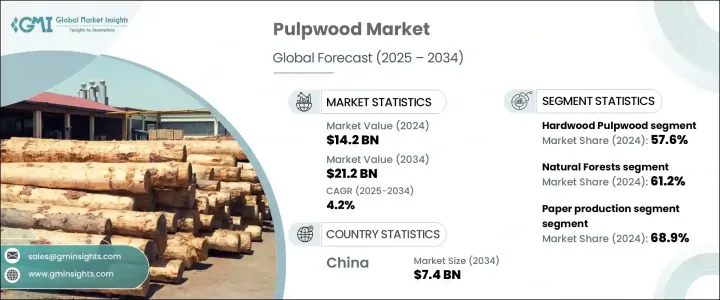
세계의 펄프목재 시장 규모는 2024년에 142억 달러로 평가되었고 포장, 위생제품, 바이오에너지 분야에서 수요 증가에 힘입어 CAGR 4.2%를 나타내 2034년에는 212억 달러에 달할 것으로 예측되고 있습니다.
전자상거래의 확대, 도시화의 진전, 지속가능성에 대한 주목이 높아짐에 따라 강력한 성장의 파도를 타고 중요한 원재료로서의 지위를 확립하고 있습니다. 보다 환경 친화적인 포장 솔루션과 생분해성 대체품으로의 세계적인 변화는 전례없는 기회를 창출하고 섬유 가공 혁신은 펄프 재료의 품질과 응용 범위를 높입니다. 산업계가 플라스틱 및 기타 재생 불가능한 재료를 대체하는 것을 추구하는 가운데, 펄프목재의 재생가능성과 범용성은 보다 지속가능한 경제로의 전환을 가능하게 하는 중요한 요소가 되고 있습니다. 신흥국은 급속한 산업화, 위생수준의 향상, 가처분소득 증가에 의해 다양한 최종 용도로 펄프목재의 소비를 확대하여 시장 기세에 크게 공헌하고 있습니다. 선진국 시장이 보다 고가치의 용도로 진화를 계속하고 있는 한편, 보다 광범위한 시장 상황은 정책 전환, 식림 이니셔티브, 순환형 경제 모델에 의해 재형성되고 있습니다.
E-Commerce의 대두는 골판지 포장 수요를 더욱 가속화해 공급 체인의 효율화와 환경 친화적인 배송 솔루션의 확보에 펄프목재가 불가결해지고 있습니다. 위생 분야는 여전히 주요 성장 촉진요인이 되고 있습니다. 특히 도시와 헬스케어 환경에서는 소프트로 흡수성이 높은 종이 제품을 선호하는 경향이 높아지고 있으며, 고품질의 활엽수 수요가 확대되고 있습니다.
| 시장 범위 | |
|---|---|
| 시작 연도 | 2024년 |
| 예측 연도 | 2025-2034년 |
| 시작 금액 | 142억 달러 |
| 예측 금액 | 212억 달러 |
| CAGR | 4.2% |
그 강력한 성장 궤도에도 불구하고, 펄프목재 산업은 큰 과제에 직면하고 있습니다. 재생 섬유의 이용 가능성과 채용이 증가하고, 버진 펄프목재의 필요성이 상쇄되기 시작하고 있으며, 특히 포장과 인쇄 업계에서는 재생 소재가 보다 낮은 환경 비용으로 경쟁력 있는 성능을 제공합니다.
펄프목재는 유형별로 활엽수와 침엽수로 구분됩니다. 동아시아는 급속한 산업화와 급성장하는 식림 자원에 힘입어 계속해서 수요를 견인합니다.
2024년 자연림의 점유율은 61.2%였습니다. 식림지는 소규모이면서 보호정책과 인증기준이 강화됨에 따라 4.6%의 비율로 성장하고 있으며, 제조업체 각사는 지속가능성을 높이기 위해 재활용재와 대체원료를 탐구하고 있습니다.
중국의 펄프목재 시장은 35%의 점유율을 차지하며, 2024년에는 49억 달러를 창출했고 강력한 제조거점과 적극적인 식림 정책에 힘입어 2034년에는 74억 달러에 달할 것으로 예측됩니다.
주요 기업은 스토라 엔소, 스즈노 SA, 몬디 그룹, 웨스트 록 컴퍼니, 국제 페이퍼, 니네 드래곤 페이퍼 홀딩스, 사피 리미티드, 니폰 페이퍼 인더스트리, 도마르 코퍼레이션, 아시아 펄프 & 페이퍼(APP), 메타 그룹, Smurfit Kappa 그룹, 오지 홀딩스 Corporation 등이 있습니다. 각 회사는 수직 통합 공급망, 장기 조달 계약, 지속 가능한 산림 관리에 주력하고 우위를 유지하고 있습니다.
목차
제1장 조사 방법과 범위
제2장 주요 요약
제3장 업계 인사이트
- 생태계 분석
- 밸류체인에 영향을 주는 요인
- 이익률 분석
- 파괴적 혁신
- 향후 전망
- 제조업자
- 리셀러
- 트럼프 정권의 관세 영향 - 구조화된 개요
- 무역에 미치는 영향
- 무역량의 혼란
- 보복 조치
- 업계에 미치는 영향
- 공급측의 영향(원재료)
- 주요 원재료의 가격 변동
- 공급망 재구성
- 생산 비용에 미치는 영향
- 수요측의 영향(판매가격)
- 최종 시장에의 가격 전달
- 시장 점유율 동향
- 소비자의 반응 패턴
- 공급측의 영향(원재료)
- 영향을 받는 주요 기업
- 무역에 미치는 영향
- 무역 통계(HS코드 : 47)
- 공급자의 상황
- 이익률 분석
- 주요 뉴스와 대처
- 규제 상황
- 영향요인
- 성장 촉진요인
- 종이 및 포장 수요 증가
- 전자상거래와 온라인 소매 증가
- 지속가능성과 바이오 베이스 재료의 채용
- 업계의 잠재적 위험 및 과제
- 삼림 파괴와 환경 문제
- 원재료 가격의 변동과 공급망의 혼란
- 엄격한 규제 준수
- 성장 촉진요인
- 성장 가능성 분석
- Porter's Five Forces 분석
- PESTEL 분석
제4장 경쟁 구도
- 서론
- 기업의 시장 점유율 분석
- 경쟁 포지셔닝 매트릭스
- 전략적 전망 매트릭스
제5장 시장 추계·예측 : 유형별(2021-2034년)
- 주요 동향
- 침엽수 펄프목재
- 활엽수 펄프목재
제6장 시장 추계·예측 : 공급원별(2021-2034년)
- 주요 동향
- 자연림
- 식림지
- 재활용 목재
제7장 시장 추계·예측 : 용도별(2021-2034년)
- 주요 동향
- 제지
- 펄프 및 섬유 생산
- 바이오에너지 및 바이오매스
- 기타(화학 가공, 합성 목재 등)
제8장 시장 추계·예측 : 지역별(2021-2034년)
- 주요 동향
- 북미
- 미국
- 캐나다
- 유럽
- 독일
- 영국
- 프랑스
- 스페인
- 이탈리아
- 아시아태평양
- 중국
- 인도
- 일본
- 호주
- 한국
- 라틴아메리카
- 브라질
- 멕시코
- 중동 및 아프리카
- 사우디아라비아
- 남아프리카
- 아랍에미리트(UAE)
제9장 기업 프로파일
- International Paper
- WestRock Company
- Stora Enso
- UPM-Kymmene Corporation
- Oji Holdings Corporation
- Nippon Paper Industries
- Mondi Group
- Sappi Limited
- Nine Dragons Paper Holdings
- Smurfit Kappa Group
- Domtar Corporation
- Suzano SA
- Asia Pulp &Paper(APP)
- Metsa Group
The Global Pulpwood Market was valued at USD 14.2 billion in 2024 and is estimated to grow at a CAGR of 4.2% to reach USD 21.2 billion by 2034, fueled by increasing demand across packaging, hygiene products, and bioenergy sectors. Pulpwood continues to establish itself as a crucial raw material, riding strong waves of growth driven by expanding e-commerce, rising urbanization, and a heightened focus on sustainability. Global shifts toward greener packaging solutions and biodegradable alternatives are creating unprecedented opportunities, while innovation in fiber processing is boosting the quality and application scope of pulpwood products. As industries seek alternatives to plastics and other non-renewable materials, pulpwood's renewability and versatility make it a key enabler in the transition toward a more sustainable economy. Emerging economies are becoming major contributors to market momentum, with rapid industrialization, improved hygiene standards, and rising disposable incomes enhancing pulpwood consumption across diverse end-use verticals. While developed markets continue to evolve toward higher-value applications, the broader pulpwood landscape is being reshaped by policy shifts, afforestation initiatives, and circular economy models.
The rise of e-commerce is further accelerating the demand for corrugated packaging, making pulpwood indispensable for ensuring supply chain efficiency and eco-friendly delivery solutions. Simultaneously, the hygiene sector remains a major growth driver as global consumption of tissue papers, sanitary items, and personal care goods rises in tandem with population growth, increased health awareness, and higher consumer spending on disposable comfort products. The surge in preference for soft, high-absorbency paper products, especially in urban areas and healthcare environments, is amplifying the demand for high-quality hardwood pulpwood. Emerging economies are witnessing particularly strong growth, where improved living standards and broader product penetration are rapidly expanding market size.
| Market Scope | |
|---|---|
| Start Year | 2024 |
| Forecast Year | 2025-2034 |
| Start Value | $14.2 Billion |
| Forecast Value | $21.2 Billion |
| CAGR | 4.2% |
Despite its strong growth trajectory, the pulpwood industry faces significant challenges. Heightened environmental scrutiny and stricter regulations on deforestation are compelling producers to invest in transparent, sustainable forestry practices. The increasing availability and adoption of recycled fibers are beginning to offset the need for virgin pulpwood, particularly in the packaging and printing industries, where recycled materials offer competitive performance with lower environmental costs.
By type, pulpwood is segmented into hardwood and softwood. In 2024, hardwood pulpwood led the segment with a 57.6% share, largely due to its dominant use in textiles, interiors, and hygiene products. East Asia continues to drive demand, supported by rapid industrialization and fast-growing plantation resources. Certified sustainable plantations are helping meet demand, but regulatory scrutiny over natural forest harvesting remains intense.
By source, natural forests held a 61.2% share in 2024. Plantation forests, while smaller, are growing at a 4.6% rate as conservation policies and certification standards tighten, driving manufacturers to explore recycled wood and alternative feedstocks to enhance sustainability.
China's Pulpwood Market held a 35% share and generated USD 4.9 billion in 2024, projected to reach USD 7.4 billion by 2034, supported by its strong manufacturing base and proactive afforestation policies.
Leading companies include Stora Enso, Suzano S.A., Mondi Group, WestRock Company, International Paper, Nine Dragons Paper Holdings, Sappi Limited, Nippon Paper Industries, Domtar Corporation, Asia Pulp & Paper (APP), Metsa Group, Smurfit Kappa Group, Oji Holdings Corporation, and UPM-Kymmene Corporation. Companies are focusing on vertically integrated supply chains, long-term sourcing contracts, and sustainable forest management to maintain their edge.
Table of Contents
Chapter 1 Methodology & Scope
- 1.1 Market scope & definition
- 1.2 Base estimates & calculations
- 1.3 Forecast calculation
- 1.4 Data sources
- 1.4.1 Primary
- 1.4.2 Secondary
- 1.4.2.1 Paid sources
- 1.4.2.2 Public sources
- 1.5 Primary research and validation
- 1.5.1 Primary sources
- 1.5.2 Data mining sources
Chapter 2 Executive Summary
- 2.1 Industry synopsis, 2021 - 2034
Chapter 3 Industry Insights
- 3.1 Industry ecosystem analysis
- 3.1.1 Factor affecting the value chain
- 3.1.2 Profit margin analysis
- 3.1.3 Disruptions
- 3.1.4 Future outlook
- 3.1.5 Manufacturers
- 3.1.6 Distributors
- 3.2 Impact of trump administration tariffs – structured overview
- 3.2.1 Impact on trade
- 3.2.1.1 Trade volume disruptions
- 3.2.1.2 Retaliatory measures
- 3.2.2 Impact on the industry
- 3.2.2.1 Supply-side impact (Raw Materials)
- 3.2.2.1.1.1 Price volatility in key materials
- 3.2.2.1.1.2 Supply chain restructuring
- 3.2.2.1.1.3 Production cost implications
- 3.2.2.2 Demand-side impact (Selling Price)
- 3.2.2.2.1.1 Price transmission to end markets
- 3.2.2.2.1.2 Market share dynamics
- 3.2.2.2.1.3 Consumer response patterns
- 3.2.2.1 Supply-side impact (Raw Materials)
- 3.2.3 Key companies impacted
- 3.2.1 Impact on trade
- 3.3 Trade statistics (HS Code: 47)
- 3.4 Supplier landscape
- 3.5 Profit margin analysis
- 3.6 Key news & initiatives
- 3.7 Regulatory landscape
- 3.8 Impact forces
- 3.8.1 Growth drivers
- 3.8.1.1 Growing demand for paper & packaging
- 3.8.1.2 Rise in e-commerce & online retail
- 3.8.1.3 Sustainability & bio-based material adoption
- 3.8.2 Industry pitfalls & challenges
- 3.8.3 Deforestation & environmental concerns
- 3.8.4 Fluctuating raw material prices & supply chain disruptions
- 3.8.5 Stringent regulatory compliance
- 3.8.1 Growth drivers
- 3.9 Growth potential analysis
- 3.10 Porter's analysis
- 3.11 PESTEL analysis
Chapter 4 Competitive Landscape, 2024
- 4.1 Introduction
- 4.2 Company market share analysis
- 4.3 Competitive positioning matrix
- 4.4 Strategic outlook matrix
Chapter 5 Market Estimates and Forecast, By Type, 2021 - 2034 (USD Billion) (Kilo Tons)
- 5.1 Key trends
- 5.2 Softwood pulpwood
- 5.3 Hardwood pulpwood
Chapter 6 Market Estimates and Forecast, By Source, 2021 - 2034 (USD Billion) (Kilo Tons)
- 6.1 Key trends
- 6.2 Natural forests
- 6.3 Plantation forests
- 6.4 Recycled wood
Chapter 7 Market Estimates and Forecast, By Application, 2021 - 2034 (USD Billion) (Kilo Tons)
- 7.1 Key trends
- 7.2 Paper production
- 7.3 Pulp & fiber production
- 7.4 Bioenergy & biomass
- 7.5 Others (Chemical Processing, Composite Wood, etc.)
Chapter 8 Market Estimates and Forecast, By Region, 2021 - 2034 (USD Billion) (Kilo Tons)
- 8.1 Key trends
- 8.2 North America
- 8.2.1 U.S.
- 8.2.2 Canada
- 8.3 Europe
- 8.3.1 Germany
- 8.3.2 UK
- 8.3.3 France
- 8.3.4 Spain
- 8.3.5 Italy
- 8.4 Asia Pacific
- 8.4.1 China
- 8.4.2 India
- 8.4.3 Japan
- 8.4.4 Australia
- 8.4.5 South Korea
- 8.5 Latin America
- 8.5.1 Brazil
- 8.5.2 Mexico
- 8.6 Middle East and Africa
- 8.6.1 Saudi Arabia
- 8.6.2 South Africa
- 8.6.3 UAE
Chapter 9 Company Profiles
- 9.1 International Paper
- 9.2 WestRock Company
- 9.3 Stora Enso
- 9.4 UPM-Kymmene Corporation
- 9.5 Oji Holdings Corporation
- 9.6 Nippon Paper Industries
- 9.7 Mondi Group
- 9.8 Sappi Limited
- 9.9 Nine Dragons Paper Holdings
- 9.10 Smurfit Kappa Group
- 9.11 Domtar Corporation
- 9.12 Suzano S.A.
- 9.13 Asia Pulp & Paper (APP)
- 9.14 Metsa Group