

|
시장보고서
상품코드
1740923
단일 스크류 압출기 시장 : 기회, 성장 촉진요인, 산업 동향 분석 및 예측(2025-2034년)Single Screw Extruder Market Opportunity, Growth Drivers, Industry Trend Analysis, and Forecast 2025 - 2034 |
||||||

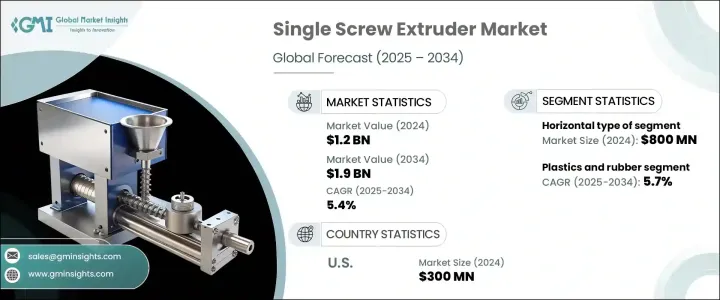
세계의 단일 스크류 압출기 시장은 2024년에 12억 달러로 평가되었고 플라스틱 제품에 대한 수요 증가, 기술 혁신, 식품, 의약품, 제조업 등 업계 전체에서 효율 개선의 필요성이 높아지고 있는 것을 배경으로 2034년에는 19억 달러에 달할 것으로 예측되며, CAGR 5.4%로 성장할 전망입니다.
단일 스크류 압출기는 파이프, 시트, 필름 등 다양한 플라스틱 제품을 만드는 데 사용됩니다. 포장 및 건축용 플라스틱 사용의 급증은 시장 수요를 더욱 촉진했습니다. 또한 자동화, 온도 제어 및 장비 설계의 발전으로 이러한 기계의 생산성이 향상되어 제조업체의 관심이 높아지고 있습니다.
식품 및 의약품 부문에서는 가공 식품 및 첨단 약물 전달 시스템에 대한 수요 증가가 시장 성장에 기여하고 있습니다. 단일 스크류 압출기는 스낵, 시리얼 및 제어 방출 정제를 생산하는 데 사용됩니다. 이 기계의 다목적성과 효율성 덕분에 다양한 산업 분야에서 대규모 생산에 적합합니다. 또한 압출기는 호스 및 씰과 같은 부품을 대량 생산할 수 있기 때문에 이 기술은 고무 제품 제조에 널리 사용됩니다.
| 시장 범위 | |
|---|---|
| 시작 연도 | 2024년 |
| 예측 연도 | 2025-2034년 |
| 시작 금액 | 12억 달러 |
| 예측 금액 | 19억 달러 |
| CAGR | 5.4% |
단일 스크류 압출기 시장은 압출기 유형에 따라 수직형과 수평형의 두 가지 주요 부문으로 나뉩니다. 2024년 8억 달러의 가치를 지닌 수평 압출기 부문은 플라스틱, 식품, 고무 등 산업 전반의 대규모 생산 작업에 적합한 수평 압출기의 확장성으로 인해 2025년부터 2034년까지 5.6%의 연평균 성장률을 보일 것으로 예상됩니다. 특히 수평 압출기는 대량 생산을 효율적으로 처리할 수 있다는 점에서 선호도가 높습니다. 반면에 컴팩트한 디자인으로 잘 알려진 수직 압출기는 공간 최적화가 우선시되는 소규모 생산 시설에 적합합니다. 이러한 압출기는 바닥 공간이 제한되어 있지만 여전히 안정적인 압출 공정이 필요한 작업장에 보다 공간 효율적인 솔루션을 제공합니다.
산업 용도별로 플라스틱 및 고무 부문은 2024년에 44%의 점유율을 차지했습니다. 이 부문은 2025년부터 2034년까지 5.7%의 연평균 성장률(CAGR)로 성장할 것으로 예상됩니다. 이 부문에서 단일 스크류 압출기에 대한 수요는 플라스틱 재활용에 대한 노력이 증가하고 재활용 가능한 재료 및 고무 제품 생산에 이러한 압출기의 사용이 증가함에 따라 증가하고 있습니다. 또한 식음료 부문에서도 특히 스낵, 시리얼, 즉석식품 생산을 위해 싱글 스크류 압출기의 수요가 크게 확대되고 있습니다. 가공 식품 및 편의 식품에 대한 소비자 수요가 증가함에 따라 효율적인 대량 압출 장비에 대한 필요성이 증가하고 있습니다.
미국의 단일 스크류 압출기 시장은 2024년에 3억 달러로 평가되었습니다. 싱글 스크류 압출기는 일반적으로 재활용 플라스틱 및 고무 재료를 처리하는 데 사용되기 때문에 지속 가능한 제조 및 재활용에 대한 미국의 강조는 이러한 성장의 핵심 촉진요인입니다. 기술 혁신과 제조 자동화의 증가로 식음료, 제약 등 다양한 분야에서 이러한 압출기의 사용이 확대되고 있습니다. 또한 더 높은 품질과 비용 효율적인 제품에 대한 지속적인 수요는 이러한 산업에서 시장의 성장을 촉진합니다.
이 시장의 주요 기업은 American Extrusion International, Bausano & Figli, Extrudex, Graham Engineering, Milacron 등이 있습니다. 시장 입지를 강화하기 위해 단일 스크류 압출기 시장의 기업들은 특히 자동화 및 에너지 효율을 통한 제품 혁신에 집중하고 있습니다. 또한 식품 및 제약과 같은 특정 산업의 요구 사항을 충족하는 맞춤형 솔루션으로 제품을 확장하고 있습니다. 연구 기관 및 기타 업계 리더들과의 전략적 파트너십을 통해 첨단 기술을 개발하는 한편, 지속 가능한 제조 관행에 대한 투자를 통해 환경적 책임을 우선시하는 시장에서 매력을 높이고 있습니다.
목차
제1장 조사 방법과 범위
제2장 주요 요약
제3장 업계 인사이트
- 생태계 분석
- 밸류체인에 영향을 주는 요인
- 이익률 분석
- 혁신
- 장래의 전망
- 제조업자
- 리셀러
- 트럼프 정권의 관세 분석
- 무역에 미치는 영향
- 무역량의 혼란
- 보복 조치
- 업계에 미치는 영향
- 공급측의 영향(원자재)
- 주요 원자재의 가격 변동
- 공급망 재구성
- 생산 비용에 미치는 영향
- 수요측의 영향(판매가격)
- 최종 시장에의 가격 전달
- 시장 점유율 동향
- 소비자의 반응 패턴
- 공급측의 영향(원자재)
- 영향을 받는 주요 기업
- 전략적인 업계 대응
- 공급망 재구성
- 가격 설정 및 제품 전략
- 정책관여
- 전망과 향후 검토 사항
- 무역에 미치는 영향
- 공급자의 상황
- 기술적 상황
- 주요 뉴스와 대처
- 규제 상황
- 영향요인
- 성장 촉진요인
- 플라스틱 제품 수요 증가
- 식품, 의약품 및 산업 부문에서의 응용 분야 확대
- 업계의 잠재적 위험 및 과제
- 트윈 스크류 압출기와의 경쟁
- 첨단 기술에 대한 고액의 초기 투자
- 성장 촉진요인
- 성장 가능성 분석
- Porter's Five Forces 분석
- PESTEL 분석
제4장 경쟁 구도
- 소개
- 기업의 시장 점유율 분석
- 경쟁 포지셔닝 매트릭스
- 전략적 전망 매트릭스
제5장 시장 추계 및 예측 : 유형별(2021-2034년)
- 주요 동향
- 수직형
- 수평형
제6장 시장 추계 및 예측 : 동작 모드별(2021-2034년)
- 주요 동향
- 반자동
- 전자동
제7장 시장 추계 및 예측 : 출력 용량별(2021-2034년)
- 주요 동향
- 최대 200kg/시
- 200-400kg/시
- 400-600kg/시
- 600kg/시 이상
제8장 시장 추계 및 예측 : 용도별(2021-2034년)
- 주요 동향
- 파이프 압출
- 시트 압출
- 필름 압출
- 기타(수정 배합 등)
제9장 시장 추계 및 예측 : 최종 이용 산업별(2021-2034년)
- 주요 동향
- 식품
- 플라스틱 및 고무
- 화학
- 의약품
- 기타(광물 및 부직포 산업 등)
제10장 시장 추계 및 예측 : 유통 채널별(2021-2034년)
- 주요 동향
- 직접 판매
- 간접 판매
제11장 시장 추계 및 예측 : 지역별(2021-2034년)
- 주요 동향
- 북미
- 미국
- 캐나다
- 유럽
- 영국
- 독일
- 프랑스
- 이탈리아
- 스페인
- 러시아
- 아시아태평양
- 중국
- 인도
- 일본
- 한국
- 호주
- 라틴아메리카
- 브라질
- 멕시코
- 중동 및 아프리카
- 아랍에미리트(UAE)
- 사우디아라비아
- 남아프리카
제12장 기업 프로파일
- American Extrusion International
- B&P Littleford
- Bausano &Figli
- BC Extrusion
- Boston Matthews
- Breyer
- Buhler
- Coperion
- CPM
- Extrudex
- Graham Engineering
- HMG Extrusion Equipment
- Milacron
- R&B Plastics Machinery
- USEON
The Global Single Screw Extruder Market was valued at USD 1.2 billion in 2024 and is estimated to grow at a CAGR of 5.4% to reach USD 1.9 billion by 2034, driven by increasing demand for plastic products, technological innovations, and the growing need for efficiency improvements across industries such as food, pharmaceuticals, and manufacturing. Single screw extruders are used to create a variety of plastic products, including pipes, sheets, and films. The surge in plastic use for packaging and construction has further fueled the market demand. Additionally, advancements in automation, temperature control, and equipment design are enhancing the productivity of these machines, making them increasingly attractive to manufacturers.
In the food and pharmaceutical sectors, the rising demand for processed food and advanced drug delivery systems is contributing to the market's growth. Single screw extruders are used to produce snacks, cereals, and controlled-release tablets. The versatility and efficiency of these machines make them well-suited for large-scale production in various industries. Furthermore, the technology is widely used in the manufacturing of rubber products, as the extruders enable high-volume production of components such as hoses and seals.
| Market Scope | |
|---|---|
| Start Year | 2024 |
| Forecast Year | 2025-2034 |
| Start Value | $1.2 Billion |
| Forecast Value | $1.9 Billion |
| CAGR | 5.4% |
The single screw extruder market is divided based on the type of extruder, with the two main segments being vertical and horizontal. The horizontal extruder segment, valued at USD 800 million in 2024, is anticipated to grow at a CAGR of 5.6% from 2025 to 2034 due to the scalability of horizontal extruders, which makes them suitable for large-scale production operations across industries such as plastics, food, and rubber. Horizontal extruders are particularly favored for their ability to handle high production efficiently. On the other hand, vertical extruders, known for their compact design, are well-suited for smaller production facilities where space optimization is a priority. These extruders provide a more space-efficient solution for operations with limited floor space but still require reliable extrusion processes.
Based on industry usage, the plastics and rubber segment held a 44% share in 2024. This segment is expected to grow at a CAGR of 5.7% between 2025 and 2034. The demand for single screw extruders in this segment is being driven by increasing efforts toward plastic recycling and the rising use of these extruders in the production of recyclable materials and rubber products. Additionally, the food and beverage sector is also significantly expanding the demand for single screw extruders, particularly to produce snacks, cereals, and ready-to-eat meals. As consumer demand for processed and convenience foods rises, the need for efficient, high-volume extruding equipment increases.
United States Single Screw Extruder Market was valued at USD 300 million in 2024. The country's emphasis on sustainable manufacturing and recycling is a key driver of this growth, as single screw extruders are commonly used to process recycled plastics and rubber materials. Technological innovations and increased automation in manufacturing are expanding the use of these extruders in various sectors, including food, beverage, and pharmaceuticals. Furthermore, the continuous demand for higher quality and more cost-effective products propels the market's growth in these industries.
Key players in the market include American Extrusion International, Bausano & Figli, Extrudex, Graham Engineering, and Milacron, among others. To enhance their market position, companies in the single screw extruder market are focusing on product innovation, particularly through automation and energy efficiency. They are also expanding their offerings with customizable solutions that cater to specific industry needs, such as food and pharmaceuticals. Strategic partnerships with research institutions and other industry leaders are allowing for the development of advanced technologies, while investments in sustainable manufacturing practices are increasing their appeal in markets that prioritize environmental responsibility.
Table of Contents
Chapter 1 Methodology & Scope
- 1.1 Market scope & definitions
- 1.2 Base estimates & calculations
- 1.3 Forecast calculations.
- 1.4 Data sources
- 1.4.1 Primary
- 1.4.2 Secondary
- 1.4.2.1 Paid sources
- 1.4.2.2 Public sources
Chapter 2 Executive Summary
- 2.1 Industry synopsis, 2021-2034
Chapter 3 Industry Insights
- 3.1 Industry ecosystem analysis
- 3.1.1 Factor affecting the value chain
- 3.1.2 Profit margin analysis
- 3.1.3 Disruptions
- 3.1.4 Future outlook
- 3.1.5 Manufacturers
- 3.1.6 Distributors
- 3.2 Trump administration tariffs analysis
- 3.2.1 Impact on trade
- 3.2.1.1 Trade volume disruptions
- 3.2.1.2 Retaliatory measures
- 3.2.2 Impact on the industry
- 3.2.2.1 Supply-side impact (raw materials)
- 3.2.2.1.1 Price volatility in key materials
- 3.2.2.1.2 Supply chain restructuring
- 3.2.2.1.3 Production cost implications
- 3.2.2.2 Demand-side impact (selling price)
- 3.2.2.2.1 Price transmission to end markets
- 3.2.2.2.2 Market share dynamics
- 3.2.2.2.3 Consumer response patterns
- 3.2.2.1 Supply-side impact (raw materials)
- 3.2.3 Key companies impacted
- 3.2.4 Strategic industry responses
- 3.2.4.1 Supply chain reconfiguration
- 3.2.4.2 Pricing and product strategies
- 3.2.4.3 Policy engagement
- 3.2.5 Outlook and future considerations
- 3.2.1 Impact on trade
- 3.3 Supplier landscape
- 3.4 Technological Landscape
- 3.5 Key news & initiatives
- 3.6 Regulatory landscape
- 3.7 Impact forces
- 3.7.1 Growth drivers
- 3.7.1.1 Rising demand for plastic products
- 3.7.1.2 Expanding applications in food, pharmaceuticals, and industrial sectors
- 3.7.2 Industry pitfalls & challenges
- 3.7.2.1 Competition from twin screw extruders
- 3.7.2.2 High initial investment in advanced technologies
- 3.7.1 Growth drivers
- 3.8 Growth potential analysis
- 3.9 Porter's analysis
- 3.10 PESTEL analysis
Chapter 4 Competitive Landscape, 2024
- 4.1 Introduction
- 4.2 Company market share analysis
- 4.3 Competitive positioning matrix
- 4.4 Strategic outlook matrix
Chapter 5 Market Estimates & Forecast, By Type, 2021-2034 (USD Billion) (Thousand Units)
- 5.1 Key trends
- 5.2 Vertical type
- 5.3 Horizontal type
Chapter 6 Market Estimates & Forecast, By Mode of Operation, 2021-2034 (USD Billion) (Thousand Units)
- 6.1 Key trends
- 6.2 Semi-automatic
- 6.3 Fully automatic
Chapter 7 Market Estimates & Forecast, By Output Capacity, 2021-2034 (USD Billion) (Thousand Units)
- 7.1 Key trends
- 7.2 Up to 200 Kg/hr
- 7.3 200 to 400 Kg/hr
- 7.4 400 to 600 Kg/hr
- 7.5 Above 600 Kg/hr
Chapter 8 Market Estimates & Forecast, By Application, 2021-2034 (USD Billion) (Thousand Units)
- 8.1 Key trends
- 8.2 Pipe extrusion
- 8.3 Sheet extrusion
- 8.4 Profile extrusion
- 8.5 Others (modified compounding etc.)
Chapter 9 Market Estimates & Forecast, By End Use Industry, 2021-2034 (USD Billion) (Thousand Units)
- 9.1 Key trends
- 9.2 Food and beverages
- 9.3 Plastics and rubber
- 9.4 Chemical industry
- 9.5 Pharmaceutical
- 9.6 Others (minerals and nonwovens industry etc.)
Chapter 10 Market Estimates & Forecast, By Distribution Channel, 2021-2034 (USD Billion) (Thousand Units)
- 10.1 Key trends
- 10.2 Direct sales
- 10.3 Indirect sales
Chapter 11 Market Estimates & Forecast, By Region, 2021-2034 (USD Billion) (Thousand Units)
- 11.1 Key trends
- 11.2 North America
- 11.2.1 U.S.
- 11.2.2 Canada
- 11.3 Europe
- 11.3.1 UK
- 11.3.2 Germany
- 11.3.3 France
- 11.3.4 Italy
- 11.3.5 Spain
- 11.3.6 Russia
- 11.4 Asia Pacific
- 11.4.1 China
- 11.4.2 India
- 11.4.3 Japan
- 11.4.4 South Korea
- 11.4.5 Australia
- 11.5 Latin America
- 11.5.1 Brazil
- 11.5.2 Mexico
- 11.6 MEA
- 11.6.1 UAE
- 11.6.2 Saudi Arabia
- 11.6.3 South Africa
Chapter 12 Company Profiles
- 12.1 American Extrusion International
- 12.2 B&P Littleford
- 12.3 Bausano & Figli
- 12.4 BC Extrusion
- 12.5 Boston Matthews
- 12.6 Breyer
- 12.7 Buhler
- 12.8 Coperion
- 12.9 CPM
- 12.10 Extrudex
- 12.11 Graham Engineering
- 12.12 HMG Extrusion Equipment
- 12.13 Milacron
- 12.14 R&B Plastics Machinery
- 12.15 USEON


