

|
시장보고서
상품코드
1750315
비행 시뮬레이터 시장 : 시장 기회, 성장 촉진요인, 산업 동향 분석 및 예측(2025-2034년)Flight Simulator Market Opportunity, Growth Drivers, Industry Trend Analysis, and Forecast 2025 - 2034 |
||||||

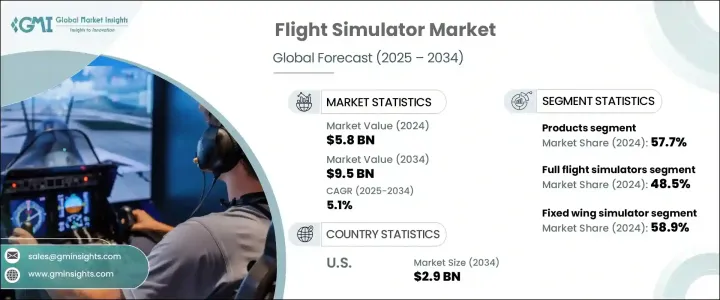
세계의 비행 시뮬레이터 시장은 2024년에는 58억 달러로 평가되었고, 2034년에는 CAGR 5.1%로 성장할 전망이며, 95억 달러에 이를 것으로 추정됩니다.
저렴한 항공사와 민간 항공 서비스의 급증은 선진적인 파일럿 훈련 툴의 필요성을 더욱 부추기고 있습니다. 비행 시뮬레이터는 기존 항공 기내 훈련을 대체하는 보다 안전하고 효율적이며 비용 대비 효과가 높은 중요한 솔루션으로 등장했습니다. 비행 시뮬레이터는 운영 비용 절감, 위험 최소화, 엄격한 항공 규격을 준수하면서 훈련의 계속성을 확보하는 데 도움이 됩니다.
국제 무역 규제의 지속적인 혼란은 시뮬레이션 하드웨어의 생산에 영향을 미칩니다. 전자 부품과 시각 시스템에 대한 관세와 수입 관세는 비용 변동과 공급 지연의 원인이 되고 있습니다. 이러한 과제로부터, 시뮬레이터 제조업체 및 주요 공급업체는, 현지 조달을 채용해, 지역에 제조 거점을 마련하게 되었습니다. 이 접근 방식은 세계 무역 불확실성에 대한 익스포저를 줄일 뿐만 아니라 국내 역량을 강화하고 첨단 기술에 대한 일관된 접근을 확보함으로써 국가 항공 우주 목표를 지원합니다.
| 시장 범위 | |
|---|---|
| 시작 연도 | 2024년 |
| 예측 연도 | 2025-2034년 |
| 시작 금액 | 58억 달러 |
| 예측 금액 | 95억 달러 |
| CAGR | 5.1% |
유형별로 시장은 풀 플라이트 시뮬레이터, 고정 기반 시뮬레이터, 비행 훈련 장비로 구분됩니다. 풀 플라이트 시뮬레이터는 첨단 모션 시스템과 사실적인 조종석 재현을 통해 몰입감 있는 훈련 경험을 제공할 수 있어 2024년 현재 48.5%의 점유율을 차지했습니다. 이러한 시스템은 민간 조종사 훈련을 위해 주요 항공 당국에 의해 설정된 규제 의무를 준수하고 있어 비행 훈련 아카데미나 항공사 사이에서 바람직한 선택지가 되고 있습니다.
서비스 부문은 2025-2034년 CAGR 6.1%로 확대될 것으로 예측됩니다. 항공사가 운영 비용 절감과 훈련 가동 시간 향상을 목표로 하는 중, 제3자에 의한 유지보수, 시뮬레이터 업그레이드, 유연한 TaaS(Training-as-a-Service) 모델에 대한 수요가 증가하고 있습니다. 구독 기반 교육 포장 및 임대 옵션은 대규모 자본 지출을 부담하지 않고 항상 최신 상태를 유지하는 것을 목표로 훈련 센터에서 특히 인기가 있습니다.
독일의 비행 시뮬레이터 시장은 2034년까지 연평균 복합 성장률(CAGR) 5.9%를 보일 것으로 예측됩니다. 이 나라는, 회전익기와 고정익기의 양쪽에 대응하는 모듈형 시뮬레이터를 중심으로, 군사 훈련 시스템의 현대화에 고액의 투자를 실시하고 있습니다. 독일이 지역 방위 동맹에서 역할을 강화함에 따라 고도로 상호 운용 가능한 훈련 플랫폼에 대한 수요는 꾸준히 증가할 것으로 예상됩니다.
세계의 비행 시뮬레이터 산업의 주요 기업으로는 L3Harris Technologies, Boeing, CAE Inc. 등이 있습니다. 테크놀로지스와 같은 비행 시뮬레이터 시장의 기업들은 세계적인 사업 개발을 강화하기 위해 전략적 인수, 합작 투자, 세계 교육 파트너십을 강조하고 있습니다. 이들 기업은 AI, VR, 클라우드 기반 기술을 통합해 확장성 있는 실시간 훈련 솔루션을 제공함으로써 시뮬레이션 포트폴리오 확대에 주력하고 있습니다. 게다가 몇몇 참가 기업은 트레이닝 센터 및 소규모 항공사에 어필하기 위해 서브스크립션 모델이나 리스 프로그램을 통해 서비스를 다양화하고 있습니다. 무역 규제에 의해 생산의 현지화 압력이 높아지는 가운데, 각사는 유럽, 북미, 아시아 태평양의 각 지역의 제조 거점이나 기술 이전 이니셔티브에 투자하고 있습니다.
목차
제1장 조사 방법 및 범위
제2장 주요 요약
제3장 산업 인사이트
- 생태계 분석
- 트럼프 정권에 의한 관세에 대한 영향
- 무역에 미치는 영향
- 무역량의 혼란
- 보복 조치
- 산업에 미치는 영향
- 공급측의 영향(서비스 제공업체)
- 주요 서비스의 가격 변동
- 공급망 재구성
- 생산 비용에 미치는 영향
- 수요측의 영향(가격 설정)
- 최종 시장에 대한 가격 전달
- 시장 점유율 동향
- 소비자의 반응 패턴
- 영향을 받는 주요 기업
- 전략적인 산업 대응
- 서버 프로바이더의 재구성
- 가격 설정 및 서비스 전략
- 시책관여
- 전망 및 향후 검토 사항
- 공급측의 영향(서비스 제공업체)
- 무역에 미치는 영향
- 산업에 미치는 영향요인
- 성장 촉진요인
- 파일럿 훈련 및 인증에 대한 수요 증가
- 시뮬레이션 기술의 진보(AR/VR 통합)
- 특히 신흥 시장에서 항공 산업 확대
- 군용 파일럿 훈련에 대한 방위비 증가
- 원격 및 가상 트레이닝 솔루션 채택 확대
- 산업의 잠재적 리스크 및 과제
- 고액의 자본 투자 및 유지비
- 급속한 혁신 사이클에 의한 기술 진부화
- 성장 촉진요인
- 성장 가능성 분석
- 규제 상황
- 기술
- 장래 시장 동향
- 갭 분석
- Porter's Five Forces 분석
- PESTEL 분석
제4장 경쟁 구도
- 서문
- 기업의 시장 점유율 분석
- 주요 시장 기업의 경쟁 분석
- 경쟁 포지셔닝 매트릭스
- 전략 대시보드
제5장 시장 추정 및 예측 : 유형별(2021-2034년)
- 주요 동향
- 풀 플라이트 시뮬레이터
- 고정 베이스 시뮬레이터
- 비행 훈련 장치
제6장 시장 추정 및 예측 : 솔루션별(2021-2034년)
- 주요 동향
- 제품
- 서비스
제7장 시장 추정 및 예측 : 플랫폼별(2021-2034년)
- 주요 동향
- 고정날개 시뮬레이터
- 회전날개 시뮬레이터
- UAV 시뮬레이터
제8장 시장 추정 및 예측 : 지역별(2021-2034년)
- 주요 동향
- 북미
- 미국
- 캐나다
- 유럽
- 독일
- 영국
- 프랑스
- 스페인
- 이탈리아
- 아시아태평양
- 중국
- 인도
- 일본
- 호주
- 한국
- 라틴아메리카
- 브라질
- 멕시코
- 중동 및 아프리카
- 아랍에미리트(UAE)
- 사우디아라비아
- 남아프리카
제9장 기업 프로파일
- AIRBUS
- AVT Simulation
- Boeing
- CAE Inc.
- Collins Aerospace
- Elite Simulation Solutions
- Havelsan Air Electronic Industry
- Indra Sistemas
- Kratos Defense & Security Solutions, Inc.
- L3Harris Technologies, Inc.
- Leonardo SpA
- Lockheed Martin Corporation
- Saab AB
- Thales
- The DiSTI Corporation
The Global Flight Simulator Market was valued at USD 5.8 billion in 2024 and is estimated to grow at a CAGR of 5.1% to reach USD 9.5 billion by 2034, attributed to the increasing demand for certified pilots amid a global surge in air travel and airline fleet expansions. The proliferation of budget airlines and private aviation services is further fueling the need for sophisticated pilot training tools. Flight simulators have emerged as a vital solution, offering safer, more efficient, and cost-effective alternatives to traditional in-aircraft training. They help in reducing operational costs, minimizing risk, and ensuring training continuity while adhering to stringent aviation standards.
Ongoing disruptions in international trade regulations have impacted the production of simulation hardware. Tariffs and import duties on electronic components and visual systems have caused cost fluctuations and supply delays. These challenges have prompted simulator manufacturers and major suppliers to adopt localized sourcing and establish regional manufacturing hubs. This approach not only reduces exposure to global trade uncertainties but also supports national aerospace objectives by bolstering domestic capabilities and ensuring consistent access to advanced technology.
| Market Scope | |
|---|---|
| Start Year | 2024 |
| Forecast Year | 2025-2034 |
| Start Value | $5.8 Billion |
| Forecast Value | $9.5 Billion |
| CAGR | 5.1% |
By type, the market is segmented into full flight simulators, fixed base simulators, and flight training devices. Full flight simulators currently hold a share of 48.5% as of 2024, driven by their ability to deliver immersive training experiences through advanced motion systems and realistic cockpit replications. These systems comply with regulatory mandates set by major aviation authorities for commercial pilot training, making them a preferred option among flight training academies and airline operators.
The services segment is anticipated to expand at a CAGR of 6.1% during 2025-2034. As airlines seek to reduce operational costs and improve training uptime, demand for third-party maintenance, simulator upgrades, and flexible training-as-a-service models is gaining momentum. Subscription-based training packages and leasing options are especially popular among training centers aiming to stay updated without bearing heavy capital expenses.
Germany Flight Simulator Market is projected to grow at a CAGR of 5.9% through 2034. The country is channeling significant investments into modernizing its military training systems, with a focus on modular simulators that support both rotary and fixed-wing aircraft. As Germany strengthens its role in regional defense alliances, demand for advanced, interoperable training platforms is expected to rise steadily.
Key players in the Global Flight Simulator Industry include L3Harris Technologies, Boeing, and CAE Inc. To boost their global footprint, companies in the flight simulator market, such as CAE Inc., Boeing, and L3Harris Technologies, emphasize strategic acquisitions, joint ventures, and global training partnerships. They focus on expanding their simulation portfolios by integrating AI, VR, and cloud-based technologies to deliver scalable, real-time training solutions. Furthermore, several players diversify their services through subscription models and leasing programs to appeal to training centers and smaller airlines. With growing pressure to localize production due to trade restrictions, companies invest in regional manufacturing hubs and technology transfer initiatives across Europe, North America, and Asia-Pacific.
Table of Contents
Chapter 1 Methodology and Scope
- 1.1 Market scope and definitions
- 1.2 Research design
- 1.2.1 Research approach
- 1.2.2 Data collection methods
- 1.3 Base estimates and calculations
- 1.3.1 Base year calculation
- 1.3.2 Key trends for market estimation
- 1.4 Forecast model
- 1.5 Primary research and validation
- 1.5.1 Primary sources
- 1.5.2 Data mining sources
Chapter 2 Executive Summary
- 2.1 Industry 3600 synopsis
Chapter 3 Industry Insights
- 3.1 Industry ecosystem analysis
- 3.2 Trump administration tariffs
- 3.2.1 Impact on trade
- 3.2.1.1 Trade volume disruptions
- 3.2.1.2 Retaliatory measures
- 3.2.1.3 Impact on the industry
- 3.2.1.3.1 Supply-side impact (service providers)
- 3.2.1.3.1.1 Price volatility in key services
- 3.2.1.3.1.2 Supply chain restructuring
- 3.2.1.3.1.3 Production cost implications
- 3.2.1.3.2 Demand-side impact (pricing)
- 3.2.1.3.2.1 Price transmission to end markets
- 3.2.1.3.2.2 Market share dynamics
- 3.2.1.3.2.3 Consumer response patterns
- 3.2.1.3.3 Key companies impacted
- 3.2.1.3.4 Strategic industry responses
- 3.2.1.3.4.1 Server provider reconfiguration
- 3.2.1.3.4.2 Pricing and service strategies
- 3.2.1.3.4.3 Policy engagement
- 3.2.1.3.5 Outlook and future considerations
- 3.2.1.3.1 Supply-side impact (service providers)
- 3.2.1 Impact on trade
- 3.3 Industry impact forces
- 3.3.1 Growth drivers
- 3.3.1.1 Rising demand for pilot training and certification
- 3.3.1.2 Advancements in simulation technology (AR/VR integration)
- 3.3.1.3 Expansion of the aviation industry, especially in emerging markets
- 3.3.1.4 Increased defense spending on military pilot training
- 3.3.1.5 Growing adoption of remote and virtual training solutions
- 3.3.2 Industry pitfalls and challenges
- 3.3.2.1 High capital investment and maintenance costs
- 3.3.2.2 Technological obsolescence due to rapid innovation cycles
- 3.3.1 Growth drivers
- 3.4 Growth potential analysis
- 3.5 Regulatory landscape
- 3.6 Technology landscape
- 3.7 Future market trends
- 3.8 Gap analysis
- 3.9 Porter's analysis
- 3.10 PESTEL analysis
Chapter 4 Competitive Landscape, 2024
- 4.1 Introduction
- 4.2 Company market share analysis
- 4.3 Competitive analysis of major market players
- 4.4 Competitive positioning matrix
- 4.5 Strategy dashboard
Chapter 5 Market Estimates & Forecast, By Type, 2021 - 2034 (USD Billion)
- 5.1 Key trends
- 5.2 Full flight simulators
- 5.3 Fixed base simulators
- 5.4 Flight training devices
Chapter 6 Market Estimates & Forecast, By Solution, 2021 - 2034 (USD Billion)
- 6.1 Key trends
- 6.2 Products
- 6.3 Services
Chapter 7 Market Estimates & Forecast, By Platform, 2021 - 2034 (USD Billion)
- 7.1 Key trends
- 7.2 Fixed wing simulator
- 7.3 Rotary wing simulator
- 7.4 UAV simulator
Chapter 8 Market Estimates and Forecast, By Region, 2021 - 2034 (USD Billion)
- 8.1 Key trends
- 8.2 North America
- 8.2.1 U.S.
- 8.2.2 Canada
- 8.3 Europe
- 8.3.1 Germany
- 8.3.2 UK
- 8.3.3 France
- 8.3.4 Spain
- 8.3.5 Italy
- 8.4 Asia Pacific
- 8.4.1 China
- 8.4.2 India
- 8.4.3 Japan
- 8.4.4 Australia
- 8.4.5 South Korea
- 8.5 Latin America
- 8.5.1 Brazil
- 8.5.2 Mexico
- 8.6 Middle East and Africa
- 8.6.1 UAE
- 8.6.2 Saudi Arabia
- 8.6.3 South Africa
Chapter 9 Company Profiles
- 9.1 AIRBUS
- 9.2 AVT Simulation
- 9.3 Boeing
- 9.4 CAE Inc.
- 9.5 Collins Aerospace
- 9.6 Elite Simulation Solutions
- 9.7 Havelsan Air Electronic Industry
- 9.8 Indra Sistemas
- 9.9 Kratos Defense & Security Solutions, Inc.
- 9.10 L3Harris Technologies, Inc.
- 9.11 Leonardo S.p.A.
- 9.12 Lockheed Martin Corporation
- 9.13 Saab AB
- 9.14 Thales
- 9.15 The DiSTI Corporation


