|
시장보고서
상품코드
1750441
오프 하이웨이 전기자동차 시장 : 기회, 성장 촉진요인, 산업 동향 분석, 예측(2025-2034년)Off-highway Electric Vehicle Market Opportunity, Growth Drivers, Industry Trend Analysis, and Forecast 2025 - 2034 |
||||||

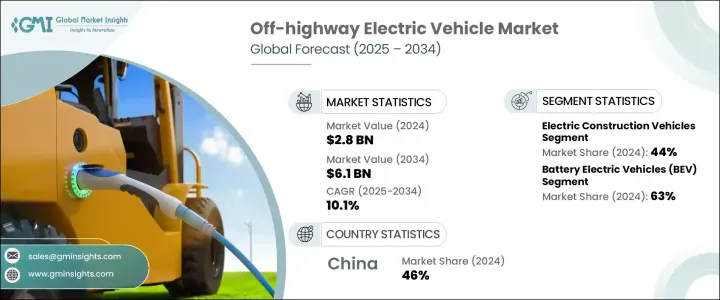
세계의 오프 하이웨이 전기자동차 시장은 2024년 28억 달러로 평가되었으며 특히 건설, 광업 및 농업과 같은 기존 디젤 중장비에 의존해 온 산업에서 까다로운 환경 규제 및 배출 가스 감축 목표에 힘입어 CAGR 10.1%로 성장해 2034년까지 61억 달러에 이를 것으로 추정됩니다.
세계 각국 정부는 보다 엄격한 배기 가스 규제를 시행하고 있으며, 기업은 국내 및 국제 환경 기준을 준수하기 위해 보다 깨끗한 대체 수단으로 전기자동차를 채택하도록 촉구하고 있습니다.
도시화와 인프라의 확대는 성장하는 도시의 지속 가능하고 효율적인 건설 기계에 대한 수요 증가로 인한 OHEV 시장의 주요 성장 촉진요인입니다. 차량은 특히 배기가스 규제와 소음 조례가 엄격하게 시행되는 도시 환경에 적합합니다. 기술이 개선됨에 따라 전기자동차는 더욱 강력하고 효율적이며 환경 친화적인 개발로의 세계 변화를 지원하면서 집중적인 건설 작업을 처리 할 수있는 능력을 더욱 강화하고 있습니다.
| 시장 범위 | |
|---|---|
| 시작 연도 | 2024년 |
| 예측 연도 | 2025-2034년 |
| 시작 금액 | 28억 달러 |
| 예측 금액 | 61억 달러 |
| CAGR | 10.1% |
전동 건설 차량 부문은 44%의 점유율을 차지하고 2025-2034년 CAGR 10.5%로 예측됩니다. 건설 활동은 소음과 대기 오염이 큰 우려 사항인 인구 밀도가 높은 도시 지역에서 발생하는 경우가 많기 때문에 전기자동차가 매우 적합합니다.
배터리 전기자동차 부문은 63%의 점유율을 차지하며, 2025-2034년 CAGR은 10.2%를 보일 것으로 예측됩니다. BEV는 운전중에 제로 에미션을 실현해, 세계의 규제 압력과 지속가능성의 목표, 특히 대기 오염의 삭감이 중요한 도시에서의 목표에 합치하고 있습니다. 또한, BEV는 가동 부품이 적고, 유지 관리가 적어져 내연 엔진 차량에 비해 운용 비용과 유지
중국 오프 하이웨이 전기자동차 정부의 강력한 지원, 견고한 인프라, 지속 가능한 건설 및 채굴 장비에 대한 수요가 증가함에 따라 2024년 시장 점유율은 46%, 매출은 5 억 5,720만 달러였습니다. 중국의 OEM은 연구개발에 많은 투자를 하고, 배터리 효율과 지능형 시스템에 주력하고 있습니다.
세계의 고속도로 전기자동차 산업에서 사업을 전개하는 주요 기업으로는 XCMG, Hitachi Construction Machinery, Kubota, Caterpillar, Sany, Liebherr, Komatsu, Wacker Neuson, Volvo AB, Deere & Company 등이 있습니다. 이러한 기업은 시장에서의 지위를 강화하기 위해 신기술의 도입에 주력하고 있습니다.
목차
제1장 조사 방법과 범위
제2장 주요 요약
제3장 업계 인사이트
- 생태계 분석
- 공급자의 상황
- 원재료 공급자
- 배터리 제조 업체 및 공급업체
- OEM
- 기술 및 소프트웨어 제공업체
- 유통, 판매, 애프터마켓 서비스 제공업체
- 이익률 분석
- 트럼프 정권에 의한 관세에 대한 영향
- 무역에 미치는 영향
- 무역량의 혼란
- 타국에 의한 보복조치
- 업계에 미치는 영향
- 주요 원재료의 가격 변동
- 공급망 재구성
- 생산 비용에 미치는 영향
- 영향을 받는 주요 기업
- 전략적인 업계 대응
- 공급망 재구성
- 가격 설정 및 제품 전략
- 전망과 향후 검토 사항
- 무역에 미치는 영향
- 기술과 혁신의 상황
- 가격 동향
- 코스트 내역 분석
- 특허 분석
- 주요 뉴스와 대처
- 규제 상황
- 영향요인
- 성장 촉진요인
- 엄격한 환경 규제와 배출 감축 목표
- 지속가능성과 환경문제에 대한 의식의 고조
- 배터리와 모터의 기술 진보
- 정부 인센티브와 보조금
- 도시화와 인프라 확장
- 업계의 잠재적 위험 및 과제
- 초기 구입 비용이 높습니다.
- 배터리의 항속 거리와 동작 시간이 한정되어 있습니다.
- 성장 촉진요인
- 성장 가능성 분석
- Porter's Five Forces 분석
- PESTEL 분석
제4장 경쟁 구도
- 소개
- 기업의 시장 점유율 분석
- 경쟁 포지셔닝 매트릭스
- 전략적 전망 매트릭스
제5장 시장 추계 및 예측 : 차량별, 2021-2034년
- 주요 동향
- 전기 건설 차량
- 굴삭기
- 불도저
- 로더
- 전기 농업용 차량
- 트랙터
- 수확기
- 분무기
- 전기광산 차량
- 운반 트럭
- 드릴
- 기타
제6장 시장추계 및 예측 : 추진력별, 2021-2034년
- 주요 동향
- 배터리 전기자동차(BEV)
- 플러그인 하이브리드 전기자동차(PHEV)
- 하이브리드 전기자동차(HEV)
- 연료전지 전기자동차(FCEV)
제7장 시장 추계 및 예측 : 배터리 용량별, 2021-2034년
- 주요 동향
- 50kWh 미만
- 50-200kWh
- 200kWh 이상
제8장 시장추계 및 예측 : 출력별, 2021-2034년
- 주요 동향
- 50마력 미만
- 50-150마력
- 150마력 이상
제9장 시장추계 및 예측 : 용도별, 2021-2034년
- 공사
- 농업
- 광업
- 기타
제10장 시장추계 및 예측 : 지역별, 2021-2034년
- 주요 동향
- 북미
- 미국
- 캐나다
- 유럽
- 영국
- 독일
- 프랑스
- 이탈리아
- 스페인
- 러시아
- 북유럽 국가
- 아시아태평양
- 중국
- 인도
- 일본
- 한국
- 호주 및 뉴질랜드
- 동남아시아
- 라틴아메리카
- 브라질
- 멕시코
- 아르헨티나
- 중동 및 아프리카
- 아랍에미리트(UAE)
- 사우디아라비아
- 남아프리카
제11장 기업 프로파일
- Bell Equipment
- Caterpillar
- CNH Industrial
- Deere & Company
- DEUTZ AG
- Doosan
- Hitachi Construction Machinery
- JCB
- Komatsu
- Kubota
- Liebherr
- Manitou Group
- Sany
- Solectrac
- Stihl Holding
- Sumitomo Heavy Industries
- Terex Corporation
- Volvo AB
- Wacker Neuson
- XCMG
The Global Off-highway Electric Vehicle Market was valued at USD 2.8 billion in 2024 and is estimated to grow at a CAGR of 10.1% to reach USD 6.1 billion by 2034 driven by stringent environmental regulations and emissions reduction targets, particularly in industries like construction, mining, and agriculture, which traditionally rely on heavy diesel-powered machinery. Governments worldwide are enforcing tighter emissions standards, pushing companies to adopt electric vehicles as a cleaner alternative to comply with local and international environmental standards.
Urbanization and infrastructure expansion are key growth drivers for the OHEV market due to the increasing demand for sustainable and efficient construction equipment in growing cities. As cities continue to grow and infrastructure demands increase, the pressure to reduce noise and air pollution on construction sites has never been higher. Electric off-highway vehicles not only meet this demand but also align with sustainability goals set by municipalities and governments. These vehicles are especially well-suited for urban environments where emissions limits and noise ordinances are strictly enforced. Additionally, the operational cost savings-thanks to fewer moving parts and lower fuel expenses-make electric models an increasingly attractive investment for contractors. As technology continues to improve, electric vehicles are becoming more powerful and efficient, further enhancing their capability to handle intensive construction tasks while supporting the global shift toward environmentally responsible development.
| Market Scope | |
|---|---|
| Start Year | 2024 |
| Forecast Year | 2025-2034 |
| Start Value | $2.8 Billion |
| Forecast Value | $6.1 Billion |
| CAGR | 10.1% |
The electric construction vehicles segment held a 44% share and is expected to grow at a CAGR of 10.5% during 2025-2034. Electric construction vehicles hold the highest market share in the OHEV market due to the sector's rapid urbanization, infrastructure development, and growing pressure to reduce emissions on job sites. Construction activities often occur in densely populated urban areas where noise and air pollution are major concerns, making electric vehicles highly suitable. Additionally, governments are enforcing stricter emissions regulations for construction zones, especially in developed and environmentally sensitive regions.
The Battery Electric Vehicles segment held 63% share and is expected to grow at a CAGR of 10.2% from 2025 - 2034. Advancements in lithium-ion battery technology have significantly improved energy density, charging speed, and lifespan, making BEVs more practical and cost-effective for off-highway applications like construction and mining. BEVs offer zero emissions during operation, aligning with global regulatory pressures and sustainability goals, especially in urbanized areas where reducing air pollution is critical. Moreover, BEVs have lower operational and maintenance costs compared to internal combustion engine vehicles, as they have fewer moving parts and require less upkeep.
China Off-highway Electric Vehicle Market held a 46% share and generated USD 557.2 million in 2024 due to strong government support, robust infrastructure, and a growing demand for sustainable construction and mining equipment. Policies promoting carbon neutrality and subsidies for electric vehicles have accelerated adoption. Chinese OEMs are investing heavily in R&D, focusing on battery efficiency and intelligent systems. The region benefits from a well-established battery manufacturing ecosystem and increasing urbanization, driving demand for low-emission equipment.
Major players operating in the Global Off-Highway Electric Vehicle Industry include XCMG, Hitachi Construction Machinery, Kubota, Caterpillar, Sany, Liebherr, Komatsu, Wacker Neuson, Volvo AB, and Deere & Company. These companies are focusing on introducing new technologies to strengthen their position in the market. The development in vehicles aims to improve fuel efficiency, delivering optimal job performance , speed, and reduce noise levels. Such innovations are expected to enhance the adoption of electric off-highway vehicles in various industries.
Table of Contents
Chapter 1 Methodology & Scope
- 1.1 Research design
- 1.1.1 Research approach
- 1.1.2 Data collection methods
- 1.2 Base estimates and calculations
- 1.2.1 Base year calculation
- 1.2.2 Key trends for market estimates
- 1.3 Forecast model
- 1.4 Primary research & validation
- 1.4.1 Primary sources
- 1.4.2 Data mining sources
- 1.5 Market definitions
Chapter 2 Executive Summary
- 2.1 Industry 3600 synopsis, 2021 - 2034
Chapter 3 Industry Insights
- 3.1 Industry ecosystem analysis
- 3.2 Supplier landscape
- 3.2.1 Raw material suppliers
- 3.2.2 Battery manufacturers and suppliers
- 3.2.3 Original Equipment Manufacturers (OEMs)
- 3.2.4 Technology and software providers
- 3.2.5 Distribution, sales, and aftermarket service providers
- 3.3 Profit margin analysis
- 3.4 Trump administration tariffs
- 3.4.1 Impact on trade
- 3.4.1.1 Trade volume disruptions
- 3.4.1.2 Retaliatory measures by other countries
- 3.4.2 Impact on the industry
- 3.4.2.1 Price Volatility in key materials
- 3.4.2.2 Supply chain restructuring
- 3.4.2.3 Production cost implications
- 3.4.3 Key companies impacted
- 3.4.4 Strategic industry responses
- 3.4.4.1 Supply chain reconfiguration
- 3.4.4.2 Pricing and product strategies
- 3.4.5 Outlook and future considerations
- 3.4.1 Impact on trade
- 3.5 Technology & innovation landscape
- 3.6 Price trends
- 3.7 Cost breakdown analysis
- 3.8 Patent analysis
- 3.9 Key news & initiatives
- 3.10 Regulatory landscape
- 3.11 Impact forces
- 3.11.1 Growth drivers
- 3.11.1.1 Stringent environmental regulations and emissions reduction targets
- 3.11.1.2 Growing awareness of sustainability and environmental concerns
- 3.11.1.3 Technological advancements in batteries and motors
- 3.11.1.4 Government incentives and subsidies
- 3.11.1.5 Urbanization and infrastructure expansion
- 3.11.2 Industry pitfalls & challenges
- 3.11.2.1 High initial purchase cost
- 3.11.2.2 Limited battery range and operating time
- 3.11.1 Growth drivers
- 3.12 Growth potential analysis
- 3.13 Porter's analysis
- 3.14 PESTEL analysis
Chapter 4 Competitive Landscape, 2024
- 4.1 Introduction
- 4.2 Company market share analysis
- 4.3 Competitive positioning matrix
- 4.4 Strategic outlook matrix
Chapter 5 Market Estimates & Forecast, By Vehicle, 2021 - 2034 ($Bn, Units)
- 5.1 Key trends
- 5.2 Electric construction vehicles
- 5.2.1 Excavators
- 5.2.2 Bulldozers
- 5.2.3 Loaders
- 5.3 Electric agricultural vehicles
- 5.3.1 Tractors
- 5.3.2 Harvesters
- 5.3.3 Sprayers
- 5.4 Electric mining vehicles
- 5.4.1 Haul trucks
- 5.4.2 Drills
- 5.5 Others
Chapter 6 Market Estimates & Forecast, By Propulsion, 2021 - 2034 ($Bn, Units)
- 6.1 Key trends
- 6.2 Battery electric vehicles (BEV)
- 6.3 Plug-in hybrid electric vehicles (PHEV)
- 6.4 Hybrid electric vehicles (HEV)
- 6.5 Fuel cell electric vehicles (FCEVs)
Chapter 7 Market Estimates & Forecast, By Battery Capacity, 2021 - 2034 ($Bn, Units)
- 7.1 Key trends
- 7.2 Less than 50 kWh
- 7.3 50–200 kWh
- 7.4 More than 200 kWh
Chapter 8 Market Estimates & Forecast, By Power Output, 2021 - 2034 ($Bn, Units)
- 8.1 Key trends
- 8.2 Less than 50 HP
- 8.3 50–150 HP
- 8.4 More than 150 HP
Chapter 9 Market Estimates & Forecast, By Application, 2021 - 2034 ($Bn, Units)
- 9.1 Construction
- 9.2 Agriculture
- 9.3 Mining
- 9.4 Others
Chapter 10 Market Estimates & Forecast, By Region, 2021 - 2034 ($Bn, Units)
- 10.1 Key trends
- 10.2 North America
- 10.2.1 U.S.
- 10.2.2 Canada
- 10.3 Europe
- 10.3.1 UK
- 10.3.2 Germany
- 10.3.3 France
- 10.3.4 Italy
- 10.3.5 Spain
- 10.3.6 Russia
- 10.3.7 Nordics
- 10.4 Asia Pacific
- 10.4.1 China
- 10.4.2 India
- 10.4.3 Japan
- 10.4.4 South Korea
- 10.4.5 ANZ
- 10.4.6 Southeast Asia
- 10.5 Latin America
- 10.5.1 Brazil
- 10.5.2 Mexico
- 10.5.3 Argentina
- 10.6 MEA
- 10.6.1 UAE
- 10.6.2 Saudi Arabia
- 10.6.3 South Africa
Chapter 11 Company Profiles
- 11.1 Bell Equipment
- 11.2 Caterpillar
- 11.3 CNH Industrial
- 11.4 Deere & Company
- 11.5 DEUTZ AG
- 11.6 Doosan
- 11.7 Hitachi Construction Machinery
- 11.8 JCB
- 11.9 Komatsu
- 11.10 Kubota
- 11.11 Liebherr
- 11.12 Manitou Group
- 11.13 Sany
- 11.14 Solectrac
- 11.15 Stihl Holding
- 11.16 Sumitomo Heavy Industries
- 11.17 Terex Corporation
- 11.18 Volvo AB
- 11.19 Wacker Neuson
- 11.20 XCMG