|
시장보고서
상품코드
1755299
센서로서의 비디오 시장 : 기회, 성장 촉진요인, 산업 동향 분석 및 예측(2025-2034년)Video as a Sensor Market Opportunity, Growth Drivers, Industry Trend Analysis, and Forecast 2025 - 2034 |
||||||

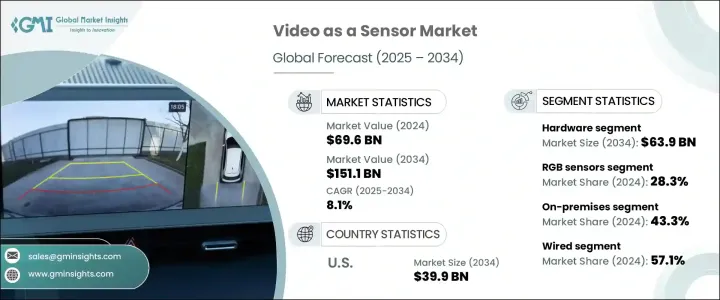
센서로서의 비디오 시장은 2024년에는 696억 달러로, 2034년에는 1,511억 달러에 이를 것으로 예측되며, CAGR 8.1%로 성장할 전망입니다.
산업계에서 실시간 환경 모니터링과 신속한 의사 결정이 우선시됨에 따라, 시각적 데이터를 실행 가능한 인사이트로 변환하는 중요한 도구로 비디오 센서가 도입되고 있습니다. AI를 비디오 피드에 통합하면 감시 효율성이 향상되어 더 빠른 해석과 안전 대응이 가능해집니다. 방위, 산업 자동화, 의료 등 산업은 기존 인프라에 스마트 비디오 센서를 통합해 운영 통제, 보안 기준, 대응 속도를 향상시키며 시장의 성장세를 강화하고 있습니다.
중국산 부품에 대한 관세 부과로 하드웨어(카메라 모듈, 이미징 센서 등)에 비용 압력이 가중되었습니다. 이 무역 변화는 공급망 중단과 납기 지연을 초래해 생산 및 조달 지연으로 이어졌습니다. 인플레이션 상승과 정부 예산 긴축은 구매 프로세스에 새로운 복잡성을 도입해 승인 기간 연장 및 고급 감시 기술 도입 지연을 초래했습니다. 이러한 경제적 제약은 공공 기관이 지출 우선순위를 조정하도록 압박을 가해, 비디오를 센서 솔루션으로 도입하는 속도에 영향을 미칠 수 있습니다.
| 시장 범위 | |
|---|---|
| 시작 연도 | 2024년 |
| 예측 연도 | 2025-2034년 |
| 시작 금액 | 696억 달러 |
| 예측 금액 | 1,511억 달러 |
| CAGR | 8.1% |
시장의 하드웨어 부문은 주목할 만한 성장을 보이며 2034년에는 639억 달러에 달할 것으로 예상됩니다. 이러한 성장은 실시간 기기 내 데이터 분석이 가능한 지능형 AI 통합 이미징 시스템에 대한 수요의 급증에 의해 크게 촉진되고 있습니다. 이러한 시스템은 지연 시간을 줄이고, 네트워크 부하를 최소화하며, 동적인 운영 환경에서 신속하고 자율적인 의사 결정을 가능하게 하는 데 매우 중요합니다.
열 센서 부문은 병원, 국경 검문소, 대규모 공공 장소 등 민감한 환경에서 열 화상 센서의 통합이 확대됨에 따라 2034년까지 444억 달러에 달할 것으로 예상됩니다. 이러한 센서는 안전 및 모니터링을 강화할 뿐만 아니라, 고장이 발생하기 전에 산업 장비의 온도 이상을 식별하여 예측 유지보수 작업을 지원하는 데도 중요한 역할을 합니다.
미국 센서로서의 비디오 시장은 2034년까지 399억 달러에 달할 전망입니다. 채택 곡선은 스마트 시티 인프라, 국방 현대화, 국가 안보 강화에 대한 강조가 결합되면서 형성되고 있습니다. 이러한 발전과 함께 에지 기반 비디오 분석 기술의 혁신은 정부 및 민간 부문 응용 분야에서 이 기술을 주류로 밀어붙이고 있습니다.
이 시장에 영향을 미치는 주요 기업은 Teledyne Technologies, OmniVision Technologies Inc., Canon Inc., Sony Corporation, and STMicroelectronics 등이 있습니다. 센서로서의 비디오 업계의 주요 기업은 더 빠르고 안전한 데이터 처리를 위한 엣지 처리 기능을 갖춘 차세대 이미징 솔루션을 개발하기 위해 R&D 투자를 확대하고 있습니다. 국방, 의료, 산업 분야 업체들과 전략적 제휴 및 협력을 맺고 분야별 요구 사항에 맞는 제품을 개발하고 있습니다. 또한 제조업체들은 공급망의 불안정성에 대한 의존도를 낮추고 무역 관세의 영향을 상쇄하기 위해 부품 조달을 현지화하고 있습니다.
목차
제1장 조사 방법과 범위
제2장 주요 요약
제3장 업계 인사이트
- 생태계 분석
- 트럼프 정권의 관세 분석
- 무역에 미치는 영향
- 무역량의 혼란
- 보복 조치
- 업계에 미치는 영향
- 공급측의 영향(원재료)
- 가격 변동
- 공급망 재구성
- 생산 비용에 미치는 영향
- 수요측의 영향
- 최종 시장에의 가격 전달
- 시장 점유율 동향
- 소비자의 반응 패턴
- 공급측의 영향(원재료)
- 영향을 받는 주요 기업
- 전략적인 업계 대응
- 공급망 재구성
- 가격 설정 및 제품 전략
- 정책관여
- 전망과 향후 검토 사항
- 무역에 미치는 영향
- 업계에 미치는 영향요인
- 성장 촉진요인
- 실시간 상황 인식에 대한 수요 증가
- 스마트시티와 인프라 프로젝트 확대
- 보안 및 모니터링 요건 강화
- AI 기반 비디오 분석의 확산
- 군사 예산 증가
- 업계의 잠재적 위험 및 과제
- 레거시 시스템과의 통합 복잡성
- 실시간 처리에서의 지연
- 성장 촉진요인
- 성장 가능성 분석
- 규제 상황
- 기술의 상황
- 장래 시장 동향
- 갭 분석
- Porter's Five Forces 분석
- PESTEL 분석
제4장 경쟁 구도
- 소개
- 기업의 시장 점유율 분석
- 주요 시장 기업의 경쟁 분석
- 경쟁 포지셔닝 매트릭스
- 전략 대시보드
제5장 시장 추계 및 예측 : 컴포넌트별(2021-2034년)
- 주요 동향
- 하드웨어
- 소프트웨어
- 서비스
제6장 시장 추계 및 예측 : 센서 유형별(2021-2034년)
- 주요 동향
- RGB 센서
- 적외선(IR) 센서
- 열 센서
- 깊이 센서
- 멀티 스펙트럼 센서
제7장 시장 추계 및 예측 : 전개 모드별(2021-2034년)
- 주요 동향
- 온프레미스
- 클라우드 기반
- 엣지 기반
제8장 시장 추계 및 예측 : 접속성별(2021-2034년)
- 주요 동향
- 유선
- 무선
제9장 시장 추계 및 예측 : 용도별(2021-2034년)
- 주요 동향
- 보안 및 모니터링
- 교통 모니터링 및 스마트 모빌리티
- 산업 자동화 및 로봇 공학
- 소매 분석
- 의료 및 환자 모니터링
- 환경 모니터링
- 농업 및 가축 모니터링
- 기타
제10장 시장 추계 및 예측 : 지역별(2021-2034년)
- 주요 동향
- 북미
- 미국
- 캐나다
- 유럽
- 독일
- 영국
- 프랑스
- 스페인
- 이탈리아
- 네덜란드
- 아시아태평양
- 중국
- 인도
- 일본
- 호주
- 한국
- 라틴아메리카
- 브라질
- 멕시코
- 아르헨티나
- 중동 및 아프리카
- 사우디아라비아
- 남아프리카
- 아랍에미리트(UAE)
제11장 기업 프로파일
- Avnet EMEA
- BAE Systems plc
- Canon Inc.
- Excelitas Technologies Corp.
- FLUKE Corporation
- Hamamatsu Photonics KK
- InfraTec GmbH
- Intevac, Inc.
- IRCameras LLC
- L3Harris Technologies
- Leonardo DRS
- Lynred
- New Imaging Technologies(NIT)
- OmniVision Technologies Inc.
- Photonis Technologies
- Sony Corporation
- STMicroelectronics
- Teledyne Technologies Incorporated
- Thales Group
- Xenics NV
The Global Video as a Sensor Market was valued at USD 69.6 billion in 2024 and is estimated to grow at a CAGR of 8.1% to reach USD 151.1 billion by 2034. The growth is driven by the rising demand for situational awareness across various sectors. As industries prioritize real-time environmental monitoring and rapid decision-making, video sensors are being deployed as critical tools that convert visual data into actionable insights. Integration of AI with video feeds enhances surveillance efficiency, allowing for faster interpretation and improved safety responses. Industries such as defense, industrial automation, and healthcare are integrating smart video sensors into their existing infrastructure to elevate operational control, security standards, and responsiveness, reinforcing the market's upward trajectory.
The imposition of tariffs on imported Chinese components has created cost pressures, particularly on hardware like camera modules and imaging sensors. These trade shifts disrupted the supply chain and extended lead times, resulting in delayed production and procurement. Rising inflation and tightening government budgets have introduced new layers of complexity to procurement processes, often resulting in longer approval times and delayed implementation of advanced surveillance technologies. These economic constraints are placing pressure on public sector agencies to prioritize spending, which may impact the pace at which video as a sensor solution is rolled out across critical sectors.
| Market Scope | |
|---|---|
| Start Year | 2024 |
| Forecast Year | 2025-2034 |
| Start Value | $69.6 Billion |
| Forecast Value | $151.1 Billion |
| CAGR | 8.1% |
The hardware component of the market is experiencing notable traction, projected to reach USD 63.9 billion by 2034. This growth is largely driven by the surge in demand for intelligent, AI-integrated imaging systems capable of real-time, on-device data analysis. Such systems are pivotal for reducing latency, minimizing network load, and enabling quick, autonomous decision-making in dynamic operational settings.
The thermal sensors segment is expected to reach USD 44.4 billion by 2034 as thermal video sensors are witnessing broader integration across sensitive environments like hospitals, border checkpoints, and large-scale public spaces. These sensors play a vital role not only in enhancing safety and monitoring but also in supporting predictive maintenance operations by identifying temperature anomalies in industrial equipment before failure occurs.
United States Video as a Sensor Market reached USD 39.9 billion by 2034. The adoption curve is being shaped by the convergence of smart city infrastructure, defense modernization, and heightened emphasis on homeland security. These developments, alongside innovation in edge-based video analytics, are pushing the technology into the mainstream across both government and private sector applications.
Key companies influencing this market include Teledyne Technologies, OmniVision Technologies Inc., Canon Inc., Sony Corporation, and STMicroelectronics. Leading firms in the video as a sensor industry are focusing on innovation, partnerships, and AI integration to strengthen their global footprint. Companies are expanding R&D initiatives to create next-gen imaging solutions with edge-processing capabilities for faster and more secure data handling. Strategic alliances and collaborations are being formed with defense, healthcare, and industrial players to tailor offerings for sector-specific needs. Manufacturers are also localizing component sourcing to reduce reliance on volatile supply chains and counteract trade tariff impacts.
Table of Contents
Chapter 1 Methodology and Scope
- 1.1 Market scope and definitions
- 1.2 Research design
- 1.2.1 Research approach
- 1.2.2 Data collection methods
- 1.3 Base estimates and calculations
- 1.3.1 Base year calculation
- 1.3.2 Key trends for market estimation
- 1.4 Forecast model
- 1.5 Primary research and validation
- 1.5.1 Primary sources
- 1.5.2 Data mining sources
Chapter 2 Executive Summary
- 2.1 Industry 360° synopsis
Chapter 3 Industry Insights
- 3.1 Industry ecosystem analysis
- 3.2 Trump administration tariffs analysis
- 3.2.1 Impact on trade
- 3.2.1.1 Trade volume disruptions
- 3.2.1.2 Retaliatory measures
- 3.2.2 Impact on the industry
- 3.2.2.1 Supply-side impact (raw material)
- 3.2.2.1.1 Price volatility
- 3.2.2.1.2 Supply chain restructuring
- 3.2.2.1.3 Production cost implications
- 3.2.2.2 Demand-side impact
- 3.2.2.2.1 Price transmission to end markets
- 3.2.2.2.2 Market share dynamics
- 3.2.2.2.3 Consumer response patterns
- 3.2.2.1 Supply-side impact (raw material)
- 3.2.3 Key companies impacted
- 3.2.4 Strategic industry responses
- 3.2.4.1 Supply chain reconfiguration
- 3.2.4.2 Pricing and product strategies
- 3.2.4.3 Policy engagement
- 3.2.5 Outlook and future considerations
- 3.2.1 Impact on trade
- 3.3 Industry impact forces
- 3.3.1 Growth drivers
- 3.3.1.1 Rising demand for real-time situational awareness
- 3.3.1.2 Expansion of smart cities and infrastructure projects
- 3.3.1.3 Increased security and surveillance requirements
- 3.3.1.4 Proliferation of AI-powered video analytics
- 3.3.1.5 Growth in military budget
- 3.3.2 Industry pitfalls and challenges
- 3.3.2.1 Integration complexity with legacy systems
- 3.3.2.2 Latency in real-time processing
- 3.3.1 Growth drivers
- 3.4 Growth potential analysis
- 3.5 Regulatory landscape
- 3.6 Technology landscape
- 3.7 Future market trends
- 3.8 Gap analysis
- 3.9 Porter's analysis
- 3.10 PESTEL analysis
Chapter 4 Competitive Landscape, 2024
- 4.1 Introduction
- 4.2 Company market share analysis
- 4.3 Competitive analysis of major market players
- 4.4 Competitive positioning matrix
- 4.5 Strategy dashboard
Chapter 5 Market Estimates & Forecast, By Component, 2021-2034 (USD Billion)
- 5.1 Key trends
- 5.2 Hardware
- 5.3 Software
- 5.4 Services
Chapter 6 Market Estimates & Forecast, By Sensor Type, 2021-2034 (USD Billion)
- 6.1 Key trends
- 6.2 RGB sensors
- 6.3 Infrared (IR) sensors
- 6.4 Thermal sensors
- 6.5 Depth sensors
- 6.6 Multispectral sensors
Chapter 7 Market Estimates & Forecast, By Deployment Mode, 2021-2034 (USD Billion)
- 7.1 Key trends
- 7.2 On-premises
- 7.3 Cloud-based
- 7.4 Edge-based
Chapter 8 Market Estimates & Forecast, By Connectivity, 2021-2034 (USD Billion)
- 8.1 Key trends
- 8.2 Wired
- 8.3 Wireless
Chapter 9 Market Estimates & Forecast, By Application, 2021-2034 (USD Billion)
- 9.1 Key trends
- 9.2 Security & surveillance
- 9.3 Traffic monitoring & smart mobility
- 9.4 Industrial automation & robotics
- 9.5 Retail analytics
- 9.6 Healthcare & patient monitoring
- 9.7 Environmental monitoring
- 9.8 Agriculture & livestock monitoring
- 9.9 Others
Chapter 10 Market Estimates and Forecast, By Region, 2021 – 2034 (USD Billion)
- 10.1 Key trends
- 10.2 North America
- 10.2.1 U.S.
- 10.2.2 Canada
- 10.3 Europe
- 10.3.1 Germany
- 10.3.2 UK
- 10.3.3 France
- 10.3.4 Spain
- 10.3.5 Italy
- 10.3.6 Netherlands
- 10.4 Asia Pacific
- 10.4.1 China
- 10.4.2 India
- 10.4.3 Japan
- 10.4.4 Australia
- 10.4.5 South Korea
- 10.5 Latin America
- 10.5.1 Brazil
- 10.5.2 Mexico
- 10.5.3 Argentina
- 10.6 Middle East and Africa
- 10.6.1 Saudi Arabia
- 10.6.2 South Africa
- 10.6.3 UAE
Chapter 11 Company Profiles
- 11.1 Avnet EMEA
- 11.2 BAE Systems plc
- 11.3 Canon Inc.
- 11.4 Excelitas Technologies Corp.
- 11.5 FLUKE Corporation
- 11.6 Hamamatsu Photonics K.K.
- 11.7 InfraTec GmbH
- 11.8 Intevac, Inc.
- 11.9 IRCameras LLC
- 11.10 L3Harris Technologies
- 11.11 Leonardo DRS
- 11.12 Lynred
- 11.13 New Imaging Technologies (NIT)
- 11.14 OmniVision Technologies Inc.
- 11.15 Photonis Technologies
- 11.16 Sony Corporation
- 11.17 STMicroelectronics
- 11.18 Teledyne Technologies Incorporated
- 11.19 Thales Group
- 11.20 Xenics NV