|
시장보고서
상품코드
1797787
항독소 시장 기회, 성장 촉진요인, 산업 동향 분석 및 예측(2025-2034년)Anti-venom Market Opportunity, Growth Drivers, Industry Trend Analysis, and Forecast 2025 - 2034 |
||||||

세계의 항독소 시장은 2024년에는 13억 6,000만 달러로 평가되었고, CAGR 7.7%를 나타내 2034년에는 28억 달러에 이를 것으로 추정되고 있습니다.
특히 열대·아열대 지역에 있어서의 독함·물림의 발생률의 상승에 의해 효과적인 치료 솔루션의 필요성이 높아지고 있습니다. 건강 관리 접근이 취약한 지역에서 개선됨에 따라, 항독소 제품은 사망 사고 및 장기 건강 합병증 예방에 중요한 역할을 하기 때문에 수요가 증가하고 있습니다.
항독소는 다양한 동물의 독의 유해한 영향을 중화하는 데 사용되는 생물학적 제제로 세계 의약품 및 응급 의학 분야에서 중요성을 늘리고 있습니다. 이 제품은 일반적으로 의학적 관리하에 투여되며 소생 유닛, 점적 요법, 중증 환자 대응과 같은 자원이 필요합니다. 병원은 인프라, 숙련된 인력, 응급 치료를 제공하는 능력으로 인해 이러한 치료의 주요 센터가되고 있습니다. 병원에 대한 의존은 특히 전신성 합병증을 동반하는 정맥류의 사례를 관리하기 위해 구조화된 임상 환경에 대한 선호도가 증가하고 있음을 뒷받침합니다.
| 시장 범위 | |
|---|---|
| 시작 연도 | 2024년 |
| 예측 연도 | 2025-2034년 |
| 시작 금액 | 13억 6,000만 달러 |
| 예측 금액 | 28억 달러 |
| CAGR | 7.7% |
2024년 시장 점유율은 병원이 63.9%를 나타내 압도적이었으며 외래수술센터(ASC)와 클리닉이 뒤를 이었습니다. 독성 치료의 중요성과 환자의 요구의 복잡성은 병원을 선호하는 최종 사용자 부문으로 계속 견인합니다. 정맥류의 치료에는 전문적인 케어와 지속적인 모니터링이 요구되는 경우가 많기 때문에 세계의 헬스케어 시스템은 이러한 긴급 상황에 대응할 수 있는 시설에 투자하고 있습니다.
시장은 유형별로 다가와 1가 항-venom제로 분할됩니다. 2024년 시장 규모는 약 9억 2,000만 달러로 다가 분야가 67.6%의 점유율을 차지하고 시장을 선도했습니다. 이 부문은 CAGR 7.9%를 나타내 2034년에는 19억 달러 이상에 달할 것으로 예측됩니다. 다가의 항독소 약물은 특히 여러 독을 가진 동물이 공존하는 지역에서 광범위한 독종에 효과적이기 때문에 선호됩니다. 한편, 2024년에 4억 4,150만 달러로 평가된 1가 부문은 표적화된 치료에 대응하고, 일반적으로 단일 유형의 위협이 우세한 지역에서 사용됩니다. 그 특이성은 이러한 환경 하에서 높은 효과를 발휘하여 안정적인 수요를 지원하고 있습니다.
종에 따라 시장은 뱀, 전갈, 거미 등으로 분류됩니다. 2024년에는 뱀에 찔렸을 때의 항독소는 50.4%를 나타내 가장 큰 점유율을 차지했고 이는 뱀에 의한 중독이 세계적으로 널리 확산되고 있음을 반영하고 있습니다. 예방과 교육의 진보에도 불구하고, 많은 신흥 국가에서 뱀 물린은 여전히 심각한 우려 사항이며 즉각적인 치료에 대한 접근이 제한되어 있습니다. 이 분야 시장 성장은 치료되지 않은 물기로 인한 사망 사고와 장기적인 부상을 줄이기 위한 공중 보건 프로그램에 의해 견인되고 있습니다.
지역별로는 북미가 2024년 항독소 시장에서 세계 점유율의 38.8%를 차지해 최대 공헌국으로 부상했습니다. 이 지역의 이점은 고급 건강 관리 인프라, 주요 제약 제조업체의 존재 및 효율적인 응급 대응 시스템으로 인한 것입니다. 게다가 규제의 명확성과 연구개발에 대한 지속적인 투자로 북미는 기술 혁신과 접근성의 리더로서의 지위를 확립하고 있습니다.
시장을 견인하는 주요 기업에는 강력한 제품 파이프라인과 강력한 세계 유통망을 갖춘 세계 제약 기업 및 생명 공학 기업이 포함됩니다. 톱 기업을 합치면 세계 시장의 약 54%를 지배하고 있습니다. 현지 특화된 제제를 제조하고 공급망의 효율성을 유지하며 규제 당국의 승인을 확보하는 능력은 시장에서의 리더십을 지원합니다. 또한 이들 기업의 대부분은 공중보건기관 및 연구기관과 파트너십을 맺고 질병이 많은 지역에서의 도달범위와 효과를 높이고 있습니다.
신규 참가 기업이 대체 생산 기술을 모색하는 가운데 기술 혁신이 상황을 바꾸고 있습니다. 합성 생물학, 재조합 항체 개발, 식물 유래 시스템 등입니다. 이러한 진보는 보다 안전하고 비용 효율적이고 확장 가능한 항독소을 생산하는 것을 목표로 합니다. 또한 비주사형 및 보다 신속한 진단 도구에 대한 관심도 높아지고 있으며, 농촌 지역이나 충분한 치료를 받지 않은 지역에서의 치료 기간을 크게 개선하여 시장 침투를 더욱 가속화할 수 있습니다.
목차
제1장 조사 방법과 범위
제2장 주요 요약
제3장 업계 인사이트
- 생태계 분석
- 업계에 미치는 영향요인
- 성장 촉진요인
- 세계적으로 뱀 물기나 전갈 자상의 발생률이 상승
- 항독소에 대한 접근 개선을 위한 정부와 NGO의 노력
- 항독소 생산에 있어서의 기술적 진보
- 독물 중독의 관리에 관한 헬스케어 종사자에의 의식 향상과 연수 프로그램의 실시
- 업계의 잠재적 위험 및 과제
- 저소득국가에서의 항독소의 고가격과 입수의 어려움
- 표준화된 제조방법의 부족으로 안전성과 유효성에 편차 발생
- 시장 기회
- 차세대 항독소 개발에 있어서의 생명공학과 나노기술의 출현
- 효율성 향상, 알레르기 반응 감소, 재조합 솔루션 개발을 위한 조사 투자 증가
- 성장 촉진요인
- 성장 가능성 분석
- 규제 상황
- 기술적 진보
- 현재의 기술 동향
- 신흥기술
- 향후 시장 동향
- 갭 분석
- 파이프라인 분석
- Porter's Five Forces 분석
- PESTEL 분석
제4장 경쟁 구도
- 서론
- 기업의 시장 점유율 분석
- 북미
- 유럽
- 기업 매트릭스 분석
- 주요 시장 기업의 경쟁 분석
- 경쟁 포지셔닝 매트릭스
- 주요 발전
- 합병과 인수
- 파트너십 및 협업
- 신제품 발매
- 확장 계획
제5장 시장 추계·예측 : 유형별(2021-2034년)
- 주요 동향
- 다가
- 1가
제6장 시장 추계·예측 : 종별(2021-2034년)
- 주요 동향
- 뱀
- 전갈
- 거미
- 기타 종
제7장 시장 추계·예측 : 최종 용도별(2021-2034년)
- 주요 동향
- 병원
- 외래수술센터(ASC)
- 클리닉
제8장 시장 추계·예측 : 지역별(2021-2034년)
- 주요 동향
- 북미
- 미국
- 캐나다
- 유럽
- 독일
- 영국
- 프랑스
- 스페인
- 이탈리아
- 네덜란드
- 아시아태평양
- 일본
- 중국
- 인도
- 호주
- 한국
- 라틴아메리카
- 브라질
- 멕시코
- 아르헨티나
- 중동 및 아프리카
- 남아프리카
- 사우디아라비아
- 아랍에미리트(UAE)
제9장 기업 프로파일
- Alomone Labs
- Bharat Serums and Vaccines Limited(BSV)
- BTG International
- CSL Limited
- Haffkine Bio-Pharmaceutical Corporation Limited
- Incepta Pharmaceuticals Limited
- Instituto Butantan
- Inosan Biopharma
- Merck
- MicroPharm
- Pfizer
- Rare Disease Therapeutics
- South African Vaccine Producers
- Serum Institute of India
- ViNS Bioproducts
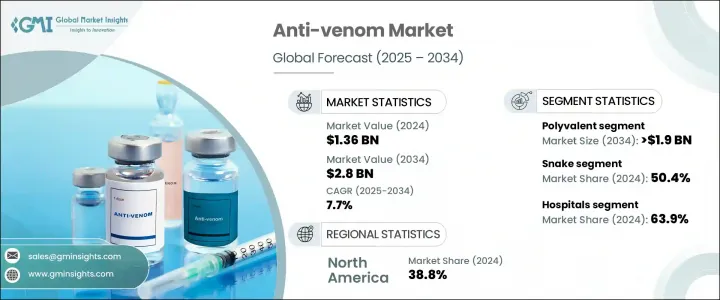
The Global Anti-venom Market was valued at USD 1.36 billion in 2024 and is estimated to grow at a CAGR of 7.7% to reach USD 2.8 billion by 2034. The rising incidence of venomous stings and bites, especially in tropical and subtropical regions, has intensified the need for effective therapeutic solutions. As healthcare access improves in vulnerable regions, demand for anti-venom products is increasing due to their critical role in preventing fatalities and long-term health complications.
Anti-venom, a biological product used to neutralize the harmful effects of venom from various animals, is gaining importance in the global pharmaceutical and emergency medicine space. The product is typically administered under medical supervision, requiring resources such as resuscitation units, IV therapies, and critical care support. Hospitals remain the primary centers for such treatment due to their infrastructure, skilled personnel, and ability to deliver urgent care. The reliance on hospitals underscores the rising preference for structured clinical settings to manage envenomation cases, especially those with systemic complications.
| Market Scope | |
|---|---|
| Start Year | 2024 |
| Forecast Year | 2025-2034 |
| Start Value | $1.36 Billion |
| Forecast Value | $2.8 Billion |
| CAGR | 7.7% |
In 2024, the hospital segment captured a dominant market share of 63.9%, followed by ambulatory surgical centers and clinics. The critical nature of venom treatment and the complexity of patient needs continue to drive hospitals as the preferred end-user segment. As envenomation management often demands specialized care and continuous monitoring, healthcare systems worldwide are investing in facilities capable of handling such emergencies.
The market is segmented by type into polyvalent and monovalent anti-venoms. In 2024, the polyvalent segment led the market with a 67.6% share, valued at approximately USD 920 million. This segment is forecasted to surpass USD 1.9 billion by 2034, growing at a CAGR of 7.9%. Polyvalent anti-venoms are preferred due to their effectiveness against a broad spectrum of venomous species, especially in areas where multiple venomous animals coexist. Meanwhile, the monovalent segment, valued at USD 441.5 million in 2024, caters to targeted treatment, typically used in regions with predominant single-species threats. Its specificity makes it highly effective in such settings, supporting its steady demand.
By species, the market is categorized into snake, scorpion, spider, and others. In 2024, snakebite-related anti-venoms held the largest share at 50.4%, reflecting the widespread global burden of snake envenomation. Despite advances in prevention and education, snakebites remain a significant concern in many developing countries, where access to immediate care is limited. The market growth in this segment is also driven by public health programs aimed at reducing fatalities and long-term injuries caused by untreated bites.
Regionally, North America emerged as the largest contributor to the anti-venom market in 2024, accounting for 38.8% of the global share. The region's dominance can be attributed to its advanced healthcare infrastructure, presence of major pharmaceutical manufacturers, and efficient emergency response systems. Additionally, regulatory clarity and continued investments in research and development have positioned North America as a leader in anti-venom innovation and accessibility.
Key players driving the market include global pharmaceutical and biotech firms with robust product pipelines and strong global distribution networks. Collectively, the top companies control about 54% of the global market. Their ability to produce region-specific formulations, maintain supply chain efficiency, and secure regulatory approvals supports their market leadership. Many of these companies also engage in partnerships with public health agencies and research institutions to enhance their reach and effectiveness in high-burden regions.
Innovation is reshaping the landscape, as newer entrants explore alternative technologies for anti-venom production. These include synthetic biology, recombinant antibody development, and plant-based systems. Such advancements aim to produce safer, more cost-effective, and scalable anti-venoms. There is also growing interest in non-injectable formats and faster diagnostic tools, which could significantly improve treatment timelines in rural and underserved areas, further accelerating market penetration.
Table of Contents
Chapter 1 Methodology and Scope
- 1.1 Market scope and definition
- 1.2 Research design
- 1.2.1 Research approach
- 1.2.2 Data collection methods
- 1.3 Data mining sources
- 1.3.1 Global
- 1.3.2 Regional/Country
- 1.4 Base estimates and calculations
- 1.4.1 Base year calculation
- 1.4.2 Key trends for market estimation
- 1.5 Primary research and validation
- 1.5.1 Primary sources
- 1.6 Forecast model
- 1.7 Research assumptions and limitations
Chapter 2 Executive Summary
- 2.1 Industry 3600 synopsis
- 2.2 Key market trends
- 2.2.1 Regional trends
- 2.2.2 Type Trends
- 2.2.3 Species trends
- 2.2.4 End use trends
- 2.3 CXO perspectives: Strategic imperatives
- 2.3.1 Key decision points for industry executives
- 2.3.2 Critical success factors for market players
- 2.4 Future outlook and strategic recommendations
Chapter 3 Industry Insights
- 3.1 Industry ecosystem analysis
- 3.2 Industry impact forces
- 3.2.1 Growth drivers
- 3.2.1.1 Rising incidence of snakebites and scorpion stings globally
- 3.2.1.2 Government and NGO initiatives to improve access to anti-venoms
- 3.2.1.3 Technological advancements in anti-venom production
- 3.2.1.4 Growing awareness and training programs for healthcare professionals in managing envenomation
- 3.2.2 Industry pitfalls and challenges
- 3.2.2.1 High cost and limited affordability of anti-venoms in low-income countries
- 3.2.2.2 Lack of standardized manufacturing practices, leading to variations in safety and efficacy
- 3.2.3 Market opportunities
- 3.2.3.1 Emergence of biotechnology and nanotechnology in creating next-generation anti-venoms
- 3.2.3.2 Increased investments in research to improve efficacy, reduce allergic reactions, and develop recombinant solutions
- 3.2.1 Growth drivers
- 3.3 Growth potential analysis
- 3.4 Regulatory landscape
- 3.4.1 North America
- 3.4.2 Europe
- 3.4.3 Asia Pacific
- 3.4.4 Latin America
- 3.4.5 Middle East and Africa
- 3.5 Technological advancements
- 3.5.1 Current technological trends
- 3.5.2 Emerging technologies
- 3.6 Future market trends
- 3.7 Gap analysis
- 3.8 Pipeline analysis
- 3.9 Porter's analysis
- 3.10 PESTEL analysis
Chapter 4 Competitive Landscape, 2024
- 4.1 Introduction
- 4.2 Company market share analysis
- 4.2.1 North America
- 4.2.2 Europe
- 4.3 Company matrix analysis
- 4.4 Competitive analysis of major market players
- 4.5 Competitive positioning matrix
- 4.6 Key developments
- 4.6.1 Mergers & acquisitions
- 4.6.2 Partnerships & collaborations
- 4.6.3 New product launches
- 4.6.4 Expansion plans
Chapter 5 Market Estimates and Forecast, By Type, 2021 - 2034 ($ Mn)
- 5.1 Key trends
- 5.2 Polyvalent
- 5.3 Monovalent
Chapter 6 Market Estimates and Forecast, By Species, 2021 - 2034 ($ Mn)
- 6.1 Key trends
- 6.2 Snake
- 6.3 Scorpion
- 6.4 Spider
- 6.5 Other species
Chapter 7 Market Estimates and Forecast, By End Use, 2021 - 2034 ($ Mn)
- 7.1 Key trends
- 7.2 Hospitals
- 7.3 Ambulatory surgical centers (ASC's)
- 7.4 Clinics
Chapter 8 Market Estimates and Forecast, By Region, 2021 - 2034 ($ Mn)
- 8.1 Key trends
- 8.2 North America
- 8.2.1 U.S.
- 8.2.2 Canada
- 8.3 Europe
- 8.3.1 Germany
- 8.3.2 UK
- 8.3.3 France
- 8.3.4 Spain
- 8.3.5 Italy
- 8.3.6 Netherlands
- 8.4 Asia Pacific
- 8.4.1 Japan
- 8.4.2 China
- 8.4.3 India
- 8.4.4 Australia
- 8.4.5 South Korea
- 8.5 Latin America
- 8.5.1 Brazil
- 8.5.2 Mexico
- 8.5.3 Argentina
- 8.6 Middle East and Africa
- 8.6.1 South Africa
- 8.6.2 Saudi Arabia
- 8.6.3 UAE
Chapter 9 Company Profiles
- 9.1 Alomone Labs
- 9.2 Bharat Serums and Vaccines Limited (BSV)
- 9.3 BTG International
- 9.4 CSL Limited
- 9.5 Haffkine Bio-Pharmaceutical Corporation Limited
- 9.6 Incepta Pharmaceuticals Limited
- 9.7 Instituto Butantan
- 9.8 Inosan Biopharma
- 9.9 Merck
- 9.10 MicroPharm
- 9.11 Pfizer
- 9.12 Rare Disease Therapeutics
- 9.13 South African Vaccine Producers
- 9.14 Serum Institute of India
- 9.15 ViNS Bioproducts