|
시장보고서
상품코드
1801827
신발 포장 시장 : 기회, 성장 촉진요인, 산업 동향 분석 및 예측(2025-2034년)Shoe Packaging Market Opportunity, Growth Drivers, Industry Trend Analysis, and Forecast 2025 - 2034 |
||||||

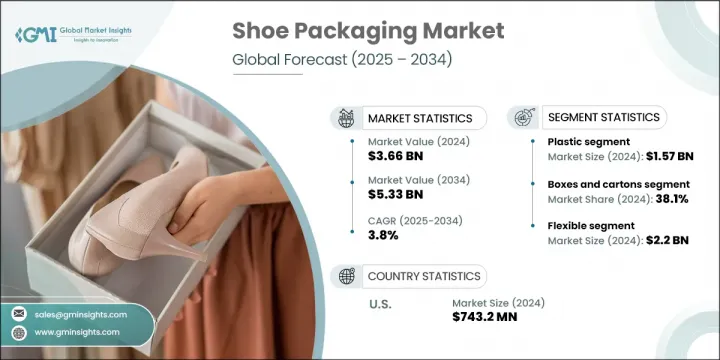
세계의 신발 포장 시장 규모는 2024년에 36억 6,000만 달러가 되고, CAGR 3.8%로 성장할 전망이며 2034년에는 53억 3,000만 달러에 이를 것으로 예측되고 있습니다.
이 분야의 성장은 확대되는 전자상거래 미래, 소비자 직접 판매(DTC), 지속가능성에 대한 소비자 기대 증가, 브랜드 정체성에 대한 강조 강화, 순환형 및 단일 소재 솔루션으로의 전환에 의해 주도되고 있습니다. 환경 규제가 강화되고 고객 선호도가 변화함에 따라 포장은 브랜드 전략의 연장선이자 가치를 전달하는 도구로 자리매김하고 있습니다.
맞춤형 포장에 대한 수요 증가는 신발 기업들이 경쟁 시장에서 차별화되는 데 기여하고 있습니다. 맞춤형 신발 가방과 상자는 이동식 광고판 역할을 하며, 고객 경험을 향상시키면서 저비용 마케팅을 제공합니다. 브랜드들은 이제 품질을 반영하고 제품 계층화를 지원하며 소비자 충성도를 강화하기 위해 다양한 형식, 소재, 마감 처리로 포장을 디자인합니다. 프리미엄 및 일상용 신발 부문 전반에 걸친 독특한 포장 경험은 정체성을 강화하고 연결성을 구축하며 구매 결정에 영향을 미칩니다.
| 시장 범위 | |
|---|---|
| 시작 연도 | 2024년 |
| 예측 연도 | 2025-2034년 |
| 시작 금액 | 36억 6,000만 달러 |
| 예측 금액 | 53억 3,000만 달러 |
| CAGR | 3.8% |
골판지 및 플라스틱과 같은 기존 신발 포장 형식은 경제성과 공급망 편의성으로 인해 여전히 주류 선택지입니다. 특히 가격에 민감한 지역을 타겟팅하거나 높은 제품 회전율을 관리하는 제조업체에게 이러한 옵션은 계속해서 매력적입니다. 그러나 소비자와 정부의 압박이 증가함에 따라 포장 제조업체들은 소재 사용을 재고하도록 촉구하고 있습니다.
바이오 기반 대체재 부문은 2034년까지 연평균 7.4%의 성장률을 보일 것으로 예상됩니다. 브랜드들은 지속가능성 목표에 부합하기 위해 생분해성, 퇴비화 가능성, 재생 가능 포장재로 전환하고 있습니다. 이러한 소재들은 구조적 성능을 저하시키지 않으면서 진열대 매력도를 높이고 친환경 포장 약속을 이행하기 위한 디자인 전략에 점점 더 통합되고 있습니다.
박스 및 카톤 부문은 2024년 14억 달러를 기록하며 38.1%의 점유율을 차지했습니다. 골판지 및 판지 박스는 보호 기능, 인쇄 가능성, 공간 효율성으로 선호됩니다. 특히 재고 관리와 브랜드 가시성이 핵심인 대규모 소매 및 도매 채널에서 물류와 마케팅 기능을 효과적으로 수행하고 있습니다.
2024년 미국의 신발 포장 시장 규모는 7억 4,320만 달러로 2034년까지 연평균 성장률(CAGR)은 1.9%였습니다. 현지 포장 제조사들은 친환경 대안을 위한 노력을 강화하며 재사용 가능한 포맷과 생분해성 내장재를 적용한 재활용 가능 판지를 제공하고 있다. 위조 방지 기능 및 스마트 라벨링과 같은 혁신 기술은 특히 브랜드 보호가 중요한 프리미엄 및 고성능 신발 부문에서 점차 확산되고 있다. 기업들은 장기적 지속가능성 목표에 부합하는 친환경 포장 기술을 도입함으로써 소비자 가치와 규제 변화에 대응하고 있습니다.
세계의 신발 포장 시장을 선도하는 주요 기업으로는 DS Smith Plc, Smurfit Kappa Group, WestRock Company, International Paper Company, Mondi Group 등이 있습니다. 신발 포장 시장의 주요 기업들은 경쟁력을 유지하기 위해 혁신, 자동화, 소재 과학 분야에 적극적으로 투자하고 있습니다. 주요 초점은 재활용 가능, 퇴비화 가능 또는 바이오 기반 소재를 활용한 지속 가능한 포장 개발에 있으며, 이는 소비자 기대와 환경 규제를 충족시키기 위함이다. 기업들은 디지털 프린팅 및 모듈식 포장 형식을 통해 맞춤화 역량을 확대하여 브랜드 차별화를 지원하고 있다. 신발 브랜드와의 전략적 협력을 통해 제품 매력을 높이는 독점적 포장을 공동 개발하고 있다. 또한 기업들은 확장성과 적시 유통을 보장하기 위해 물류 및 전 세계 공급망을 강화하고 있다.
목차
제1장 조사 방법과 범위
제2장 주요 요약
제3장 업계 인사이트
- 생태계 분석
- 공급자의 상황
- 이익률
- 비용 구조
- 각 단계에서의 부가가치
- 밸류체인에 영향을 주는 요인
- 혁신
- 업계에 미치는 영향요인
- 성장 촉진요인
- 소매 및 식료품 부문의 높은 수요
- 비용 효율과 경량성
- 급속한 도시화와 인구 증가
- 신흥 경제국에서의 조직화된 소매 확대
- 맞춤화 및 브랜딩 기회
- 업계의 잠재적 위험 및 과제
- 환경규제 및 금지사항
- 지속가능한 대체품에 대한 소비자의 선호도 증가
- 성장 촉진요인
- 성장 가능성 분석
- 규제 상황
- 북미
- 유럽
- 아시아태평양
- 라틴아메리카
- 중동 및 아프리카
- Porter's Five Forces 분석
- PESTEL 분석
- 기술과 혁신 미래
- 현재의 기술 동향
- 신흥기술
- 가격 동향
- 과거 가격 분석(2021-2024년)
- 가격 동향 요인
- 지역별 가격 차이
- 가격 예측(2025-2034년)
- 가격 전략
- 새로운 비즈니스 모델
- 규제 준수 요건
- 지속가능성 대책
- 지속 가능한 재료의 평가
- 탄소발자국 분석
- 순환형 경제의 실현
- 지속가능성 인증 및 기준
- 지속가능성 ROI 분석
- 세계 소비자 감정 분석
- 특허 분석
제4장 경쟁 구도
- 소개
- 기업의 시장 점유율 분석
- 지역별
- 북미
- 유럽
- 아시아태평양
- 라틴아메리카
- 중동 및 아프리카
- 시장 집중 분석
- 지역별
- 주요 기업의 경쟁 벤치마킹
- 재무실적의 비교
- 수익
- 이익률
- 연구개발
- 제품 포트폴리오 비교
- 제품 라인업 폭
- 기술
- 혁신
- 지리적 존재의 비교
- 세계 실적 분석
- 서비스 네트워크의 범위
- 지역별 시장 침투율
- 경쟁 포지셔닝 매트릭스
- 전략적 전망 매트릭스
- 재무실적의 비교
- 주요 발전(2021-2024년)
- 합병과 인수
- 파트너십 및 협업
- 기술 발전
- 확대 및 투자 전략
- 지속가능성에 대한 노력
- 디지털 변혁의 대처
- 신흥기업/스타트업 기업 경쟁 구도
제5장 시장 추계 및 예측 : 재료 유형별(2021-2034년)
- 주요 동향
- 플라스틱
- PET(폴리에틸렌테레프탈레이트)
- HDPE(고밀도 폴리에틸렌)
- LDPE(저밀도 폴리에틸렌)
- 재활용 플라스틱
- 종이 및 판지
- 골판지
- 크래프트지
- 코트지
- 성형 섬유
- 바이오 기반 소재
- 버섯 포장
- 펄프 기반 포장
- 해양 플라스틱
- 옥수수 전분 기반 바이오플라스틱
- 바가스(사탕수수 폐기물)
제6장 시장 추계 및 예측 : 제품 유형별(2021-2034년)
- 주요 동향
- 상자 및 판지
- 백
- 랩
- 삽입물 및 액세서리
제7장 시장 추계 및 예측 : 유형별(2021-2034년)
- 주요 동향
- 유연 포장
- 경질 포장
제8장 시장 추계 및 예측 : 유통 채널별(2021-2034년)
- 주요 동향
- 온라인
- 전자상거래 플랫폼(Amazon, Flipkart, Alibaba)
- 소비자 직접 판매(D2C) 브랜드의 웹사이트
- 오프라인
- 신발 소매점
- 백화점
- 전문 포장점
- 도매업체
제9장 시장 추계 및 예측 : 지역별(2021-2034년)
- 주요 동향
- 북미
- 미국
- 캐나다
- 유럽
- 독일
- 영국
- 프랑스
- 스페인
- 이탈리아
- 네덜란드
- 아시아태평양
- 중국
- 인도
- 일본
- 호주
- 한국
- 라틴아메리카
- 브라질
- 멕시코
- 아르헨티나
- 중동 및 아프리카
- 사우디아라비아
- 남아프리카
- 아랍에미리트(UAE)
제10장 기업 프로파일
- Abdos Labtech Private Limited
- Agar Scientific Ltd.
- DS Smith Plc
- Ebro Color GmbH
- Graphic Packaging Holding Company
- Great Little Box Company
- Heathrow Scientific
- Huhtamaki Oyj
- Hurst Scientific
- International Paper Company
- Leica Biosystems Nussloch GmbH
- Molecular Biology Products Inc.(MBPS)
- Mondi Group
- Nashville Wraps
- Packaging Corporation of America
- Packlane Inc.
- Progress Luv2Pak International
- ProSciTech
- Seaman Paper Company
- Shenzhen Prince New Material Co., Ltd.
- Smurfit Kappa Group
- Stora Enso Oyj
- Ted Pella, Inc.
- Thermo Fisher Scientific Inc.
- WestRock Company
The Global Shoe Packaging Market was valued at USD 3.66 billion in 2024 and is estimated to grow at a CAGR of 3.8% to reach USD 5.33 billion by 2034. Growth in this space is being shaped by the expanding e-commerce landscape, direct-to-consumer retailing, rising consumer expectations around sustainability, the growing emphasis on brand identity, and the shift toward circular and mono-material solutions. As environmental regulations tighten and customer preferences evolve, packaging is becoming an extension of brand strategy and a tool for communicating values.
The push for customized packaging is helping shoe companies stand out in competitive markets. Personalized shoe bags and boxes act as mobile billboards, offering low-cost marketing while enhancing the customer experience. Brands now design packaging in varied formats, materials, and finishes to reflect quality, support product tiering, and strengthen consumer loyalty. Unique packaging experiences across both premium and everyday footwear segments help reinforce identity, build connection, and influence purchasing decisions.
| Market Scope | |
|---|---|
| Start Year | 2024 |
| Forecast Year | 2025-2034 |
| Start Value | $3.66 Billion |
| Forecast Value | $5.33 Billion |
| CAGR | 3.8% |
Traditional shoe packaging formats, such as corrugated cardboard and plastics, remain the dominant choice due to their affordability and supply chain convenience. These options continue to hold appeal, especially for manufacturers targeting price-sensitive regions or managing high product turnover. However, mounting pressure from both consumers and governments is pushing packaging manufacturers to rethink material use.
The bio-based alternatives segment is expected to grow at a CAGR of 7.4% through 2034. Brands are turning to biodegradable, compostable, and renewable packaging components to align with sustainable targets. These materials are increasingly integrated into design strategies to improve shelf appeal and meet green packaging commitments without compromising structural performance.
The boxes and cartons segment held a 38.1% share, generating USD 1.4 billion in 2024. Corrugated and paperboard boxes are favored for their protective quality, print capabilities, and space efficiency. They continue to serve both logistics and marketing functions effectively, especially in large-scale retail and wholesale channels, where inventory management and brand visibility are key.
United States Shoe Packaging Market was valued at USD 743.2 million in 2024, registering a CAGR of 1.9% through 2034. Local packaging manufacturers are ramping up efforts toward greener alternatives, offering reusable formats and recyclable paperboard with biodegradable inserts. Innovations such as anti-counterfeit features and smart labeling are gaining ground, particularly in premium and performance footwear segments where brand protection is critical. Companies are responding to consumer values and regulatory changes by adopting eco-conscious packaging technologies that align with long-term sustainability goals.
Key players leading the Global Shoe Packaging Market include DS Smith Plc, Smurfit Kappa Group, WestRock Company, International Paper Company, and Mondi Group. Top players in the shoe packaging market are actively investing in innovation, automation, and material science to stay competitive. A major focus lies in the development of sustainable packaging using recyclable, compostable, or bio-based materials to align with consumer expectations and environmental regulations. Companies are expanding their customization capabilities with digital printing and modular packaging formats to support brand differentiation. Strategic collaborations with shoe brands help them co-create exclusive packaging that enhances product appeal. Firms are also strengthening logistics and global supply networks to ensure scalability and timely distribution.
Table of Contents
Chapter 1 Methodology and Scope
- 1.1 Market scope and definition
- 1.2 Research design
- 1.2.1 Research approach
- 1.2.2 Data collection methods
- 1.3 Data mining sources
- 1.3.1 Global
- 1.3.2 Regional/Country
- 1.4 Base estimates and calculations
- 1.4.1 Base year calculation
- 1.4.2 Key trends for market estimation
- 1.5 Primary research and validation
- 1.5.1 Primary sources
- 1.6 Forecast model
- 1.7 Research assumptions and limitations
Chapter 2 Executive Summary
- 2.1 Industry snapshot
- 2.2 Key market trends
- 2.2.1 Business trends
- 2.2.2 Material type trends
- 2.2.3 Product type trends
- 2.2.4 Type trends
- 2.2.5 Distribution channels trends
- 2.2.6 Regional
- 2.3 TAM Analysis, 2025-2034 (USD Billion)
- 2.4 CXO perspectives: Strategic imperatives
- 2.4.1 Executive decision points
- 2.4.2 critical success factors
- 2.5 Future outlook and strategic recommendations
Chapter 3 Industry Insights
- 3.1 Industry ecosystem analysis
- 3.1.1 Supplier landscape
- 3.1.2 Profit margin
- 3.1.3 Cost structure
- 3.1.4 Value addition at each stage
- 3.1.5 Factor affecting the value chain
- 3.1.6 Disruptions
- 3.2 Industry impact forces
- 3.2.1 Growth drivers
- 3.2.1.1 High demand from retail and grocery sectors
- 3.2.1.2 Cost-effectiveness and lightweight nature
- 3.2.1.3 Rapid urbanization and population growth
- 3.2.1.4 Expansion of organized retail in emerging economies
- 3.2.1.5 Customization and branding opportunities
- 3.2.2 Industry pitfalls and challenges
- 3.2.2.1 Environmental regulations and bans
- 3.2.2.2 Rising consumer preference for sustainable alternatives
- 3.2.1 Growth drivers
- 3.3 Growth potential analysis
- 3.4 Regulatory landscape
- 3.4.1 North America
- 3.4.2 Europe
- 3.4.3 Asia Pacific
- 3.4.4 Latin America
- 3.4.5 Middle East & Africa
- 3.5 Porter’s analysis
- 3.6 PESTEL analysis
- 3.7 Technology and innovation landscape
- 3.7.1 Current technological trends
- 3.7.2 Emerging technologies
- 3.8 Price trends
- 3.8.1 Historical price analysis (2021-2024)
- 3.8.2 Price trend drivers
- 3.8.3 Regional price variations
- 3.8.4 Price forecast (2025-2034)
- 3.9 Pricing strategies
- 3.10 Emerging business models
- 3.11 Compliance requirements
- 3.12 Sustainability measures
- 3.12.1 Sustainable materials assessment
- 3.12.2 Carbon footprint analysis
- 3.12.3 Circular economy implementation
- 3.12.4 Sustainability certifications and standards
- 3.12.5 Sustainability roi analysis
- 3.13 Global consumer sentiment analysis
- 3.14 Patent analysis
Chapter 4 Competitive Landscape, 2024
- 4.1 Introduction
- 4.2 Company market share analysis
- 4.2.1 By region
- 4.2.1.1 North America
- 4.2.1.2 Europe
- 4.2.1.3 Asia Pacific
- 4.2.1.4 Latin America
- 4.2.1.5 Middle East & Africa
- 4.2.2 Market concentration analysis
- 4.2.1 By region
- 4.3 Competitive benchmarking of key players
- 4.3.1 Financial performance comparison
- 4.3.1.1 Revenue
- 4.3.1.2 Profit margin
- 4.3.1.3 R&D
- 4.3.2 Product portfolio comparison
- 4.3.2.1 Product range breadth
- 4.3.2.2 Technology
- 4.3.2.3 Innovation
- 4.3.3 Geographic presence comparison
- 4.3.3.1 Global footprint analysis
- 4.3.3.2 Service network coverage
- 4.3.3.3 Market penetration by region
- 4.3.4 Competitive positioning matrix
- 4.3.4.1 Leaders
- 4.3.4.2 Challengers
- 4.3.4.3 Followers
- 4.3.4.4 Niche players
- 4.3.5 Strategic outlook matrix
- 4.3.1 Financial performance comparison
- 4.4 Key developments, 2021-2024
- 4.4.1 Mergers and acquisitions
- 4.4.2 Partnerships and collaborations
- 4.4.3 Technological advancements
- 4.4.4 Expansion and investment strategies
- 4.4.5 Sustainability initiatives
- 4.4.6 Digital transformation initiatives
- 4.5 Emerging/ startup competitors landscape
Chapter 5 Market Estimates and Forecast, By Material Type, 2021 - 2034 (USD Billion & Units)
- 5.1 Key trends
- 5.2 Plastic
- 5.2.1 PET (Polyethylene Terephthalate)
- 5.2.2 HDPE (High-Density Polyethylene)
- 5.2.3 LDPE (Low-Density Polyethylene)
- 5.2.4 Recycled plastics
- 5.3 Paper and paperboard
- 5.3.1 Corrugated paperboard
- 5.3.2 Kraft paper
- 5.3.3 Coated paperboard
- 5.3.4 Molded fiber
- 5.4 Bio-based materials
- 5.4.1 Mushroom packaging
- 5.4.2 Pulp-based packaging
- 5.4.3 Ocean plastic
- 5.4.4 Cornstarch-based bioplastics
- 5.4.5 Bagasse (sugarcane waste)
Chapter 6 Market Estimates and Forecast, By Product Type, 2021 - 2034 (USD Billion & Units)
- 6.1 Key trends
- 6.2 Boxes and cartons
- 6.3 Bags
- 6.4 Wraps
- 6.5 Inserts and accessories
Chapter 7 Market Estimates and Forecast, By Type, 2021 - 2034 (USD Billion & Units)
- 7.1 Key trends
- 7.2 Flexible
- 7.3 Rigid
Chapter 8 Market Estimates and Forecast, By Distribution Channel, 2021 - 2034 (USD Billion & Units)
- 8.1 Key trends
- 8.2 Online
- 8.2.1 E-commerce platforms (Amazon, Flipkart, Alibaba)
- 8.2.2 Direct-to-consumer (D2C) brand websites
- 8.3 Offline
- 8.3.1 Shoe retail stores
- 8.3.2 Department stores
- 8.3.3 Specialty packaging stores
- 8.3.4 Wholesale distributors
Chapter 9 Market Estimates and Forecast, By Region, 2021 - 2034 (USD Billion & Units)
- 9.1 Key trends
- 9.2 North America
- 9.2.1 U.S.
- 9.2.2 Canada
- 9.3 Europe
- 9.3.1 Germany
- 9.3.2 UK
- 9.3.3 France
- 9.3.4 Spain
- 9.3.5 Italy
- 9.3.6 Netherlands
- 9.4 Asia Pacific
- 9.4.1 China
- 9.4.2 India
- 9.4.3 Japan
- 9.4.4 Australia
- 9.4.5 South Korea
- 9.5 Latin America
- 9.5.1 Brazil
- 9.5.2 Mexico
- 9.5.3 Argentina
- 9.6 Middle East and Africa
- 9.6.1 Saudi Arabia
- 9.6.2 South Africa
- 9.6.3 UAE
Chapter 10 Company Profiles
- 10.1 Abdos Labtech Private Limited
- 10.2 Agar Scientific Ltd.
- 10.3 DS Smith Plc
- 10.4 Ebro Color GmbH
- 10.5 Graphic Packaging Holding Company
- 10.6 Great Little Box Company
- 10.7 Heathrow Scientific
- 10.8 Huhtamaki Oyj
- 10.9 Hurst Scientific
- 10.10 International Paper Company
- 10.11 Leica Biosystems Nussloch GmbH
- 10.12 Molecular Biology Products Inc. (MBPS)
- 10.13 Mondi Group
- 10.14 Nashville Wraps
- 10.15 Packaging Corporation of America
- 10.16 Packlane Inc.
- 10.17 Progress Luv2Pak International
- 10.18 ProSciTech
- 10.19 Seaman Paper Company
- 10.20 Shenzhen Prince New Material Co., Ltd.
- 10.21 Smurfit Kappa Group
- 10.22 Stora Enso Oyj
- 10.23 Ted Pella, Inc.
- 10.24 Thermo Fisher Scientific Inc.
- 10.25 WestRock Company