
|
시장보고서
상품코드
1959649
항공화물 컨테이너 시장 기회, 성장요인, 업계 동향 분석 및 예측(2026-2035년)Air Cargo Container Market Opportunity, Growth Drivers, Industry Trend Analysis, and Forecast 2026 - 2035 |
||||||

세계의 항공화물 컨테이너 시장은 2025년에 4억 1,120만 달러로 평가되었고, 2035년까지 연평균 복합 성장률(CAGR) 4.9%로 성장하여 6억 6,200만 달러에 이를 것으로 예측됩니다.

시장 확대는 특히 전통적인 알루미늄 구조에서 경량 복합재 및 하이브리드 재료로 전환하는 등 단위 하중 장치(ULD) 제조의 지속적인 변화에 큰 영향을 받고 있습니다. 이러한 소재 전환은 컨테이너 무게를 줄여 항공사의 경제성을 크게 향상시키고, 결과적으로 연료 소비를 줄이고 항공기 적재량을 증가시킬 수 있습니다. 첨단 복합재료는 구조적 강도, 내식성 및 서비스 수명을 향상시켜 장기적인 유지보수 요구사항을 줄여줍니다. 연료비 변동과 환경 규제 강화에 따라 항공사와 화물 사업자들은 중량 최적화와 지속가능성 노력을 우선순위로 삼고 있습니다. ULD 항공기 현대화는 운영 효율성, 배출량 감소, 수명주기 비용 최적화에 초점을 맞춘 항공 산업 전반의 목표와 일치합니다. 세계 항공화물 물동량 증가와 강력한 고성능 화물 처리 솔루션에 대한 기대가 높아지면서 세계 항공화물 컨테이너 시장의 꾸준한 발전을 더욱 촉진하고 있습니다.
| 시장 범위 | |
|---|---|
| 개시 연도 | 2025년 |
| 예측 연도 | 2026-2035년 |
| 개시 연도 가치 | 4억 1,120만 달러 |
| 예측 금액 | 6억 6,200만 달러 |
| CAGR | 4.9% |
항공화물 컨테이너 시장은 전 세계 항공화물 인프라의 근간이 되는 분야로, 여객기 및 화물기의 화물 적재, 하역, 기내 취급을 효율화하는 표준화된 컨테이너 및 팔레트를 제공합니다. 이 산업은 일반 컨테이너, 온도 조절 컨테이너, 특수 컨테이너 등 다양한 유형의 컨테이너를 제조, 임대, 판매하며, 항공사, 화물 운송업체, 제3자 물류업체가 사용하는 항공기용 팔레트도 포함됩니다. 이 시장을 형성하는 두드러진 변화로 ULD 시스템 내 디지털 기술의 통합이 진행되고 있습니다. 임베디드 IoT 장치, RFID 지원 추적 시스템, GPS 모니터링 플랫폼으로 자산의 위치, 환경 조건, 보안 상태를 실시간으로 가시화하여 업무의 투명성과 공급망의 신뢰성을 강화합니다.
컨테이너 부문은 항공기 공간을 효율적으로 활용하고 중요 화물을 보호하는 안전하고 표준화된 화물 솔루션에 대한 수요 증가에 힘입어 2035년까지 4억 5,820만 달러 규모에 달할 것으로 예측됩니다. 항공 화물 컨테이너는 전 세계 운송 경로에서 효율적인 화물 취급과 안전한 운송을 보장하기 위해 설계된 항공기용 견고한 구조물입니다. 이 장치에는 일반 화물 컨테이너 외에도 특수 화물을 보호하기 위한 온도 제어 및 맞춤형 솔루션이 포함되어 있습니다. 컨테이너는 항공화물 업무의 핵심으로, 고부가가치 및 정시성 화물의 운송을 지원하는 동시에 적재 정확도와 처리 효율을 향상시킵니다.
2025년 기준, 알루미늄 부문이 51%의 점유율을 차지할 것으로 예상되는데, 이는 저렴한 가격, 내구성, 그리고 세계 항공 네트워크에서 수년간의 규제 승인에 기인합니다. 항공사는 검증된 운영 기록, 유지보수 용이성, 복합재 대체품에 비해 낮은 초기 자본 투자로 인해 알루미늄 ULD에 대한 의존도가 계속 높아지고 있습니다. 대규모 도입 실적, 다양한 항공기군과의 호환성, 고빈도 운항 주기에 대한 적응성이 수요를 뒷받침하고 있으며, 특히 표준화와 비용 효율성에 중점을 둔 화물 장비 솔루션을 원하는 항공사에서 두드러지게 나타나고 있습니다.
북미 항공화물 컨테이너 시장은 2025년 23.5%의 점유율을 차지할 것으로 예상되며, 이는 성숙한 대량 항공화물 지역으로서의 지위를 반영합니다. 강력한 전자상거래 유통망과 확대되는 특송화물 사업이 컨테이너와 팔레트에 대한 안정적인 수요를 뒷받침하고 있습니다. 빠른 배송 주기, 정시 물류 모델, 중앙 집중식 허브 유통 시스템은 내구성과 효율성이 뛰어난 ULD 자산의 필요성을 더욱 높이고 있습니다. 또한, 이 지역의 화물 운송업체들은 연료 효율을 높이고, 자산 추적을 강화하며, 진화하는 항공 표준을 준수하기 위해 노후화된 컨테이너 선단을 교체하고 있습니다.
자주 묻는 질문
목차
제1장 조사 방법과 범위
제2장 주요 요약
제3장 업계 인사이트
제4장 경쟁 구도
제5장 시장 추산 및 예측 : 컨테이너 유형별, 2022-2035
제6장 시장 추산 및 예측 : 재료별, 2022-2035
제7장 시장 추산 및 예측 : 소유 형태별, 2022-2035
제8장 시장 추산 및 예측 : 지역별, 2022-2035
제9장 기업 개요
LSH 26.03.16The Global Air Cargo Container Market was valued at USD 411.2 million in 2025 and is estimated to grow at a CAGR of 4.9% to reach USD 662 million by 2035.
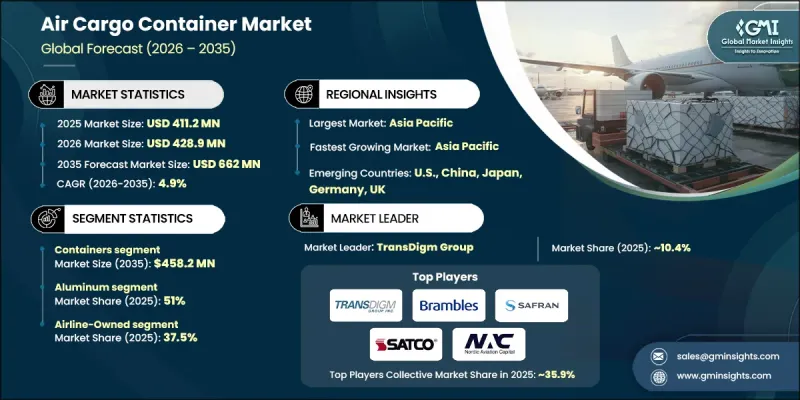
Market expansion is strongly influenced by the ongoing transformation in unit load device (ULD) manufacturing, particularly the shift from conventional aluminum structures to lightweight composite and hybrid materials. This material transition significantly enhances airline economics by lowering container weight, which in turn reduces fuel consumption and increases aircraft payload capacity. Advanced composites provide enhanced structural strength, corrosion resistance, and extended service life, lowering long-term maintenance requirements. As fuel costs fluctuate and environmental regulations tighten, airlines and cargo operators are prioritizing weight optimization and sustainability initiatives. The modernization of ULD fleets aligns with broader aviation industry goals focused on operational efficiency, emissions reduction, and lifecycle cost optimization. Growing global air freight volumes and rising expectations for resilient, high-performance cargo handling solutions further reinforce the steady development of the air cargo container market worldwide.
| Market Scope | |
|---|---|
| Start Year | 2025 |
| Forecast Year | 2026-2035 |
| Start Value | $411.2 Million |
| Forecast Value | $662 Million |
| CAGR | 4.9% |
The air cargo container market represents a foundational segment of the global air freight infrastructure, supplying standardized containers and pallets that streamline cargo loading, unloading, and in-flight handling across passenger and dedicated cargo aircraft. The industry includes the production, leasing, and sale of various container types, including general-purpose, temperature-controlled, and specialty units, along with aircraft-compatible pallets utilized by airlines, freight forwarders, and third-party logistics providers. A notable transformation shaping this market is the increasing integration of digital technologies within ULD systems. Embedded IoT devices, RFID-enabled tracking, and GPS monitoring platforms allow real-time visibility of asset location, environmental conditions, and security status, strengthening operational transparency and supply chain reliability.
The containers segment is expected to reach USD 458.2 million by 2035, driven by growing demand for secure, standardized cargo solutions that maximize aircraft space utilization and safeguard sensitive shipments. Air cargo containers are rigid, aircraft-compatible structures engineered to ensure efficient cargo handling and safe transportation across global routes. These units include general cargo containers as well as temperature-regulated and customized solutions designed to protect specialized freight. Containers remain central to air freight operations, supporting high-value and time-sensitive cargo movements while enhancing loading precision and turnaround efficiency.
The aluminum segment accounted for 51% share in 2025, supported by its affordability, established durability, and long-standing regulatory approval across global aviation networks. Airlines continue to rely on aluminum ULDs due to their proven operational track record, ease of maintenance, and lower upfront capital investment compared to composite alternatives. The large installed base, compatibility with diverse aircraft fleets, and suitability for intensive operational cycles sustain demand, particularly among carriers focused on standardized and cost-efficient cargo equipment solutions.
North America Air Cargo Container Market held a 23.5% share in 2025, reflecting its position as a mature and high-volume air freight region. Strong e-commerce distribution networks and expanding express cargo operations contribute to consistent demand for containers and pallets. Rapid shipment cycles, time-sensitive logistics models, and centralized hub distribution systems reinforce the need for durable and efficient ULD assets. Additionally, cargo operators in the region are upgrading aging container fleets to enhance fuel performance, asset tracking, and compliance with evolving aviation standards.
Key participants in the Global Air Cargo Container Market include Safran, TransDigm Group, Brambles, ACL Airshop, DoKaSch GmbH, Envirotainer AB, CSafe, VRR Aviation, Nordisk Aviation, PalNet GmbH, Satco Inc., and aerotuf. Companies operating in the air cargo container market are strengthening their competitive advantage through material innovation, fleet modernization programs, and digital integration strategies. Manufacturers are investing in lightweight composite engineering to enhance fuel efficiency and lifecycle durability while maintaining structural integrity. Strategic leasing partnerships with airlines and logistics operators are expanding market reach and ensuring recurring revenue streams. Firms are also incorporating smart tracking technologies to provide real-time asset visibility and improve fleet management efficiency. Expanding global distribution networks, enhancing repair and maintenance services, and aligning product portfolios with evolving sustainability regulations further reinforce market positioning.
Table of Contents
Chapter 1 Methodology and Scope
- 1.1 Market scope and definition
- 1.2 Research design
- 1.2.1 Research approach
- 1.2.2 Data collection methods
- 1.3 Data mining sources
- 1.3.1 Global
- 1.3.2 Regional/Country
- 1.4 Base estimates and calculations
- 1.4.1 Base year calculation
- 1.4.2 Key trends for market estimation
- 1.5 Primary research and validation
- 1.5.1 Primary sources
- 1.6 Forecast model
- 1.7 Research assumptions and limitations
Chapter 2 Executive Summary
- 2.1 Industry 360° synopsis, 2022 - 2035
- 2.2 Key market trends
- 2.2.1 System type trends
- 2.2.2 Deployment model trends
- 2.2.3 End-user industry trends
- 2.2.4 Regional trends
- 2.3 TAM analysis, 2025-2034
- 2.4 CXO perspectives: Strategic imperatives
- 2.4.1 Executive decision points
- 2.4.2 Critical success factors
- 2.5 Future outlook and strategic recommendations
Chapter 3 Industry Insights
- 3.1 Industry ecosystem analysis
- 3.1.1 Supplier landscape
- 3.1.2 Profit margin analysis
- 3.1.3 Cost structure
- 3.1.4 Value addition at each stage
- 3.1.5 Factor affecting the value chain
- 3.1.6 Disruptions
- 3.2 Industry impact forces
- 3.2.1 Growth drivers
- 3.2.1.1 Growth in international trade and cargo flights
- 3.2.1.2 Expansion of airline fleets & new routes
- 3.2.1.3 Technological Advancements in ULDs
- 3.2.1.4 Expansion of e-commerce & express delivery
- 3.2.1.5 Growing demand for lightweight and fuel-efficient ulds
- 3.2.2 Industry pitfalls and challenges
- 3.2.2.1 High capital investment and maintenance costs
- 3.2.2.2 Complicated supply chain management for ULDs
- 3.2.3 Market opportunities
- 3.2.3.1 Use of lightweight and high-strength container materials
- 3.2.3.2 Expansion of cold-chain air cargo services
- 3.2.1 Growth drivers
- 3.3 Regulatory landscape
- 3.3.1 North America
- 3.3.2 Europe
- 3.3.3 Asia Pacific
- 3.3.4 Latin America
- 3.3.5 Middle East & Africa
- 3.4 Porter’s analysis
- 3.5 PESTEL analysis
- 3.6 Technology and innovation landscape
- 3.6.1 Current technological trends
- 3.6.2 Emerging technologies
- 3.7 Emerging business models
- 3.8 Compliance requirements
- 3.9 Patent and IP analysis
- 3.10 Geopolitical and trade dynamics
Chapter 4 Competitive Landscape, 2024
- 4.1 Introduction
- 4.2 Company market share analysis
- 4.2.1 By region
- 4.2.1.1 North America
- 4.2.1.2 Europe
- 4.2.1.3 Asia Pacific
- 4.2.1.4 Latin America
- 4.2.1.5 Middle East & Africa
- 4.2.1 By region
- 4.3 Competitive benchmarking of key players
- 4.3.1 Financial performance comparison
- 4.3.1.1 Revenue
- 4.3.1.2 Profit margin
- 4.3.1.3 R&D
- 4.3.2 Product portfolio comparison
- 4.3.2.1 Product range breadth
- 4.3.2.2 Technology
- 4.3.2.3 Innovation
- 4.3.3 Geographic presence comparison
- 4.3.3.1 Global footprint analysis
- 4.3.3.2 Service network coverage
- 4.3.3.3 Market penetration by region
- 4.3.4 Competitive positioning matrix
- 4.3.4.1 Leaders
- 4.3.4.2 Challengers
- 4.3.4.3 Followers
- 4.3.4.4 Niche players
- 4.3.5 Strategic outlook matrix
- 4.3.1 Financial performance comparison
- 4.4 Key developments, 2021-2024
- 4.4.1 Mergers and acquisitions
- 4.4.2 Partnerships and collaborations
- 4.4.3 Technological advancements
- 4.4.4 Expansion and investment strategies
- 4.4.5 Digital transformation initiatives
- 4.5 Emerging/ startup competitors’ landscape
Chapter 5 Market Estimates and Forecast, By Containers Type, 2022 - 2035 (USD Mn)
- 5.1 Key trends
- 5.2 Containers
- 5.2.1 Standard containers
- 5.2.2 Refrigerated/Insulated containers
- 5.2.3 Specialized containers
- 5.3 Pallets
- 5.3.1 Standard pallets
- 5.3.2 Specialized pallets
Chapter 6 Market Estimates and Forecast, By Material, 2022 - 2035 (USD Mn)
- 6.1 Key trends
- 6.2 Aluminum
- 6.3 Composite
- 6.4 Plastic / Thermoplastic
- 6.5 Hybrid / Mixed-material
Chapter 7 Market Estimates and Forecast, By Ownership Model, 2022 - 2035 (USD Mn)
- 7.1 Key trends
- 7.2 Airline-owned
- 7.3 Leased
- 7.4 Pooled / Managed
Chapter 8 Market Estimates and Forecast, By Region, 2022 - 2035 (USD Mn)
- 8.1 Key trends
- 8.2 North America
- 8.2.1 U.S.
- 8.2.2 Canada
- 8.3 Europe
- 8.3.1 Germany
- 8.3.2 UK
- 8.3.3 France
- 8.3.4 Spain
- 8.3.5 Italy
- 8.3.6 Netherlands
- 8.4 Asia Pacific
- 8.4.1 China
- 8.4.2 India
- 8.4.3 Japan
- 8.4.4 Australia
- 8.4.5 South Korea
- 8.5 Latin America
- 8.5.1 Brazil
- 8.5.2 Mexico
- 8.5.3 Argentina
- 8.6 Middle East and Africa
- 8.6.1 South Africa
- 8.6.2 Saudi Arabia
- 8.6.3 UAE
Chapter 9 Company Profiles
- 9.1 TransDigm Group
- 9.2 Brambles
- 9.3 Safran
- 9.4 ACL Airshop
- 9.5 DoKaSch GmbH
- 9.6 Envirotainer AB
- 9.7 CSafe
- 9.8 Satco Inc.
- 9.9 PalNet GmbH
- 9.10 VRR Aviation
- 9.11 Nordisk Aviation
- 9.12 aerotuf


