|
시장보고서
상품코드
1998707
여성용 헬스케어 기기 시장 기회, 성장요인, 업계 동향 분석 및 예측(2026-2035년)Women Health Devices Market Opportunity, Growth Drivers, Industry Trend Analysis, and Forecast 2026 - 2035 |
||||||

세계의 여성용 헬스케어 기기 시장은 2025년에 1,504억 달러로 평가되며, 2035년까지 CAGR 10.2%로 성장하며, 3,898억 달러에 달할 것으로 추정되고 있습니다.
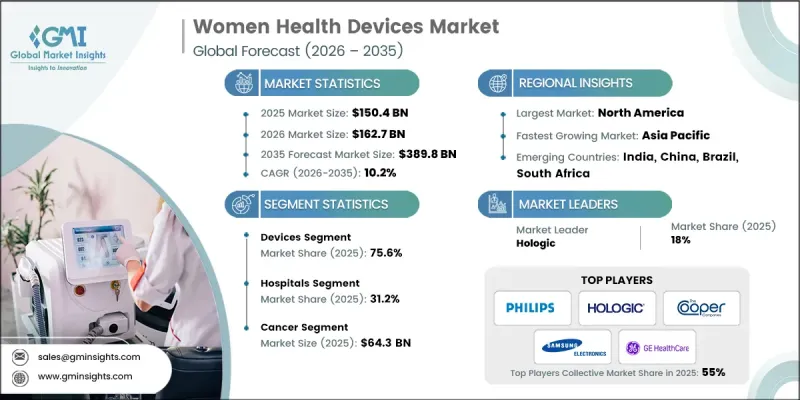
여성용 헬스케어 기기 시장의 성장은 여성에게 불균형적으로 영향을 미치는 건강 상태의 발생률 증가와 더불어 사전 예방적 헬스케어로의 광범위한 전환에 의해 촉진되고 있습니다. 의료 프로바이더와 소비자는 조기 진단, 정기적인 모니터링, 장기적인 질병 관리를 더욱 중요하게 생각하게 되었고, 이는 전문 의료 기술의 도입을 가속화하고 있습니다. 디지털 헬스, 스마트 모니터링 툴, 진단용 영상 장비의 지속적인 발전도 시장 확대에 기여하고 있습니다. 생식 건강, 호르몬 모니터링, 임산부 관리 및 장기적인 웰빙을 위해 설계된 최신 기기들은 임상 및 재택 치료 환경 모두에서 보다 쉽게 사용할 수 있게 되었습니다. 또한 생식 건강, 검진 프로그램 및 웰니스 관리에 대한 인식이 높아짐에 따라 더 많은 여성들이 자신의 특정 건강 요구에 맞는 의료 기술을 이용하고 있습니다. 고령화되는 여성 인구 증가도 중요한 성장 요인 중 하나입니다. 나이가 들어감에 따라 지속적인 모니터링과 치료가 필요한 장기적인 질병에 걸리기 쉽기 때문입니다. 전반적으로 여성용 헬스케어 기기 시장은 여성 특유의 진단, 치료 및 웰빙 요구를 충족시키기 위해 개발된 기술에 초점을 맞춘 의료기기 산업의 전문 분야입니다.
| 시장 범위 | |
|---|---|
| 시작연도 | 2025년 |
| 예측 기간 | 2026-2035년 |
| 개시 금액 | 1,504억 달러 |
| 예측액 | 3,898억 달러 |
| CAGR | 10.2% |
디바이스 부문은 2025년 1,137억 달러의 매출을 창출하며 시장 점유율 75.6%를 차지할 것으로 예측됩니다. 이 카테고리에는 피임 장치, 가임력 모니터링 장치, 생리 위생 제품, 유방 건강 장치, 골반저 건강 장치, 임산부 건강 제품, 일반 건강 모니터링 장치, 부인과 질환에 사용되는 의료기기 및 기타 전문 기술이 포함됩니다. 이 부문의 확대는 예방 의료와 일상적인 헬스케어의 중요성에 대한 여성들의 인식이 높아진 데 따른 것입니다. 개인이 자신의 건강 상태를 보다 효과적으로 모니터링하고 관리할 수 있는 전용 기기의 보급은 보다 광범위한 채택을 촉진하고 있습니다. 또한 기기의 정확성, 사용 편의성, 휴대성의 지속적인 개선은 병원, 클리닉, 홈케어 환경에서 수요를 지원하고 있습니다.
용도별로는 2025년 병원 부문이 31.2%의 점유율을 차지했습니다. 병원은 여성 특유의 다양한 건강 상태를 진단, 치료 및 수술하는 주요 장소로, 이 장치 수요에 큰 기여를 하고 있습니다. 많은 환자 수, 전문 진료과목의 존재, 그리고 첨단 치료 인프라 구축은 병원 환경에서 첨단 의료기술의 활용을 지속적으로 촉진하고 있습니다. 이들 시설에서는 산부인과 진료에 따른 복잡한 건강관리 요구에 대응하기 위해 통합 진단 시스템, 모니터링 장비, 치료용 의료기기에 의존하고 있습니다. 또한 병원은 엄격한 규제 및 품질 보증 기준에 따라 운영되며, 환자 결과를 개선하고 안전을 보장하기 위해 승인된 의료 기술을 채택해야 합니다. 따라서 여성 건강과 관련된 시술 및 임상적 개입이 증가함에 따라 병원 환경에서 첨단 의료기기에 대한 수요가 더욱 증가하고 있습니다.
2025년 북미 여성용 의료기기 시장은 32.1%의 점유율을 차지했습니다. 이 지역은 잘 구축된 의료 인프라, 높은 의료비 수준, 여성 건강 증진에 대한 강한 관심으로 인해 계속해서 강력한 시장 리더십을 발휘하고 있습니다. 첨단 진단 기술, 전문 의료시설, 그리고 지원적인 규제 프레임워크도 이 지역의 성장에 기여하고 있습니다. 이 지역의 의료 서비스 프로바이더들은 질병을 감지, 모니터링 및 치료 결과를 개선하기 위해 혁신적인 의료 기술을 일상적인 치료에 점점 더 많이 통합하고 있습니다. 또한 R&D, 임상 개발 및 디지털 헬스케어 플랫폼에 대한 지속적인 투자가 여성 건강에 특화된 차세대 의료기기의 도입을 가속화하고 있습니다. 이러한 요인들이 복합적으로 작용하여 예측 기간 중 여성 건강 관련 기기 시장의 지속적인 성장에 북미가 주요 기여자로 자리매김할 것으로 보입니다.
Allengers, Ava Women, Caldera Medical, Carestream Health, Garmin Ltd., GE Healthcare Technologies, HeraMED, Hologic, Koninklijke Philips N.V., Mankind Pharma Limited, Pregnabit, Samsung Electronics, The Cooper Companies 등 수많은 주요 기업이 세계 여성용 헬스케어 기기 시장에 적극적으로 진출하고 있습니다. 이 시장에서 사업을 운영하는 기업은 경쟁력을 강화하고 세계 입지를 확대하기 위해 다양한 전략적 노력을 기울이고 있습니다. 주요 기업은 정확성, 연결성, 환자 편의성을 향상시킨 기술적으로 진보된 제품을 선보이기 위해 연구개발에 집중하고 있습니다. 또한 혁신을 가속화하고 제품 기능을 확장하기 위해 의료 프로바이더, 기술 기업, 연구 기관과의 전략적 제휴를 추진하고 있습니다. 많은 기업이 환자 모니터링과 개인 맞춤형 치료를 강화하기 위해 커넥티드 디바이스와 데이터베이스 헬스케어 플랫폼을 포함한 디지털 헬스 통합에 투자하고 있습니다. 파트너십, 판매 계약 및 지역별 제조 시설을 통한 지역적 확장은 신흥 시장 진출을 위한 또 다른 중요한 접근 방식입니다.
자주 묻는 질문
목차
제1장 조사 방법과 범위
제2장 개요
제3장 업계 인사이트
제4장 경쟁 구도
제5장 시장 추산·예측 : 제품별, 2022-2035
제6장 시장 추산·예측 : 용도별, 2022-2035
제7장 시장 추산·예측 : 최종 용도별, 2022-2035
제8장 시장 추산·예측 : 지역별, 2022-2035
제9장 기업 개요
KSA 26.04.20The Global Women Health Devices Market was valued at USD 150.4 billion in 2025 and is estimated to grow at a CAGR of 10.2% to reach USD 389.8 billion by 2035.
Growth in the women health devices market is fueled by the increasing incidence of health conditions that disproportionately affect women, along with a broader shift toward proactive and preventive healthcare practices. Healthcare providers and consumers are placing greater emphasis on early diagnosis, routine monitoring, and long-term disease management, which is accelerating the adoption of specialized medical technologies. Continuous progress in digital health, smart monitoring tools, and diagnostic imaging equipment is also contributing to market expansion. Modern devices designed for reproductive health, hormonal monitoring, maternal care, and long-term wellness are becoming more accessible across both clinical environments and home-care settings. In addition, improved awareness regarding reproductive health, screening programs, and wellness management is encouraging more women to utilize medical technologies tailored to their specific health needs. The expanding elderly female population is another important growth factor, as aging increases susceptibility to long-term medical conditions that require ongoing monitoring and treatment. Overall, the women health devices market represents a dedicated segment of the medical device industry focused on technologies developed to address diagnostic, therapeutic, and wellness requirements that are unique to women.
| Market Scope | |
|---|---|
| Start Year | 2025 |
| Forecast Year | 2026-2035 |
| Start Value | $150.4 Billion |
| Forecast Value | $389.8 Billion |
| CAGR | 10.2% |
The devices segment generated USD 113.7 billion in 2025 and accounted for 75.6% share. This category includes contraceptive devices, fertility monitoring devices, menstrual health products, breast health devices, pelvic health devices, maternal health products, general health monitoring devices, medical devices used in gynecological conditions, and other specialized technologies. Expansion of this segment is supported by increasing awareness among women about the importance of preventive care and routine health tracking. The availability of dedicated devices that allow individuals to monitor and manage health conditions more effectively is encouraging wider adoption. Continuous improvements in device accuracy, ease of use, and portability are also supporting demand across hospitals, clinics, and home-care environments.
Based on end use, the hospitals segment held 31.2% share in 2025. Hospitals remain a key setting for diagnosis, treatment, and surgical management of a wide range of women-specific health conditions, which contributes significantly to device demand. High patient inflow, the presence of specialized departments, and the availability of advanced treatment infrastructure continue to support the use of sophisticated medical technologies within hospital environments. These facilities rely on integrated diagnostic systems, monitoring equipment, and therapeutic devices to manage complex healthcare requirements associated with obstetric and gynecological care. In addition, hospitals operate under strict regulatory and quality-assurance standards that require the adoption of approved medical technologies designed to improve patient outcomes and ensure safety. The growing number of procedures and clinical interventions related to women's health is therefore reinforcing the demand for advanced devices within hospital settings.
North America Women Health Devices Market accounted for 32.1% share in 2025. The region continues to demonstrate strong market leadership due to its well-established healthcare infrastructure, high levels of healthcare expenditure, and a strong focus on women's health awareness initiatives. The availability of advanced diagnostic technologies, specialized healthcare facilities, and supportive regulatory frameworks further contributes to regional growth. Healthcare providers across the region are increasingly integrating innovative medical technologies into routine care to improve disease detection, monitoring, and treatment outcomes. In addition, continued investments in research, clinical development, and digital healthcare platforms are accelerating the adoption of next-generation medical devices tailored for women's health. These factors collectively position North America as a key contributor to the ongoing expansion of the women health devices market over the forecast period.
Several major companies are actively participating in the Global Women Health Devices Market, including Allengers, Ava Women, Caldera Medical, Carestream Health, Garmin Ltd., GE Healthcare Technologies, HeraMED, Hologic, Koninklijke Philips N.V., Mankind Pharma Limited, Pregnabit, Samsung Electronics, and The Cooper Companies. Companies operating in the Global Women Health Devices Market are adopting multiple strategic initiatives to strengthen their competitive position and expand global presence. Leading players are focusing heavily on research and development to introduce technologically advanced products with improved accuracy, connectivity, and patient usability. Strategic collaborations with healthcare providers, technology firms, and research institutions are also being pursued to accelerate innovation and expand product capabilities. Many companies are investing in digital health integration, including connected devices and data-driven healthcare platforms that enhance patient monitoring and personalized care. Geographic expansion through partnerships, distribution agreements, and regional manufacturing facilities is another key approach used to reach emerging markets.
Table of Contents
Chapter 1 Methodology and Scope
- 1.1 Market scope and definition
- 1.2 Research design
- 1.2.1 Research approach
- 1.2.2 Data collection methods
- 1.3 Data mining sources
- 1.3.1 Global
- 1.3.2 Regional/Country
- 1.4 Base estimates and calculations
- 1.4.1 Base year calculation
- 1.4.2 Key trends for market estimation
- 1.5 Primary research and validation
- 1.5.1 Primary sources
- 1.6 Forecast model
- 1.7 Research assumptions and limitations
Chapter 2 Executive Summary
- 2.1 Industry 360° synopsis
- 2.2 Key market trends
- 2.2.1 Regional trends
- 2.2.2 Product trends
- 2.2.3 Application trends
- 2.2.4 End use trends
- 2.3 CXO perspectives: Strategic imperatives
Chapter 3 Industry Insights
- 3.1 Industry ecosystem analysis
- 3.2 Industry impact forces
- 3.2.1 Growth drivers
- 3.2.1.1 Increasing disease burden among women
- 3.2.1.2 Rising elderly female population
- 3.2.1.3 Technological advancements in healthcare
- 3.2.1.4 Increasing awareness regarding women’s health in developing countries
- 3.2.2 Industry pitfalls and challenges
- 3.2.2.1 High cost of devices and procedures
- 3.2.2.2 Stringent regulatory guidelines for new devices
- 3.2.3 Market opportunities
- 3.2.3.1 Growing demand for home-based and remote monitoring solutions for women’s health
- 3.2.3.2 Rising adoption of wearable devices for menstrual and hormonal health tracking
- 3.2.1 Growth drivers
- 3.3 Growth potential analysis
- 3.4 Regulatory landscape
- 3.4.1 North America
- 3.4.2 Europe
- 3.4.3 Asia Pacific
- 3.5 Technological advancements
- 3.5.1 Current technological trends
- 3.5.2 Emerging technologies
- 3.6 Pricing analysis, 2024
- 3.7 Future market trends
- 3.8 Impact of AI and generative AI on the market
- 3.9 Porter's analysis
- 3.10 PESTEL analysis
Chapter 4 Competitive Landscape, 2024
- 4.1 Introduction
- 4.2 Company market share analysis
- 4.3 Company matrix analysis
- 4.4 Competitive analysis of major market players
- 4.5 Competitive positioning matrix
- 4.6 Key developments
- 4.6.1 Mergers and acquisitions
- 4.6.2 Partnerships and collaborations
- 4.6.3 New product launches
- 4.6.4 Expansion plans
Chapter 5 Market Estimates and Forecast, By Product, 2022 - 2035 ($ Mn)
- 5.1 Key trends
- 5.2 Devices
- 5.2.1 Contraceptive devices
- 5.2.2 Fertility monitoring devices
- 5.2.3 Menstrual health products
- 5.2.4 Breast health devices
- 5.2.5 Pelvic health devices
- 5.2.6 Maternal health products
- 5.2.7 General health monitoring devices
- 5.2.8 Medical devices for gynecological conditions
- 5.2.9 Other devices
- 5.3 Consumables
Chapter 6 Market Estimates and Forecast, By Application, 2022 - 2035 ($ Mn)
- 6.1 Key trends
- 6.2 Cancer
- 6.3 Osteoporosis
- 6.4 Infectious disease
- 6.5 Uterine fibroids
- 6.6 Pregnancy
- 6.7 Female sterilization
- 6.8 Menstrual disorders
- 6.9 Other applications
Chapter 7 Market Estimates and Forecast, By End Use, 2022 - 2035 ($ Mn)
- 7.1 Key trends
- 7.2 Hospitals
- 7.3 Obstetrics and gynecology clinics
- 7.4 Diagnostic laboratories
- 7.5 Ambulatory surgical centers
- 7.6 Other end users
Chapter 8 Market Estimates and Forecast, By Region, 2022 - 2035 ($ Mn)
- 8.1 Key trends
- 8.2 North America
- 8.2.1 U.S.
- 8.2.2 Canada
- 8.3 Europe
- 8.3.1 Germany
- 8.3.2 UK
- 8.3.3 France
- 8.3.4 Spain
- 8.3.5 Italy
- 8.3.6 Netherlands
- 8.4 Asia Pacific
- 8.4.1 China
- 8.4.2 India
- 8.4.3 Japan
- 8.4.4 Australia
- 8.4.5 South Korea
- 8.5 Latin America
- 8.5.1 Brazil
- 8.5.2 Mexico
- 8.5.3 Argentina
- 8.6 Middle East and Africa
- 8.6.1 Saudi Arabia
- 8.6.2 South Africa
- 8.6.3 UAE
Chapter 9 Company Profiles
- 9.1 Allengers
- 9.2 Ava Women
- 9.3 Caldera Medical
- 9.4 Carestream Health
- 9.5 Garmin Ltd.
- 9.6 GE Healthcare Technologies
- 9.7 HeraMED
- 9.8 Hologic
- 9.9 Koninklijke Philips N.V.
- 9.10 Mankind Pharma Limited
- 9.11 Pregnabit
- 9.12 Samsung Electronics
- 9.13 The Cooper Companies