
|
시장보고서
상품코드
1998753
스마트 그리드 시장 기회, 성장요인, 업계 동향 분석 및 예측(2026-2035년)Smart Grid Market Opportunity, Growth Drivers, Industry Trend Analysis, and Forecast 2026 - 2035 |
||||||

세계의 스마트 그리드 시장은 2025년에 730억 달러로 평가되며, CAGR 10.5%로 성장하며, 2035년까지 1,974억 달러에 달할 것으로 추정되고 있습니다.
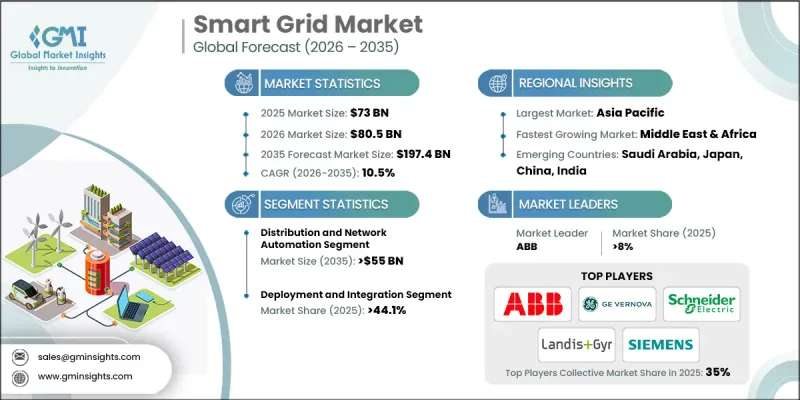
세계 인구 증가와 급속한 도시 개발이 전력 수요 증가를 주도하고 있는 가운데, 이 시장은 괄목할 만한 성장세를 보이고 있습니다. 현대의 전력 네트워크는 점점 더 안정적이고 효율적이며 지속가능한 에너지 공급을 요구하고 있으며, 이는 첨단 스마트 그리드 기술의 도입을 촉진하고 있습니다. 또한 재생에너지 발전으로의 전환은 분산되고 변동하는 전력을 관리할 수 있는 지능형 전력망 인프라에 대한 강력한 수요를 창출하고 있습니다. 에너지 분야 전반의 디지털 전환은 자동화된 그리드 시스템, 첨단 계측 기술, 실시간 모니터링 플랫폼의 도입을 더욱 가속화하고 있습니다. 또한 많은 지역에서 노후화된 전력 인프라는 변화하는 에너지 소비 패턴과 증가하는 전력 부하에 대응하기 위해 현대화가 필요합니다. 전력회사와 정부는 전력망의 신뢰성을 높이고, 운영 효율을 개선하며, 탄소 감축 목표를 지원하기 위해 스마트그리드 기술에 많은 투자를 하고 있습니다. 저배출 및 에너지 효율적인 전력 시스템으로 전환함에 따라 네트워크의 안정성과 복원력을 유지하면서 재생에너지를 통합할 수 있는 고급 그리드 솔루션에 대한 요구가 증가하고 있습니다.
| 시장 범위 | |
|---|---|
| 시작연도 | 2025년 |
| 예측 기간 | 2026-2035년 |
| 개시 금액 | 730억 달러 |
| 예측액 | 1,974억 달러 |
| CAGR | 10.5% |
디지털화와 재생에너지의 보급이 진행되고 세계 에너지 네트워크가 재편되는 가운데, 스마트그리드 시장은 꾸준히 확대되고 있습니다. 자동 제어 시스템 및 첨단 계측 인프라의 도입이 진행됨에 따라 전력회사는 에너지 배전 관리 및 운영 가시성을 향상시킬 수 있게 되었습니다. 최신 스마트그리드 시스템을 통해 전력의 흐름을 더 잘 모니터링하고 수요반응을 더 효율적으로 관리할 수 있으므로 전력회사는 변화하는 에너지 수요에 신속하게 대응할 수 있습니다. 또한 스마트 에너지 솔루션 보급을 위한 재정적 인센티브, 보조금 및 정책적 지원은 전력망 현대화 프로젝트에 대한 대규모 투자를 촉진하고 있습니다. 전 세계 전력망 인프라의 대부분은 20년 이상 운영되어 왔으며, 증가하는 전력 소비와 첨단 에너지 기술에 대응하기 위해서는 업그레이드가 필수적입니다. 각국 정부와 에너지 공급업체들이 탄소중립 목표와 지속가능성을 위해 노력하는 가운데, 배출량을 줄이고 에너지 효율을 향상시킬 수 있는 스마트그리드 시스템에 대한 투자는 지속적으로 증가하고 있습니다.
배전 및 네트워크 자동화 기술 부문은 2035년까지 550억 달러에 달할 것으로 예측됩니다. 전 세계에서 재생에너지 시스템 도입이 확대됨에 따라 변동하는 발전량을 효율적으로 관리할 수 있는 자동화된 배전 네트워크에 대한 강력한 수요가 발생하고 있습니다. 스마트 변압기, 디지털 변전소 및 첨단 고압 송전 기술은 송전망의 신뢰성과 운영 효율성 향상에 기여하고 있습니다. 또한 송전망 인프라에 인공지능(AI) 및 사물인터넷(IoT) 기술을 통합하여 실시간 데이터 분석 및 배전 시스템 자동 제어가 가능해집니다. 이러한 혁신은 전력회사가 전력망 성능을 개선하고, 에너지 손실을 줄이고, 전체 시스템의 복원력을 높이는 데 도움이 되고 있습니다.
컨설팅 서비스 분야는 2035년까지 연평균 복합 성장률(CAGR) 9.5%를 나타낼 것으로 예측됩니다. 스마트그리드 생태계의 복잡성이 계속 증가함에 따라 전력회사 및 에너지 기업은 전략적 계획, 시스템 통합, 인프라 업그레이드를 지원하는 전문 자문 서비스를 요구하고 있습니다. 컨설팅 기업은 예측 분석, 고급 데이터 모델링, 리스크 평가 기술 등을 도입하기 위해 역량을 확장하고 있습니다. 이러한 서비스는 에너지 공급 사업자가 송전망의 성능을 평가하고, 취약점을 파악하며, 미래 인프라 개발을 위한 투자 전략을 최적화하는 데 도움이 됩니다. 첨단 송전망 기술 도입에 대한 전문가 지도의 필요성이 증가함에 따라 스마트그리드 분야 전반에 걸쳐 컨설팅 서비스의 지속적인 성장을 촉진할 것으로 예측됩니다.
미국 스마트그리드 시장 규모는 2025년 148억 달러로 평가되었습니다. 이 시장의 성장은 전력망 현대화를 위한 지속적인 투자와 첨단 에너지 관리 솔루션에 대한 수요 증가에 힘입어 성장세를 보이고 있습니다. 이 지역의 전력회사들은 신뢰도 향상, 운영 효율성 향상, 재생에너지 발전의 통합을 지원하기 위해 인프라 업그레이드를 추진하고 있습니다. 디지털 에너지 시스템으로의 전환과 첨단 모니터링 기술의 도입은 미국 에너지 부문 전반에 걸쳐 스마트 그리드 솔루션에 대한 수요를 더욱 강화시키고 있습니다.
자주 묻는 질문
목차
제1장 조사 방법과 범위
제2장 개요
제3장 업계 인사이트
제4장 경쟁 구도
제5장 시장 규모·예측 : 기술별, 2022-2035
제6장 시장 규모·예측 : 서비스별, 2022-2035
제7장 시장 규모·예측 : 배포별, 2022-2035
제8장 시장 규모·예측 : 지역별, 2022-2035
제9장 기업 개요
KSAThe Global Smart Grid Market was valued at USD 73 billion in 2025 and is estimated to grow at a CAGR of 10.5% to reach USD 197.4 billion by 2035.
The market is experiencing significant growth as rising global population levels and rapid urban development continue to drive higher electricity demand. Modern power networks are increasingly required to deliver reliable, efficient, and sustainable energy distribution, which is encouraging the adoption of advanced smart grid technologies. The transition toward renewable energy generation is also creating strong demand for intelligent grid infrastructure capable of managing decentralized and variable power sources. Digital transformation across the energy sector is further accelerating the deployment of automated grid systems, advanced metering technologies, and real-time monitoring platforms. In addition, aging electricity infrastructure across many regions requires modernization to accommodate evolving energy consumption patterns and growing power loads. Utilities and governments are investing heavily in smart grid technologies to enhance grid reliability, improve operational efficiency, and support carbon reduction goals. The shift toward low-emission and energy-efficient power systems is also increasing the need for advanced grid solutions that can integrate renewable energy while maintaining network stability and resilience.
| Market Scope | |
|---|---|
| Start Year | 2025 |
| Forecast Year | 2026-2035 |
| Start Value | $73 Billion |
| Forecast Value | $197.4 Billion |
| CAGR | 10.5% |
The smart grid market is witnessing steady expansion as digitalization and the growing penetration of renewable energy sources reshape global energy networks. The increasing installation of automated control systems and advanced metering infrastructure is enabling utilities to improve energy distribution management and operational visibility. Modern smart grid systems allow for better monitoring of electricity flow and more efficient demand-response management, helping utilities respond quickly to changing energy requirements. In addition, financial incentives, grants, and policy support aimed at promoting smart energy solutions are encouraging large-scale investments in grid modernization projects. A significant portion of global grid infrastructure has been operational for more than two decades, making upgrades essential to support increasing electricity consumption and advanced energy technologies. As governments and energy providers pursue carbon neutrality targets and sustainability initiatives, investment in smart grid systems capable of reducing emissions and improving energy efficiency continues to rise.
The distribution and network automation technologies segment is expected to reach USD 55 billion by 2035. The increasing deployment of renewable energy systems worldwide is creating a strong need for automated distribution networks that can efficiently manage fluctuating power generation. Smart transformers, digital substations, and advanced high-voltage transmission technologies are contributing to improved grid reliability and operational efficiency. In addition, the integration of artificial intelligence and Internet of Things technologies within grid infrastructure enables real-time data analysis and automated control of electricity distribution systems. These innovations are helping utilities enhance grid performance, reduce energy losses, and improve overall system resilience.
The consultation services segment is projected to grow at a CAGR of 9.5% through 2035. As the complexity of smart grid ecosystems continues to increase, utilities and energy companies are seeking specialized advisory services to support strategic planning, system integration, and infrastructure upgrades. Consulting firms are expanding their capabilities to include predictive analytics, advanced data modeling, and risk evaluation technologies. These services help energy providers assess grid performance, identify vulnerabilities, and optimize investment strategies for future infrastructure development. The increasing need for expert guidance in deploying advanced grid technologies is expected to drive continued growth in consulting services across the smart grid sector.
United States Smart Grid Market was valued at 14.8 billion in 2025. Market growth in the country is being driven by ongoing investments in grid modernization and increasing demand for advanced energy management solutions. Utilities across the region are upgrading infrastructure to improve reliability, enhance operational efficiency, and support the integration of renewable power generation. The transition toward digital energy systems and the adoption of advanced monitoring technologies are further strengthening the demand for smart grid solutions across the U.S. energy sector.
Key companies operating in the Global Smart Grid Market include ABB, Siemens, Schneider Electric, GE Vernova, Honeywell International, Cisco Systems, Eaton, IBM, Oracle, Fujitsu, Enel, Itron, Landis+Gyr, Belden, Hubbell, S&C Electric Company, Sunverge Energy, Uplight, Emerson Electric, and Wipro. Companies operating in the Global Smart Grid Market are implementing several strategic initiatives to strengthen their market position and expand their technological capabilities. Industry participants are investing heavily in research and development to create advanced grid automation technologies, intelligent monitoring systems, and integrated energy management platforms. Strategic collaborations with utility providers, technology developers, and government agencies are enabling companies to accelerate innovation and expand the deployment of smart grid infrastructure. Firms are also focusing on expanding digital solutions that incorporate artificial intelligence, cloud-based platforms, and advanced analytics to improve grid efficiency and reliability.
Table of Contents
Chapter 1 Methodology & Scope
- 1.1 Research design
- 1.1.1 Research approach
- 1.1.2 Data collection methods
- 1.2 Base estimates and calculations
- 1.2.1 Base year calculation
- 1.2.2 Market estimates & forecast parameters
- 1.3 Forecast
- 1.3.1 Key trends for market estimates
- 1.3.2 Quantified market impact analysis
- 1.3.2.1 Mathematical impact of growth parameters on forecast
- 1.3.3 Scenario analysis framework
- 1.4 Primary research and validation
- 1.4.1 Some of the primary sources (but not limited to)
- 1.5 Data mining sources
- 1.5.1 Paid Sources
- 1.5.2 Sources, by region
- 1.6 Research trail & scoring components
- 1.6.1 Research trail components
- 1.6.2 Scoring components
- 1.7 Research transparency addendum
- 1.7.1 Source attribution framework
- 1.7.2 Quality assurance metrics
- 1.7.3 Our commitment to trust
- 1.8 Market definitions
Chapter 2 Executive Summary
- 2.1 Industry synopsis, 2022 - 2035
- 2.2 Business trends
- 2.3 Technology trends
- 2.4 Service trends
- 2.5 Deployment trends
- 2.6 Regional trends
Chapter 3 Industry Insights
- 3.1 Industry ecosystem analysis
- 3.2 Regulatory landscape
- 3.3 Industry impact forces
- 3.3.1 Growth drivers
- 3.3.2 Industry pitfalls & challenges
- 3.4 Growth potential analysis
- 3.5 Porter's analysis
- 3.5.1 Bargaining power of suppliers
- 3.5.2 Bargaining power of buyers
- 3.5.3 Threat of new entrants
- 3.5.4 Threat of substitutes
- 3.6 PESTEL analysis
- 3.6.1 Political factors
- 3.6.2 Economic factors
- 3.6.3 Social factors
- 3.6.4 Technological factors
- 3.6.5 Legal factors
- 3.6.6 Environmental factors
- 3.7 Emerging opportunities & trends
- 3.8 Investment analysis & future prospects
Chapter 4 Competitive landscape, 2025
- 4.1 Introduction
- 4.2 Company market share analysis, 2025
- 4.3 Key developments
- 4.3.1 Mergers & acquisitions
- 4.3.2 Partnerships & collaborations
- 4.3.3 New product launches
- 4.3.4 Expansion plans and funding
- 4.4 Competitive benchmarking
- 4.5 Innovation & sustainability landscape
Chapter 5 Market Size and Forecast, By Technology, 2022 - 2035 (USD Million)
- 5.1 Key trends
- 5.2 Smart T&D equipment
- 5.3 Distribution & network automation
- 5.4 Advanced metering infrastructure
- 5.5 Consumer interface
- 5.6 Communication & wireless infrastructure
Chapter 6 Market Size and Forecast, By Service, 2022 - 2035 (USD Million)
- 6.1 Key trends
- 6.2 Consulting
- 6.3 Deployment & integration
- 6.4 Support & maintenance
Chapter 7 Market Size and Forecast, By Deployment, 2022 - 2035 (USD Million)
- 7.1 Key trends
- 7.2 Generation
- 7.3 Transmission
- 7.4 Distribution
- 7.5 End use
Chapter 8 Market Size and Forecast, By Region, 2022 - 2035 (USD Million)
- 8.1 Key trends
- 8.2 North America
- 8.2.1 U.S.
- 8.2.2 Canada
- 8.2.3 Mexico
- 8.3 Europe
- 8.3.1 UK
- 8.3.2 France
- 8.3.3 Germany
- 8.3.4 Spain
- 8.3.5 Italy
- 8.4 Asia Pacific
- 8.4.1 China
- 8.4.2 Australia
- 8.4.3 Japan
- 8.4.4 South Korea
- 8.4.5 India
- 8.5 Middle East & Africa
- 8.5.1 Saudi Arabia
- 8.5.2 UAE
- 8.5.3 South Africa
- 8.6 Latin America
- 8.6.1 Brazil
- 8.6.2 Chile
Chapter 9 Company Profiles
- 9.1 ABB
- 9.2 Belden
- 9.3 Cisco Systems
- 9.4 Eaton
- 9.5 Emerson Electric
- 9.6 Enel
- 9.7 Fujitsu
- 9.8 GE Vernova
- 9.9 Honeywell International
- 9.10 Hubbell
- 9.11 IBM
- 9.12 Itron
- 9.13 Landis+Gyr
- 9.14 Oracle
- 9.15 S&C Electric Company
- 9.16 Schneider Electric
- 9.17 Siemens
- 9.18 Sunverge Energy
- 9.19 Uplight
- 9.20 Wipro