

|
시장보고서
상품코드
1998827
개 아토피 피부염 시장 기회, 성장요인, 업계 동향 분석 및 예측(2026-2035년)Canine Atopic Dermatitis Market Opportunity, Growth Drivers, Industry Trend Analysis, and Forecast 2026 - 2035 |
||||||

세계의 개 아토피 피부염 시장은 2025년에 15억 달러로 평가되며, CAGR 9.2%로 성장하며, 2035년까지 36억 달러에 달할 것으로 추정되고 있습니다.
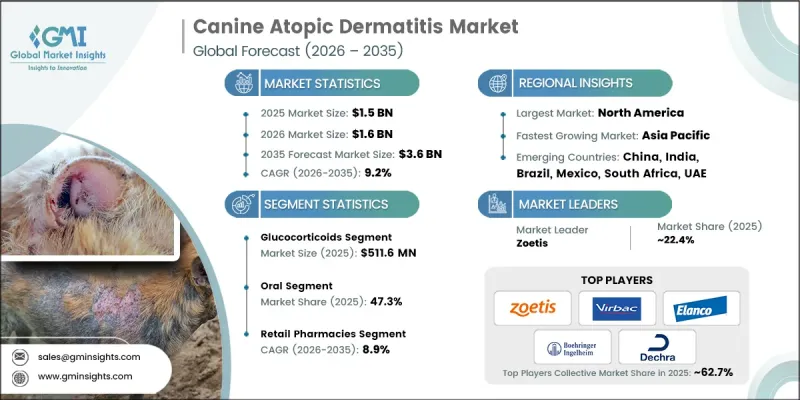
이 시장의 성장은 반려견 아토피 피부염의 유병률 증가와 반려동물의 건강관리에 대한 관심 증가에 힘입어 성장세를 보이고 있습니다. 반려동물의 건강에 대한 보호자들의 인식이 높아지면서 고급 수의피부과 치료에 대한 수요가 증가하고 있습니다. 또한 반려동물 보호자와 수의사들이 만성 피부질환에 대한 안전하고 효과적이며 표적화된 치료법을 찾고 있는 가운데, 동물용 의약품의 혁신도 시장에 긍정적인 영향을 미치고 있습니다. 선진국과 신흥 국가 모두에서 동물의료 인프라와 전문 클리닉이 확충되면서 적절한 진단과 치료를 받는 반려견이 늘고 있습니다. 신흥 시장의 가처분 소득 증가는 반려동물 헬스케어에 대한 투자를 더욱 촉진하고 있습니다. 예방적이고 지속적인 피부 관리의 중요성에 대한 인식이 확산됨에 따라개 특발성 피부염 시장은 지역을 불문하고 꾸준하고 지속적인 성장세를 보이고 있습니다.
| 시장 범위 | |
|---|---|
| 시작연도 | 2025년 |
| 예측 기간 | 2026-2035년 |
| 개시 금액 | 15억 달러 |
| 예측액 | 36억 달러 |
| CAGR | 9.2% |
개 아토피 피부염은 진드기, 꽃가루, 곰팡이 또는 특정 음식과 같은 환경 알레르겐에 대한 과민반응에 의해 발생하며 유전적 요인도 관여하는 만성 염증성 피부질환입니다. 이 질환은 과도한 면역 반응을 일으켜 지속적인 가려움증, 발적, 피부 및 귀 감염의 재발을 초래합니다. 모노클로널 항체, 경구용 치료제와 같은 혁신적인 수의학적 치료법의 개발로 질병 관리는 크게 변화했습니다. 모노클로널 항체는 가려움증과 염증을 표적으로 완화하는 반면, 경구 치료는 장기적인 치료의 편의성과 효능을 제공합니다. 특히 신흥 국가에서 반려동물의 건강에 대한 지식이 높아지면서 수의학 치료제의 채택률 향상과 투자 확대에 대한 관심이 높아지고 있습니다.
2025년 글루코코르티코이드 부문은 5억 1,160만 달러의 시장 규모를 기록했습니다. 프레드니손과 덱사메타손을 포함한 이들 약물은 염증과 가려움증을 빠르게 완화하는 효과가 뛰어나며, 중증 및 급성 발작시 1차 선택 약물이 되고 있습니다. 새로운 표적치료제에 비해 가격이 저렴하므로 특히 고급 수의학에 대한 접근성이 제한적이거나 반려동물 보험의 보급률이 낮은 지역에서는 지속적인 채택이 이루어지고 있습니다.
경구 투여 부문은 2025년 47.3%의 점유율을 차지했습니다. 오클라시티닙이나 글루코코르티코이드와 같은 경구용 약물은 사용 편의성 때문에 반려동물 보호자들이 선호하고 있으며, 이는 복약 순응도를 높여 일관성 있는 치료를 보장합니다. 이러한 치료법은 가려움증과 염증을 빠르게 완화하고 급성 및 만성 증상 모두에 효과적입니다. 표적 경구 치료는 염증 경로를 특이적으로 조절하여 효능을 높이고, 수의 피부과 진료에서 그 인기가 더욱 높아지고 있습니다.
북미개 아토피 피부염 시장은 41%의 점유율을 차지하고 있으며, 2035년까지 연평균 복합 성장률(CAGR) 9%를 나타낼 것으로 예측됩니다. 수의학 인프라가 잘 갖추어져 있고, 혁신적인 피부과 치료법에 대한 접근성이 높으며, 모노클로널 항체 등 첨단 치료법이 광범위하게 도입되면서 이 지역 시장 성장을 지원하고 있습니다. 반려동물 보호자들의 전문적인 케어에 대한 투자 의지와 반려견의 만성 피부질환 유병률이 높아지면서 북미 시장에서의 리더십을 더욱 공고히 하고 있습니다.
자주 묻는 질문
목차
제1장 조사 방법
제2장 개요
제3장 업계 인사이트
제4장 경쟁 구도
제5장 시장 추산·예측 : 제품별, 2022-2035
제6장 시장 추산·예측 : 투여 경로별, 2022-2035
제7장 시장 추산·예측 : 유통 채널별, 2022-2035
제8장 시장 추산·예측 : 지역별, 2022-2035
제9장 기업 개요
KSA 26.04.20The Global Canine Atopic Dermatitis Market was valued at USD 1.5 billion in 2025 and is estimated to grow at a CAGR of 9.2% to reach USD 3.6 billion by 2035.
The market growth is driven by the rising prevalence of atopic dermatitis in dogs and a growing focus on companion animal healthcare. Increasing awareness among pet owners about their pets' well-being is fueling demand for advanced veterinary dermatology therapies. The market is also benefiting from innovations in veterinary medications, as pet owners and veterinarians seek safe, effective, and targeted treatment options for chronic skin conditions. With the expansion of veterinary infrastructure and specialized clinics in both developed and emerging regions, more dogs are receiving proper diagnosis and treatment. Rising disposable incomes in emerging markets further encourage investments in pet healthcare. As awareness of the importance of preventative and ongoing dermatological care spreads, the canine atopic dermatitis market is witnessing steady and sustained growth across geographies.
| Market Scope | |
|---|---|
| Start Year | 2025 |
| Forecast Year | 2026-2035 |
| Start Value | $1.5 Billion |
| Forecast Value | $3.6 Billion |
| CAGR | 9.2% |
Canine atopic dermatitis is a chronic, genetically influenced inflammatory skin disorder caused by hypersensitivity to environmental allergens like dust mites, pollen, mold, or specific foods. The condition triggers an exaggerated immune response, resulting in persistent itching, redness, and recurrent skin and ear infections. The development of innovative veterinary treatments such as monoclonal antibodies and oral therapies has transformed disease management. Monoclonal antibodies offer targeted relief from pruritus and inflammation, while oral therapies provide convenience and efficacy for long-term treatment. Rising knowledge of companion animal health, especially in emerging economies, is driving higher adoption rates and increased investment in veterinary therapeutics.
The glucocorticoids segment generated USD 511.6 million in 2025. These medications, including prednisone and dexamethasone, are highly effective in rapidly alleviating inflammation and itching, making them the preferred choice for severe or acute flare-ups. Their affordability compared to newer targeted therapies supports their continued adoption, particularly in regions with limited access to advanced veterinary care or low pet insurance penetration.
The oral administration segment held a 47.3% share in 2025. Oral medications like oclacitinib and glucocorticoids are favored by pet owners due to ease of use, which improves compliance and ensures consistent treatment. These therapies deliver fast relief for pruritus and inflammation and are effective for both acute and chronic conditions. Targeted oral treatments enhance efficacy by specifically modulating inflammatory pathways, reinforcing their popularity in veterinary dermatology practices.
North America Canine Atopic Dermatitis Market held 41% share and is expected to grow at a 9% CAGR through 2035. Strong veterinary infrastructure, access to innovative dermatology treatments, and widespread adoption of advanced therapies such as monoclonal antibodies are supporting regional market growth. Pet owners' increasing willingness to invest in specialized care and the prevalence of chronic dermatological conditions among dogs further strengthen North America's market leadership.
Key players operating in the Global Canine Atopic Dermatitis Market include AB Science, Boehringer Ingelheim, Ceva, Dechra Veterinary Products, Elanco Animal Health, Kindred Biosciences, Nextmune, Phibro Animal Health Corporation, Toray Industries, Vetoquinol, Virbac, and Zoetis. Companies in the Global Canine Atopic Dermatitis Market are focusing on R&D to develop innovative therapies, including monoclonal antibodies, targeted oral medications, and combination treatments. They are investing in clinical trials to demonstrate safety and efficacy while expanding product portfolios to address different severity levels and breeds. Strategic collaborations with veterinary clinics and distribution partners, along with educational initiatives to increase awareness among pet owners and veterinarians, are central to expanding market reach. Firms are also entering emerging markets and leveraging digital marketing to increase product adoption and improve brand visibility, enhancing their competitive position.
Table of Contents
Chapter 1 Research Methodology
- 1.1 Market scope and definition
- 1.2 Research approach
- 1.3 Quality commitments
- 1.3.1 GMI AI policy and data integrity commitment
- 1.3.1.1 Source consistency protocol
- 1.3.1 GMI AI policy and data integrity commitment
- 1.4 Research trail and confidence scoring
- 1.4.1 Research trail components
- 1.4.2 Scoring components
- 1.5 Data collection
- 1.5.1 Partial list of primary sources
- 1.6 Data mining sources
- 1.6.1 Paid sources
- 1.6.1.1 Sources, by region
- 1.6.1 Paid sources
- 1.7 Base estimates and calculations
- 1.7.1 Revenue share analysis
- 1.7.2 Base year calculation
- 1.8 Forecast model
- 1.9 Research transparency addendum
- 1.9.1 Source attribution framework
- 1.9.2 Quality assurance metrics
- 1.9.3 Our commitment to trust
Chapter 2 Executive Summary
- 2.1 Industry 360° synopsis
- 2.2 Key market trends
- 2.2.1 Regional trends
- 2.2.2 Product trends
- 2.2.3 Route of administration trends
- 2.2.4 Distribution channel trends
- 2.3 CXO perspectives: Strategic imperatives
Chapter 3 Industry Insights
- 3.1 Industry ecosystem analysis
- 3.2 Industry impact forces
- 3.2.1 Growth drivers
- 3.2.1.1 Rising pet ownership and humanization of pets
- 3.2.1.2 Increased awareness of skin disorders and advanced treatment options
- 3.2.2 Industry pitfalls & challenges
- 3.2.2.1 Side effect of few medications
- 3.2.2.2 Off-label use of human drugs
- 3.2.3 Market opportunities
- 3.2.3.1 Growing demand and utilization of combination therapies
- 3.2.3.2 Development of pediatric ulcerative colitis treatment
- 3.2.1 Growth drivers
- 3.3 Growth potential analysis
- 3.4 Regulatory landscape (Driven by primary research)
- 3.4.1 North America
- 3.4.1.1 U.S.
- 3.4.1.2 Canada
- 3.4.2 Europe
- 3.4.3 Asia Pacific
- 3.4.1 North America
- 3.5 Pricing analysis (Driven by primary research)
- 3.6 Pipeline and clinical trials landscape
- 3.7 Future market trends
- 3.8 Impact of AI and generative AI on the market
- 3.9 Porter's analysis
- 3.10 PESTEL analysis
Chapter 4 Competitive Landscape, 2025
- 4.1 Introduction
- 4.2 Company market share analysis
- 4.3 Company matrix analysis
- 4.4 Competitive analysis of major market players
- 4.5 Competitive positioning matrix
- 4.6 Key developments
- 4.6.1 Merger and acquisition
- 4.6.2 Partnership and collaboration
- 4.6.3 New product launches
- 4.6.4 Expansion plans
Chapter 5 Market Estimates and Forecast, By Product, 2022 - 2035 ($ Mn)
- 5.1 Key trends
- 5.2 Glucocorticoids
- 5.3 Antihistamines
- 5.4 Immunosuppressants
- 5.5 MAbs
- 5.6 Other products
Chapter 6 Market Estimates and Forecast, By Route of Administration, 2022 - 2035 ($ Mn)
- 6.1 Key trends
- 6.2 Oral
- 6.3 Topical
- 6.4 Injectable
Chapter 7 Market Estimates and Forecast, By Distribution Channel, 2022 - 2035 ($ Mn)
- 7.1 Key trends
- 7.2 Retail pharmacies
- 7.3 Veterinary hospital pharmacies
- 7.4 Online pharmacies
Chapter 8 Market Estimates and Forecast, By Region, 2022 - 2035 ($ Mn)
- 8.1 Key trends
- 8.2 North America
- 8.2.1 U.S.
- 8.2.2 Canada
- 8.3 Europe
- 8.3.1 Germany
- 8.3.2 UK
- 8.3.3 France
- 8.3.4 Italy
- 8.3.5 Spain
- 8.3.6 Netherlands
- 8.4 Asia Pacific
- 8.4.1 China
- 8.4.2 Japan
- 8.4.3 India
- 8.4.4 Australia
- 8.4.5 South Korea
- 8.5 Latin America
- 8.5.1 Brazil
- 8.5.2 Mexico
- 8.5.3 Argentina
- 8.6 Middle East and Africa
- 8.6.1 South Africa
- 8.6.2 Saudi Arabia
- 8.6.3 UAE
Chapter 9 Company Profiles
- 9.1 AB Science
- 9.2 Boehringer Ingelheim
- 9.3 Ceva
- 9.4 Dechra Veterinary Products
- 9.5 Elanco
- 9.6 Kindred Biosciences
- 9.7 Nextmune (Vimian)
- 9.8 Phibro Animal Health Corporation
- 9.9 Toray Industries
- 9.10 Vetoquinol
- 9.11 Virbac
- 9.12 Zoetis


