|
시장보고서
상품코드
2019162
반려동물용 암 치료제 시장 비즈니스 기회, 성장요인, 업계 동향 분석 및 예측(2026-2035년)Pet Cancer Therapeutics Market Opportunity, Growth Drivers, Industry Trend Analysis, and Forecast 2026 - 2035 |
||||||

세계의 반려동물용 암 치료제 시장은 2025년에 5억 1,290만 달러로 평가되었고, CAGR 9.8%로 성장하여 2035년까지 13억 달러에 이를 것으로 추정되고 있습니다.
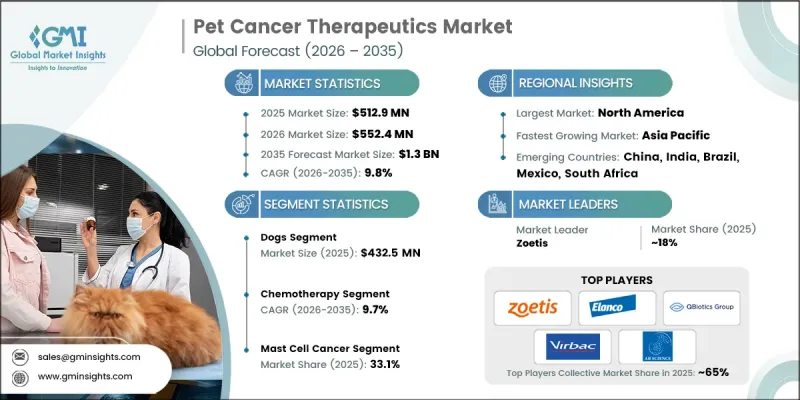
시장의 급속한 확대는 반려동물의 '인간화'라는 트렌드 증가에 힘입은 바 큽니다. 반려동물을 가족의 일원으로 여기게 되면서 첨단 헬스케어 솔루션에 대한 투자가 증가하고 있습니다. 진단 기술, 표적치료제, 면역치료의 발전으로 효과적인 암 치료에 대한 접근성이 확대되고 있습니다. 또한, 반려동물의 고령화에 따라 암의 유병률이 증가하고 있으며, 이는 수의 종양학 솔루션에 대한 수요를 더욱 자극하고 있습니다. 소비자들이 양질의 치료와 생명 연장에 대한 관심이 높아지면서 정밀 진단부터 최소 침습적 치료까지 수의학 혁신이 시장 성장에 핵심적인 역할을 하고 있습니다. 첨단 치료법의 보급, 반려동물 사육두수 증가, 반려동물 보호자들의 인식이 높아지면서 전 세계적으로 첨단 종양 치료의 도입이 진행되고 있습니다.
| 시장 범위 | |
|---|---|
| 개시 연도 | 2025년 |
| 예측 기간 | 2026-2035년 |
| 개시 연도 시장 규모 | 5억 1,290만 달러 |
| 예측액 | 13억 달러 |
| CAGR | 9.8% |
반려동물용 암 치료제는 반려동물의 암 진단, 관리, 치료를 목적으로 하는 다양한 치료법을 포함합니다. 이러한 치료법에는 화학요법, 면역요법, 표적치료, 그리고 종양의 축소, 증상 관리, 반려동물의 전반적인 건강 상태 개선을 위한 병용요법이 포함됩니다. 정밀의료, 유전체 진단, 면역치료 등 수의종양학의 발전으로 보다 효과적이고 덜 침습적인 치료가 가능해졌습니다. 이러한 혁신은 암 진단을 받은 반려동물의 생존율과 삶의 질을 향상시키고 있으며, 첨단 치료법에 대한 큰 수요를 창출하고 있습니다. 수의사들은 이러한 치료법의 표적 효과와 안전성 프로파일이 향상됨에 따라 점점 더 많은 수의사들이 이러한 치료법을 채택하고 있으며, 이는 시장의 지속적인 확장을 주도하고 있습니다.
개 부문은 2025년 4억 3,250만 달러에 달했습니다. 개는 다른 반려동물에 비해 암 발생률이 높기 때문에 가장 큰 비중을 차지하고 있습니다. 림프종, 골육종, 유선종양 등의 질병은 개에서 자주 진단되며, 전문 치료제에 대한 수요를 견인하고 있습니다. 반려견의 암에 대한 보호자들의 인식이 높아지고 효과적인 치료 옵션이 늘어남에 따라 반려동물 암 치료제 시장에서 반려견 부문이 우위를 점하고 있는 것으로 분석됩니다.
주사제 부문은 2035년까지 8억 3,540만 달러에 달할 것으로 예측됩니다. 주사제는 치료제를 혈류와 종양 부위에 직접 주입하여 빠른 흡수와 표적에 대한 작용을 보장하는 능력으로 인해 선호되고 있습니다. 화학요법제, 면역요법제 및 기타 주사제는 정확한 용량 설정과 부작용을 억제할 수 있어 반려동물의 다양한 암 치료에 높은 효과를 발휘합니다. 주사제 전달 시스템의 지속적인 혁신은 이 부문에 대한 시장의 강력한 수요를 유지할 것으로 예측됩니다.
2025년 기준 북미 반려동물 암 치료제 시장은 78.4%의 점유율을 차지했습니다. 이 지역의 선도적 지위는 높은 반려동물 양육률, 첨단 치료법의 보급, 그리고 조기 발견과 맞춤형 치료 계획을 가능하게 하는 유전체 진단, AI를 활용한 세포 진단 및 영상 진단 시스템의 적극적인 도입에 의해 뒷받침되고 있습니다. 개와 고양이의 높은 암 유병률, 동물 건강 관리에 대한 높은 지출, 조기 개입과 고품질 치료에 대한 관심 증가가 북미 시장의 견조한 성장을 견인하고 있습니다.
자주 묻는 질문
목차
제1장 조사 방법과 범위
제2장 주요 요약
제3장 업계 인사이트
제4장 경쟁 구도
제5장 시장 추산 및 예측 : 유형별, 2022-2035
제6장 시장 추산 및 예측 : 치료법별, 2022-2035
제7장 시장 추산 및 예측 : 투여 경로별, 2022-2035
제8장 시장 추산 및 예측 : 암 유형별, 2022-2035
제9장 시장 추산 및 예측 : 지역별, 2022-2035
제10장 기업 개요
LSH 26.05.08The Global Pet Cancer Therapeutics Market was valued at USD 512.9 million in 2025 and is estimated to grow at a CAGR of 9.8% to reach USD 1.3 billion by 2035.
The market's rapid expansion is driven by the growing trend of pet humanization, with owners increasingly treating pets as family members and investing in advanced healthcare solutions. Improved diagnostic technologies, targeted therapies, and immunotherapies have enhanced access to effective cancer care. Additionally, an aging pet population has led to higher cancer prevalence, further stimulating demand for veterinary oncology solutions. As consumers increasingly prioritize quality care and life-extending treatments, innovations in veterinary medicine, ranging from precision diagnostics to minimally invasive therapies, are playing a central role in shaping market growth. The convergence of advanced therapeutics, increased pet ownership, and rising awareness among pet owners is driving the adoption of sophisticated oncology treatments globally.
| Market Scope | |
|---|---|
| Start Year | 2025 |
| Forecast Year | 2026-2035 |
| Start Value | $512.9 Million |
| Forecast Value | $1.3 Billion |
| CAGR | 9.8% |
Pet cancer therapeutics encompass a broad range of treatments aimed at diagnosing, managing, and treating cancers in companion animals. These therapies include chemotherapy, immunotherapies, targeted therapies, and combination regimens designed to reduce tumor size, manage symptoms, and improve overall pet health. Advances in veterinary oncology, such as precision medicine, genomic diagnostics, and immunotherapy, are enabling more effective and less invasive treatments. These innovations are improving survival rates and quality of life for pets diagnosed with cancer, creating substantial demand for advanced therapeutics. Veterinary practitioners are increasingly adopting these therapies due to their targeted effects and improved safety profiles, which drive the market's continuous expansion.
The dogs segment reached USD 432.5 million in 2025. Dogs account for the largest share because cancer incidence is higher in this species compared to other pets. Conditions such as lymphoma, osteosarcoma, and mammary tumors are commonly diagnosed in dogs, driving demand for specialized therapeutics. Increased owner awareness about canine cancer and the availability of effective treatment options further support the dominance of the dog segment in the pet cancer therapeutics market.
The injectable therapies segment is projected to reach USD 835.4 million by 2035. Injectables are favored due to their ability to deliver treatment directly into the bloodstream or tumor site, ensuring rapid absorption and targeted action. Chemotherapy agents, immunotherapies, and other injectable formulations offer precise dosing and enhanced control over side effects, making them highly effective for treating various cancers in pets. Continuous innovations in injectable delivery systems are expected to sustain strong market demand for this segment.
North America Pet Cancer Therapeutics Market held a 78.4% share in 2025. The region's leadership is fueled by high pet ownership, widespread use of advanced therapies, and strong adoption of genomic diagnostics, AI-enabled cytology, and imaging systems that enable early detection and personalized treatment planning. The prevalence of cancer in dogs and cats, high veterinary healthcare spending, and growing emphasis on early-stage interventions and premium therapeutics are driving robust market growth in North America.
Key players in the Global Pet Cancer Therapeutics Market include Zoetis, Elanco Animal Health, Virbac, Dechra Pharmaceuticals, AB Science, NovaVive, Karyopharm Therapeutics, Akston Biosciences, CureLab Oncology, VetDC, Boehringer Ingelheim, Vivesto, ELIAS Animal Health, Qbiotics, and Immuvera. Companies in the Global Pet Cancer Therapeutics Market are pursuing several strategies to strengthen their market position. They are investing heavily in R&D to develop innovative targeted and immunotherapy treatments. Strategic partnerships with veterinary clinics, research institutions, and distribution networks are expanding market access. Product pipelines are being diversified to include injectable, oral, and combination therapies. Geographic expansion into emerging markets and the adoption of digital veterinary tools enhance customer reach. Companies emphasize awareness campaigns, clinical education, and after-sales support programs to build trust with pet owners and veterinarians, solidifying brand loyalty and sustaining long-term growth.
Table of Contents
Chapter 1 Methodology and Scope
- 1.1 Market scope and definition
- 1.2 Research approach
- 1.3 Quality commitments
- 1.3.1 GMI AI policy and data integrity commitment
- 1.3.1.1 Source consistency protocol
- 1.3.1 GMI AI policy and data integrity commitment
- 1.4 Research trail and confidence scoring
- 1.4.1 Research trail components
- 1.4.2 Scoring components
- 1.5 Data collection
- 1.5.1 Partial list of primary sources
- 1.6 Data mining sources
- 1.6.1 Paid sources
- 1.6.1.1 Sources, by region
- 1.6.1 Paid sources
- 1.7 Base estimates and calculations
- 1.7.1 Revenue share analysis
- 1.7.2 Base year calculation
- 1.8 Forecast model
- 1.9 Research transparency addendum
- 1.9.1 Source attribution framework
- 1.9.2 Quality assurance metrics
- 1.9.3 Our commitment to trust
Chapter 2 Executive Summary
- 2.1 Industry 360° synopsis
- 2.2 Key market trends
- 2.2.1 Regional trends
- 2.2.2 Species trends
- 2.2.3 Therapy trends
- 2.2.4 Route of administration trends
- 2.2.5 Cancer type trends
- 2.3 CXO perspectives: Strategic imperatives
Chapter 3 Industry Insights
- 3.1 Industry ecosystem analysis
- 3.2 Industry impact forces
- 3.2.1 Growth drivers
- 3.2.1.1 Increased pet humanization
- 3.2.1.2 Rising cancer incidence in pets
- 3.2.1.3 Advancements in veterinary oncology diagnosis and treatment
- 3.2.1.4 Growing awareness and diagnostic capabilities
- 3.2.2 Industry pitfalls and challenges
- 3.2.2.1 High treatment costs
- 3.2.2.2 Side effects and animal tolerance
- 3.2.3 Market opportunities
- 3.2.3.1 Development of personalized cancer vaccines for pets
- 3.2.3.2 Expansion of AI-powered diagnostic and treatment platforms
- 3.2.1 Growth drivers
- 3.3 Growth potential analysis
- 3.4 Regulatory landscape
- 3.4.1 North America
- 3.4.2 Europe
- 3.4.3 Asia Pacific
- 3.5 Technology landscape
- 3.5.1 Current technological trends
- 3.5.2 Emerging technologies (Driven by primary research)
- 3.6 Pipeline analysis (Driven by primary research)
- 3.7 Investment and funding landscape in pet care (Driven by primary research)
- 3.8 Pet population, by country
- 3.9 Pet insurance coverage and reimbursement landscape (Driven by primary research)
- 3.10 Impact of AI and generative AI on the market (Driven by primary research)
- 3.11 Future market trends (Driven by primary research)
- 3.12 Porter's analysis
- 3.13 PESTEL analysis
Chapter 4 Competitive Landscape, 2025
- 4.1 Introduction
- 4.2 Company market share analysis
- 4.3 Company matrix analysis
- 4.4 Competitive analysis of major market players
- 4.5 Competitive positioning matrix
- 4.6 Key developments
- 4.6.1 Merger and acquisition
- 4.6.2 Partnership and collaboration
- 4.6.3 New product launches
- 4.6.4 Expansion plans
Chapter 5 Market Estimates and Forecast, By Species, 2022 - 2035 ($ Mn)
- 5.1 Key trends
- 5.2 Dogs
- 5.3 Cats
- 5.4 Other species
Chapter 6 Market Estimates and Forecast, By Therapy, 2022 - 2035 ($ Mn)
- 6.1 Key trends
- 6.2 Chemotherapy
- 6.3 Immunotherapy
- 6.4 Targeted therapy
- 6.5 Combination therapy
Chapter 7 Market Estimates and Forecast, By Route of Administration, 2022 - 2035 ($ Mn)
- 7.1 Key trends
- 7.2 Oral
- 7.3 Injectable
Chapter 8 Market Estimates and Forecast, By Cancer Type, 2022 - 2035 ($ Mn)
- 8.1 Key trends
- 8.2 Lymphoma
- 8.3 Mast cell cancer
- 8.4 Melanoma
- 8.5 Mammary and squamous cell cancer
- 8.6 Other cancer types
Chapter 9 Market Estimates and Forecast, By Region, 2022 - 2035 ($ Mn)
- 9.1 Key trends
- 9.2 North America
- 9.2.1 U.S.
- 9.2.2 Canada
- 9.3 Europe
- 9.3.1 Germany
- 9.3.2 UK
- 9.3.3 France
- 9.3.4 Spain
- 9.3.5 Italy
- 9.3.6 Netherlands
- 9.4 Asia Pacific
- 9.4.1 China
- 9.4.2 Japan
- 9.4.3 India
- 9.4.4 Australia
- 9.4.5 South Korea
- 9.5 Latin America
- 9.5.1 Brazil
- 9.5.2 Mexico
- 9.5.3 Argentina
- 9.6 Middle East and Africa
- 9.6.1 South Africa
- 9.6.2 Saudi Arabia
- 9.6.3 UAE
Chapter 10 Company Profiles
- 10.1 AB Science
- 10.2 Akston Biosciences
- 10.3 Boehringer Ingelheim
- 10.4 CureLab Oncology
- 10.5 Dechra Pharmaceuticals
- 10.6 Elanco Animal Health
- 10.7 ELIAS Animal Health
- 10.8 Immuvera
- 10.9 Karyopharm Therapeutic
- 10.10 NovaVive
- 10.11 Qbiotics
- 10.12 VetDC
- 10.13 Vibrac
- 10.14 Vivesto
- 10.15 Zoetis