

|
시장보고서
상품코드
2045720
욕실 배관 설비 시장 : 기회, 성장 촉진요인, 업계 동향 분석 및 예측(2026-2035년)Bathroom Plumbing Fixtures Market Opportunity, Growth Drivers, Industry Trend Analysis, and Forecast 2026 - 2035 |
||||||

세계의 욕실 배관 설비 시장은 2025년에 640억 달러로 평가되었고 CAGR 5.8%를 나타내 2035년까지 1,122억 달러에 이를 것으로 예측됩니다.
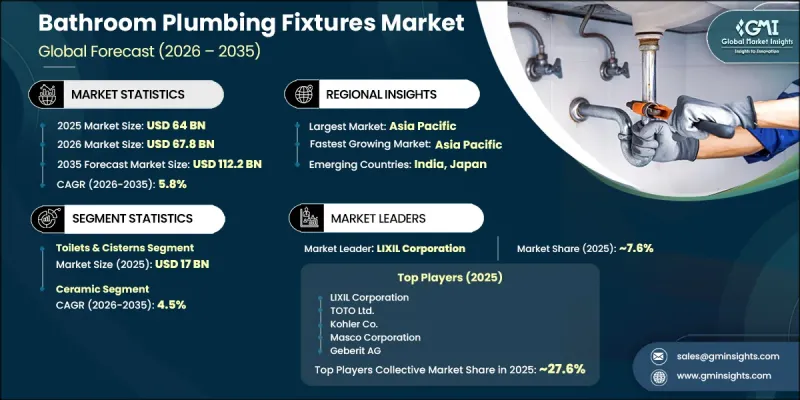
시장 확대는 세계 각국의 경제권에서 주택 및 상업용 건축 활동의 활성화에 힘입은 바 큽니다. 도시화의 진전, 인프라의 정비 및 개조 수요 증가로 인해 주거 및 상업시설 모두에서 화장실, 수도꼭지, 세면대, 샤워 시스템, 욕조의 도입이 가속화되고 있습니다. 소비자들은 현대적인 욕실의 미학, 절수 성능, 그리고 고급스러운 인테리어 디자인을 점점 더 중요시하고 있으며, 이로 인해 제조업체들은 기능성과 현대적인 디자인을 향상시킨 첨단 설비를 도입해야 하는 상황에 직면해 있습니다. 동시에 스마트홈의 급속한 보급과 지속 가능한 건축 기법의 확대가 제품 개발 동향을 재구성하고 있습니다. 물 절약 기술, 센서 기반 시스템, 비접촉식 솔루션의 통합으로 편의성과 위생 기준이 더욱 향상되었습니다. 엔지니어링 세라믹, 금속 합금, 복합 표면재 등 소재의 발전으로 내구성, 내식성 및 제품 수명이 향상되고 있습니다. 친환경 배관 시스템과 지능형 욕실 솔루션에 대한 관심이 높아짐에 따라 전 세계 시장에서 장기적인 수요가 지속적으로 증가하고 있습니다.
| 시장 범위 | |
|---|---|
| 시작 연도 | 2025년 |
| 예측 기간 | 2026-2035년 |
| 시작 연도 시장 규모 | 640억 달러 |
| 예측 금액 | 1,122억 달러 |
| CAGR | 5.8% |
화장실 및 물탱크 부문은 2025년 170억 달러를 차지했으며, 2026년부터 2035년까지 연평균 7.2%의 성장률을 나타낼 것으로 예측됩니다. 이 부문은 주거 및 상업시설의 위생 시스템에서 필수적인 기능을 수행하기 때문에 욕실 배관 설비 시장을 주도하고 있습니다. 짧은 교체 주기, 위생 관련 규제 요건, 신축 및 개보수 프로젝트에서 광범위하게 사용되어 안정적인 수요를 지속적으로 촉진하고 있습니다. 세척 효율 향상, 물 절약, 공간 절약형 디자인을 갖춘 현대식 화장실 시스템에 대한 소비자의 선호도가 높아지면서 이 부문의 성장을 더욱 촉진하고 있습니다.
세라믹 부문은 2025년 52%의 점유율을 차지했으며, 2035년까지 연평균 복합 성장률(CAGR) 4.5%를 나타낼 것으로 예측됩니다. 세라믹은 높은 내구성, 습기와 얼룩에 대한 저항성, 위생 설비에 대한 적합성 때문에 여전히 선호되는 소재입니다. 유지관리가 간편하고 수명이 길며 부식에 강해 싱크대, 세면대, 화장실 시스템에 널리 사용되고 있습니다. 매끄러운 마감, 다양한 디자인, 그리고 접근성 덕분에 주거용 및 상업용 건물 모두에서 꾸준히 채택되고 있습니다.
중국의 욕실 배관 설비 시장은 2025년에 151억 달러에 달했으며, 2026년부터 2035년까지 연평균 4.6%의 성장률을 나타낼 것으로 예측됩니다. 이 나라 시장 지배력은 급속한 도시 개발, 대규모 주택 건설, 지속적인 인프라 확장에 의해 뒷받침되고 있습니다. 현대식 주택, 인테리어 개조, 욕실 리모델링에 대한 소비자의 투자 증가로 화장실, 수도꼭지, 세면대, 샤워기 시스템에 대한 수요가 증가하고 있습니다. 강력한 국내 제조 능력과 광범위한 생산 네트워크는 공급의 안정성을 더욱 향상시키고 시장 확대를 지원합니다.
자주 묻는 질문
목차
제1장 조사 방법과 범위
제2장 주요 요약
제3장 업계 인사이트
제4장 경쟁 구도
제5장 시장 추산 및 예측 : 제품 유형별(2022-2035년)
제6장 시장 추산 및 예측 : 소재별(2022-2035년)
제7장 시장 추산 및 예측 : 가격별(2022-2035년)
제8장 시장 추산 및 예측 : 최종 용도별(2022-2035년)
제9장 시장 추산 및 예측 : 유통 채널별(2022-2035년)
제10장 시장 추산 및 예측 : 지역별(2022-2035년)
제11장 기업 개요
KTH 26.06.10The Global Bathroom Plumbing Fixtures Market was valued at USD 64 billion in 2025 and is estimated to grow at a CAGR of 5.8% to reach USD 112.2 billion by 2035.
Market expansion is supported by rising residential and commercial construction activity across global economies. Increasing urbanization, infrastructure upgrades, and renovation-driven demand are accelerating the adoption of toilets, faucets, sinks, shower systems, and bathtubs across both residential and commercial buildings. Consumers are increasingly prioritizing modern bathroom aesthetics, water efficiency, and premium interior design, which is pushing manufacturers to introduce advanced fixtures with improved functionality and contemporary styling. At the same time, rapid growth in smart home adoption and sustainable building practices is reshaping product development trends. The integration of water-saving technologies, sensor-based systems, and touchless solutions is further enhancing convenience and hygiene standards. Advancements in materials such as engineered ceramics, metal alloys, and composite surfaces are improving durability, corrosion resistance, and product lifespan. Rising focus on eco-friendly plumbing systems and intelligent bathroom solutions continues to strengthen long-term demand across global markets.
| Market Scope | |
|---|---|
| Start Year | 2025 |
| Forecast Year | 2026-2035 |
| Start Value | $64 Billion |
| Forecast Value | $112.2 Billion |
| CAGR | 5.8% |
The toilets & cisterns segment accounted for USD 17 billion in 2025 and is projected to grow at a CAGR of 7.2% from 2026 to 2035. This segment leads the bathroom plumbing fixtures market due to its essential function in sanitation systems across residential and commercial spaces. High replacement cycles, regulatory hygiene requirements, and widespread use in new construction and renovation projects continue to drive consistent demand. Growing consumer preference for modern toilet systems with enhanced flushing efficiency, water-saving mechanisms, and space-efficient designs is further supporting segment growth.
The ceramic segment held a 52% share in 2025 and is expected to grow at a CAGR of 4.5% through 2035. Ceramic remains the preferred material due to its strong durability, resistance to moisture and staining, and suitability for sanitary applications. It is widely used in sinks, basins, and toilet systems because of its low maintenance requirements, long service life, and resistance to corrosion. Its smooth finish, design versatility, and broad availability continue to support strong adoption across both residential and commercial installations.
China Bathroom Plumbing Fixtures Market reached USD 15.1 billion in 2025 and is projected to grow at a CAGR of 4.6% from 2026 to 2035. The country's dominance is supported by rapid urban development, large-scale residential construction, and continuous infrastructure expansion. Rising consumer investment in modern housing, interior upgrades, and bathroom remodeling is boosting demand for toilets, faucets, wash basins, and shower systems. Strong domestic manufacturing capacity and extensive production networks further enhance supply availability and support market scalability.
Major players operating in the Global Bathroom Plumbing Fixtures Industry include Geberit AG, Roca Sanitario S.A., LIXIL Corporation, TOTO Ltd., Kohler Co., Villeroy & Boch AG, Masco Corporation, Duravit AG, Jaquar Group, RAK Ceramics, CERA Sanitaryware Limited, Lecico Egypt S.A.E., Hindware Homes (HSIL Limited), Hansgrohe SE, Gessi S.p.A., Jacuzzi Brands LLC, Arrow Home Group Co., Ltd., Vitra (EczacIbasI Building Products), Brizo (Delta Faucet Company), and JOMOO Kitchen & Bath Co., Ltd. Companies in the bathroom plumbing fixtures market are strengthening their competitive position through continuous product innovation focused on water efficiency, hygiene, and modern design aesthetics. Manufacturers are increasingly investing in smart bathroom technologies such as sensor-operated faucets, automated flushing systems, and digital shower controls to enhance user convenience and sustainability. Strategic partnerships with construction firms, real estate developers, and retail distributors are helping expand market reach and ensure steady project-based demand. Firms are also focusing on expanding production capabilities and optimizing supply chains to support large-scale infrastructure and residential projects. The introduction of eco-friendly materials, antimicrobial coatings, and durable surface technologies is further improving product value.
Table of Contents
Chapter 1 Methodology & Scope
- 1.1 Market scope and definition
- 1.2 Research design
- 1.2.1 Research approach
- 1.2.2 Data collection methods
- 1.3 Data mining sources
- 1.3.1 Global
- 1.3.2 Regional/Country
- 1.4 Base estimates and calculations
- 1.4.1 Base year calculation
- 1.4.2 Key trends for market estimation
- 1.5 Primary research and validation
- 1.5.1 Primary sources
- 1.6 Forecast model
- 1.7 Research assumptions and limitations
Chapter 2 Executive Summary
- 2.1 Industry 360° synopsis
- 2.2 Key market trends
- 2.2.1 Regional
- 2.2.2 Product type
- 2.2.3 Material
- 2.2.4 Price range
- 2.2.5 End-use
- 2.2.6 Distribution channel
Chapter 3 Industry Insights
- 3.1 Industry ecosystem analysis
- 3.1.1 Supplier landscape
- 3.1.2 Profit margin
- 3.1.3 Value addition at each stage
- 3.1.4 Factor affecting the value chain
- 3.2 Industry impact forces
- 3.2.1 Growth drivers
- 3.2.1.1 Rising residential and commercial construction activities
- 3.2.1.2 Growing adoption of water-efficient and smart plumbing solutions
- 3.2.1.3 Rising consumer spending on premium home interiors and remodeling
- 3.2.2 Pitfalls & Challenges
- 3.2.2.1 Fluctuating raw material prices and supply chain disruptions
- 3.2.2.2 High installation and maintenance costs for premium smart fixtures
- 3.2.3 Opportunities
- 3.2.3.1 Growing demand for sustainable and water-saving bathroom solutions
- 3.2.3.2 Expansion of smart homes and connected bathroom technologies
- 3.2.1 Growth drivers
- 3.3 Growth potential analysis
- 3.4 Future market trends
- 3.5 Technology and innovation landscape
- 3.5.1 Current technological trends
- 3.5.2 Emerging technologies
- 3.6 Regulatory landscape
- 3.6.1 Standards and compliance requirements
- 3.6.2 Regional regulatory frameworks
- 3.6.3 Certification standards
- 3.7 Porter's analysis
- 3.8 PESTEL analysis
- 3.8.1 Pricing analysis (driven by primary research)
- 3.8.2 Historical price trend analysis (2020-2026) (driven by primary research)
- 3.8.3 Pricing strategy by player type (premium, mid-range, value segment) (driven by primary research)
- 3.8.4 Price variation by product type
- 3.8.5 Price variation by material type
- 3.8.6 Regional price benchmarking
- 3.8.7 Impact of raw material costs on pricing
- 3.8.8 Impact of freight and logistics on pricing
- 3.9 Trade data analysis (driven by paid data base)
- 3.9.1 Import/export volume and value trends (HS Code 6910 - ceramic fixtures; HS Code 7324 - metal fixtures) (driven by paid data base)
- 3.9.2 Key trade corridors and tariff impact (China-US, Europe-Asia, intra-regional) (driven by paid data base)
- 3.9.3 Top exporting countries
- 3.9.4 Top importing countries
- 3.9.5 Trade dynamics by product type
- 3.9.6 Impact of trade tensions and sanctions
- 3.10 Impact of AI and generative AI on the market
- 3.10.1 AI-driven disruption of existing business models
- 3.10.2 GenAI use cases and adoption roadmap by segment (design customization, demand forecasting, inventory optimization, customer experience)
- 3.10.3 Risks, limitations and regulatory considerations
- 3.11 Capacity and production landscape (driven by primary research)
- 3.11.1 Installed manufacturing capacity by region and key producer (driven by primary research)
- 3.11.2 Capacity utilization rates and expansion pipelines (driven by primary research)
Chapter 4 Competitive Landscape, 2025
- 4.1 Introduction
- 4.2 Company market share analysis
- 4.2.1 By Region
- 4.2.1.1 North America
- 4.2.1.2 Europe
- 4.2.1.3 Asia Pacific
- 4.2.1.4 Latin America
- 4.2.1.5 Middle East & Africa
- 4.2.1 By Region
- 4.3 Company matrix analysis
- 4.4 Competitive analysis of major market players
- 4.5 Competitive positioning matrix
- 4.6 Key developments
- 4.6.1 Mergers & acquisitions
- 4.6.2 Partnerships & collaborations
- 4.6.3 New product launches
- 4.6.4 Expansion plans
Chapter 5 Market Estimates & Forecast, By Product Type, 2022 - 2035, (USD Billion) (Thousand Units)
- 5.1 Key trends
- 5.2 Toilets & Cisterns
- 5.3 Faucets & Taps
- 5.4 Shower Systems
- 5.5 Sinks & Basins
- 5.6 Bathtubs
- 5.7 Accessories
- 5.8 Urinals
Chapter 6 Market Estimates & Forecast, By Material, 2022 - 2035, (USD Billion) (Thousand Units)
- 6.1 Key trends
- 6.2 Ceramic
- 6.3 Metal
- 6.4 Plastic & Fiberglass
- 6.5 Stone & Composite Stone
- 6.6 Glass
Chapter 7 Market Estimates & Forecast, By Price Range, 2022 - 2035, (USD Billion) (Thousand Units)
- 7.1 Key trends
- 7.2 Below USD 100
- 7.3 USD 100-USD 200
- 7.4 Above USD 200
Chapter 8 Market Estimates & Forecast, By End-Use, 2022 - 2035, (USD Billion) (Thousand Units)
- 8.1 Key trends
- 8.2 Residential
- 8.3 Commercial
Chapter 9 Market Estimates & Forecast, By Distribution Channel, 2022 - 2035, (USD Billion) (Thousand Units)
- 9.1 Key trends
- 9.2 Offline
- 9.3 Online
Chapter 10 Market Estimates & Forecast, By Region, 2022 - 2035, (USD Billion) (Thousand Units)
- 10.1 Key trends
- 10.2 North America
- 10.2.1 U.S.
- 10.2.2 Canada
- 10.3 Europe
- 10.3.1 Germany
- 10.3.2 UK
- 10.3.3 France
- 10.3.4 Italy
- 10.3.5 Spain
- 10.4 Asia Pacific
- 10.4.1 China
- 10.4.2 India
- 10.4.3 Japan
- 10.4.4 South Korea
- 10.4.5 Australia
- 10.5 Latin America
- 10.5.1 Brazil
- 10.5.2 Mexico
- 10.5.3 Argentina
- 10.6 MEA
- 10.6.1 Saudi Arabia
- 10.6.2 UAE
- 10.6.3 South Africa
Chapter 11 Company Profiles
- 11.1 Top Global Players
- 11.1.1 Kohler Co.
- 11.1.2 TOTO Ltd.
- 11.1.3 LIXIL Corporation
- 11.1.4 Masco Corporation
- 11.1.5 Roca Sanitario S.A.
- 11.1.6 Geberit AG
- 11.1.7 Villeroy & Boch AG
- 11.2 Regional Champions
- 11.2.1 Duravit AG
- 11.2.2 Jaquar Group
- 11.2.3 RAK Ceramics
- 11.2.4 Huida Sanitary Ware Co., Ltd.
- 11.2.5 CERA Sanitaryware Limited
- 11.2.6 Lecico Egypt S.A.E.
- 11.2.7 Hindware Homes (HSIL Limited)
- 11.3 Emerging & Specialized Players
- 11.3.1 Gessi S.p.A.
- 11.3.2 Hansgrohe SE
- 11.3.3 JOMOO Kitchen & Bath Co., Ltd.
- 11.3.4 Arrow Home Group Co., Ltd.
- 11.3.5 Vitra
- 11.3.6 Jacuzzi Brands LLC
- 11.3.7 Brizo (Delta Faucet Company)


