
|
시장보고서
상품코드
2061488
동물병원 시장 기회, 성장요인, 업계 동향 분석 및 예측(2026-2035년)Veterinary Hospital Market Opportunity, Growth Drivers, Industry Trend Analysis, and Forecast 2026 - 2035 |
||||||

세계의 동물병원 시장은 2025년에 678억 달러로 평가되고 CAGR 7.1%로 성장하며, 2035년까지 1,328억 달러에 달할 것으로 예측됩니다.
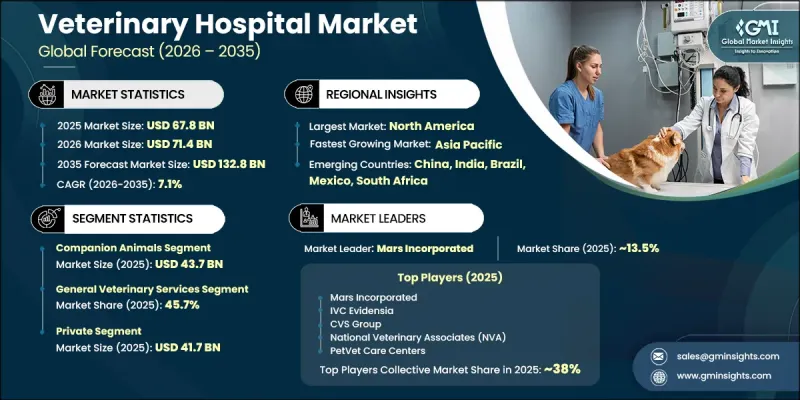
전 세계 동물 수의 증가, 반려동물 사육 수의 증가, 그리고 동물 헬스케어 서비스에 대한 지출 확대에 힘입어 시장은 꾸준히 성장하고 있습니다. 동물병원은 폭넓은 진단, 예방, 치료 서비스를 통해 반려동물, 가축 및 기타 동물에게 포괄적인 의료 서비스를 제공하는 데 중요한 역할을 하고 있습니다. 이 시설들은 외과수술, 정기 검진, 예방접종 프로그램, 전문 수의 의료 서비스 등 첨단 의료 지원을 제공하기 위한 설비를 갖추고 있습니다. 반려동물 주인과 동물 간의 정서적 유대감 강화는 양질의 의료 서비스와 첨단 치료 솔루션에 대한 수요에 큰 영향을 미치고 있습니다. 또한 수의학의 지속적인 발전, 혁신적인 의료기기의 보급, 그리고 반려동물 헬스케어 서비스에 대한 접근성 확대가 시장 전체의 성장에 기여하고 있습니다. 동물 복지와 예방 의료에 대한 인식이 높아짐에 따라 전 세계 동물병원에 대한 수요가 더욱 증가하고 있습니다. 또한 이 업계는 진단, 치료 절차 및 동물 헬스케어 시스템 분야의 기술 발전의 혜택을 받고 있으며, 이를 통해 동물 의료 시설 전반에 걸친 치료 성과 향상과 운영 효율 제고가 지원되고 있습니다.
| 시장 범위 | |
|---|---|
| 시작연도 | 2025년 |
| 예측 기간 | 2026-2035년 |
| 개시 금액 | 678억 달러 |
| 예측액 | 1,328억 달러 |
| CAGR | 7.1% |
2025년, 반려동물 부문은 437억 달러 규모의 시장을 기록했습니다. 이 부문의 성장은 주로 반려동물을 키우며, 반려동물을 가족의 일원으로 여기는 가구의 증가에 힘입어 이루어지고 있습니다. 동물의 건강과 웰빙에 대한 인식이 높아지는 데 더해, 예방 의료 및 전문적인 헬스케어 서비스에 대한 수요가 확대되면서 시장 성장이 지속적으로 지원되고 있습니다. 반려동물 주인들의 의료비 지출 증가와 세계 시장에서 반려동물을 위한 고품질 치료 및 장기적인 헬스케어에 대한 수요가 높아짐에 따라 반려동물은 계속해서 동물병원의 주요 중점 분야로 자리 잡고 있습니다.
일반 수의학 서비스 부문은 2025년에 45.7%의 점유율을 차지했습니다. 일반 수의학 서비스에 대한 강력한 수요는 반려동물 보유율의 증가, 동물 헬스케어에 대한 관심 고조, 그리고 수의학 실무의 지속적인 개선에 힘입어 증가하고 있습니다. 동물 건강 문제의 발생률 증가 역시 정기적인 수의사 진찰 및 예방 헬스케어 솔루션에 대한 수요 확대에 기여하고 있습니다. 동물병원은 정기 건강검진, 예방접종, 예방 치료, 지속적인 헬스케어 등을 포함한 일반 서비스의 제공 범위를 확대하고 있으며, 이는 시장의 추가적인 성장을 지원하고 있습니다.
북미의 동물병원 시장은 2025년에 39.7%의 점유율을 차지했습니다. 이 지역은 높은 반려동물 사육률, 반려동물 헬스케어에 대한 막대한 지출, 그리고 잘 갖춰진 수의학 인프라 덕분에 계속해서 업계를 선도하고 있습니다. 첨단 진단 기술, 전문 치료 서비스, 그리고 반려동물 의료보험을 활용할 수 있는 체계적인 환경이 지역 전체에서 수의 의료 서비스 이용 확대를 지원하고 있습니다. 또한 여러 지역에 걸쳐 운영되는 동물병원 네트워크의 확대와 동물 헬스케어 서비스에 대한 투자 증가가 북미 전역의 시장 발전을 더욱 촉진하고 있습니다.
자주 묻는 질문
목차
제1장 조사 방법과 범위
제2장 개요
제3장 업계 인사이트
제4장 경쟁 구도
제5장 시장 추산·예측 : 동물 유형별, 2022-2035년
제6장 시장 추산·예측 : 서비스별, 2022-2035년
제7장 시장 추산·예측 : 소유 형태별, 2022-2035년
제8장 시장 추산·예측 : 지역별, 2022-2035년
제9장 기업 개요
KSA 26.06.24The Global Veterinary Hospital Market was valued at USD 67.8 billion in 2025 and is estimated to grow at a CAGR of 7.1% to reach USD 132.8 billion by 2035.
The market is expanding steadily due to the rising global animal population, increasing adoption of companion animals, and growing spending on animal healthcare services. Veterinary hospitals play a critical role in delivering comprehensive medical care for pets, livestock, and other animals through a broad range of diagnostic, preventive, and treatment services. These facilities are equipped to provide advanced medical support, including surgical procedures, routine examinations, immunization programs, and specialized veterinary care. The increasing emotional attachment between pet owners and animals is significantly influencing demand for high-quality healthcare services and advanced treatment solutions. In addition, continuous progress in veterinary medicine, availability of innovative medical devices, and wider access to pet healthcare services are contributing to overall market growth. Expanding awareness regarding animal welfare and preventive healthcare is further strengthening demand for veterinary hospitals worldwide. The industry is also benefiting from technological advancements in diagnostics, treatment procedures, and veterinary healthcare management systems, supporting improved treatment outcomes and operational efficiency across veterinary care facilities.
| Market Scope | |
|---|---|
| Start Year | 2025 |
| Forecast Year | 2026-2035 |
| Start Value | $67.8 Billion |
| Forecast Value | $132.8 Billion |
| CAGR | 7.1% |
The companion animals segment generated USD 43.7 billion in 2025. Growth within this segment is primarily driven by the increasing number of households adopting companion animals and treating pets as integral family members. Rising awareness regarding animal health and wellness, coupled with growing demand for preventive and specialized healthcare services, continues to support market expansion. Companion animals remain a major focus area for veterinary hospitals due to increasing healthcare spending by pet owners and rising demand for quality treatment and long-term medical care for pets across global markets.
The general veterinary services segment held a 45.7% share in 2025. Strong demand for general veterinary services is being driven by rising pet ownership rates, increasing focus on animal health management, and continuous improvements in veterinary medical practices. The growing occurrence of animal health conditions is also contributing to greater demand for routine veterinary consultations and preventive healthcare solutions. Veterinary hospitals are increasingly expanding their general service offerings to include regular health examinations, vaccinations, preventive treatments, and ongoing wellness care, supporting broader market growth.
North America Veterinary Hospital Market captured 39.7% share in 2025. The region continues to lead the industry due to high pet ownership levels, substantial expenditure on companion animal healthcare, and the presence of well-developed veterinary infrastructure. Strong availability of advanced diagnostic technologies, specialty treatment services, and pet healthcare coverage is supporting increased adoption of veterinary services throughout the region. In addition, the growing expansion of multi-location veterinary hospital networks and rising investments in animal healthcare services are further strengthening market development across North America.
Major companies operating in the Global Veterinary Hospital Market include All Pets Veterinary Hospital, AniCura, Beijing Xintiandi International Animal Hospital, Belltowne Veterinary Center, CVS Group, Fishers Veterinary Hospital, Greencross Vets, Innovative Petcare, IVC Evidensia, MaxPetZ, Mars Incorporated, Medivet, National Veterinary Associates (NVA), PetVet Care Centers, SASH Vets, The Animal Medical Center, and VetPartners. Companies operating in the veterinary hospital industry are adopting multiple strategic initiatives to strengthen their market presence and expand service capabilities. Leading organizations are investing in advanced diagnostic technologies, digital healthcare systems, and specialized treatment facilities to improve the quality of veterinary care and operational efficiency. Many market participants are also focusing on expanding multi-location hospital networks through mergers, acquisitions, and strategic partnerships to increase geographic reach and customer access. In addition, veterinary healthcare providers are emphasizing preventive care programs, wellness services, and personalized treatment solutions to enhance long-term client relationships. Investments in skilled veterinary professionals, telemedicine platforms, and modern healthcare infrastructure are further supporting business growth.
Table of Contents
Chapter 1 Methodology and Scope
- 1.1 Market scope and definition
- 1.2 Research approach
- 1.3 Quality commitments
- 1.3.1 GMI AI policy and data integrity commitment
- 1.3.1.1 Source consistency protocol
- 1.3.1 GMI AI policy and data integrity commitment
- 1.4 Research trail and confidence scoring
- 1.4.1 Research trail components
- 1.4.2 Scoring components
- 1.5 Data collection
- 1.5.1 Partial list of primary sources
- 1.6 Data mining sources
- 1.6.1 Paid sources
- 1.6.1.1 Sources, by region
- 1.6.1 Paid sources
- 1.7 Base estimates and calculations
- 1.7.1 Revenue share analysis
- 1.7.2 Base year calculation
- 1.8 Forecast model
- 1.9 Research transparency addendum
- 1.9.1 Source attribution framework
- 1.9.2 Quality assurance metrics
- 1.9.3 Our commitment to trust
Chapter 2 Executive Summary
- 2.1 Industry 360° synopsis
- 2.2 Key market trends
- 2.2.1 Regional trends
- 2.2.2 Animal type trends
- 2.2.3 Services trends
- 2.2.4 Ownership trends
- 2.3 CXO perspectives: Strategic imperatives
Chapter 3 Industry Insights
- 3.1 Industry ecosystem analysis
- 3.2 Industry impact forces
- 3.2.1 Growth drivers
- 3.2.1.1 Growing animal population and rising pet ownership
- 3.2.1.2 Advancements in veterinary medicine
- 3.2.1.3 Consolidation of animal hospitals
- 3.2.1.4 Growing prevalence of chronic and infectious diseases in animals
- 3.2.2 Industry pitfalls and challenges
- 3.2.2.1 High cost of advanced veterinary treatments
- 3.2.2.2 Shortage of skilled veterinary professionals
- 3.2.3 Market opportunities
- 3.2.3.1 Growth in pet insurance adoption
- 3.2.3.2 Increasing demand for specialized and referral veterinary services
- 3.2.3.3 Expansion in emerging markets
- 3.2.1 Growth drivers
- 3.3 Growth potential analysis
- 3.4 Regulatory landscape
- 3.4.1 North America
- 3.4.2 Europe
- 3.4.3 Asia Pacific
- 3.4.4 Latin America
- 3.4.5 Middle East & Africa
- 3.5 Pet population, by country
- 3.6 Impact of demographics on pet ownership
- 3.7 Future market trends
- 3.8 Veterinary service healthcare cost analysis
- 3.9 Impact of AI and Gen AI on the market
- 3.10 Porter's analysis
- 3.11 PESTEL analysis
Chapter 4 Competitive Landscape, 2025
- 4.1 Introduction
- 4.2 Company market share analysis
- 4.2.1 North America
- 4.2.2 Europe
- 4.3 Company matrix analysis
- 4.4 Competitive analysis of major market players
- 4.5 Competitive positioning matrix
- 4.6 Key developments
- 4.6.1 Merger and acquisition
- 4.6.2 Partnership and collaboration
- 4.6.3 New product launches
- 4.6.4 Expansion plans
Chapter 5 Market Estimates and Forecast, By Animal Type, 2022 - 2035 ($ Mn)
- 5.1 Key trends
- 5.2 Companion animals
- 5.2.1 Dogs
- 5.2.2 Cats
- 5.2.3 Horses
- 5.2.4 Other companion animals
- 5.3 Farm animals
- 5.3.1 Cattle
- 5.3.2 Swine
- 5.3.3 Poultry
- 5.3.4 Other farm animals
- 5.4 Exotic animals and wildlife
Chapter 6 Market Estimates and Forecast, By Services, 2022 - 2035 ($ Mn)
- 6.1 Key trends
- 6.2 General veterinary services
- 6.3 Diagnostic services
- 6.4 Surgical services
- 6.5 Other services
Chapter 7 Market Estimates and Forecast, By Ownership, 2022 - 2035 ($ Mn)
- 7.1 Key trends
- 7.2 Public
- 7.3 Private
Chapter 8 Market Estimates and Forecast, By Region, 2022 - 2035 ($ Mn)
- 8.1 Key trends
- 8.2 North America
- 8.2.1 U.S.
- 8.2.2 Canada
- 8.3 Europe
- 8.3.1 Germany
- 8.3.2 UK
- 8.3.3 France
- 8.3.4 Italy
- 8.3.5 Spain
- 8.3.6 Netherlands
- 8.4 Asia Pacific
- 8.4.1 China
- 8.4.2 Japan
- 8.4.3 India
- 8.4.4 Australia
- 8.4.5 South Korea
- 8.5 Latin America
- 8.5.1 Brazil
- 8.5.2 Mexico
- 8.5.3 Argentina
- 8.6 Middle East and Africa
- 8.6.1 South Africa
- 8.6.2 Saudi Arabia
- 8.6.3 UAE
Chapter 9 Company Profiles
- 9.1 All Pets Veterinary Hospital
- 9.2 AniCura
- 9.3 Beijing Xintiandi International Animal Hospital
- 9.4 Belltowne Veterinary Center
- 9.5 CVS Group
- 9.6 Fishers Veterinary Hospital
- 9.7 Greencross Vets
- 9.8 Innovative Petcare
- 9.9 IVC Evidensia
- 9.10 MaxPetZ
- 9.11 Mars Incorporated
- 9.12 Medivet
- 9.13 National Veterinary Associates (NVA)
- 9.14 PetVet Care Centers
- 9.15 SASH Vets
- 9.16 The Animal Medical Center
- 9.17 VetPartners