
|
시장보고서
상품코드
2071404
α-1 항트립신 결핍증 치료 시장 성장 기회, 성장 촉진요인, 업계 동향 분석 및 예측(2026-2035년)Alpha-1 Antitrypsin Deficiency Disease Treatment Market Opportunity, Growth Drivers, Industry Trend Analysis, and Forecast 2026 - 2035 |
||||||

세계의 α-1 항트립신 결핍증 치료 시장은 2025년에 31억 달러로 평가되었고 CAGR 8.1%로 성장하여 2035년까지 68억 달러에 이를 것으로 추정되고 있습니다.
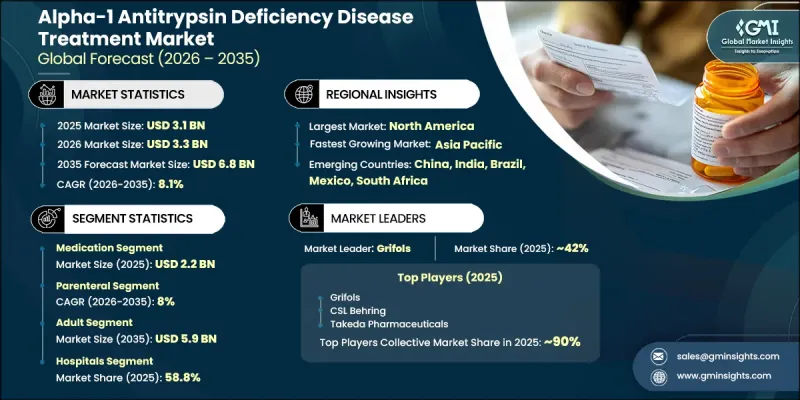
이 시장은 α-1 항트립신 결핍증(AATD)과 관련된 호흡기 질환 및 간 질환의 유병률 증가, 희귀 유전 질환에 대한 인식 제고, 질환 선별 검사 프로그램의 확대, 그리고 진단 및 치료 기술의 지속적인 발전으로 인해 꾸준히 성장하고 있습니다. AATD로 인한 만성 호흡기 및 간 합병증의 유병률 증가는 효과적인 질환 관리 솔루션에 대한 큰 수요를 창출하고 있습니다. α-1 항트립신은 간에서 합성되는 천연 단백질로, 폐 조직을 염증으로 인한 손상으로부터 보호하는 데 매우 중요한 역할을 합니다. 이 단백질의 수치가 부족할 경우, 특히 다른 환경적 요인이 질환의 진행에 기여할 때, 심각한 폐 및 간 관련 건강상의 합병증을 유발할 수 있습니다. 이 시장에는 진단 기술, 보충 요법, 유전자 중심 치료 전략, 흡입 요법 및 지지 요법 솔루션 등 광범위한 치료 및 관리 접근법이 포함됩니다. 생명공학 및 정밀 의학 분야의 지속적인 혁신은 환자의 예후를 개선하고, α-1 항트립신 결핍증과 관련된 장기적인 과제를 해결하기 위한 첨단 치료 옵션의 개발을 더욱 촉진하고 있습니다.
| 시장 범위 | |
|---|---|
| 시작 연도 | 2025년 |
| 예측 기간 | 2026-2035년 |
| 초기 시장 규모 | 31억 달러 |
| 예측 금액 | 68억 달러 |
| CAGR | 8.1% |
α-1 항트립신 결핍증 치료 시장은 이 질환의 진단 및 치료 개입 분야에서 이루어진 현저한 진전의 혜택을 받고 있습니다. 의료 종사자와 환자들의 인식이 높아짐에 따라 조기 진단과 치료 시작이 촉진되어, 질환 관리의 개선에 기여하고 있습니다. 맞춤형 의료에 대한 관심이 높아짐에 따라, 이 질환의 근본적인 원인과 진행을 다루는 표적 치료법의 도입이 촉진되고 있습니다. 또한, 바이오의약품, 유전자 치료 및 새로운 치료 플랫폼의 발전으로 인해 치료 분야 전반에 걸쳐 혁신의 새로운 기회가 생겨나고 있습니다. 의료 서비스 제공업체들은 합병증 완화, 장기 기능 유지, 그리고 환자의 삶의 질 향상을 목표로 하는 종합적인 질환 관리 전략에 계속해서 주력하고 있습니다. 이러한 추세는 예측 기간 동안 시장 전체의 지속적인 성장을 뒷받침할 것으로 전망됩니다.
2025년, 의약품 부문 시장 규모는 22억 달러에 달했습니다. 이 분야는 질환의 증상 관리, 임상 경과의 지연, 그리고 호흡기 증상 및 간 증상과 관련된 합병증을 최소화하는 데 핵심적인 역할을 하고 있습니다. 약물 요법이 널리 사용되고 있다는 사실은 α-1 항트립신 결핍증에 일반적으로 수반되는 폐 질환의 부담이 막대함을 반영하고 있습니다. 약물을 이용한 치료 접근법은 호흡 기능 개선, 질환 관리 지원, 그리고 환자의 전반적인 건강 상태 향상을 목적으로 널리 활용되고 있습니다. 약물 요법의 지속적인 발전으로 인해, 시장 내 이 부문의 입지는 더욱 공고해지고 있습니다.
비경구 투여 부문은 2035년까지 연평균 성장률(CAGR) 8%로 성장할 것으로 전망됩니다. 이 부문의 확고한 입지는 비경구 투여가 치료제를 전신 순환계로 직접 전달하여 최적의 치료 효과를 확실하게 얻을 수 있다는 유효성에 기인합니다. α-1 항트립신 결핍증 치료 분야에서 정맥 내 투여를 통한 보충 요법은 여전히 주요 치료법으로 자리 잡고 있습니다. 이 투여 경로는 체내 단백질 농도를 적절한 수준으로 유지하고, 진행성 조직 손상을 완화하며, 장기적인 질환 관리를 지원할 수 있기 때문에 널리 선호되고 있습니다. 치료 프로토콜이 지속적으로 발전함에 따라, 비경구 투여 부문은 환자 치료에 있어 앞으로도 중요한 요소로 남아 있을 것으로 예측됩니다.
북미의 α-1 항트립신 결핍증 치료 시장은 2025년에 60.2%의 점유율을 기록하며, 지역 시장으로서 주도적인 위치를 유지했습니다. 이 지역의 성장은 첨단 유전자 검사 기술에 대한 폭넓은 접근성, 희귀 호흡기 질환에 대한 높은 인식, 그리고 전문적인 치료법의 보급에 힘입어 이루어지고 있습니다. 유서 깊은 바이오의약품 기업의 존재, 광범위한 혈장 수집 능력, 그리고 잘 갖춰진 수액 요법 인프라가 일관된 치료 접근성에 기여하고 있습니다. α-1 항트립신 결핍증과 관련된 호흡기 질환의 유병률 증가와 정밀의료 접근법의 도입 확대가 맞물리면서, 지역 전체 시장 수요는 계속해서 증가하고 있습니다. 이러한 요인들이 복합적으로 작용하여, 세계 시장에서 북미의 주도적 지위를 더욱 공고히 하고 있습니다.
자주 묻는 질문
목차
제1장 조사 방법과 범위
제2장 주요 요약
제3장 업계 인사이트
제4장 경쟁 구도
제5장 시장 추정 및 예측 : 치료 유형별(2022-2035년)
제6장 시장 추정 및 예측 : 투여 경로별(2022-2035년)
제7장 시장 추정 및 예측 : 연령층별(2022-2035년)
제8장 시장 추정 및 예측 : 최종 용도별(2022-2035년)
제9장 시장 추정 및 예측 : 지역별(2022-2035년)
제10장 기업 개요
KTH 26.07.03The Global Alpha-1 Antitrypsin Deficiency Disease Treatment Market was valued at USD 3.1 billion in 2025 and is estimated to grow at a CAGR of 8.1% to reach USD 6.8 billion by 2035.
The market is experiencing steady expansion due to the increasing incidence of alpha-1 antitrypsin deficiency (AATD)-related respiratory and liver conditions, growing recognition of rare genetic disorders, expanding disease screening programs, and ongoing progress in diagnostic and therapeutic technologies. The rising prevalence of chronic respiratory and hepatic complications associated with AATD is creating significant demand for effective disease management solutions. Alpha-1 antitrypsin is a naturally occurring protein synthesized by the liver that plays a vital role in protecting lung tissue from inflammatory damage. Insufficient levels of this protein can result in serious pulmonary and liver-related health complications, particularly when additional environmental factors contribute to disease progression. The market encompasses a broad range of treatment and management approaches, including diagnostic technologies, augmentation therapies, gene-focused therapeutic strategies, inhalation-based treatments, and supportive care solutions. Continuous innovation in biotechnology and precision medicine is further supporting the development of advanced treatment options designed to improve patient outcomes and address the long-term challenges associated with alpha-1 antitrypsin deficiency disease.
| Market Scope | |
|---|---|
| Start Year | 2025 |
| Forecast Year | 2026-2035 |
| Start Value | $3.1 Billion |
| Forecast Value | $6.8 Billion |
| CAGR | 8.1% |
The alpha-1 antitrypsin deficiency disease treatment market is benefiting from significant advances in disease identification and therapeutic intervention. Increasing awareness among healthcare professionals and patients is encouraging earlier diagnosis and treatment initiation, contributing to improved disease management. The growing emphasis on personalized healthcare approaches is supporting the adoption of targeted therapies that address the underlying causes and progression of the disorder. In addition, advancements in biologics, genetic medicine, and novel therapeutic platforms are creating new opportunities for innovation across the treatment landscape. Healthcare providers continue to focus on comprehensive disease management strategies aimed at reducing complications, preserving organ function, and enhancing quality of life for affected individuals. These developments are expected to support sustained growth across the market over the forecast period.
The medication segment generated USD 2.2 billion in 2025. This segment plays a central role in managing disease symptoms, slowing clinical progression, and minimizing complications associated with both respiratory and hepatic manifestations of the condition. The widespread use of pharmacological therapies reflects the significant burden of pulmonary disorders commonly associated with alpha-1 antitrypsin deficiency. Medication-based treatment approaches are widely utilized to improve respiratory function, support disease management, and enhance overall patient well-being. Continued advancements in pharmaceutical therapies are further strengthening the segment's position within the market.
The parenteral segment is anticipated to grow at a CAGR of 8% throughout 2035. The strong position of this segment is attributed to the effectiveness of parenteral administration in delivering therapies directly into systemic circulation, ensuring optimal therapeutic outcomes. Within the alpha-1 antitrypsin deficiency treatment landscape, augmentation therapies delivered through intravenous administration remain a primary treatment approach. This route of administration is widely preferred due to its ability to maintain appropriate protein levels within the body, helping reduce progressive tissue damage and support long-term disease management. As treatment protocols continue to evolve, the parenteral segment is expected to remain a critical component of patient care.
North America Alpha-1 Antitrypsin Deficiency Disease Treatment Market accounted for 60.2% share in 2025, maintaining its position as the leading regional market. Growth across the region is supported by broad access to advanced genetic testing technologies, strong awareness of rare respiratory disorders, and widespread adoption of specialized treatment options. The presence of established biopharmaceutical companies, extensive plasma collection capabilities, and robust infusion therapy infrastructure contributes to consistent treatment accessibility. Rising prevalence of respiratory conditions associated with alpha-1 antitrypsin deficiency, combined with the increasing adoption of precision medicine approaches, continues to strengthen market demand throughout the region. These factors collectively reinforce North America's leadership within the global market.
Key companies operating in the Global Alpha-1 Antitrypsin Deficiency Disease Treatment Market include Takeda Pharmaceutical, Grifols, CSL Behring, Kamada, LFB Biotechnologies, Intellia Therapeutics, Prime Medicine, Arrowhead Pharmaceuticals, Inhibrx, Jaguar Gene Therapy, Octapharma, National Jewish Health, The Johns Hopkins Hospital, and The General Hospital. Companies participating in the alpha-1 antitrypsin deficiency disease treatment market are implementing a variety of strategies to strengthen their market position and expand their competitive advantage. Significant investments in research and development remain a primary focus as organizations work to advance innovative therapies, including gene-based treatments, biologics, and precision medicine solutions. Strategic collaborations with research institutions, healthcare organizations, and biotechnology companies are accelerating product development and clinical advancement. Many companies are also expanding their clinical trial programs to evaluate new therapeutic approaches and improve treatment effectiveness. In addition, businesses are prioritizing geographic expansion, regulatory approvals, and enhanced patient access initiatives to broaden their market reach. Strengthening manufacturing capabilities, improving treatment availability, and investing in advanced diagnostic technologies are further helping market participants reinforce their presence and secure long-term growth within the global alpha-1 antitrypsin deficiency disease treatment industry.
Table of Contents
Chapter 1 Methodology and Scope
- 1.1 Market scope and definition
- 1.2 Research approach
- 1.3 Quality commitments
- 1.3.1 GMI AI policy and data integrity commitment
- 1.3.1.1 Source consistency protocol
- 1.3.1 GMI AI policy and data integrity commitment
- 1.4 Research trail and confidence scoring
- 1.4.1 Research trail components
- 1.4.2 Scoring components
- 1.5 Data collection
- 1.5.1 Partial list of primary sources
- 1.6 Data mining sources
- 1.6.1 Paid sources
- 1.6.1.1 Sources, by region
- 1.6.1 Paid sources
- 1.7 Base estimates and calculations
- 1.7.1 Revenue share analysis
- 1.7.2 Base year calculation
- 1.8 Forecast model
- 1.9 Research transparency addendum
- 1.9.1 Source attribution framework
- 1.9.2 Quality assurance metrics
- 1.9.3 Our commitment to trust
Chapter 2 Executive Summary
- 2.1 Industry 3600 synopsis
- 2.2 Key market trends
- 2.2.1 Regional trends
- 2.2.2 Treatment type trends
- 2.2.3 Route of administration trends
- 2.2.4 Age group trends
- 2.2.5 End use trends
- 2.3 CXO perspectives: Strategic imperatives
Chapter 3 Industry Insights
- 3.1 Industry ecosystem analysis
- 3.2 Industry impact forces
- 3.2.1 Growth drivers
- 3.2.1.1 Increasing prevalence of alpha-1 antitrypsin deficiencey disease (AATD)
- 3.2.1.2 Advancements in biotechnology
- 3.2.1.3 Approval of novel therapies for AATD
- 3.2.1.4 Improving reimbursement coverage and rare disease policies
- 3.2.2 Industry pitfalls and challenges
- 3.2.2.1 High cost of treatment
- 3.2.2.2 Adverse effects associated with treatment
- 3.2.3 Market opportunities
- 3.2.3.1 Advancement in gene therapy and biologics
- 3.2.3.2 Increasing awareness and early diagnosis programs
- 3.2.1 Growth drivers
- 3.3 Growth potential analysis
- 3.4 Regulatory landscape (Driven By Primary Research)
- 3.4.1 North America
- 3.4.2 Europe
- 3.4.3 Asia Pacific
- 3.4.4 Latin America
- 3.4.5 Middle East and Africa
- 3.5 Pipeline analysis (Driven By Primary Research)
- 3.6 Impact of AI and Generative AI on the market (Driven By Primary Research)
- 3.7 Epidemiology and patient population analysis (Driven By Primary Research)
- 3.8 Future market trends (Driven By Primary Research)
- 3.9 Porter's analysis
- 3.10 PESTEL analysis
Chapter 4 Competitive Landscape, 2025
- 4.1 Introduction
- 4.2 Company market share analysis
- 4.2.1 North America
- 4.2.2 Europe
- 4.2.3 Asia Pacific
- 4.3 Company matrix analysis
- 4.4 Competitive analysis of major market players
- 4.5 Competitive positioning matrix
- 4.6 Key developments
- 4.6.1 Merger and acquisition
- 4.6.2 Partnership and collaboration
- 4.6.3 New product launches
- 4.6.4 Expansion plans
Chapter 5 Market Estimates and Forecast, By Treatment Type, 2022-2035 ($ Mn)
- 5.1 Key trends
- 5.2 Medication
- 5.2.1 Alpha-1 proteinase inhibitor
- 5.2.2 Bronchodilators
- 5.2.3 Corticosteroids
- 5.2.4 Other medications
- 5.3 Therapy
- 5.3.1 Augmentation therapy
- 5.3.2 Oxygen therapy
- 5.3.3 Other therapies
- 5.4 Surgery
Chapter 6 Market Estimates and Forecast, By Route of Administration, 2022-2035 ($ Mn)
- 6.1 Key trends
- 6.2 Parenteral
- 6.3 Intranasal
- 6.4 Oral
Chapter 7 Market Estimates and Forecast, By Age Group, 2022-2035 ($ Mn)
- 7.1 Key trends
- 7.2 Pediatric
- 7.3 Adult
Chapter 8 Market Estimates and Forecast, By End Use, 2022-2035 ($ Mn)
- 8.1 Key trends
- 8.2 Hospitals
- 8.3 Specialty clinics
- 8.4 Other end users
Chapter 9 Market Estimates and Forecast, By Region, 2022 - 2035 ($ Mn)
- 9.1 Key trends
- 9.2 North America
- 9.2.1 U.S.
- 9.2.2 Canada
- 9.3 Europe
- 9.3.1 Germany
- 9.3.2 UK
- 9.3.3 France
- 9.3.4 Spain
- 9.3.5 Italy
- 9.3.6 Netherlands
- 9.4 Asia-Pacific
- 9.4.1 China
- 9.4.2 Japan
- 9.4.3 India
- 9.4.4 Australia
- 9.4.5 South Korea
- 9.5 Latin America
- 9.5.1 Brazil
- 9.5.2 Mexico
- 9.5.3 Argentina
- 9.6 Middle East and Africa
- 9.6.1 South Africa
- 9.6.2 Saudi Arabia
- 9.6.3 UAE
Chapter 10 Company Profiles
- 10.1 Manufacturers
- 10.1.1 CSL Behring
- 10.1.2 Grifols
- 10.1.3 Takeda Pharmaceutical
- 10.1.4 Kamada
- 10.1.5 LFB Biotechnologies
- 10.2 Pipeline/emerging players
- 10.2.1 Prime Medicine
- 10.2.2 Jaguar Gene Therapy
- 10.2.3 Intellia Therapeutics
- 10.2.4 Inhibrx
- 10.2.5 Arrowhead Pharmaceuticals
- 10.2.6 Octapharma
- 10.3 Service providers
- 10.3.1 The Johns Hopkins Hospital
- 10.3.2 The General Hospital
- 10.3.3 National Jewish Health