

|
시장보고서
상품코드
2083049
실내 사프란 재배 시장 비즈니스 기회, 성장요인, 업계 동향 분석 및 예측(2026-2035년)Indoor Saffron Cultivation Market Opportunity, Growth Drivers, Industry Trend Analysis, and Forecast 2026 - 2035 |
||||||

세계의 실내 사프란 재배 시장은 2025년에 4,680만 달러로 평가되었고, 21.8%의 연평균 복합 성장률(CAGR)로 확대되어 2035년에는 3억 3,570만 달러에 달할 것으로 예측됩니다.
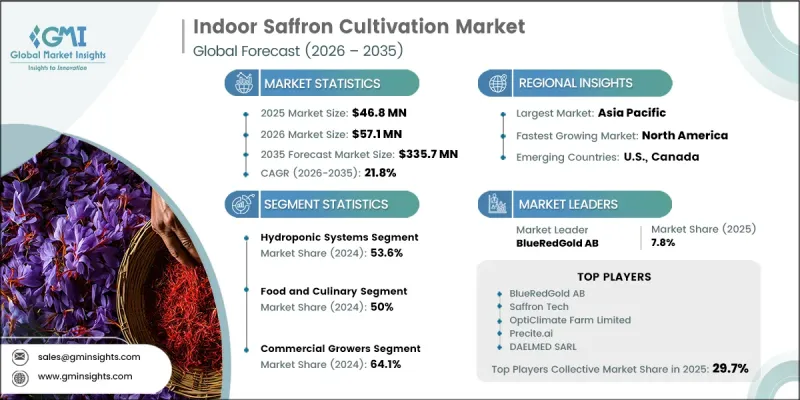
환경 제어형 농업 덕분에 사프란 생산이 계절적 주기나 지리적 조건에 제한받지 않고, 신뢰할 수 있는 연중 농업 활동으로 변모함에 따라 이 시장은 강력한 성장세를 보이고 있습니다. 실내 재배 기술을 통해 생산자는 안정적인 생산량을 유지하면서, 그동안 생산에 제약을 가해왔던 기존 농업 환경에 대한 의존도를 낮출 수 있게 되었습니다. 이러한 변화로 인해 공급의 신뢰성이 강화되고, 농산물의 품질 균일성이 향상되며, 여러 지역에 걸쳐 상업적 기회가 확대되고 있습니다. 표준화된 생물활성 화합물을 찾는 제약사의 관심이 높아지는 데다, 고품질 실내 농업에 대한 투자 증가까지 더해지면서 시장 확대가 계속해서 뒷받침되고 있습니다. 또한, 첨단 재배 시스템은 추적성 향상, 품질 관리 강화, 생산 효율 증대를 가져오고 있어, 실내에서 재배된 사프란은 상업적 용도로서 점점 더 매력적인 상품이 되고 있습니다. 생산자들이 확장성이 뛰어난 재배 방법과 기술 주도형 농업 운영에 주력함에 따라, 실내 사프란 재배 시장은 혁신, 투자, 그리고 일관된 품질 기준을 갖춘 프리미엄 사프란에 대한 수요 증가에 힘입어 고부가가치 부문으로 진화하고 있습니다.
| 시장 범위 | |
|---|---|
| 개시연도 | 2025년 |
| 예측 기간 | 2026-2035년 |
| 개시 연도 시장 규모 | 4,680만 달러 |
| 예측액 | 3억 3,570만 달러 |
| CAGR | 21.8% |
기존의 사프란 생산은 오랫동안 극히 특수한 환경 조건, 짧은 수확기, 제한된 생산 지역에 의존해 왔기 때문에 생산의 균일성과 공급의 안정성과 관련된 문제가 끊임없이 발생해 왔습니다. 실내 재배 시스템은 관리된 시설 내에서 개화 및 작물 생장에 필요한 정확한 환경 조건을 일년내내 재현함으로써 이러한 제약을 극복합니다. 이러한 접근 방식을 통해 기상 조건으로 인한 혼란, 자원 제약 및 기타 외부적 생산 위험의 영향을 최소화하면서 지속적인 수확 주기를 실현합니다. 그 결과, 생산자들은 자연적인 기후 패턴에 의존하지 않고 훨씬 더 광범위한 지역에서 상업적 재배 사업을 전개할 수 있게 되어, 실내 사프란 재배 시장의 장기적인 성장 가능성이 크게 확대될 것입니다.
2025년, 수경재배 부문은 53.6%의 시장 점유율을 차지했습니다. 해당 시장에서 차지하는 선도적 지위는 입증된 상업적 확장성, 현대적인 온실 인프라와의 원활한 통합, 그리고 크로커스 사티버스(Crocus sativus)의 영양분 공급을 관리하기 위한 확립된 재배 기법에 의해 뒷받침되고 있습니다. 상업적 생산자들은 수직으로 쌓아 올린 생산 시스템에서 영양막법(NFT)이나 심수 재배법(DWC)과 같은 첨단 수경 재배 기술을 계속해서 도입하고 있습니다. 이러한 구성 덕분에 기존의 노지 재배에 비해 구근의 식재 밀도를 대폭 높일 수 있을 뿐만 아니라, 공간 활용 효율, 생산 효율 및 운영의 일관성도 향상됩니다.
2025년에는 식품·요리 용도 부문이 시장 점유율의 50%를 차지했습니다. 수요를 주도하고 있는 주체는 주로 안정적인 제품 공급, 원산지 검증, 일관된 품질을 중시하는 고급 식품 제조업체, 전문 소매업체 및 고급 외식 기업입니다. 실내 재배는 제품의 추적성을 강화하고 위조 및 변조에 대한 우려를 최소화함으로써, 밸류체인 전반에 걸친 신뢰성을 높이고 있습니다. 신뢰할 수 있는 생산 기준에 따라 인증을 받은 고품질 사프란을 공급할 수 있다는 점은 고급 요리 분야에서 그 가치를 한층 더 높여주고 있습니다.
2025년, 북미의 실내 사프란 재배 시장은 10.9%의 점유율을 차지했습니다. 미국은 환경 제어형 농업에 대한 지속적인 투자, 연구 활동의 활성화, 그리고 첨단 실내 농업 기술의 상용화에 힘입어, 여전히 지역적 확장의 주요 원동력으로 자리 잡고 있습니다. 지속적인 기술 개발, 호조를 보이는 투자 동향, 그리고 상업 생산 능력의 확대로 인해, 예측 기간 동안 해당 지역의 입지는 더욱 공고해질 것으로 전망됩니다.
자주 묻는 질문
목차
제1장 조사 방법과 범위
제2장 주요 요약
제3장 업계 인사이트
제4장 경쟁 구도
제5장 시장 추산 및 예측 : 재배 기술 유형별, 2022년-2035년
제6장 시장 추산 및 예측 : 용도별, 2022년-2035년
제7장 시장 추산 및 예측 : 최종사용자별, 2022년-2035년
제8장 시장 추산 및 예측 : 지역별, 2022년-2035년
제9장 기업 개요
LSH 26.07.13The Global Indoor Saffron Cultivation Market was valued at USD 46.8 million in 2025 and is estimated to grow at a CAGR of 21.8% to reach USD 335.7 million by 2035.
The market is gaining strong momentum as controlled-environment farming transforms saffron production into a reliable, year-round agricultural activity rather than one limited by seasonal cycles and geographic conditions. Indoor cultivation technologies are enabling producers to maintain stable output while reducing dependence on traditional farming environments that have historically constrained production. This shift is strengthening supply reliability, improving crop consistency, and expanding commercial opportunities across multiple regions. Growing interest from pharmaceutical manufacturers seeking standardized bioactive compounds, along with increasing investment in premium indoor agriculture, continues to support market expansion. Advanced cultivation systems also provide improved traceability, greater quality control, and enhanced production efficiency, making indoor-grown saffron increasingly attractive across commercial applications. As producers focus on scalable cultivation methods and technology-driven farming operations, the indoor saffron cultivation market is evolving into a high-value segment supported by innovation, investment, and rising demand for premium saffron with consistent quality standards.
| Market Scope | |
|---|---|
| Start Year | 2025 |
| Forecast Year | 2026-2035 |
| Start Value | $46.8 Million |
| Forecast Value | $335.7 Million |
| CAGR | 21.8% |
Conventional saffron production has long depended on highly specific environmental conditions, narrow seasonal harvesting periods, and limited agricultural regions, creating ongoing challenges related to production consistency and supply stability. Indoor cultivation systems overcome these limitations by recreating the precise environmental conditions required for flowering and crop development year-round in controlled facilities. This approach minimizes exposure to weather-related disruptions, resource limitations, and other external production risks while allowing continuous harvesting cycles. As a result, producers can establish commercial cultivation operations across a much broader range of locations without relying on natural climate patterns, significantly expanding the long-term growth potential of the indoor saffron cultivation market.
The hydroponic cultivation segment held 53.6% share in 2025. Its market leadership is supported by proven commercial scalability, seamless integration with modern greenhouse infrastructure, and well-established cultivation practices for managing nutrient delivery in Crocus sativus. Commercial producers continue to use advanced hydroponic techniques, including the nutrient film technique (NFT) and deep water culture (DWC), in vertically stacked production systems. These configurations enable significantly higher corm planting densities than conventional field cultivation while improving space utilization, production efficiency, and operational consistency.
The food and culinary applications segment accounted for 50% share in 2025. Demand is primarily driven by premium food manufacturers, specialty retailers, and high-end food service businesses that prioritize dependable product availability, verified origin, and consistent quality. Indoor cultivation also strengthens product traceability and minimizes concerns associated with adulteration, supporting greater confidence throughout the supply chain. The ability to deliver certified, high-quality saffron with reliable production standards continues to reinforce its value across premium culinary applications.
North America Indoor Saffron Cultivation Market held 10.9% share in 2025. The United States remains the primary contributor to regional expansion, supported by continued investment in controlled-environment agriculture, increasing research activities, and the commercialization of advanced indoor farming technologies. Ongoing technological development, favorable investment trends, and expanding commercial production capacity are expected to further strengthen the region's position during the forecast period.
Major companies operating in the global indoor saffron cultivation market include BlueRedGold AB, Saffron Tech, OptiClimate Farm Limited, Precite.ai, DAELMED SARL, Arima Climate Technologies, Neras Tech (Neweras Enercon), Beeroots, Jayant Enterprises, Refricon, Rootious Organics, Ecoence (Saffronice), Novin Javane, Saffranova Farms, and Zedusk Farming. Companies in the indoor saffron cultivation market are strengthening their competitive position by investing in advanced controlled-environment farming technologies, hydroponic production systems, and automated climate management solutions to improve productivity and crop consistency. Many market participants are expanding commercial-scale production facilities to increase output while maintaining premium quality standards. Strategic investments in research and development are helping optimize cultivation protocols, improve resource efficiency, and enhance yield performance. Businesses are also emphasizing product traceability, quality certification, and standardized production processes to meet the requirements of pharmaceutical and premium food industries.
Table of Contents
Chapter 1 Methodology & Scope
- 1.1 Market scope and definition
- 1.2 Research design
- 1.2.1 Research approach
- 1.2.2 Data collection methods
- 1.3 Data mining sources
- 1.3.1 Global
- 1.3.2 Regional/Country
- 1.4 Base estimates and calculations
- 1.4.1 Base year calculation
- 1.4.2 Key trends for market estimation
- 1.5 Primary research and validation
- 1.5.1 Primary sources
- 1.6 Forecast model
- 1.7 Research assumptions and limitations
Chapter 2 Executive Summary
- 2.1 Industry 360° synopsis
- 2.2 Key market trends
- 2.2.1 Cultivation technology type
- 2.2.2 Application
- 2.2.3 End user
- 2.2.4 Regional
- 2.3 TAM Analysis, 2026-2035
- 2.4 CXO perspectives: Strategic imperatives
- 2.4.1 Executive decision points
Chapter 3 Industry Insights
- 3.1 Industry ecosystem analysis
- 3.1.1 Supplier landscape
- 3.1.2 Profit margin
- 3.1.3 Value addition at each stage
- 3.1.4 Factor affecting the value chain
- 3.1.5 Disruptions
- 3.2 Industry impact forces
- 3.2.1 Growth drivers
- 3.2.2 Industry pitfalls and challenges
- 3.2.3 Market opportunities
- 3.3 Growth potential analysis
- 3.4 Regulatory landscape
- 3.4.1 North America
- 3.4.2 Europe
- 3.4.3 Asia Pacific
- 3.4.4 Latin America
- 3.4.5 Middle East & Africa
- 3.5 Porter's analysis
- 3.6 PESTEL analysis
- 3.7 Price trends
- 3.7.1 By region
- 3.7.2 By type
- 3.8 Future market trends
- 3.9 Technology and Innovation landscape
- 3.9.1 Current technological trends
- 3.9.2 Emerging technologies
- 3.10 Patent Landscape
- 3.11 Trade statistics (HS code)
- 3.11.1 Major importing countries
- 3.11.2 Major exporting countries
- 3.12 Sustainability and environmental aspects
- 3.12.1 Sustainable practices
- 3.12.2 Waste reduction strategies
- 3.12.3 Energy efficiency in production
- 3.12.4 Eco-friendly initiatives
- 3.13 Carbon footprint consideration
Chapter 4 Competitive Landscape, 2025
- 4.1 Introduction
- 4.2 Company market share analysis
- 4.2.1 By region
- 4.2.1.1 North America
- 4.2.1.2 Europe
- 4.2.1.3 Asia Pacific
- 4.2.1.4 LATAM
- 4.2.1.5 MEA
- 4.2.1 By region
- 4.3 Company matrix analysis
- 4.4 Competitive analysis of major market players
- 4.5 Competitive positioning matrix
- 4.6 Key developments
- 4.6.1 Mergers & acquisitions
- 4.6.2 Partnerships & collaborations
- 4.6.3 New Product Launches
- 4.6.4 Expansion Plans
Chapter 5 Market Estimates and Forecast, By Cultivation Technology Type, 2022-2035 (USD Million) (Kilo Tons)
- 5.1 Key trends
- 5.2 Hydroponic systems
- 5.3 Aeroponic systems
- 5.4 Climate-controlled chamber systems
Chapter 6 Market Estimates and Forecast, By Application, 2022-2035 (USD Million) (Kilo Tons)
- 6.1 Key trends
- 6.2 Food & culinary
- 6.2.1 Culinary seasoning & spices
- 6.2.2 Food processing & ingredient supply
- 6.2.3 Beverage applications
- 6.2.4 Bakery & confectionery
- 6.3 Pharmaceutical & therapeutic
- 6.3.1 Macular degeneration treatment
- 6.3.2 Neuroprotective drug formulations
- 6.3.3 Anti-inflammatory therapeutics
- 6.3.4 Clinical research applications
- 6.4 Nutraceuticals & dietary supplements
- 6.4.1 Health supplements
- 6.4.2 Functional foods
- 6.4.3 Bioactive compound extracts
- 6.5 Cosmetics & personal care
- 6.5.1 Skincare products
- 6.5.2 Anti-aging formulations
- 6.5.3 Beauty & cosmetic ingredients
- 6.5.4 Aromatherapy & essential oils
Chapter 7 Market Estimates and Forecast, By End User, 2022-2035 (USD Million) (Kilo Tons)
- 7.1 Key trends
- 7.2 Commercial growers
- 7.3 Home & urban growers
- 7.4 Research & development institutions
Chapter 8 Market Estimates and Forecast, By Region, 2022-2035 (USD Million) (Kilo Tons)
- 8.1 Key trends
- 8.2 North America
- 8.2.1 U.S.
- 8.2.2 Canada
- 8.3 Europe
- 8.3.1 Germany
- 8.3.2 UK
- 8.3.3 France
- 8.3.4 Spain
- 8.3.5 Italy
- 8.3.6 Rest of Europe
- 8.4 Asia Pacific
- 8.4.1 China
- 8.4.2 India
- 8.4.3 Japan
- 8.4.4 Australia
- 8.4.5 South Korea
- 8.4.6 Rest of Asia Pacific
- 8.5 Latin America
- 8.5.1 Brazil
- 8.5.2 Mexico
- 8.5.3 Argentina
- 8.5.4 Rest of Latin America
- 8.6 Middle East and Africa
- 8.6.1 Saudi Arabia
- 8.6.2 South Africa
- 8.6.3 UAE
- 8.6.4 Rest of Middle East and Africa
Chapter 9 Company Profiles
- 9.1 BlueRedGold AB
- 9.2 Saffron Tech
- 9.3 OptiClimate Farm Limited
- 9.4 Precite.ai
- 9.5 DAELMED SARL
- 9.6 Arima Climate Technologies
- 9.7 Neras Tech (Neweras Enercon)
- 9.8 Beeroots
- 9.9 Jayant Enterprises
- 9.10 Refricon
- 9.11 Rootious Organics
- 9.12 Ecoence (Saffronice)
- 9.13 Novin Javane
- 9.14 Saffranova Farms
- 9.15 Zedusk Farming

(주말 및 공휴일 제외)


