
|
시장보고서
상품코드
2109291
유전자 치료 시장 : 시장 기회, 성장요인, 업계 동향 분석 및 예측(2026-2035년)Gene Therapy Market Opportunity, Growth Drivers, Industry Trend Analysis, and Forecast 2026 - 2035 |
||||||

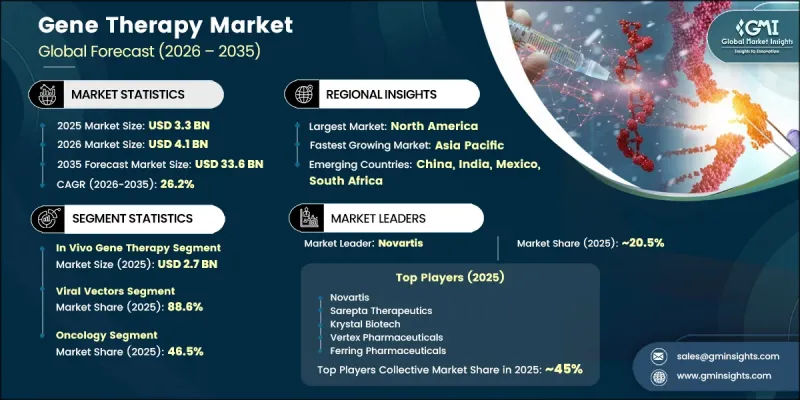
세계의 유전자 치료 시장은 2025년에 33억 달러로 평가되었고, 26.2%의 연평균 복합 성장률(CAGR)로 확대될 전망이며, 2035년까지 336억 달러에 이를 것으로 추정되고 있습니다.
이러한 강력한 시장 성장은 유전자 전달 기술의 지속적인 발전, 유전자 벡터 개발 확대, 유전자 치료 연구에 대한 투자 증가, 암 및 기타 대상 질환의 발병률 상승, 세포 및 유전자 치료 제조 서비스 이용 확대, 그리고 제품 승인 및 시판 건수 증가에 힘입고 있습니다. 또한, 유전자 치료 시장은 치료 선택지가 제한적인 질환을 해결할 수 있는 혁신적인 치료법에 대한 수요 증가의 혜택을 받고 있습니다. 정밀 의학(Precision Medicine)에 대한 인식 제고, 유전자 검사의 발전, 그리고 제조 능력 향상으로 인해 의료 시스템 전반에 걸쳐 유전자 기반 치료법의 채택이 더욱 확대되고 있습니다. 유전자 치료란 질환을 예방, 관리 또는 치료하기 위해 환자의 세포 내 유전 물질을 변형, 치환 또는 도입하는 것을 말합니다. 이 기술은 단순히 증상을 조절하는 데 그치지 않고, 질환의 근본적인 유전적 원인을 해결함으로써 장기적인 치료 효과를 가져올 가능성을 지니고 있습니다. 조사 활동이 지속적으로 확대되고 상용화가 가속화됨에 따라, 시장은 예측 기간 동안 지속적인 성장을 이룰 것으로 전망됩니다.
| 시장 범위 | |
|---|---|
| 개시 연도 | 2025년 |
| 예측 기간 | 2026-2035년 |
| 초기 시장 규모 | 33억 달러 |
| 예측액 | 336억 달러 |
| CAGR | 26.2% |
유전성 질환 및 희귀질환의 부담이 증가하고 있는 것은 유전자 치료 시장에 계속해서 큰 기회를 창출하고 있습니다. 많은 유전성 질환의 경우, 그동안 치료 선택지가 제한적이었기 때문에 지속적인 치료 효과를 추구하는 의료 종사자와 환자들에게 유전자 치료는 점점 더 매력적인 해결책이 되고 있습니다. 대부분의 경우, 단 한 번의 치료로 장기적인 임상적 효과를 기대할 수 있어 지속적인 약물 복용이나 지속적인 질환 관리의 필요성을 줄일 수 있습니다. 질환에 대한 인식 향상, 유전자 스크리닝 및 진단 기술의 발전으로 인해 유전자 치료 및 임상 연구 프로그램의 대상 환자층이 확대되고 있습니다. 동시에, 유전자 전달 플랫폼의 지속적인 발전으로 치료의 정밀도, 제조 효율 및 전반적인 치료 효과가 향상되고 있어 시장 확장을 더욱 촉진하고 있습니다.
2025년, 생체 내 유전자 치료 부문은 27억 달러 시장 규모를 기록했습니다. 이 부문이 주도적인 위치를 유지하고 있는 이유는 생체 내 치료를 통해 치료용 유전자를 환자의 체내로 직접 전달할 수 있으며, 전신적 접근을 통해 여러 장기 및 조직에 걸친 치료가 가능하기 때문입니다. 이러한 능력은 여러 신체 시스템에 영향을 미치는 질환에서 특히 가치가 있습니다. 전달 기술의 지속적인 혁신으로 유전 물질 전달의 정확성, 효율성, 안전성도 향상되고 있어 치료 성과 개선에 기여할 뿐만 아니라, 임상 용도 분야에서의 생체 내 유전자 치료 도입을 가속화하고 있습니다.
종양학 부문은 2025년에 46.5%의 점유율을 차지한 것으로 평가되었으며, 2026-2035년 연평균 성장률(CAGR) 24.2%로 성장할 것으로 전망됩니다. 이 부문이 시장을 계속 주도하고 있는 이유는 유전자 치료를 통해 주변의 건강한 조직에 미치는 영향을 최소화하면서, 치료용 유전자를 암세포에 직접 표적화하여 전달할 수 있기 때문입니다. 이러한 정밀성을 중시하는 치료 접근 방식은 치료 효과 향상에 기여하는 동시에, 기존 치료법에 일반적으로 수반되는 바람직하지 않은 부작용을 경감시킵니다. 또한, 전반적인 임상 결과를 개선하기 위해 기존 치료 전략과 병행하여 유전자 치료에 대한 평가가 진행되고 있습니다. 전 세계적으로 암 발병률이 증가하고 있는 점도 혁신적인 유전자 치료 솔루션에 대한 강력한 수요를 지속적으로 뒷받침하고 있습니다.
2025년, 북미 유전자 치료 시장은 62.5%의 점유율을 차지했습니다. 이 지역의 성장은 유리한 규제 체계, 공공 및 민간 부문의 막대한 투자, 선진적인 의료 인프라, 그리고 고도로 발달된 연구 환경에 의해 뒷받침되고 있습니다. 또한, 이 지역에는 생명공학 기업, 연구 기관, 의료 기관이 집중되어 있으며, 이들이 유전자 치료 업계의 혁신과 상용화를 지속적으로 가속화하고 있는 점도 이 지역의 강점으로 작용하고 있습니다. 과학 연구, 제조 능력, 임상 개발에 대한 지속적인 투자는 북미의 선도적 위상을 더욱 공고히 하고, 장기적인 시장 확대를 뒷받침하고 있습니다.
자주 묻는 질문
목차
제1장 조사 방법 및 범위
제2장 주요 요약
제3장 업계 인사이트
제4장 경쟁 구도
제5장 시장 추산 및 예측 : 치료법별(2022-2035년)
제6장 시장 추산 및 예측 : 제공 방법별(2022-2035년)
제7장 시장 추산 및 예측 : 적응증별(2022-2035년)
제8장 시장 추산 및 예측 : 최종 용도별(2022-2035년)
제9장 시장 추산 및 예측 : 지역별(2022-2035년)
제10장 기업 개요
AJY 26.08.20The Global Gene Therapy Market was valued at USD 3.3 billion in 2025 and is estimated to grow at a CAGR of 26.2% to reach USD 33.6 billion by 2035.
Strong market growth is supported by continuous advancements in gene delivery technologies, expanding development of gene vectors, rising investments in gene therapy research, increasing incidence of cancer and other target diseases, broader availability of cell and gene therapy manufacturing services, and the growing number of product approvals and commercial launches. The gene therapy market is also benefiting from the increasing demand for innovative treatment options capable of addressing diseases with limited therapeutic alternatives. Growing awareness of precision medicine, improvements in genetic testing, and advances in manufacturing capabilities are encouraging wider adoption of gene-based therapies across healthcare systems. Gene therapy involves modifying, replacing, or introducing genetic material within a patient's cells to prevent, manage, or treat disease. The technology offers the potential for long-lasting therapeutic outcomes by addressing the underlying genetic cause of disease rather than simply controlling symptoms. As research activities continue to expand and commercialization accelerates, the market is expected to experience sustained growth throughout the forecast period.
| Market Scope | |
|---|---|
| Start Year | 2025 |
| Forecast Year | 2026-2035 |
| Start Value | $3.3 Billion |
| Forecast Value | $33.6 Billion |
| CAGR | 26.2% |
The rising burden of genetic and rare diseases continues to create significant opportunities for the gene therapy market. Many inherited disorders have historically offered limited treatment options, making gene therapy an increasingly attractive solution for healthcare providers and patients seeking durable therapeutic outcomes. In many cases, a single treatment has the potential to deliver long-term clinical benefits, reducing the need for continuous medication and ongoing disease management. Improvements in disease awareness, genetic screening, and diagnostic technologies are identifying a larger patient population eligible for gene therapy treatments and clinical research programs. At the same time, ongoing progress in gene delivery platforms is improving treatment precision, manufacturing efficiency, and overall therapeutic performance, further supporting market expansion.
The in vivo gene therapy segment generated USD 2.7 billion in 2025. This segment maintains its leadership because in vivo therapies allow therapeutic genes to be delivered directly into the patient's body, enabling treatment across multiple organs and tissues through a systemic approach. Such capabilities are particularly valuable for diseases affecting several body systems. Continuous innovation in delivery technologies has also enhanced the accuracy, efficiency, and safety of genetic material delivery, contributing to improved therapeutic outcomes and accelerating adoption of in vivo gene therapy across clinical applications.
The oncology segment accounted for 46.5% share in 2025 and is anticipated to grow at a CAGR of 24.2% between 2026 and 2035. The segment continues to lead the market because gene therapy enables targeted delivery of therapeutic genes directly to cancer cells while minimizing the impact on surrounding healthy tissues. This precision-based treatment approach helps improve therapeutic effectiveness while reducing unwanted side effects commonly associated with conventional treatment methods. In addition, gene therapy is increasingly being evaluated alongside existing treatment strategies to improve overall clinical outcomes. The growing global prevalence of cancer continues to support strong demand for innovative gene-based therapeutic solutions.
North America Gene Therapy Market held a 62.5% share in 2025. Regional growth is supported by a favorable regulatory framework, substantial public and private investment, advanced healthcare infrastructure, and a highly developed research environment. The region also benefits from a strong concentration of biotechnology companies, research organizations, and healthcare institutions that continue to accelerate innovation and commercialization within the gene therapy industry. Ongoing investments in scientific research, manufacturing capabilities, and clinical development continue to reinforce North America's leadership position and support long-term market expansion.
Leading participants operating in the global gene therapy market include Novartis, BioMarin, Vertex Pharmaceuticals, Orchard Therapeutics, Pfizer, UniQure, Amgen, Bayer, Ferring Pharmaceuticals, Gilead Sciences, CRISPR Therapeutics, Bristol Myers Squibb, Krystal Biotech, bluebird bio, Sarepta Therapeutics, and Spark Therapeutics (Roche). Companies operating in the gene therapy market are strengthening their competitive position through continuous investment in research and development, expansion of manufacturing capacity, and advancement of proprietary gene delivery technologies. Strategic collaborations with biotechnology firms, research institutions, and contract manufacturing organizations are helping accelerate product development and commercialization. Many companies are broadening their clinical pipelines by targeting multiple therapeutic areas while enhancing manufacturing scalability and process efficiency to support growing commercial demand. Organizations are also pursuing regulatory approvals across additional markets, expanding geographic presence, and investing in advanced production facilities to improve supply capabilities.
Table of Contents
Chapter 1 Methodology and Scope
- 1.1 Research approach
- 1.2 Quality commitments
- 1.2.1 GMI AI policy & data integrity commitment
- 1.2.1.1 Source consistency protocol
- 1.2.1 GMI AI policy & data integrity commitment
- 1.3 Research trail & confidence scoring
- 1.3.1 Research trail components
- 1.3.2 Scoring components
- 1.4 Data collection
- 1.4.1 Partial list of primary sources
- 1.5 Data mining sources
- 1.5.1 Paid sources
- 1.5.1.1 Sources, by region
- 1.5.1 Paid sources
- 1.6 Base estimates and calculations
- 1.6.1 Base year calculation for any one approach
- 1.7 Market estimates & forecasts parameters
- 1.8 Forecast model
- 1.8.1 Quantified market impact analysis
- 1.8.1.1 Mathematical impact of growth parameters on forecast
- 1.8.1 Quantified market impact analysis
- 1.9 Research transparency addendum
- 1.9.1 Source attribution framework
- 1.9.2 Quality assurance metrics
- 1.9.3 Our commitment to trust
Chapter 2 Executive Summary
- 2.1 Industry 360° synopsis
- 2.2 Key market trends
- 2.2.1 Regional trends
- 2.2.2 Therapy type trends
- 2.2.3 Vector type trends
- 2.2.4 Indication trends
- 2.2.5 End use trends
- 2.3 CXO perspectives: Strategic imperatives
Chapter 3 Industry Insights
- 3.1 Industry ecosystem analysis
- 3.2 Industry impact forces
- 3.2.1 Growth drivers
- 3.2.1.1 Advancements in gene editing technologies
- 3.2.1.2 Increasing prevalence of rare genetic and inherited diseases
- 3.2.1.3 Rising investments and collaborations
- 3.2.1.4 Growing awareness and improved genetic diagnostics
- 3.2.2 Industry pitfalls and challenges
- 3.2.2.1 High development and manufacturing costs
- 3.2.2.2 Complexity of gene therapy delivery and potential side effects
- 3.2.3 Market opportunities
- 3.2.3.1 Development of personalized and precision gene therapies
- 3.2.3.2 Expansion in emerging markets with growing healthcare infrastructure
- 3.2.1 Growth drivers
- 3.3 Growth potential analysis
- 3.4 Regulatory landscape
- 3.4.1 North America
- 3.4.1.1 U.S.
- 3.4.1.2 Canada
- 3.4.2 Europe
- 3.4.3 Asia Pacific
- 3.4.4 Latin America
- 3.4.5 Middle East and Africa
- 3.4.1 North America
- 3.5 Technology and innovation landscape
- 3.5.1 Current technological trends
- 3.5.2 Emerging technologies
- 3.6 Pricing analysis (Driven by Primary Research)
- 3.6.1 Historical price trend analysis
- 3.6.2 Pricing analysis, by therapy type
- 3.7 Porter’s analysis
- 3.8 PESTEL analysis
- 3.9 Investment & funding analysis
- 3.9.1 Global gene therapy investment trends (2022–2026)
- 3.9.2 Government, NIH & grant funding landscape
- 3.10 Approved & commercialized gene therapy products
- 3.11 Pipeline and clinical trial landscape
- 3.12 Future market trends
- 3.13 Impact of AI & Generative AI on the market
Chapter 4 Competitive Landscape, 2025
- 4.1 Introduction
- 4.2 Company market share analysis
- 4.2.1 North America
- 4.2.2 Europe
- 4.2.3 Asia Pacific
- 4.3 Company matrix analysis
- 4.4 Competitive analysis of major market players
- 4.5 Competitive positioning matrix
- 4.6 Key developments
- 4.6.1 Merger and acquisition
- 4.6.2 Partnership and collaboration
- 4.6.3 New product launches
- 4.6.4 Expansion plans
Chapter 5 Market Estimates and Forecast, By Therapy Type, 2022 – 2035 ($ Mn)
- 5.1 Key trends
- 5.2 In vivo gene therapy
- 5.3 Ex vivo gene therapy
Chapter 6 Market Estimates and Forecast, By Delivery Method, 2022 – 2035 ($ Mn)
- 6.1 Key trends
- 6.2 Viral vectors
- 6.2.1 Adeno-associated virus vectors
- 6.2.2 Lentiviral vectors
- 6.2.3 Retrovirus & γ-Retrovirus
- 6.2.4 Other viral vectors
- 6.3 Non-viral vectors
Chapter 7 Market Estimates and Forecast, By Indication, 2022 – 2035 ($ Mn)
- 7.1 Key trends
- 7.2 Oncology
- 7.3 Rare and genetic disorders
- 7.4 Hematology
- 7.5 Ophthalmology
- 7.6 Other indications
Chapter 8 Market Estimates and Forecast, By End Use, 2022 – 2035 ($ Mn)
- 8.1 Key trends
- 8.2 Hospitals
- 8.3 Specialty clinics and gene therapy centers
- 8.4 Academic and research institutions
- 8.5 Other end users
Chapter 9 Market Estimates and Forecast, By Region, 2022 – 2035 ($ Mn)
- 9.1 Key trends
- 9.2 North America
- 9.2.1 U.S.
- 9.2.2 Canada
- 9.3 Europe
- 9.3.1 Germany
- 9.3.2 UK
- 9.3.3 France
- 9.3.4 Spain
- 9.3.5 Italy
- 9.3.6 Netherlands
- 9.4 Asia Pacific
- 9.4.1 China
- 9.4.2 India
- 9.4.3 Japan
- 9.4.4 Australia
- 9.4.5 South Korea
- 9.5 Latin America
- 9.5.1 Brazil
- 9.5.2 Mexico
- 9.5.3 Argentina
- 9.6 Middle East and Africa
- 9.6.1 South Africa
- 9.6.2 Saudi Arabia
- 9.6.3 UAE
Chapter 10 Company Profiles
- 10.1 Amgen
- 10.2 Bayer
- 10.3 BioMarin
- 10.4 bluebird bio
- 10.5 Bristol Myers Squibb
- 10.6 CRISPR Therapeutics
- 10.7 Ferring Pharmaceuticals
- 10.8 Gilead Sciences
- 10.9 Krystal Biotech
- 10.10 Novartis
- 10.11 Orchard Therapeutics
- 10.12 Pfizer
- 10.13 Sarepta Therapeutics
- 10.14 Spark Therapeutics (Roche)
- 10.15 UniQure
- 10.16 Vertex Pharmaceuticals