|
시장보고서
상품코드
1636316
원심 송풍기 시장 보고서 : 압력별, 최종 사용자별, 지역별(2025-2033년)Centrifugal Blower Market Report by Pressure (High Pressure, Medium Pressure, Low Pressure), End User (Cement Plant, Steel Plant, Mining, Power Station, Chemical, Pulp and Paper, and Others), and Region 2025-2033 |
||||||

원심 송풍기 시장 세계 시장 규모는 2024년 32억 달러에 달했습니다. 향후 IMARC Group은 2033년까지 시장 규모가 44억 달러에 달할 것으로 예상하며, 2025-2033년간 연평균 성장률(CAGR)은 3.36%를 나타낼 것으로 전망하고 있습니다. 급속한 산업화, 에너지 효율과 지속가능성에 대한 관심 증가, 건설 부문의 확대, 대기 질 및 배출물 제어에 대한 정부의 엄격한 규제와 기준은 시장을 이끄는 주요 요인 중 일부입니다.
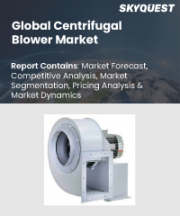
원심 송풍기는 공기나 가스를 취급하는 용도로 다양한 산업에서 널리 사용되는 기계 장치입니다. 원심력 원리로 작동하며 회전하는 임펠러로 구성되어 공기나 가스를 임펠러의 중심에서 바깥쪽으로 가속하여 고속 흐름을 생성합니다. 이 고속 흐름은 디퓨저로 유도되어 운동 에너지를 압력 에너지로 변환합니다. 원심 송풍기는 일반적으로 견고한 하우징, 곡선형 블레이드가 있는 임펠러, 임펠러를 구동하는 전기 모터로 구성됩니다. 원심 송풍기는 고압으로 대량의 공기와 가스를 고효율로 고압으로 펌핑할 수 있는 등 몇 가지 장점이 있습니다. 또한 크기가 작고 설치가 용이하며 유지 보수가 비교적 적고 작동 소음이 적은 것으로 알려져 소음에 민감한 환경에도 적합합니다. 현재 원심 송풍기는 방사형, 전방 곡선형, 후방 곡선형 등 다양한 유형의 원심 송풍기가 있습니다.
원심 송풍기 시장 동향 :
세계 원심 송풍기 시장은 급속한 산업화, 에너지 효율과 지속가능성에 대한 관심 증가 등 몇 가지 중요한 요인에 의해 뒷받침되고 있습니다. 이와 더불어, 건설 부문의 확대로 인해 난방, 환기 및 공조(HVAC) 용도에 대한 원심 송풍기 수요가 크게 증가하여 시장 전망을 밝게 하고 있습니다. 또한, 대기질 및 배출물 관리에 대한 정부의 엄격한 규제와 기준은 발전, 화학, 석유화학 및 기타 산업에서 원심 송풍기의 필요성을 촉진하여 시장 성장을 더욱 촉진하고 있습니다. 또한, 오염이 인체에 미치는 악영향에 대한 인식이 높아지고 폐수 처리 산업에서 원심 송풍기에 대한 수요가 증가하면서 시장 성장에 기여하고 있습니다. 또한, 가변 주파수 드라이브(VFD) 및 IoT 기반 제어 시스템 통합과 같은 첨단 기술 개발과 자동차 및 운송 산업의 꾸준한 성장이 시장 성장을 뒷받침하고 있습니다.
본 보고서에서 답변한 주요 질문
- 세계 원심 송풍기 시장은 지금까지 어떻게 발전해 왔으며 향후 몇 년동안 어떻게 발전할 것인가?
- 세계 원심 송풍기 시장 성장 촉진요인, 억제요인 및 기회는?
- 각 촉진요인, 억제요인, 기회가 세계 원심 송풍기 시장에 미치는 영향은?
- 주요 지역 시장은?
- 원심 송풍기의 가장 매력적인 원심 송풍기 시장은 어느 국가인가?
- 압박에 따른 시장 분석은?
- 원심 송풍기 시장에서 가장 매력적인 압력은?
- 최종 사용자별 시장 분석은?
- 원심 송풍기 시장에서 가장 매력적인 최종 사용자는?
- 세계 원심 송풍기 시장 경쟁 구도는?
- 세계 원심 송풍기 시장의 주요 기업은?
목차
제1장 서문
제2장 조사 범위와 조사 방법
- 조사 목적
- 이해관계자
- 데이터 소스
- 1차 정보
- 2차 정보
- 시장 추정
- 보텀업 접근
- 톱다운 접근
- 조사 방법
제3장 주요 요약
제4장 서론
- 개요
- 주요 업계 동향
제5장 세계의 원심 송풍기 시장
- 시장 개요
- 시장 실적
- COVID-19의 영향
- 시장 예측
제6장 시장 분석 : 압력별
- 고전압
- 시장 동향
- 시장 예측
- 중전압
- 시장 동향
- 시장 예측
- 저전압
- 시장 동향
- 시장 예측
제7장 시장 분석 : 최종사용자별
- 시멘트 공장
- 시장 동향
- 시장 예측
- 제철소
- 시장 동향
- 시장 예측
- 광업
- 시장 동향
- 시장 예측
- 발전소
- 시장 동향
- 시장 예측
- 화학제품
- 시장 동향
- 시장 예측
- 펄프 및 종이
- 시장 동향
- 시장 예측
- 기타
- 시장 동향
- 시장 예측
제8장 시장 분석 : 지역별
- 북미
- 미국
- 캐나다
- 아시아태평양
- 중국
- 일본
- 인도
- 한국
- 호주
- 인도네시아
- 기타
- 유럽
- 독일
- 프랑스
- 영국
- 이탈리아
- 스페인
- 러시아
- 기타
- 라틴아메리카
- 브라질
- 멕시코
- 기타
- 중동 및 아프리카
제9장 성장 촉진요인 및 억제요인과 기회
- 개요
- 성장 촉진요인
- 성장 억제요인
- 기회
제10장 밸류체인 분석
제11장 Porter의 Five Forces 분석
- 개요
- 바이어의 교섭력
- 공급 기업의 교섭력
- 경쟁 정도
- 신규 진출업체의 위협
- 대체품의 위협
제12장 가격 분석
제13장 경쟁 구도
- 시장 구조
- 주요 기업
- 주요 기업 개요
- Aeromeccanica Stranich S.p.A.
- Aerotek Equipment
- Air Control Industries Ltd
- Alfotech Fans
- AMCS Cooling Systems Pvt. Ltd.
- Atlantic Blowers LLC
- Atlas Copco
- Boldrocchi Group
- Continental Blower, LLC
- Hibon Inc(Ingersoll Rand)
- Howden Group(Chart Industries Inc.)
- Piller Blowers & Compressors GmbH
The global centrifugal blower market size reached USD 3.2 Billion in 2024. Looking forward, IMARC Group expects the market to reach USD 4.4 Billion by 2033, exhibiting a growth rate (CAGR) of 3.36% during 2025-2033. Rapid industrialization, the growing emphasis on energy efficiency and sustainability, expansion of the construction sector, and stringent government regulations and standards regarding air quality and emissions control represent some of the key factors driving the market.
A centrifugal blower is a mechanical device widely used in various industries for air and gas handling applications. It works on the principle of centrifugal force and consists of a rotating impeller that accelerates the air or gas outward from the center of the impeller, creating a high-velocity stream. This high-velocity stream is then directed into a diffuser, which converts the kinetic energy into pressure energy. Centrifugal blowers are typically made up of sturdy housing, an impeller with curved blades, and an electric motor to drive the impeller. Centrifugal blowers offer several advantages, including they are highly efficient, capable of delivering a large volume of air or gas at high pressures. These devices are also compact in size, easy to install, relatively low maintenance, and are known for their quiet operation, making them suitable for noise-sensitive environments. Currently, there are different types of centrifugal blowers available, including radial, forward curved, and backward curved designs.
Centrifugal Blower Market Trends:
The global centrifugal blower market is primarily bolstered by several key factors, including rapid industrialization and the growing emphasis on energy efficiency and sustainability across industries. Besides this, the expansion of the construction sector has considerably surged the demand for centrifugal blowers in heating, ventilation, and air conditioning (HVAC) applications, which is creating a positive outlook for the market. Additionally, stringent government regulations and standards regarding air quality and emissions control have fueled the need for centrifugal blowers in industries such as power generation, chemical, and petrochemical, further boosting the market growth. Moreover, the increasing awareness about the adverse effects of pollution on human health and the rising demand for centrifugal blowers in the wastewater treatment industry are contributing to market growth. Furthermore, the development of advanced technologies, such as the integration of variable frequency drives (VFDs) and IoT-based control systems, and the steady growth of the automotive and transportation industry are supporting the market growth.
Key Market Segmentation:
Pressure Insights:
- High Pressure
- Medium Pressure
- Low Pressure
End User Insights:
- Cement Plant
- Steel Plant
- Mining
- Power Station
- Chemical
- Pulp and Paper
- Others
Regional Insights:
- North America
- United States
- Canada
- Asia Pacific
- China
- Japan
- India
- South Korea
- Australia
- Indonesia
- Others
- Europe
- Germany
- France
- United Kingdom
- Italy
- Spain
- Russia
- Others
- Latin America
- Brazil
- Mexico
- Others
- Middle East and Africa
- The report has also provided a comprehensive analysis of all the major regional markets, which include North America (the United States and Canada); Asia Pacific (China, Japan, India, South Korea, Australia, Indonesia, and others); Europe (Germany, France, the United Kingdom, Italy, Spain, Russia, and others); Latin America (Brazil, Mexico, and others); and the Middle East and Africa. According to the report, North America was the largest market for centrifugal blower. Some of the factors driving the North America centrifugal blower market included the steady growth of the automotive and transportation industry, the expanding pharmaceutical and healthcare sector, coupled with the increasing need for cleanroom environments.
Competitive Landscape:
- The report has also provided a comprehensive analysis of the competitive landscape in the global centrifugal blower market. Detailed profiles of all major companies have been provided. Some of the companies covered include Aeromeccanica Stranich S.p.A., Aerotek Equipment, Air Control Industries Ltd, Alfotech Fans, AMCS Cooling Systems Pvt. Ltd., Atlantic Blowers LLC, Atlas Copco, Boldrocchi Group, Continental Blower, LLC, Hibon Inc (Ingersoll Rand), Howden Group (Chart Industries Inc.), Piller Blowers & Compressors Gmbh, etc. Kindly note that this only represents a partial list of companies, and the complete list has been provided in the report..
Key Questions Answered in This Report:
- How has the global centrifugal blower market performed so far, and how will it perform in the coming years?
- What are the drivers, restraints, and opportunities in the global centrifugal blower market?
- What is the impact of each driver, restraint, and opportunity on the global centrifugal blower market?
- What are the key regional markets?
- Which countries represent the most attractive centrifugal blower market?
- What is the breakup of the market based on pressure?
- Which is the most attractive pressure in the centrifugal blower market?
- What is the breakup of the market based on the end user?
- Which is the most attractive end user in the centrifugal blower market?
- What is the competitive structure of the global centrifugal blower market?
- Who are the key players/companies in the global centrifugal blower market?
Table of Contents
1 Preface
2 Scope and Methodology
- 2.1 Objectives of the Study
- 2.2 Stakeholders
- 2.3 Data Sources
- 2.3.1 Primary Sources
- 2.3.2 Secondary Sources
- 2.4 Market Estimation
- 2.4.1 Bottom-Up Approach
- 2.4.2 Top-Down Approach
- 2.5 Forecasting Methodology
3 Executive Summary
4 Introduction
- 4.1 Overview
- 4.2 Key Industry Trends
5 Global Centrifugal Blower Market
- 5.1 Market Overview
- 5.2 Market Performance
- 5.3 Impact of COVID-19
- 5.4 Market Forecast
6 Market Breakup by Pressure
- 6.1 High Pressure
- 6.1.1 Market Trends
- 6.1.2 Market Forecast
- 6.2 Medium Pressure
- 6.2.1 Market Trends
- 6.2.2 Market Forecast
- 6.3 Low Pressure
- 6.3.1 Market Trends
- 6.3.2 Market Forecast
7 Market Breakup by End User
- 7.1 Cement Plant
- 7.1.1 Market Trends
- 7.1.2 Market Forecast
- 7.2 Steel Plant
- 7.2.1 Market Trends
- 7.2.2 Market Forecast
- 7.3 Mining
- 7.3.1 Market Trends
- 7.3.2 Market Forecast
- 7.4 Power Station
- 7.4.1 Market Trends
- 7.4.2 Market Forecast
- 7.5 Chemical
- 7.5.1 Market Trends
- 7.5.2 Market Forecast
- 7.6 Pulp and Paper
- 7.6.1 Market Trends
- 7.6.2 Market Forecast
- 7.7 Others
- 7.7.1 Market Trends
- 7.7.2 Market Forecast
8 Market Breakup by Region
- 8.1 North America
- 8.1.1 United States
- 8.1.1.1 Market Trends
- 8.1.1.2 Market Forecast
- 8.1.2 Canada
- 8.1.2.1 Market Trends
- 8.1.2.2 Market Forecast
- 8.1.1 United States
- 8.2 Asia-Pacific
- 8.2.1 China
- 8.2.1.1 Market Trends
- 8.2.1.2 Market Forecast
- 8.2.2 Japan
- 8.2.2.1 Market Trends
- 8.2.2.2 Market Forecast
- 8.2.3 India
- 8.2.3.1 Market Trends
- 8.2.3.2 Market Forecast
- 8.2.4 South Korea
- 8.2.4.1 Market Trends
- 8.2.4.2 Market Forecast
- 8.2.5 Australia
- 8.2.5.1 Market Trends
- 8.2.5.2 Market Forecast
- 8.2.6 Indonesia
- 8.2.6.1 Market Trends
- 8.2.6.2 Market Forecast
- 8.2.7 Others
- 8.2.7.1 Market Trends
- 8.2.7.2 Market Forecast
- 8.2.1 China
- 8.3 Europe
- 8.3.1 Germany
- 8.3.1.1 Market Trends
- 8.3.1.2 Market Forecast
- 8.3.2 France
- 8.3.2.1 Market Trends
- 8.3.2.2 Market Forecast
- 8.3.3 United Kingdom
- 8.3.3.1 Market Trends
- 8.3.3.2 Market Forecast
- 8.3.4 Italy
- 8.3.4.1 Market Trends
- 8.3.4.2 Market Forecast
- 8.3.5 Spain
- 8.3.5.1 Market Trends
- 8.3.5.2 Market Forecast
- 8.3.6 Russia
- 8.3.6.1 Market Trends
- 8.3.6.2 Market Forecast
- 8.3.7 Others
- 8.3.7.1 Market Trends
- 8.3.7.2 Market Forecast
- 8.3.1 Germany
- 8.4 Latin America
- 8.4.1 Brazil
- 8.4.1.1 Market Trends
- 8.4.1.2 Market Forecast
- 8.4.2 Mexico
- 8.4.2.1 Market Trends
- 8.4.2.2 Market Forecast
- 8.4.3 Others
- 8.4.3.1 Market Trends
- 8.4.3.2 Market Forecast
- 8.4.1 Brazil
- 8.5 Middle East and Africa
- 8.5.1 Market Trends
- 8.5.2 Market Breakup by Country
- 8.5.3 Market Forecast
9 Drivers, Restraints, and Opportunities
- 9.1 Overview
- 9.2 Drivers
- 9.3 Restraints
- 9.4 Opportunities
10 Value Chain Analysis
11 Porters Five Forces Analysis
- 11.1 Overview
- 11.2 Bargaining Power of Buyers
- 11.3 Bargaining Power of Suppliers
- 11.4 Degree of Competition
- 11.5 Threat of New Entrants
- 11.6 Threat of Substitutes
12 Price Analysis
13 Competitive Landscape
- 13.1 Market Structure
- 13.2 Key Players
- 13.3 Profiles of Key Players
- 13.3.1 Aeromeccanica Stranich S.p.A.
- 13.3.1.1 Company Overview
- 13.3.1.2 Product Portfolio
- 13.3.2 Aerotek Equipment
- 13.3.2.1 Company Overview
- 13.3.2.2 Product Portfolio
- 13.3.3 Air Control Industries Ltd
- 13.3.3.1 Company Overview
- 13.3.3.2 Product Portfolio
- 13.3.4 Alfotech Fans
- 13.3.4.1 Company Overview
- 13.3.4.2 Product Portfolio
- 13.3.5 AMCS Cooling Systems Pvt. Ltd.
- 13.3.5.1 Company Overview
- 13.3.5.2 Product Portfolio
- 13.3.6 Atlantic Blowers LLC
- 13.3.6.1 Company Overview
- 13.3.6.2 Product Portfolio
- 13.3.7 Atlas Copco
- 13.3.7.1 Company Overview
- 13.3.7.2 Product Portfolio
- 13.3.7.3 Financials
- 13.3.7.4 SWOT Analysis
- 13.3.8 Boldrocchi Group
- 13.3.8.1 Company Overview
- 13.3.8.2 Product Portfolio
- 13.3.9 Continental Blower, LLC
- 13.3.9.1 Company Overview
- 13.3.9.2 Product Portfolio
- 13.3.10 Hibon Inc (Ingersoll Rand)
- 13.3.10.1 Company Overview
- 13.3.10.2 Product Portfolio
- 13.3.11 Howden Group (Chart Industries Inc.)
- 13.3.11.1 Company Overview
- 13.3.11.2 Product Portfolio
- 13.3.12 Piller Blowers & Compressors GmbH
- 13.3.12.1 Company Overview
- 13.3.12.2 Product Portfolio
- 13.3.1 Aeromeccanica Stranich S.p.A.
Kindly note that this only represents a partial list of companies, and the complete list has been provided in the report.