|
시장보고서
상품코드
1661139
대전차 미사일 시스템 시장 보고서 : 미사일 유형별, 플랫폼별, 최종 사용자별, 지역별(2025-2033년)Anti-tank Missile System Market Report by Missile Type (Man-Portable, Vehicle-Mounted), Platform (Airborne, Ground-Based), End User (Military, Commercial), and Region 2025-2033 |
||||||

세계의 대전차 미사일 시스템 시장 규모는 2024년 32억 달러에 달했습니다. IMARC Group은 향후 시장이 2033년까지 43억 달러에 이를 전망이며, 2025년부터 2033년까지 2.98%의 성장률(CAGR)을 나타낼 것으로 예측했습니다. 군사력 강화를 위한 선진 시스템에 대한 각국 정부의 방위 예산 증가가 시장을 자극하고 있습니다.
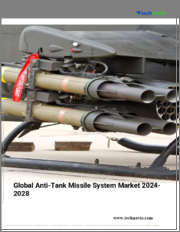
대전차 미사일 시스템은 근접 전투에서 전차 및 기타 차량을 소멸시키는 것을 목표로 하는 유도 미사일을 말합니다. 이러한 미사일은 소형 및 중형의 주력 전차(MBT)에 대해서 유효하고, 휴대형, 삼각 탑재형, 어깨로부터 발사하는 형 등, 다양한 사이즈가 있습니다. 원격으로 작동되며 일반적으로 지상 또는 항공기에서 발사됩니다. 일반적으로 레이저 유도, 와이어 유도, 디지털 이미징 시스템 등 다양한 목표 유도 시스템으로 구성됩니다. 전통적으로 사용되는 무기에 비해, 대전차 미사일은 국경, 벽, 장갑차 등 더 무거운 장애물을 관통할 수 있습니다.
시장은 주로 세계에서 무력분쟁, 폭력, 테러리즘의 사례가 우려할 정도로 증가하고 있는 것이 원동력이 되고 있습니다. 또한 국가 안보 강화를 위한 군사 근대화의 필요성이 커지고 있는 것도 시장 성장을 뒷받침하고 있습니다. 차세대 무기 시스템의 개발에 따라, 특히 개발도상국의 정부 및 방위기관은 전투부대의 생존성을 지원하고 향상시키기 위해 참신한 ATMS를 급속히 채용하고 있습니다. 게다가 듀얼 모드의 시커를 탑재한 미사일의 개발 등 다양한 기술 진보도 성장을 가속하는 요인이 되고 있습니다. 이 미사일은 열 대비가 낮은 표적을 포착하기 위한 적외선 및 가시색 채널과 발사 플랫폼에 대한 원격 액세스를 용이하게 하는 광섬유 데이터 링크를 갖추고 있습니다. 기타 요인으로는 전 세계 국방비 증가, 기존 무기 시스템 업그레이드를 위한 광범위한 연구개발 활동 등이 있어 시장을 더욱 견인할 것으로 예상됩니다.
이 보고서에서 다루는 주요 질문
- 세계의 대전차 미사일 시스템 시장은 지금까지 어떻게 추이하고 향후 어떻게 추이할 것인가?
- COVID-19가 세계의 대전차 미사일 시스템 시장에 미친 영향은?
- 주요 지역 시장은?
- 미사일 유형별 시장 내역은?
- 플랫폼별 시장 내역은?
- 최종 사용자별 시장 내역은?
- 업계 밸류체인의 다양한 단계란?
- 업계의 주요 촉진요인 및 과제는 무엇인가?
- 세계 대전차 미사일 시스템 시장의 구조 및 주요 기업은?
- 업계 경쟁도는?
목차
제1장 서문
제2장 조사 범위 및 조사 방법
- 조사 목적
- 이해관계자
- 데이터 소스
- 1차 정보
- 2차 정보
- 시장 추정
- 상향식 접근
- 하향식 접근
- 조사 방법
제3장 주요 요약
제4장 서문
- 개요
- 주요 업계 동향
제5장 세계의 대전차 미사일 시스템 시장
- 시장 개요
- 시장 실적
- COVID-19의 영향
- 시장 예측
제6장 시장 내역 : 미사일 유형별
- 인간 휴대용
- 시장 동향
- 시장 예측
- 차재형
- 시장 동향
- 시장 예측
제7장 시장 내역 : 플랫폼별
- 공중
- 시장 동향
- 시장 예측
- 지상 베이스
- 시장 동향
- 시장 예측
제8장 시장 내역 : 최종 사용자별
- 군용
- 시장 동향
- 시장 예측
- 상업용
- 시장 동향
- 시장 예측
제9장 시장 내역 : 지역별
- 북미
- 미국
- 캐나다
- 아시아태평양
- 중국
- 일본
- 인도
- 한국
- 호주
- 인도네시아
- 기타
- 유럽
- 독일
- 프랑스
- 영국
- 이탈리아
- 스페인
- 러시아
- 기타
- 라틴아메리카
- 브라질
- 멕시코
- 기타
- 중동 및 아프리카
- 시장 동향
- 시장 내역 : 국가별
- 시장 예측
제10장 SWOT 분석
- 개요
- 강점
- 약점
- 기회
- 위협
제11장 밸류체인 분석
제12장 Porter's Five Forces 분석
- 개요
- 구매자의 협상력
- 공급기업의 협상력
- 경쟁도
- 신규 참가업체의 위협
- 대체품의 위협
제13장 가격 분석
제14장 경쟁 구도
- 시장 구조
- 주요 기업
- 주요 기업 프로파일
- Denel Aerostructures(Pty) Ltd.(Denel SOC Ltd.)
- Elbit Systems Ltd.
- General Dynamics Corporation
- KBP Instrument Design Bureau(Rostec)
- Lockheed Martin Corporation
- MBDA
- Rafael Advanced Defense Systems Ltd.
- Raytheon Technologies Corporation
- Saab AB
The global anti-tank missile system market size reached USD 3.2 Billion in 2024. Looking forward, IMARC Group expects the market to reach USD 4.3 Billion by 2033, exhibiting a growth rate (CAGR) of 2.98% during 2025-2033. The rising defense budgets by governments for advanced systems to strengthen military capabilities are stimulating the market.
The anti-tank missile system refers to a guided missile intended for obliterating tanks and other vehicles in close battle fighting. These missiles are effective against small- and medium-sized main battle tanks (MBTs) and are available in various sizes that are used in the form of man-portable, tripod mounted and shoulder-launched variants. They are remotely controlled and are usually launched on the ground or through an aircraft. They usually consist of various target guidance systems, including laser guiding, wire guiding and digital imaging systems. In comparison to the traditionally used weapons, anti-tank missiles can penetrate heavier obstructions, such as bunkers, walls and armored vehicles.
The market is primarily being driven by an alarming increase in the instances of armed conflicts, violence and terrorism across the globe. Furthermore, the escalating need for military modernization to enhance national security is also driving the market growth. With the development of next-generation weaponry systems, governments and defense organizations, especially of developing nations, are rapidly adopting novel ATMSs to support and improve the survivability of the fight troops. Additionally, various technological advancements, such as the development of missiles with a dual-mode seeker, are acting as other growth-inducing factors. These missiles are equipped with infrared and visible color channels to capture targets in low thermal contrast and fiber-optic data links to facilitate remote access to the launch platforms. Other factors, including an overall increase in the defense expenditure across the globe, along with extensive research and development (R&D) activities to upgrade the existing weapon system, are anticipated to drive the market further.
Key Market Segmentation:
Breakup by Missile Type:
- Man-Portable
- Vehicle-Mounted
Breakup by Platform:
- Airborne
- Ground-Based
Breakup by End User:
- Military
- Commercial
Breakup by Region:
- North America
- United States
- Canada
- Asia Pacific
- China
- Japan
- India
- South Korea
- Australia
- Indonesia
- Others
- Europe
- Germany
- France
- United Kingdom
- Italy
- Spain
- Russia
- Others
- Latin America
- Brazil
- Mexico
- Others
- Middle East and Africa
Competitive Landscape:
The report has also analysed the competitive landscape of the market with some of the key players being Denel Aerostructures (Pty) Ltd. (Denel SOC Ltd.), Elbit Systems Ltd., General Dynamics Corporation, KBP Instrument Design Bureau (Rostec), Lockheed Martin Corporation, MBDA, Rafael Advanced Defense Systems Ltd., Raytheon Technologies Corporation and Saab AB.
Key Questions Answered in This Report:
- How has the global anti-tank missile system market performed so far and how will it perform in the coming years?
- What has been the impact of COVID-19 on the global anti-tank missile system market?
- What are the key regional markets?
- What is the breakup of the market based on the missile type?
- What is the breakup of the market based on the platform?
- What is the breakup of the market based on the end user?
- What are the various stages in the value chain of the industry?
- What are the key driving factors and challenges in the industry?
- What is the structure of the global anti-tank missile system market and who are the key players?
- What is the degree of competition in the industry?
Table of Contents
1 Preface
2 Scope and Methodology
- 2.1 Objectives of the Study
- 2.2 Stakeholders
- 2.3 Data Sources
- 2.3.1 Primary Sources
- 2.3.2 Secondary Sources
- 2.4 Market Estimation
- 2.4.1 Bottom-Up Approach
- 2.4.2 Top-Down Approach
- 2.5 Forecasting Methodology
3 Executive Summary
4 Introduction
- 4.1 Overview
- 4.2 Key Industry Trends
5 Global Anti-tank Missile System Market
- 5.1 Market Overview
- 5.2 Market Performance
- 5.3 Impact of COVID-19
- 5.4 Market Forecast
6 Market Breakup by Missile Type
- 6.1 Man-Portable
- 6.1.1 Market Trends
- 6.1.2 Market Forecast
- 6.2 Vehicle-Mounted
- 6.2.1 Market Trends
- 6.2.2 Market Forecast
7 Market Breakup by Platform
- 7.1 Airborne
- 7.1.1 Market Trends
- 7.1.2 Market Forecast
- 7.2 Ground-Based
- 7.2.1 Market Trends
- 7.2.2 Market Forecast
8 Market Breakup by End User
- 8.1 Military
- 8.1.1 Market Trends
- 8.1.2 Market Forecast
- 8.2 Commercial
- 8.2.1 Market Trends
- 8.2.2 Market Forecast
9 Market Breakup by Region
- 9.1 North America
- 9.1.1 United States
- 9.1.1.1 Market Trends
- 9.1.1.2 Market Forecast
- 9.1.2 Canada
- 9.1.2.1 Market Trends
- 9.1.2.2 Market Forecast
- 9.1.1 United States
- 9.2 Asia Pacific
- 9.2.1 China
- 9.2.1.1 Market Trends
- 9.2.1.2 Market Forecast
- 9.2.2 Japan
- 9.2.2.1 Market Trends
- 9.2.2.2 Market Forecast
- 9.2.3 India
- 9.2.3.1 Market Trends
- 9.2.3.2 Market Forecast
- 9.2.4 South Korea
- 9.2.4.1 Market Trends
- 9.2.4.2 Market Forecast
- 9.2.5 Australia
- 9.2.5.1 Market Trends
- 9.2.5.2 Market Forecast
- 9.2.6 Indonesia
- 9.2.6.1 Market Trends
- 9.2.6.2 Market Forecast
- 9.2.7 Others
- 9.2.7.1 Market Trends
- 9.2.7.2 Market Forecast
- 9.2.1 China
- 9.3 Europe
- 9.3.1 Germany
- 9.3.1.1 Market Trends
- 9.3.1.2 Market Forecast
- 9.3.2 France
- 9.3.2.1 Market Trends
- 9.3.2.2 Market Forecast
- 9.3.3 United Kingdom
- 9.3.3.1 Market Trends
- 9.3.3.2 Market Forecast
- 9.3.4 Italy
- 9.3.4.1 Market Trends
- 9.3.4.2 Market Forecast
- 9.3.5 Spain
- 9.3.5.1 Market Trends
- 9.3.5.2 Market Forecast
- 9.3.6 Russia
- 9.3.6.1 Market Trends
- 9.3.6.2 Market Forecast
- 9.3.7 Others
- 9.3.7.1 Market Trends
- 9.3.7.2 Market Forecast
- 9.3.1 Germany
- 9.4 Latin America
- 9.4.1 Brazil
- 9.4.1.1 Market Trends
- 9.4.1.2 Market Forecast
- 9.4.2 Mexico
- 9.4.2.1 Market Trends
- 9.4.2.2 Market Forecast
- 9.4.3 Others
- 9.4.3.1 Market Trends
- 9.4.3.2 Market Forecast
- 9.4.1 Brazil
- 9.5 Middle East and Africa
- 9.5.1 Market Trends
- 9.5.2 Market Breakup by Country
- 9.5.3 Market Forecast
10 SWOT Analysis
- 10.1 Overview
- 10.2 Strengths
- 10.3 Weaknesses
- 10.4 Opportunities
- 10.5 Threats
11 Value Chain Analysis
12 Porters Five Forces Analysis
- 12.1 Overview
- 12.2 Bargaining Power of Buyers
- 12.3 Bargaining Power of Suppliers
- 12.4 Degree of Competition
- 12.5 Threat of New Entrants
- 12.6 Threat of Substitutes
13 Price Analysis
14 Competitive Landscape
- 14.1 Market Structure
- 14.2 Key Players
- 14.3 Profiles of Key Players
- 14.3.1 Denel Aerostructures (Pty) Ltd. (Denel SOC Ltd.)
- 14.3.1.1 Company Overview
- 14.3.1.2 Product Portfolio
- 14.3.2 Elbit Systems Ltd.
- 14.3.2.1 Company Overview
- 14.3.2.2 Product Portfolio
- 14.3.2.3 Financials
- 14.3.3 General Dynamics Corporation
- 14.3.3.1 Company Overview
- 14.3.3.2 Product Portfolio
- 14.3.3.3 Financials
- 14.3.3.4 SWOT Analysis
- 14.3.4 KBP Instrument Design Bureau (Rostec)
- 14.3.4.1 Company Overview
- 14.3.4.2 Product Portfolio
- 14.3.5 Lockheed Martin Corporation
- 14.3.5.1 Company Overview
- 14.3.5.2 Product Portfolio
- 14.3.5.3 Financials
- 14.3.5.4 SWOT Analysis
- 14.3.6 MBDA
- 14.3.6.1 Company Overview
- 14.3.6.2 Product Portfolio
- 14.3.7 Rafael Advanced Defense Systems Ltd.
- 14.3.7.1 Company Overview
- 14.3.7.2 Product Portfolio
- 14.3.8 Raytheon Technologies Corporation
- 14.3.8.1 Company Overview
- 14.3.8.2 Product Portfolio
- 14.3.8.3 Financials
- 14.3.8.4 SWOT Analysis
- 14.3.9 Saab AB
- 14.3.9.1 Company Overview
- 14.3.9.2 Product Portfolio
- 14.3.9.3 Financials
- 14.3.9.4 SWOT Analysis
- 14.3.1 Denel Aerostructures (Pty) Ltd. (Denel SOC Ltd.)