|
시장보고서
상품코드
1819979
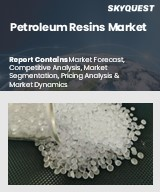
석유 수지 시장 보고서 : 제품, 용도, 최종 용도, 지역별(2025-2033년)Petroleum Resins Market Report by Product, Application, End Use, and Region 2025-2033 |
||||||

세계 석유 수지 시장 규모는 2024년 45억 달러에 달했습니다. 향후 IMARC Group은 2033년에는 62억 달러에 달하고, 2025-2033년 3.74%의 연평균 성장률(CAGR)을 보일 것으로 전망하고 있습니다.
석유 수지는 석유를 분해하여 얻은 저분자량의 열가소성 탄화수소입니다. 올레핀, 디올레핀, 방향족 비닐 화합물 등 불포화 단량체의 혼합물을 중합하여 제조되며, 천연가스 액, 석유 및 가스, 석유 나프타를 분해할 때 부생합니다. 석유 수지는 분말, 플레이크, 고체 블록, 용액, 비드, 분쇄 덩어리, 분산액 등의 형태로 볼 수 있습니다. 페인트, 바니시, 코팅제, 종이, 접착제, 콘크리트 경화제, 고무, 인쇄 잉크, 석판 잉크 등에 응용되고 있습니다.
석유 수지 시장 동향 :
석유 수지 세계 시장은 주로 페인트, 실란트, 개인 위생용품, 타이어, 자동차, 포장용 테이프, 건축 및 건축자재 제조 수요 증가에 의해 주도되고 있습니다. 석유 수지는 접착 강도가 향상되고 산, 알칼리, 물에 대한 내성이 있습니다. 이 외에도 뛰어난 열 안정성, 박리 강도, 점착력, 높은 연화점으로 인해 채택되고 있습니다. 세계 각국 정부는 자동차 도료의 휘발성 유기화합물(VOC) 배출에 대한 엄격한 규제를 채택하고 있으며, 이는 저 VOC 석유 수지에 대한 수요를 촉진하고 있습니다. 미국, 인도, 독일, 중국 등의 국가에서는 정부가 포장 분야에 대한 지출을 늘리고 있으며, 이는 시장 성장을 가속하고 있습니다. 또한, 자동차 생산 증대를 위한 정책 및 시책이 시행되고 있어 석유 수지에 대한 수요가 증가하고 있습니다. 또한, 수지 생산량을 늘리기 위한 첨단 공정 기술의 개발은 시장 성장에 긍정적인 영향을 미치고 있습니다.
본 보고서에서 다룬 주요 질문
- 석유 수지 시장 규모는?
- 석유 수지 시장 전망은?
- 석유 수지 시장을 이끄는 주요 요인은?
- 세계 석유 수지 시장의 주요 기업은?
목차
제1장 서문
제2장 조사 범위와 조사 방법
- 조사 목적
- 이해관계자
- 데이터 소스
- 1차 정보
- 2차 정보
- 시장 추정
- 보텀업 접근
- 톱다운 접근
- 조사 방법
제3장 주요 요약
제4장 서론
제5장 세계의 석유 수지 시장
- 시장 개요
- 시장 실적
- COVID-19의 영향
- 시장 예측
제6장 시장 분석 : 제품별
- C5 수지
- C9 수지
- C5/C9 수지
- 수소화 수지
제7장 시장 분석 : 용도별
- 페인트
- 접착제
- 인쇄 잉크
- 고무 및 타이어
- 테이프 및 라벨
- 기타
제8장 시장 분석 : 최종 용도별
- 자동차
- 건설
- 포장
- 소비재
- 개인 위생
- 기타
제9장 시장 분석 : 지역별
- 북미
- 미국
- 캐나다
- 아시아태평양
- 중국
- 일본
- 인도
- 한국
- 호주
- 인도네시아
- 기타
- 유럽
- 독일
- 프랑스
- 영국
- 이탈리아
- 스페인
- 러시아
- 기타
- 라틴아메리카
- 브라질
- 멕시코
- 기타
- 중동 및 아프리카
제10장 SWOT 분석
제11장 밸류체인 분석
제12장 Porter의 Five Forces 분석
제13장 가격 분석
제14장 경쟁 구도
- 시장 구조
- 주요 기업
- 주요 기업 개요
- Arakawa Chemical Industries Ltd.
- Eastman Chemical Company
- Exxon Mobil Corporation
- Henan Anglxxon Chemical Products Co., Ltd.
- Idemitsu Kosan
- KOLON Industries Inc.
- Lesco Chemical Limited
- Neville Chemical Company
- Puyang Changyu Petroleum Resins Co. Ltd.
- Seacon Corporation
- TotalEnergies Group
- Zeon Corporation
The global petroleum resins market size reached USD 4.50 Billion in 2024. Looking forward, IMARC Group expects the market to reach USD 6.20 Billion by 2033, exhibiting a growth rate (CAGR) of 3.74% during 2025-2033.
Petroleum resins are low molecular weighted thermoplastic hydrocarbons that are derived from cracked petroleum fractions. They are produced by polymerizing mixtures of unsaturated monomers such as olefins, diolefins, and aromatic vinyl compounds, which are the by-products of cracking natural gas liquids, gas oil, and petroleum naphtha. Petroleum resins can be found in the form of powder, flakes, solid blocs, solutions, beads, crushed nuggets, and dispersion. They find application in paints and varnishes, coatings, paper, adhesives, concrete-curing compounds, rubber, printing inks, and lithographic inks.
Petroleum Resins Market Trends:
The global petroleum resins market is primarily driven by their growing demand for manufacturing paints, sealants, personal hygiene products, tire, automotive, packaging tapes, and building and construction materials. Petroleum resins offer improved adhesive bond strength and resistance to acids, alkalis and water. In addition to this, they are also employed due to their exceptional thermal stability, peeling strength, tack ability, and high softening point. Governments worldwide are adopting stringent regulations regarding volatile organic compound (VOCs) emissions from vehicle coatings, which, in turn, is facilitating the demand for petroleum resins with low VOCs. In countries such as the United States, India, Germany, and China, governments are increasing their spending in the packaging sector, which is also propelling the market growth. They are also imposing policies and measures to augment the production of vehicles, which is increasing the demand for petroleum resins. Furthermore, the development of advanced process technologies to increase the output of resins is positively impacting the growth of the market.
Key Market Segmentation:
Breakup by Product:
- C5 Resins
- C9 Resins
- C5/C9 Resins
- Hydrogenated Resins
Breakup by Application:
- Paints
- Adhesives
- Printing Inks
- Rubber and Tires
- Tapes and Labels
- Others
Breakup by End Use:
- Automotive
- Construction
- Packaging
- Consumer Goods
- Personal Hygiene
- Others
Breakup by Region:
- North America
- United States
- Canada
- Asia-Pacific
- China
- Japan
- India
- South Korea
- Australia
- Indonesia
- Others
- Europe
- Germany
- France
- United Kingdom
- Italy
- Spain
- Russia
- Others
- Latin America
- Brazil
- Mexico
- Others
- Middle East and Africa
Competitive Landscape:
The competitive landscape of the industry has also been examined along with the profiles of the key players being Arakawa Chemical Industries Ltd., Eastman Chemical Company, Exxon Mobil Corporation, Henan Anglxxon Chemical Products Co., Ltd., Idemitsu Kosan, KOLON Industries Inc., Lesco Chemical Limited, Neville Chemical Company, Puyang Changyu Petroleum Resins Co. Ltd., Seacon Corporation, TotalEnergies Group and Zeon Corporation.
Key Questions Answered in This Report
- 1.How big is the petroleum resins market?
- 2.What is the future outlook of petroleum resins market?
- 3.What are the key factors driving the petroleum resins market?
- 4.Which are the leading companies in the global petroleum resins market?
Table of Contents
1 Preface
2 Scope and Methodology
- 2.1 Objectives of the Study
- 2.2 Stakeholders
- 2.3 Data Sources
- 2.3.1 Primary Sources
- 2.3.2 Secondary Sources
- 2.4 Market Estimation
- 2.4.1 Bottom-Up Approach
- 2.4.2 Top-Down Approach
- 2.5 Forecasting Methodology
3 Executive Summary
4 Introduction
- 4.1 Overview
- 4.2 Key Industry Trends
5 Global Petroleum Resins Market
- 5.1 Market Overview
- 5.2 Market Performance
- 5.3 Impact of COVID-19
- 5.4 Market Forecast
6 Market Breakup by Product
- 6.1 C5 Resins
- 6.1.1 Market Trends
- 6.1.2 Market Forecast
- 6.2 C9 Resins
- 6.2.1 Market Trends
- 6.2.2 Market Forecast
- 6.3 C5/C9 Resins
- 6.3.1 Market Trends
- 6.3.2 Market Forecast
- 6.4 Hydrogenated Resins
- 6.4.1 Market Trends
- 6.4.2 Market Forecast
7 Market Breakup by Application
- 7.1 Paints
- 7.1.1 Market Trends
- 7.1.2 Market Forecast
- 7.2 Adhesives
- 7.2.1 Market Trends
- 7.2.2 Market Forecast
- 7.3 Printing Inks
- 7.3.1 Market Trends
- 7.3.2 Market Forecast
- 7.4 Rubber and Tires
- 7.4.1 Market Trends
- 7.4.2 Market Forecast
- 7.5 Tapes and Labels
- 7.5.1 Market Trends
- 7.5.2 Market Forecast
- 7.6 Others
- 7.6.1 Market Trends
- 7.6.2 Market Forecast
8 Market Breakup by End Use
- 8.1 Automotive
- 8.1.1 Market Trends
- 8.1.2 Market Forecast
- 8.2 Construction
- 8.2.1 Market Trends
- 8.2.2 Market Forecast
- 8.3 Packaging
- 8.3.1 Market Trends
- 8.3.2 Market Forecast
- 8.4 Consumer Goods
- 8.4.1 Market Trends
- 8.4.2 Market Forecast
- 8.5 Personal Hygiene
- 8.5.1 Market Trends
- 8.5.2 Market Forecast
- 8.6 Others
- 8.6.1 Market Trends
- 8.6.2 Market Forecast
9 Market Breakup by Region
- 9.1 North America
- 9.1.1 United States
- 9.1.1.1 Market Trends
- 9.1.1.2 Market Forecast
- 9.1.2 Canada
- 9.1.2.1 Market Trends
- 9.1.2.2 Market Forecast
- 9.1.1 United States
- 9.2 Asia-Pacific
- 9.2.1 China
- 9.2.1.1 Market Trends
- 9.2.1.2 Market Forecast
- 9.2.2 Japan
- 9.2.2.1 Market Trends
- 9.2.2.2 Market Forecast
- 9.2.3 India
- 9.2.3.1 Market Trends
- 9.2.3.2 Market Forecast
- 9.2.4 South Korea
- 9.2.4.1 Market Trends
- 9.2.4.2 Market Forecast
- 9.2.5 Australia
- 9.2.5.1 Market Trends
- 9.2.5.2 Market Forecast
- 9.2.6 Indonesia
- 9.2.6.1 Market Trends
- 9.2.6.2 Market Forecast
- 9.2.7 Others
- 9.2.7.1 Market Trends
- 9.2.7.2 Market Forecast
- 9.2.1 China
- 9.3 Europe
- 9.3.1 Germany
- 9.3.1.1 Market Trends
- 9.3.1.2 Market Forecast
- 9.3.2 France
- 9.3.2.1 Market Trends
- 9.3.2.2 Market Forecast
- 9.3.3 United Kingdom
- 9.3.3.1 Market Trends
- 9.3.3.2 Market Forecast
- 9.3.4 Italy
- 9.3.4.1 Market Trends
- 9.3.4.2 Market Forecast
- 9.3.5 Spain
- 9.3.5.1 Market Trends
- 9.3.5.2 Market Forecast
- 9.3.6 Russia
- 9.3.6.1 Market Trends
- 9.3.6.2 Market Forecast
- 9.3.7 Others
- 9.3.7.1 Market Trends
- 9.3.7.2 Market Forecast
- 9.3.1 Germany
- 9.4 Latin America
- 9.4.1 Brazil
- 9.4.1.1 Market Trends
- 9.4.1.2 Market Forecast
- 9.4.2 Mexico
- 9.4.2.1 Market Trends
- 9.4.2.2 Market Forecast
- 9.4.3 Others
- 9.4.3.1 Market Trends
- 9.4.3.2 Market Forecast
- 9.4.1 Brazil
- 9.5 Middle East and Africa
- 9.5.1 Market Trends
- 9.5.2 Market Breakup by Country
- 9.5.3 Market Forecast
10 SWOT Analysis
- 10.1 Overview
- 10.2 Strengths
- 10.3 Weaknesses
- 10.4 Opportunities
- 10.5 Threats
11 Value Chain Analysis
12 Porters Five Forces Analysis
- 12.1 Overview
- 12.2 Bargaining Power of Buyers
- 12.3 Bargaining Power of Suppliers
- 12.4 Degree of Competition
- 12.5 Threat of New Entrants
- 12.6 Threat of Substitutes
13 Price Analysis
14 Competitive Landscape
- 14.1 Market Structure
- 14.2 Key Players
- 14.3 Profiles of Key Players
- 14.3.1 Arakawa Chemical Industries Ltd.
- 14.3.1.1 Company Overview
- 14.3.1.2 Product Portfolio
- 14.3.1.3 Financials
- 14.3.2 Eastman Chemical Company
- 14.3.2.1 Company Overview
- 14.3.2.2 Product Portfolio
- 14.3.2.3 Financials
- 14.3.2.4 SWOT Analysis
- 14.3.3 Exxon Mobil Corporation
- 14.3.3.1 Company Overview
- 14.3.3.2 Product Portfolio
- 14.3.3.3 Financials
- 14.3.3.4 SWOT Analysis
- 14.3.4 Henan Anglxxon Chemical Products Co., Ltd.
- 14.3.4.1 Company Overview
- 14.3.4.2 Product Portfolio
- 14.3.5 Idemitsu Kosan
- 14.3.5.1 Company Overview
- 14.3.5.2 Product Portfolio
- 14.3.5.3 Financials
- 14.3.5.4 SWOT Analysis
- 14.3.6 KOLON Industries Inc.
- 14.3.6.1 Company Overview
- 14.3.6.2 Product Portfolio
- 14.3.6.3 Financials
- 14.3.6.4 SWOT Analysis
- 14.3.7 Lesco Chemical Limited
- 14.3.7.1 Company Overview
- 14.3.7.2 Product Portfolio
- 14.3.8 Neville Chemical Company
- 14.3.8.1 Company Overview
- 14.3.8.2 Product Portfolio
- 14.3.9 Puyang Changyu Petroleum Resins Co. Ltd.
- 14.3.9.1 Company Overview
- 14.3.9.2 Product Portfolio
- 14.3.10 Seacon Corporation
- 14.3.10.1 Company Overview
- 14.3.10.2 Product Portfolio
- 14.3.11 TotalEnergies Group
- 14.3.11.1 Company Overview
- 14.3.11.2 Product Portfolio
- 14.3.11.3 Financials
- 14.3.11.4 SWOT Analysis
- 14.3.12 Zeon Corporation
- 14.3.12.1 Company Overview
- 14.3.12.2 Product Portfolio
- 14.3.12.3 Financials
- 14.3.1 Arakawa Chemical Industries Ltd.