|
시장보고서
상품코드
1987557
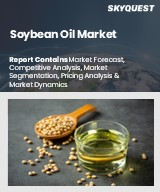
대두유 시장 규모, 점유율, 동향 및 예측 : 용도별, 지역별(2026-2034년)Soybean Oil Market Size, Share, Trends and Forecast by End-Use and Region, 2026-2034 |
||||||

2025년, 세계의 대두유 시장 규모는 6,340만 톤에 이르렀습니다. IMARC Group은 2034년에는 시장 규모가 7,320만 톤에 이르고, 2026-2034년 CAGR 1.57%를 나타낼 것으로 예측했습니다. 현재 중국이 시장을 독점하고 있으며, 2025년에는 32.0% 이상의 높은 시장 점유율을 차지할 것으로 예측됩니다. 식물성 기름과 트랜스 지방산이 없는 기름에 대한 선호도 증가, 일반 대중의 건강 인식과 지식의 향상, 다양한 산업 분야에서 제품 사용의 확대는 전 세계 식용유 산업에서 대두유 시장 점유율을 강화하고 있습니다.
주요 하이라이트
- 건강에 대한 인식 증가, 식물성 식품에 대한 수요 급증, 바이오디젤 생산 확대, 식품 가공 부문의 성장, 오일 추출 기술의 발전이 대두유 시장의 주요 시장 성장 촉진요인이 되고 있습니다.
- 식품 부문은 요리, 튀김, 제과, 제빵, 가공식품의 원료 등 다양한 요리에 널리 사용되어 2025년 약 76.8%의 시장 점유율을 차지하며 시장을 주도할 것으로 예측됩니다.
- 중국은 주요 콩 생산국이기 때문에 32.0%가 넘는 가장 큰 시장 점유율을 차지하고 있습니다. 이와 더불어, 호황을 누리고 있는 외식 산업에서 대두유에 대한 수요가 증가하면서 시장 성장에 기여하고 있습니다.
대두유 시장은 식물성 기름에 대한 소비자 수요 증가, 식품 가공 산업 확대, 바이오디젤 생산 증가에 힘입어 성장하고 있습니다. 재생에너지와 지속가능성을 촉진하는 정부 정책도 시장 성장을 더욱 촉진하고 있습니다. 석유 추출 및 정제 기술의 발전으로 수율과 품질이 향상되고 있습니다. 오메가3와 비타민 E를 포함한 기능성 건강 효과에 대한 인식이 높아지면서 수요가 증가하고 있습니다. 대두 생산량 변동, 지정학적 무역 정책, 공급망 동향은 가격 및 시장 안정성에 영향을 미치고 있습니다. IBEF가 발표한 보고서에 따르면, 2024년 10월 현재 인도의 대두 생산량은 6% 증가하여 126만 톤에 달했으며, 1헥타르당 평균 수확량은 1,063kg으로 집계됐습니다. 콩 재배 면적은 1,183만 헥타르에 달했습니다. 마디야 프라데시주의 생산량은 554만 톤으로, 정부는 2024-25년 최저 지원가격(MSP)을 쿼터당 58.23달러로 설정했습니다.
미국 대두유 시장은 식품 가공, 바이오연료, 산업 부문의 견고한 수요에 의해 주도되고 있습니다. 재생가능 연료 기준(RFS)과 같은 정부 인센티브에 힘입어 재생가능 디젤과 바이오디젤 생산이 확대되면서 성장세를 견인하고 있습니다. 식물성 기름과 트랜스 지방산을 함유하지 않은 기름에 대한 소비자의 선호도가 높아지면서 식품 산업에서의 채택이 촉진되고 있습니다. 정제 기술의 발전과 유전자 변형 콩 품종의 개발로 수율과 품질이 향상되고 있습니다. 또한, 대두 수확량 변동, 무역 정책, 세계 공급망의 변화가 가격 및 시장 역학에 영향을 미치고 있습니다. 2024년 10월 미국 농무부(USDA)의 '작물 생산 보고서'는 2024년 미국의 대두 생산량을 45억 8,000만 부셸로 예측하고 있으며, 이는 2023년 대비 10% 증가한 수치입니다. 1에이커당 평균 수확량은 53.1부셸로 지난 예측보다 0.1부셸 감소할 것으로 예상되며, 수확 면적은 8,630만 에이커로 이전 추정치에서 변동이 없을 것으로 예측됩니다.
대두유 시장 동향
식용유 수요 증가
식용유에 대한 수요 증가는 대두유 시장의 성장을 이끄는 중요한 요인입니다. 예를 들어, IMARC에 따르면 인도의 식용유 시장 규모는 2023년 2,470만 톤에 달할 전망입니다. 향후 IMARC Group은 2032년까지 시장 규모가 2,790만 톤에 달하고 2024-2032년까지 연평균 1.35%의 성장률을 보일 것으로 예측했습니다. 인구 증가와 건강하고 다양한 용도로 사용되는 식용유에 대한 소비자의 선호도가 높아지면서 대두유의 우수한 특성과 저렴한 가격으로 인해 대두유이 최고의 선택이 되고 있습니다. 또한, 다양한 식품 및 조리 용도에 사용되면서 대두유 시장 수요를 더욱 촉진하고 있습니다. 이러한 요인들은 향후 몇 년 동안 대두유 시장을 견인할 것으로 예측됩니다.
건강에 대한 인식 제고
세계 소비자들 사이에서 건강에 대한 인식이 높아지면서 대두유에 대한 수요가 증가하고 있습니다. 사람들은 점점 더 영양가가 높은 식품을 선호하고 있으며, 이는 시장 전망을 밝게 하고 있습니다. 업계 보고서에 따르면, 인도에서는 2023년도에 약 500만 톤 이상의 대두유이 소비되었습니다. 이 물량의 대부분은 수입에 의한 것이었습니다. 대두유은 우수한 지방산 성분으로 인해 더 건강한 선택으로 여겨지고 있습니다. 예를 들어, 미국 국립의학도서관이 발표한 논문에 따르면 대두유은 염증이나 산화 지표에 영향을 주지 않으면서 혈중 콜레스테롤 수치와 관상동맥성 심장질환의 위험을 낮춘다고 합니다. 이러한 요인들은 대두유 시장 예측에 더욱 긍정적인 영향을 미치고 있습니다.
바이오연료 생산 확대
바이오연료 생산 증가는 대두유 시장의 성장을 크게 견인하고 있습니다. 예를 들어, 국제에너지기구(IEA)의 발표에 따르면, 2023-2028년 사이 바이오연료 수요는 380억 리터 증가할 것으로 예상되며, 이는 지난 5년과 비교했을 때 약 30% 증가한 수치입니다. 실제로 전 세계 바이오연료 소비량은 2028년까지 23% 증가하여 2,000억 리터에 달할 것으로 예측됩니다. 대두유은 바이오디젤 생산의 주요 원료입니다. 대두유으로 생산된 바이오디젤은 석유디젤의 대체연료로 널리 사용되고 있으며, 환경정책과 의무화로 인해 생산량이 증가하면서 대두유 시장의 수익을 높이고 있습니다.
대두유 시장 기회
바이오연료 수요 증가
바이오연료, 특히 대두유에서 추출한 바이오디젤에 대한 수요가 증가하면서 시장 기회가 확대되고 있습니다. 아시아태평양과 아프리카의 신흥 경제국에서는 도시화와 식생활의 변화로 인해 미개척 시장이 생겨나고 있습니다. 효소 추출법 등 유지 가공 기술의 발전과 기름 수율 향상을 위한 콩의 유전자 개량으로 비용 절감과 품질 향상의 여지를 가져오고 있습니다. 또한, 화장품, 의약품, 산업 분야에서의 대두유 사용 확대도 시장 규모를 확대하고 있습니다. 지속 가능하고 재생 가능한 에너지에 대한 정부 보조금도 수요를 견인하고 있습니다. 온라인 마켓플레이스의 성장으로 소비자에게 직접 판매할 수 있게 되어 도달 범위가 확대되고 있습니다. 이러한 추세에 더해 비 유전자 변형(Non-GMO) 및 유기농 대두유에 대한 수요 증가가 더해져 시장 진출기업들이 혁신과 성장에 유리한 환경을 조성하고 있습니다.
대두유 시장 과제
원자재 가격 변동
기후 변화, 해충, 국제 무역 마찰로 인한 원자재 가격 변동은 생산과 공급의 안정성에 영향을 미칩니다. 트랜스 지방산과 고도로 가공된 기름과 관련된 건강상의 우려로 인해 일부 소비자들은 올리브유나 아보카도 오일과 같은 대체품을 선택하게 되면서 대두유의 매력이 줄어들고 있습니다. 유전자변형(GMO) 작물에 대한 규제 압력도 비GMO를 선호하는 지역에서는 장벽이 되고 있습니다. 또한 팜유, 해바라기유 등 다른 식물성 기름과의 치열한 경쟁으로 인해 시장 점유율과 가격이 압박을 받고 있습니다. 콩 재배의 환경적 지속가능성, 삼림 벌채, 과도한 물 소비에 대한 우려가 시장의 평판을 위협하고 있습니다. 미국, 브라질, 아르헨티나 등 주요 생산국의 정치적 불안정과 수출 금지 조치도 세계 무역을 더욱 어렵게 만들고 있습니다. 마지막으로, 바이오디젤 정책에 대한 반발 가능성이 산업계 수요를 감소시켜 시장 성장에 또 다른 도전을 가져올 수 있습니다.
목차
제1장 서문
제2장 조사 범위와 조사 방법
제3장 주요 요약
제4장 서론
제5장 세계의 대두 산업
제6장 세계의 식용유 산업
제7장 세계의 대두유 산업
제8장 시장 동향 : 최종 용도별
제9장 시장 주요 지역 실적
제10장 경쟁 구도
제11장 대두유 가공
제12장 프로젝트 상세, 필요조건 및 비용
제13장 융자와 자금 원조
제14장 프로젝트의 경제성
제15장 주요 기업 개요
LSH 26.04.14The global soybean oil market size reached 63.4 Million Tons in 2025. Looking forward, IMARC Group estimates the market to reach 73.2 Million Tons by 2034, exhibiting a CAGR of 1.57% during 2026-2034. China currently dominates the market, holding a significant market share of over 32.0% in 2025. The increasing preference for plant-based and trans-fat-free oils, rising health consciousness and awareness among the masses and growing product utilization in various industrial applications are strengthening soybean oil market share in the global edible oil industry.
KEY HIGHLIGHTS:
- Enhanced health consciousness, surging need for plant-based foodstuffs, rise in the manufacture of biodiesel, growing food processing sector, and advances in the technology of oil extraction are the major drivers of the soybean oil market.
- Food leads the market with around 76.8% of market share in 2025 as it is widely used for various culinary purposes, such as cooking, frying, baking, and as an ingredient in processed foods.
- China accounted for the largest market share of over 32.0% as it is the major producer of soybeans. Apart from this, the rising demand for soybean oil on account of the thriving food service industry is contributing to the growth of the market in the country.
The soybean oil market is driven by rising consumer demand for plant-based and heart-healthy oils, expanding food processing industries and increasing biodiesel production. Government policies promoting renewable energy and sustainability further boost market growth. Technological advancements in oil extraction and refining enhance yield and quality. Growing awareness of functional health benefits including omega-3 and vitamin E content fuels demand. Fluctuating soybean production, geopolitical trade policies and supply chain dynamics influence pricing and market stability. According to the report published by IBEF, in October 2024, Indian soybean production rose by 6% to 1.26 million tonnes in the current kharif season with an average yield of 1,063 kg per hectare. Soybeans were sown in 11.83 million hectares. Madhya Pradesh produced 5.54 million tonnes, while the government set the MSP at $58.23 per quintal for 2024-25.
The U.S. soybean oil market is driven by strong demand from the food processing, biofuel and industrial sectors. The expansion of renewable diesel and biodiesel production supported by government incentives like the Renewable Fuel Standard (RFS) fuels growth. Rising consumer preference for plant-based and trans-fat-free oils boosts food industry adoption. Technological advancements in refining and genetically modified soybean varieties enhance yield and quality. Additionally, fluctuating soybean crop yields, trade policies, and global supply chain shifts impact pricing and market dynamics. In October 2024, the USDA's Crop Production report forecasts U.S. soybean production at 4.58 billion bushels, a 10% increase from 2023. Yields are expected to average 53.1 bushels per acre, down 0.1 bushel from the previous forecast, with a harvested area of 86.3 million acres, unchanged from earlier estimates.
SOYBEAN OIL MARKET TRENDS:
Rising Demand for Edible Oil
The rising demand for edible oils is a significant driver of growth in the soybean oil market. For instance, according to IMARC, the India edible oil market size reached 24.7 Million Tons in 2023. Looking forward, IMARC Group expects the market to reach 27.9 Million Tons by 2032, exhibiting a growth rate (CAGR) of 1.35% during 2024-2032. As populations expand and consumer preferences shift towards healthier and more versatile cooking oils, soybean oil's favorable properties and affordability make it a top choice. Additionally, its use in various food products and cooking applications further fuels the soybean oil market demand. These factors are expected to propel the soybean oil market in the coming years.
Increasing Health Consciousness
There is a rise in the demand for soybean oil due to the growing health consciousness among consumers across the globe. People are increasingly preferring nutrient-rich food products, which offer a positive market outlook. According to a report from the industry, India used approximately over five million metric tons of soybean oil during the fiscal year 2023. A significant part of this quantity was brought into the country. Soybean oil is considered a healthier choice due to its favorable fatty acid composition. For instance, according to an article published by the National Library of Medicine, soybean oil reduces circulating cholesterol and the risk of coronary heart disease while having no effect on inflammation or oxidation indicators. These factors further positively influence the soybean oil market forecast.
Growing Biofuel Production
The rising biofuel production is significantly driving growth in the soybean oil market. For instance, according to an article published by IEA, biofuel demand is expected to grow by 38 billion liters between 2023 and 2028, an almost 30% rise over the previous five years. In fact, worldwide biofuel consumption climbs 23% to 200 billion liters by 2028. Soybean oil is a key feedstock for biodiesel production. Biodiesel made from soybean oil is widely used as an alternative to petroleum diesel, and its production has been increasing due to environmental policies and mandates, thereby boosting the soybean oil market revenue.
SOYBEAN OIL MARKET OPPORTUNITIES:
Rising Demand for Biofuels
Growing demand for biofuels, particularly biodiesel from soybean oil, is improving market opportunities. Asia-Pacific and African emerging economies are offering untapped markets because of urbanization and shifting food consumption behavior. Technology developments in oil processing like enzymatic extraction and genetic improvement of soybeans for greater oil yield are providing scope for cost savings and quality enhancement. Also, the increasing applications of soybean oil in cosmetics, pharmaceuticals, and industries enhance its market space. Government subsidies towards sustainable and renewable energy also drive demand. Online growth allows for direct-to-consumer sales, increasing reach. All these tendencies, along with the rise in demand for non-GMO and organic soybean oil, create a positive environment for market participants to innovate and grow.
SOYBEAN OIL MARKET CHALLENGES:
Fluctuations in Raw Material
Price fluctuations of raw materials from climate change, pests, and international trade tensions affect production and stability of supplies. Health issues related to trans fats and ultra-processed oils prompt other consumers towards substitutes such as olive or avocado oil, minimizing the attractiveness of soybean oil. Bureaucratic pressures related to genetically modified (GMO) crops provide obstacles in areas that prefer non-GMO. Furthermore, high competition from other vegetable oils like palm and sunflower oil squeezes market share and price. Concerns about environmental sustainability for soybean cultivation, deforestation, and excessive water consumption threaten the reputation of the market. Instability through politics and export bans in key producing nations like the U.S., Brazil, and Argentina also make global trade more difficult. Finally, possible reaction against biodiesel policy may cut demand from industry, offering a further challenge to growth in the market.
SOYBEAN OIL INDUSTRY SEGMENTATION:
Analysis by End-Use :
- Food
- Feed
- Industrial
Food leads the market with around 76.8% of market share in 2025. According to the soybean oil market outlook, the food industry is one of the largest consumers of soybean oil as it is widely used for various culinary purposes, such as cooking, frying, baking, and as an ingredient in processed foods. In line with this, the rising adoption of ready-to-eat (RTE) food products among the masses is contributing to the growth of the market. Additionally, increasing health consciousness is driving demand for soybean oil due to its high unsaturated fat content and omega-3 fatty acids. Expanding food service and restaurant industries further fuel consumption while innovations in oil processing improve product stability and shelf life.
Regional Analysis
- China
- United States
- Brazil
- Europe
- Argentina
- India
- Others
In 2025, China accounted for the largest market share of over 32.0%. According to the soybean oil market statistics, China held the biggest market share as it is the major producer of soybeans. Apart from this, the rising demand for soybean oil on account of the thriving food service industry is contributing to the growth of the market in the country. In line with this, the increasing consumption of processed and convenience food products is propelling the growth of the market in China. Furthermore, the rising adoption of soybean oil due to changing consumer eating habits is bolstering the growth of the market in the country. In 2023, industry reports indicated that approximately 17.8 million metric tons of soybean oil were consumed by China's population.
KEY REGIONAL TAKEAWAYS:
UNITED STATES SOYBEAN OIL MARKET ANALYSIS
The US soybean oil market is growing, fueled by robust domestic production, rising biodiesel demand, and government policies favoring renewable energy. The USDA now projects 12.8 billion pounds of soybean oil will be used in biofuel production during 2023-'24, emphasizing the expanding role of renewable fuels. Federal policies such as the Renewable Fuel Standard (RFS) and tax credits continue to drive soybean oil use in biodiesel and renewable diesel. In addition, food processing firms use soybean oil for myriad purposes, generating stable demand. Large processors including ADM and Bunge control refining and distribution, securing domestic market supply while sending increasing volumes into key markets in China and Mexico. Ongoing investment in processing capacity and sustainability efforts further entrenches the market.
BRAZIL SOYBEAN OIL MARKET ANALYSIS
Supported by its massive soybean production and strong exporting capabilities, Brazil is the dominant force in the global soybean oil industry. According to USDA forecasts for 2023-2024, Brazil produced 10.94 million metric tons of soybeans, or 17% of global production. In 2023, the nation's soybean exports were about 102 million metric tons, a 29% increase over the previous year and worth approximately USD 53.2 billion. Due to its use in food processing and the creation of biodiesel, soybean oil is becoming more and more in demand locally. Government regulations requiring the blending of biodiesel also encourage market expansion. Processing and exports are driven by major businesses like Bunge and Cargill, which maintain Brazil's competitiveness in the global market.
EUROPE SOYBEAN OIL MARKET ANALYSIS
At present, the European soybean oil market is swinging in various imports and demanding more food and biofuel applications. For the soybean imports into the European Union in the 2023/24 season, which started in July, figures had already amounted to 4.23 million metric tons by November, as per reports. Because of limited domestic soybean cultivation, the region heavily relies on imports, principally from Brazil and the United States. Soybean oil is commonly regarded as oil to be used in food processing, while currently, sustainability initiatives and biofuel mandates are going to bring its application into renewable energy. Leading refiners like Bunge and Cargill contribute considerably to processing and distribution. Again, stricter EU regulations would only create have to import goods deforested linked throughout the seas into such very same markets trends. Those would push suppliers to adapt their sustainable sourcing policies.
ARGENTINA SOYBEAN OIL MARKET ANALYSIS
Argentina significantly influences the global soybean oil market, being one of the major producers and exporters. An industrial report indicated that the country's soybean oil consumption was around 2.29 million metric tons in 2022, with projections suggesting it will rise to 2.55 million metric tons by 2023. The country is a key exporter mainly to the European Union and Asia due to large-scale soybean cultivation. Policies supporting biodiesel from soybean oil further enhance domestic demand. Major processing and export players are Vicentin and Molinos Rio de la Plata. With its favorable location and infrastructure for soybean oil production, Argentina's attractiveness in the competitive global market is assured.
INDIA SOYBEAN OIL MARKET ANALYSIS
An expansive yet growing Indian populace, a burgeoning middle class, and rising consumption of processed foods have created a demand for soybean oil both home and abroad. According to an industrial report, by August 2023, India had brought in 357,890 tonnes of crude soybean oil, which represented 48 percent of the country's overall vegetable oil imports. Thus, soybean oil remains the most imported edible oil in India, with Brazil and Argentina as the major suppliers. The demand for soybean oil comes primarily from cooking and food processing and packaged foods. While import dependence is relieved by domestic refining capacity, primarily players such as Adani Wilmar and Ruchi Soya have been refining a large volume of imported crude oils. The government supports local oilseed production to lessen import dependence, alongside policies to control oil prices. Healthy oil consumption awareness leads to pressure on the market for new opportunities and innovation.
COMPETITIVE LANDSCAPE:
Key players in the industry are investing in research and development (R&D) activities to improve production processes, develop new product formulations, and enhance the quality and functionality of soybean oil. They are also exploring new extraction techniques, optimizing refining processes, and developing specialty variants of soybean oil to cater to specific customer needs. In line with this, major manufacturers are offering organic or non-genetically modified organism (GMO) variants of soybean oil, introducing specialty blends, and diversifying into value-added products, such as flavored or infused soybean oils. Apart from this, companies are opening soybean oil production facilities across the globe, which is positively influencing the market.
The report provides a comprehensive analysis of the competitive landscape in the soybean oil market with detailed profiles of all major companies, including:
- Archer Daniels Midland Company
- Bunge Limited
- Cargill, Incorporated
- Louis Dreyfus Company B.V.
- Wilmar International Limited
KEY QUESTIONS ANSWERED IN THIS REPORT
1. How big is the soybean oil market?
2. What is the future outlook of soybean oil market?
3. What is the soybean oil market trend?
4. Who is the largest consumer of soybean oil?
5. Which are the leading companies in the global soybean oil market?
Table of Contents
1 Preface
2 Scope and Methodology
- 2.1 Objectives of the Study
- 2.2 Stakeholders
- 2.3 Data Sources
- 2.3.1 Primary Sources
- 2.3.2 Secondary Sources
- 2.4 Market Estimation
- 2.4.1 Bottom-Up Approach
- 2.4.2 Top-Down Approach
- 2.5 Forecasting Methodology
3 Executive Summary
4 Introduction
- 4.1 Overview
- 4.2 Key Industry Trends
5 Global Soybean Industry
- 5.1 Market Performance
- 5.1.1 Volume Trends
- 5.1.2 Value Trends
- 5.2 Market by End-Use
- 5.3 Market by Region
- 5.4 Market Forecast
6 Global Edible Oil Industry
- 6.1 Market Performance
- 6.2 Market by Region
- 6.3 Market by Oil Type
- 6.4 Market Forecast
7 Global Soybean Oil Industry
- 7.1 Market Overview
- 7.2 Market Performance
- 7.3 Impact of COVID-19
- 7.4 Price Analysis
- 7.4.1 Key Price Indicators
- 7.4.2 Price Structure
- 7.4.3 Price Trends
- 7.5 Market Breakup by Region
- 7.6 Market Breakup by End-Use
- 7.7 Market Forecast
- 7.8 SWOT Analysis
- 7.8.1 Overview
- 7.8.2 Strengths
- 7.8.3 Weaknesses
- 7.8.4 Opportunities
- 7.8.5 Threats
- 7.9 Value Chain Analysis
- 7.9.1 Raw Material Procurement
- 7.9.2 Manufacturing
- 7.9.3 Marketing
- 7.9.4 Distribution
- 7.9.5 Exports
- 7.9.6 End-Use
- 7.10 Porter's Five Forces Analysis
- 7.10.1 Overview
- 7.10.2 Bargaining Power of Buyers
- 7.10.3 Bargaining Power of Suppliers
- 7.10.4 Degree of Competition
- 7.10.5 Threat of New Entrants
- 7.10.6 Threat of Substitutes
- 7.11 Key Market Drivers and Success Factors
8 Market Performance by End-Use
- 8.1 Food
- 8.1.1 Market Trends
- 8.1.2 Market Forecast
- 8.2 Feed
- 8.2.1 Market Trends
- 8.2.2 Market Forecast
- 8.3 Industrial
- 8.3.1 Market Trends
- 8.3.2 Market Forecast
9 Market Performance of Key Regions
- 9.1 China
- 9.1.1 Market Trends
- 9.1.2 Market Forecast
- 9.2 United States
- 9.2.1 Market Trends
- 9.2.2 Market Forecast
- 9.3 Brazil
- 9.3.1 Market Trends
- 9.3.2 Market Forecast
- 9.4 Europe
- 9.4.1 Market Trends
- 9.4.2 Market Forecast
- 9.5 Argentina
- 9.5.1 Market Trends
- 9.5.2 Market Forecast
- 9.6 India
- 9.6.1 Market Trends
- 9.6.2 Market Forecast
- 9.7 Others
- 9.7.1 Market Trends
- 9.7.2 Market Forecast
10 Competitive Landscape
- 10.1 Market Structure
- 10.2 Key Players
11 Soybean Oil Processing
- 11.1 Product Overview
- 11.2 Detailed Process Flow
- 11.3 Various Types of Unit Operations Involved
- 11.4 Mass Balance and Raw Material Requirements
12 Project Details, Requirements and Costs Involved
- 12.1 Land Requirements and Expenditures
- 12.2 Construction Requirements and Expenditures
- 12.3 Plant Layout
- 12.4 Plant Machinery
- 12.5 Machinery Pictures
- 12.6 Raw Material Requirements and Expenditures
- 12.7 Raw Material and Final Product Pictures
- 12.8 Packaging Requirements and Expenditures
- 12.9 Transportation Requirements and Expenditures
- 12.10 Utility Requirements and Expenditures
- 12.11 Manpower Requirements and Expenditures
- 12.12 Other Capital Investments
13 Loans and Financial Assistance
14 Project Economics
- 14.1 Capital Cost of the Project
- 14.2 Techno-Economic Parameters
- 14.3 Product Pricing and Margins Across Various Levels of the Supply Chain
- 14.4 Taxation and Depreciation
- 14.5 Income Projections
- 14.6 Expenditure Projections
- 14.7 Financial Analysis
- 14.8 Profit Analysis
15 Key Player Profiles
- 15.1 Archer Daniels Midland Company
- 15.2 Bunge Limited
- 15.3 Cargill, Incorporated
- 15.4 Louis Dreyfus Company B.V.
- 15.5 Wilmar International Limited