|
시장보고서
상품코드
2008777
벤젠 시장 보고서 : 유도체별, 제조 공정별, 용도별, 지역별(2026-2034년)Benzene Market Report by Derivative, Manufacturing Process, Application, and Region 2026-2034 |
||||||

세계의 벤젠 시장 규모는 2025년에 682억 달러에 달했습니다. 향후 IMARC Group은 2034년까지 시장 규모가 881억 달러에 달하고, 2026년부터 2034년까지 CAGR 2.80%로 성장할 것으로 예측했습니다. 엄격한 환경 및 건강 규제 도입, 세계 R&D 투자 확대, 농업 생산량 증가에 대한 수요 증가가 시장 성장을 이끄는 주요 요인으로 작용하고 있습니다.
벤젠은 분자식 C6H6의 유기 화합물입니다. 무색의 가연성 액체로 달콤한 냄새가 납니다. 또한, 다양한 화학제품 및 제품 제조에 중요한 성분으로 사용되고 있습니다. 원유에 자연적으로 함유되어 있으며, 플라스틱, 수지, 합성섬유, 고무, 염료, 세제, 의약품 등 많은 다른 화학제품의 합성 원료로 사용됩니다. 광범위한 산업적 용도에도 불구하고 벤젠에 노출되면 건강상의 위험을 초래할 수 있습니다. 연구에 따르면, 장기간 노출되면 암 위험 증가를 포함한 다양한 건강 문제를 유발할 수 있다고 합니다. 그 결과, 노동자와 환경을 보호하기 위해 많은 국가에서 이 제품의 취급과 사용에 대한 엄격한 규제를 시행하고 있습니다. 책임감 있는 사용을 보장하기 위해서는 산업계와 연구자들이 그 특성, 잠재적 위험성 및 안전 조치를 인식하는 것이 필수적입니다.
엄격한 환경 및 건강 규제의 시행은 세계 시장을 주도하는 중요한 요인이 되고 있습니다. 노출에 따른 건강 위험에 대한 인식이 높아짐에 따라 산업계는 보다 안전하고 효율적이며 깨끗한 생산 방식에 투자할 수밖에 없습니다. 이러한 규제는 기업들이 모범 사례 채택, R&D 투자, 프로세스 혁신을 촉진하고 있습니다. 자동차 생산량 증가와 경량화 및 연비 효율이 높은 차량에 대한 수요 증가에 따라 자동차 분야에서의 수요는 증가할 것으로 예상됩니다. 인프라 개발 및 도시 주택 프로젝트가 증가함에 따라 그 유도체에 대한 수요도 확대되고 있습니다. 또한, 농업 생산의 증가와 이에 따른 수요 증가는 작물을 보호하고 수확량을 향상시키는 화학제품에 대한 수요에 영향을 미치고 있습니다. 이는 간접적으로 해당 제품의 수요를 견인하고 있습니다. 또한, 가전제품 시장의 확대도 시장 전망을 밝게 하고 있습니다.
벤젠 시장 동향 및 촉진요인:
합성섬유 산업의 수요 증가
폴리머, 플라스틱, 수지, 합성섬유 생산을 포함한 합성재료 산업은 수년 동안 수요가 꾸준히 증가하고 있습니다. 본 제품은 포장재부터 생활용품에 이르기까지 다양한 용도로 사용되는 폴리머인 폴리스티렌의 제조에 사용되는 스티렌 생산에 있어 주요 원료로서 매우 중요한 역할을 하고 있습니다. 또한, 세계 인구 증가와 도시화 추세로 인해 합리적인 가격과 내구성이 뛰어난 소비재에 대한 수요가 증가하고 있습니다. 이들 합성소재는 자동차, 전자기기, 건설, 소비재 등 다양한 분야에서 활용되고 있어 기초원료로서 본 제품의 수요도 비례하여 확대될 것으로 예상됩니다. 각 업계는 합성 제품의 성능과 범용성을 향상시킬 수 있는 방법을 끊임없이 모색하고 있으며, 이는 시장에서의 입지를 더욱 공고히 하고 있습니다.
석유화학 부문의 성장
석유화학 산업은 세계 경제 성장과 에너지 수요 증가에 힘입어 상승세를 보이고 있습니다. 원유 정제의 주요 파생 제품 중 하나로서, 이 산업은 석유화학 부문의 동향과 밀접하게 연관되어 있습니다. 또한, 특히 신흥국의 정유공장 증설과 수송용 연료 수요 확대는 석유화학 산업이 호황을 누리고 있음을 보여주는 지표가 되고 있습니다. 이 분야가 확대됨에 따라 해당 제품의 공급량과 수요가 증가할 것으로 예상됩니다. 정유공장이 고부가가치 화학제품 생산에 최적화됨에 따라 생산능력을 확대하여 다운스트림 수요 증가에 대응할 수 있을 것으로 예상됩니다.
생산의 기술적 진보
이 산업은 생산 최적화, 비용 절감, 환경 규제 준수를 위해 상당한 기술적 진보를 이룩하고 있습니다. 또한, 촉매 기술, 공정 집약화 및 다른 공정과의 통합에 대한 혁신을 통해 생산자들은 원유 1배럴당 더 많은 가치를 창출할 수 있게 되었습니다. 생산 공정을 단일 다기능 장치 내에서 수행하도록 재설계함으로써 기업은 여러 공정을 동시에 실행할 수 있습니다. 또한, 제품별, 폐기물별 회수 및 재사용이 가능한 기술을 통해 생산의 지속가능성과 효율성이 향상되고 있습니다. 이러한 발전은 생산자의 수익성을 향상시킬 뿐만 아니라, 안정적이고 고품질의 공급을 보장함으로써 전 세계적으로 증가하는 수요에 대응하고 있습니다.
목차
제1장 서문
제2장 조사 범위와 조사 방법
제3장 주요 요약
제4장 소개
제5장 세계의 벤젠 시장
제6장 시장 내역 : 유도체별
제7장 시장 내역 : 제조 공정별
제8장 시장 내역 : 용도별
제9장 시장 내역 : 지역별
제10장 무역 데이터
제11장 SWOT 분석
제12장 밸류체인 분석
제13장 Porter's Five Forces 분석
제14장 가격 분석
제15장 경쟁 구도
KSM 26.05.04The global benzene market size reached USD 68.2 Billion in 2025. Looking forward, IMARC Group expects the market to reach USD 88.1 Billion by 2034, exhibiting a growth rate (CAGR) of 2.80% during 2026-2034. The implementation of stringent environmental and health regulations, the escalating investment in research and development across the globe, and the increasing demand for increased agricultural production are among the key factors driving the market growth.
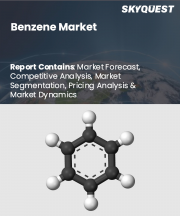
Benzene is an organic chemical compound with the molecular formula C6H6. It is a colorless and flammable liquid with a sweet odor, and it is an important component in the production of a wide range of chemicals and products. Found naturally in crude oil, it is used as a starting material in the synthesis of many other chemicals, including plastics, resins, synthetic fibers, rubber, dyes, detergents, and pharmaceuticals. Despite its vast industrial applications, exposure to it can pose health risks. Studies have shown that prolonged exposure can lead to various health problems, including an increased risk of cancer. As a result, the handling and use of the product are subject to strict regulations in many countries to protect both workers and the environment. It is essential for industries and researchers to be aware of its properties, potential hazards, and safety measures to ensure its responsible use.
The implementation of stringent environmental and health regulations is a significant factor that is driving the global market. As awareness about the health hazards associated with it exposure grows, industries are compelled to invest in safer, more efficient, and cleaner production methods. These regulations push companies to adopt best practices, invest in research and development, and innovate in their processes. With the rise in vehicle production and increasing demand for lightweight and fuel-efficient vehicles, its need in the automotive sector is expected to increase. As infrastructure development and urban housing projects rise, the demand for its derivatives also grows. In addition, the rise and the consequent demand for increased agricultural production are influencing the need for chemicals that protect crops and enhance yield. This indirectly drives the demand for the product. Moreover, the expansion of consumer electronics is creating a positive market outlook.
BENZENE MARKET TRENDS/DRIVERS:
Increased demand in the synthetics industry
The synthetic materials industry, which includes the production of polymers, plastics, resins, and synthetic fibers, has seen a consistent rise in demand over the years. The product plays a pivotal role as a key raw material in the production of styrene, which is used to manufacture polystyrene a polymer used in a variety of applications from packaging materials to household goods. Additionally, the rise in the global population and urbanization trends are driving the need for affordable and durable consumer products. As these synthetic materials find applications in diverse sectors such as automotive, electronics, construction, and consumer goods, the demand for the product, as a foundational ingredient, is expected to grow proportionally. Industries are continuously seeking ways to improve the performance and versatility of synthetic products, further solidifying the market's position.
Growth in the petrochemical sector
The petrochemical industry has been on an upward trajectory, driven by global economic growth and increasing energy needs. As one of the primary derivatives of crude oil refining, it is intrinsically linked to the fortunes of the petrochemical sector. In addition, the expansion of refineries, especially in emerging economies, and the growth in transportation fuels are indicators of a thriving petrochemical industry. With the expansion of this sector, there's an anticipated growth in the availability and demand for the product. As refineries optimize their operations to produce more value-added chemicals, the production capacity is also likely to increase, catering to its growing demand in downstream applications.
Technological advancements in production
The industry has witnessed significant technological advancements aimed at optimizing production, reducing costs, and ensuring environmental compliance. In addition, innovations in catalysis, process intensification, and integration with other processes are allowing producers to extract more value from each barrel of oil. By re-engineering production processes to occur in a single, multi-functional unit, companies can perform multiple steps simultaneously. Additionally, technologies that allow the capture and reuse of by-products and waste streams are enhancing the sustainability and efficiency of production. Such advancements bolster the profitability of producers but also cater to the growing global demand by ensuring a consistent and high-quality supply.
BENZENE INDUSTRY SEGMENTATION:
Breakup by Derivative:
- Ethylbenzene
- Cumene
- Cyclohexane
- Nitrobenzene
- Linear Alkylbenzene
- Maleic Anhydride
- Others
Ethylbenzene holds the largest market share
Ethylbenzene, a direct derivative of benzene, plays a crucial role in the petrochemical sector, primarily due to its use in producing styrene a vital component for various polymers and plastics. A principal driver for the demand for ethylbenzene derivatives stems from the growth in the global polystyrene market. Along with this, polystyrene is extensively used in packaging, electronics, toys, and numerous consumer goods, with its demand closely tied to global economic growth and consumer purchasing power. In addition, the expanding automotive industry is influencing the demand for styrene-based polymers, such as ABS (Acrylonitrile Butadiene Styrene), used for car interiors, exteriors, and consumer electronics. With urbanization trends, particularly in emerging economies, the construction sector is also witnessing considerable growth, leading to increased demand for insulation products made from styrene-based materials. Furthermore, technological advancements and research in newer applications of styrene derivatives are expected to propel the market further.
Breakup by Manufacturing Process:
- Pyrolysis Steam Cracking of Naphtha
- Catalytic Reforming of Naphtha
- Toluene Hydrodealkylation
- Toluene Disproportionation
- From Biomass
Catalytic reforming is an essential process in refineries, turning naphtha into high-octane gasoline components and valuable aromatic compounds. Along with this, the growing global demand for cleaner and higher-octane gasoline is a dominant driver for the catalytic reforming of naphtha. As environmental regulations become stricter, there's a rising need for gasoline blends that produce fewer emissions and have improved combustion efficiency. Catalytically reformed naphtha fulfills this requirement by enhancing the octane number of gasoline. Additionally, the ever-increasing demand for petrochemicals, especially aromatics, such as xylene, and toluene, further strengthens the market for catalytic reforming.
On the other hand, pyrolysis steam cracking is a foundational process in petrochemical manufacturing, transforming naphtha and other hydrocarbons into olefins and aromatics. One primary market driver for this process is the rising global demand for ethylene, propylene, and other olefins used in polymer production. Along with this, the growing demand for xylene drives the toluene disproportionation process. As industries seek efficient production, this method offers an attractive route. Furthermore, the rising use of xylene in petrochemicals reinforces this process's importance, making it integral to meeting global aromatic compound needs.
Breakup by Application:
- Plastics
- Resins
- Synthetic Fibers
- Rubber Lubricants
- Others
The relentless growth in the global plastics market, driven by applications ranging from packaging to automotive components, substantially fuels the product demand. With rapid urbanization, industrialization, and a rise in consumer goods consumption, plastics have become indispensable in everyday life. This ubiquity translates to a consistent demand for polymers, such as polystyrene, ABS, and nylon. Moreover, advancements in plastic technologies, aiming to produce materials with enhanced properties like durability and recyclability, further amplify the product's significance. Apart from this, the integral role of plastics in modern society, coupled with innovative material developments, positions it as a cornerstone in the industry's growth trajectory.
On the other hand, the growing demand for resins, especially in coatings, adhesives, and the construction sector, drives the market. The escalating demand for synthetic fibers, such as nylon and polyester, in textiles, apparel, and home furnishings is a significant market driver. Its utility extends to the rubber lubricants sector, where it's involved in the production of certain key ingredients.
Breakup by Region:
- Asia Pacific
- China
- India
- Japan
- South Korea
- Europe
- Germany
- UK
- France
- Italy
- North America
- United States
- Canada
- Middle East and Africa
- Saudi Arabia
- South Africa
- Latin America
- Brazil
- Argentina
Asia Pacific leads the market, accounting for the largest benzene market share
The market research report has also provided a comprehensive analysis of all the major regional markets, which include Asia Pacific (China, India, Japan, and South Korea); Europe (Germany, UK, France, and Italy); North America (the United States and Canada); Latin America (Brazil and Argentina); and the Middle East and Africa (Saudi Arabia and South Africa). According to the report, Asia Pacific accounted for the largest market share.
The Asia Pacific region, particularly powerhouses, such as China, India, and Southeast Asian countries, is emerging as a focal point for the industry. Additionally, rapid industrialization and urbanization are resulting in an escalated demand for products, such as plastics, resins, and synthetic fibers. The region's booming automotive and construction sectors further fuel this demand. Along with this, the expanding petrochemical infrastructure, driven by both local investments and international collaborations, ensures a steady supply and production capacity for the product and its derivatives.
In addition to this, the inflating disposable income levels are propelling the consumer goods market, which indirectly boosts the market. The region's strategic location, favorable governmental policies, and cost-competitive labor force also make it an attractive hub for petrochemical investments. Lastly, research and innovation in the Asia Pacific region, aiming to harness newer applications and enhance the production efficiency of its derivatives, solidify its position as a dominant player in the global market.
COMPETITIVE LANDSCAPE:
The key players are constantly optimizing their production processes to produce more efficiently, ensuring high purity and yield. In addition, companies often expand their operations either by increasing the capacity of existing plants or by establishing new production facilities, especially in regions with high demand or favorable business conditions. In addition, firms invest in R&D to find new applications for their derivatives, as well as to develop more sustainable and efficient production methods. Ensuring a robust and agile supply chain is crucial, given the global nature of the petrochemical industry. Companies often seek partnerships, logistics solutions, and digital tools to streamline their supply chain. As global focus shifts towards sustainable solutions, many producers are exploring greener alternatives, recycling methods, and waste reduction strategies.
The market research report has provided a comprehensive analysis of the competitive landscape. Detailed profiles of all major companies have also been provided. Some of the key players in the market include:
- BASF
- Sinopec
- Royal Dutch Shell
- China National Petroleum Corporation
- DuPont
- Saudi Basic Industries Corporation
- China Petroleum & Chemical Corporation
- ExxonMobil Corporation
- JX Holdings
- BP
- Borealis AG
- Braskem
- Repsol
- Arsol Aromatics GmbH & Co. KG
()
KEY QUESTIONS ANSWERED IN THIS REPORT
1. What was the size of the global benzene market in 2025?
2. What is the expected growth rate of the global benzene market during 2026-2034?
3. What are the key factors driving the global benzene market?
4. What has been the impact of COVID-19 on the global benzene market?
5. What is the breakup of the global benzene market based on the derivative?
6. What are the key regions in the global benzene market?
7. Who are the key players/companies in the global benzene market?
Table of Contents
1 Preface
2 Scope and Methodology
- 2.1 Objectives of the Study
- 2.2 Stakeholders
- 2.3 Data Sources
- 2.3.1 Primary Sources
- 2.3.2 Secondary Sources
- 2.4 Market Estimation
- 2.4.1 Bottom-Up Approach
- 2.4.2 Top-Down Approach
- 2.5 Forecasting Methodology
3 Executive Summary
4 Introduction
- 4.1 Overview
- 4.2 Properties
- 4.3 Key Industry Trends
5 Global Benzene Market
- 5.1 Market Overview
- 5.2 Market Performance
- 5.3 Impact of COVID-19
- 5.4 Market Breakup by Derivative
- 5.5 Market Breakup by Manufacturing Process
- 5.6 Market Breakup by Application
- 5.7 Market Breakup by Region
- 5.8 Market Forecast
6 Market Breakup by Derivative
- 6.1 Ethylbenzene
- 6.1.1 Market Trends
- 6.1.2 Market Forecast
- 6.2 Cumene
- 6.2.1 Market Trends
- 6.2.2 Market Forecast
- 6.3 Cyclohexane
- 6.3.1 Market Trends
- 6.3.2 Market Forecast
- 6.4 Nitrobenzene
- 6.4.1 Market Trends
- 6.4.2 Market Forecast
- 6.5 Linear Alkylbenzene
- 6.5.1 Market Trends
- 6.5.2 Market Forecast
- 6.6 Maleic Anhydride
- 6.6.1 Market Trends
- 6.6.2 Market Forecast
- 6.7 Others
- 6.7.1 Market Trends
- 6.7.2 Market Forecast
7 Market Breakup by Manufacturing Process
- 7.1 Pyrolysis Steam Cracking of Naphtha
- 7.1.1 Market Trends
- 7.1.2 Market Forecast
- 7.2 Catalytic Reforming of Naphtha
- 7.2.1 Market Trends
- 7.2.2 Market Forecast
- 7.3 Toluene Hydrodealkylation
- 7.3.1 Market Trends
- 7.3.2 Market Forecast
- 7.4 Toluene Disproportionation
- 7.4.1 Market Trends
- 7.4.2 Market Forecast
- 7.5 From Biomass
- 7.5.1 Market Trends
- 7.5.2 Market Forecast
8 Market Breakup by Application
- 8.1 Plastics
- 8.1.1 Market Trends
- 8.1.2 Market Forecast
- 8.2 Resins
- 8.2.1 Market Trends
- 8.2.2 Market Forecast
- 8.3 Synthetic Fibers
- 8.3.1 Market Trends
- 8.3.2 Market Forecast
- 8.4 Rubber Lubricants
- 8.4.1 Market Trends
- 8.4.2 Market Forecast
- 8.5 Others
- 8.5.1 Market Trends
- 8.5.2 Market Forecast
9 Market Breakup by Region
- 9.1 Asia Pacific
- 9.1.1 Market Trends
- 9.1.2 Major Markets
- 9.1.2.1 China
- 9.1.2.2 India
- 9.1.2.3 Japan
- 9.1.2.4 South Korea
- 9.1.3 Market Forecast
- 9.2 Europe
- 9.2.1 Market Trends
- 9.2.2 Major Markets
- 9.2.2.1 Germany
- 9.2.2.2 UK
- 9.2.2.3 France
- 9.2.2.4 Italy
- 9.2.3 Market Forecast
- 9.3 North America
- 9.3.1 Market Trends
- 9.3.2 Major Markets
- 9.3.2.1 United States
- 9.3.2.2 Canada
- 9.3.3 Market Forecast
- 9.4 Middle East and Africa
- 9.4.1 Market Trends
- 9.4.2 Major Markets
- 9.4.2.1 Saudi Arabia
- 9.4.2.2 South Africa
- 9.4.3 Market Forecast
- 9.5 Latin America
- 9.5.1 Market Trends
- 9.5.2 Major Markets
- 9.5.2.1 Brazil
- 9.5.2.2 Argentina
- 9.5.3 Market Forecast
10 Trade Data
- 10.1 Import Breakup by Country
- 10.2 Export Breakup by Country
11 SWOT Analysis
- 11.1 Overview
- 11.2 Strengths
- 11.3 Weaknesses
- 11.4 Opportunities
- 11.5 Threats
12 Value Chain Analysis
13 Porter's Five Forces Analysis
- 13.1 Overview
- 13.2 Bargaining Power of Buyers
- 13.3 Bargaining Power of Suppliers
- 13.4 Degree of Competition
- 13.5 Threat of New Entrants
- 13.6 Threat of Substitutes
14 Price Analysis
15 Competitive Landscape
- 15.1 Market Structure
- 15.2 Key Players
- 15.3 Profiles of Key Players
- 15.3.1 BASF
- 15.3.2 Sinopec
- 15.3.3 Royal Dutch Shell
- 15.3.4 China National Petroleum Corporation
- 15.3.5 DuPont
- 15.3.6 Saudi Basic Industries Corporation
- 15.3.7 China Petroleum & Chemical Corporation
- 15.3.8 ExxonMobil Corporation
- 15.3.9 JX Holdings
- 15.3.10 BP
- 15.3.11 Borealis AG
- 15.3.12 Braskem
- 15.3.13 Repsol
- 15.3.14 Arsol Aromatics GmbH & Co. KG