|
시장보고서
상품코드
2016117
휴대용 통신 시스템 시장 보고서 : 플랫폼별, 제품 유형별, 디바이스 유형별, 용도별, 지역별(2026-2034년)Man-Portable Communication System Market Report by Platform, Product Type, Device Type, Application, and Region 2026-2034 |
||||||

세계의 휴대용 통신 시스템 시장 규모는 2025년에 41억 달러에 이르렀습니다. 향후, IMARC Group은 2034년까지 시장 규모가 58억 달러에 이르고, 2026-2034년 CAGR 3.82%를 나타낼 것으로 예측했습니다.
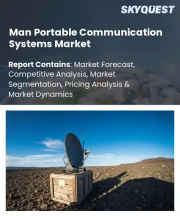
휴대용 통신 시스템(MPCS)은 전술 및 현장 방어 통신에 사용되는 소형, 휴대형 또는 착용형 장치의 총칭입니다. 여기에는 소프트웨어 무전기, 위성 통신 장비, 휴대용 인터콤, 군용 무전기, 무전기 기능이 있는 스마트폰, 양방향 무전기, 개인용 디지털 비서(PDA) 등이 포함됩니다. 이 시스템은 육상, 군용기, 군용기, 함정에 배치되어 방해 전파 방지 기능을 갖춘 데이터 및 음성 통신을 보장하는 동시에 군용 장비와 사이렌으로 인한 소음을 최소화합니다. MPCS는 통신 범위, 유연성, 기동성을 향상시켜 군사 작전의 전반적인 효율성과 성공률을 높입니다.
세계적으로 범죄와 테러 활동이 증가하고 있는 것은 시장 성장을 이끄는 주요 요인 중 하나입니다. 국방 현대화 프로그램의 시행으로 독립형 GPS 시스템, 스마트폰, 무전기, 전술 통신 장비의 도입이 진행되고 있으며, 이는 시장 전망을 밝게 하고 있습니다. 또한, 첨단 경량 전자통신기기에 대한 수요가 빠르게 증가하고 있는 것도 시장 성장을 견인하고 있습니다. 또한, MPCS는 현재 선진국과 신흥국 모두에서 군사 방어 시스템의 지휘통제(C2) 시스템과 통합이 진행되고 있습니다. C2 시스템에서는 기밀정보 취급의 프라이버시와 효율성을 보장하기 위해 군관제센터와 병사들 간에 암호화된 정보를 양방향으로 주고받을 때 MPCS 단말기가 사용됩니다. 또한, 더 높은 대역폭과 주파수를 달성하기 위한 4G 및 5G 네트워크의 국방 인프라에 대한 통합, 사용자가 실시간 데이터에 접근할 수 있도록 다양한 인터넷 기반 네트워크의 활용 등 다양한 기술 발전이 향후 몇 년 동안 시장을 주도할 것으로 예측됩니다. 시장을 주도할 것으로 예측됩니다.
본 보고서에서 답변을 얻을 수 있는 주요 질문:
- 세계 휴대용 통신 시스템 시장은 지금까지 어떤 추세를 보여 왔으며, 향후 몇 년 동안 어떤 추세를 보일 것인가?
- 주요 지역 시장은?
- 코로나19는 전 세계 휴대용 통신 시스템 시장에 어떤 영향을 미쳤는가?
- 플랫폼별 시장 현황은?
- 제품 유형별 시장 구성은?
- 디바이스 유형별 시장 현황은?
- 용도에 따른 시장 내역은?
- 이 산업의 가치사슬에서 각 단계는 어떤 역할을 하는가?
- 이 산업의 주요 촉진요인과 과제는?
- 세계 휴대용 통신 시스템 시장의 구조는 무엇이며, 주요 기업은?
- 업계 내 경쟁은 어느 정도 치열한가?
목차
제1장 서문
제2장 조사 범위와 조사 방법
제3장 주요 요약
제4장 서론
제5장 세계의 휴대용 통신 시스템 시장
제6장 시장 분석 : 플랫폼별
제7장 시장 분석 : 제품 유형별
제8장 시장 분석 : 디바이스 유형별
제9장 시장 분석 : 용도별
제10장 시장 분석 : 지역별
제11장 SWOT 분석
제12장 밸류체인 분석
제13장 Porter의 Five Forces 분석
제14장 경쟁 구도
LSH 26.05.08The global man-portable communication system market size reached USD 4.1 Billion in 2025. Looking forward, IMARC Group expects the market to reach USD 5.8 Billion by 2034, exhibiting a growth rate (CAGR) of 3.82% during 2026-2034.
A man-portable communication system (MPCS) refers to a collection of compact, handheld and wearable devices used for tactical and on-site defense communications. It includes software-based radios, satellite communication devices, portable intercoms, military walkie-talkies, transceiver smartphones, two-way radios and personal digital assistants (PDAs). The system is deployed on land, military aircraft and ships to secure data and voice transmissions with anti-jamming features while minimizing the noises generated by military equipment and sirens. MPCS enhances the transmission range, flexibility and mobility, thus increasing the overall efficiency and success rate of military operations.
The rising number of criminal and terrorist activities across the globe is one of the key factors driving the growth of the market. The implementation of defense modernization programs has enhanced the adoption of self-contained GPS systems, smartphones, radios and tactical communication devices, which is, in turn, creating a positive outlook for the market. Furthermore, the rapidly increasing demand for advanced and light-weight electronic communication devices is also favoring the market growth. Additionally, MPCS is currently being integrated with Command and Control (C2) military defense systems across both the developed and emerging nations. The C2 systems use MPCS devices for a two-way flow of encrypted information between the military control centers and soldiers to ensure privacy and efficiency while handling sensitive information. Moreover, various technological advancements, including the integration of 4G and 5G networks into defense infrastructure for higher bandwidth and frequency, along with the utilization of various internet-based networks for enabling users to access real-time data, is projected to drive the market in the upcoming years.
Key Market Segmentation:
The publisher provides an analysis of the key trends in each sub-segment of the global man-portable communication system market report, along with forecasts at the global, regional and country level from 2026-2034. Our report has categorized the market based on platform, product type, device type and application.
Breakup by Platform:
- Land
- Airborne
- Naval
Breakup by Product Type:
- Communication
- ISTAR
- Command and Control
- Others
Breakup by Device Type:
- Hand-Held Communication Device
- Portable Communication Device
Breakup by Application:
- Software Defined Radios
- SATCOM
- Encryption
- Smartphones
- Homeland Security
- Commercial
- Others
Breakup by Region:
- North America
- United States
- Canada
- Asia Pacific
- China
- Japan
- India
- South Korea
- Australia
- Indonesia
- Others
- Europe
- Germany
- France
- United Kingdom
- Italy
- Spain
- Russia
- Others
- Latin America
- Brazil
- Mexico
- Others
- Middle East and Africa
Competitive Landscape:
The competitive landscape of the industry has also been examined with some of the key players being Aselsan Corporation, BAE Systems, Codan, Elbit Systems, General Dynamics, Harris Corporation, ITT Inc., L3 Technologies, Leonardo SpA, Northrop Grumman, Rockwell Collins, Saab AB, Thales Group, Ultra Electronics, Viasat Inc., etc.
Key Questions Answered in This Report:
- How has the global man-portable communication system market performed so far and how will it perform in the coming years?
- What are the key regional markets?
- What has been the impact of COVID-19 on the global man-portable communication system market?
- What is the breakup of the market based on the platform?
- What is the breakup of the market based on the product type?
- What is the breakup of the market based on the device type?
- What is the breakup of the market based on the application?
- What are the various stages in the value chain of the industry?
- What are the key driving factors and challenges in the industry?
- What is the structure of the global man-portable communication system market and who are the key players?
- What is the degree of competition in the industry?
Table of Contents
1 Preface
2 Scope and Methodology
- 2.1 Objectives of the Study
- 2.2 Stakeholders
- 2.3 Data Sources
- 2.3.1 Primary Sources
- 2.3.2 Secondary Sources
- 2.4 Market Estimation
- 2.4.1 Bottom-Up Approach
- 2.4.2 Top-Down Approach
- 2.5 Forecasting Methodology
3 Executive Summary
4 Introduction
- 4.1 Overview
- 4.2 Key Industry Trends
5 Global Man-Portable Communication System Market
- 5.1 Market Overview
- 5.2 Market Performance
- 5.3 Impact of COVID-19
- 5.4 Market Forecast
6 Market Breakup by Platform
- 6.1 Land
- 6.1.1 Market Trends
- 6.1.2 Market Forecast
- 6.2 Airborne
- 6.2.1 Market Trends
- 6.2.2 Market Forecast
- 6.3 Naval
- 6.3.1 Market Trends
- 6.3.2 Market Forecast
7 Market Breakup by Product Type
- 7.1 Communication
- 7.1.1 Market Trends
- 7.1.2 Market Forecast
- 7.2 ISTAR
- 7.2.1 Market Trends
- 7.2.2 Market Forecast
- 7.3 Command and Control
- 7.3.1 Market Trends
- 7.3.2 Market Forecast
- 7.4 Others
- 7.4.1 Market Trends
- 7.4.2 Market Forecast
8 Market Breakup by Device Type
- 8.1 Hand-Held Communication Device
- 8.1.1 Market Trends
- 8.1.2 Market Forecast
- 8.2 Portable Communication Device
- 8.2.1 Market Trends
- 8.2.2 Market Forecast
9 Market Breakup by Application
- 9.1 Software Defined Radios
- 9.1.1 Market Trends
- 9.1.2 Market Forecast
- 9.2 SATCOM
- 9.2.1 Market Trends
- 9.2.2 Market Forecast
- 9.3 Encryption
- 9.3.1 Market Trends
- 9.3.2 Market Forecast
- 9.4 Smartphones
- 9.4.1 Market Trends
- 9.4.2 Market Forecast
- 9.5 Homeland Security
- 9.5.1 Market Trends
- 9.5.2 Market Forecast
- 9.6 Commercial
- 9.6.1 Market Trends
- 9.6.2 Market Forecast
- 9.7 Others
- 9.7.1 Market Trends
- 9.7.2 Market Forecast
10 Market Breakup by Region
- 10.1 North America
- 10.1.1 United States
- 10.1.1.1 Market Trends
- 10.1.1.2 Market Forecast
- 10.1.2 Canada
- 10.1.2.1 Market Trends
- 10.1.2.2 Market Forecast
- 10.1.1 United States
- 10.2 Asia Pacific
- 10.2.1 China
- 10.2.1.1 Market Trends
- 10.2.1.2 Market Forecast
- 10.2.2 Japan
- 10.2.2.1 Market Trends
- 10.2.2.2 Market Forecast
- 10.2.3 India
- 10.2.3.1 Market Trends
- 10.2.3.2 Market Forecast
- 10.2.4 South Korea
- 10.2.4.1 Market Trends
- 10.2.4.2 Market Forecast
- 10.2.5 Australia
- 10.2.5.1 Market Trends
- 10.2.5.2 Market Forecast
- 10.2.6 Indonesia
- 10.2.6.1 Market Trends
- 10.2.6.2 Market Forecast
- 10.2.7 Others
- 10.2.7.1 Market Trends
- 10.2.7.2 Market Forecast
- 10.2.1 China
- 10.3 Europe
- 10.3.1 Germany
- 10.3.1.1 Market Trends
- 10.3.1.2 Market Forecast
- 10.3.2 France
- 10.3.2.1 Market Trends
- 10.3.2.2 Market Forecast
- 10.3.3 United Kingdom
- 10.3.3.1 Market Trends
- 10.3.3.2 Market Forecast
- 10.3.4 Italy
- 10.3.4.1 Market Trends
- 10.3.4.2 Market Forecast
- 10.3.5 Spain
- 10.3.5.1 Market Trends
- 10.3.5.2 Market Forecast
- 10.3.6 Russia
- 10.3.6.1 Market Trends
- 10.3.6.2 Market Forecast
- 10.3.7 Others
- 10.3.7.1 Market Trends
- 10.3.7.2 Market Forecast
- 10.3.1 Germany
- 10.4 Latin America
- 10.4.1 Brazil
- 10.4.1.1 Market Trends
- 10.4.1.2 Market Forecast
- 10.4.2 Mexico
- 10.4.2.1 Market Trends
- 10.4.2.2 Market Forecast
- 10.4.3 Others
- 10.4.3.1 Market Trends
- 10.4.3.2 Market Forecast
- 10.4.1 Brazil
- 10.5 Middle East and Africa
- 10.5.1 Market Trends
- 10.5.2 Market Breakup by Country
- 10.5.3 Market Forecast
11 SWOT Analysis
- 11.1 Overview
- 11.2 Strengths
- 11.3 Weaknesses
- 11.4 Opportunities
- 11.5 Threats
12 Value Chain Analysis
13 Porters Five Forces Analysis
- 13.1 Overview
- 13.2 Bargaining Power of Buyers
- 13.3 Bargaining Power of Suppliers
- 13.4 Degree of Competition
- 13.5 Threat of New Entrants
- 13.6 Threat of Substitutes
14 Competitive Landscape
- 14.1 Market Structure
- 14.2 Key Players
- 14.3 Profiles of Key Players
- 14.3.1 Aselsan Corporation
- 14.3.1.1 Company Overview
- 14.3.1.2 Product Portfolio
- 14.3.1.3 Financials
- 14.3.2 BAE Systems
- 14.3.2.1 Company Overview
- 14.3.2.2 Product Portfolio
- 14.3.2.3 Financials
- 14.3.2.4 SWOT Analysis
- 14.3.3 Codan
- 14.3.3.1 Company Overview
- 14.3.3.2 Product Portfolio
- 14.3.3.3 Financials
- 14.3.4 Elbit Systems
- 14.3.4.1 Company Overview
- 14.3.4.2 Product Portfolio
- 14.3.4.3 Financials
- 14.3.5 General Dynamics
- 14.3.5.1 Company Overview
- 14.3.5.2 Product Portfolio
- 14.3.5.3 Financials
- 14.3.5.4 SWOT Analysis
- 14.3.6 Harris Corporation
- 14.3.6.1 Company Overview
- 14.3.6.2 Product Portfolio
- 14.3.7 ITT Inc.
- 14.3.7.1 Company Overview
- 14.3.7.2 Product Portfolio
- 14.3.7.3 Financials
- 14.3.7.4 SWOT Analysis
- 14.3.8 L3 Technologies
- 14.3.8.1 Company Overview
- 14.3.8.2 Product Portfolio
- 14.3.8.3 SWOT Analysis
- 14.3.9 Leonardo SpA
- 14.3.9.1 Company Overview
- 14.3.9.2 Product Portfolio
- 14.3.9.3 Financials
- 14.3.9.4 SWOT Analysis
- 14.3.10 Northrop Grumman
- 14.3.10.1 Company Overview
- 14.3.10.2 Product Portfolio
- 14.3.10.3 Financials
- 14.3.10.4 SWOT Analysis
- 14.3.11 Rockwell Collins
- 14.3.11.1 Company Overview
- 14.3.11.2 Product Portfolio
- 14.3.12 Saab AB
- 14.3.12.1 Company Overview
- 14.3.12.2 Product Portfolio
- 14.3.12.3 Financials
- 14.3.12.4 SWOT Analysis
- 14.3.13 Thales Group
- 14.3.13.1 Company Overview
- 14.3.13.2 Product Portfolio
- 14.3.13.3 Financials
- 14.3.14 Ultra Electronics
- 14.3.14.1 Company Overview
- 14.3.14.2 Product Portfolio
- 14.3.14.3 Financials
- 14.3.15 Viasat Inc.
- 14.3.15.1 Company Overview
- 14.3.15.2 Product Portfolio
- 14.3.15.3 Financials
- 14.3.1 Aselsan Corporation